5 Common Job Application Mistakes New Physicians Make (and How to Avoid Them)
Finding your first job post-residency is one of the biggest transitions in your medical career. You’ve survived the wards, passed your boards, and honed your clinical judgment—yet the job market can feel like unfamiliar territory. Many new physicians assume that strong training and a solid CV are enough. In reality, the job search is its own skill set, and missteps in Job Applications can delay or derail promising opportunities.
This guide breaks down five common mistakes new physicians make when applying for jobs and offers practical, step-by-step strategies to avoid them. The focus is on career advice that is realistic for busy residents and fellows, with a special emphasis on networking, soft skills, and positioning yourself competitively in the post-residency job market.
Mistake 1: Sending Generic, Untailored Applications
New physicians often approach the job hunt like they did residency applications: create a strong core personal statement and CV, then send them everywhere with minimal changes. In the employment world, that strategy is costly.
Why Tailoring Matters in the Physician Job Market
Hiring committees and recruiters see hundreds of CVs. Generic documents—especially those that could be sent to any hospital in any city—blend into the background. Worse, many health systems and large groups now use Applicant Tracking Systems (ATS), which scan your CV and cover letter for keywords that match the job description.
When your materials are not aligned with the role:
- Key experiences may be overlooked
- Your application may be filtered out by ATS software
- You appear less motivated and less informed about the position
- You miss the opportunity to differentiate yourself from other new physicians
How to Tailor Your Application Effectively
Think of each job as an individual patient: you wouldn’t use the same plan for everyone. Similarly, customize each application based on the organization and role.
1. Conduct Targeted Research
Before applying, spend 10–15 minutes investigating:
- The organization’s mission and values
- Are they community-focused, academic, research-driven, or growth-oriented?
- Their patient population and service lines
- Safety-net hospital? Suburban outpatient group? Academic center?
- Their care model
- Team-based care, patient-centered medical home (PCMH), integrated behavioral health?
- Recent news, expansions, or quality initiatives
Sources:
- Practice’s website (About Us, Leadership, News)
- Quality/ratings websites (NCQA, Leapfrog, U.S. News)
- LinkedIn company page
- Local news coverage
2. Align Your CV and Cover Letter
Once you understand what they value, adjust your materials:
- Reorder your CV bullet points so the most relevant experience appears first
- Emphasize procedures, patient volumes, or settings that match the job
- Reflect their language and keywords (e.g., “patient-centered medical home,” “value-based care,” “team-based care,” “EHR optimization”)
Example transformation:
- Generic: “Possess a strong foundation in primary care.”
- Tailored: “Developed a comprehensive, patient-centered primary care approach through continuity clinic in a level-3 PCMH, aligning with [Organization Name]’s emphasis on holistic, team-driven care.”
3. Create a Flexible Template System
To keep tailoring efficient:
- Build 2–3 master CV templates (e.g., academic, hospital-employed, outpatient clinic/urgent care)
- Maintain a “plug-and-play” cover letter template with sections you quickly customize:
- The first paragraph (why this role/region)
- Middle paragraph highlighting relevant skills and experiences
- Final paragraph reinforcing your fit and interest
Mistake 2: Underestimating the Power of Networking
Many new physicians assume the job search is purely transactional: find a posting, submit an application, wait for a response. That’s rarely how the best positions are filled.
In reality, a large percentage of physician jobs—especially desirable ones—are filled through word of mouth, referrals, and professional connections, often before they are widely advertised.
Why Networking Matters for New Physicians
Effective networking:
- Surfaces unposted or early-stage opportunities
- Gets your CV directly on the decision-maker’s desk
- Provides insider information about culture, leadership, workload, and compensation
- Helps you avoid toxic workplaces or unstable practices
- Builds long-term relationships that support your career beyond the first job
Networking is not about self-promotion; it’s about building authentic, mutual professional relationships.
Practical Networking Strategies for Residents and Fellows
1. Start With Your Existing Circles
You already have a network; you may just not be using it intentionally:
- Program faculty and mentors – ask who they know in your target city/specialty
- Co-residents and fellows – especially those a year or two ahead, who have just navigated the job market
- Medical school alumni – many institutions have alumni directories or regional chapters
- Subspecialty rotation sites – community attendings and site directors often know regional opportunities
Reach out with simple, respectful messages such as:
“I’m starting to look at outpatient internal medicine positions in [City/Region]. I really value your perspective—would you be open to a brief conversation about the local job market or any groups you’d recommend I explore?”
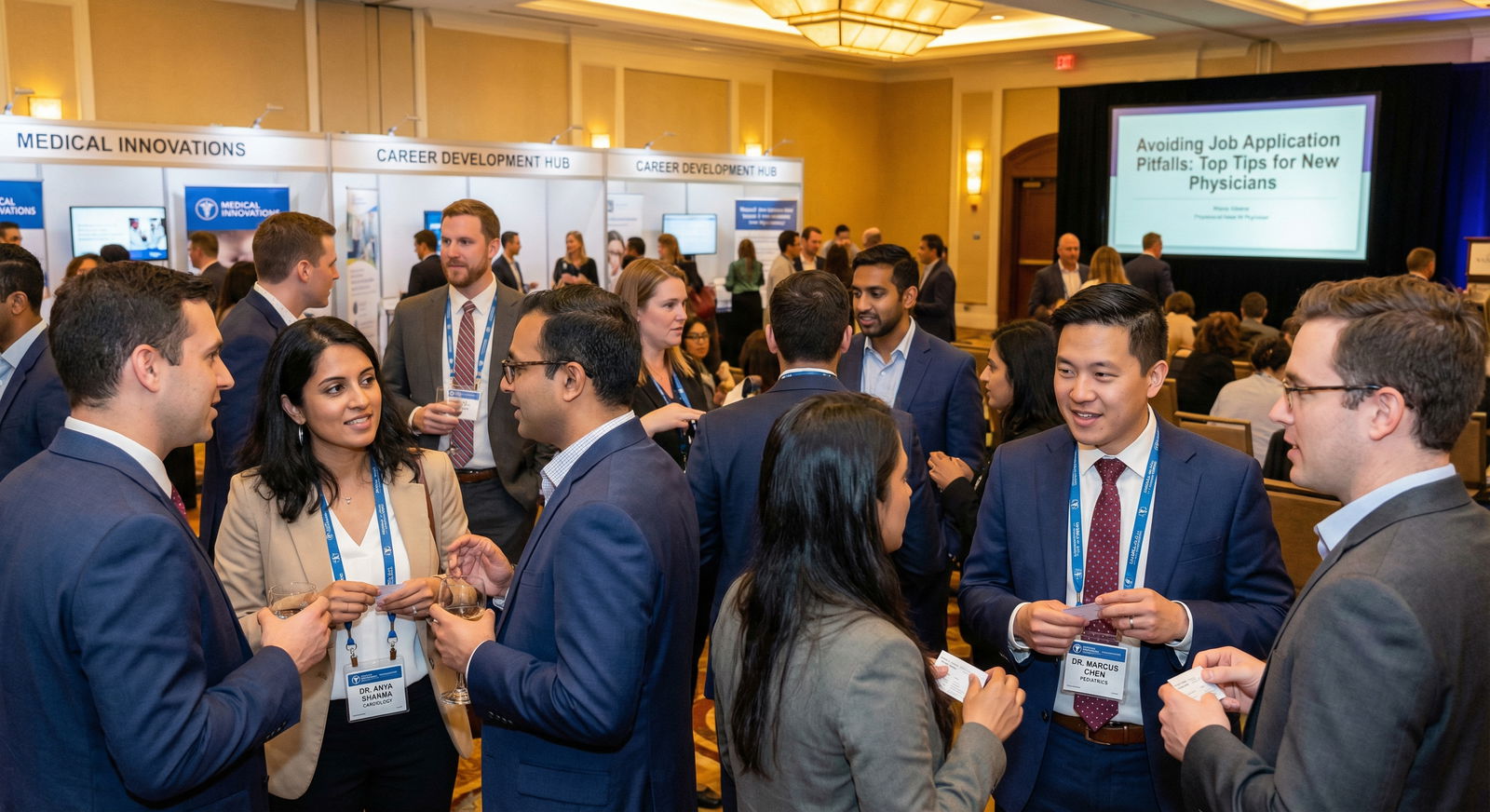
2. Leverage Professional Organizations and Conferences
Joining specialty societies early pays off:
- Internal medicine: ACP
- Family medicine: AAFP
- Pediatrics: AAP
- Surgery: ACS
- Psychiatry: APA
- EM: ACEP, AAEM
Use their:
- Job boards and career centers
- Mentoring programs
- Networking receptions at national and regional meetings
At conferences, make a specific goal (e.g., “meet 5 people who practice in the Pacific Northwest outpatient setting”). Prepare a brief “career interests” summary you can comfortably share.
3. Use LinkedIn Strategically
An updated LinkedIn profile is more than a digital CV; it’s a networking tool:
- Upload a professional headshot
- Include a concise headline, e.g., “PGY-3 Family Medicine Resident | Interested in Community-Based Outpatient Practice”
- Add keywords related to your specialty, interests (e.g., “primary care,” “quality improvement,” “population health”)
- Connect with:
- Attendings you’ve worked with
- Co-residents and alumni
- Recruiters who specialize in your specialty or region
When you send connection requests, include a short, personalized note, not just the default message.
4. Follow Up and Nurture Relationships
Networking is not a one-time ask. After conversations:
- Send a brief thank-you email or message
- If they suggest an organization or contact:
- Follow through
- Circle back later with a quick update (“I connected with Dr. Smith, thank you again for the introduction”)
- Periodically share relevant updates (e.g., passing boards, moving to a new city, shifting career interests)
Over time, this creates a genuine professional network that continues to support your growth.
Mistake 3: Failing to Highlight Soft Skills and Professionalism
Residency trains you to think in terms of diagnoses, procedures, and clinical outcomes. But hiring committees are equally concerned with what it will be like to work with you and how you interact with patients, staff, and colleagues.
Many new physicians underestimate the importance of soft skills in their Job Applications and interviews, or they mention them only superficially (“team player,” “good communicator”) without concrete examples.
Why Soft Skills Are Critical for New Physician Hires
Organizations know that a new physician with excellent clinical skills but poor interpersonal skills can:
- Damage team culture
- Increase burnout among staff
- Generate patient complaints
- Struggle with leadership and collaboration
Conversely, strong soft skills:
- Improve patient experience and HCAHPS scores
- Enhance team functioning
- Reduce conflicts and miscommunication
- Position you for future leadership roles
Key soft skills for physicians include:
- Communication (with patients, families, and teams)
- Empathy and emotional intelligence
- Teamwork and collaboration
- Cultural humility and respect
- Conflict resolution
- Adaptability and resilience
How to Demonstrate Soft Skills in Your Application
1. Make Your CV Bullets Show, Not Tell
Instead of listing generic traits, embed soft skills in outcome-focused bullet points:
Weak: “Worked with a multidisciplinary team.”
Strong: “Collaborated with a multidisciplinary team (nursing, social work, pharmacy) to create standardized care pathways for patients with heart failure, resulting in a 20% reduction in 30-day readmissions over 12 months.”
Weak: “Good communicator with patients and families.”
Strong: “Led family meetings for complex ICU patients, integrating input from multiple specialists and ensuring shared decision-making; consistently recognized by attendings and nursing staff for clear, compassionate communication.”
2. Use Your Cover Letter to Tell a Brief Story
Choose one concise anecdote that demonstrates a key soft skill:
- Navigating a difficult patient encounter with empathy
- Mediating a conflict between team members
- Leading a quality improvement project that required collaboration across departments
Keep it focused (1–2 short paragraphs), and highlight the action you took and what you learned.
Example:
“During my night float rotation, I managed a patient with poorly controlled diabetes who repeatedly missed follow-up appointments. Rather than simply adjusting insulin doses, I coordinated with social work and nursing to explore transportation and health literacy barriers, ultimately creating a simplified regimen and follow-up plan. Over subsequent visits, her A1c improved from 11.2 to 8.6. This experience reinforced for me the importance of communication, empathy, and teamwork in achieving sustainable outcomes.”
3. Align Soft Skills With Employer Priorities
If the job description emphasizes:
- “Team-based care” – highlight interprofessional collaboration
- “Patient-centered outcomes” – emphasize communication, shared decision-making
- “Leadership potential” – cite leading committees, resident projects, or teaching roles
This shows you understand their needs and can contribute beyond clinical volume.
Mistake 4: Skimming or Ignoring Job Descriptions
In a busy call month, it’s tempting to skim job postings and quickly fire off your CV. But overlooking the details in a job description can lead to:
- Misaligned expectations (schedule, call, compensation model)
- Missed opportunities to mirror their language and highlight relevant experiences
- Application rejections because you didn’t address required qualifications
How to Read Job Descriptions Strategically
Treat each job post like a consult note you’re reviewing carefully.
1. Identify Core Components
As you read, highlight or jot down:
- Required qualifications
- Board certification/eligibility, specific training, licenses
- Preferred skills/experience
- Procedures, subspecialty interest, languages, EHR experience
- Clinical scope and setting
- Inpatient vs outpatient, volumes, age groups
- Schedule and call expectations
- Weekends, nights, telehealth, hospital coverage
- Practice model and compensation
- Employed vs independent, RVU-based, salary plus bonus
2. Echo the Language in Your Application
You don’t need to copy phrases exactly, but you should use related wording and demonstrate that you understand the role.
If the posting emphasizes:
- “Proficiency in electronic health records (EHR) and documentation efficiency”
- Include a bullet such as:
- “Proficient in Epic and Cerner; achieved documentation completion within 24 hours for >95% of encounters during residency.”
- Include a bullet such as:
- “Experience with underserved populations”
- Highlight community clinic rotations, free clinics, or language skills.
3. Verify Alignment Before You Invest Time
Before spending 30–45 minutes customizing materials, ask yourself:
- Does this role match my geographic and lifestyle priorities?
- Is the compensation model acceptable (salary vs RVU-heavy vs partnership track)?
- Does the scope of practice fit my interests (e.g., outpatient only vs significant inpatient call)?
This prevents you from chasing jobs that aren’t truly a fit.
Mistake 5: Not Following Up After Applying
Many new physicians submit an application and then wait in silence, assuming no news means rejection or that following up will seem pushy. In most cases, the opposite is true: a professional follow-up signals maturity, organization, and genuine interest.
Why Follow-Up Matters
Recruiters juggle dozens of positions and candidates. Following up:
- Keeps your name on their radar
- Clarifies timelines and next steps
- Demonstrates motivation and professionalism
- Sometimes prompts them to “rescue” a lost or overlooked application
How to Follow Up Without Being Annoying
1. Time Your Follow-Up Appropriately
- After submitting a CV via a job portal:
- Wait about 7–14 days, then send a brief, polite email
- After an interview:
- Send a thank-you message within 24–48 hours
- If you haven’t heard back by the timeline they indicated, follow up 1–2 weeks later
2. Keep Messages Concise and Professional
Sample follow-up email:
Subject: Follow-Up on [Job Title] Application
Dear [Hiring Manager’s Name / Dr. Last Name],
I hope you’re doing well. I am writing to follow up on my application for the [Job Title] position submitted on [date]. I remain very interested in the opportunity to contribute to [Organization Name], particularly in the areas of [briefly mention 1–2 relevant strengths or interests].
Please let me know if there is any additional information I can provide.
Thank you for your time and consideration.
Best regards,
[Your Full Name, Credentials]
[Phone Number]
[LinkedIn profile or email]
3. Track Your Applications
Create a simple spreadsheet with:
- Organization name
- Contact person
- Date applied
- Method (portal, recruiter, referral)
- Date of follow-up
- Status/notes
This keeps you organized and prevents duplicate or premature follow-up.

Putting It All Together: A Strategic Approach to Your First Physician Job
When you integrate these elements—tailored applications, intentional networking, clear demonstration of soft skills, careful reading of job descriptions, and professional follow-up—you move from a passive to an active, strategic job search.
A Simple 5-Step Framework for New Physicians
Clarify Your Priorities
- Geography, practice setting (academic vs community vs private), inpatient/outpatient mix, call expectations, compensation model, long-term career goals.
Prepare Strong Baseline Materials
- Polished CV with accomplishment-focused bullets
- Core cover letter template ready to be tailored
- Updated LinkedIn profile that reflects your career interests
Network Before You Need a Job (But Especially While You Do)
- Activate mentors, alumni, and professional societies
- Attend conferences with a purpose
- Respond to recruiter outreach selectively and thoughtfully
Apply Strategically and Thoughtfully
- Read each job description carefully
- Tailor CV and cover letter to match the organization’s needs and language
- Showcase both clinical competence and soft skills
Follow Up and Stay Organized
- Track applications and timelines
- Send professional follow-up emails
- Reassess your strategy every few weeks and adjust as needed
By approaching your first job search with the same focus and intentionality you brought to residency, you dramatically increase your chances of landing not just a job—but the right job that supports your growth, values, and long-term career satisfaction.
FAQ: New Physicians, Job Applications, and the Post-Residency Job Market
1. When should I start looking for my first job post-residency?
For most specialties, begin exploring options 9–12 months before graduation.
- Start with informational conversations and networking early.
- Target serious applications and interviews 6–9 months before your anticipated start date.
Highly competitive subspecialties or specific geographic targets (e.g., small metro areas) may require starting even earlier.
2. How many jobs should I apply to as a new physician?
Quality matters more than quantity. Instead of sending out 50 generic applications:
- Identify 5–15 well-aligned positions, and
- Submit carefully tailored applications to each.
Your goal is to generate several strong interview opportunities, not a large batch of lukewarm responses.
3. Should I list all my clinical rotations on my CV?
You don’t need to list every rotation, but you should highlight:
- Key experiences relevant to the job (e.g., community clinic, ICU, global health, rural rotations)
- Substantial elective time in areas that demonstrate your clinical focus or niche interests
For early-career physicians, residency experiences still carry significant weight and can help differentiate you.
4. How can I strengthen my soft skills while still in training?
Practical ways to build and demonstrate soft skills include:
- Volunteering for resident leadership roles or committees
- Participating in quality improvement or patient safety projects
- Seeking out communication skills workshops, simulation sessions, or feedback from attendings and nurses
- Practicing difficult conversations (e.g., delivering bad news, conflict resolution) with mentorship and reflection
Document these activities and outcomes on your CV and in your interviews.
5. What if I don’t have a strong professional network yet?
Everyone starts somewhere. To build your network:
- Ask your program leadership if there’s an alumni list or networking group
- Join national and local specialty societies and attend at least one meeting or webinar
- Connect with attending physicians you’ve worked well with and ask for career advice calls
- Use LinkedIn to find physicians in your target city or practice setting and send polite, specific requests for brief conversations
Over time, these small steps accumulate into a robust professional network that will support every stage of your career.
By understanding and avoiding these five common mistakes, new physicians can navigate the post-residency job market more confidently and effectively. Thoughtful Job Applications, strategic Networking, and a clear demonstration of both clinical and soft skills will help you secure a role that aligns with your values, supports your growth, and sets a strong foundation for a fulfilling medical career.