
The 2:00 AM Cold Sweat: My ERAS Worst-Case Scenario Came True
It's 2:14 AM. The blue light of my laptop screen is burning my retinas, and my heart is hammering against my ribs like a trapped bird. I hit refresh on the ERAS dashboard for the fiftieth time. Then I check Reddit. Then I check Student Doctor Network. And there it is. The rumor that has been keeping me awake for three days is suddenly confirmed by a dozen anonymous posters: my designated "least competitive" backup specialty is showing zero open slots. Worse, there are sudden mass-rejection warnings popping up from programs I haven't even heard back from yet.
If you are concerned about your overall competitiveness, read Scared I'm Not Competitive Enough for Lucrative Specialties for additional guidance on handling anxiety during the application cycle.
My chest tightens. Pure, unadulterated panic sets in.
What if I don't match anywhere? What if my entire backup plan is crumbling before my eyes while I'm sitting here in my sweatpants? I chose this backup specialty specifically because it was supposed to be my safety net. It was the one field where I told myself, "Even if my reach specialty tanks, I'll definitely get interviews here." Now, that net is dissolving. I'm spiraling. My brain immediately jumps to the absolute worst-case scenarios. I picture myself SOAPing into the unknown, begging for a spot in some rural program 800 miles away from my partner. Or worse, I'm staring down the barrel of a year in research purgatory. "Just take a research year," my attendings say cheerfully. Easy for them to say. They aren't the ones facing a year of pipetting in a lab while their classmates post their Match Day photos on Instagram.
If you are reading this and feeling this exact same dread, I need you to know you aren't alone. I have been in this exact cold sweat. The fear of the unknown is paralyzing. But before you completely unravel and make a rash decision that tanks your Match cycle, you need to step back and look at what is actually happening behind the ERAS curtain.
Breathe: Why 'Fully Booked' ERAS Specialties Aren't Actually What They Seem
Step away from the keyboard. Take a deep breath. ERAS is not a hotel booking website, and residency programs do not operate like a Black Friday sale where the doors lock the second they hit capacity. When applicants say a specialty is "fully booked," they are almost always confusing true program capacity limits with interview slot limits.
Let's deconstruct this illusion of scarcity. Programs know exactly how the game is played. They know that if they have 10 interview days with 8 slots each, they cannot just invite 80 people. People get sick. People fail Step 2 CK at the last minute. People change their minds and pivot to a different specialty entirely. Because of this, programs will invite 120 or even 150 applicants to fill those 80 slots. When the initial wave of invites goes out, the "slots" look full. The forums explode. But that is just the first wave.
Look at the historical data. The chart above shows the brutal reality of the ERAS timeline. You see that massive, anxiety-inducing spike in October? That's the initial invite wave that makes everyone think the specialty is full. But look at November and December. There is a massive, secondary wave of interview cancellations and re-invitations. Movement happens constantly.
The new ERAS signaling system creates a false sense of finality. Applicants think that if they didn't send a gold signal to a program, the program will instantly reject them, effectively "filling" the spot with signaled applicants. It's simply not true. Signals are just one metric. Programs still review the entire stack. I've seen classmates with zero signals land interviews in "fully booked" programs simply because their geographic ties or Step 2 scores caught a coordinator's eye. The "full" status is a mirage created by our own anxiety.
The Immediate Damage Control Checklist: What to Do Right Now
So, the forums are screaming that your safety specialty is full. What do you do? First rule of ERAS club: never make drastic, impulsive application changes at 3 AM. Do not withdraw applications. Do not mass-email program directors begging for a spot. Follow this triage protocol instead.
1. Verify the glitch or rumor. ERAS crashes. It just does. Sometimes a program's status updates incorrectly on the backend, or a rumor on Reddit is started by one bitter applicant who got rejected and assumes everyone else did too. Check the actual program website. Look for official updates.
2. Check your filters and signals. Are you only looking at programs in the Northeast? Are you filtering out community programs because you secretly want a university affiliation? Broaden your geographic scope immediately. If you used all your signals on top-tier academic centers in your backup specialty, you miscalculated. Pivot your remaining signals (if the timeline allows) or focus your networking efforts on community programs that are historically less bombarded by signals.
3. Talk to your Dean. I cannot stress this enough. Your medical school Dean and residency advisors have seen this exact panic attack happen to dozens of students before you. They have the NRMP data. They know which programs historically over-invite and which ones actually cap out. Schedule an emergency meeting. Let them talk you off the ledge with hard data, not Reddit gossip.
Expanding Your Safety Net: Alternative Pathways and Secondary Backups
Let's play out the worst-case scenario. What if your primary backup specialty really is saturated this year? You need to look at adjacent fields. This is where having a secondary backup becomes a lifeline, not just a buzzword.
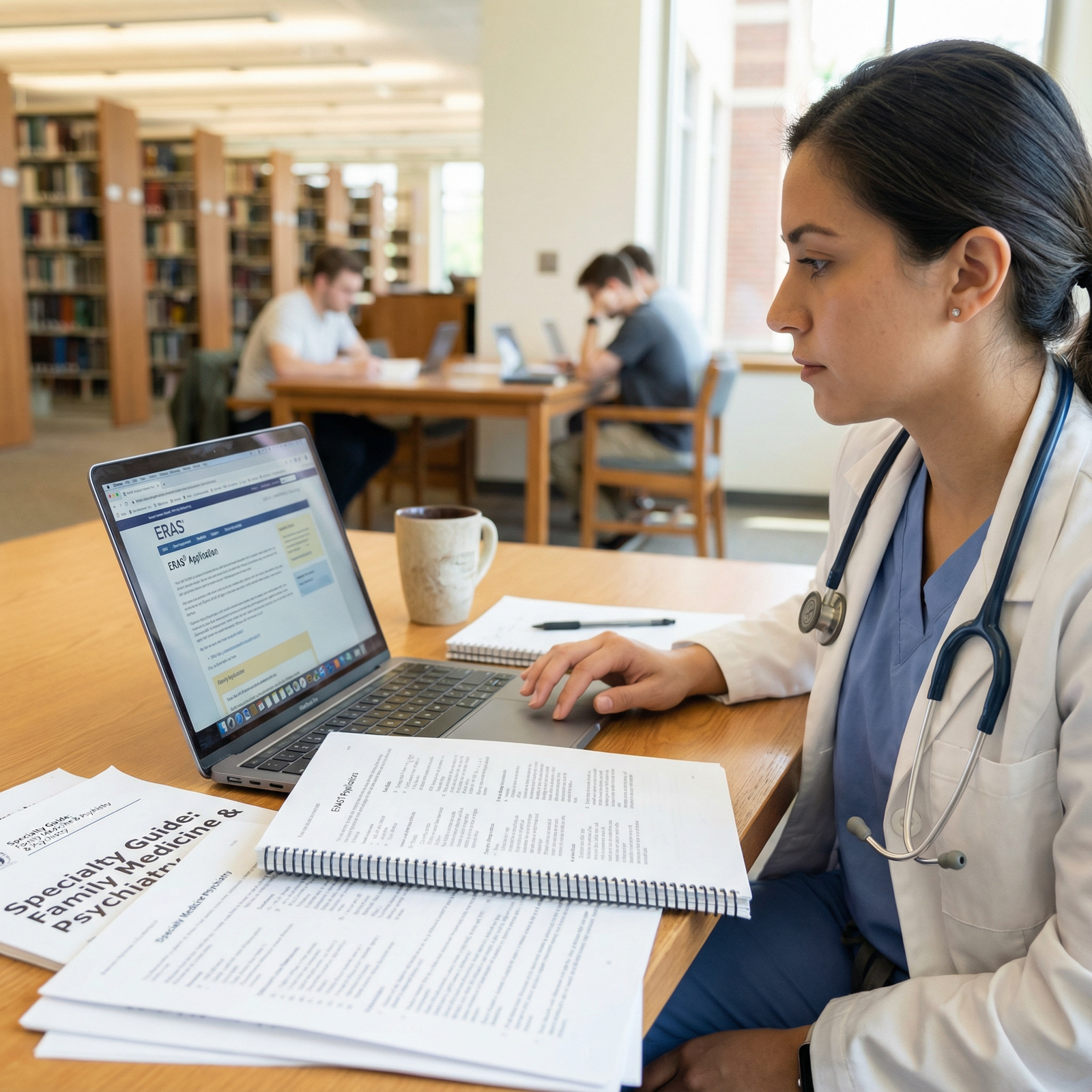
You have to look beyond your primary backup into fields that respect the letters of recommendation you've already submitted. If you applied to Internal Medicine as your backup, your letters are likely from internists. You can't suddenly pivot to Psychiatry or Pediatrics without scrambling for new letters, which takes weeks you don't have. But you can look at Transitional Years or Preliminary Medicine spots. They use the exact same letters.
You also need to prepare mentally and logistically for the SOAP. I know, the SOAP sounds like a death sentence. It feels like a total failure. It isn't. It is simply a mechanism to place unmatched applicants into unfilled spots. If you are heading toward SOAP, start organizing your documents now. Know your geographic limits. Know what you are willing to accept.
If you need to cast a wider net, you might have to adjust your personal statement rapidly. You don't need to write a masterpiece at 4 AM. You just need to clearly articulate why you are a safe, reliable, and hardworking candidate for a less traditional specialty or a preliminary year. Keep it professional, keep it humble, and get it uploaded.
Surviving Match Season: Managing Anxiety When Everything Feels Out of Control
The waiting game is a psychological torture chamber. Catastrophic thinking isn't just a symptom; it's the default state of being an applicant. You will convince yourself that a single rejection email means you are fundamentally unlovable and unemployable. You have to actively fight this.

Limit your exposure to toxic peer comparison. Delete the Reddit app. Log out of the Discord servers. Those forums are echo chambers of misery where people only post their rejections and interview invites, completely skewing your perception of reality. The person bragging about 15 invites in your "fully booked" safety specialty is a statistical outlier, not the norm.
Ground yourself in reality. Every single year, thousands of medical students think they are going to unmatched, and every single year, the vast majority find a way forward. You have survived organic chemistry, you have survived 80-hour shelf weeks, and you have survived the USMLE. You are resilient. The ERAS portal is just a website. It does not define your worth as a future physician. Take a breath. Close the laptop. Go to sleep. You will figure this out, just like everyone before you did.
Key Takeaways
- Seeing a specialty look "fully booked" on ERAS or forums often triggers a panic response, but program capacity and interview invitation dynamics are highly fluid and constantly shifting through the fall.
- Never make drastic, impulsive application changes at 3 AM; always verify whether the issue is a genuine capacity block, a technical glitch, or just a misinterpretation of program signals.
- Always maintain a tiered backup strategy that includes adjacent specialties (like prelim or transitional years) and begin early mental preparation for the SOAP process if your primary and secondary nets fail.