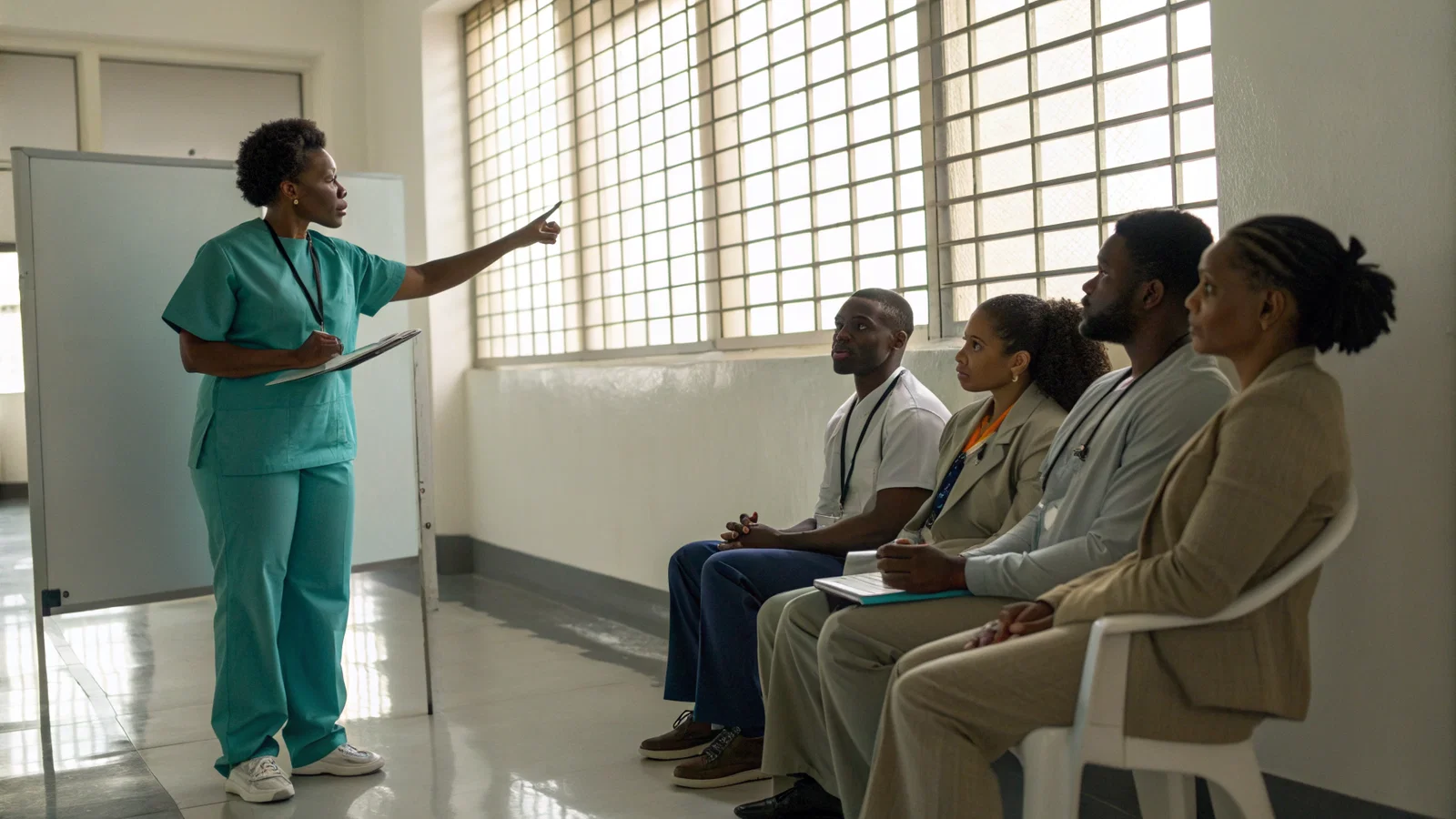
You got the volunteer spot in the prison clinic. Congratulations. Now take a breath, because this isn't your standard suburban hospital shadowing gig. You're stepping into a high-stakes, highly regulated environment where the social determinants of health aren't just textbook concepts, they're staring you in the face.
If you think you're just going to show up, take some blood pressures, and leave, you're in for a rude awakening. The stakes are different, the patients are different, and the environment will test your biases, your empathy, and your situational awareness. Here is exactly what you need to do to survive, learn, and leverage this experience.
This article is for educational purposes only. It is not financial advice, not legal advice, and not tax advice. Figures vary by individual circumstances, so consult a qualified professional before acting.
Your First Week: Orientation, Safety, and Setting Expectations
Don't just walk in expecting to take vitals on day one. Your first week is about survival, compliance, and understanding the rules of engagement. Security training isn't a suggestion. It's the law. You'll go through escape drills, contraband briefings, and emergency code reviews.
Listen to me closely on contraband. If you bring a cell phone into the general population area "just to check the time," you're done. If you bring a pen with a metal clip that could be fashioned into a weapon, it gets confiscated and you get written up. Follow the rules to the letter.
HIPAA in a correctional setting is a whole different beast. You'll attend confidentiality training specific to the facility. You cannot discuss patient cases in the hallways, the cafeteria, or the parking lot. Inmates have sharp ears, and a breach of privacy here can lead to physical retaliation against the patient or compromise facility security.
Once you're cleared, you'll review the facility policies regarding your scope of practice. You are a volunteer, not a licensed provider. Know your limits. Meet your supervising physician and the clinic manager. Understand the reporting structure. You report medically to the attending physician, but operationally, the Correctional Officers (COs) run the facility. Respect both chains of command.
Before you touch a patient, you shadow. Watch how experienced staff interact with the incarcerated population. Pay attention to their body language, their tone, and how they handle aggression or non-compliance. During your debriefs, clarify your boundaries. You will inevitably face dual-loyalty situations, where the prison's security goals clash with the patient's medical needs. Figure out early on how your preceptor handles these conflicts so you aren't caught off guard.
Clinical Encounters: Skills and Ethical Nuances
Now you're in the exam room. The patient is sitting across from you, likely in a jumpsuit, possibly in restraints. They don't trust you. Why should they? You're a volunteer associated with the system that locked them up.
Your first job is to build rapport. Use open body language. Don't cross your arms. Don't stare at their restraints. Maintain eye contact and practice active listening. Treat them with the exact same dignity you'd offer a CEO in a private clinic. You'd be amazed at how quickly a patient's demeanor changes when they realize you actually see them as a human being.

Clinically, you are going to see a lot. Prison clinics are the de facto public health safety net for a profoundly underserved population. You'll manage common chronic conditions that have been neglected for years: uncontrolled hypertension, advanced diabetes, HIV, and Hepatitis C. Mental health disorders are rampant. You need to learn how to recognize the signs of substance withdrawal, alcohol DTs, opioid sickness, benzodiazepine withdrawal, and co-occurring psychiatric crises. Watch the experienced staff triage these patients. It's masterclass-level clinical reasoning.
Then comes the hard part: managing dual loyalty. The CO might want the patient cleared for a work detail. The patient might want a "sick chit" to stay in their bunk. Your loyalty is to the patient's health. Period. You are not an arm of law enforcement. You are a healthcare worker. If a patient discloses a crime to you, know the mandatory reporting laws, but never act as an informant for the guards.
Document your interactions carefully. In a prison clinic, your notes might be subpoenaed, reviewed by legal staff, or read by the prison administration. Be objective, factual, and precise. Avoid subjective judgments about the patient's character or their crime.
Finally, practice cultural humility. You will encounter profound trauma, addiction, and systemic abuse. Check your biases at the door. You aren't there to judge what they did to end up in a cage. You're there to treat the human sitting in front of you.
Maximizing the Experience for Your Application
This experience is absolute gold for your medical school application, but only if you frame it correctly. Don't just write "I took blood pressures and shadowed a doctor" in your Work/Activities section. That's a wasted opportunity.
Emphasize your unique clinical exposure and your deep, firsthand understanding of the social determinants of health. Talk about the pipeline from poverty to incarceration to poor health outcomes. Admissions committees read thousands of applications about shadowing in pristine suburban clinics. Yours will stand out because you stepped into the trenches.
Request a letter of recommendation from your supervising physician early. Preceptors in correctional facilities are often overworked and rotate out frequently. Don't wait until your last day. Ask them while your contributions are fresh in their mind, and prompt them with specific examples of your work, like a time you successfully de-escalated a tense patient or caught a subtle clinical sign during an intake.
When it comes to your personal statement, reflect on the ethical challenges you faced. How did managing dual loyalty shape your view of medical ethics? How did treating an incarcerated patient change your understanding of health equity? This is the exact kind of mature, nuanced reflection that makes an admissions committee stop and pay attention.
Keep a private, de-identified journal. Document the patient interactions, the procedures you observed, and any quality improvement projects you helped with. When interview season hits, they will ask you about this role. Prepare to answer questions about safety, empathy, and why you chose this specific setting. Connect this experience to your broader narrative of serving underserved populations. Show them you aren't just checking a box; you're committed to the patients everyone else forgets.
Key Takeaways
- Your first week is critical: Complete all safety and confidentiality training before any clinical shadowing. If you feel unprepared or unsure about a security protocol, speak up immediately. Ignorance is not an excuse in a correctional facility.
- Prioritize empathy over judgment: In patient interactions, your role is not to judge but to treat. The prison clinic is a microcosm of health disparities. Use non-judgmental communication and recognize the profound trauma many of these patients carry.
- Frame it right for your application: This experience is a massive asset when articulated properly. Highlight the unique clinical exposure, your ethical growth, and your commitment to underserved care. Lock down that letter of recommendation from your supervisor while the experience is fresh.
Next Steps
- Read the handbook: Before your first day, read every page of the volunteer manual they sent you. Highlight the contraband rules.
- Buy cheap, compliant scrubs: Don't wear your expensive, branded university scrubs. Buy plain, cheap ones that meet the facility's dress code. You might get ink or betadine on them.
- Check your biases: Spend an hour this week reading about the intersection of the justice system and public health. Go in with your eyes open.