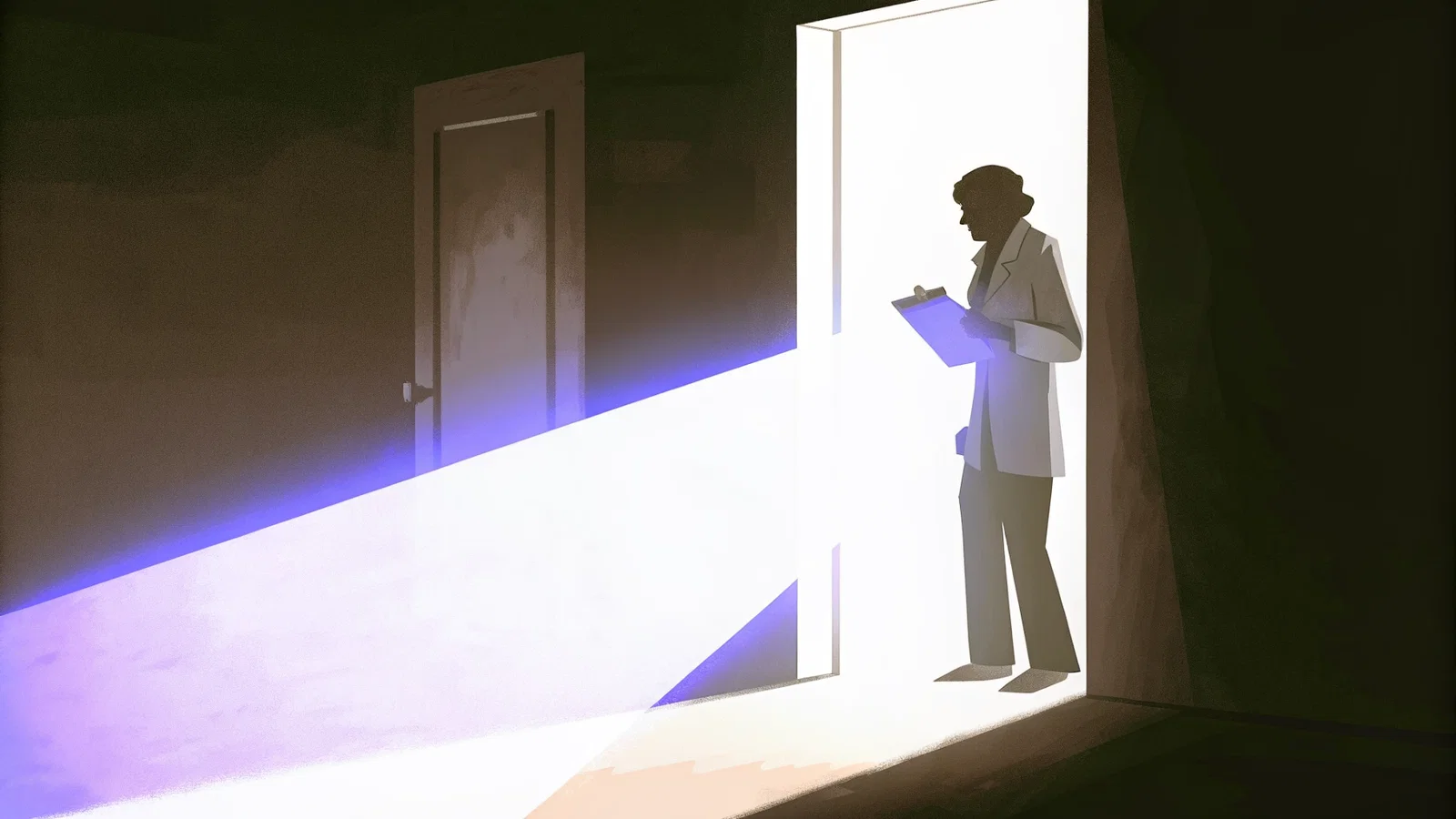
During a residency program's information session, the program director described night float with the confidence of someone selling a luxury car.
"Our night float is the best," she said. "Low census, excellent attending backup, and you'll never work more than 12 hours."
I remember doing the math in my notebook. Twelve-hour shifts. Dedicated coverage. A manageable patient list. I even pictured myself sleeping peacefully afterward instead of staring at the ceiling, replaying every decision I'd made while half-awake.
It sounded so reassuring. But I should have known better.
Later, I heard a more complicated version from residents who weren't on the interview committee. The census was "low" only when no one was counting ICU transfers or sick admissions after 10 p.m. Attending backup meant leaving a message and hoping for a callback. The scheduled 12-hour shift frequently became 14, especially when a sick patient deteriorated or paperwork spilled into the morning.
Nothing about night float had to be unusually dangerous for it to become exhausting. The problem was the gap between the brochure and the lived experience.
That gap is where applicants get hurt.
A polished promise is not a supervision plan. A six-patient cap is not a workload description. "Call anytime" is not the same as having help arrive. And "everyone loves the rotation" may tell you less than you think.
For a deeper look at how these systems break down, see Red Flags in How Programs Handle Sick Call, Coverage, and Backup Systems.
Here are the night float red flags that look reassuring on paper but deserve serious scrutiny.
Red Flag #1: "We Have a Dedicated Night Float", But No Real Supervisory Structure
On paper, a dedicated night float team sounds excellent. It suggests fewer 24-hour shifts, more predictable scheduling, better handoffs, and a group of residents whose entire job is to manage overnight problems while the daytime teams sleep.
That can be true. But the word dedicated tells you almost nothing about the supervision structure.
The real questions are:
- Is an attending physically in the hospital during the night float shift?
- Is there a senior resident on nights?
- Is that senior resident responsible for the same patients, or merely floating between several teams?
- Who takes the first call when a patient becomes unstable?
- Who provides direct bedside help when a phone call is no longer enough?
- Can the attending come in, or are they anchored at home with other obligations?
A team of residents working alone is not a supervisory structure. It's a smaller overnight call system.
I've seen this distinction get blurred in interviews. A program says residents have "excellent attending backup," and the applicant hears constant supervision. Current residents may mean something very different: the attending is available by phone, usually responds eventually, and expects the night team to stabilize the patient unless there is an immediate threat to life.
Ask current residents:
"Who is the first person you call when a patient crumps?"
The answer matters more than the program brochure. If they say, "The attending," follow up:
"Do they come in, or do you usually manage it by phone?"
A good answer might sound like: "The attending comes in for a true emergency, the senior resident is always here, and the ICU or rapid response team backs us up." A concerning answer sounds like: "You call, you leave a message, and if nobody calls back within 20 minutes, you call again."
That isn't a failure of collegiality. It's a structural safety issue.
The chart below illustrates the kind of gap that can exist between scheduled and actual time. The numbers are illustrative, not national survey results, but the pattern is familiar: handoffs, crises, and delayed discharge paperwork consume time that never appeared on the official schedule.
Also remember that ACGME duty-hour limits are safeguards, not a measure of workload. A shift can satisfy the hour limit and still be inhumane if every patient is complex, the team is understaffed, and there is no reliable backup.
Red Flag #2: "Our Night Float Cap Is Only Six Patients", When the Acuity Is Sky-High
A six-patient cap sounds humane. Six patients cannot possibly be overwhelming, right?
If you're wondering how night float compares to traditional call, see Night Float vs 24-Hour Call: Regional Patterns and Resident Impact.
Wrong.
Workload is not determined by census alone. One patient with rapidly worsening sepsis, one with a complicated acute respiratory failure, and one waiting for a difficult ICU transfer can consume more attention than a full list of stable admissions.
The number "6" may also mean different things to different people:
- Six patients for each resident?
- Six patients for the entire team?
- Six beds at the start of the shift, with additional admissions permitted afterward?
- Six floor patients, excluding ICU transfers, observation patients, and sick patients waiting for beds upstairs?
That last version is especially concerning. A cap can look excellent while the real overnight load comes through the side door.
Ask what happens when the cap is reached. Are additional patients refused, redistributed, or handed to the on-call team? Ask how often night float receives ICU transfers, step-down patients, or deteriorating floor patients. Ask how many "potential admissions" become admissions after 10 p.m.
"Sickest patients are stabilized" is another phrase that deserves a second look. Stabilized is not the same as low risk. Some patients can deteriorate quickly, and night float may be the default destination because the hospital needs someone to own them overnight.
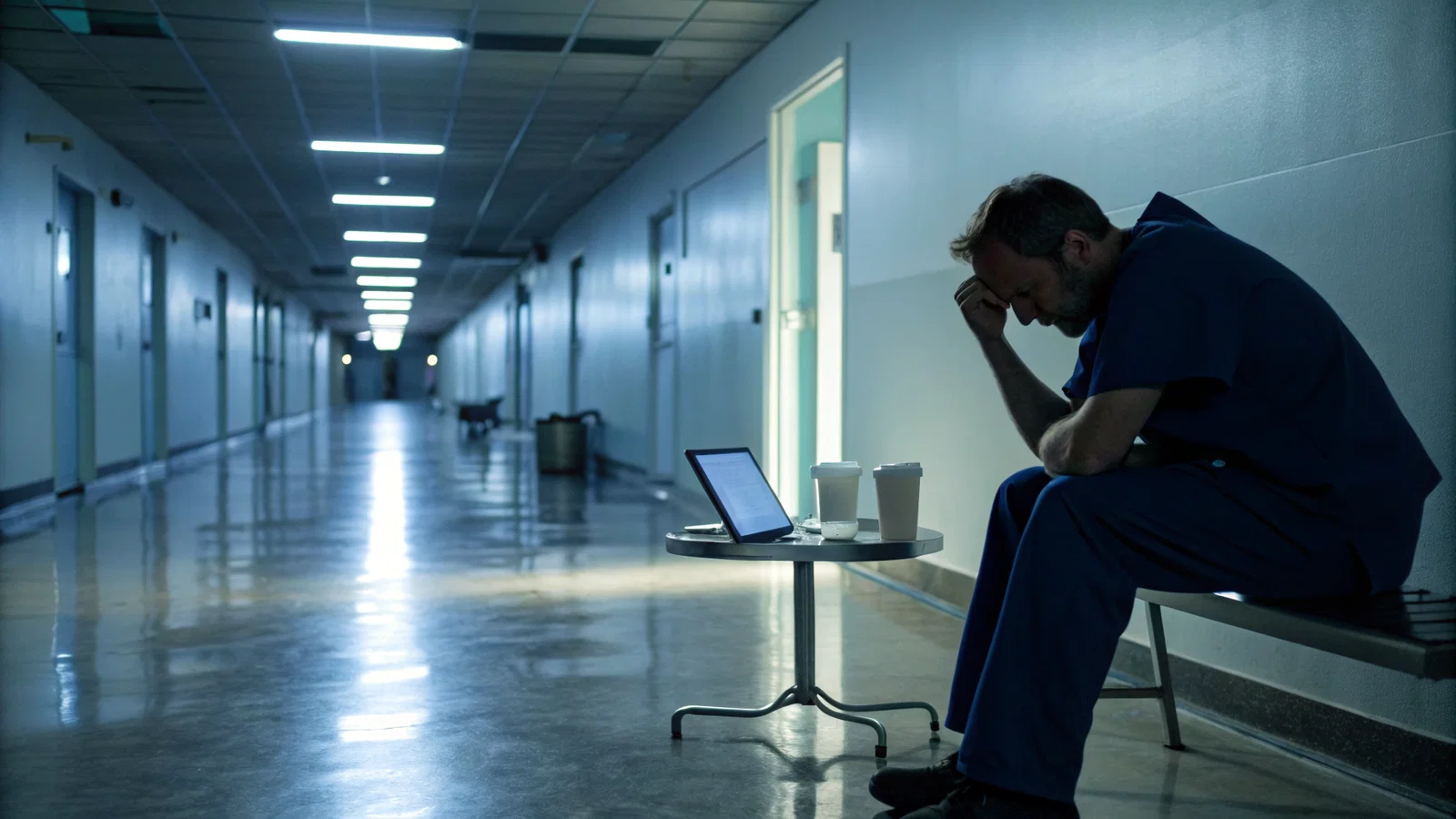
Questions worth asking include:
- "What are the most common night float admissions?"
- "How many ICU transfers should we expect on a typical night?"
- "Can a sixth patient be added after 1 a.m.?"
- "What happens when the night team has multiple simultaneous crises?"
- "How often do residents stay after handoff to finish overnight work?"
A strong program will give you a realistic picture. It may even say, "Six is the cap, but we sometimes carry eight because of admissions." That candor is reassuring. A vague insistence that the workload is always light is not.
Red Flag #3: "Attendings Are Available 24/7 by Phone", When Availability Isn't Accessibility
"You'll never be alone. The attending is just a phone call away."
This is one of the most common reassurances in residency recruiting, and one of the most misleading.
A phone number is not supervision. It is a request for help.
Imagine 2:13 a.m. A patient you have been following all night is now hypotensive, tachycardic, and confused. You call the covering attending. No answer. You leave a message and call the senior resident, who is managing another crisis. Twenty minutes later, the attending calls back and asks for updated labs. You relay the results. The attending gives a phone order and says to continue monitoring.
Maybe that works. Maybe the patient stabilizes.
But now imagine the patient continues to deteriorate and needs a bedside reassessment, a procedure, or an immediate transfer to a higher level of care. Your backup remains ten miles away at home.
This is the worst-case scenario I worry about: not that the attending is a bad physician, but that the system depends on a delayed callback while a resident manages a worsening patient with too little support.
Ask night float residents:
- "How often do you call an attending?"
- "How quickly do they respond?"
- "Have you asked an attending to come in? What happened?"
- "When the night team has two simultaneous crises, how is the backup divided?"
- "Who covers codes and rapid responses?"
The strongest programs have explicit escalation pathways. They know who is physically available, who provides the next level of support, and how residents should obtain bedside help when phone advice is insufficient.
If every answer is theoretical, ask for a real example: "Tell me about the last time a night float resident needed the attending to come in." Specific stories reveal the actual chain of command. Vague praise does not.
Red Flag #4: "Post-Night Float Days Off Are Sacred", Until They Aren't
"The day after nights is completely protected."
I want that to be true. After a string of overnight shifts, sleep is not a luxury; it is part of staying safe and functional.
But sometimes the protected day includes:
- A mandatory morning lecture
- Clinic catch-up
- Morning sign-out that began the previous afternoon
- A "voluntary" research meeting that becomes difficult to skip without looking disengaged
- Department conference with attendance recorded
- Administrative duties completed during "protected" time
The day may exist on the schedule while disappearing in practice.
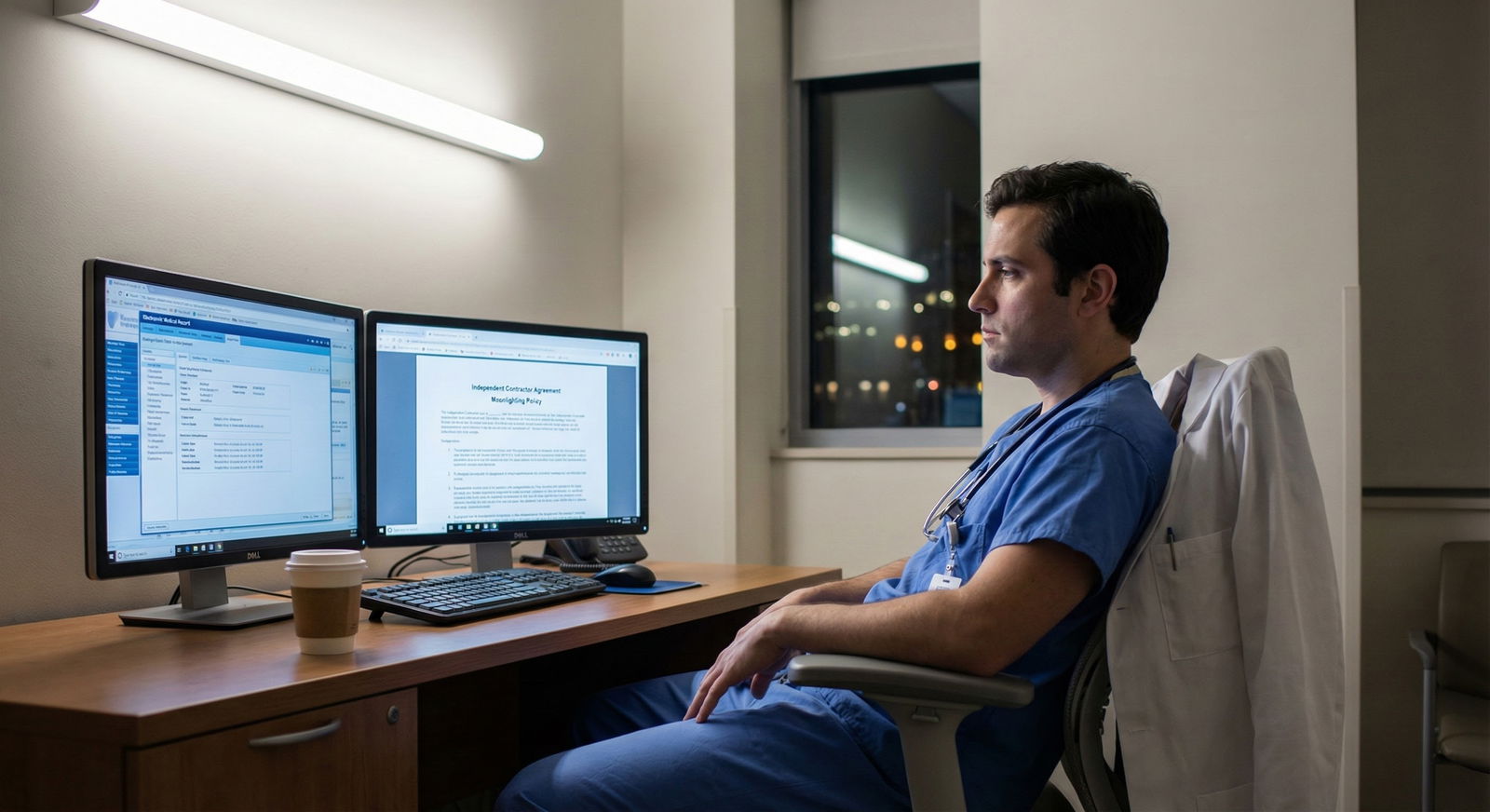
Ask:
- "What is the culture around post-night days?"
- "Do people actually leave immediately after sign-out?"
- "Which activities are mandatory?"
- "Are there make-up clinics or conferences after night float?"
- "What happens if I miss a lecture because I slept?"
- "How is the schedule handled during holidays, illness, or family emergencies?"
Be especially cautious with the phrase "flexible." Flexibility sounds resident-friendly, but it can also mean the program moves obligations whenever convenient.
You are not being unreasonable by wanting a day without required educational programming after overnight work. Fatigue impairs attention, communication, and clinical judgment. A rest day is not a perk; it is part of safe coverage.
Red Flag #5: "Residents Love Our Night Float", The Survivorship Bias Trap
Programs love to highlight supportive residents. Nothing sells a schedule like a current PGY-2 saying, "Night float was my favorite rotation."
Sometimes that's completely genuine. But consider who is still available to give that answer.
Residents who transferred, left the specialty, took medical leave, or burned out and recovered are not standing beside the program director during recruiting. The enthusiastic voices you hear may represent only the people who adapted successfully, or the people who have learned how to look fine while answering interview questions.
Survivorship bias turns suffering into a personality trait. The tough resident managed. The resilient resident barely noticed. The "not easily bothered" resident is still working.
More useful questions include:
- "What was your worst night float experience?"
- "When did you most wish the attending were physically present?"
- "Has anyone ever felt unsafe or unsupported?"
- "What changed after people complained?"
- "How often do residents leave before completing night float?"
- "What would you fix about this rotation?"
Ask residents who have been there at least two years, but also speak with recent graduates and, when possible, former residents. People who no longer fear program repercussions may be more candid.
If every resident gives a perfectly polished answer, don't assume the program is hiding a disaster. Interview settings create social pressure. But if nobody can name even one irritation, ask yourself whether you're hearing a healthy rotation, or a rehearsed recruiting line.
These hypothetical figures illustrate a common survey gap: satisfaction with a rotation and exhaustion caused by that rotation can coexist. A resident may value the learning and still describe the schedule as brutal.
Your Night Float Due-Diligence Checklist
Before ranking a program, get answers in plain numbers rather than adjectives:
- Schedule: When does the shift officially start and end? How often do residents stay late? Are protected post-night days actually protected?
- Supervision: Is an attending in-house? Is there a senior resident? Who backs up the first and second calls?
- Workload: What does the patient cap include? How many ICU transfers and new admissions arrive after midnight?
- Coverage: How are simultaneous crises divided? Are attendings expected to come in when bedside help is needed?
- Culture: What was the worst recent night? What happens after residents report unsafe conditions?
- Turnover: Have multiple residents transferred or changed tracks after night float? Is there a consistent pattern?
Then compare every polished statement with at least two or three current residents, ideally including someone not on the interview committee. One person's bad night may be an isolated event. A shared pattern is structural.
Reassurance Should Come From Systems, Not Sales Pitches
Night float is hard everywhere. You should not expect a rotation where nothing ever goes wrong. The difference between a difficult rotation and an unsafe one is the presence of reliable supervision, realistic workload, protected recovery, and a culture in which residents can raise concerns without punishment.
Your anxiety is not a flaw. It is doing its job. You are noticing that a reassuring phrase has not yet been translated into a concrete plan.
The goal is not to find the program with zero hard nights. It is to find one where "we have your back" means a named attending, a reachable senior resident, reasonable workload, protected time after shifts, and residents who feel comfortable telling you where the system breaks.
Ask for examples. Ask for numbers. Ask current residents what happens when the night goes sideways.
And if the answers remain vague, let that discomfort count. You are not applying for a promise of easy nights. You are applying for a system that works when the night becomes hard.