Disclaimer: This article is for educational purposes only and not financial, legal, or tax advice. Compensation structures, budgets, and benefits figures vary by institution. Consult a qualified professional regarding specific contractual or financial questions.

The Night the Lights Went Out: A Warning from the Trenches
I got the text at 2:14 AM. "ICU short two nurses. You'll cover tonight. Good luck."
This wasn't a COVID surge. It wasn't a snowstorm. It was a Tuesday in July, and the hospital had simply stopped paying the agency nurses. The unit secretary was gone too, so I was fielding family calls between titrating pressors. At one point, I was running an ABG myself, something I hadn't done since medical school, because respiratory therapy had been "redistributed." The attending? Holed up in an emergency budget meeting, eyes glazed over spreadsheets instead of my crashing patient.
That night, I learned the truth nobody tells you on the interview trail: a hospital's financial health is your clinical safety net.
Hospitals rarely announce insolvency. They don't send out a memo saying "We're running out of cash." Instead, they quietly bleed. A nursing shift here. A closed MRI slot there. A "strategic restructuring" that leaves you, the resident, holding the bag. You don't see the balance sheet, but you feel it in your bones at 3 AM when you realize you're the only person in the ICU who knows how to silence a vent alarm.
Why does this matter to you? Because your training quality is the first casualty. Not the administrator's bonus. Not the CEO's golden parachute. Your education. Your procedures. Your supervision. When the money runs dry, the learning stops. You become cheap labor, not a doctor-in-training. And if you don't spot the red flags before Match Day, you'll be the one drowning.
The 'Paper Tiger' Budget: How Hospitals Hide Insolvency
Program directors know the smell of a dying budget. I've sat in faculty meetings where the CFO uses words like "revenue cycle optimization" and "productivity enhancement." What they mean is: we're broke, and we're cutting everything that doesn't generate immediate billing codes. Residency programs? They're a line item in red ink.
The classic move is the "Ghost Staffing" phenomenon. Officially, the hospital has an open position for a nurse practitioner or a clinical pharmacist. Unofficially, that position will never be filled. The hiring freeze is permanent, but they won't say that. Instead, the work migrates to you. You're placing IVs. You're mixing antibiotics. You're doing the jobs of three people for $60,000 a year while the hospital saves $180,000 in salary. Congratulations, you're not a resident anymore. You're a substitute workforce.
Here's the brutal reality: in a financial pinch, residents shift from "investment" to "cost center." Academic medical centers are strange beasts. The training mission often subsidizes huge community health losses, uninsured patients, underfunded trauma bays, money-losing pediatric units. When the system is flush, they can afford the luxury of teaching rounds, protected didactics, and low patient caps. When the subsidy stops, the chaos begins. Teaching becomes a distraction from throughput. You're not there to learn. You're there to move the meat.
I've watched this cycle destroy programs in eighteen months flat. It starts with a bad fiscal quarter. Then a "consultant" arrives from Deloitte. Within a year, the faculty are fleeing, the call rooms are filthy, and the residents are unionizing, or trying to. The program director? They're spending their days begging the C-suite for basics like suture kits while the suits decide whether to sell the whole hospital to a private equity firm.
The Domino Effect: How Financial Stress Kills Training
Let's get specific about what dies first.
The 'Cover' Culture. Suddenly, you're "assisting" with tasks that are firmly outside your scope. Transporting patients to CT. Drawing stat labs because phlebotomy was cut. Acting as a scribe in clinic because the EMR training budget vanished. I've seen a second-year surgical resident spend an entire rotation functioning as a wound care nurse because the hospital couldn't afford to hire one. That's not training. That's exploitation dressed up as "resilience."
The 'Consult' Black Hole. I remember an internal medicine service where radiology turnaround time went from two hours to eighteen. No warning. Just a steady, suffocating decline. Turns out, the radiology group had quit over a contract dispute, and the hospital was relying on a skeleton crew of locums. CT scans sat unread. MRIs got rescheduled. And the residents? We were making clinical decisions in the dark, praying we weren't missing an ischemic gut. When you can't get a timely read, it's not because the radiologist is lazy. It's because the hospital calculated that your liability is cheaper than their salary.
The 'Moonlighting' Vanishing Act. This is a canary in a coal mine. When a hospital starts hurting for cash, the first thing they kill is internal moonlighting for residents. The shifts go to cheaper NPs or just get left uncovered. I've seen a psychiatry program where residents suddenly lost $2,000 a month in overnight call pay because the hospital "reorganized coverage." That cash wasn't luxury income, it was how they paid rent in an expensive city. The program didn't care.
The 'Supervision' Gap. This is the deadliest one. Attendings get pulled into endless meetings about RVU targets, billing compliance, and "clinical transformation." They're told to spend less time teaching and more time generating charges. So you're left alone with a septic patient at 2 AM, your attending unreachable because they're in a mandatory webinar on coding modifiers. I've been there. You improvise. You guess. And sometimes, you guess wrong. When a program loses its attendings to administrative purgatory, you're not learning medicine anymore. You're just surviving it.

The Insider Checklist: Spotting the Red Flags Before You Match
You can't ask for the hospital's audited financials during an interview. But you can read the signs. Here's what I look for.
The 'Ancillary' Test. On interview day, listen for how quickly they mention turnaround times. If they brag about "same-day reads" and "24/7 phlebotomy," that's a functioning institution. If they're vague, or if you see residents personally wheeling patients to radiology, that's a blood-red flag. I once toured a program where the resident casually mentioned that weekend labs took four hours because "the tube system doesn't get picked up regularly." That's not a tube system problem. That's a staffing starvation problem.
The 'Faculty' Exodus. Ask a simple question: "How many core faculty have left in the last two years?" Watch their face. A good program will give you a straight number, maybe one retirement, one moved for family. A dying program will fumble. They'll talk about "exciting new hires" who haven't started yet. They'll spin departures as "pursuing other opportunities." What it means: the senior physicians saw the books and bailed. If the old guard is gone, the place is insolvent. Period.
The 'Call' Schedule Reality. Don't ask how many hours you'll work. Ask this instead: "Who else is in the hospital with me overnight on a general medicine floor?" If the answer is "just you and the attending on home call," run. That means there's no rapid response nurse. No on-site pharmacist. No critical care outreach. You're the entire safety net. The hospital is saving $500,000 a year in nocturnist salary by substituting a PGY-1. I've lived that shift. You don't want it.
The 'Quiet' Budget Cuts. Look at the perks. Textbooks, are they still provided, or is it "access to online resources only"? Conference stipends, do you get $1,500 a year to present your research, or has it been "under review" for three cycles? Meal cards, did they quietly drop from $20 a day to $8? I've seen programs cut the ACGME-required journal club to a bi-monthly email thread because they couldn't afford pizza. If they're nickel-and-diming the pizza, they're nickel-and-diming your attendings too.
A healthy program maintains its resources year over year. A failing one shows a steady, quiet decline. The chart above? That's not theoretical. I've mapped that exact slope onto a program that later lost accreditation. The warning signs were visible three years before Match Day. Nobody looked.
Why You Should Walk Away (Even if You're Desperate)
I know the panic. Scramble week. An open spot. A program that's "under new leadership" and "turning things around." You think: Maybe I can be the one who helps. Maybe I can tough it out. It's just three years.
That's the martyr trap. And it's a lie.
You cannot fix a broken system from the position of a resident. You have zero power. None. The same administrators who slashed the nursing budget will not listen to your impassioned plea for patient safety. They'll nod, thank you for your "valuable feedback," and then ask you to cover another unfilled shift. I've watched idealistic interns become bitter, checked-out seniors in exactly that environment. They entered wanting to change medicine. They left just wanting to survive their contract.
The fellowship reality is even harsher. A residency on financial life support generates weak letters of recommendation. Attendings who are overworked and underpaid write lukewarm, generic endorsements. Your research output suffers because there's no protected time, no mentorship, no travel money to present. Fellowship directors know which programs are failing. They see the name on your application and mentally downgrade you. I've heard it bluntly at fellowship selection meetings: "This candidate's clinical training is suspect. Their program has real issues." You don't get a chance to explain. You just don't match.
Burnout is not a personal weakness here. It's a structural inevitability. When you're doing scut work instead of learning, when you're chronically unsafe, when your attendings are ghosts, you corrode. I've seen residents develop somatic symptoms, migraines, insomnia, panic attacks, directly from the moral injury of working in a system that doesn't care about patients or learners. The program will offer you a wellness module and some lavender-scented eye pillows. It won't fix the fact that you're the only physician within shouting distance of a decompensating floor patient.
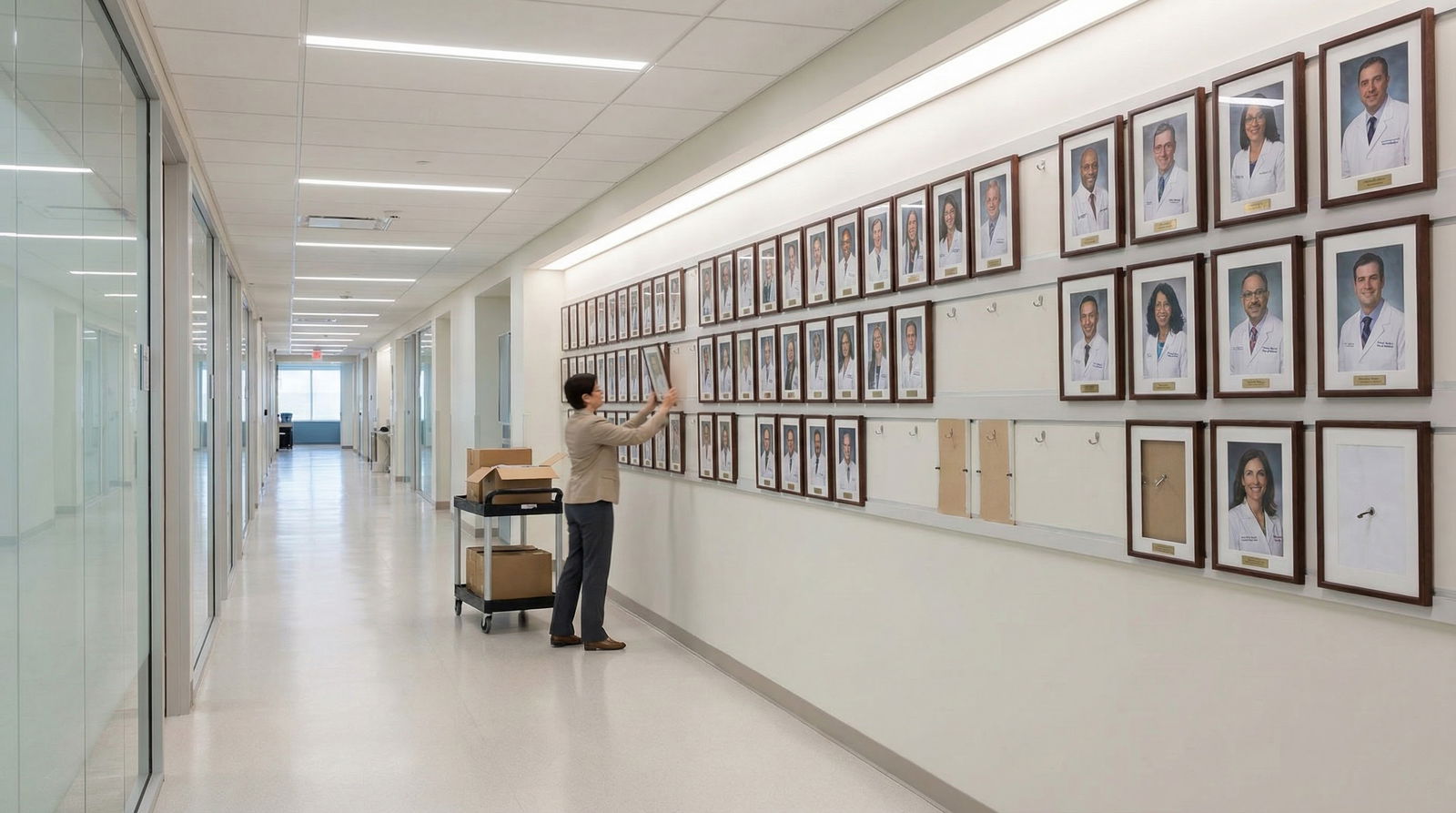
Here's my insider advice, unfiltered: if the lights are flickering, the ship is already underwater. Don't jump in to bail it out. The culture of a dying program is toxic. It pits residents against each other for scarce resources. It normalizes dangerous shortcuts. It creates a learned helplessness that takes years to unlearn. You deserve to train somewhere that sees you as a future colleague, not a cost-saving device.
Conclusion: Trust Your Instincts
Financial health isn't just a spreadsheet issue. It's a patient safety issue. It's an educational quality issue. It's a proxy for everything that matters in residency. When a hospital is solvent, it protects its training mission. When it's insolvent, it cannibalizes it.
Trust what you feel on interview day. If the residents look exhausted and evasive. If the ancillary services seem sluggish. If the faculty seem distracted and defensive. Those aren't cultural quirks. They're symptoms of a system in financial freefall.
The best programs protect their residents fiercely. They do it because they know their reputation, their ability to attract top candidates, to secure NIH funding, to maintain high patient satisfaction scores, depends entirely on the quality of the doctors they produce. A solvent program is a proud program. A proud program protects its own.
If the budget feels tight, the training is tight. If the place smells like desperation, it is desperate. You've worked too hard, taken on too much debt, and sacrificed too much to accept a substandard education. Don't rationalize red flags. Don't be a martyr. Don't hope for a turnaround.
Spot the signs early. Trust your gut. And if it's wrong, walk away.