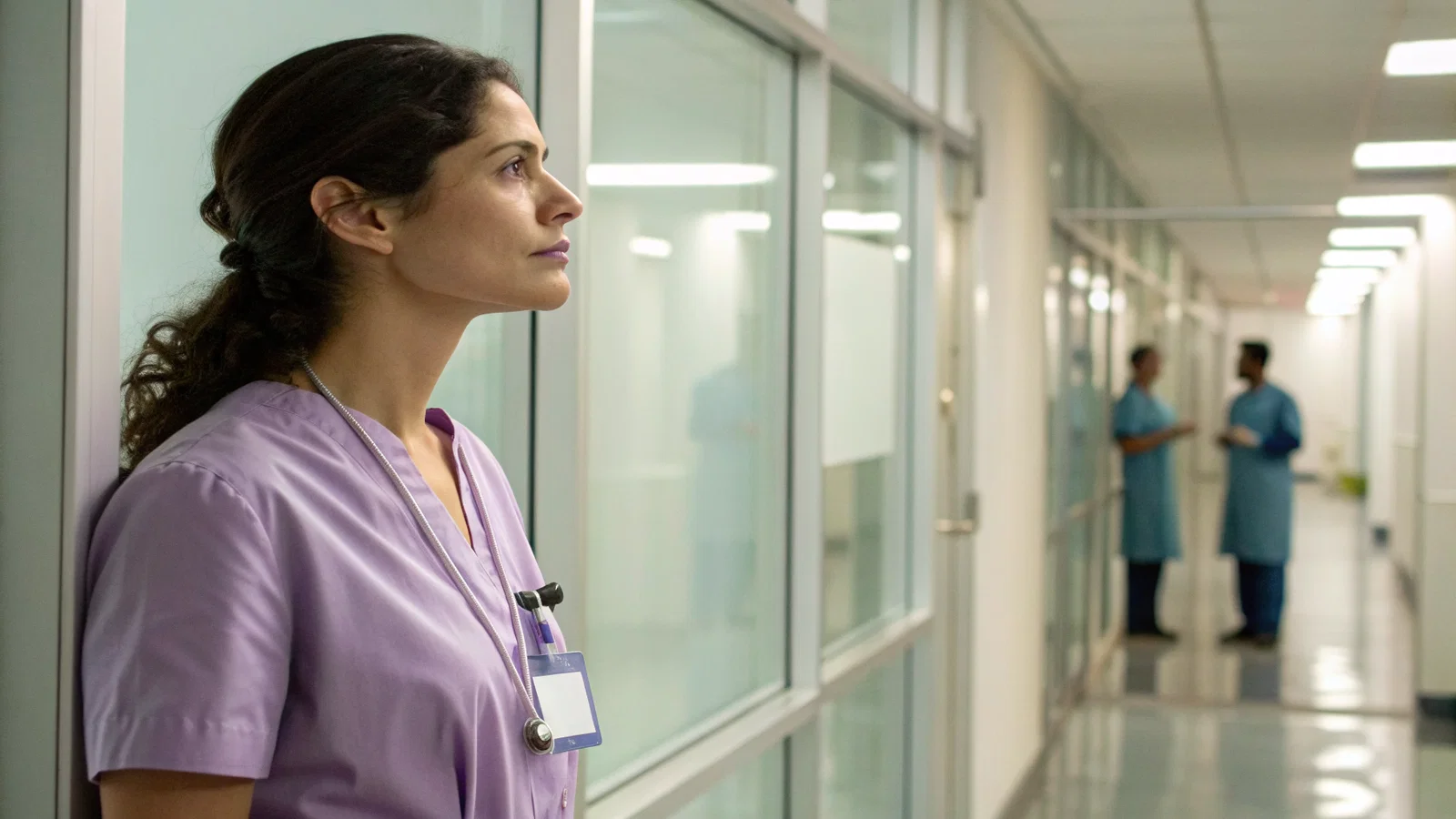
If you're on an F1 visa trying to build a competitive medical school application, here's the brutal truth: your shadowing experience will never look like your US-citizen peers' experience. That's not a bug, it's a feature, if you play it right. Most international applicants waste precious months worrying about accumulating the wrong kind of hours, then panic when an admissions committee flags something questionable in their application. Don't be that person.
The constraint is hard. Federal immigration regulations prohibit you from touching patients, treating them, or independently interacting with them in any way that could be construed as clinical care. Period. But here's what most premeds miss: admissions committees don't expect you to have the same clinical immersion as a citizen applicant. They expect you to have demonstrated judgment, boundary awareness, and an understanding of how healthcare actually functions at a systems level. That's a completely different, and arguably more sophisticated, standard.
The danger zone lives in the middle. Pure admin work (charting reviews, workflow audits, case conferences) is safe but feels hollow. Direct patient interaction is illegal for you. The risky territory is "passive" exposure where a well-meaning physician waves you into a room and suddenly you're standing three feet from a patient who asks you a question. That gray zone is where applications get flagged, and where visa status gets questioned.
My position: it is better to have 80 hours of squeaky-clean, system-level shadowing than 200 hours of gray-area exposure that could jeopardize your status. Here's how to get there.
The Red Line: Defining 'Interaction' Under Immigration Law
Let's get precise about what counts as interaction, because vague definitions will cost you your application, maybe more.
High-risk activities that you should treat as flat-out prohibited:
- Answering a patient question, even casually. "The doctor is running late, but it'll probably be okay" is a statement that assumes a clinical role.
- Taking any part of a patient history, even passively if the physician prompts the patient to talk while you scribble.
- Assisting with physical exams. Holding a chart while someone else does an abdominal palpation still counts as participation.
- Explaining test results, medications, side effects, or prognosis. Anywhere, to anyone, even if the patient looks anxious and you want to help.
- Translating for a physician in a clinical encounter. This is one I see constantly, and it's an instant disqualifier. Translation during patient care is clinical work.
Low-risk, fully compliant activities:
- Sitting in on multidisciplinary team meetings (case conferences, tumor boards, M&M conferences).
- Reviewing de-identified charts and case studies with the physician afterward.
- Following physicians through their documentation workflow. Watching how they write notes, place orders, and communicate with the care team.
- Observing procedures from the foot of the bed or behind a glass barrier, provided you do not touch the patient or sterile field.
- Shadowing intake processes where you watch the administrative side: how patients check in, how insurance gets verified, how prior authorizations move.
The physician you're shadowing is not your legal counsel. They cannot keep you compliant. When they say "it's fine, just stand in the corner", they mean it kindly, but they are not signing your visa paperwork. If something goes wrong, the responsibility falls entirely on you. I've watched applicants get blindsided by this after a physician's casual "just shadow normally" invitation turned into an audit.
Here's the part that surprises people: admissions committees can and do penalize shadowing that looks non-compliant. If your application describes clinical interactions that an F1 holder shouldn't legally have, it raises a flag, not about your clinical readiness, but about your ethical reasoning and rule-following. Schools want physicians who respect boundaries. Proving you understood yours as a student matters.
Scenario A: The Safe Route, Admin & Clinical Exposure Without Contact

The compliant shadowing day is highly structured. Here is how to actually run one.
Morning block, 8:00 AM to 12:00 PM: Ask to attend the clinic's morning huddle or pre-rounds conference. Watch how the care team coordinates. Who's on call? Who's covering which patients? What got handed off overnight? This is where you learn the actual mechanics of medicine, the stuff no medical student learns until third year. Take notes on workflow, not patient specifics.
Midday, 12:00 to 2:00 PM: Sit with the attending during their documentation time. Watch how they chart. How do they phrase findings? How long does it take? What EHR shortcuts do they use? Which parts of the chart trigger payer requirements? You'll learn more about the hidden labor of medicine in two hours of documentation observation than in a week of in-room shadowing, and it's 100% compliant.
Afternoon, 2:00 to 5:00 PM: Attend morbidity and mortality conference, grand rounds, or specialty case review. These are gold. They show how medicine handles its own errors, how evidence gets debated, and how senior physicians think through uncertainty. Frame this in your application as "systemic healthcare observation," not patient care.
When a physician invites you to follow them into a patient room, you have a choice. You can decline politely and remain in the documentation area. You can join the room only if the patient has explicitly consented and you will not speak or touch. You can ask the attending to brief you outside the room after the encounter instead.
Here's the uncomfortable truth: compliant shadowing feels less "medical." You're not wearing scrubs. You're not catching babies. You're not suturing simulated skin. That's fine. Theobald Smith once said the medical student who observes carefully is more useful than the one who jumps in recklessly, and admissions committees know this. A clean 80-hour record at a respected institution beats a contaminated 200-hour record at a generic clinic that no one will ever verify.
Scenario B: The Danger Zone, When 'Helpfulness' Becomes Non-Compliance
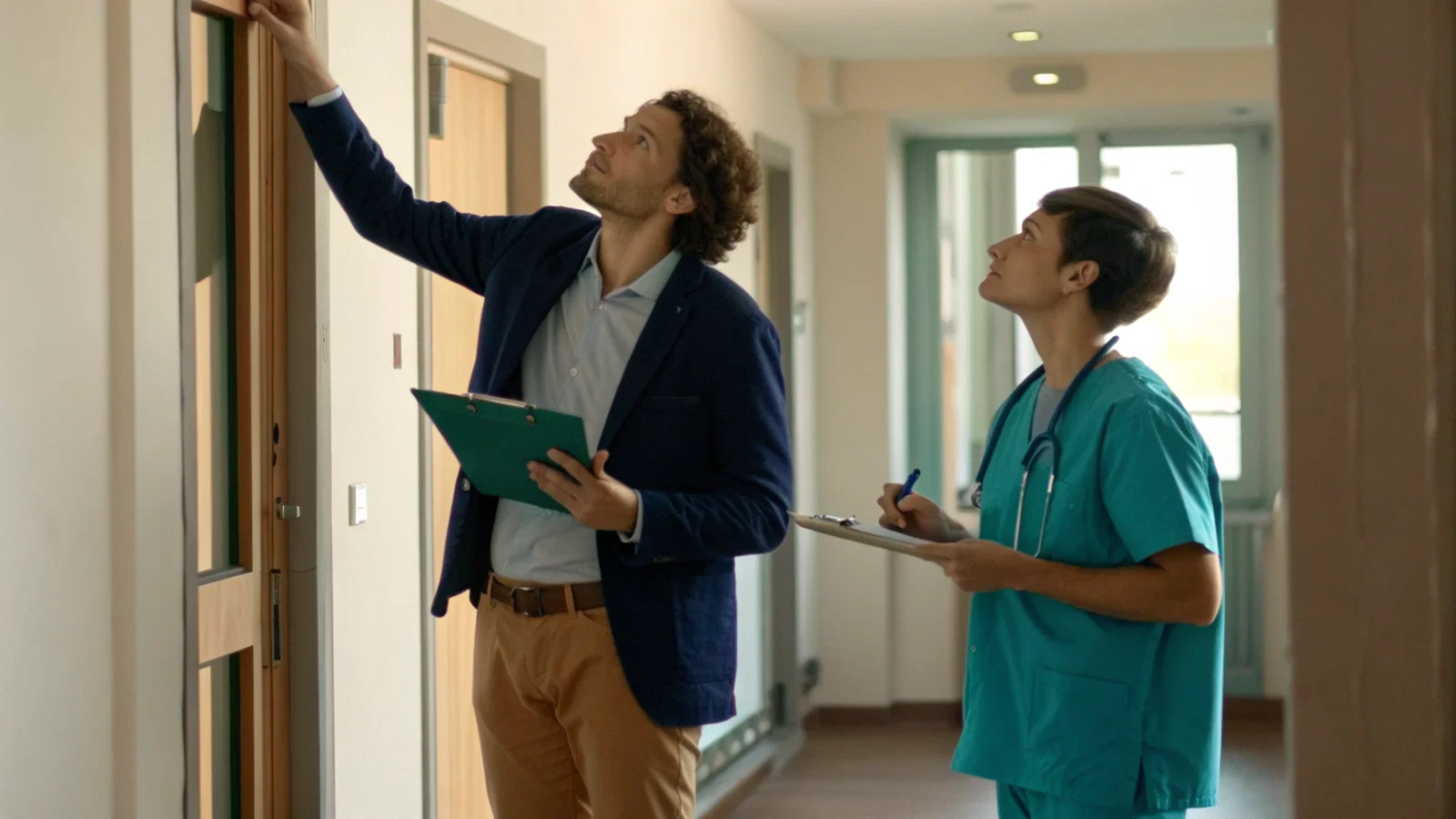
The trap is almost always kindness, not ambition.
Here's the scenario that gets applicants flagged. You're shadowing an internist. A patient is mid-encounter. The physician steps out to grab a lab result. The patient looks at you, worried, and asks: "Is this new medication going to make me nauseous? My sister couldn't take it." Your instinct is to help. You say something like, "Most people do fine, but I think the doctor will discuss side effects with you."
You just violated your visa terms. Worse, you just gave clinical advice based on secondhand knowledge. If that patient files a complaint, escalates the encounter, or, if you get very unlucky, just mentions to the attending that you spoke up, the attending is now in the position of reporting a clinical incident involving an unauthorized participant. The hospital's risk management office gets involved. Your name is in their system. Your application references the same hospital. The chain reaction starts.
I have seen admissions committee members pull shadowing verifications and discover exactly this scenario. The applicant described shadowing "extensively with the attending," the hospital's letter described "an observer present during encounters," and the patient's recorded feedback mentioned "the student explained things to me when the doctor was out." That application got rejected. Not because the student was incompetent, but because the shadowing description didn't match the visa reality.
Here is your script for these moments. Memorize it.
When a patient speaks to you: politely redirect with, "I'm an observer here, I'll let the physician know you have a question." Then exit the room or step aside.
When a physician asks you to do something clinical: "I want to help, but I'm not authorized to participate in patient care on my visa. Can I watch you do it instead?"
When a nurse or staff person asks you to "just hand the patient this paperwork": politely decline and ask the staff member to do it directly.
When you're unsure in real time: leave. There is no penalty for being overly cautious. There is enormous downside for being overly helpful.
The shift happens the moment you speak in a clinical role. Touch is fraud. Speech is participation. Once you cross either line, you have committed a regulatory violation that cannot be retroactively fixed by good intentions.
Admissions Perspective: How Program Directors View These Experiences

Program directors are not naive. Most of them have reviewed applications from F1 visa holders for years. They know exactly what your shadowing looked like. They're not disappointed by it.
What they're evaluating isn't the type of clinical exposure you had, it's the depth of reflection that exposure produced. A citizen applicant who shadowed a cardiologist for 100 hours might write a generic essay about "seeing great medicine." An F1 applicant who observed care coordination, documentation workflows, and interdisciplinary team meetings can write about how insurance pre-authorizations delay care by three days for uninsured patients. That's a more sophisticated observation. Use it.
When writing about admin-heavy shadowing, frame it as "Systemic Healthcare Observation." Describe the indirect patterns you noticed. How did the care team communicate across shifts? Where did handoffs break down? How did documentation requirements shape what physicians actually did at the bedside? How did social determinants surface in case conferences, even when patients weren't present in the room? This is the level of insight that mature applicants bring, and you can bring it precisely because your shadowing forced you to look at systems, not just bodies.
What to avoid in your writing:
- Vague descriptions that imply direct patient care ("I worked closely with patients to understand their conditions").
- Boasting about "independent interactions" with patients or families.
- Listing procedures you "assisted" with as a shadow.
- Describing clinical conversations you had with patients without using precise language about your observer role.
What to emphasize:
- Clean language: "I observed," "I attended," "I shadowed while documenting my observations."
- Reflection on workflow, documentation, and care coordination.
- Evidence of ethical reasoning and boundary awareness.
- Comments about healthcare systems thinking rather than bed-side manner.
If you want a one-line test for your own essay: could a visa compliance officer read this and find anything that would trigger an inquiry? If yes, rewrite it. If the language is fully consistent with observer-only activities, you're fine.
The Short Version
The F1 visa constraint is real. The shadowing experience it forces you to have is different from your peers' experience, not lesser, just different. Lean into the systems-level observation that compliant shadowing demands of you. Structure your shadowing days around admin, documentation, and conferences, not patient rooms. When you do enter patient rooms, stay silent, stay hands-off, and exit at the first sign of interaction. Use prepared scripts to extract yourself from "helpful" moments before they become compliance violations.
Admissions committees know exactly what you can and cannot do. They reward ethical boundary awareness over gray-area "immersion." Frame every hour in your application around systemic insight, team dynamics, and care coordination, not clinical encounters. That positioning, more than the hours themselves, is what separates strong F1 applicants from the rest.
Don't trade your visa status, or your future admissions file, for 50 extra shadowing hours that won't even move the needle. Play the long game.
Key Takeaways:
- Strictly separate admin/workflow observation from patient-facing activities to remain visa compliant.
- Adcoms value ethical boundary awareness over risky "hands-on" exposure for international students.
- Never answer patient questions or explain diagnoses; polite disengagement is safer than assumed helpfulness.
- Frame indirect observations around system-level insights (care coordination, team dynamics) to strengthen your narrative.