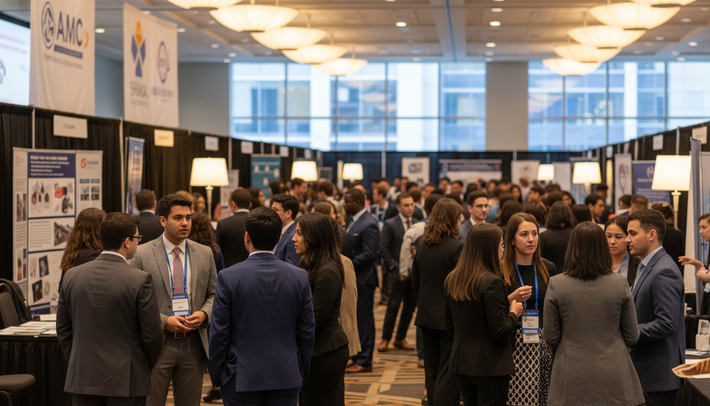
You're about to step onto a plane for a semester or summer abroad and a cold dread creeps in: What about my chapter? My leadership track? My resume? I've heard it a hundred times. "Will it look like I abandoned my org?" "Should I just step down?" Short answer: no, and absolutely not. What you actually have is a chance to turn your AMSA or SNMA involvement into something far more interesting than a weekly meeting on campus. You're not disappearing. You're reconfiguring.
Problem is, most people don't plan for that reconfiguration, they just let involvement drift and hope nobody notices. That's the trap. I want to walk you through what to do before, during, and after your time away so you come back with a stronger profile than the person who never left.
This article is for educational purposes only. It is not financial advice, not legal advice, and not tax advice. Figures vary by individual circumstances, so consult a qualified professional before acting.
The Disconnection Trap: Why Studying Abroad Doesn't Mean Dropping the Ball
(See also: MS1 to MS4: Evolving Your Role in AMSA and SNMA Without Burning Out for tips on sustaining involvement long-term.)
The anxiety is real. Med school and pre-med culture fixates on continuity, sustained volunteer gigs, officer roles that stretch across semesters, so stepping off the grid even for a legit international experience can feel like self-sabotage. I call this the "Involvement Gap" panic: you imagine adcoms squinting at your application and seeing a hole. But that's based on a narrow, checkbox mentality that has little to do with what actually moves the needle.
Programs value cultural competence and adaptability. Not as buzzwords. As real assets. A student who navigated a foreign health system, built connections across languages, and still found ways to advocate for health equity back home is a far more compelling candidate than someone who clocked another 50 hours of local volunteering without stretching their worldview. The key is framing. You weren't absent from leadership. You were leveraging a global platform to sharpen your advocacy muscles. That's not a gap; it's an upgrade.
(See also: Gap Year Roadmap: How to Stay Active in AMSA and SNMA Off-Campus for more strategies on maintaining involvement while away.)
AMSA and SNMA aren't just local soup kitchens or trivia-night clubs. Their DNA is about health policy, community outreach, mentoring, and fighting disparities. All of those work perfectly well from another continent. I've watched chapter officers study in Kenya, Spain, or South Korea and come back with sharper ideas, new project blueprints, and stronger networks because they refused to see "away" as "disconnected." They didn't resign. They pivoted.
Reality check: nobody expects you to physically attend Monday-night board meetings from 6,000 miles away. What matters is that you deliver on the commitments you set. Be clear-eyed: if you can't handle a time-zone difference and a heavy course load, then maybe a stripped-down advisory role is smarter. But most decently organized chapters are thrilled to have someone doing targeted remote work, writing policy briefs, managing their social media, coordinating a national webinar, while contributing an international perspective they'd never otherwise get.
So kill the guilt. Think expansion, not retreat.
Mapping Your Involvement Before You Go: The Pre-Departure Strategy
Walking into your study-abroad term without a specific plan is a recipe for doing nothing, or worse, sending a single email three weeks in that says "Hi, what did I miss?" Don't be that person.
Audit where you actually stand. Are you a chapter president, a committee chair, a regular member? If you're in a high-demand role, ask yourself honestly: can I still execute the top two responsibilities from abroad? If the answer is no, don't cling to the title like a security blanket. Step into a remote advisory role instead. Presidents who go abroad sometimes hand off daily operations to their vice president but keep oversight on strategy, donor relations, or national-level reporting. That's respected, not seen as a demotion.
If you're not a top officer, this is your chance to claim a niche. Volunteer to edit the chapter's monthly newsletter, coordinate a social media campaign around a health awareness day, or aggregate data for a national SNMA health-equity survey. The trick is to ask for something concrete and asynchronous. Vague promises, "I'll help out however I can!", evaporate the moment your first immunology exam hits. Neglect derails more remote involvement than time zones ever do.
Lock down your digital infrastructure. Dedicate a non-negotiable block in your calendar for org work, even if it's just two hours a week. Set Gmail filters so chapter emails skip the inbox abyss. Join the chapter's Slack or Discord and set notifications for your specific channels. If your team uses Trello, Asana, or Notion, make sure you're in there before you leave. I've seen too many students fumble simple logistics, they can't find a document, miss a deadline because it went to spam, and then disappear in a fog of apology emails.
Establish a communication cadence now. Sit down (virtually) with your chapter president or a national officer and agree on monthly check-ins. Not "touch base" calls, actual 15-minute syncs with a simple agenda: what you completed, what's next, any roadblocks. Solid consistency in those one-on-ones builds trust. By month two, nobody will even think of you as "the person who left." You're just the member who happens to be working from Barcelona.
Pivoting Locally: Integrating into Host Institution Networks
You're not the first visiting student to walk into that international hospital or medical school. Host universities almost always have global health interest groups, international student associations, or research symposia. Joining one isn't a betrayal of your home chapter. It's a force multiplier.
Dual affiliation shows proactivity. When you come back and can say, "I served as a liaison between my AMSA chapter and the International Federation of Medical Students' Associations (IFMSA) group at my host university," that's a story no typical applicant can tell. It demonstrates you can navigate unfamiliar structures and build coalitions. That's leadership.
Cross-pollinate. Ferociously. Start a shared Google Doc where you jot down what you're learning: a workshop on refugee health in Germany, a street-medicine elective in Thailand, a lecture on national health insurance in France. Then package that into something your home chapter can use, a 20-minute Zoom presentation, a blog series, a policy brief on global disparities. I've seen students return with entire new committees spun out of ideas they gathered abroad. That's legacy-building you'd never get from staying put.
Document everything. Not just for your CV, for the narrative you'll need during interviews. Did you attend a cervical cancer screening drive run by the host institution's community health club? Write down the date, your role, what you observed, how it connects to US disparities. That raw material becomes gold when you later articulate your "why medicine" with vivid, cross-cultural specifics. Resumes full of generic soup-kitchen hours blur together. A story about organizing a health-literacy workshop in a rural clinic abroad while staying active in your SNMA chapter? That sticks.
Avoid isolation. Studying abroad can be lonely, especially if you're the only person from your program there. Connecting with local student groups gives you a peer network that understands the immediate environment. It also keeps you socially anchored, so you don't retreat entirely into solo study and end up disengaging from both communities.
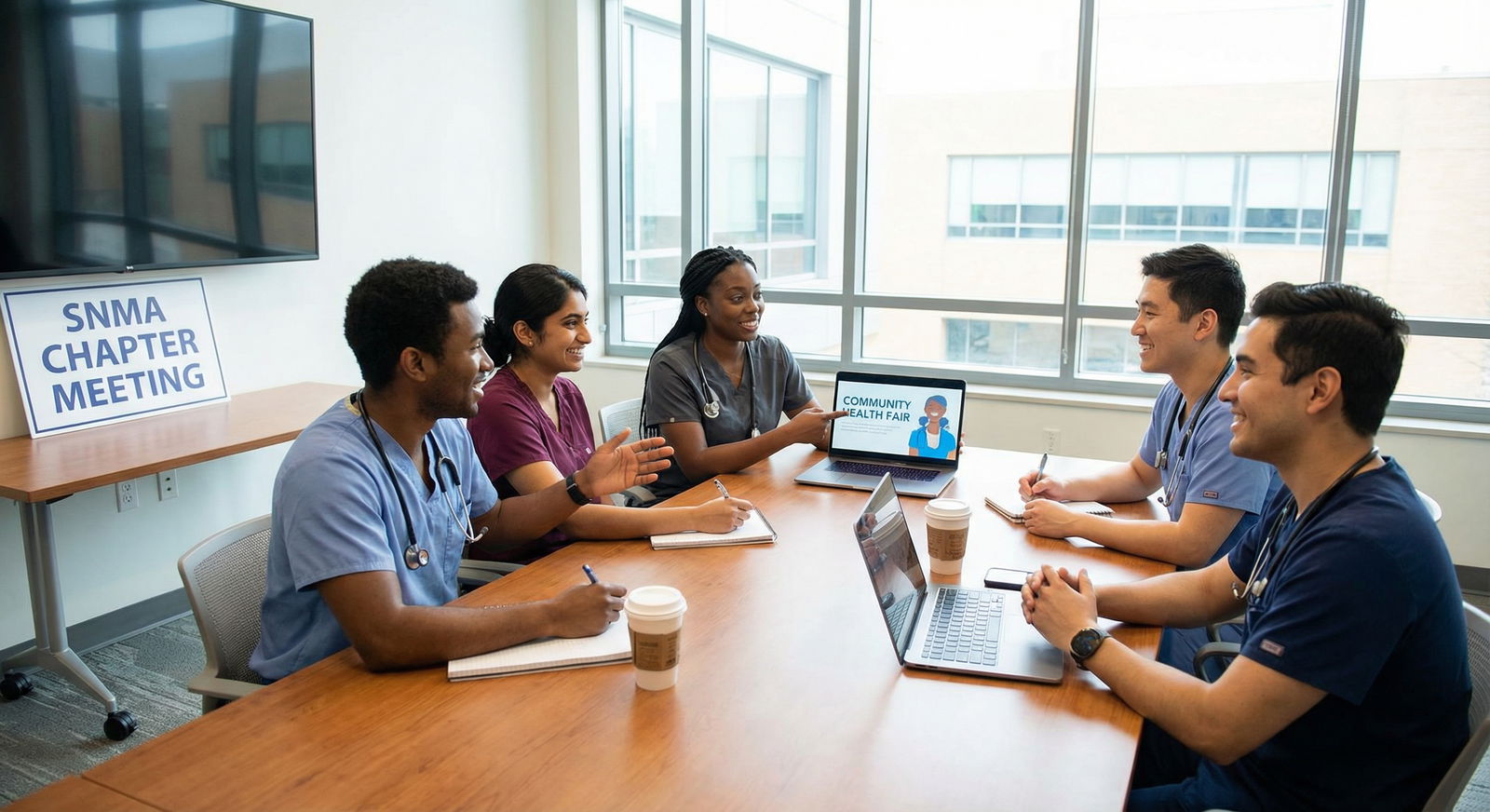
Maintaining Momentum: The Remote Execution Framework
Execution abroad is a different animal. You can't rely on in-person hallway chats or impulsive late-night planning sessions. You need a system that survives exams, time-zone insomnia, and the occasional Wi-Fi blackout.
Asynchronous is your default. Record a short Loom video update for your chapter board instead of trying to attend live meetings at 3 a.m. Draft newsletter articles or social media posts in batches during your weekends and hand them off to someone else to publish. I'm a big fan of using a shared Notion dashboard where your chapter can see your progress without you having to ping them constantly. Visible progress silences skeptics.
Focus on impact, not hours. Nobody on an admissions committee cares that you logged 40 hours of remote "general assistance." They care that you, say, led a virtual advocacy campaign that got 200 medical students to submit congressional letters about maternal health equity. Pick two meaningful projects you can realistically complete. Maybe you'll design and run a webinar series on cultural humility in clinical encounters, or coordinate a scholarship fund for pre-meds from underrepresented backgrounds. One well-executed project with measurable outcomes (funds raised, attendees educated, policy briefs submitted) is worth more than a year of meeting attendance.
Have an escalation protocol for crunch time. The week before your tropical medicine final, you won't have bandwidth. Anticipate that. Send a brief message to your chapter lead: "I'm in exam period until [date]; my project deliverable X will be completed by [new date]. I'll be offline except for emergencies." That's professional, not flaky. People respect clarity. What they don't forgive is silence followed by excuses.
Become the Bridge Officer. This is the most underrated leadership move abroad. Serve as the official connection between your host institution's global health group and your home AMSA chapter. Find a joint project: a virtual global health case competition, a collaborative workshop during a national conference, a resource exchange. You'll essentially be running a cross-institutional initiative, and that title, even an informal one, looks fantastic on ERAS or AMCAS. It shows you weren't just a remote helper; you were a connector.
Returning Home: Reintegration and Highlighting Your Experience
You're back. You've got stories, maybe a tan, probably a pile of unread emails. Don't just slip back into your old routine as if nothing happened. That's a massive waste.
Do a structured debrief. Write a one-page summary for yourself: what you did abroad clinically, what you contributed to AMSA/SNMA remotely, what you learned, and how it reshapes your career goals. This document does two things. First, it cements the narrative for interviews, you'll thank yourself later when you're not scrambling to remember details. Second, you can condense it into a killer update for your chapter or national org. "Returned from Ghana; here's how maternal health disparities there compare with Black maternal health in the U.S. and here's my proposal for a new chapter initiative." That's how you show growth, not just gap-filling.
Update your CV correctly. Don't bury your international experience in a "Travel" footnote. List it alongside your domestic org roles using the same format: organization name, your title, location (city, country), dates, and bullet points. Use active verbs: Adapted chapter mental health curriculum for a cross-cultural audience. Led a digital advocacy campaign reaching 500+ medical students across four countries. Collaborated with host-university peers to coordinate a global health seminar series. The goal is to make transferable skills obvious. You didn't just "study away"; you managed projects, facilitated cross-institutional communication, and operated with high independence. That's what physician leaders do.
Don't let the momentum die. The first month back is when you either cement your new role as the global health liaison, or you become just another member again. Pitch that new initiative you dreamed up. Offer to lead a workshop at the next regional conference. Your time abroad gave you a fresh perspective. Use it before it gets dulled by the grind.

Your Action Plan: Steps to Secure Your Legacy
You don't need a 40-page strategic plan. You need a handful of concrete moves. Do them in order, and you'll finish your abroad experience with a stronger AMSA/SNMA footprint than when you left.
- Contact your current chapter president today. Not next week. Be direct: "I'm studying abroad from [dates]. I want to stay involved remotely. Let's brainstorm a specific role that fits my schedule." You've set the expectation that you're not fading out.
- Claim one remote leadership task before you pack your bags. Social media strategy? Newsletter editing? Policy brief drafting? Pick it, define the output, and put it in writing. Ambiguity kills remote contribution.
- Join one international health organization at your host university within the first two weeks of arrival. Don't wait until you're settled. That's code for "never." Walk up, introduce yourself, and ask what they're working on.
- Schedule your first remote check-in now. Put it on the calendar with your home-chapter contact even if it's six weeks out. Locking in that date stops procrastination.
- Commit to a simple monthly documentation habit. A five-minute voice memo, a quick Google Doc entry, capture one lesson, one challenge, one win. By the time you return, you'll have a portfolio, not just memories.
Studying abroad doesn't shrink your profile. Handled right, it blows the doors open. You come back not as the person who "missed a semester" but as the one who broadened the chapter's worldview and built cross-cultural leadership muscle. That's the narrative that wins interviews and respect. So own it. Your chapter needs exactly what you'll bring back, but only if you stay intentional while you're gone.