
The belief that paying dues to AMSA or SNMA will boost your match chances is, bluntly, a myth. A persistent, profitable, very well-branded myth—but still a myth.
If writing your name on a membership list and paying $75 could measurably improve residency outcomes, Residency Program Directors would have said so by now. They have not. The data, when you dig into it, point in a very different direction.
This is not an attack on AMSA or SNMA as organizations. Both have long histories, legitimate missions, and real value for some students. But if you’re asking as a premed or medical student, “Will joining AMSA or SNMA help me match into residency?” you deserve a clear, unvarnished answer.
It will not. Not by itself. Not in the way you probably think.
(See also: National Titles vs Local Impact for more details.)
Let’s pull this apart.
What Residency Programs Actually Care About
Programs are not reading your ERAS application thinking, “Nice, they paid national dues to a big-name organization.” They are scanning for signals that meaningfully predict how you’ll function as a resident.
Those signals, over and over, look like this:
- Academic performance (class rank, clerkship grades, AOA/GHHS where applicable)
- Standardized exams (Step 2 CK scores now matter more than ever)
- Clinical evaluations and narratives
- Letters of recommendation from people they trust
- Concrete achievements: research, leadership with impact, teaching, QI projects
- Evidence of professionalism and reliability over time
"Membership" alone is functionally noise.
When NRMP surveys program directors on what factors influence interview and ranking decisions, generic organization membership doesn’t make the cut as a meaningful variable. Leadership with outcomes sometimes does. Plain membership, almost never.
So where do AMSA and SNMA fit?
They can be platforms. They are not golden tickets.
The Membership Illusion: Why the Myth Persists
There’s a convenient story students are sold, explicitly or implicitly:
- Join AMSA or SNMA
- Put it on your CV
- Residency programs will see it and be impressed
- Your match odds go up
That story survives because:
- National organizations need dues to exist, so they market membership as a “must-have”
- Students are anxious and want to feel they’re doing “the right things”
- Prehealth advisors and peers often repeat vague advice like, “Join major national orgs; it looks good”
But let’s be concrete. When a program director sees this on your ERAS:
Activities: AMSA, Member (2022–2025)
Activities: SNMA, Member (2021–2025)
What does this actually communicate?
- You went to a student org fair or clicked “join” online.
- You paid dues.
- You may or may not have ever attended a meeting.
That’s it. There is no built-in assumption of impact, effort, or competence from the word “member.” In fact, because so many people sign up and do nothing, “member” is functionally devalued.
Residency programs know how easy it is to collect logos on a CV with zero meaningful involvement behind them. They are not fooled.
AMSA vs SNMA: Different Missions, Same Core Reality
Now for nuance. AMSA and SNMA are not the same, and not all “value” is about the match.
AMSA (American Medical Student Association)
- Historically focuses on advocacy, health policy, and progressive health reform
- Targets premeds and med students
- Offers conferences, advocacy opportunities, and some leadership roles
- Membership is widely available; lots of people join once then disappear
For AMSA, the signal to residency comes only when you can show real work:
- Led a national committee and produced position statements or campaigns
- Organized a local or regional conference with documented outcomes
- Ran large-scale advocacy projects with measurable impact (e.g., campus-wide initiatives, policy changes, published work)
Just “AMSA Member” is background noise.
“National AMSA Health Policy Chair, led multi-school advocacy initiative that resulted in XYZ resolution adopted by state medical society” is different. That starts to look like evidence of leadership and follow-through.
SNMA (Student National Medical Association)
- Oldest and largest independent, student-run organization focused on supporting underrepresented minority (URM) students
- Strong emphasis on pipeline programs, mentorship, community outreach, and retention of minority students in medicine
- Deep cultural and community significance, particularly for Black students and other URM groups
For SNMA, the story is more layered.
Programs that care about diversity, equity, and inclusion may view substantial SNMA involvement as a positive signal of:
- Leadership and collaboration
- Commitment to underserved communities
- Longitudinal engagement with a clear mission
But again, the word “member” is not the point. It’s the work.
Serving as:
- Chapter president with concrete programs you built or expanded
- Regional officer managing multiple chapters and projects
- National committee leader contributing to sustainable initiatives
That can strengthen your application and, in some settings, align with a program’s mission. But the strength comes from what you did, not the act of paying dues.
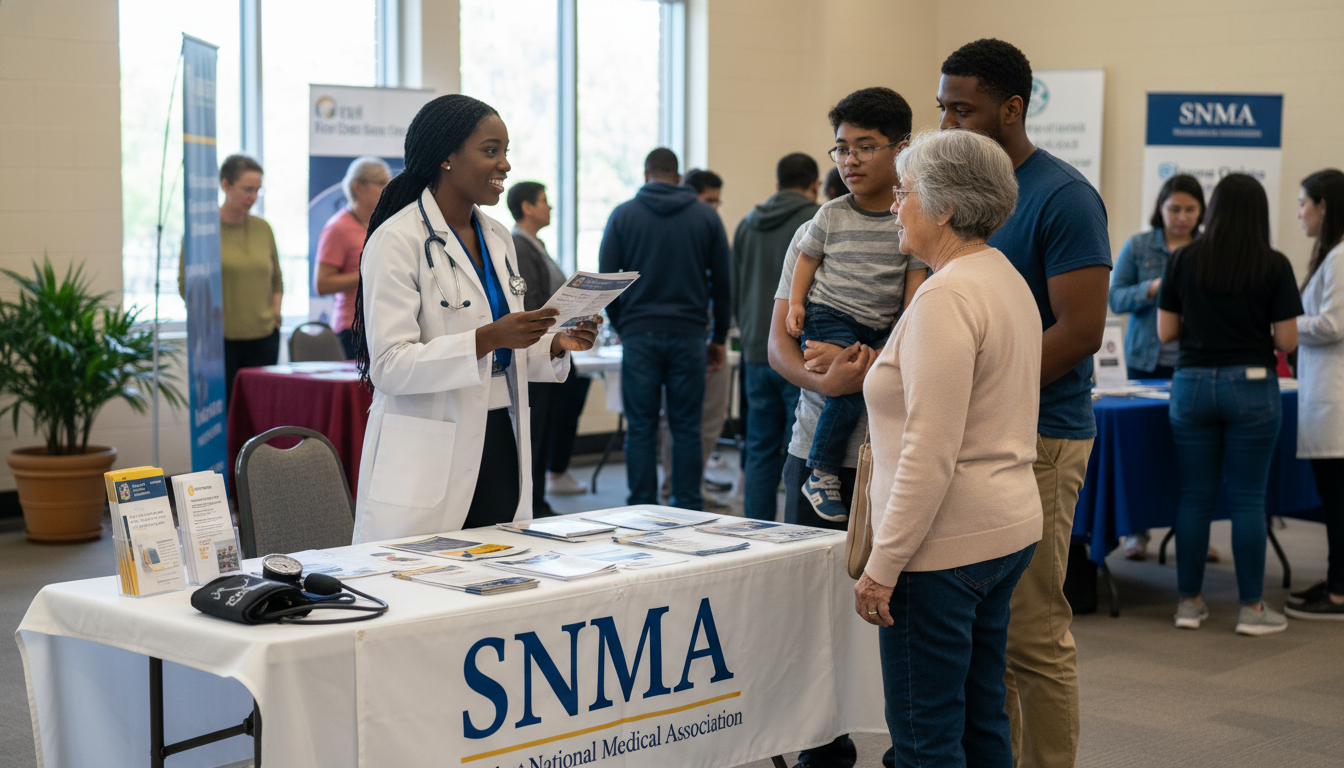
Membership vs. Meaningful Involvement: Very Different Signals
The critical distinction most students miss:
- Membership = a line on your CV
- Meaningful involvement = multiple lines, with outcomes attached
Residency programs care about the second.
Compare these two ERAS entries.
Version 1: Passive
Organization: AMSA
Role: Member
Dates: 2021–2025
Description: Attended meetings and participated in events.
This tells a program almost nothing. It could describe any of 5,000+ students.
Version 2: Active, Outcome-Based
Organization: SNMA
Role: Chapter President
Dates: 2022–2024
Description: Led executive board of 8; created longitudinal mentorship program pairing 40 premeds with medical students; expanded annual community health fair from 60 to 180 participants; secured $5,000 in institutional funding and partnerships with two local clinics.
Now we’re talking. Concrete numbers. Leadership. Sustainability. This shows skills that translate to residency.
The label “SNMA” or “AMSA” is almost incidental here. What matters is that you took responsibility, executed projects, and produced something real. You could do that in a free, no-dues local interest group and get similar credit.
That’s the part students rarely hear.
Premed vs. Med School: The Signaling Shifts
Premeds often overestimate how much “national org membership” matters to medical school admissions. Med students then make the same error with residency.
Let’s separate the phases.
As a Premed
Medical schools are trying to answer:
- Can you handle the academic rigor?
- Do you understand what medicine actually is?
- Have you shown initiative, service, and some persistence?
For that, any of the following can work:
- Long-term involvement in a campus free clinic
- Community outreach you helped grow
- Leadership in any organization (not just brand-name ones) with clear outcomes
- Research or quality improvement projects with real contributions
AMSA membership on a premed app is, again, mostly meaningless unless you used it to drive that kind of impact.
SNMA membership for premeds may matter a bit more in context if you’re URM and engaged in pipeline or mentoring activities, but the same rule applies: involvement with substance > membership title.
As a Med Student
By the time you’re looking at residency, the bar moves:
- Clinical performance now soaks up the bulk of decision weight
- Step 2 and narrative evaluations matter more than preclinical achievements
- Research, leadership, and significant service work can differentiate you slightly, particularly in competitive specialties
Here, an AMSA or SNMA role can help if:
- You held a real position with clear responsibilities
- Your work is supported by a strong letter from an advisor or faculty mentor attesting to your leadership, reliability, and maturity
- You can talk about it convincingly during interviews as something that changed how you think and act
If you’re a “name on the roster only” member, it won’t move the needle.
When Dues Might Be Worth It (And When They’re Not)
So if dues don’t boost your match odds directly, should you ever pay them?
Possible reasons to say yes:
You plan to be deeply involved
You see a clear leadership path and specific projects you want to execute within the organization.You value the community and mentorship
SNMA, in particular, can provide essential social and professional support for URM students navigating hostile or isolating environments. That’s not about the match; that’s about survival and growth.You’ll actually use the resources
Conferences, advocacy training, policy work, national networks—those can be genuinely useful if you’re intentional.
Reasons to say no or “not now”:
- You’re stretched thin and will not realistically commit beyond attending a meeting or two
- You’re joining “just for the CV” because someone told you it “looks good”
- You can get similar opportunities for leadership and service through free or local options
There’s also a financial dimension everyone pretends isn’t there. Dues may not be huge, but for some students, especially first-gen or low-income, every extra $50–$100 counts. You do not owe any national organization your money in exchange for the illusion of “match leverage.”

The Quiet Truth: You Can Match Without Any National Memberships
Here’s what tends to be true when you talk to residents across a range of specialties:
- Many matched with zero involvement in AMSA or SNMA
- Others joined casually and never listed the org on their ERAS because they did nothing with it
- Some leveraged those orgs as platforms for real leadership and got strong letters and interview stories out of them
Programs care that you can learn, work, and not crumble under pressure. They care that you show up, follow through, and are not a liability in the hospital at 3 a.m.
No one is ranking their list thinking:
“We liked her, but she wasn’t in AMSA.”
Or:
“He’s borderline, but wait, he paid SNMA dues; let’s move him up 10 spots.”
That’s not how this works.
What might actually happen is this:
A PD reading your file sees:
- Strong clinical comments
- Solid Step 2
- A research poster or two
- A SNMA leadership role with impact, backed by a compelling letter from your faculty advisor
Now the SNMA piece is acting as corroborating evidence of a pattern: you’re engaged, responsible, and care about certain missions that align with the program’s values.
But the membership itself didn’t get you there. Your actions did.
How to Think About Student Organizations Strategically
Strip away the logos and marketing. Then ask three questions:
What specific skills or experiences do I want from this?
Leadership? Teaching? Advocacy? Event planning? Community outreach?Can I realistically commit enough time to create something real and measurable?
Or will this be another name on a list?Is this the best available platform for that at my school?
Sometimes AMSA or SNMA is. Sometimes it is a specialty interest group, a community clinic, a research lab, or a homegrown initiative you start from scratch.
If AMSA or SNMA are the best available vehicles for high-quality involvement, pay the dues, get in deep, and do real work. Then those experiences can strengthen your narrative and, secondarily, your residency application.
If they are not, save your time and money and build substance somewhere else.
Years from now, you will not remember whether you checked the AMSA or SNMA box on a membership form. You will remember the few projects and communities where you actually showed up, did the work, and became someone programs trust to care for their patients.