The Impact of Student Organizations on Medical School Applications
Introduction: Why Student Organizations Matter in Medical School Admissions
In today’s highly competitive world of medical school admissions, high GPAs and strong MCAT scores are necessary—but no longer sufficient. Admissions committees increasingly look beyond numbers to understand who you are, how you work with others, and what you will bring to their medical school community and the profession.
This is where Student Organizations and other Extracurricular Activities can dramatically elevate your profile.
Thoughtful involvement in campus organizations:
- Demonstrates leadership skills and initiative
- Reflects commitment to service and advocacy
- Shows your ability to collaborate and communicate
- Provides networking in medicine with peers, faculty, and physicians
- Helps you build a coherent, authentic story in your application
This article explores how student organizations influence Medical School Admissions, the specific types that are most impactful, and practical strategies to maximize your involvement for both personal growth and a stronger application.
Understanding Student Organizations in the Pre-Med Context
What Are Student Organizations?
Student organizations are officially recognized campus groups formed around shared interests, professional goals, identities, or causes. For pre-med and early medical students, these groups can be powerful platforms to explore the profession, serve communities, and develop essential non-academic competencies.
They typically offer:
- Regular meetings and educational events
- Leadership positions and committees
- Community service and outreach opportunities
- Research, shadowing, or clinical exposure
- Peer support and professional development
Major Types of Student Organizations Relevant to Pre-Meds
While every campus is different, most institutions host several categories that are especially valuable for students preparing for careers in medicine.
1. Professional Pre-Med and Pre-Health Organizations
These focus on helping students prepare for and navigate Medical School Admissions:
- Examples:
- American Medical Student Association (AMSA)
- Alpha Epsilon Delta (AED – pre-health honor society)
- Minority Association of Pre-Medical Students (MAPS)
- Pre-Medical Society or Pre-Health Club (school-specific)
Typical activities include:
- Application and MCAT workshops
- Personal statement and CV review
- Physician panels and specialty exploration nights
- Mock interviews and MMI practice sessions
- Shadowing or clinical exposure coordination
These organizations show a clear, sustained interest in medicine and can be cornerstone activities in your application narrative.
2. Specialty and Interest Groups
These clubs let you explore specific areas of medicine or health:
- Specialty-focused: Surgery Interest Group, Pediatrics Club, Emergency Medicine Club, Psychiatry Interest Group
- Topic-focused: Global Health, Women’s Health, LGBTQ+ Health, Health Policy, Rural Health, Public Health
They’re especially helpful if you want to:
- Demonstrate early exposure to certain specialties
- Engage with advocacy or policy issues in health
- Show a long-standing commitment to a particular patient population or health topic
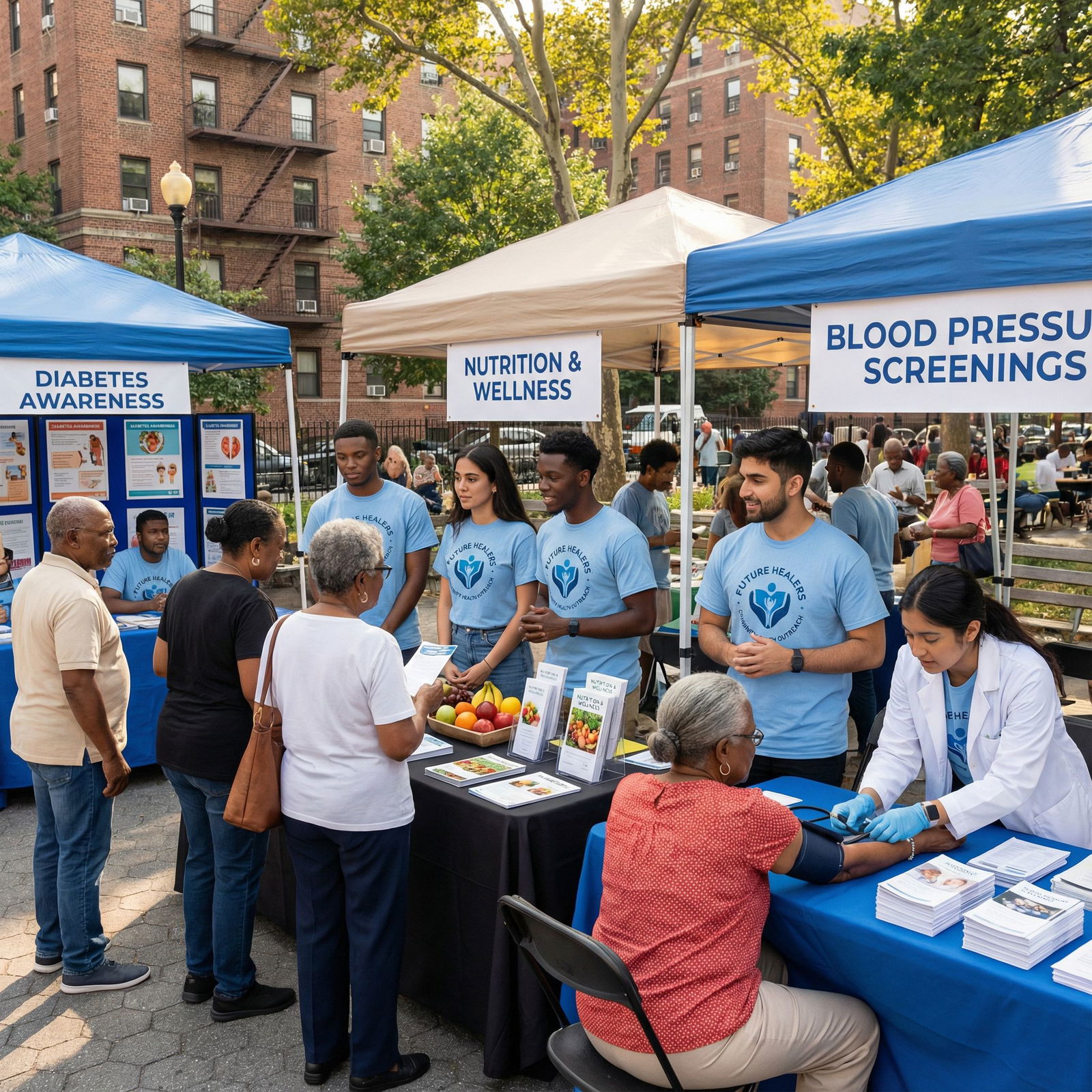
3. Community Service and Health Outreach Organizations
Service-based organizations directly reflect your commitment to helping others, a core attribute in medicine:
- Health education or prevention groups
- Free clinics or mobile clinics in partnership with local providers
- Campus groups that staff health fairs, screenings, or vaccination drives
- Non-health service organizations (e.g., tutoring, housing, food insecurity)
Activities might include:
- Organizing blood drives or flu shot clinics
- Delivering health education in schools or shelters
- Running community CPR training sessions
- Volunteering at local hospitals or nonprofit organizations
These experiences can become powerful stories for your personal statement and secondary essays.
4. Cultural, Identity-Based, and Diversity Organizations
Diversity-focused groups help foster inclusion and support underrepresented communities in medicine and on campus:
- Latino/a/x organizations (e.g., Latino Medical Student Association at the med school level)
- Black student unions or African Student Associations
- Asian Pacific American student associations
- LGBTQ+ affinity groups
- First-generation or low-income student groups
These can:
- Reflect your personal identity and values
- Demonstrate a sustained commitment to health equity and inclusion
- Provide leadership avenues in mentorship, recruitment, or advocacy programs
5. Research and Academic Societies
Research experience is increasingly valued in medical school admissions, especially at research-intensive institutions:
- Undergraduate research societies
- Science department student groups (Biology, Neuroscience, Biochemistry)
- Clubs that host journal clubs or poster sessions
- Honors programs with a research emphasis
Involvement can help you:
- Find research mentors and lab positions
- Learn to read and discuss scientific literature
- Present at campus or regional conferences
- Potentially contribute to abstracts or publications
How Student Organizations Strengthen Your Medical School Application
1. Demonstrating Leadership Skills and Initiative
Medical schools want future physicians who can lead teams, improve systems, and advocate for patients. Leadership doesn’t just mean holding a title; it means taking responsibility and driving positive change.
How Leadership in Student Organizations Translates to Medicine
Being:
- President or Vice President shows you can steer vision and manage groups
- Treasurer or Finance Officer demonstrates responsibility, integrity, and attention to detail
- Event or Volunteer Coordinator shows organizational skills and the ability to execute complex tasks
- Committee Chair reveals your capacity to work across teams and delegate effectively
Example Scenario:
You serve as Volunteer Coordinator of a community health outreach organization. You:
- Recruit and train 30 student volunteers
- Partner with a local clinic for a monthly hypertension screening program
- Develop a follow-up process so participants with elevated blood pressure are connected to primary care
In your application, this becomes evidence of:
- Leadership and project management
- Understanding of chronic disease management and public health
- Initiative to create sustainable, patient-centered programs
Admissions committees value leadership that leads to measurable impact, not just a line item on your CV.
2. Building a Strong Professional Network in Medicine
Networking in Medicine is a long-term investment that often starts in student organizations.
Types of Connections You Can Build
- Faculty advisors and pre-health advisors who can provide guidance and letters of recommendation
- Physicians and residents who speak at events or support outreach projects
- Researchers who need motivated students in their labs
- Older pre-med or medical students who can share advice and mentorship
These relationships can support you with:
- Letters of recommendation grounded in real experiences
- Shadowing or clinical experiences
- Insight into specialties, practice types, and career paths
- Opportunities in research, internships, or pipeline programs
Action Tip: After events, send brief thank-you emails to speakers or mentors you connected with. Mention something specific you learned, and express interest in staying in touch. This small habit builds a professional reputation and opens doors over time.
3. Strengthening Communication and Interpersonal Skills
As a physician, you will constantly communicate with patients, families, colleagues, and teams. Student organizations provide real-world practice:
- Leading meetings and facilitating discussions
- Presenting at general body meetings or campus events
- Writing clear emails, proposals, or funding requests
- Educating the public during health fairs or workshops
Clinical Parallel:
If you learn to explain diabetes prevention in simple, culturally sensitive terms at a community event, you’re practicing the same skills needed to counsel a future patient newly diagnosed with diabetes.
Admissions committees look for evidence that you can:
- Listen actively
- Work with people from diverse backgrounds
- Manage conflicts and collaborate effectively
Your stories from student organizations can be powerful ways to demonstrate these skills in interviews and essays.
4. Showcasing Commitment to Service and Professional Values
Medicine is fundamentally a service profession. Consistent, meaningful involvement in community service organizations helps demonstrate that you understand this.
Key qualities you can highlight:
- Empathy and compassion
- Accountability to a community
- Commitment to addressing health disparities
- Respect for people’s lived experiences
Impactful Example:
You help lead a long-term partnership between your university and a local homeless shelter to provide monthly health education sessions. Over two years, you:
- Develop tailored, low-literacy educational materials
- Partner with social workers and nurses to address complex needs
- Train new volunteers to continue the program after you graduate
This kind of longitudinal, community-focused experience speaks volumes about your character, resilience, and alignment with medicine’s core values.
5. Providing Research, Academic, and Intellectual Growth
Through Research Societies and academic clubs, you can demonstrate curiosity, critical thinking, and comfort with scientific inquiry—especially important for MD and MD/PhD applicants.
Benefits include:
- Learning to ask researchable questions
- Understanding study design and basic statistics
- Gaining experience with data collection and analysis
- Presenting at a poster session or conference
- Potentially earning authorship on a paper
When you describe these experiences, focus on:
- What problem or question the research addressed
- Your specific role and responsibilities
- What you learned from challenges or setbacks
- How it changed your understanding of medicine or science
6. Developing Personal Growth, Resilience, and Time Management
Balancing academics, work, family, and Extracurricular Activities is challenging—and that’s exactly why admissions committees care about it.
From student organizations, you can gain:
- Time management skills: Juggling exams with event planning and leadership duties
- Resilience: Navigating conflicts, event failures, or low turnout and adapting
- Self-awareness: Learning when to say “no” and how to set boundaries
- Adaptability: Pivoting events online, adjusting to new university policies, or responding to community needs
These experiences prepare you for the intensity of medical school and residency, where resilience and prioritization are critical.
Maximizing the Impact of Student Organizations on Your Application
Being a member of several organizations is not enough. Admissions committees care more about depth, continuity, and reflection than about sheer quantity of clubs.
1. Choose Involvements with Intention
Think strategically about how each organization fits into your broader story.
Ask yourself:
- Does this align with my values, interests, or long-term goals in medicine?
- Can I grow into a leadership role or make a sustained contribution?
- Does it complement my other experiences (e.g., research, clinical, service)?
It’s perfectly acceptable—often better—to be deeply involved in 2–4 organizations rather than superficially present in many.
2. Seek Progressive Leadership and Responsibility
Admissions committees love to see progression:
- Member → Committee Member → Officer → President or Program Founder
- Volunteer → Coordinator → Program Developer
Try to:
- Start as a member to understand the group’s mission and workflow
- Volunteer for a small project (e.g., organizing a single event)
- Take on more responsibility each year as you gain experience
- Identify gaps (e.g., lack of evaluation, poor outreach) and propose improvements
You don’t have to hold the highest title; meaningful responsibility and impact matter more than rank.
3. Get Involved Early and Sustain Your Commitment
Starting in your first or second year allows more time to:
- Build trust within an organization
- Take on leadership roles
- Develop long-term initiatives
- Demonstrate continuity over several years
If you discover your passion later, that’s still valuable—be honest about your trajectory and show how your later involvement was focused and intentional.
4. Reflect Regularly and Capture Your Experiences
Reflection is what turns activity into growth—and strong application material.
Practical tips:
Keep a simple activity log or journal:
- Organization name and role
- Dates of involvement
- Estimated hours per week/month
- Responsibilities and key events
- Memorable interactions or challenges
- Skills developed and insights gained
Every semester, spend 20–30 minutes reflecting:
- What did I learn about myself?
- What did I learn about patients, communities, or healthcare systems?
- How did this experience confirm or challenge my desire to pursue medicine?
These notes will be invaluable when you write your AMCAS or AACOMAS activities descriptions, personal statement, and secondaries.
5. Network Intentionally Through Organizations
Student organizations are built-in networking platforms for Networking in Medicine.
To make the most of them:
- Introduce yourself to guest speakers and advisors; ask thoughtful questions
- Follow up with a brief email or LinkedIn message
- Ask about shadowing, research, or further learning opportunities respectfully
- Offer to help with projects or events that align with your interests
- Stay in touch a few times per year with brief updates and gratitude
Professional relationships formed through organizations can later become:
- Strong letters of recommendation
- Mentorship that lasts into medical school and residency
- Connections that guide specialty choice and career direction

Frequently Asked Questions About Student Organizations and Medical School Applications
1. How important are student organizations for my medical school application?
Student organizations are not strictly required for admission, but they are highly influential. They help demonstrate:
- Leadership and teamwork
- Service and advocacy
- Communication and professionalism
- Long-term commitment and resilience
For many applicants, their strongest personal statement stories and interview examples come from meaningful involvement in student organizations and Extracurricular Activities. While you won’t be rejected just because you weren’t heavily involved, your application may feel less dynamic and less personal without them.
2. Should I join many organizations or focus deeply on a few?
For Medical School Admissions, depth is more valuable than breadth. It’s better to:
- Join 2–4 organizations that genuinely matter to you
- Stay active for multiple semesters or years
- Take on increasing responsibility or leadership
- Make tangible contributions
Being in 8–10 organizations with minimal involvement usually comes across as box-checking. Admissions committees can tell the difference between a long list and a meaningful commitment.
3. Do my organizations have to be “pre-med” or medically related to count?
Not necessarily. Medical schools appreciate well-rounded applicants. Strong involvement in:
- Cultural or identity-based organizations
- Debate, student government, or policy groups
- Music, athletics, or the arts
- Social justice or community service organizations
can all be very compelling—especially if you develop leadership skills, serve others, and can clearly articulate what you learned and how it relates to your future as a physician.
Aim for a balanced portfolio: some activities clearly connected to medicine and health, and others that show your broader interests and identity.
4. How can I talk about my involvement in organizations in my personal statement and interviews?
Focus less on listing tasks and more on:
- Stories: Describe a specific event, challenge, or moment that changed you
- Growth: Explain what you learned about yourself or about medicine
- Impact: Highlight how your involvement affected others or improved a program
- Reflection: Connect the experience to skills you’ll use as a physician (e.g., communication, cultural humility, teamwork, problem-solving)
Example interview framing:
“As president of our global health organization, I initially focused on planning large events. Over time, I realized our programs weren’t aligned with what our partner clinic actually needed. I learned to listen first, adjust our goals, and co-create projects with community partners. That experience reshaped how I think about patient-centered care and collaboration in medicine.”
5. What if my school has limited student organizations or I commute and can’t be on campus often?
Admissions committees understand different campus and personal contexts. You can still demonstrate the same core qualities by:
- Volunteering consistently at a local clinic, hospital, or community organization
- Taking on responsibility at a job (e.g., supervisor at a pharmacy or clinic front desk)
- Starting a small, focused initiative (e.g., a health education project at a community center)
- Participating in online pre-med communities, webinars, or national organizations
- Joining committees tied to your major department or pre-health advising office
Be sure to explain your context briefly in applications if necessary (e.g., commuting, working significant hours, caring for family) and highlight the meaningful ways you still engaged.
Student organizations are much more than lines on a resume—they are training grounds for the kind of physician you will become. By choosing your involvements thoughtfully, seeking real responsibility, reflecting regularly, and building authentic relationships, you can transform your time in student organizations into one of the most compelling strengths of your medical school application.