
How to Cultivate a Positive Work Environment that Truly Supports Mental Health
In modern healthcare and other high-demand professions, the line between work and personal life is increasingly blurred. Long hours, emotional intensity, and constant pressure to perform can make even the most dedicated professionals vulnerable to burnout. For medical trainees in particular, the work environment can either protect mental health and foster growth—or accelerate distress, disengagement, and attrition.
A positive work environment that supports Mental Health is no longer a “nice-to-have”; it is a strategic requirement for Organizational Success. When employees feel psychologically safe and supported, Employee Engagement rises, Work-Life Balance improves, and both patient care and productivity benefit.
This article expands on practical, evidence-informed strategies to build a healthy work environment—especially relevant for healthcare teams, residency programs, and academic institutions—but applicable to any mission-driven organization.
Understanding Mental Health in the Workplace
What Is Mental Health in a Professional Context?
Mental Health encompasses emotional, psychological, and social well-being. In the workplace, it influences:
- How people respond to stress and high workload
- How they relate to patients, colleagues, and leadership
- How effectively they make decisions and solve problems
- Their ability to maintain Work-Life Balance and sustain performance over time
Common workplace-related issues include:
- Burnout (emotional exhaustion, depersonalization, and reduced sense of accomplishment)
- Anxiety and depression
- Moral distress or moral injury, especially in healthcare when values conflict with system constraints
- Compassion fatigue and secondary traumatic stress in caregiving roles
For residents and medical students, the combination of long hours, sleep deprivation, clinical responsibility, and evaluation pressure can significantly impact Mental Health, especially in unsupportive environments.
Why Prioritize Mental Health at Work?
Ignoring Mental Health has far-reaching implications that affect individuals, teams, and organizations:
Reduced productivity and performance
Mental distress impairs attention, memory, empathy, and clinical judgment. Even high-performing individuals under chronic stress may function at a fraction of their potential.Increased turnover and “quiet quitting”
When staff feel unsupported or burned out, they may leave the organization, reduce their effort, or mentally disengage. In healthcare, losing residents or experienced staff is costly and destabilizing.Lower Employee Engagement and morale
A chronically stressed environment can become toxic: blame culture, incivility, gossip, and conflict. Over time, this erodes trust and teamwork.Higher absenteeism and presenteeism
People may call in sick more often—or show up but operate at significantly reduced capacity.Patient safety and quality risks (in healthcare settings)
Fatigued, distressed clinicians are more prone to errors, delayed decisions, and reduced empathy.
By contrast, organizations that actively support Mental Health:
- Attract and retain strong talent
- Build resilient teams able to handle crises
- Improve patient and client outcomes
- Strengthen their reputation and long-term Organizational Success
Framing Mental Health support as both an ethical obligation and a core strategic priority helps align leaders, educators, and staff around shared goals.
Core Strategies to Build a Mentally Healthy Work Environment
1. Encourage Open, Safe, and Stigma-Free Communication
Psychological safety—where people feel safe to speak up without fear of humiliation or retaliation—is foundational for a supportive Work Environment.
Practical ways to foster open communication:
Normalize conversations about stress and well-being
Leaders, attendings, and senior residents can share (appropriately) about their own challenges and coping strategies. This signals that struggling is human—not a weakness.Regular one-on-one check-ins
Supervisors should schedule brief, predictable check-ins focusing not only on performance, but also on workload, stress, and support needs. Example prompts:- “How are you doing—really?”
- “What’s been most challenging this week?”
- “Is there anything I can adjust to help make this more sustainable?”
Team huddles that include well-being
Incorporate a brief “pulse check” at the start or end of team meetings. This can be as simple as asking, “On a scale of 1–10, how’s everyone’s bandwidth today?”Anonymous feedback mechanisms
Use confidential surveys or digital suggestion boxes to surface issues related to culture, staffing, scheduling, and Work-Life Balance. Close the loop by sharing themes and action steps so employees know their voices matter.Clear, well-communicated policies for reporting concerns
Ensure people know how to report harassment, bullying, or unsafe conditions without fear of retaliation. For residents, this includes clear pathways outside their direct chain of command if needed.
When communication is open and safe, you catch problems earlier—before they become crises.

2. Implement Structured Mental Health Support and Education
An organization’s commitment to Mental Health should be tangible and visible, not just aspirational.
Employee Assistance and Counseling Resources
Employee Assistance Programs (EAPs)
Offer confidential counseling, short-term therapy, and referrals. Make sure:- Services are easy to access (clear contacts, 24/7 options if possible)
- Staff are reminded regularly (new hire orientation, emails, posters, intranet)
- Stigma is actively addressed—leaders can emphasize that using these resources is a sign of responsibility, not weakness.
On-site or embedded mental health professionals (where possible)
In large training programs or hospitals, consider having psychologists or counselors embedded in residency programs or departments. Their presence can normalize help-seeking.
Training and Skill-Building
Workshops on stress management and resilience
Topics might include sleep hygiene, cognitive strategies for managing negative thoughts, coping with difficult cases, and boundary-setting.Leadership training on mental health
Teach chiefs, attendings, and managers to:- Recognize signs of distress and burnout
- Approach difficult conversations with empathy
- Refer appropriately to resources
- Balance performance feedback with support and recognition
Peer support initiatives
Train peers or senior residents to offer structured peer support (e.g., debriefing after critical incidents). This can be especially powerful in healthcare where only colleagues fully grasp the emotional weight of the work.
By embedding Mental Health education into orientation, ongoing CME/CPD, and leadership development, organizations send a clear signal: well-being is part of professional competence.
3. Design Work for Flexibility and Sustainable Work-Life Balance
Work design has as much impact on Mental Health as any individual coping strategy. When possible, build flexibility into schedules and expectations.
Flexible Working Arrangements
Depending on the setting, this could include:
- Remote or hybrid work options for roles that do not require constant onsite presence (telehealth clinics, research, administrative tasks).
- Adjustable start/end times where patient care or shift patterns allow, helping employees accommodate childcare, commuting, or personal health needs.
- Job sharing or part-time tracks, particularly in academic and clinical environments, to retain staff who might otherwise leave entirely.
For medical trainees with less schedule control, programs can still:
- Avoid routinely scheduling excessive consecutive hours
- Protect post-call time and limit non-essential obligations
- Design rotations to balance high-intensity blocks with recovery time
Protecting Work-Life Boundaries
Discourage unnecessary after-hours communication
Leaders can model this by using delayed-send emails and clarifying what is truly urgent vs. can wait until business hours.Clarify expectations for availability
For example, “Off shift means off”—no expectation to check email or messages unless on call.Encourage planned time off
- Track vacation usage and check in with individuals who consistently postpone or forgo leave.
- Make coverage plans in advance so that taking leave does not increase guilt or workload for colleagues.
Healthy Work-Life Balance does not mean reduced dedication; it means structuring work in a way that is sustainable, allowing people to bring their best selves to their roles over the long term.
4. Build a Strong Sense of Community, Inclusion, and Respect
Humans are social creatures. A Work Environment that supports belonging and mutual respect is protective for Mental Health, especially under stress.
Foster Connection and Peer Support
Regular team-building activities
These do not need to be elaborate or expensive:- Shared lunches or coffee breaks
- Short “get-to-know-you” rounds at meetings
- Celebrating holidays or cultural events
Mentorship and sponsorship programs
Pair junior staff with mentors at different training stages. In medicine, mentorship can:- Provide career guidance and role modeling
- Offer a safe space to discuss impostor syndrome or moral distress
- Open doors for research or leadership opportunities
Peer support circles or reflection groups
Small, facilitated groups where staff or trainees can discuss challenging experiences, grief, or ethical dilemmas. Balint groups and Schwartz Rounds are well-known models in healthcare.
Champion Diversity, Equity, and Inclusion (DEI)
A truly positive Work Environment must be psychologically safe for people of all backgrounds and identities.
Zero tolerance for discrimination and harassment
Back this with clear policies, reporting mechanisms, and visible accountability.Inclusive scheduling and accommodations
Respect religious holidays, disability-related needs, pregnancy and parenting, and cultural practices where feasible.Visibility of diverse leaders
Representation in leadership roles signals that everyone can belong and thrive.
Inclusion initiatives are not “extras”; they are core to Employee Engagement, trust, and Organizational Success.
5. Recognize, Reward, and Support Growth
Recognition and growth opportunities are powerful drivers of morale and engagement.
Recognition That Feels Genuine
Frequent, specific praise
Instead of generic “good job,” highlight concrete behaviors:- “Your calm communication with that anxious family made a huge difference.”
- “You did an excellent job prioritizing tasks during that busy shift.”
Celebrate individual and team milestones
- Certification exams passed
- End of difficult rotations
- Work anniversaries and promotions
- Research presentations or publications
Peer-nominated awards
Allow colleagues to nominate each other for kindness, teamwork, and going above and beyond—not only for high metrics.
Support for Professional Development
Investing in people’s growth improves both career satisfaction and Organizational Success:
Training and skill-building
Offer CME, workshops, or short courses in clinical skills, teaching, quality improvement, leadership, or communication.Protected time for development
Especially in academic or training settings, allocate time for scholarly projects, education, or wellness-related activities without penalizing productivity metrics.Educational funding support
Provide reimbursement or stipends for conferences, courses, or certifications when possible.
When employees see a future for themselves within the organization, their motivation, loyalty, and engagement rise—directly benefiting the Work Environment and patient care.
6. Optimize the Physical and Digital Work Environment
The spaces where people work—physical and virtual—have a direct impact on Mental Health.
Create Calming, Functional Physical Spaces
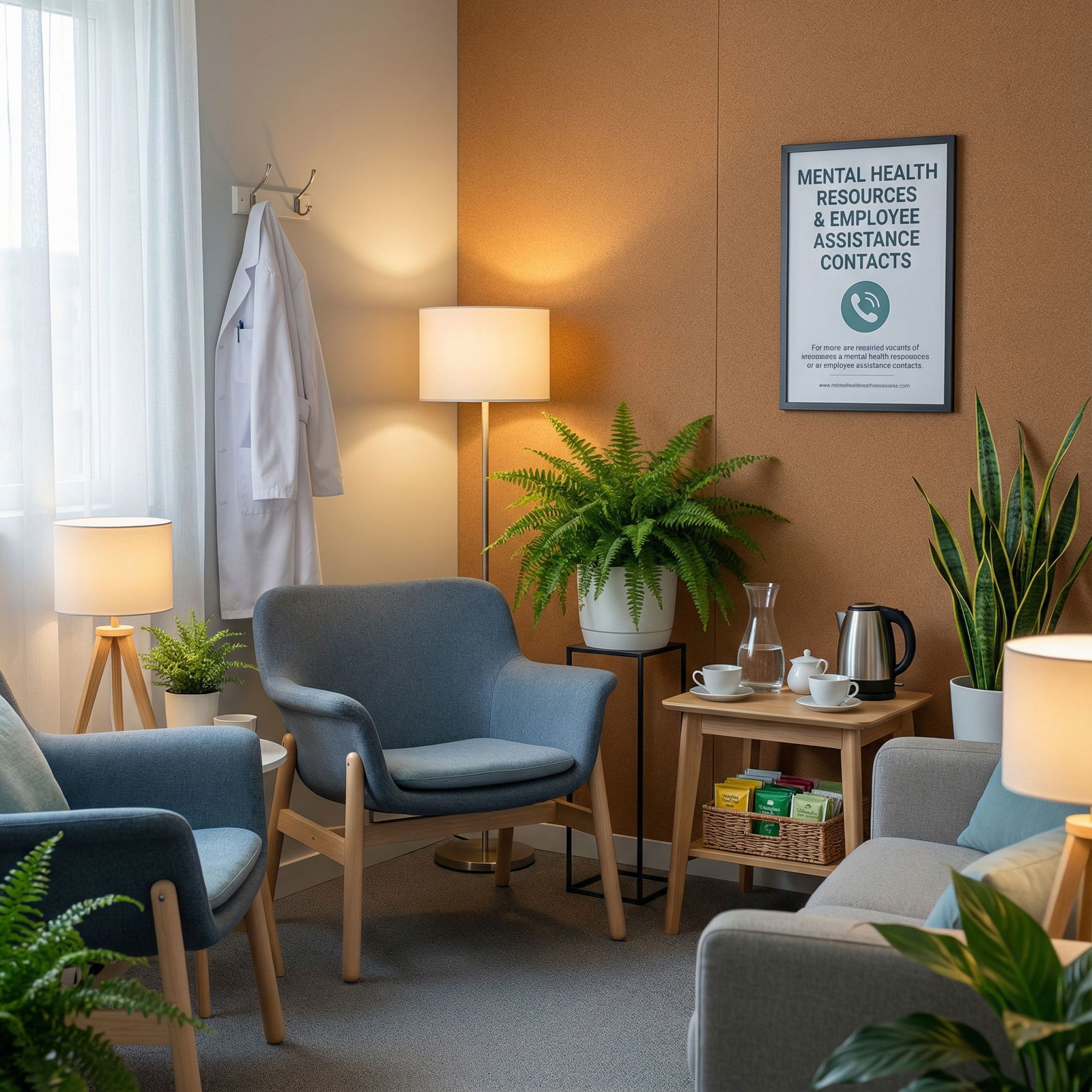
Natural light and greenery
Whenever possible, design work areas with access to windows, daylight, and plants. Even a few small plants on desks can improve mood.Restorative break areas
Provide:- Comfortable seating
- Access to water, tea, and healthy snacks when feasible
- A space where staff can decompress without being “on display”
Quiet rooms or reflection spaces
In high-stress settings (e.g., hospitals), a small quiet room can be invaluable for brief decompression after difficult cases or code situations.Ergonomic workstations
Adjustable chairs, proper lighting, and well-placed equipment reduce physical strain, which can compound mental fatigue.
Design Healthy Digital Practices
Manage digital overload
Excessive emails, alerts, and documentation demands are major stressors, particularly in healthcare with electronic medical records.- Simplify workflows where possible
- Provide training on efficient use of digital systems
- Limit unnecessary “reply-all” threads and duplicate communications
Protect privacy and confidentiality
Ensure that work-related mental health resources are clearly separate from performance monitoring or evaluation data.
Embedding Mental Health into Policies and Culture
Policies should not just exist on paper—they should shape daily behavior.
Key Policy Areas to Consider
Mental health days and flexible leave
Formally allow mental health days or “self-care days” without stigma. Educate managers on approving and supporting such leave.Clear work hour and rest policies
For trainees and shift workers, adhere to duty-hour regulations and ensure they are respected in practice—not only in documentation.Anti-bullying and anti-harassment policies
Define unacceptable behavior, outline reporting channels, and describe consequences. Provide training so everyone understands their rights and responsibilities.Return-to-work and accommodation policies
For staff who have taken leave for mental or physical health reasons, ensure:- A clear, compassionate reintegration plan
- Modified duties or hours if needed
- Ongoing follow-up and support
Embedding Mental Health and Work-Life Balance into policy helps ensure that support is consistent, fair, and not dependent on individual leaders’ goodwill alone.
Case Example: Organizational Impact of Prioritizing Mental Health
Consider a mid-sized healthcare organization—“Hospital X”—that decided to address burnout among residents and staff:
- They introduced regular wellness check-ins, anonymous surveys, and structured debriefings after critical incidents.
- They revised schedules to reduce excessively long stretches of consecutive night shifts and protected post-call time.
- They launched an embedded mental health support program, with easy access to counseling for trainees and staff.
- They created recognition programs highlighting teamwork, compassion, and teaching—alongside clinical productivity.
Within a year, they observed:
- A measurable increase in Employee Engagement scores on annual surveys
- A reduction in turnover and early contract terminations
- Fewer reports of burnout symptoms based on validated screening tools
- Improved patient experience scores, as staff were more present and empathetic
This example illustrates how a proactive strategy that prioritizes Mental Health and Work-Life Balance can drive Organizational Success—not just in metrics, but in culture.
FAQs: Mental Health and Positive Work Environments
1. What are common signs that Mental Health is being compromised in the workplace?
Warning signs at the individual level include:
- Noticeable decline in concentration, memory, or clinical judgment
- Increased irritability, cynicism, or emotional outbursts
- Social withdrawal or isolation from colleagues
- Frequent absenteeism or repeated lateness
- Expressing hopelessness, feeling “trapped,” or talking about “just surviving shifts”
At the organizational level, red flags include:
- Rising turnover, especially among early-career staff or trainees
- Increased conflicts, complaints, or reports of incivility
- More errors, near-misses, or patient complaints in clinical settings
- Low or declining Employee Engagement survey scores
2. How can I support a colleague who seems to be struggling?
You don’t need to be a mental health professional to make a difference:
Reach out privately and with empathy
Use open, nonjudgmental language: “I’ve noticed you seem really overwhelmed lately and I’m concerned. How are you doing?”Listen more than you talk
Avoid minimizing (“Everyone’s tired”) or jumping straight to problem-solving. Validate their feelings.Encourage use of support resources
Gently suggest talking to a trusted mentor, supervisor, or mental health professional. Offer to help them find the right contact.Respect boundaries and confidentiality
Do not share their concerns without permission—unless there is imminent risk of harm.
If you believe there is immediate risk to their safety or others, follow your institutional procedures for urgent assistance.
3. What can I do if leadership seems uninterested in Mental Health initiatives?
Even without immediate top-down support, you can:
Gather data and stories
Use existing survey results, turnover statistics, or patient safety data to highlight the impact of burnout and poor Mental Health.Start small, low-cost initiatives
Examples: peer support groups, informal well-being check-ins, a resource list, or a quiet reflection corner.Build alliances
Partner with colleagues, chief residents, faculty champions, or HR to create a coalition for change.Frame the issue in terms leaders care about
Emphasize that improved Mental Health supports Organizational Success: reduced turnover, better performance, and enhanced reputation.
Persistence, evidence, and alignment with organizational goals can gradually shift priorities.
4. How often should teams formally assess Mental Health and culture?
There is no single formula, but helpful practices include:
- Short “pulse” surveys (3–5 questions) every 1–3 months to monitor engagement, workload, and well-being.
- Comprehensive culture or engagement surveys annually or biannually, with transparent sharing of results and action plans.
- Regular structured debriefs after major changes, crises, or high-stress events.
The key is not just frequency, but follow-through: staff need to see that their feedback leads to concrete action.
5. As a trainee or early-career professional, what can I do to protect my own Mental Health?
While system-level changes are crucial, individual strategies still matter:
- Set realistic limits around extra shifts, committees, or projects when your bandwidth is already stretched.
- Prioritize basic needs: sleep, nutrition, movement, and some form of connection or joy outside work.
- Use available resources early—EAP, counseling, peer support, or mentoring—rather than waiting for crisis levels.
- Reflect regularly on your values and boundaries; seek mentors who support both your career and your well-being.
- If the Work Environment is persistently toxic and unchangeable, consider whether staying is sustainable for your long-term health and goals.
Investing in a Work Environment that supports Mental Health is an investment in people, quality, and the future of the organization. When employees feel safe, respected, and supported—when Work-Life Balance is treated as a necessity, not a luxury—Employee Engagement flourishes, and Organizational Success follows.