
Top 5 Activities to Recharge Your Energy and Prevent Burnout (Especially for Medical Trainees)
Burnout is no longer a distant, abstract concept—it’s a daily reality for many people, especially those in medicine. Long hours, emotional intensity, administrative overload, and constant digital connectivity can slowly erode your motivation, empathy, and joy in the work you once loved.
For medical students, residents, and early-career physicians, Burnout Prevention is not a luxury or a hobby; it is an ethical and professional responsibility. Protecting your mental health, sustaining your capacity to care for patients, and maintaining your own humanity require intentional self-care, not just “pushing through.”
This guide expands on five evidence-informed Wellness Activities that can help you recharge your energy and build resilience against burnout. They are realistic, adaptable to busy schedules, and do not require perfection—just small, consistent steps.
Understanding Burnout: Why It Matters in Medicine and Daily Life
Burnout is more than “feeling tired” or having a bad week. It is a chronic state of emotional, physical, and mental exhaustion caused by prolonged exposure to stress without adequate recovery.
Core Components of Burnout
Researchers typically describe burnout using three main dimensions:
- Emotional exhaustion – Feeling drained, “used up,” or unable to give any more of yourself.
- Depersonalization / Cynicism – Developing a detached or negative attitude toward patients, colleagues, or your work; feeling numb or indifferent.
- Reduced personal accomplishment – Feeling ineffective, inadequate, or that your work does not matter, despite evidence to the contrary.
Common Signs and Symptoms
You might be moving toward burnout if you notice:
- Chronic fatigue or difficulty recovering even after rest
- Irritability, mood swings, or emotional numbness
- Declining performance or productivity
- Cynicism toward work, school, or life responsibilities
- Feeling helpless, trapped, or “stuck on autopilot”
- Sleep disturbances, headaches, or unexplained bodily tension
- Withdrawing socially or losing interest in things you once enjoyed
For clinicians and trainees, burnout is also a patient safety issue. It is linked to a higher risk of medical errors, decreased empathy, and impaired decision-making. Ethically, maintaining your well-being is part of your duty to patients and colleagues.
While systemic change is essential (reasonable schedules, supportive culture, fair staffing), there are also personal tools that can help you create a buffer against stress. The activities below are not “cures,” but they are practical, evidence-informed strategies to recharge your energy and protect your mental health.
Activity 1: Mindful Walking – A Simple, Powerful Reset
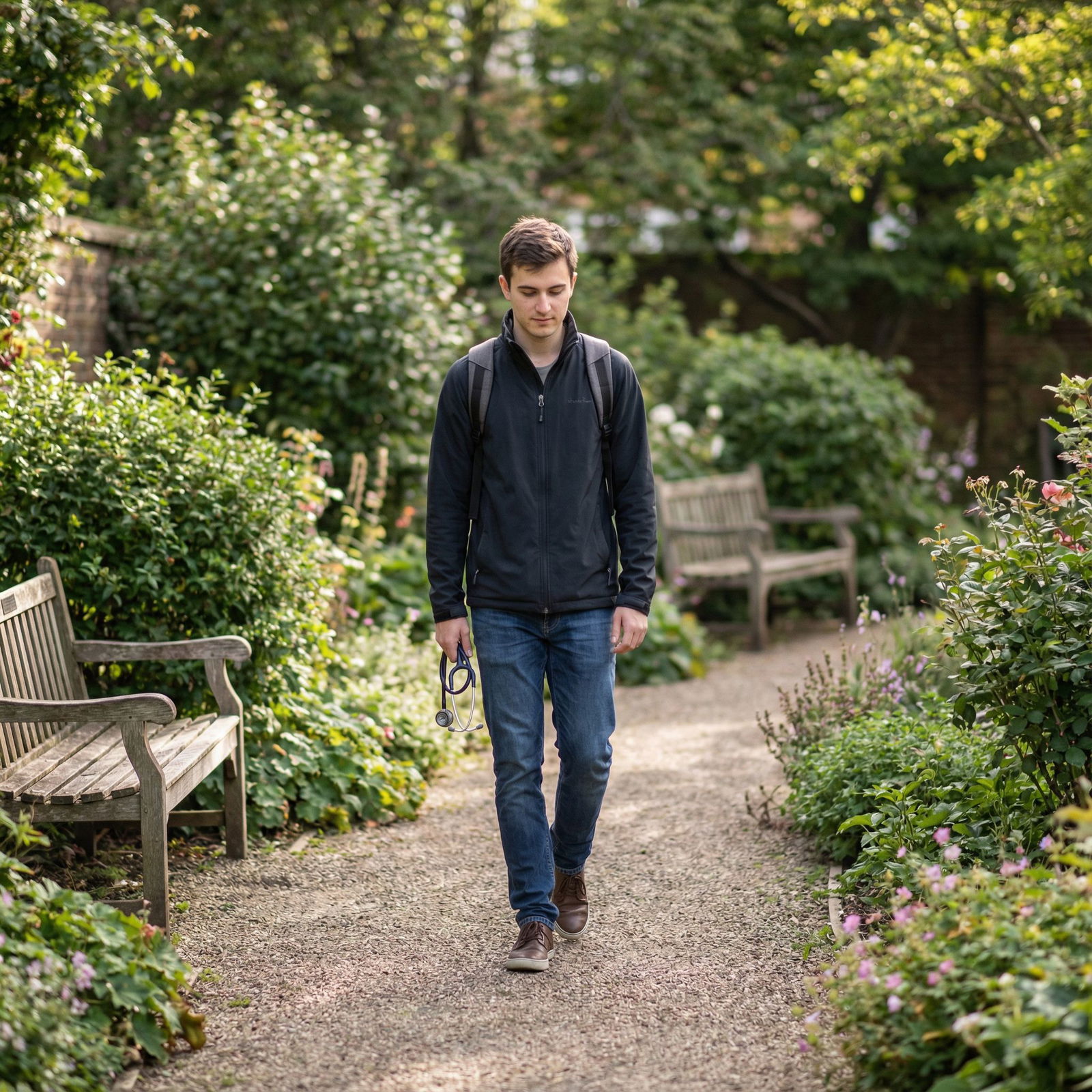
Mindful walking is one of the most accessible Stress Relief practices. You can do it almost anywhere—with no equipment, no special clothes, and no extra cost. For medical trainees, it can be integrated into your day between cases, after rounds, or during a short break.
Why Mindful Walking Works
Mindful walking combines gentle physical movement with present-moment awareness. This pairing can:
- Lower stress hormones like cortisol
- Improve mood and reduce anxiety
- Increase focus and attention
- Provide a mental “buffer” between intense clinical encounters
When done regularly, even in short intervals, it becomes a core Burnout Prevention habit rather than just an occasional escape.
How to Practice Mindful Walking in Real Life
You do not need a quiet forest or a meditation retreat—although those are wonderful if available. Try these practical approaches:
Micro-walks between tasks
- Walk one or two laps around the ward, your office floor, or the hospital courtyard.
- Between studying topics, walk for 3–5 minutes down the hall and back.
- Use stairs instead of elevators when it’s safe and feasible.
Engage your senses
- Notice the feeling of your feet making contact with the ground.
- Observe the temperature of the air on your skin.
- Pay attention to colors, sounds, and smells around you.
- Each time your mind jumps to to-do lists, gently bring it back to your senses.
Anchor to your breathing
- Coordinate your breath with your steps: for example, inhale for three steps, exhale for four.
- Avoid forcing deep breaths; instead, aim for smooth, steady breathing.
Nature if possible
- If you have access to a garden, courtyard, or park, choose that over indoor hallways.
- Even small doses of greenery or natural light enhance mental health benefits.
Minimum Effective Dose
If you’re extremely busy, aim for:
- 3–5 minutes of mindful walking once or twice per day to start.
- Build up to 10–15 minutes, 3–5 times per week as your schedule allows.
Consistency matters far more than duration. Think of it as regularly “hitting reset” on your nervous system.
Activity 2: Creative Expression – Processing Emotions, Not Just Distracting Yourself
In medicine and other high-stress fields, you absorb intense emotions—fear, grief, frustration, uncertainty—often with little formal space to process them. Over time, these unprocessed emotions can accumulate and fuel burnout.
Creative expression offers a healthy outlet to release and organize these internal experiences. You do not need to consider yourself “artistic” for this to be effective.
Why Creativity Supports Mental Health
Creative activities can:
- Provide emotional release and reduce internal pressure
- Help you make sense of complex or morally distressing experiences
- Increase self-awareness and self-compassion
- Create a sense of mastery and enjoyment unrelated to work performance
These are powerful contributors to Self-Care and long-term resilience.
Practical Ways to Use Creative Expression for Burnout Prevention
Pick one or two methods that feel approachable:
1. Journaling with Intention
- Reflective journaling after difficult shifts
- Write freely about what happened, how you felt, what you learned.
- Include moments of meaning as well as struggle.
- Gratitude and accomplishment lists
- Note 3 things you’re grateful for and 1–3 things you did well that day.
- This counters the tendency to remember only what went wrong.
Make it low pressure: 5–10 minutes, a few times per week is enough to help.
2. Doodling, Sketching, or Visual Art
- Keep a small sketchbook or notepad in your bag.
- Use simple tools—pens, pencils, or a tablet stylus—no special supplies needed.
- Draw abstract shapes, patterns, or quick impressions of scenes from your day.
- Focus on the process, not the quality of the result.
3. Music and Sound
- Play an instrument if you have one, even for 10 minutes.
- Sing along to a favorite song on your commute.
- Create playlists for different needs: “unwind after night shift,” “focus for studying,” “gentle morning reset.”
4. Low-Pressure Creative Projects
- Try simple crafts: knitting, origami, coloring books, or calligraphy.
- Work on a small creative project that can be paused easily—helpful during unpredictable rotations.
Fitting Creativity into a Busy Schedule
- Use transition times (before bed, after call, on weekends) for 10–20 minutes.
- Replace some passive scrolling with 10 minutes of journaling or sketching.
- Give yourself permission for “imperfect” consistency—missing a day is not failure, it’s normal life.
Activity 3: Physical Movement – Protecting Your Body and Brain
Physical movement is one of the most powerful tools for Stress Relief and Burnout Prevention, but it’s also one of the first things to disappear when schedules intensify.
You do not need a full gym routine or marathon training plan. Even modest, consistent movement can:
- Release endorphins and improve mood
- Reduce anxiety and depressive symptoms
- Enhance sleep quality
- Improve concentration and learning
- Support long-term physical health (cardiovascular, metabolic, musculoskeletal)
Finding Forms of Movement You Actually Enjoy
The best exercise for burnout prevention is the one you can realistically sustain. Some ideas:
1. Joyful, Unstructured Movement
- Dance breaks in your living room between study blocks
- Playing active games or sports with friends or family
- Walking while listening to audiobooks or podcasts
Make movement something you look forward to, not just another task.
2. Short, Structured Routines
For busy trainees, short, targeted routines can be highly effective:
- 10-minute morning stretch + mobility
- Gentle neck rolls, shoulder stretches, spinal twists, hamstring stretches.
- Helps counteract long hours of standing or sitting.
- Bodyweight circuits (10–15 minutes)
- Squats, lunges, push-ups (on wall or knees), planks.
- Do 2–3 rounds at moderate intensity.
3. Yoga and Mind-Body Practices
Yoga, tai chi, or qigong combine gentle movement with breath and awareness, making them excellent for both physical relief and mental health:
- Try a 10–20-minute beginner video on days off.
- Focus on how your body feels, not on achieving perfect poses.
4. Movement as Community
- Join a low-pressure group fitness class when schedule allows.
- Participate in hospital or school wellness challenges (steps, runs, yoga sessions).
- Use movement as a way to reconnect with friends outside of clinical contexts.
Making Movement Realistic
- Block two or three 20–30-minute movement sessions into your week as if they were appointments.
- On extremely busy days, aim for a “minimum floor”:
- 5 minutes of stretching before bed
- 5–10 minutes of brisk walking at some point in the day
- Think of exercise as part of your professional longevity plan, not a cosmetic add-on.
Activity 4: Digital Detox – Taking Back Your Attention and Energy
Digital devices keep us informed, connected, and efficient—but they also keep us constantly “on.” For many clinicians and students, the day never truly ends: messages, EMR alerts, social media, and news all compete for your limited mental energy.
A digital detox is not about abandoning technology; it is about setting healthy boundaries that protect your attention, mood, and sleep.
How Constant Connectivity Fuels Burnout
- Endless notifications fragment your focus and increase stress.
- Comparison on social media erodes confidence and increases self-criticism.
- Late-night screen time disrupts sleep, compounding exhaustion.
- Having no true “off” time prevents full recovery between demanding days.
Strategic Ways to Detox Digitally
You can design your own version of a digital detox that fits your responsibilities:
1. Create Clear Tech Boundaries
- Set tech-free time blocks each day (e.g., first 30–60 minutes after waking, last 60 minutes before bed).
- Keep your phone out of reach during key blocks of work or study.
- Turn off non-essential notifications (social apps, promotional emails).
2. Protect Your Sleep Environment
- Charge your phone outside the bedroom if possible, or across the room.
- Avoid blue light–heavy screens for at least 30–60 minutes before sleep.
- Use a physical alarm clock if the phone is too tempting.
3. Designate “Offline” Activities
When you set your device aside, have something to turn toward:
- Reading a physical book or printed article
- Cooking, stretching, or gentle cleaning
- Journaling or drawing
- Simple conversation with a roommate, partner, or friend
4. Short, Regular Detox Periods
You don’t need a full weekend retreat to benefit:
- Try a half-day tech-light period once a week (minimal phone use, no social media).
- Experiment with a “no social media before noon” rule on off days.
- Consider using website blockers during study or charting time.
Framing this as Self-Care and not self-punishment helps it feel sustainable rather than restrictive.
Activity 5: Connecting with Nature – A Powerful, Underused Antidote to Stress
Time in nature is one of the simplest yet most potent Wellness Activities for both body and mind. Research consistently shows that exposure to natural environments can:
- Lower stress and anxiety
- Improve mood and emotional regulation
- Enhance cognitive function and creativity
- Reduce feelings of mental fatigue
For those working in high-intensity, indoor environments like hospitals, even small doses of outdoor time can significantly support Burnout Prevention.
Realistic Ways to Connect with Nature
You don’t need a mountain retreat to benefit. Try:
1. Micro-Nature Breaks
- Eat part of your lunch outside when possible, even for 10 minutes.
- Stand near a window with natural light between tasks.
- Take one daily walk that includes trees, plants, or water, if available.
2. Simple Gardening or Plant Care
- Keep a few low-maintenance plants at home or in your workspace.
- Use watering and tending time as a brief, mindful ritual.
- If you have a balcony or small yard, try herbs or easy vegetables.
3. Outdoor Recreation When Feasible
- On off days, consider:
- Light hiking or walking trails
- Biking in a park
- Sitting by a lake, beach, or river
- Focus on fully engaging your senses:
- Feel the air on your skin
- Listen to natural sounds
- Notice colors, textures, and movement
4. Nature Getaways as Periodic Resets
When life allows, plan short, low-stress trips:
- A day trip to a nearby park, forest, or shoreline
- A weekend cabin or camping trip with minimal screens
- Combine with other Stress Relief habits: mindful walking, journaling, or stretching outdoors
These experiences can provide perspective, remind you why you value life outside of work, and help reset your nervous system.

Putting It All Together: Building a Personal Burnout Prevention Plan
Avoid viewing these activities as a long checklist you “should” complete. Instead, think of them as tools in a flexible personal wellness kit.
Step 1: Start Small and Specific
Pick one or two activities that feel genuinely approachable in the next week. For example:
- “I will do a 5-minute mindful walk after lunch at least 3 days this week.”
- “I will journal for 10 minutes after my longest shift twice this week.”
- “I will keep my phone outside my bedroom 3 nights this week.”
Write your plan down and treat it as an experiment, not a test.
Step 2: Pair Habits with Existing Routines
Anchoring new behaviors to existing patterns increases success:
- Mindful walk after sign-out.
- Stretching while coffee brews in the morning.
- Journaling right after brushing your teeth at night.
- Digital detox during your regular Sunday morning or afternoon.
Step 3: Notice What Actually Helps
Periodically ask yourself:
- Which activities leave me feeling more grounded or energized?
- What times of day are easiest for Self-Care?
- What unrealistic standards am I holding about wellness (e.g., “If I can’t do 60 minutes, it’s not worth it”)?
Adjust your plan to match reality, not perfection.
Step 4: Involve Your Community
Burnout is not just an individual problem. Share your efforts with:
- Peers and co-residents – try a group walk, yoga, or journaling challenge.
- Mentors or program leadership – discuss system-level changes and protected time.
- Friends and family – ask for accountability and support for your Wellness Activities.
Bringing others into your efforts can reduce shame and normalize taking care of yourself.
FAQs: Burnout Prevention, Self-Care, and Wellness Activities
Q1: I’m a resident with an unpredictable schedule. How can I realistically incorporate these activities?
Focus on micro-practices and flexibility rather than rigid routines. Aim for 3–10-minute actions: a brief mindful walk after a tough case, a 5-minute stretch before bed, or journaling a few lines during your commute (if not driving). Use your “best available window” each day and allow the specific activity to change depending on how you feel and what time you have.
Q2: How often should I engage in these Wellness Activities to see a benefit?
You do not need daily perfection. As a starting point, try to do one short activity most days (e.g., mindful walking, journaling, stretching) and one slightly longer session (20–30 minutes) once or twice a week (e.g., nature outing, yoga class, creative project). It’s the repeated pattern over weeks and months—not a single intense weekend—that creates meaningful change.
Q3: I don’t enjoy traditional exercise. What counts as helpful movement for burnout prevention?
Any activity that gets your body moving and heart rate gently up can be beneficial: brisk walking, dancing in your living room, biking, playing a casual sport, or active play with children or pets. The key is enjoyment and consistency, not formality. If you dread it, try a different form of movement—your body doesn’t care whether it’s a treadmill or a walk with a friend.
Q4: How can I make a digital detox effective without missing critical messages from my team?
Clarify what is truly essential. Keep your work communication channels available during expected coverage hours, but limit or mute non-essential apps (social media, shopping, non-urgent email). Define specific “off-call” windows when you’re not expected to respond immediately and let colleagues and loved ones know your typical availability. Use features like “Do Not Disturb” with exceptions for critical contacts.
Q5: I feel guilty taking time away from studying or work for Self-Care. How do I handle that?
Reframe Self-Care as essential maintenance, not indulgence. Just as you would not run a complex machine without regular servicing, you cannot sustain safe, compassionate clinical work without tending to your basic physical and mental needs. Short, intentional breaks improve focus, retention, efficiency, and empathy. Ethically, caring for yourself is part of caring for your patients and honoring your professional responsibilities.
By weaving even small moments of mindful walking, creative expression, physical movement, digital boundaries, and nature connection into your life, you actively protect your mental health and strengthen your resilience. Burnout may be common, but it is not inevitable—and you deserve a career and life that are sustainable, meaningful, and humane.