
Why Building Rapport with Attendings Matters in Clinical Rotations
Clinical rotations sit at the heart of medical education, where classroom knowledge is translated into patient care. During this phase of Medical School life, your interactions with attendings can significantly shape not only what you learn, but how you feel about medicine—and how others perceive you as a future colleague.
Attendings are more than just evaluators; they are potential mentors, advocates, and role models. Learning how to build strong professional relationships with them is a core skill that will serve you well throughout your training and career.
Key Benefits of Strong Rapport with Attendings
Building rapport with attendings during Clinical Rotations leads to tangible advantages:
Enhanced Learning and Clinical Growth
- Attendings who know you and trust you are more likely to teach at a higher level, share clinical “pearls,” and involve you in nuanced decision-making.
- They may tailor teaching to your knowledge gaps, interests, and career goals.
More Frequent and Higher-Quality Feedback
- When you have rapport, it’s easier for attendings to give you honest, specific, and timely feedback.
- You’ll feel safer asking, “What’s one thing I can improve?” and “How am I doing compared with expectations for my level?”
Mentorship, Networking, and Career Opportunities
- Many long-term mentorship relationships begin on the wards.
- Attendings you connect with can become:
- Residency letter writers
- Research collaborators
- Advisors for specialty choice
- Advocates when networking for away rotations or jobs
Emotional Support and Professional Identity Formation
- Training is stressful. Attendings who know you are better positioned to support you through difficult patient encounters, exam stress, or self-doubt.
- Watching how they handle conflict, uncertainty, and failure helps you shape your own professional identity.
Increased Responsibility and Visibility
- Students with good rapport are more often trusted with:
- Independently seeing patients first
- Presenting at rounds
- Trying procedures under supervision
- This extra responsibility helps you stand out—and makes you feel like part of the team.
- Students with good rapport are more often trusted with:
The goal isn’t to “charm” attendings or be performative. Instead, it’s about building authentic, respectful, professional relationships that support your learning and growth.
Strategy 1: Show Genuine Interest in Both Patients and Attendings
At its core, rapport is built on sincere curiosity and respect. Attendings quickly sense who is there to “check the boxes” versus who is deeply engaged in learning and patient care.
Engage Actively in Patient Care
Prepare before rounds:
- Read about your patients’ conditions the night before.
- Know the most recent labs, imaging, and plan.
- Be ready with 1–2 focused questions per patient (“Would this be a good candidate for ___ therapy?”).
Be present during encounters:
- Put your phone away and avoid side conversations.
- Listen carefully to your attending’s reasoning and explanations.
- Ask clarifying questions: “I noticed we chose drug A rather than drug B—could you walk me through that decision?”
Volunteer appropriately:
- Offer to do tasks that match your level: calling the lab, updating notes, checking on a patient’s symptoms, or obtaining collateral history.
Show Interest in Your Attendings’ Work and Perspectives
Attendings are more likely to invest in students who show they care about the field and the team.
Ask about their path in medicine:
- “What led you to choose this specialty?”
- “Was this the career you envisioned when you were a resident?”
Learn about their academic or clinical interests:
- Look them up on the institution’s website.
- If they have research, read at least one abstract and mention it:
- “I saw your paper on heart failure management in older adults—what did you find most surprising in that study?”
Connect clinical questions to their expertise:
- “Given your interest in sepsis management, how do you think guidelines may change in the next few years?”
You don’t need to be overly formal or rehearsed—just genuinely curious.
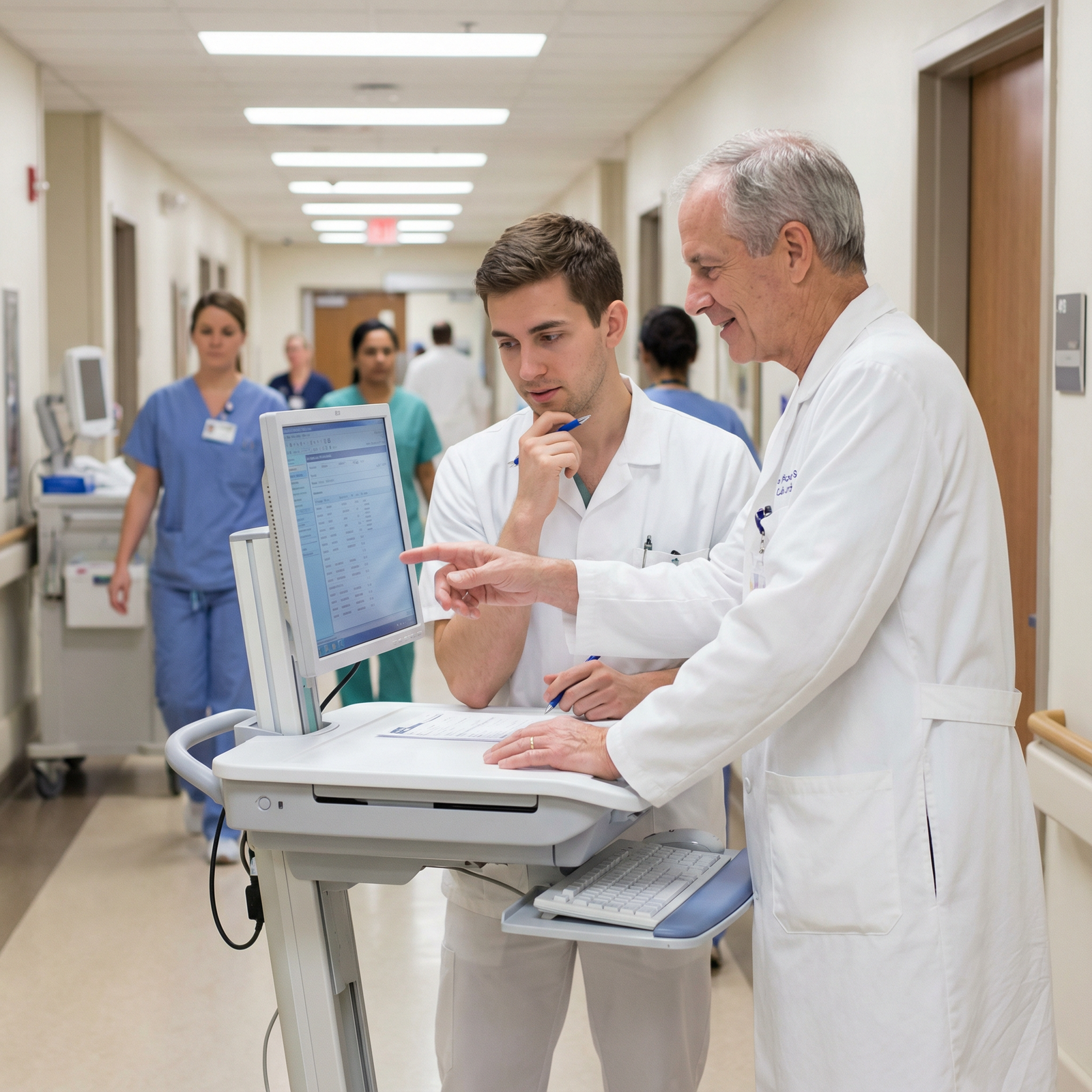
Strategy 2: Demonstrate Professionalism and Respect Consistently
Professionalism is one of the most visible—and rapidly judged—aspects of your behavior on Clinical Rotations. Reliable professionalism builds trust and sets the foundation for effective Mentorship and Networking.
Present Yourself as a Future Colleague
Dress and appearance:
- Follow your institution’s dress code. When in doubt, err slightly more formal.
- Clean white coat, neat clothing, appropriate footwear.
- Keep visible clutter (bulging pockets, disorganized notes) to a minimum.
Punctuality and reliability:
- Aim to be 10–15 minutes early for rounds, teaching sessions, and procedures.
- If you are running late for a legitimate reason, notify the team early and apologize briefly without long excuses.
Respectful communication:
- Address people by their preferred title (e.g., “Dr. ___”) unless invited to do otherwise.
- Use professional language in person and in written notes.
- Acknowledge guidance: “Thank you for explaining that approach; I hadn’t thought about it that way.”
Respect the Attending’s Time and Context
Attendings are juggling patient care, documentation, teaching, and often research or leadership responsibilities.
Be concise:
- When asking questions, give context in 1–2 sentences, then the question.
- Practice efficient case presentations that are organized and to the point.
Choose moments wisely:
- Complex career questions are better suited for downtime or after rounds, not in the middle of a new consult or code.
- If busy, ask: “Is there a better time later today when I could ask you a few questions about ______?”
Showing that you understand the clinical environment makes it easier for attendings to invest in you.
Strategy 3: Be a Team Player in the Clinical Environment
Rapport with attendings often grows out of how well you function as part of the entire healthcare team. Attendings notice students who collaborate respectfully with residents, nurses, advanced practice providers, and support staff.
Contribute Meaningfully to the Team
Help within your scope:
- Offer to gather vitals, call consults under supervision, or follow up on test results.
- Volunteer to write draft notes so residents can review and edit.
Be proactive, not passive:
- “Is there anything else I can help with for this patient or others?”
- “Would it be helpful if I followed up on the MRI result and updated the team?”
Respect all team members:
- Learn nurses’ and staff members’ names.
- Thank them for their help and heed their input about patients.
- Never speak negatively about team members; attendings recognize professionalism in how you handle conflict.
Support Your Peers
Rapport with attendings is also influenced by how you treat classmates and co-rotators.
Share resources and knowledge:
- Offer to review presentations together or share articles you find helpful.
- Help each other prepare for pimping questions or shelf exams.
Avoid unhealthy competition:
- Most attendings can tell when students are trying to “outshine” teammates at others’ expense.
- Focus on collaboration. Praise others publicly; compete only with your past self.
Recognize and celebrate wins:
- “That was a great presentation you gave on our patient’s anemia.”
- “Dr. X, Alex had a really insightful thought about the differential today.”
Positive team dynamics reflect well on you and encourage attendings to trust you as a future resident.
Strategy 4: Seek, Receive, and Apply Feedback Constructively
Being teachable is one of the most valued traits in a trainee. Students who actively pursue and act on feedback quickly build rapport with attendings and demonstrate readiness for increased responsibility.
Ask for Specific, Actionable Feedback
Generic questions like “Do you have any feedback?” often yield generic answers. Instead:
Be concrete:
- “Could you give me feedback on my patient presentations today—one thing I’m doing well and one thing I should change?”
- “I’m working on improving my physical exam skills. Is there a particular maneuver you’d recommend I practice more?”
Choose appropriate timing:
- After rounds
- At mid-rotation check-ins
- During a lull in clinic sessions
Respond Professionally, Even When Feedback Is Tough
Manage your immediate reaction:
- Maintain open body language and eye contact.
- Avoid arguing or explaining right away, unless clarification is requested.
Acknowledge and clarify:
- “Thank you—that’s really helpful.”
- “Just to make sure I understand, you’d like me to focus on organizing my assessment and plan more clearly, right?”
Reflect and document:
- Jot down feedback after the shift so you can track progress over time.
- Turn each piece of feedback into a specific goal for the next day.
Demonstrate Growth Over Time
Rapport strengthens when attendings see their feedback leading to visible change.
Show that you’ve implemented advice:
- “Yesterday you suggested I shorten my HPI and emphasize active issues. I tried that this morning—does this format work better?”
- “You recommended reading up on COPD exacerbation management; I reviewed the GOLD guidelines last night.”
Ask for follow-up assessment:
- “I’ve been working on this for the last few days—have you noticed any improvement?”
This creates a positive learning loop and signals that you value their time and input.
Strategy 5: Find Common Ground While Respecting Boundaries
Relationships deepen when you find human connection beyond exam scores and notes—while still maintaining professionalism.
Identify Shared Interests and Build Light Connection
Look for organic openings:
- Small talk on the way to the OR, between clinic patients, or while waiting for imaging.
- Compliments or questions about neutral topics: “I like your lapel pin—is that from your residency program?”
Possible shared interests:
- Hobbies (running, cooking, travel, music)
- Sports teams
- Medical education, health policy, global health, technology in medicine
Example conversation starter:
- “I heard you mention you ran a half marathon—do you still find time to run during busy weeks? I’ve been struggling with that as a student.”
These moments of connection help attendings see you as a person, not just a grade.
Use Humor Thoughtfully and Professionally
Humor can ease tension and build rapport when used wisely.
Do:
- Keep it light, positive, and inclusive.
- Let the attending set the tone; if they’re more serious, follow their lead.
- Use self-deprecating humor sparingly and only when it doesn’t undermine trust in your competence.
Do not:
- Make jokes about patients, colleagues, or sensitive topics.
- Use sarcasm that can be misunderstood.
- Attempt humor in high-acuity or emotionally charged clinical moments.
When in doubt, err on the side of professionalism.
Strategy 6: Be Consistent, Reflective, and Mindful
Rapport isn’t built in a single impressive presentation—it’s built through dozens of small, consistent actions over time.
Show Up the Same Way, Day After Day
Reliability:
- Do what you say you’ll do—call families, follow up tests, complete notes.
- If you miss something, acknowledge it and correct it promptly.
Steady attitude:
- Maintain a calm, receptive demeanor, even when tired or stressed.
- Avoid obvious mood swings that affect team dynamics.
Regular check-ins with attendings:
- “Is there anything I should adjust about how I’m participating on rounds?”
- “Are there particular patients you’d like me to focus on tomorrow?”
Over time, this consistency builds trust and respect.
Practice Ongoing Self-Reflection
Reflection is a powerful tool in Medical Education and clinical development.
Daily micro-reflection (5–10 minutes):
- What went well today in my interactions with attendings and the team?
- What moment made me uncomfortable, and why?
- What is one behavior I want to try differently tomorrow?
Mid-rotation check-in with yourself:
- Am I demonstrating initiative, curiosity, and professionalism?
- Do I understand expectations for my level?
- Are there attendings I’d like to ask for Mentorship or letters from?
Self-awareness allows you to adapt your style to different attendings and environments.
Be Mindful and Present in Interactions
Mindfulness during Clinical Rotations doesn’t require elaborate meditation routines.
- Practical mindfulness techniques:
- Before rounds, take 3 deep breaths to center yourself.
- During teaching moments, focus fully on the speaker—avoid mentally rehearsing your next answer.
- In difficult conversations, notice your internal reactions without letting them control your behavior.
Students who are grounded and attentive are easier to teach and more enjoyable to work with.

Turning Rapport into Long-Term Professional Relationships
Once you’ve built good rapport, think about how to maintain and grow those connections into sustained professional relationships and mentorship.
Ask for Letters of Recommendation Thoughtfully
If you’ve worked closely with an attending and received positive feedback:
Choose the right moment:
- Late in the rotation or at a scheduled feedback meeting.
- After they’ve seen you in multiple settings (rounds, clinic, call).
Be direct but respectful:
- “I’ve really valued working with you and your feedback on my growth. Would you feel comfortable writing a strong letter of recommendation for my residency applications in ___?”
Provide helpful materials:
- Updated CV
- Personal statement draft (if available)
- Brief summary of patients or projects you worked on together
Maintain Contact After the Rotation
Send a brief thank-you email within a week of finishing:
- Mention specific things you appreciated about their teaching.
- Share one way the rotation influenced your goals or interests.
Update them periodically:
- When you choose a specialty
- After major milestones (Step scores, match result, research presentations)
- Keep messages concise and focused.
Over time, these relationships build your professional network and can lead to future opportunities in research, residency, or employment.
FAQs: Building Rapport with Attendings During Clinical Rotations
Q1: Can I realistically build good rapport with multiple attendings on one rotation?
Yes. You may not connect equally deeply with everyone, but you can establish solid, professional relationships with several attendings. Prioritize those you work with most consistently (e.g., your primary ward or clinic attendings), while still being engaged and respectful with others. Think breadth for Networking and depth for potential Mentorship and letters.
Q2: What if I struggle to connect personally with a particular attending?
Not every personality combination will click—and that’s okay. Focus on what you can control:
- Be prepared, punctual, and professional.
- Ask clear, focused clinical questions.
- Seek specific feedback on performance rather than personal rapport.
Even if the connection never feels “warm,” you can still learn a lot and leave a positive professional impression.
Q3: How should I handle a difficult or intimidating attending?
Approach the situation with professionalism and boundaries:
- Separate style from substance—an attending may be brusque but still an excellent teacher.
- Keep your focus on learning: ask for clarification, not confrontation.
- If you feel you’re being treated unfairly or experiencing mistreatment, document specific incidents and seek guidance from a trusted resident, clerkship director, or dean’s office.
Remember that preserving your wellbeing and safety is part of professional behavior.
Q4: When is it appropriate to share personal challenges or stress with an attending?
It depends on your relationship and the context. Some attendings are very open to supporting students’ wellbeing; others may keep a more formal distance.
- Appropriate situations might include:
- You are struggling with a major life event that is affecting your performance.
- You need schedule accommodations for health or family reasons.
- Keep disclosures focused and relevant, and avoid oversharing. You might say:
- “I’m dealing with a family situation that’s affecting my focus. I’m working on strategies to manage it, but I wanted to let you know in case you notice I seem quieter than usual.”
If unsure, you can also approach student affairs or a trusted faculty mentor first.
Q5: Can the rapport I build during rotations really help after I graduate?
Absolutely. Strong Professional Relationships with attendings often lead to:
- Mentorship during residency application decisions
- Letters of recommendation that highlight your growth and character
- Introductions to program directors or research collaborators
- Career advice years later, even across institutions and specialties
Many physicians can trace key opportunities back to relationships they formed as medical students during Clinical Rotations.
By approaching your rotations with curiosity, professionalism, teamwork, and consistent self-reflection, you can transform everyday interactions with attendings into powerful engines for learning, Mentorship, and Networking. These skills will serve you well far beyond third-year clerkships—into residency, fellowship, and your career as a practicing physician.