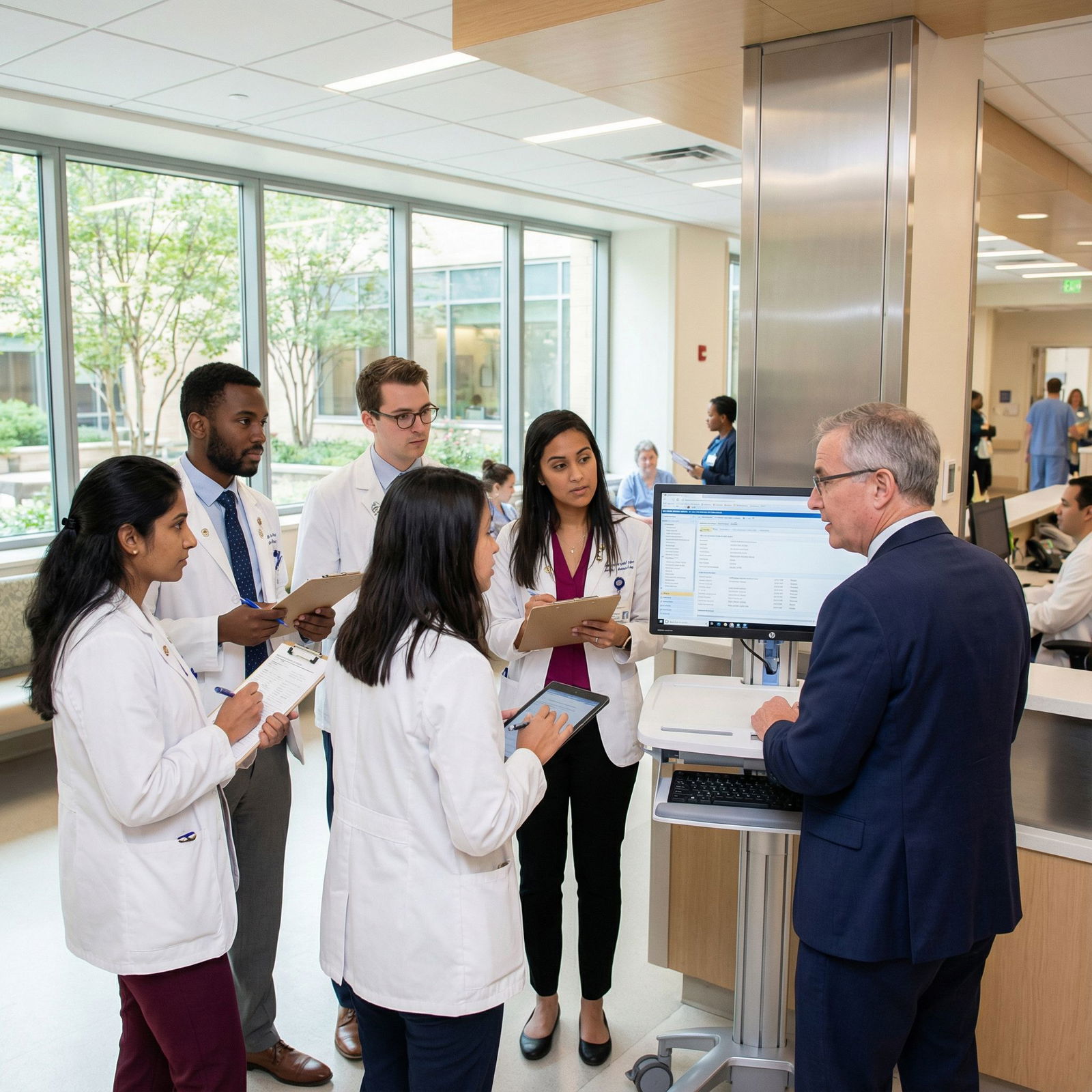
Clinical rotations are where classroom knowledge turns into real patient care. They are also where attendings, residents, and program directors start forming lasting impressions of you—not just as a student, but as a future colleague. Many students ask, “What do attendings actually care about?” or “How do I stand out without being annoying?”
This guide breaks down the real-world behaviors and mindsets that attendings consistently value: strong communication skills, professionalism, initiative, and patient-centered care. Whether you’re just starting third year or moving into sub-internships, these principles will help you thrive in clinical rotations and build the foundation for residency success.
Understanding the Purpose of Clinical Rotations
Clinical rotations aren’t just about checking boxes or surviving long days on the wards. They are a critical phase of medical education where you:
- Learn to apply medical knowledge to real patients
- Develop clinical reasoning and diagnostic skills
- Practice communication skills with patients and the healthcare team
- Demonstrate professionalism and reliability
- Show attendings and residents what kind of physician you are becoming
Attendings know you are still learning. They do not expect you to know everything or perform perfectly. What they look for instead is potential: your curiosity, work ethic, integrity, and capacity to grow. Once you understand this, the “secrets” of successful rotations become much clearer.
Building Strong Relationships: Communication Is Your Core Skill
Effective communication is one of the most important predictors of success on clinical rotations—and of your future success as a physician. Attendings watch closely how you communicate with them, with the team, and especially with patients.
1. Mastering Open and Professional Communication
Attendings want students who communicate clearly, respectfully, and proactively. This doesn’t mean talking constantly. It means:
- Asking thoughtful questions at appropriate times
- Confirming your understanding of plans
- Being honest about what you know and don’t know
- Keeping the team updated on your tasks and patient issues
Practical Tips for Effective Communication
Be concise and structured
When you present, use a logical format (e.g., SOAP or problem-based). Don’t read from the chart; synthesize what’s important.Ask targeted questions
Instead of: “What does CHF mean?”
Try: “For this patient with heart failure with reduced EF, what features would make you consider adjusting the guideline-directed medical therapy today?”Clarify expectations early
On day 1, ask your resident or attending:
“How do you like presentations? How long should they be? How often should I update you on patient changes?”Own your knowledge gaps
If you don’t know an answer, say: “I’m not sure, but I’ll look it up and report back.” Then actually follow through.
Respectful Professional Interaction
- Address attendings formally (e.g., “Dr. Smith”) unless they invite you to do otherwise.
- Avoid interrupting during rounds; jot down questions and ask at natural breaks.
- In conflicts or misunderstandings, stay calm, factual, and respectful.
2. Establishing Rapport with Attendings and the Team
Strong working relationships make rotations more enjoyable and educational. Attendings appreciate students who are engaged, approachable, and professional.
Strategies to Build Rapport
Be present and engaged
- Arrive a bit early to get sign-out, review patients, and be ready for rounds.
- Don’t disappear; if you need to leave (e.g., lecture, exam), tell the resident or attending.
Show interest beyond your “required” tasks
- Ask to observe or assist in procedures.
- Volunteer to follow up on lab results, imaging, or discharge planning.
Connect like a future colleague
Without overstepping boundaries, you can:- Ask attendings about their career paths or fellowship choices.
- Share your interests in a specialty and ask for advice:
“I’m considering internal medicine—are there skills I should especially focus on during this rotation?”
Understand hierarchy but collaborate respectfully
Residents, nurses, and staff are your best teachers. Treat everyone with the same respect you give attendings.

Professionalism: The Non-Negotiable Foundation
Professionalism is one of the top domains evaluated on every rotation. Attendings pay very close attention to behaviors that reflect integrity, reliability, and respect.
3. Punctuality, Preparedness, and Reliability
Being on time and prepared is the baseline expectation—not a way to “stand out.” Failing in these areas quickly erodes trust.
How to Demonstrate Reliability
Be consistently punctual
- Aim to arrive 10–15 minutes early.
- Anticipate transportation or parking issues and plan accordingly.
- If you’re running late due to something unavoidable, notify the team as early as possible.
Prepare for your patients
- Pre-round: Review overnight events, vitals, labs, and notes.
- Know your patients’ active problems, medications, and key exam findings.
- Anticipate next steps in their care (e.g., “Today we should re-evaluate if they’re ready for discharge.”)
Follow through on every task
If you say you’ll call a consultant, follow a lab, or update a family member, do it—and close the loop with the team.
4. Professional Appearance and Demeanor
Your appearance and behavior influence how patients and staff perceive you—and by extension, your attending and institution.
Dressing the Part in Clinical Rotations
Follow the dress code
- Some services prefer business casual with a white coat; others prefer scrubs.
- When in doubt, err slightly more formal on day 1 and adjust based on team norms.
Pay attention to grooming and hygiene
- Clean white coat, name badge visible.
- Neat hair, minimal fragrance, clean shoes.
- Nails short and clean, especially in procedural or patient-contact-heavy settings.
Professional Conduct in Every Interaction
- Avoid complaining about hours or patients in public spaces or on social media.
- Protect confidentiality—never discuss patient details where you can be overheard.
- If you make a mistake, own it early and honestly:
“I realized I documented the wrong time for that medication; I’ve corrected it in the chart and informed the nurse.”
These behaviors signal to attendings that you are trustworthy, safe, and ready to take on more responsibility.
Initiative and Drive: Showing You Care About Learning
Attendings highly value students who are proactive, curious, and eager to learn—not those who passively stand at the back of the room.
5. Demonstrating a Proactive Attitude
Being proactive doesn’t mean being overbearing. It means looking for ways to contribute and learn without waiting to be told what to do.
Ways to Show Initiative (Without Overstepping)
Volunteer for meaningful tasks
- “Would it be helpful if I called the patient’s family with an update after rounds?”
- “Can I pre-chart for new admissions to help the team?”
Seek out learning opportunities
- Ask to scrub into procedures.
- Request to perform parts of the exam or history you’re comfortable with.
- When appropriate: “Could I try performing the knee exam under your supervision?”
Read with purpose
- After seeing a condition, read about that specific disease, guideline, or imaging.
- The next day, briefly share: “I looked up X last night—may I share a quick 30-second takeaway?”
This kind of initiative shows enthusiasm and respect for the team’s time.
6. Actively Seeking and Using Feedback
Feedback is one of your most powerful tools for growth, but many students avoid it because it feels uncomfortable. Attendings notice when you genuinely want to improve.
How to Get Useful Feedback
Ask at manageable intervals
- Mid-rotation: “Could you share one thing I’m doing well and one thing I should work on for the rest of the rotation?”
- After a presentation: “Any tips on making my presentations more focused or clear?”
Make feedback easy for them
- Be specific: “How was my differential diagnosis for that patient with abdominal pain? What could I have added?”
Implementing Feedback in Real Time
- Write down feedback immediately.
- Identify 1–2 concrete action steps (e.g., “Organize presentation by problems,” “Commit to reading about one chief complaint each night”).
- Show visible change: “Yesterday you mentioned my presentations ran long; today I aimed to make them more concise—does this format work better?”
Attendings are much more likely to advocate strongly for students who clearly grow over the course of a rotation.
Patient Care and Teamwork: Putting Patients at the Center
Ultimately, attendings care deeply about how you interact with and advocate for patients. Clinical knowledge can be taught more easily than empathy, communication, and teamwork.
7. Excelling in Patient Interaction and Bedside Manner
Attendings look closely at how you communicate with patients and families, especially when explaining diagnoses, tests, or treatment plans.
Patient-Centered Communication Skills
Start with introductions and consent
- “Hi, I’m [Name], a medical student working with Dr. X. Is it okay if I talk with you and examine you today?”
Use plain language
- Replace “You have myocardial infarction” with “You’ve had a heart attack, which means…”
- Ask: “Can you tell me in your own words what you understand so far?”
Listen actively
- Sit down when possible, make eye contact, and avoid looking at your phone.
- Reflect emotion: “It sounds like this has been really overwhelming for you.”
Respect cultural and individual differences
- Ask about preferences: “How involved would you like to be in decisions about your care?”
- Be sensitive to interpreter needs; never rely on family members for crucial medical interpretation when professional interpreters are available.
8. Being a Team Player on the Ward
High-quality patient care is always a team effort. Attendings expect you to integrate smoothly into the healthcare team and respect everyone’s roles.
Teamwork Behaviors Attendings Notice
Respect for all staff
- Introduce yourself to nurses, physical therapists, pharmacists, social workers.
- Ask for their insights: “You’ve been with this patient much of the day—have you noticed anything we should know?”
Clear communication with the team
- Update the resident when something important changes with your patient.
- Close the loop: “I spoke with radiology; the CT will be done at 2 PM, and I’ll follow up on the report.”
Willingness to help
- Within your scope, offer help:
“Can I help you gather supplies for that procedure?”
“Would it help if I prepared the discharge instructions draft?”
- Within your scope, offer help:
By contributing to smooth team functioning, you show that you’re thinking like a resident and future attending, not just a student.

Reflection and Adaptability: Turning Experience into Growth
Rotations are demanding and sometimes humbling. The students who accelerate their growth are those who consistently reflect, adapt, and learn from every experience.
9. Practicing Structured Self-Reflection
Self-reflection helps you transform daily experiences into lasting skills and professional identity.
Simple Reflection Practices for Clinical Rotations
Keep a short reflection journal
Each day or several times a week, jot down:- One thing you did well
- One thing you want to improve
- One memorable patient interaction and what you learned
Use reflection prompts
- “What challenged my assumptions today?”
- “What did I learn about communication or professionalism from this situation?”
- “How did I contribute to patient care today?”
De-identify all details
Protect patient privacy—never include names or specific identifiers.
10. Adapting to Feedback and Changing Expectations
Different attendings and services will have different styles and priorities. Adaptability is a marker of maturity and professionalism.
How to Adapt Effectively
Observe patterns
Some attendings want very detailed presentations; others prefer a shorter, problem-focused style. Adjust quickly based on their feedback and examples.Stay positive under critique
- Avoid defensiveness: listen fully before responding.
- Thank them for their feedback—even when it’s hard to hear.
- Convert criticism into a specific plan: “Starting tomorrow, I’ll reorganize my notes to highlight assessment and plan more clearly.”
Embrace discomfort as growth
Feeling out of your comfort zone is normal. Attendings don’t expect perfection; they expect progress. Showing that you can accept feedback, adapt, and improve is one of the most powerful ways to stand out.
Putting It All Together: Becoming the Student Attendings Remember
When attendings describe outstanding students, they rarely focus on raw test scores. Instead, they mention qualities like:
- Communicates clearly and respectfully
- Shows up prepared and reliable every day
- Demonstrates genuine care for patients
- Works well with the entire team
- Seeks feedback and visibly improves
- Has a positive, curious attitude—even when tired
If you consistently focus on communication skills, professionalism, initiative, and patient-centered care, you will not only perform well on clinical rotations—you will also start shaping the kind of physician you want to become.
FAQs About Succeeding in Clinical Rotations and Impressing Attendings
1. What common mistakes should I avoid during clinical rotations?
Some of the biggest pitfalls include:
- Being late or leaving early without explanation
- Appearing disinterested (e.g., constantly on your phone, not taking notes)
- Arguing defensively when given feedback
- Speaking disrespectfully about patients or staff
- Falsifying or guessing exam findings or data
If you’re unsure how something was interpreted, ask your resident for honest input. Small course corrections early prevent bigger problems later.
2. How can I stand out to my attending in a positive way?
You don’t need to be the smartest person on the team to stand out. Focus on:
- Being reliably prepared on your patients
- Giving organized, concise presentations
- Showing genuine empathy and professionalism with patients
- Asking thoughtful, relevant questions
- Volunteering for appropriate responsibilities
- Following up on feedback and showing visible improvement
Many attendings remember students who worked hard, cared deeply about patient care, and were pleasant team members far more than those who simply answered the most questions correctly.
3. What should I do if I’m struggling with a particular skill or specialty?
Struggling is normal, especially in unfamiliar specialties or skills. To handle this constructively:
- Tell your resident or attending early: “I’m finding [skill/area] challenging and would appreciate any guidance or resources.”
- Ask to observe or practice with supervision (e.g., more practice with cardiac exams or progress notes).
- Use targeted resources: clinical skills books, reputable online videos, or simulations.
- Focus on incremental improvement rather than perfection.
Attendings are generally more impressed by honest effort and growth than by initial performance.
4. How can I use my clinical rotation experiences in my residency application?
Rotations are a rich source of material for:
- Personal statements (reflective stories about key patient encounters or growth moments)
- ERAS experiences section (specific roles and responsibilities)
- Letters of recommendation (attendings can speak to your professionalism, communication skills, and patient care)
- Interview answers (“Tell me about a time you faced a challenge on the wards”)
Keep a secure, de-identified record of important cases or experiences and what you learned. These reflections will help you when you’re writing or interviewing months later.
5. What are the best ways to improve my clinical reasoning and patient care during rotations?
To steadily improve your clinical reasoning:
- Always generate a differential diagnosis, even if brief, and share it with your resident.
- When you look up information, connect it to your patients, not just abstract facts.
- Ask attendings to “talk out loud” through their reasoning when making a decision.
- Compare your assessment and plan with the team’s and identify gaps.
- Practice “If/then” thinking: “If the CT is negative, then I think we should…”
This active approach transforms clinical rotations from passive observation into deliberate, high-yield medical education.
By focusing on clear communication, professionalism, initiative, and patient-centered care, you’ll develop into the kind of student attendings are excited to teach—and the kind of resident programs are eager to train.