

The rotation where your attending doesn’t like you feels less like “clinical education” and more like “slow public execution.”
You’re Not Crazy: This Feels Terrible For A Reason
Let’s say it out loud: having an attending who clearly doesn’t like you is one of the most sickening feelings in medical school.
You walk in every day bracing for impact.
You overthink every patient presentation on the way to the room.
You replay every interaction on your commute home.
And the soundtrack in your head sounds like:
- “They hate me. This is going to tank my eval.”
- “I’m never getting a good letter from this rotation.”
- “What if this ruins my chances at [insert dream specialty/program]?”
- “What if I actually am incompetent and this is the first person to say it out loud?”
I’ve watched students who were solid, kind, hardworking people get absolutely crushed by one cold, impatient attending. Not because they failed the rotation. But because they convinced themselves they’d just lost their entire future over four weeks with one human having a bad month.
So let’s be very direct about the core fear underneath all of this:
You’re worried this one attending’s dislike is going to permanently damage your career.
Most of the time? That’s wrong.
Not “kinda wrong.”
Just… wrong.
First: Is It Actually “They Don’t Like Me”… Or Something Else?
Your brain is going to default to “They hate me personally.” That’s what anxious brains do.
Before we assume that, you need a reality check. Not a vibes check. A data check.
Look for these patterns:

Signs this might not actually be about you
- They’re short with everyone on the team, including residents and other attendings.
- They openly complain about “students these days” as a category.
- They rush, interrupt, or cut off most people, not just you.
- Residents warn you: “Yeah, Dr. X can be… intense. Don’t take it personally.”
Translation: they’re generally difficult, burned out, or socially blunt. You just happen to be there.
Signs it might feel worse than it is
- You haven’t actually gotten explicit negative feedback, just… vaguely cold vibes.
- Your residents say you’re doing fine or good, but you don’t believe them.
- Your written feedback from other rotations has been solid.
- You’re catastrophizing (“I’m going to fail”) even though nothing concrete has happened.
I’ve seen students spiral over one raised eyebrow in rounds, when the attending literally didn’t even remember their name a week later. Your emotional experience is real. It just might not map to the actual threat level.
Signs there is a problem with your performance
This part’s going to sting, but it’s important.
- The attending or resident has explicitly said things like “You’re unprepared,” “You’re not improving,” or “I’m concerned.”
- You’re repeatedly late, missing tasks, or forgetting key patient info.
- You’ve made the same mistake multiple times despite feedback.
- Other team members (residents, fellows, nurses) have also expressed concerns.
Even then, “they don’t like me” is still not the actual issue. The issue is specific behaviors you can work on. There’s a big difference between “I’m doomed” and “I need to adjust quickly.”
How Much Power Does This One Attending Actually Have?
Your anxiety is telling you: “One bad rotation = destroyed future.” That’s just not how the system works.
Here’s the unglamorous reality of how much this actually matters.
| Area | Impact of One Harsh Attending |
|---|---|
| Rotation grade | Possibly lower than others, rarely a fail if you’re trying |
| Dean's letter (MSPE) | One slightly weaker comment buried in pages of data |
| Away rotations | Almost never see this specific eval |
| Residency applications | One eval among dozens; patterns matter more |
| Overall career | Annoying bump, not a fatal blow |
Residency programs are not sitting around thinking, “Well, they had 12 great evals, but this one attending on IM in October of MS3 didn’t vibe with them, so let’s toss their app.”
What they care about:
- Patterns (chronically “disengaged,” “unreliable,” “unprofessional”)
- Big red flags (professionalism issues, dishonesty, patient safety problems)
- Global picture: board scores, class rank, overall comments
One hostile, irritable, or perfectionist attending? That’s not a pattern. That’s noise.
You feel like this rotation is your whole world because right now…it is. But on paper, in your final record, it will be a tiny slice.
What You Can Do Right Now On This Rotation (While You’re Stuck In It)
You can’t change their personality. You probably can’t fix their burnout, their marriage, their sleep, or the 27 administrative tasks they’re behind on.
But there are things you can control.
1. Get concrete feedback from someone safer
If your attending scares you, don’t start with them. Go to a resident you trust.
Say something like:
“I’m worried Dr. X doesn’t think I’m doing well, and I really want to improve. Are there specific things you’ve noticed that I should focus on the next week or two?”
Don’t ask, “Do they hate me?” Ask, “What can I do better?”
Then shut up and listen. Resist the urge to defend yourself. Write down what they say. Pick two things and aggressively work on those.
2. Ask your attending one focused question
Yes, this is terrifying. Do it anyway, but keep it specific and short.
Try:
“Dr. X, I really want to make sure I’m improving. Could you share one thing I could do differently in my presentations or on the wards tomorrow?”
You’re not asking for a performance review. You’re asking for one thing. Attending brains can handle one thing.
Then actually do it. Visibly. The next day.
Even difficult attendings sometimes soften slightly when they see a student trying very clearly to follow their guidance. If they don’t soften? You’ve still created a record (in their minds and your residents’) that you were receptive to feedback.
3. Turn down the “personality performance” and turn up the basics
When you feel disliked, you start overcompensating. Talking more. Trying to be extra charming. Over-explaining your reasoning.
That usually backfires.
Instead, lock in on the unsexy fundamentals:
- Be 5–10 minutes early. To everything.
- Know your patients cold: vitals, labs, imaging, plan.
- Keep your presentations tight: no rambling, clear assessment.
- Write notes early and respond quickly to pages/requests.
- Help the team without making a show of it (print lists, follow up on labs, update consult recs).
You’re not auditioning to be their favorite. You’re trying to make it basically impossible for anyone to say you were lazy, unprepared, or disengaged.
4. Protect your mental bandwidth ruthlessly
This is the part nobody talks about.
Rotations like this don’t just hurt your feelings. They eat your brain.
You start spending 3 hours a night replaying conversations instead of studying. You sleep badly. You wake up already drained.
You need triage:
- Sleep is non-negotiable. Six hours is the absolute floor. Under that, your performance will actually drop and confirm your worst fears.
- Reduce non-essential obligations. This is not the month to add new projects if you’re drowning emotionally.
- Have one person you vent to freely (friend, partner, therapist), and then try not to rehash it with everyone you know. Reliving it 10 times doesn’t help.
Your goal isn’t to feel great. Your goal is to stay barely functional enough to not set yourself up for an actual bad evaluation from being exhausted, disorganized, or checked out.
Worst-Case Scenarios (And What Actually Happens)
Let’s lean into your anxiety brain for a second and walk through the “what if it really is bad?” scenarios.
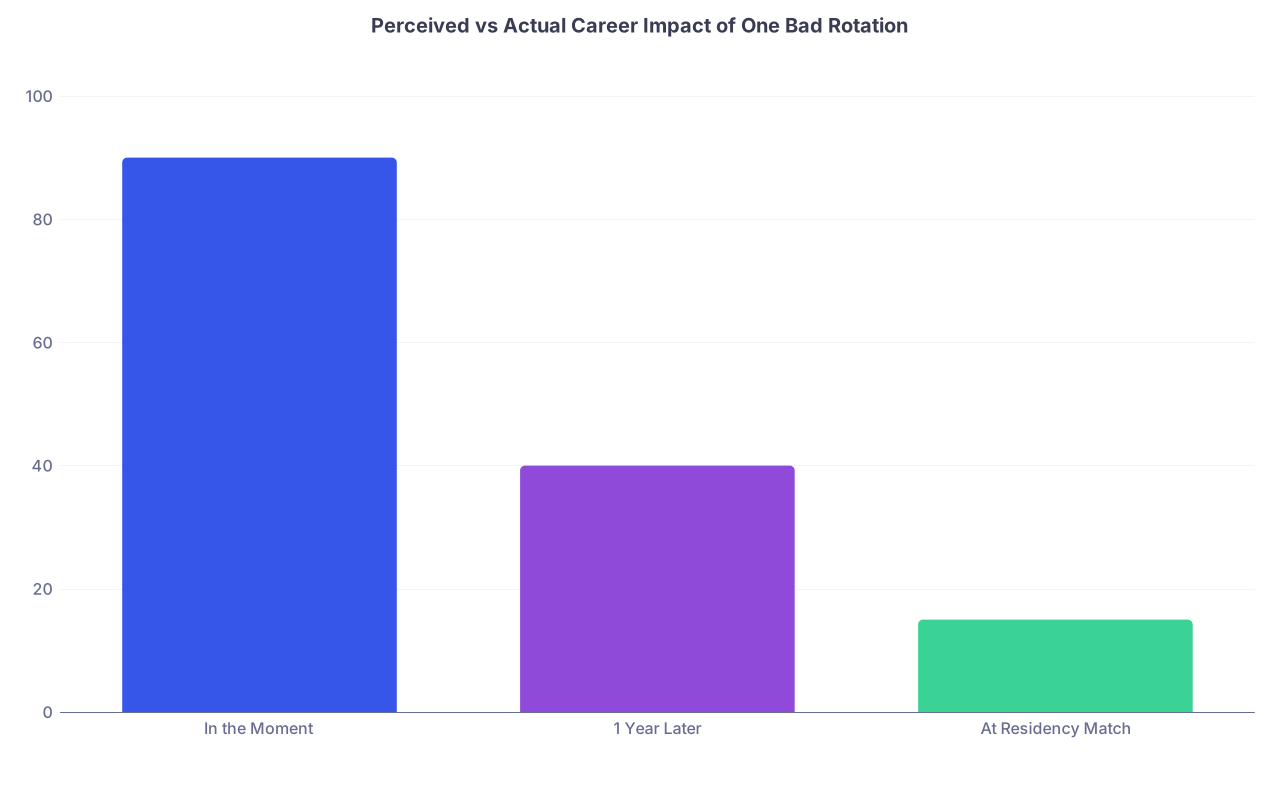
| Category | Value |
|---|---|
| In the Moment | 90 |
| 1 Year Later | 40 |
| At Residency Match | 15 |
Think of these numbers like: how huge it feels to you vs how big it actually is in your long-term career. You’re at a 90 now. By the time you match, this specific rotation is like a 15.
Scenario 1: You get a mediocre eval (not glowing, not terrible)
Happens all the time. The narrative in your head: “Everyone else is getting honors and I’m barely scraping by.”
What actually happens:
- It blends into the pile of “solid, average” evaluations.
- You hustle on other rotations, collect strong comments there.
- In your MSPE, it looks like: some great comments, some okay ones. Like a normal human.
Programs are suspicious of people with all perfect evals anyway. A little variation is normal.
Scenario 2: You get a truly bad evaluation from this attending
It’s rare, but it happens.
Let’s say they say things like “below expectations,” “not prepared,” or “minimal initiative,” and your grade reflects that.
What you do:
- Request a meeting with the clerkship director. Calmly, not in full meltdown mode.
- Bring specific examples of your effort and any contradictory feedback from residents or others.
- Ask for clarity: “I want to understand what went wrong here and how I can address it moving forward.”
Sometimes, the director will recognize the attending as “difficult” and mentally discount their extremes. Sometimes, they’ll offer remediation or another chance to show improvement. Either way, you’re not silently taking a hit; you’re documenting that you care and you’re trying.
One bad eval doesn’t automatically tank your Dean’s letter. Directors know who their harsh graders are.
Scenario 3: You actually fail the rotation
This is the nightmare scenario for most anxious students.
Yes, residency programs will see a failed rotation. Yes, they will ask about it. No, it doesn’t automatically kill your chances—especially if:
- You remediated and passed strongly.
- Your later rotations are clearly better.
- You have a coherent explanation that doesn’t throw everyone under the bus but does show growth.
Something like:
“On my surgery rotation I struggled early with managing time and organization on a high-volume service and received a failing grade. I worked with my advisor, remediated the rotation, implemented concrete changes to how I prepare, and my subsequent clerkship evaluations reflect that growth.”
Is it ideal? No. Is it survivable? Yes. I’ve seen it, repeatedly.
How To Not Let This Attending Live In Your Head Rent-Free Forever
The real trap of “my attending doesn’t like me” isn’t just the grade. It’s the identity hit.
“I’m not cut out for this.”
“I’m the weak link.”
“Everyone else is thriving and I’m barely holding on.”
Here’s the truth you’re not going to feel, but you need to hear: every single one of your classmates has had—or will have—a rotation like this. Some just don’t talk about it.
The student who seems effortlessly confident? Had an attending who once told them, “You’re not impressing me.”
The resident you admire? Has a story about failing a shelf or getting a brutal eval.
The attending you’re scared of? Once got destroyed by their attending.
You’re not uniquely broken. You’re just in your version of that story right now.
Your job isn’t to convert this attending into a fan. Your job is simpler and much more boring:
- Minimize actual, objective damage (show up, work, fix what you can).
- Collect better data about your performance from people who aren’t in a bad mood 24/7.
- Survive this month with enough energy left to crush a different rotation with a more humane attending.
You don’t have to turn this into some grand “I learned so much from suffering” redemption arc. You just have to get out with a passing grade and your sanity mostly intact.
That’s enough.


