
Harsh attendings are not automatically bad for your career. Unchecked abuse is. There’s a difference, and most students blur the line.
You already know the folklore:
“Mean attendings ruin evals.”
“Pimping is toxic.”
“Any rotation that feels bad must be bad for you.”
That story is emotionally satisfying. It is not what the data actually shows.
Let me separate three very different things people lazily lump together:
- Legitimate high expectations and direct feedback
- Old-school, high-pressure “pimping” style teaching
- True mistreatment and abuse
Academically, clinically, and long‑term for your career, those three do not have the same impact. In fact, sometimes the people you complain about on GroupMe are the ones who quietly end up writing the most powerful letters and pushing your skills the furthest.
Let’s walk through what the research actually says, then translate it into what you should do when you’re stuck with a difficult attending.
What the Data Actually Says About “Harsh” Teaching
There’s decent data on three relevant domains:
- Pimping / high-pressure questioning
- Mistreatment and humiliation
- Learner performance and career outcomes
They are not interchangeable.
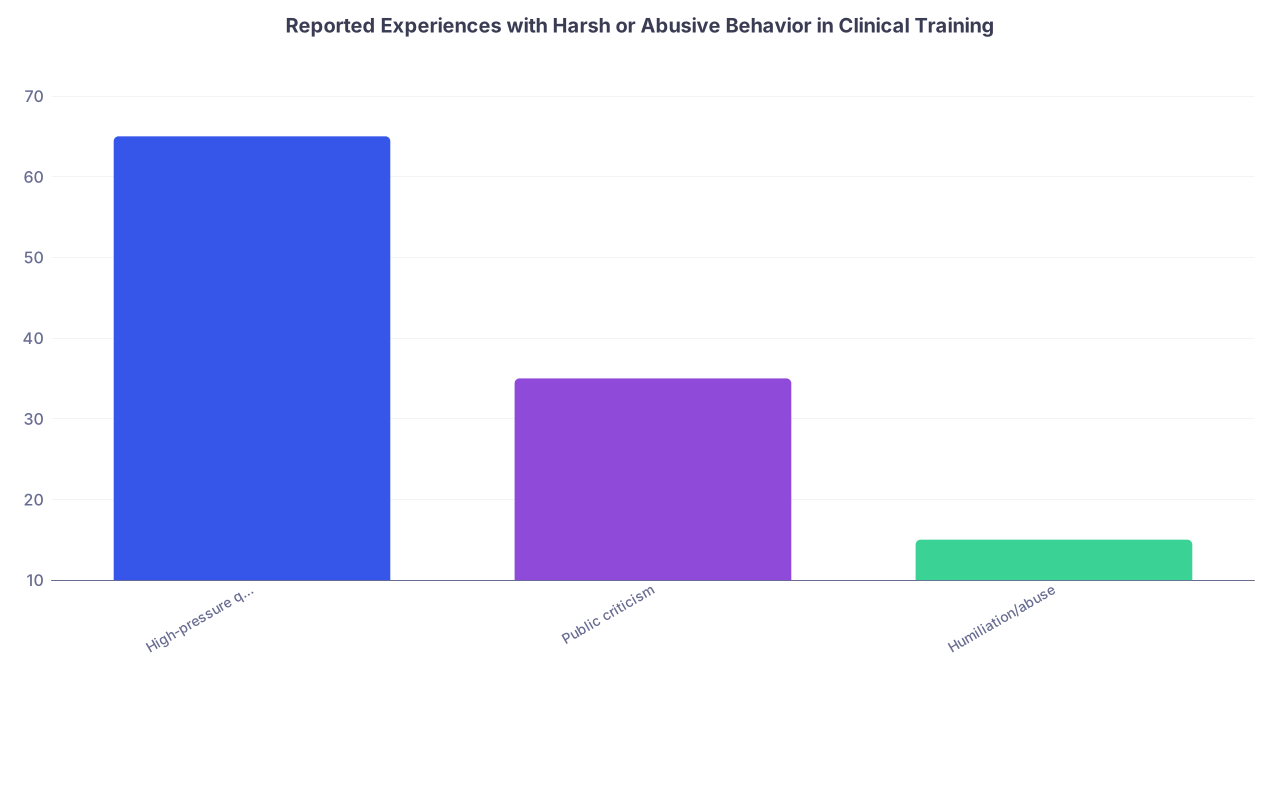
| Category | Value |
|---|---|
| High-pressure questions only | 65 |
| Public criticism | 35 |
| Humiliation/abuse | 15 |
This kind of split shows up again and again: most students experience “pressure”; a smaller but significant fraction experience outright humiliation; fewer still experience what any reasonable person would call abuse.
High-pressure questioning: uncomfortable ≠ harmful
Studies of “pimping” are messy, but the pattern is consistent:
- Many students dislike high-pressure questioning.
- Many also report it improves knowledge retention and clinical reasoning—when done without humiliation.
Several survey-based studies (internal medicine, surgery, EM) show:
- Learners often rate “rapid-fire questions on rounds” as stressful, but
- They also associate it with:
- Better preparation and reading habits
- Stronger understanding of pathophysiology
- Improved exam performance (shelf/Step style thinking)
Faculty who use aggressive questioning often believe—and not totally without evidence—that discomfort sharpens attention and memory. There’s cognitive psychology to support this: “desirable difficulties” and retrieval practice improve learning. Being forced to retrieve information under mild stress can cement knowledge.
Key word: mild.
When it crosses into shame, the benefits evaporate.
Mistreatment and humiliation: that is harmful
The mistreatment literature is not subtle. Psychological or physical abuse from attendings and residents is consistently associated with:
- Higher rates of burnout and depression
- Lower self-confidence
- Lower sense of professional identity and belonging
- In some studies, worse performance and even attrition
We’re talking about things like:
- Public ridicule (“Are you stupid?” “Did you even go to medical school?”)
- Threats (“I’ll make sure you never match here.”)
- Discriminatory remarks (sexist, racist, homophobic “jokes”)
- Unreasonable, retaliatory grading
That’s not “challenging.” That’s unprofessional and, in many places, reportable.
Here’s the nuance students often miss: the negative outcomes are tied to humiliation and disrespect, not to “the attending seemed strict” or “I felt dumb because I got questions wrong.”
The Harsh Attending Archetypes: Not All Equal
In real life, “harsh” attendings fall into predictable buckets. Some are awful for you. Some are secretly the best thing that happens to your clinical skills.
1. The Demanding Coach
Traits you’ll recognize:
- Rapid-fire questions, expects you to have read last night
- Cuts you off when you ramble
- Tells you, bluntly, when you’re wrong
- Holds high standards for notes, presentations, and follow-through
- BUT: No personal insults, no mocking, no retaliation
Students often walk away saying, “That was brutal… but I learned a ton.”
From an outcomes perspective, these attendings:
- Frequently write detailed, enthusiastic letters for hard‑working students
- Are overrepresented among “most effective teachers” when residents are surveyed, despite lower “likeability” scores from some students
- Push you into habits that matter for residency: concision, anticipation, responsibility
This type feels harsh but is usually good for your career if you lean in instead of withdrawing.
2. The Public Humiliator
Traits:
- Questions are designed to expose what you do not know
- Laughs, sighs theatrically, or rolls eyes when you answer
- Uses lines like “A first-year should know this” in front of others
- Makes you the example of “what not to do” for the team
Here, the evidence is clear: repeated humiliation is linked with worse mental health, worse sense of competence, and often disengagement. These students read less, ask fewer questions, and focus on surviving rather than learning.
Career-wise?
- Evals from these attendings are highly variable. Some still give “Honors” if you perform; others are petty graders.
- The longer-term harm is more about confidence and identity than one bad eval.
3. The Abuser / Bully
This is rarer but real. Indicators:
- Threatens your career or grades for non-clinical issues (e.g., you asked to go to your own doctor’s appointment)
- Uses slurs, personal attacks, or physical intimidation
- Retaliates after reasonable feedback or schedule requests
- Tries to isolate you from the rest of the team
The data here is ugly:
- Higher rates of depression, anxiety, and even suicidal ideation
- Students in these environments are more likely to consider leaving medicine or avoid that specialty altogether
- Zero evidence these interactions “toughen you up” in any useful way
This is the line where “harsh attending” stops being a teaching style and becomes a professionalism violation. Different category. Full stop.
How “Harsh” Attendings Actually Affect Evaluations and Careers
Let’s dismantle the myth that any tough attending automatically sinks your grade or your match.

Evaluations: not as simple as “nice vs mean”
Look at multi-year clerkship data from schools that have analyzed grading trends by attending. The pattern is surprisingly consistent:
- A small minority of attendings are strict graders across the board
- A smaller minority are notorious “everyone gets Honors” people
- The vast majority cluster around the middle and differentiate mainly on:
- Preparedness
- Initiative
- Communication with team
- Reliability / ownership of tasks
Correlations that do show up repeatedly:
- Being perceived as engaged and teachable → higher evals, regardless of attending personality
- Documented professionalism issues (late, disappearing, defensive about feedback) → lower evals, regardless of how “nice” the attending seems
What does that mean? You can survive—and even thrive—with a harsh attending if you:
- Show visible effort over the course of the rotation
- Respond to criticism with changed behavior, not arguments
- Communicate proactively when you’re struggling
Letters of recommendation: harsh ≠ hostile
Ask residents in surgical subspecialties, EM, or critical care who wrote their best letters. You’ll hear the same names—the “scary” attendings everyone warned them about.
Why?
Harsh but fair attendings often:
- See more of your work because you’re on edge and over-prepared
- Notice improvement over time (they actually track your progress)
- Value resilience and initiative—traits they like to describe in detail
From a program director’s perspective, a glowing letter from a demanding attending carries more weight than a generic “they were pleasant” blurb from someone who never pushed you.
Long-term skills: comfort is overrated
There’s a reason people remember their toughest rotations as turning points.
Pressure, handled correctly:
- Forces you to organize your knowledge for rapid retrieval
- Makes you concrete: no more vague “the patient is stable” without vitals and trend
- Trains you to present succinctly and think out loud
These are exactly the skills you need when you’re the intern at 3 a.m. with a crashing patient and no one between you and the attending on the phone.
No one cares then whether your third-year attending made you feel comfortable. They care whether you can synthesize information under pressure.
How to Distinguish “Harsh but Good for Me” From “Actually Toxic”
If you confuse any discomfort with toxicity, you will throw away valuable learning (and mentorship) opportunities. On the other hand, if you swallow real abuse as “part of the culture,” you’ll damage your mental health and possibly your career.
Here’s a blunt diagnostic test.
| Feature | Harsh but Helpful | Truly Harmful |
|---|---|---|
| Focus of criticism | Your knowledge / behavior | Your worth / identity |
| Language | Direct, specific, clinical | Insults, slurs, threats |
| Pattern | You improve → tone often softens | You improve → still targeted |
| Impact on learning | Anxiety but increased prep and insight | Dread, avoidance, shutdown |
| Team perception | Others say “tough but fair” | Others warn “be careful” or quietly agree it’s bad |
Also ask yourself:
- After a week, am I learning more, reading more effectively, and seeing my own progress—even if I still feel stressed?
- Or am I just counting the hours, losing sleep, and avoiding any interaction?
The first scenario is growth under pressure. The second is harm.
Practical Strategies: How to Survive and Use a Harsh Attending
You cannot control personalities. You can control how you interact with them and what you extract from the experience.
1. Clarify expectations early
One of the simplest moves students almost never use: ask.
“Dr. X, I want to do well on this rotation. How do you like students to prepare and present? Anything people commonly miss that I should avoid?”
Most “demanding coach” types respect this and will give you a blueprint. Now you’re not guessing.
2. Convert attacks on your answers into feedback on your process
When you get crushed on rounds, do not sulk in the workroom.
Say: “I realized I missed X and Y when you asked that question. Can I run by how you’d approach that case so I can structure my thinking better next time?”
You:
- Show humility and growth
- Force them into teacher mode instead of judge mode
- Turn a one-off embarrassment into a repeatable framework

| Step | Description |
|---|---|
| Step 1 | Publicly miss a question |
| Step 2 | Avoid attending, learn less |
| Step 3 | Ask for framework after rounds |
| Step 4 | Apply advice next day |
| Step 5 | Visible improvement |
| Step 6 | Better evals and stronger skills |
| Step 7 | Internal reaction |
3. Control what gets written about you
People forget you’re allowed to say, near the end of a rotation:
“I’ve appreciated how much you’ve pushed me. I’d really value any specific feedback for my evaluation and for my growth—what have I improved on, and what should I focus on?”
Most attendings are not monsters. This nudges them to:
- Notice your improvement
- Encode “hard‑working, coachable” in their mental summary of you
- Write something more thoughtful than “met expectations”
4. Document, discreetly, when it crosses the line
If you’re dealing with the true abuser type:
- Keep a factual log: dates, times, direct quotes, witnesses
- Talk confidentially to a trusted resident, faculty advisor, or clerkship director
- Know your institution’s process for reporting mistreatment
You are not weak for drawing a boundary. You are protecting yourself and future students.

Do not confuse this with “I got a Pass instead of Honors.” A bad grade is not automatically mistreatment. But explicit threats, slurs, and retaliatory grading after you raise reasonable concerns absolutely qualify.
How This Plays Out for Exams and Matching
You’re in the “Medical School Life and Exams” phase, so let’s tie this directly to the things you actually care about: shelves, Step, and Match.
Shelf and Step performance
Rotations with demanding attendings often force you into:
- Reading original guidelines, not just review books
- Anticipating next steps, imaging, and management
- Practicing concise case presentations that mirror NBME question stems
I’ve watched anxious third-years on a tough medicine service jump their practice shelf scores by 10+ points in three weeks because:
- They were terrified of looking dumb, so they actually read UpToDate daily
- They started thinking in terms of “next best step” and prioritization, which is exactly how shelf and Step questions are written
The discomfort paid an academic dividend.
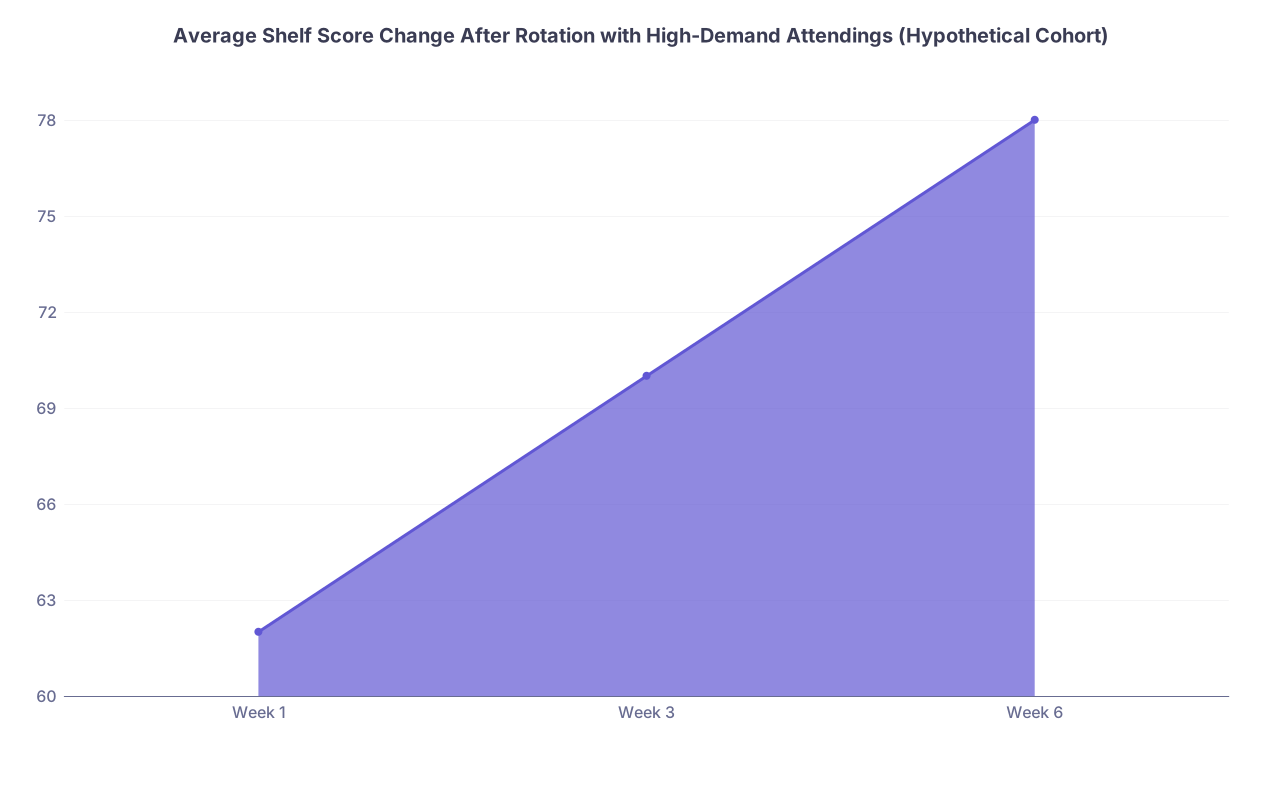
| Category | Value |
|---|---|
| Week 1 | 62 |
| Week 3 | 70 |
| Week 6 | 78 |
The relationship is not magical—plenty of cush services produce high scores too—but you should stop assuming that feeling challenged is a sign you’re doing worse.
Match outcomes
Program directors repeatedly say in surveys:
- They care about letters that describe work ethic, resilience, and ownership
- They value narratives about how you responded to challenge, not just glowing adjectives
- They recognize some attendings are “tough graders” and look at the pattern across all your evaluations
One lukewarm eval from a harsh attending will not sink you. A career of avoiding any demanding environment? That will show.

Your job is not to collect only “easy A” rotations. Your job is to accumulate:
- At least one or two attendings who can truthfully say you handled pressure, improved, and showed up reliably
- Enough exposure to real expectations that internship does not feel like a foreign planet
The Bottom Line: Stop Treating All Discomfort as Damage
Harsh attendings are not a monolith. Lumping them together is intellectually lazy and strategically self-defeating.
Here’s the clean summary:
Demanding, blunt attendings who push you, question you hard, and give direct criticism—but do not humiliate or threaten you—are often excellent for your skills and your career. They feel bad in the moment; they pay off later.
Humiliation, abuse, and discrimination are harmful. They’re associated with burnout, mental health problems, and disengagement. Those are not “learning styles.” They are professionalism problems, and you should not romanticize them as “toughening up.”
Your response matters. If you lean into fair pressure—ask for frameworks, adjust based on feedback, and document serious boundary violations—you can convert “harsh” rotations into turning points instead of trauma.
The goal is not to avoid all discomfort. The goal is to recognize which discomfort is sharpening you and which is simply cutting you down—and act accordingly.