
Most students sound terrible on rounds because they try to say everything. Good one-liners are powerful because they say almost nothing—except exactly what matters.
Let me be blunt. If your “presentation” on rounds is a 3‑minute monologue about bowel movements, potassium, and how the patient “feels okay,” you are signaling one thing: you do not yet understand the problem.
One-liners force you to pick a problem, define it, and frame the patient in that context. That is why attendings care so much about them. They are not a formality. They are a diagnostic exam of your thinking.
Let’s break this down specialty by specialty, and I will give you concrete examples you can steal and adapt tomorrow.
The Core Anatomy of a Strong One-Liner
Before we go specialty-specific, you need the skeleton. Almost every good one-liner has some version of this structure:
Age + key demographic / risk factor(s)
→ with most important chronic conditions
→ presenting with the key acute problem
→ with the key abnormal data / severity marker(s)
→ with current clinical status / disposition.
I usually teach it as:
[Age] [sex] with history of [2–3 key problems], admitted on [day X] with [most important acute issue], now [clinical status] with [most critical objective data or disposition].
Notice what is missing:
- No full med list.
- No entire PMH recital.
- No “here for workup of…” fluff.
You pick the story you are telling. If they are in for sepsis, diabetes is probably not the headline. The infected port is.
Let’s ground this with hard examples by specialty.
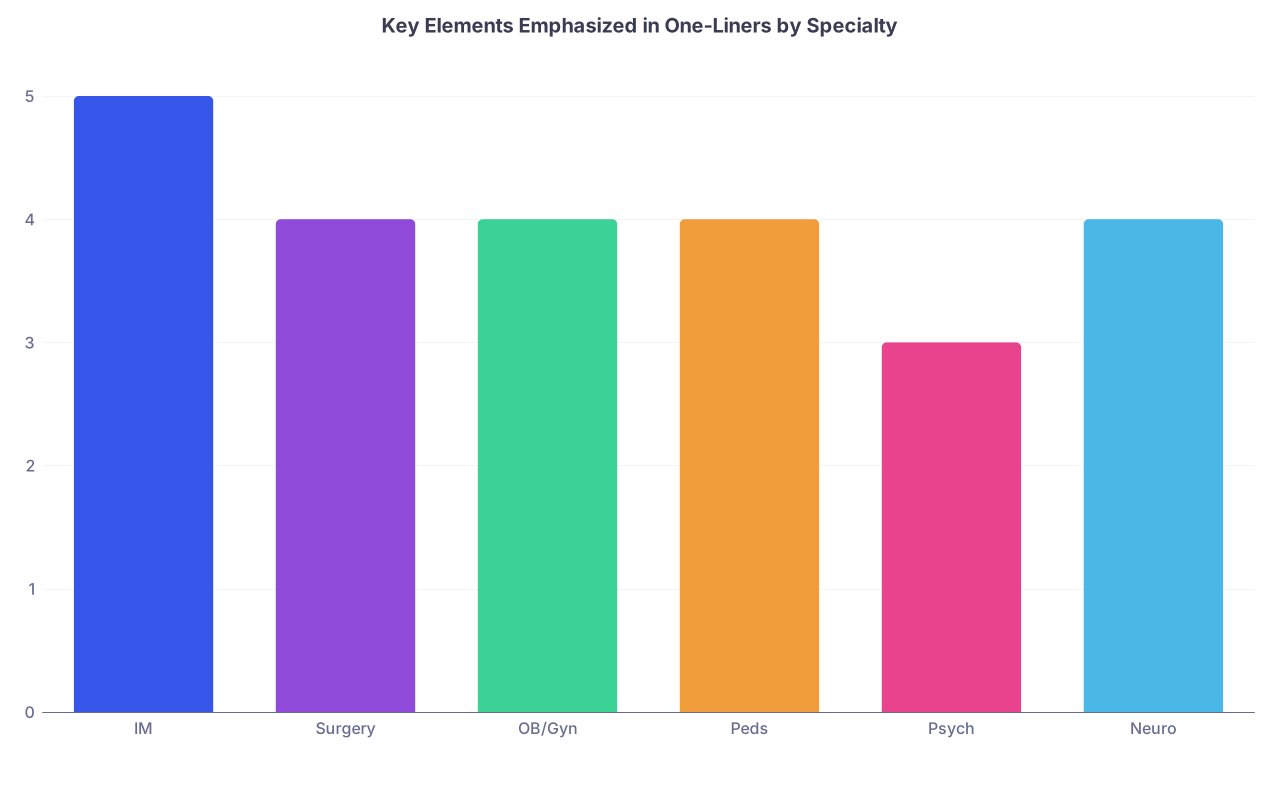
| Category | Value |
|---|---|
| IM | 5 |
| Surgery | 4 |
| OB/Gyn | 4 |
| Peds | 4 |
| Psych | 3 |
| Neuro | 4 |
Internal Medicine: Problem-Focused and Data-Rich
Internal medicine one-liners are the template everyone pretends they use and almost no one actually does well as a student. You must glue the chronic diseases to the acute problem.
Bad student version:
“Mr. Smith is a 68-year-old male with a history of diabetes, hypertension, hyperlipidemia, COPD, and CKD here with shortness of breath.”
That tells me nothing about severity, context, or why he is in the hospital instead of clinic.
Stronger version:
“Mr. Smith is a 68-year-old man with severe COPD on 2 L home oxygen, HFpEF, and CKD3, admitted yesterday for acute hypoxic respiratory failure likely due to COPD exacerbation, now on 4 L nasal cannula with improving work of breathing after steroids and nebs.”
Why this works:
- “Severe COPD on 2 L home oxygen” immediately sets baseline.
- “Admitted yesterday” anchors time course.
- “Acute hypoxic respiratory failure likely due to COPD exacerbation” states the problem and your leading diagnosis.
- “Now on 4 L…with improving work of breathing” updates status and trajectory.
Internal medicine loves trajectory.
More IM examples:
Pneumonia:
“Ms. Jones is a 54-year-old woman with type 2 diabetes and obesity, admitted 2 days ago with sepsis from community-acquired pneumonia, currently afebrile on 3 L nasal cannula with improving leukocytosis but persistent pleuritic chest pain.”
Decompensated cirrhosis:
“Mr. R is a 49-year-old man with alcohol-related cirrhosis with prior variceal bleed, admitted with tense ascites and new hepatic encephalopathy after medication nonadherence, now improving mentation on lactulose but still requiring daily large-volume paracenteses.”
DKA:
“Ms. L is a 23-year-old woman with type 1 diabetes and prior DKA admissions, admitted overnight with moderate DKA likely precipitated by insulin pump failure, now anion gap closing on insulin drip and transitioning to subcutaneous regimen.”
Student IM checklist in your head:
- Baseline severity of chronic diseases (on home O2? prior ICU? prior MI?).
- Time since admission and major change since then.
- The single main acute problem you are managing.
- Whether they are getting better, worse, or unchanged.
If your one-liner does not make clear what problem you are following today, fix that first.
General Surgery: Mechanism, Anatomy, and Operative Plan
Surgeons care about mechanism, anatomy, physiology, and whether a knife is involved. If your one-liner sounds like medicine, you will lose them in 5 seconds.
Student mistake:
“Mr. K is a 45-year-old male with hypertension and diabetes, here with abdominal pain and nausea.”
Surgeons hear: clinic note. Not why they admitted.
Better surgical one-liner:
“Mr. K is a 45-year-old man with no prior abdominal surgeries, admitted last night with 24 hours of crampy periumbilical pain, vomiting, and no flatus, found to have a high-grade small bowel obstruction on CT without clear transition point, currently NPO with NG tube to low intermittent suction and stable vitals.”
Key focus areas in surgery:
- Prior surgeries / anatomy.
- Mechanism or time course (gunshot, fall, 3 days of pain).
- What the imaging showed in anatomic terms.
- Current operative / procedural status.
More surgical examples:
Acute cholecystitis:
“Ms. A is a 32-year-old woman with obesity and no prior abdominal surgeries, admitted yesterday with RUQ pain and fever, ultrasound showing gallstones with wall thickening and pericholecystic fluid consistent with acute cholecystitis, currently afebrile on IV antibiotics and scheduled for laparoscopic cholecystectomy this afternoon.”
Post-op day presentation:
“Mr. J is a 70-year-old man with CAD and COPD, now POD2 from open right hemicolectomy for colon cancer, hemodynamically stable, pain reasonably controlled, tolerating sips with minimal nausea, and passing flatus but no bowel movement yet.”
Appendicitis:
“Ms. S is a 19-year-old previously healthy woman, admitted overnight with 18 hours of migrating periumbilical to RLQ pain, CT-confirmed nonperforated appendicitis, now POD1 from uncomplicated laparoscopic appendectomy, afebrile, tolerating clears, ambulating with minimal assistance.”
On surgery, if you forget “POD#” and “tolerating diet / ambulation / flatus / pain control,” you will be corrected. Repeatedly.

Obstetrics & Gynecology: Gestational Age and Status of Pregnancy
OB/Gyn is unforgiving if you leave out gestational age. Or parity. Or route of prior deliveries when it matters.
Here is the mental model:
- If pregnant: gestational age, parity, indication for admission, maternal and fetal status.
- If gyn: acuity, hemodynamics, and relevant anatomic problem.
Weak OB one-liner: “Ms. T is a 28-year-old female, 7 months pregnant, here for high blood pressure.”
Better:
“Ms. T is a 28-year-old G1P0 at 30 weeks by LMP consistent with 10-week ultrasound, admitted yesterday with new-onset severe-range blood pressures and headache, now diagnosed with preeclampsia with severe features, currently with controlled BPs on IV labetalol, reassuring category I fetal tracing, and receiving betamethasone.”
Labor patient:
“Ms. R is a 24-year-old G2P1 at 39 weeks, prior uncomplicated vaginal delivery, admitted in spontaneous labor this morning, now in active labor at 6 cm/80%/–1 with reassuring category I tracing and well-controlled pain with epidural.”
Postpartum hemorrhage patient (post-stabilization):
“Ms. K is a 33-year-old G3P3 who underwent uncomplicated vaginal delivery yesterday at 40 weeks, complicated by postpartum hemorrhage from uterine atony requiring uterotonics and 2 units PRBC, now hemodynamically stable with appropriate lochia and improving hemoglobin.”
Gyn – adnexal torsion:
“Ms. B is a 19-year-old G0 with no prior surgeries, admitted overnight with acute-onset severe right lower quadrant pain, ultrasound concerning for right ovarian torsion, now POD1 from laparoscopic detorsion with preserved ovary, pain controlled and tolerating regular diet.”
If you are on OB and you are not saying gestational age, parity, and fetal status in your first sentence, fix that immediately.
Pediatrics: Age, Developmental Context, and Sick vs Not Sick
Peds is not “internal medicine but smaller.” A 3-week-old with fever is a different universe than a 10-year-old with fever. Your one-liner must reflect that.
Bad peds one-liner: “Johnny is a 3-year-old male with asthma, here with cough and fever for 2 days.”
Better:
“Johnny is a previously healthy 3-year-old boy with mild intermittent asthma, admitted from the ED last night for increased work of breathing and hypoxia in the setting of 2 days of viral URI symptoms, now stable on 1 L nasal cannula with improved wheezing after albuterol and steroids.”
For infants:
“Emma is a 25-day-old full-term female with no medical history, admitted for fever to 38.6°C at home without localizing symptoms, now well-appearing on exam, s/p full sepsis workup and started on empiric IV antibiotics.”
Bronchiolitis:
“Liam is a 6-month-old ex-39-week male, previously healthy, admitted with RSV bronchiolitis causing increased work of breathing and poor oral intake, currently on high-flow nasal cannula 8 L at 30% with stable vitals and slightly improved feeding.”
Peds oncology:
“Ava is a 9-year-old girl with newly diagnosed standard-risk ALL, admitted for induction chemotherapy day 3, currently afebrile, hemodynamically stable, with mild chemotherapy-induced nausea controlled on ondansetron.”
Age, ex-preterm vs term, immunization status (when relevant), and sick vs not sick. That is your peds backbone.
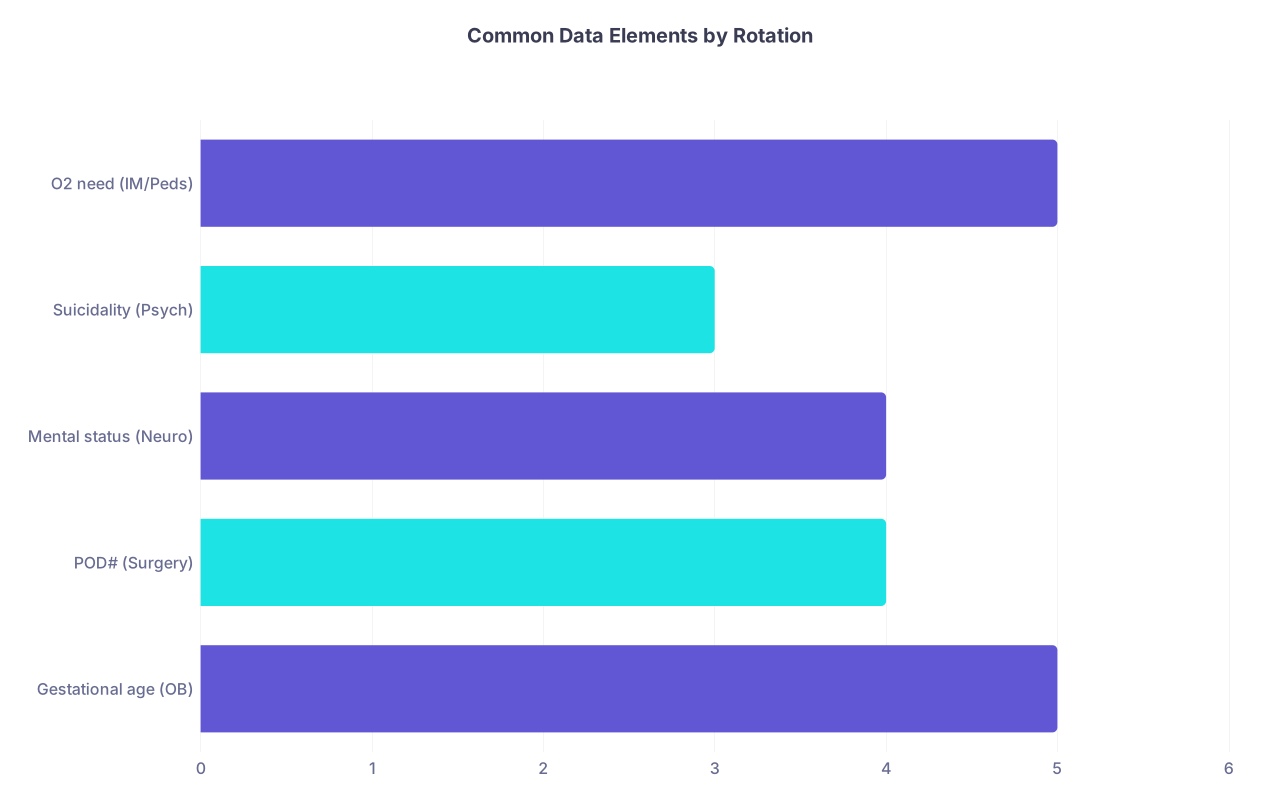
| Category | Value |
|---|---|
| Gestational age (OB) | 5 |
| POD# (Surgery) | 4 |
| Mental status (Neuro) | 4 |
| Suicidality (Psych) | 3 |
| O2 need (IM/Peds) | 5 |
Psychiatry: Function, Safety, and Context
Psych one-liners live and die on context and risk. If you present psych like IM, you miss the point.
Weak psych version: “Mr. X is a 40-year-old male with depression and anxiety here after a suicide attempt.”
Sharper:
“Mr. X is a 40-year-old man with recurrent major depressive disorder and alcohol use disorder, admitted involuntarily after an intentional overdose of his prescribed sertraline and alcohol, currently denying active suicidal intent but with ongoing passive suicidal ideation and limited insight, on Q15 safety checks and starting cross-taper from sertraline to venlafaxine.”
Core elements:
- Primary diagnoses and substance use.
- Voluntary vs involuntary status.
- Precipitating event (attempt, psychosis, mania, unsafe behavior).
- Current risk level / suicidality / insight / safety plan.
Psychosis:
“Ms. J is a 22-year-old woman with no formal psychiatric history, brought in by family for 2 weeks of progressive auditory hallucinations and paranoid delusions, now admitted voluntarily to the inpatient unit, currently calm and cooperative but with persistent persecutory delusions and partial insight, started on risperidone yesterday.”
Mania:
“Mr. L is a 30-year-old man with bipolar I disorder, admitted 3 days ago for an acute manic episode with grandiosity, decreased need for sleep, and impulsive spending, currently less pressured and more redirectable on lithium and olanzapine but still with impaired judgment and poor insight.”
On psych, if you do not mention suicide risk (even to say “denies SI/HI”), someone will eventually stop you and you will not forget again.
Neurology: Localization and Time Course
Neurology one-liners are about localization and vascular vs non-vascular patterns. You must make clear:
- What kind of deficit.
- Which side.
- How fast it came on.
- Where you think the lesion is.
Weak neurology one-liner: “Mr. P is a 72-year-old male with hypertension and diabetes here with arm weakness.”
Good:
“Mr. P is a 72-year-old man with hypertension, diabetes, and atrial fibrillation not on anticoagulation, admitted early this morning with sudden-onset left arm and facial weakness and dysarthria, now with improving NIHSS 4 after tenecteplase for presumed right MCA ischemic stroke.”
Key features:
- Vascular risk factors.
- Onset: sudden vs progressive.
- Which deficit(s) and side.
- Treatment status (tPA, thrombectomy, AEDs, etc).
Seizure case:
“Ms. A is a 26-year-old woman with no known neurologic history, admitted after a first-time generalized tonic-clonic seizure at home, now post-ictal period resolved, neurologically nonfocal and awaiting MRI brain and EEG.”
Guillain–Barré:
“Mr. S is a 45-year-old previously healthy man, admitted 2 days ago with 4 days of progressive ascending weakness and areflexia after a diarrheal illness, diagnosed with Guillain–Barré syndrome, currently with stable respiratory status on room air and receiving day 2 of IVIG.”
Neuro loves specificity and timing. If you can say “2 days of progressive ascending symmetric weakness” instead of “his legs feel weak,” you sound like you know what you are doing.
Emergency Medicine: Triage, Threats, and Disposition
On EM shifts, your “one-liner” is often the first sentence of your oral presentation. Attendings want:
- Sick or not sick.
- What can kill them.
- What you think is going on.
- What you are going to do in the next 10–30 minutes.
Terrible EM opener: “Ms. L is a 60-year-old female with hypertension and diabetes here with chest pain and shortness of breath that started earlier today.”
Better:
“Ms. L is a 60-year-old woman with hypertension and diabetes presenting with 3 hours of substernal chest pressure radiating to the left arm and associated dyspnea, currently hemodynamically stable and pain 6/10, EKG without ST elevations but with new T-wave inversions in the anterior leads, concerning for NSTEMI.”
Shortness of breath:
“Mr. D is a 75-year-old man with severe COPD on 3 L home oxygen presenting with 1 day of worsening dyspnea and productive cough, arriving in moderate respiratory distress with increased work of breathing, satting 86% on home NC, improved to 92% on BiPAP in triage, concern for COPD exacerbation with possible pneumonia.”
EM is about threat assessment and immediate plan. If your first sentence does not tell me why I should or should not be worried, you missed the EM culture.
How to Practice and Not Sound Like a Robot
You cannot “wing” good one-liners at 6:30 a.m. while half awake. The students who sound smooth have rehearsed.
Here is what actually works:
Write them out on your progress note
Literally one sentence at the top of the note: “55-year-old man with…” Then read it once before rounds. Edit it if it sounds off.Say it out loud once before you sleep
On busy rotations, I used to walk home and literally mutter: “54-year-old woman with… admitted yesterday… now…” If you feel ridiculous, good. It will feel less ridiculous when you do not stumble in front of the attending.Ask your resident: “Can I run one-liners by you?”
Quick-fire: you say the one-liner, they give a 5-second tweak. Residents actually like doing this; it tells them you care.Focus on “problem identity”
Ask yourself: If I had to write a sign above this bed, what would it say? “PNA + COPD exacerbation,” “DKA,” “POD2 lap chole,” “39-week labor induction.” That is the core of the one-liner.
Specialty-Specific Templates You Can Steal
Use these as starting points. Adjust to your context.
| Specialty | Template |
|---|---|
| Internal Medicine | `[Age] [sex] with [key chronic conditions] admitted [X days ago] for [main acute issue], now [clinical status] with [critical data/trajectory].` |
| Surgery | `[Age] [sex] with [key surgical history], admitted for [acute surgical problem] with [imaging or intra-op findings], now [POD# and current functional status].` |
| OB/Gyn | `[Age] [G?P?] at [gestational age] admitted for [labor / complication], currently [labor/c-section/postpartum status] with [maternal & fetal status].` |
| Pediatrics | `[Age] [sex], ex-[term/preterm] with [relevant history], admitted for [acute problem], now [respiratory/hemodynamic/feeding status].` |
| Psychiatry | `[Age] [sex] with [primary psych & substance diagnoses], admitted [voluntarily/involuntarily] for [precipitating crisis], currently [risk level, insight, and treatment status].` |
You are not expected to memorize every word. You should internalize the pattern.
Common Mistakes That Make You Sound Unsure
I have seen the same errors on every rotation, every year.
Leading with the wrong problem
“Mr. X is a 70-year-old man with BPH, GERD, and hypertension here with…” when he is literally in florid pulmonary edema in the MICU. BPH is not the story.Burying the main diagnosis
“He was brought in by ambulance, seen in the ED, got labs and imaging, and now is up on the floor for further management of his symptoms, which are consistent with…” No. Name the problem early: “admitted for upper GI bleed.”Overloading chronic problems
If a condition does not impact today’s problem or management, do not cram it in. “History of seasonal allergies” does not belong in the sepsis patient’s one-liner.Vague clinical status
“He is doing okay” is meaningless. Say “hemodynamically stable on room air,” “still febrile to 39°C despite antibiotics,” or “pain well controlled on oral meds.”Changing the story every day
The central one-liner should evolve, not be reinvented. Day 1: “admitted with sepsis from pyelonephritis.” Day 3: “now improving sepsis from pyelonephritis with down-trending WBC, transitioning to oral antibiotics.”
Putting It Together: Before-and-After Examples
Let’s clean up a few real-world student-style one-liners.
Case 1 – Medicine
Student:
“Mr. H is a 64-year-old male with hypertension, hyperlipidemia, diabetes, and COPD, here because he was feeling short of breath and kind of weak, and he has been on antibiotics.”
Refined:
“Mr. H is a 64-year-old man with severe COPD and CAD, admitted 3 days ago with acute hypoxic respiratory failure from community-acquired pneumonia, now improving but still requiring 3 L nasal cannula with down-trending WBC and afebrile for 24 hours.”
Case 2 – Surgery
Student:
“Ms. C is a 50-year-old female status post surgery for her gallbladder, doing okay today.”
Refined:
“Ms. C is a 50-year-old woman with obesity and no prior abdominal surgeries, now POD1 from laparoscopic cholecystectomy for acute cholecystitis, hemodynamically stable, pain controlled on oral meds, tolerating clear liquids, not yet passing flatus.”
Case 3 – OB
Student:
“She’s a pregnant 29-year-old who came in with contractions and is being induced.”
Refined:
“Ms. D is a 29-year-old G2P1 at 41 weeks, admitted last night for post-dates induction of labor, currently on oxytocin with cervical exam 4 cm/70%/–2 and category I fetal tracing.”
You hear the difference immediately. One sounds like a progress note. The other sounds like you actually know what is happening.
FAQ – Five Questions You Were Probably Going to Ask
1. How long should a one-liner actually be?
One to two sentences. If you routinely need three, you are stuffing in too much background. Aim for about 20–35 words for most patients. Complex ICU or multi-organ transplant patients may need closer to 40–45 words, but that is the upper edge.
2. Should I include every chronic condition in the one-liner?
No. Include only the ones that affect:
- Why they are in the hospital.
- How you manage them.
- Their overall risk (e.g., severe COPD, ESRD, CHF, active cancer).
“Remote appendectomy” has never earned anyone points in a one-liner.
3. What if I am not sure of the diagnosis yet?
You still commit. Use framing like “with undifferentiated shock most consistent with septic etiology” or “with acute liver injury, likely ischemic vs drug-induced.” Being honest about uncertainty while naming your leading hypothesis is much better than hiding behind vagueness.
4. Do I repeat the one-liner every single day on rounds?
Yes, but it should evolve as the hospitalization evolves. Day 1: “admitted with new onset heart failure.” Day 4: “now improving acute decompensated HFrEF with diuresis and transitioning to guideline-directed medical therapy.” The one-liner is the daily headline of the story.
5. How do I know if my one-liner is good?
Test it. After rounds, ask your resident: “If you only heard my one-liner and nothing else, would you know why this person is in the hospital and how sick they are?” If the answer is no or “kind of,” rework it. Over a week or two, you will feel the pattern click.
Two things to remember.
First, good one-liners are not about sounding fancy; they are about proving you understand the patient’s core problem and current status. Second, each specialty has its own language—gestational age for OB, POD for surgery, oxygen requirement for IM and peds, risk and insight for psych. Speak that language in one sentence, and your stock on rounds rises immediately.