
Most students can recite the HPI. Very few can write an assessment and plan that makes an attending nod and say, “Exactly.”
Let me be blunt: your assessment and plan (A/P) is the entire point of the note. It is where you prove you are thinking like a physician, not just a stenographer with a stethoscope.
Most medical students underperform here. They either:
- Regurgitate data (“Patient with pneumonia, WBC 14, on 2L O2…”), or
- Write vague non-committal fluff (“Will continue to monitor, consider further workup as needed”).
Both are useless.
I am going to walk you through how to turn messy clinical data into a clear, structured, defensible assessment and plan that will impress residents, attendings, and more importantly, actually help the next person taking care of the patient.
1. The Core Mindset: Your A/P Is a Structured Argument
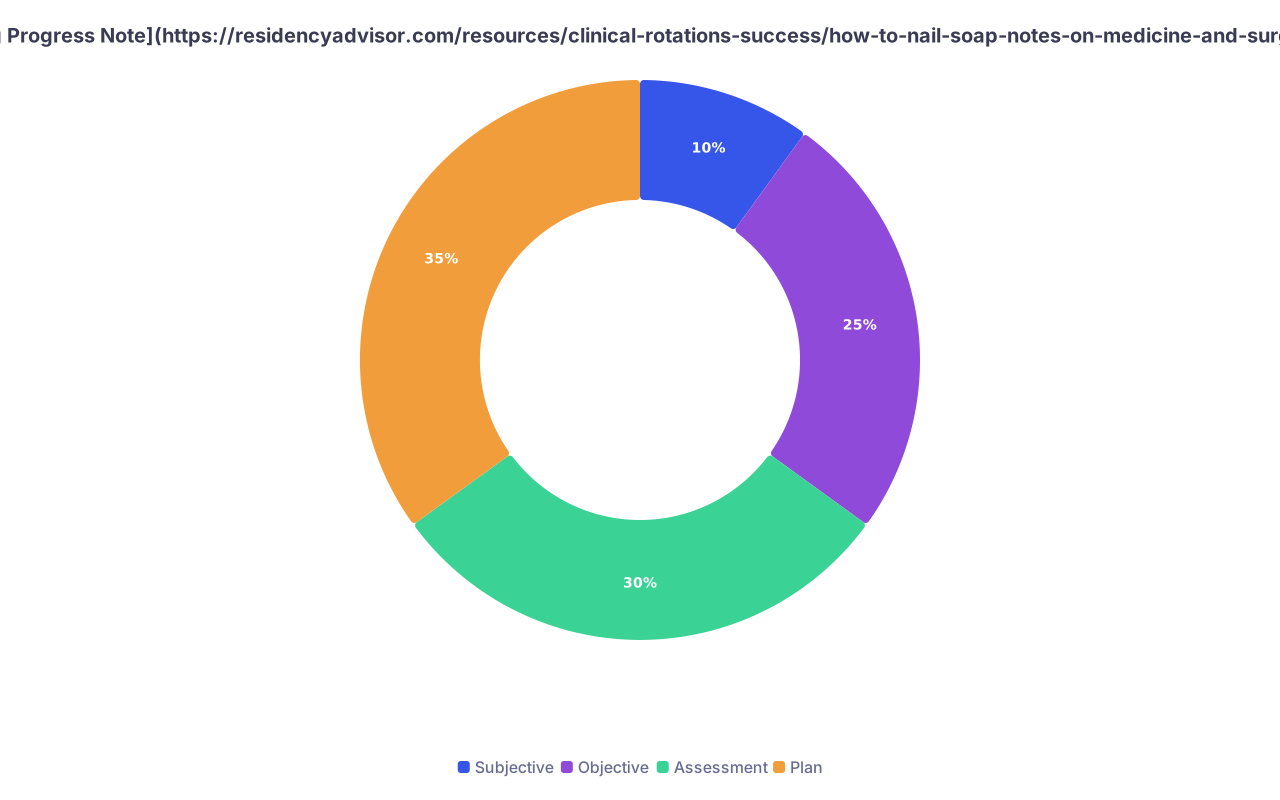
| Category | Value |
|---|---|
| Subjective | 10 |
| Objective | 25 |
| Assessment | 30 |
| Plan | 35 |
The assessment and plan is not a recap. It is a clinical argument:
- What is going on? (Diagnosis or problem definition)
- Why do you think that? (Prioritization + key supporting data)
- What are you going to do about it? (Diagnostic and therapeutic steps)
- What are you watching for? (Contingencies and safety nets)
You are transforming raw findings into decisions. That is clinical reasoning.
If your plan could be written by a second-year student after UpToDate plus 5 minutes, it is not advanced. Strong A/Ps show:
- Prioritization: sick vs stable, urgent vs chronic
- Specificity: doses, routes, thresholds, timeframes
- Contingency thinking: “If X, then Y”
- Individualization: anchored to this patient’s comorbidities, social context, and goals
You do not need to be right all the time. You do need to be explicit.
2. Anatomy of an Advanced Assessment and Plan

Stop thinking of A/P as a blob of text. Think in structured layers.
A. Use a Problem-Based Structure
Every inpatient A/P should be organized by numbered problems. For example:
- Sepsis secondary to pneumonia
- Acute hypoxic respiratory failure
- Type 2 diabetes mellitus
- Hyperlipidemia
- Disposition and social issues
Each problem then has:
– A one- to two-sentence assessment
– A structured, prioritized plan
B. The Assessment: Short, High-Yield, Opinionated
For each problem, your assessment should answer:
- What is this problem right now?
- How severe or unstable?
- What is the likely cause or differential?
- How is it trending?
Example for pneumonia:
“Community-acquired pneumonia, likely bacterial, with improving oxygen requirements (4L → 2L NC) and down-trending WBC (18 → 12). No evidence of empyema or septic shock. CURB-65 = 2.”
Notice what that does:
- Names the problem precisely (CAP, not just “pneumonia”)
- Comments on trajectory (improving)
- Mentions severity/decision tools (CURB-65)
- Rules out key bad stuff (empyema, shock)
Weak version:
“Pneumonia. Patient admitted with cough and shortness of breath, WBC 12, on 2L O2. On antibiotics.”
That is not an assessment. That is retyping the objective section.
C. The Plan: Concrete, Layered, Action-Oriented
A strong plan has these components where relevant:
- Diagnostics: what you will check, how often, and why
- Therapeutics: specific drugs, doses, routes, and duration
- Monitoring: vitals/labs, thresholds for escalation
- Consults/coordination: who else needs to be involved
- Patient-centered pieces: education, goals-of-care, social issues
For that same pneumonia:
- Continue ceftriaxone 1 g IV q24h + azithromycin 500 mg IV q24h (day 3/5), reassess for narrowing to oral on day 4 if afebrile and stable.
- Wean O2 as tolerated, target SpO2 ≥ 92%; RT to reassess for bronchodilator need.
- Daily CBC, BMP; monitor for rising WBC, creatinine increase, or clinical decompensation.
- Incentive spirometry q1h while awake, encourage ambulation TID with nursing assistance.
- If worsens (RR > 30, SBP < 90, increasing O2 needs), notify team stat, consider ICU and broaden coverage (e.g., piperacillin-tazobactam + vanc).
That sounds like someone who might actually have seen a real patient. Because it answers: what, how, when, and “what if.”
3. Turning Data Into Clinical Reasoning, Step by Step
Here is the part everyone hand-waves but never teaches properly. How do you go from pages of data to a clean A/P?
Step 1: Identify and Rank the Problems
Before you write, think in this order:
- Life-threatening / unstable (airway, breathing, circulation, sepsis, ACS, stroke)
- Active acute issues (infection, DKA, GI bleed, acute kidney injury)
- Chronic issues impacting today’s care (CHF, CKD, COPD, anticoagulation)
- Baseline chronic issues (HTN, HLD)
- Prophylaxis and disposition (VTE ppx, PT/OT, placement)
You should literally number them in this order. If you bury sepsis under “#7: Infection,” you look clueless about acuity.
Step 2: For Each Problem, Synthesize the Key Data
Ask yourself for each problem:
- What 3–5 data points actually change my thinking or management?
- What do I need to say once here so I do not repeat it everywhere else?
Example: 65-year-old male with heart failure exacerbation.
Key synthesis for “Acute decompensated HFrEF” might include:
- Trigger: recent NSAID use and dietary indiscretion
- Status: weight up 4 kg from baseline, JVP to jaw, 2+ LE edema, O2 requirement
- Function: EF 25%, prior admissions, home meds
- Renal function and electrolytes trends
- Response to initial therapy (IV lasix doses and UOP)
Put those into 2–3 tight sentences in the assessment. Do not scatter them randomly across three pages.
Step 3: Explicitly State Your Working Diagnosis or Differential
You are allowed to be uncertain. You are not allowed to be vague.
Good:
“Acute kidney injury, likely pre-renal from volume depletion (BUN:Cr ratio > 20, FeNa < 1%, recent poor PO intake). Less likely ATN given rapid improvement with fluids and bland urine sediment. No evidence of obstruction on renal ultrasound.”
Bad:
“AKI, creatinine elevated, will monitor and give fluids.”
Do not ever write “will monitor” as a standalone. Monitor for what? And what will you do?
Step 4: Convert Reasoning Into Testable Actions
For each problem, ask:
- What test will move the needle?
- What treatment am I starting, continuing, holding, or stopping—and why?
- What specific threshold would make me escalate care or change the plan?
Example for suspected GI bleed:
Assessment (abridged):
“Acute upper GI bleed, likely peptic vs variceal less likely (no known cirrhosis, normal LFTs, platelets 220). Hemodynamically stable (HR 92, BP 118/72) with Hgb 9.2 from 12.0 three months ago.”
Plan:
- NPO, two large-bore IVs.
- PPI: pantoprazole 80 mg IV bolus, then 8 mg/hr infusion.
- Type and cross 2 units PRBC; transfuse if Hgb < 7 or ongoing hemodynamic instability.
- Trend CBC q6h until stable.
- GI consult this morning for possible endoscopy today.
- If develops tachycardia > 110, hypotension SBP < 90, or melena/hematemesis increases, call rapid response and activate massive transfusion protocol per hospital policy.
That is advanced because it builds in monitoring, thresholds, and contingencies.
4. Common Patterns: How A/P Differs Across Settings
| Setting | A/P Style Focus | Level of Detail | Typical Horizon |
|---|---|---|---|
| Inpatient Ward | Multi-problem, longitudinal | High | Days |
| ICU | Physiologic systems, minute-to-minute | Very High | Hours |
| Outpatient | Focused problems, follow-up tasks | Moderate | Weeks/Months |
| ED | Acute problem, disposition decisions | High | Hours |
Inpatient (Ward) Style
- Problem-based list
- Emphasis on trend over 24–72 hours
- Heavy on coordination: PT/OT, case management, nursing
You are telling a story of “where this patient is headed over the next few days.”
ICU Style
More system-based, even if your hospital still wants problem-based notes. Think:
- Neuro
- Pulm
- Cardio
- Renal/Fluids
- ID
- Heme
- Endo
- Lines/Drains/Tubes
- Sedation/Analgesia
- Family/Goals-of-care
Each line is tight but heavy on numbers and titration parameters:
“Shock, likely septic, improving: NE 0.08 mcg/kg/min (down from 0.12), MAP 68–74 overnight, lactate 1.9 from 3.2.”
Your plan is all about titration, minute-level adjustments, and precise thresholds.
Outpatient Style
Here you have less time and more problems, but you still need structure.
- Prioritize 2–4 problems per visit realistically
- Anchor each problem to time-bound plans: “Follow up in 3 months,” “Lab in 6 weeks”
- Document shared decision-making and patient preferences
Instead of long explanations, you mention key decision factors: ASCVD score, A1c trends, screening intervals.
ED Style
The ED A/P lives and dies on two things:
- Disposition (admit vs discharge vs obs vs transfer)
- Risk stratification (who is safe to go home and under what conditions)
Plans are short but must answer: “Why is it safe (or not) to send this person away from close monitoring?”
5. Typical Medical Student Mistakes (And How To Fix Them)
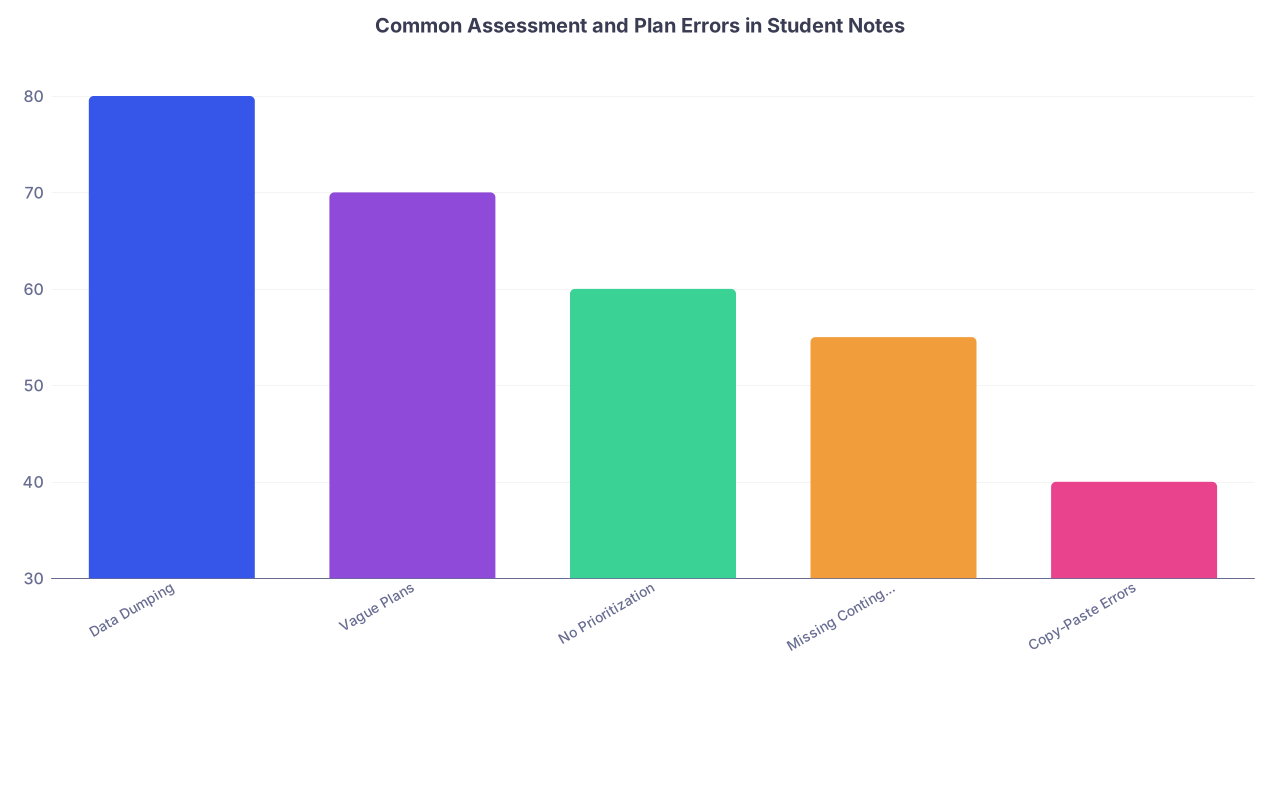
| Category | Value |
|---|---|
| Data Dumping | 80 |
| Vague Plans | 70 |
| No Prioritization | 60 |
| Missing Contingencies | 55 |
| Copy-Paste Errors | 40 |
I have read thousands of student notes. The mistakes are predictable.
Mistake 1: Repeating the Objective Section in the Assessment
You write:
“Patient with fever to 38.9, HR 110, WBC 14, CXR with right lower lobe infiltrate and procalcitonin elevated.”
You have not assessed anything. You have just restated labs.
Fix: Turn data into meaning.
“Likely bacterial pneumonia causing sepsis, with stable hemodynamics and no current end-organ dysfunction.”
Then if you must, reference key supporting data in a targeted way.
Mistake 2: “Will Monitor” Without a Plan
“Will monitor” is code for “I do not know what to do and hope you don’t notice.”
Fix: Always attach monitoring to:
- The parameter
- The frequency
- The action threshold
Example: “Monitor BMP daily; if creatinine rises > 0.3 from baseline or K > 5.5, hold lisinopril and re-evaluate diuretic dosing.”
Mistake 3: Non-Specific or Incomplete Orders
“Continue antibiotics” is not a plan.
Fix: Include drug, dose, route, duration, and rationale when you can.
Students worry about being wrong. That is fine. You are expected to be corrected. But vague is worse than wrong because it shows no reasoning.
Mistake 4: No Acknowledgment of Comorbidities and Interactions
Example: Starting NSAIDs for pain in a CKD stage 4 patient on ACE inhibitor.
Your plan must show awareness of interactions:
“Avoid NSAIDs given CKD4 and concurrent ACE inhibitor; will use scheduled acetaminophen and consider low-dose opioid if inadequate.”
Mistake 5: Copy-Pasting Yesterday’s Plan With No Update
If your plan is identical to yesterday’s despite clinical change, you look disengaged.
Fix: Daily micro-adjustments:
- “Day 3/5 antibiotics, consider switch to oral tomorrow if afebrile.”
- “Lasix 40 IV BID yesterday with net –1.5 L; will repeat today, consider decreasing to daily if weight down 2 kg by tomorrow.”
Even one sentence about trajectory shows you are thinking.
6. Worked Example: Bad vs Strong Assessment and Plan
Let us work through a full example. Patient: 72-year-old female with COPD, HTN, DM2, admitted with shortness of breath.
Weak Student Version
COPD Exacerbation
Assessment: Patient with history of COPD, now with worsening shortness of breath and wheezing. On 2L O2. CXR shows hyperinflation.
Plan: Continue duonebs. Continue steroids. Will monitor.HTN
Assessment: Has history of HTN.
Plan: Continue home meds.DM2
Assessment: Diabetic, on insulin.
Plan: Continue insulin. Monitor sugars.Dispo
Assessment: On oxygen.
Plan: Discharge when stable.
Nothing technically “wrong.” But it is clinically useless.
Stronger Version
- Acute COPD Exacerbation with Hypoxic Respiratory Failure
Assessment: Acute COPD exacerbation, likely triggered by viral URI vs bacterial bronchitis. Currently on 2L NC to maintain SpO2 90–92% (baseline room air). Speaking in full sentences, wheezing on exam, no accessory muscle use. No evidence of pneumonia on CXR, procalcitonin low.
Plan:
- Bronchodilators: Duonebs q4h scheduled, albuterol q2h PRN.
- Steroids: Prednisone 40 mg PO daily, day 2/5.
- Antibiotics: Start azithromycin 500 mg PO daily x 3 days for possible bacterial contribution per GOLD guidelines.
- Oxygen: Titrate to SpO2 88–92% (avoid over-oxygenation), wean as tolerated.
- Monitoring: Vitals q4h, close watch for increased WOB, rising O2 requirement, or change in mental status; if SpO2 < 88% on 4L NC or RR > 30, notify team; consider ABG and possible escalation to BiPAP.
- Smoking cessation counseling prior to discharge; respiratory therapy to assess inhaler technique.
- Hypertension
Assessment: Long-standing HTN, currently well-controlled (BP 120s/70s) on home lisinopril and amlodipine. No evidence of hypertensive emergency.
Plan:
- Continue home lisinopril 20 mg daily and amlodipine 5 mg daily.
- Monitor BP q8h; adjust if sustained SBP < 100 or > 160.
- Avoid excessive fluid boluses given comorbid COPD and risk of volume overload.
- Type 2 Diabetes Mellitus
Assessment: DM2, A1c 8.2% (last month), on basal-bolus insulin at home. At risk for steroid-induced hyperglycemia given prednisone course.
Plan:
- Hold home oral hypoglycemics (none in this case) and continue basal insulin glargine 20 units qHS.
- Implement medium-dose correctional insulin with pre-meal and bedtime blood sugars.
- Increase monitoring to AC/HS while on steroids.
- Adjust glargine dose by 10–20% if persistent BG > 200 on current regimen.
- Arrange outpatient follow-up with PCP/endocrine to reassess regimen after steroid taper.
- Disposition / Social
Assessment: Lives alone, baseline independent in ADLs, no home oxygen. Currently on 2L NC with limited exertional tolerance (SOB after walking ~50 feet).
Plan:
- PT/OT evaluation for safety and endurance.
- Anticipate discharge home once off oxygen at rest and able to ambulate safely in hall.
- Case management consult to assess need for home health vs pulmonary rehab referral.
Now the note actually guides care. It shows an understanding of underlying physiology, risks, and realistic discharge criteria.
7. Developing Advanced A/P Skills Day-to-Day on Rotations

| Step | Description |
|---|---|
| Step 1 | Pre-round Chart Review |
| Step 2 | Identify and Rank Problems |
| Step 3 | Write Draft A/P Before Seeing Patient |
| Step 4 | See Patient and Update A/P |
| Step 5 | Pre-round with Resident |
| Step 6 | Get Feedback on Reasoning |
| Step 7 | Update Written Note |
| Step 8 | End-of-day Self-Review |
If you want to actually get better (not just read about getting better), here is a practical workflow.
Before Seeing the Patient
- Skim vitals, labs, imaging, overnight events.
- List problems in your head or on scratch paper in priority order.
- Draft at least one sentence of assessment and 2–3 bullets of plan for the top 2 problems.
Yes, before you touch the patient. You will adjust later. But forcing yourself to commit to a preliminary A/P sharpens your thinking.
After Seeing the Patient
Update your A/P:
- Incorporate new subjective info and exam findings.
- Clarify things like medication adherence, home baseline, functional status.
- Make sure your assessment reflects “today vs yesterday.”
On Rounds
When presenting, do not just read the written A/P. Use a structured spoken version:
- “Problem 1 is X. I think it is due to Y, because Z. He is [improving/stable/worse]. My plan is A, B, and C, and if he does not respond by [time], then D.”
After the attending or resident edits the plan, write down the key conceptual changes. Not just the orders. The reasoning.
End of the day, look at 1–2 patients:
- Compare your original A/P with the team’s final plan.
- Ask yourself:
- What did they consider that I did not?
- What thresholds did they set for change?
- What comorbidities changed their choices?
This is how you bootstrap your own internal library of “if X, then Y” for real patients, not just textbook cases.
8. How Assessment and Plan Writing Shows Up on Exams
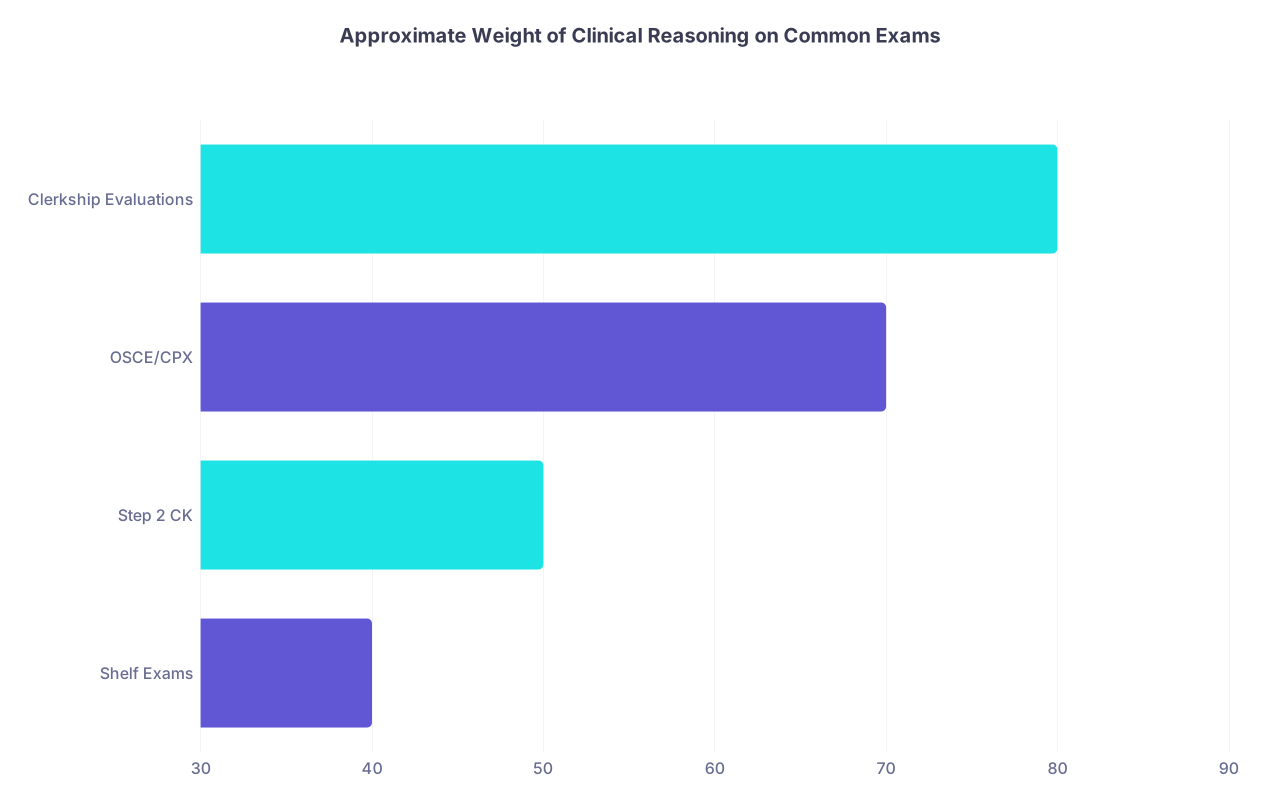
| Category | Value |
|---|---|
| Shelf Exams | 40 |
| Step 2 CK | 50 |
| OSCE/CPX | 70 |
| Clerkship Evaluations | 80 |
Advanced A/P writing is not just for notes. It is the same skill tested in:
- NBME shelf exams
- Step 2 CK
- OSCE/CPX encounters
- Morning case conferences and “pimping” sessions
When you pick the best answer on a multiple-choice question, you are silently writing an assessment and plan in your head:
- What is the problem?
- What is most likely?
- What is the next best step?
- What are the contraindications in this patient?
If you struggle to structure your A/P on the wards, you will struggle on these exams. Period.
One practical exercise: after doing UWorld questions, force yourself to write a 2–3 line “mini A/P” for the stem:
- “Assessment: 64-year-old male with NSTEMI, hemodynamically stable, no HF signs. Plan: dual antiplatelet therapy, anticoagulation, beta-blocker, high-intensity statin, urgent but not emergent cath within 24 hours; avoid fibrinolytics.”
It feels slow. It pays off.
9. Quick Templates You Can Steal and Adapt
I will give you some high-yield scaffolds. Do not parrot them verbatim. Adapt them.
Generic Problem Template
Assessment:
“[New vs chronic] [specific problem], currently [improving/stable/worsening], likely secondary to [most likely cause] given [key data]. Less likely [other etiologies] due to [negative data]. No current evidence of [catastrophe to rule out].”
Plan:
- Diagnostics: [tests, frequency, purpose].
- Therapeutics: [start/continue/stop meds with dose, route, duration, and rationale].
- Monitoring: [which vitals/labs, how often, and clear thresholds].
- Consults: [who and why].
- Safety/Disposition: [falls risk, code status, discharge criteria].
Chronic Disease on an Acute Admission
Assessment:
“Chronic [disease], baseline [status or last known measurements]. Currently [controlled/uncontrolled] with [home regimen]. No evidence of acute [complication].”
Plan:
- Continue or adjust home meds based on today’s vitals/labs.
- Avoid [drugs/fluids] that worsen this disease.
- Arrange outpatient follow-up or repeat testing at [timepoint].
FAQ (Exactly 4 Questions)
1. How long should my assessment and plan be in a typical inpatient progress note?
Long enough to show clear reasoning, short enough to be readable. For a moderately complex patient, you are usually looking at 1–3 sentences of assessment and 3–6 bullets of plan per major problem. If your A/P is longer than the rest of your note combined, you are probably retyping data. If it is two lines for a crashing ICU patient, you are missing the point.
2. What if I genuinely do not know the diagnosis yet—how do I write the assessment?
You write your best working differential and state your level of certainty. For example: “Acute kidney injury, unclear etiology—pre-renal vs ATN. More likely pre-renal given BUN:Cr > 20 and FeNa < 1, but no clear volume loss history. Will further characterize with urine microscopy and response to cautious fluids.” You are graded on whether your reasoning is coherent, not on mystical diagnostic omniscience.
3. Should I include medication doses and specific orders as a student, or will that be seen as overstepping?
You should include them. This is where you demonstrate you know standard regimens and can individualize them. No one is going to enter your orders blindly. The resident and attending will edit as they see fit. Writing concrete plans helps you learn dosing, contraindications, and interactions. Vague plans help no one and teach you nothing.
4. How do I get feedback specifically on my assessment and plan during busy rotations?
Ask for targeted, time-limited feedback. For example on rounds: “Could I quickly run my plan for this patient by you and hear what you would change?” Or after rounds: “On this COPD patient, I struggled with how aggressive to be on steroids—how would you think about that?” Bring your actual written A/P and compare it to what the team did. Attendings are much more willing to teach when you show them your thought process, not just ask, “Any feedback?” in the hallway as they are walking away.
Key takeaways:
- Your assessment and plan is a structured clinical argument, not a data recap.
- Strong A/Ps are problem-based, prioritized, specific, and include contingencies.
- The daily habit of drafting, presenting, and refining your A/P is what turns you from a note-writer into a clinician who actually thinks.