

What if that one awful rotation — the attending who hated you, the shelf exam you bombed, the “High Pass” that turned into a “Pass” — is the thing that nukes your entire residency future?
Let me be blunt: you’re not the first person to spiral over this. I’ve watched people obsess over a single line on their transcript like it’s a death sentence. “My surgery rotation was a Pass. Is ortho dead? Is everything dead?”
Let’s walk through this like honest adults, not fantasy world optimists.
What Programs Actually See When They Look at Your Rotations
First, let’s clear up the horror movie version living in your head.
Program directors are not sitting in dark rooms cackling over your one bad grade. They’re skimming. Fast. Usually with limited patience and way too many applications.
They see:
- Your transcript: list of rotations + grades
- Your MSPE (Dean’s Letter): some narrative comments and grade distributions
- Your Step/COMLEX scores (if applicable)
- Your letters, personal statement, and experiences
Here’s how that infamous “bad” grade sits in context.
| Application Component | Typical Impact Level* |
|---|---|
| Step/COMLEX Scores | High |
| Core Clerkship Grades | High |
| Class Rank/Quartile | Moderate–High |
| Letters of Rec | High |
| One Outlier Rotation | Low–Moderate |
*Varies by specialty and program, but you get the idea.
They care about patterns. Trends. Consistency. Not a single blip.
If you have:
- Mostly Honors/High Pass with one ugly Pass or Low Pass → that’s a blip
- Mixed grades (HP/Pass) with one even worse outlier → still usually a blip
- Multiple bad rotations in a row → now we’re talking pattern
Your brain is zoomed in to 2000%. Programs are more like… 40% zoom.
When One Bad Rotation Actually Starts to Matter
Here’s the part you probably came here for: When is one bad grade a real problem, and when is it just your anxiety chewing glass?
1. If It’s In The Specialty You’re Applying To
Yeah. This one stings.
If you’re applying to:
- Internal medicine and your IM core is a Low Pass or marginal Pass
- Surgery and your surgery core is your worst rotation
- Pediatrics and you barely scraped by peds
Programs will notice. Because that’s literally the field you’re saying you love.
But even then, it’s not game over. I’ve seen:
- People match IM with a mediocre IM core but great sub-I and strong letters
- People match OB/GYN even after a rough OB core because later rotations and letters were solid
- People match surgery with a Pass in surgery and a later Honors away rotation
You just lose the luxury of being “effortlessly competitive.” You need compensating strengths.
2. If It’s Part of a Downward Trend
One bad rotation in isolation? Annoying but survivable.
One bad rotation at the start of third year, followed by stronger performance? Honestly, not a big deal. People expect you to improve.
Bad rotations piling up later in third year — after you should have your act together — that’s when program directors raise an eyebrow.
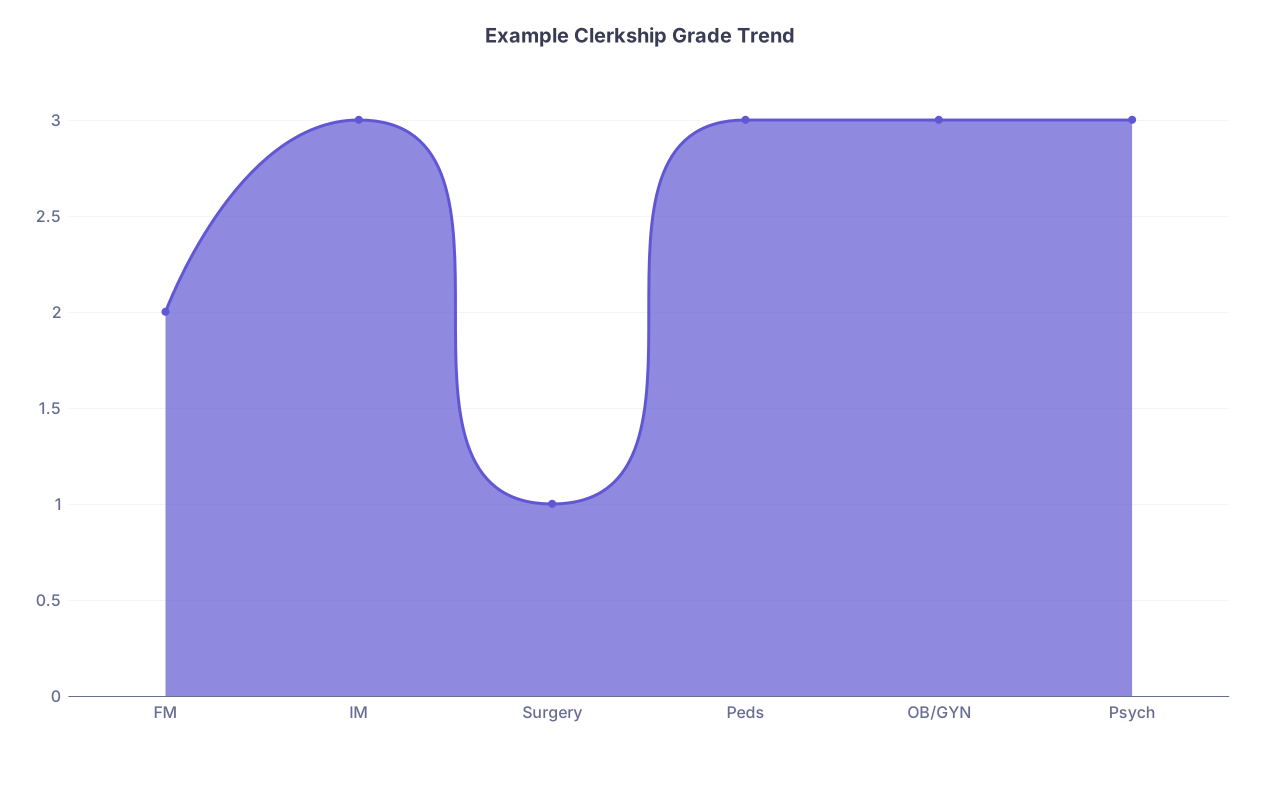
| Category | Value |
|---|---|
| FM | 2 |
| IM | 3 |
| Surgery | 1 |
| Peds | 3 |
| OB/GYN | 3 |
| Psych | 3 |
(Imagine: 3 = Honors, 2 = High Pass, 1 = Pass. One dip is fine. A collapse over time is not.)
3. If It Comes With Scary Narrative Comments
A Pass with narrative comments like:
- “Frequently late”
- “Unprofessional behavior”
- “Difficulty accepting feedback”
- “Concerns regarding reliability or honesty”
Those are worse than the grade itself.
Programs will forgive “needed more efficiency” way faster than “raised concerns among staff.” The words matter. A lot.
If your bad grade is purely numbers-based (shelf exam dragged your grade down, or you were 0.5% off cut-off), and your comments are actually good? That’s significantly less terrifying than what your brain is telling you.
How Bad Is “Bad,” Really?
You’re probably not even sure whether your “bad” is actually catastrophic or just average.
Let’s define it a bit.

Rough scale (for most schools):
- Honors = top ~10–20%
- High Pass = solid, above average
- Pass = the big scary word that actually just means… you passed
- Low Pass/Conditional = below expectations
- Fail = yeah, this one actually is serious
If your “bad” grade is:
- One Pass among High Pass/Honors: annoying, but common
- One Low Pass with decent narrative: concerning, but not fatal
- One Fail that you remediated: serious, but still not automatic death of your career
Here’s how programs tend to react:
| Situation | Program Director Reaction |
|---|---|
| Mostly Honors/HP + 1 Pass | “Okay, they’re human.” |
| Mixed HP/Pass + 1 Low Pass | “What happened there?” |
| One Fail, remediated, then stronger | “Red flag, but maybe they recovered.” |
| Multiple Low Pass/Fail in cores | “Probably not ranking unless major explanation.” |
Your brain is likely treating your single Pass like it’s that last row. It’s not.
Specialty Differences: Where One Bad Grade Hurts More
Here’s where your anxiety is a little justified: some specialties care more about clerkship performance than others.
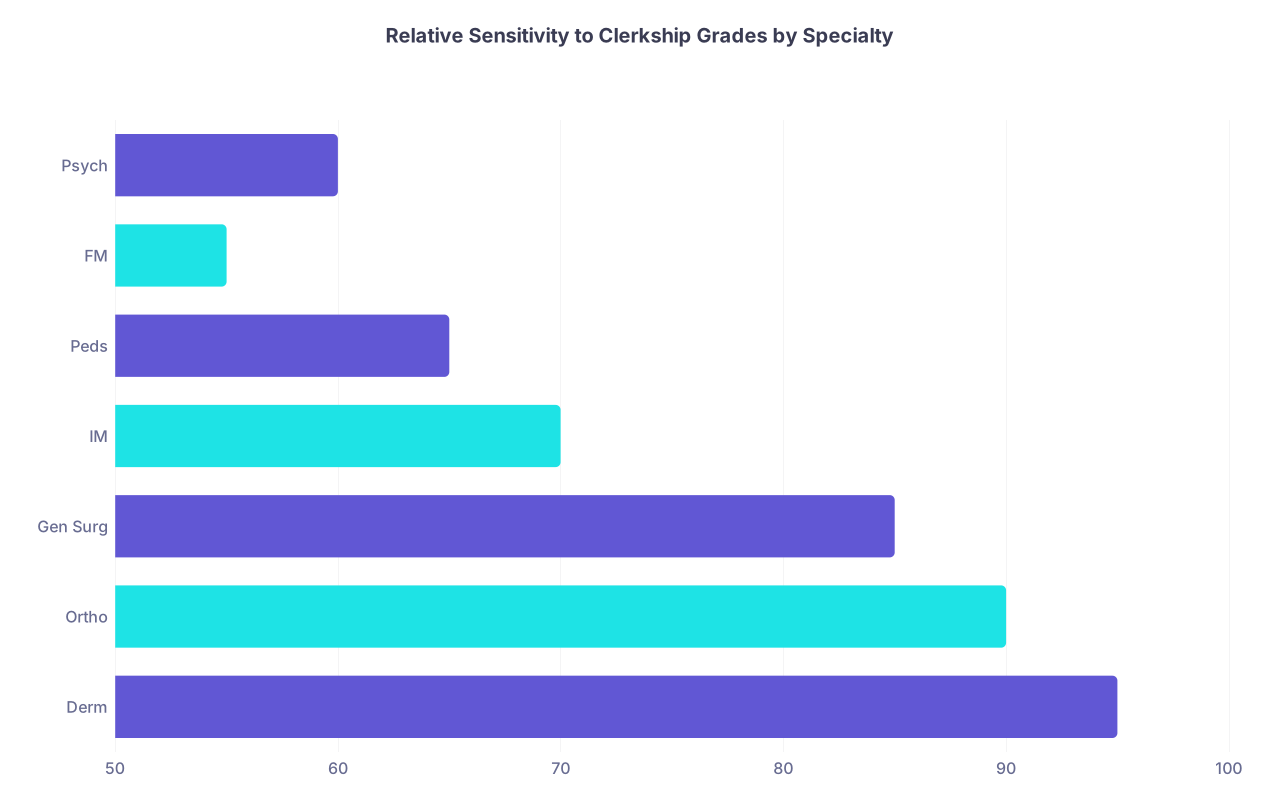
| Category | Value |
|---|---|
| Derm | 95 |
| Ortho | 90 |
| Gen Surg | 85 |
| IM | 70 |
| Peds | 65 |
| FM | 55 |
| Psych | 60 |
Very rough, but you get the vibe.
Highly Competitive (Derm, Ortho, Plastics, ENT, Ortho, Neurosurg)
For these, one bad core in that specialty or a related field can hurt more because:
- The application pool is stacked
- They’re trying to filter aggressively
- A “perfect” looking application is common
Even here, I’ve seen people with:
- Non-Honors surgery cores match into surgery because their sub-Is and letters were killer
- Ortho applicants with non-Honors surgery but strong ortho rotations/letters match fine
You just lose margin for error.
Middle of the Road (IM, Gen Surg, EM, OB/GYN)
One bad rotation is often a talking point, not a deal-breaker.
They’ll look harder at:
- Step scores
- Sub-I performance
- Narrative comments
- SLOEs (for EM) or strong specialty letters
Less Hyper-Competitive (FM, Peds, Psych, some IM programs)
These tend to be more forgiving of a single bad grade, especially if the story makes sense and the rest of your app is steady or on an upward trend.
What You Can Do If You Already Have The Bad Grade
Okay, enough analysis. You can’t un-live that rotation. So what now?
1. Crush Subsequent Rotations
You need to send a loud, clear signal: “That was an outlier, not the real me.”
Especially in:
- Your chosen specialty
- Sub-internships
- Away rotations (if you’re doing them)
If you’re applying to IM and your IM core was shaky, then:
- Make sure your IM sub-I is as strong as humanly possible
- Get at least one, ideally two, very strong IM letters
- Ask attendings who’ve seen you after that bad grade and can honestly say you improved
2. Get Letters That Indirectly Defend You
You don’t need them to write, “Despite their terrible surgery grade…”
But you want language like:
- “Outstanding team member, extremely reliable”
- “Responsive to feedback and showed clear growth over the rotation”
- “Would welcome them to our residency program without hesitation”
These statements make programs discount that one bad line on the transcript.
3. Address It (Briefly, Not Dramatically) If You Must
If the bad rotation comes with a real story (illness, personal crisis, legitimately toxic environment), you can acknowledge it.
Options:
- MSPE addendum (sometimes your dean’s office can help)
- Brief mention in personal statement, but only if absolutely necessary
- Prepared explanation for interviews
The rule: own it, don’t wallow in it.
Something like:
“Early in my third year, during my surgery rotation, I struggled with time management and clinical efficiency, which was reflected in my final grade. I took that feedback seriously, adjusted my approach, and subsequently improved, as seen in my performance on later rotations and my sub-internship.”
Short. Accountable. Then move on.
What you don’t want:
“My attending hated me, the residents were unfair, the environment was toxic…”
Even if it’s true, it sounds like excuse-making. Program directors hate that.
4. Don’t Let It Tank Your Confidence in Front of Patients or Attendings
This is the sneaky damage one bad grade can cause: it gets into your head, you start walking into every new rotation like you’ve already failed.
Attendings pick up on that. They’d rather work with a solid, teachable student who tries than a terrified perfectionist who freezes.
If you’re still carrying that bad grade like a scarlet letter, remind yourself:
- Most of your attendings won’t even know your prior grades
- They’re forming fresh opinions based on what they see now
- You can reinvent yourself, rotation to rotation, more than you think
Reality Check: What Actually Destroys Residency Chances
Just so we’re honest: yes, you can wreck your chances. But it’s usually not via one borderline shelf exam.
The killers are:
- Repeated professionalism issues
- Multiple failures (Step, core rotations) without clear improvement
- Lying, charting dishonestly, or cheating
- Terrible letters that say things like “I would not want this student as my resident”
One bad surgery grade because you were slow, overwhelmed, and exhausted? Common. Almost boring.

| Step | Description |
|---|---|
| Step 1 | Bad Rotation Grade |
| Step 2 | Compensate with Strong Later Rotations |
| Step 3 | Seek Help & Address Underlying Issues |
| Step 4 | Strong Letters & Sub-I |
| Step 5 | Residency Programs See Full Picture |
| Step 6 | Pattern or One-Off? |
FAQ (Exactly 4 Questions)
1. I got a Pass in the core rotation of the specialty I want. Should I give up on that field?
No. You’re just not in the “effortless” zone anymore. You’ll need:
- A strong sub-I in that specialty
- Great letters that clearly support you
- Solid Step/COMLEX scores if required
- A believable, non-dramatic explanation of growth
People match every year into their chosen field with less-than-perfect core grades. You’re just going to have to be more intentional and realistic with your program list.
2. I failed a rotation, remediated it, and passed. Am I doomed?
You’re not doomed, but this is a real red flag that programs will notice. The key is what happens next. If your later rotations are strong, your narratives are positive, and there’s a clear “before and after” story, you can absolutely still match — probably just with more caution about specialty competitiveness and geographic snobbery. If things keep going badly after that, then yes, it becomes a big problem.
3. Should I explain my bad rotation in my personal statement?
Only if it’s truly central to your “growth” story and you can talk about it without sounding bitter or victimized. Most of the time, I’d rather see you:
- Show growth through later performance
- Let strong letters speak for your current level
- Be prepared to discuss it in interviews if asked
If you do mention it, keep it to 2–3 sentences. Don’t turn your personal statement into a legal defense.
4. Programs see my grades before interviews. Why would they invite me if I have a bad rotation?
Because they’re not robots. If they invite you, it means they saw enough good stuff — scores, letters, narrative, experiences — that the bad grade didn’t scare them off. An interview invite is basically the program saying, “We know about your flaws. We’re still interested. Convince us.” If they cared enough to reject you over that one grade, you’d never see an interview email at all.
Bottom line:
- One bad rotation almost never destroys your residency chances by itself.
- Patterns and narrative comments matter way more than a single ugly line on your transcript.
- Your job now is to turn that bad grade into a clear “I learned, I improved, here’s proof” story — and then back it up with performance, not just apologies.


