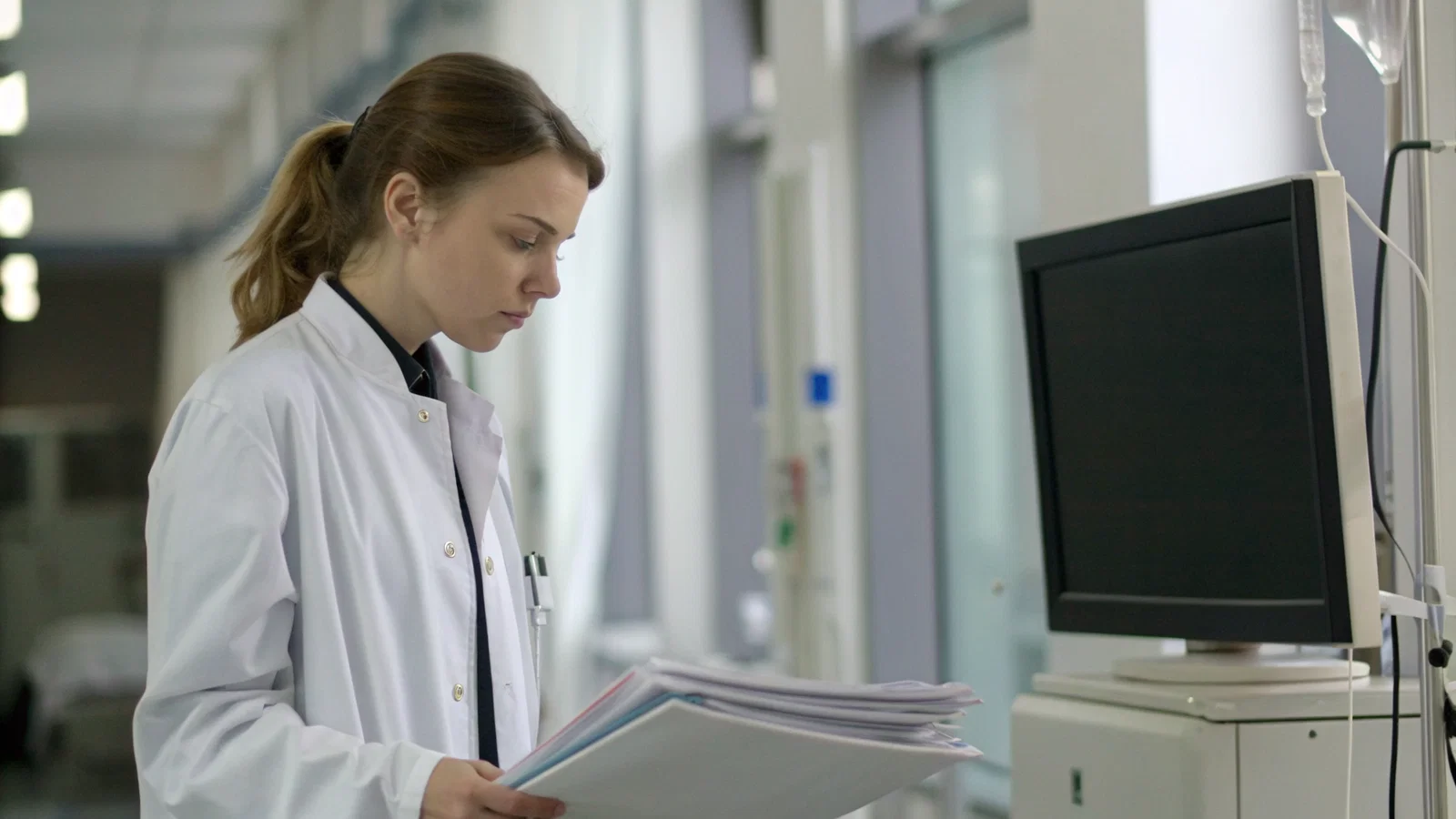
So you got the dialysis volunteer spot. And now you're panicking because the description was literally "record weights and times."
You're picturing three hours of clipboard purgatory while a machine beeps.
Don't make that mistake. That mindset will kill the spot before you even start.
This article is for educational purposes only. It is not financial advice, not legal advice, and not tax advice. Figures vary by individual circumstances, so consult a qualified professional before acting.
The 'Just Numbers' Trap: Why Complacency Will Waste Your Clinical Volunteer Spot
WARNING: Walking into a dialysis unit expecting to be a glorified data clerk is your first catastrophic error.
That "boring" machine interface? It hides the most intense hemodynamic drama in all of medicine. If you treat vitals as mere numbers, you are voluntarily blinding yourself.
I've seen premeds do this on day one. They sit down, open the binder, write "Pre-weight: 82.3 kg" and think they're done. They missed everything.
Mistake #1: Blind Transcription vs. Clinical Correlation.
Recording "Weight: 80kg" without understanding dry weight is turning yourself into a robot. Not a future physician.
That weight is a proxy for extracellular fluid volume. A 2.5 kg gain since last session? That's 2.5 liters of fluid the patient's heart and lungs have been drowning in for 48 hours. If the target weight is 78 kg and they came in at 81 kg, that 3 kg ultrafiltration goal is a serious cardiovascular stress test. Miss that connection and you miss the red flag of fluid overload. Or worse, the risk of rapid ultrafiltration, crashing blood pressure, cramping, vomiting, cardiac stunning.
Time tracking isn't admin work either. That "time on" stamp is the window into anticoagulation duration and dialysate flow rates. A shortened treatment time because the patient was late? That changes the Kt/V clearance math completely.
Red Flag: The 'Wait-and-See' Attitude.
If you stand passively waiting for instructions, you will become invisible. Technologists are trained to spot volunteers who lack curiosity. They have a unit to run. They have 12 patients to put on. They do not have time to babysit someone scrolling their phone between weights.
Invisibility is fatal. It means no mentorship. No deep-dive discussions about why they're using a 1.25 calcium bath. And a worthless, generic letter of recommendation later that says "attended regularly."
Actionable Pivot: Reframe every task immediately.
Don't just record. Interrogate the why behind the protocol on hour one.
- Weights aren't just numbers; they're fluid status. Ask: "What's his dry weight and when was it last challenged?"
- Blood pressure isn't just a number; it's hemodynamic compensation. Ask: "Why is her pre-dialysis BP 98/62, is she still on antihypertensives?"
- Time isn't just time; it's prescription. Ask: "Why 3.5 hours today instead of 4?"
You walked in to avoid data entry. Good. Now prove you understand what the data actually means.
Clinical Minefield: Three Errors That Will Get You Ejected Immediately
This isn't shadowing in a quiet clinic. This is a high-risk, high-liability environment with immunocompromised patients who have a direct line into their bloodstream. Mess up here and you don't get a second chance.
CRITICAL WARNING: Mistake #2, Sterile Technique at the Vascular Access site.
This is the immediate termination event. Non-negotiable.
The fistula, the graft, the central catheter, that is their lifeline. Touch it, lean over it without a mask, adjust your gloves near it, bump the sterile field during cannulation, you have just introduced a pathway for bacteremia that can kill them. Staff has zero tolerance for this. I've seen a volunteer get pulled off the floor permanently because they reached to steady a patient's arm near a newly cannulated fistula. One reach.
Rule: never touch the access. Never. If you are within three feet of cannulation, hands behind your back, mask on, mouth shut. Ask about thrill and bruit from a distance. Let the RN invite you closer, and still, don't touch.
Mistake #3: Dismissing Patient Complaints as 'Just Part of Treatment'.
When a patient complains of leg cramps, nausea, headache, chest tightness, do not nod and say "that happens."
Rookie failure. Dangerous.
Those symptoms often signal:
- Rapid ultrafiltration and intravascular depletion (cramps, lightheadedness)
- Electrolyte imbalance like hypocalcemia or potassium shifts (tingling, cramps, palpitations)
- Disequilibrium syndrome, especially in new or severely uremic patients (headache, nausea, confusion)
- An impending hypotensive crash (yawning, nausea, restlessness are early signs)
Ignoring trends prevents you from recognizing when a patient is crashing. Your job isn't to fix it. Your job is to notice it and report it instantly to the RN or Tech. "Mr. Johnson in chair 4 just said he's suddenly nauseous and his BP was 88/54 last check", that sentence makes you invaluable.
Mistake #4: Scope Creep and Machine Liability.
NEVER touch the machine controls to change pressure limits, blood flow rates, or dialysate potassium. NEVER attempt to assist with needle insertion, even if they ask you to "hold this."
That is not helping. That is massive liability and a direct threat to patient safety. A wrong button press can cause air embolism, hemolysis, blood loss. Your liability is zero training, zero certification.
Know your boundaries cold:
- Observe
- Document what you're assigned to document
- Report abnormalities immediately to the RN or Tech. Verbally. Right then.
You want to look competent? Knowing what NOT to do is how.
Look at the difference. Passive approach yields maybe weights and timekeeping. Two concepts per hour. Active approach, where you ask why the ultrafiltration profile changed, why they're sodium profiling today, that's 15 concepts per hour. Same shift. Totally different education.
Strategic Extraction: Turning a 3-Hour Shift into Interview Gold
Alright, you've avoided the landmines. Now how do you actually win here? How do you turn this supposed data entry gig into the story that gets you into med school?
Strategy Focus: Master the 'First 15 Minutes'.
Most complications occur during initiation. The biggest mistake, Mistake #5, is arriving late or missing this critical window.
Be early. Be gowned. Be ready.
Watch how the Tech:
- Assesses the thrill and bruit before touching anything. No vibration, no flow, no dialysis. Why?
- Calibrates the machine, checks conductivity, sets the target ultrafiltration based on that weight math you thought was boring.
- Manages heparin protocols, bolus vs. infusion. Why does a patient with a GI bleed history get no heparin? Why does that change clotting risk in the dialyzer?
This is pathophysiology in real-time. Not textbook. Real blood, real pressure.
Elevating Rapport: Build relationships that lead to advocacy.
Don't just smile and nod. Techs and RNs can smell fake interest.
Ask specific questions that signal high-level engagement:
- Instead of "How is the patient doing?" try "How did his morning labs influence the target potassium drop today? I saw his K was 5.8."
- Instead of "What does that button do?" try "What was your rationale for using a sodium profiling curve for that patient who kept cramping last time?"
- "I noticed you lowered the dialysate temp, were you trying to prevent intradialytic hypotension?"
That makes you memorable. That makes the entire care team want to teach you. I promise you, the tech who runs that unit for 20 years knows more practical nephrology than most residents.

Documentation for Impact: Don't waste the details.
Failing to record nuanced observations is a wasted opportunity.
At the end of every shift, write down 3 specific cases in a private log. Not PHI. Learning points.
- Case: Tech caught BP trending down from 142/80 to 108/65 over 20 min before patient felt dizzy. Stopped ultrafiltration, gave 200cc saline bolus. Patient stabilized. Lesson: watch trend, not single value.
Later, when crafting personal statements or interview stories, these specific anecdotes about interdisciplinary collaboration and acute recognition destroy generic descriptions. "I volunteered in dialysis" is forgettable. "I learned to recognize early intradialytic hypotension by watching a senior tech correlate a subtle BP drift with patient yawning", that's interview gold. That's a future doctor.
Final Warning: Do not romanticize the role, but do not disrespect the grind.
Respect the rhythm of the unit. Protect the patients with fanatical hand hygiene and boundary awareness. And relentlessly pursue the education hidden in the routine.
Make the mistake of underestimating this spot, and you'll log 100 hours of nothing. Succeed here, and you've mastered one of the toughest, highest-stakes clinical environments a premed can touch.
Start asking the hard why questions on your next shift. Not next week. Next shift.
Key Takeaways:
- Dialysis volunteering is high-yield physiology disguised as routine; treating it as "data entry" is a passive failure state that guarantees you learn nothing.
- Never breach sterile technique near the vascular access, and never attempt to operate machine controls; these are immediate eject buttons protecting both patient safety and your clinical standing.
- Extract maximum value by interrogating the rationale behind ultrafiltration profiles, electrolyte replacements, and pre-treatment assessments to transform hours on the floor into masterclass-level nephrology observation.