
Most students are completely wrong about what “operating room volunteering” actually looks like.
If you are imagining yourself standing at the surgeon’s elbow, peering into the wound, maybe handing instruments or suctioning blood—stop. That is not what OR support volunteering is. Not at a teaching hospital, not at a community hospital, and definitely not as a premed.
Let me break this down specifically so your expectations match reality, and so you can leverage this role intelligently for clinical exposure, letters, and applications.
(See also: Clinical Volunteering in Palliative Care for insights on communication skills you'll gain.)
What “Operating Room Support Volunteer” Actually Means
The title sounds glamorous. The work is not. It is, however, valuable, very “real-world,” and surprisingly high-yield if you approach it correctly.
Typical titles for this role:
- OR Support Volunteer
- Perioperative Services Volunteer
- Surgical Services Volunteer
- Patient Transport / OR Support
You are not:
- Scrubbed into cases
- Making clinical decisions
- Touching sterile instruments or sterile fields
- “Assisting” in surgery in any legitimate sense
You are:
- A supervised, non-clinical helper
- A logistics and flow support person
- A quiet observer of OR culture, team dynamics, and perioperative care
Well-run OR volunteer programs are designed to:
- Protect patient safety and privacy.
- Maintain OR efficiency.
- Give premeds exposure without getting in the way.
If any program promises you that, as a premed, you will “help with the surgery” or “assist the surgeon,” treat that as a red flag for both ethics and accuracy.
What You’ll Actually See in the OR Environment
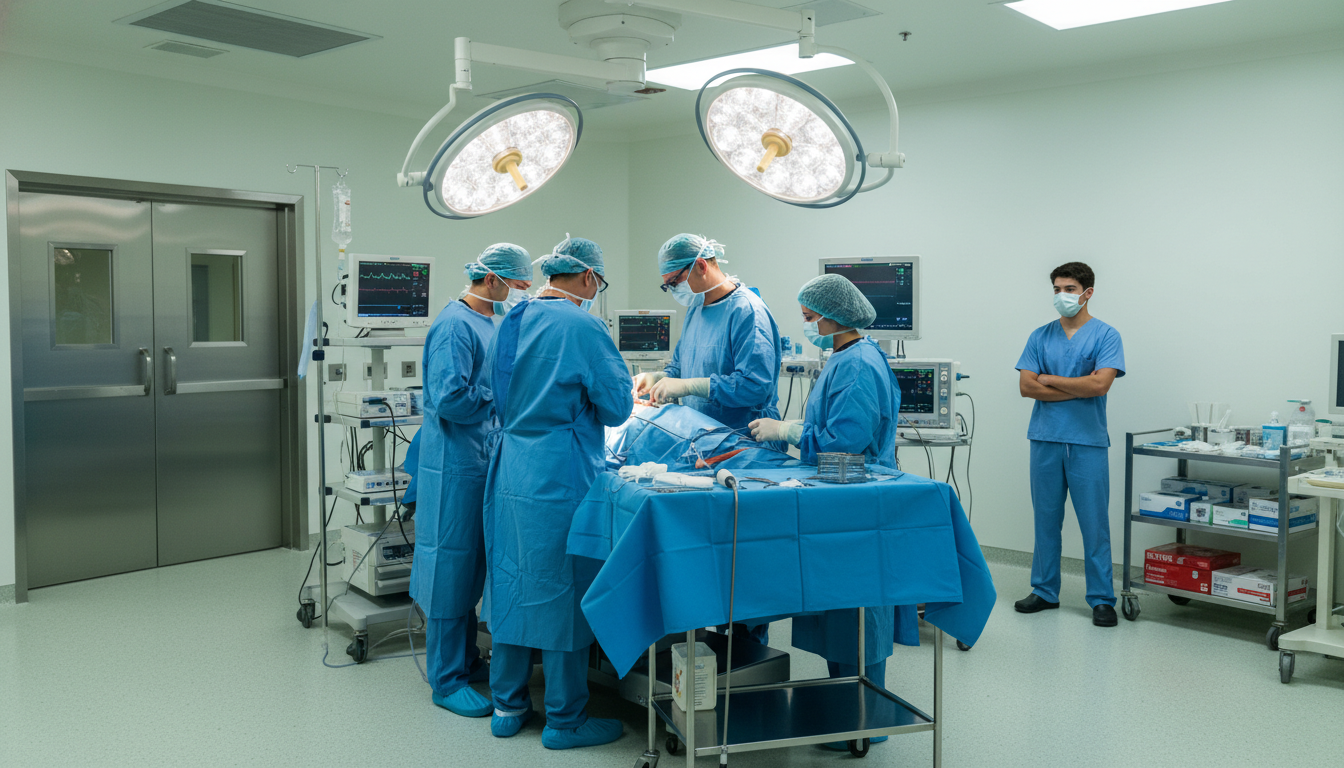
You will see more than you will do, at least initially. The OR is one of the most structured environments in the hospital. Once you learn how it runs, you begin to understand what “team-based care” actually means.
1. The OR Layout and Zones
You will quickly learn the geography:
- Sterile field: Draped patient, surgical instruments, scrub tech, surgeon, first assist. You do not cross this line.
- Non-sterile team area: Anesthesia workstation, circulating nurse, monitors, computer charting station.
- Periphery / back of room: Where you stand. Where equipment is staged. Where you move supplies, bring extra blankets, or quietly observe.
You will probably be instructed exactly where you may stand and where you absolutely may not. Ignore that guidance once, and you might lose the position.
2. The Surgical Team in Action
From your vantage point, you will see:
- Surgeons operating under the drapes. You may not see the incision clearly, depending on your angle and how strict the hospital is with observers.
- Anesthesiologist or CRNA managing the airway, medications, and monitoring vitals.
- Circulating nurse moving in and out of the room, grabbing supplies, documenting, communicating with pre-op and PACU.
- Surgical techs managing instruments, setting up the sterile field, counting sponges and sharps.
You will also see the hierarchy:
- Attending surgeon making final decisions.
- Residents or fellows assisting and teaching.
- Nurses who quietly hold the unit together.
- Techs who are the “instrument experts.”
Watching how they speak to each other, how they handle complications, or how they talk about delays is deeply educational for anyone considering surgery, anesthesiology, or perioperative care.
3. The Flow of a Surgical Case
Over time, you will stop seeing “one big surgery” and start seeing phases:
Setup / Room Turnover
- Environmental services cleans the room.
- Techs open sterile instrument trays.
- Anesthesia sets up medications and airway equipment.
- Your possible role: helping with non-sterile stocking, trash, and transport.
Patient Arrival and Induction
- Patient enters with transport team and nurse.
- Time-out, verification, consent confirmation (you may hear parts of this).
- Anesthesia induces; airway secured; patient positioned and prepped.
Incision to Closure
- Surgical drapes go up—this may block your direct view.
- You monitor the big picture: monitors, communication, team dynamics.
- You observe how they manage issues (hypotension, bleeding, equipment problems).
Emergence and Transport Out
- Drapes down, patient cleaned, lines checked, extubation (if appropriate).
- Patient transferred to gurney and transported to PACU.
- You may assist with pushing beds under staff supervision.
Watching this repeatedly imprints the rhythm of the OR on you. That rhythm shows up again when you rotate as a third-year medical student.
What You’ll Actually Do: Task-by-Task Breakdown
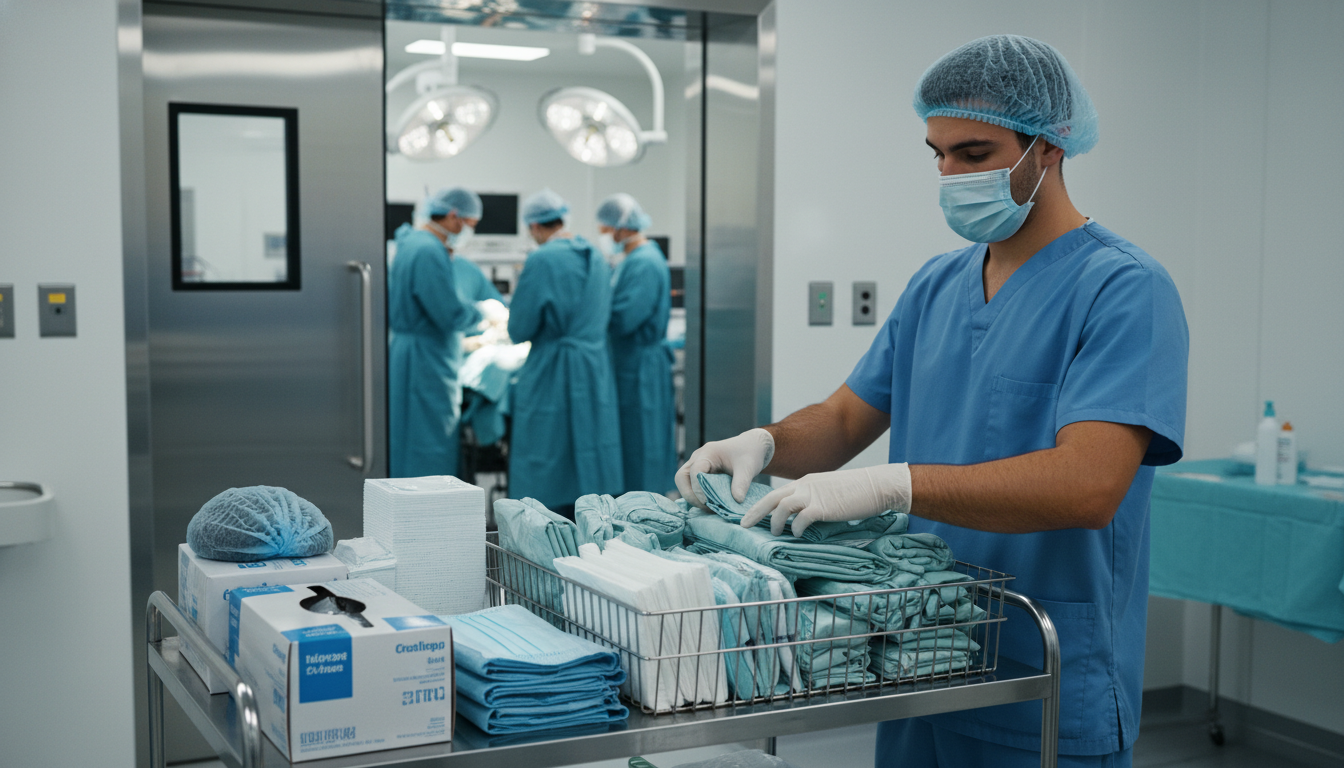
Now for the granular reality. Responsibilities differ by institution, but here is the accurate range of tasks for OR support volunteers.
1. Patient Transport (Non-Clinical)
Common duties:
- Escorting patients (with staff) from pre-op to the OR holding area.
- Helping push beds or wheelchairs under staff supervision.
- Returning stretchers to the pre-op area or post-op recovery.
Key points:
- You do not manage oxygen or IV lines alone. Staff handles that.
- You do not talk about diagnoses or prognosis with patients.
- Your goal is basic comfort and logistical help: adjust blankets, move belongings, help with privacy.
From an admissions committee perspective, this does count as clinical exposure if you are:
- Physically in patient-care areas.
- Around real-time decision-making.
- Interacting with patients under supervision.
2. Stocking and Room Turnover
This is the bulk of your “doing” in many shifts.
Typical tasks:
- Restocking:
- Gloves, gowns, masks.
- IV start kits, syringes (non-medication).
- Linens, blankets, patient positioning tools.
- Helping with:
- Moving non-sterile equipment between rooms.
- Getting extra supplies requested during a case.
- Taking trash or non-biohazard waste to designated areas (under guidance).
This work feels mundane. It is exactly what keeps the OR from bogging down and building delays. Residents will not notice you when you do it well—but nurses and techs will.
3. Indirect Patient Interaction
You are not performing clinical procedures. You may, however, have brief but meaningful interactions.
Examples:
- Offering warm blankets to patients in pre-op holding under nurse instruction.
- Introducing yourself briefly as a volunteer and explaining you help support the OR.
- Small, non-invasive conversation:
- “Is the temperature okay for you?”
- “Would you like another blanket?”
- “I will let your nurse know you would like some water after surgery.”
You must follow HIPAA and privacy rules:
- Do not discuss patient details outside clinical areas.
- Do not record anything. No photos, no videos.
- Do not share cases on social media in any identifiable way.
4. Observation of Surgery and Anesthesia
This is the part everyone cares about. How much can you actually see?
It depends on:
- Hospital policy.
- The attending’s comfort level.
- Case complexity.
- Physical space in the room.
At many institutions:
- You may stand at the back or side of the room, away from the field.
- You may be asked to step out during certain portions (intubation, catheter placement, sensitive procedures).
- You can ask the circulating nurse or resident for occasional, quiet clarification during non-critical periods.
You should not:
- Ask questions during time-out, instrument counts, or critical events.
- Lean in or try to get closer without permission.
- Touch anything near the sterile field.
In reality, you often see:
- The general procedure steps (incision, retraction, key maneuvers, closure) from a distance.
- Monitors displaying vital signs and, sometimes, laparoscopic video.
- Team communication patterns: how surgeons talk to anesthesia, nursing, and each other.
This is more valuable than simply seeing “guts.” It shows you what real OR life feels like: the pace, the tension, the routines.
What You Will Not Do (No Matter What You’ve Heard)
You should be extremely clear on the limits of an OR support volunteer role, both ethically and legally.
You will not:
- Perform any sterile duties:
- No scrubbing in.
- No handling instruments.
- No holding retractors, suction, or cautery.
- Perform clinical tasks:
- No starting IVs.
- No administering medications.
- No manipulating the patient’s airway or surgical site.
- Give medical advice or interpret results.
Any program allowing premed volunteers to cross these boundaries is exposing you and the hospital to risk. If you are ever asked to do something that feels “too clinical,” a safe script is:
“I am a volunteer, not clinical staff. I am not trained or permitted to do that. Would you like me to get a nurse or tech?”
That line protects everyone.
How to Behave in the OR: The Unwritten Rules
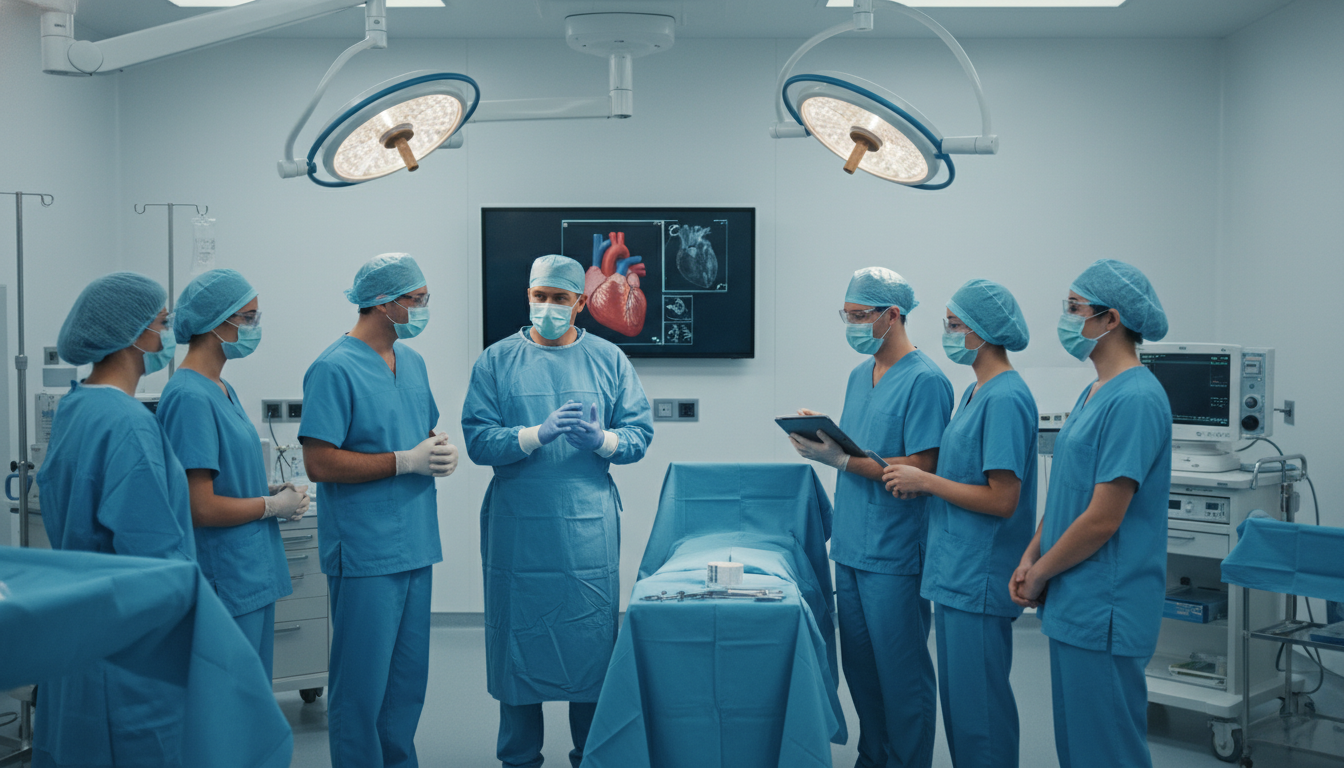
The OR is as much about culture as it is about surgery. You can impress people—or annoy them—without saying a word.
1. Learn the Hierarchy and Lines of Communication
Rough order for most OR questions:
- First go to the circulating nurse. They are your primary point of contact.
- For logistics (stocking, where to stand, which rooms need help), ask the nurse or charge nurse.
- For educational questions, ask:
- A resident or fellow (when they are not scrubbed in).
- A nurse or tech during room turnover.
- Occasionally an attending if they clearly invite questions.
Avoid:
- Interrupting during time-outs or when the surgeon is obviously dealing with a complication.
- Asking “What surgery is this?” five minutes into the case. You can read the board or case list beforehand.
2. Be Present but Nearly Invisible
Practical tips:
- Stand where they told you to stand, not where you think is best.
- Do not lean on anything that rolls, contains drugs, or is part of the anesthesia station.
- Keep your hands away from draped areas and instrument tables.
- When people are moving the bed or turning the patient, step out of the way unless specifically asked to help.
The OR appreciates volunteers who:
- Are physically there and reliably on time.
- Anticipate simple needs (restocking, moving stretchers).
- Do not require constant reminders about boundaries.
3. Ask Smarter Questions at Smarter Times
Questions that go over well:
- During room turnover:
- “Can you explain what the time-out is checking for?”
- “How do you decide which instruments to open for a case?”
- After a case, outside the OR:
- “What are the main risks of this operation?”
- “How does this compare to doing it laparoscopically or robotically?”
Questions that do not go over well:
- “Can I scrub in next time?” as a premed.
- “How much money does a surgeon like you make?”
- “Was that a bad outcome?” as soon as you see any complication.
Think like a future colleague, not a tourist.
How This Actually Helps Your Premed Application
Now the strategic part. OR support volunteering can be truly valuable—if you understand how to frame it.
1. Is This Clinical Experience?
Yes, at most institutions this counts as clinical exposure because:
- You are in patient-care areas.
- You are around active decision-making and procedures.
- You have supervised patient interaction, even if limited.
On an application, this might be categorized as:
- “Clinical volunteering — hospital-based”
- Sometimes “Shadowing / clinical observation,” particularly if your role is observation-heavy.
In your description, emphasize:
- Patient-facing components (transport, pre-op comfort, post-op escort).
- Proximity to real-time clinical decision-making.
- Understanding of team-based, interprofessional care.
2. How Many Hours Actually Matter?
A realistic target:
- 3–4 hours per week over 6–12 months is common.
- 50–150 hours total is a strong block of OR exposure.
- More is fine if you are learning and engaged; excessive hours without reflection add little.
Admissions readers do not care if you hit 300 OR volunteer hours versus 150. They care what you learned and how you articulate it.
3. What You Can Honestly Claim You Learned
Examples of higher-order learning outcomes:
- Team roles: “I learned to distinguish the responsibilities of the circulating nurse, scrub tech, surgeon, and anesthesiologist during different phases of surgery.”
- Systems thinking: “I saw how a single missing instrument could delay multiple downstream cases and how the OR adjusted.”
- Patient experience: “I observed how anxiety shifts from pre-op (fear of anesthesia and pain) to post-op (comfort, nausea, results).”
These are far more compelling than, “I really liked watching surgery and knew I wanted to be a surgeon.”
Red Flags and Common Misconceptions
You should go into this with clear eyes. There are pitfalls.
1. “I’ll Be in Every Surgery, Front Row”
Reality checks:
- Many shifts will involve more stocking and transport than actual case observation.
- You might have entire days where you do not see the critical moment of a procedure due to space or policy.
- You may see repetitive, routine cases (hernia repairs, cholecystectomies) rather than dramatic trauma or transplants.
That is not failure. That is real OR life.
2. “This Will Guarantee a Surgical Letter of Recommendation”
Unlikely if you:
- Are one of many volunteers.
- Spend most time with nurses and techs.
- Have minimal conversation with surgeons.
More realistic:
- A nurse manager, volunteer coordinator, or surgical tech could write about your reliability, maturity, and professionalism.
- This can still be a strong letter, especially on character and work ethic.
If you want a physician letter from this experience:
- Show up consistently for months.
- Be engaged and professional.
- If an attending repeatedly sees you and interacts with you, ask only after establishing a real working/observational relationship.
3. “I’ll Know if Surgery Is for Me After a Few Shifts”
You will know if the environment is tolerable:
- How you react to blood, smells, cautery.
- Whether you can stand for long stretches.
- Whether you like a high-intensity, structured setting.
You will not legitimately know if surgery is your calling based on a handful of observer shifts as a premed. You are too far from real responsibility to know that yet. But you can absolutely say:
- “The OR environment energized me.”
- Or, “I learned I am more interested in pre-op and post-op communication than the procedure itself.”
Both are completely valid.
How to Get the Most Out of OR Support Volunteering
To convert a logistics-heavy role into a high-yield experience, you have to be intentional.
1. Prepare Before Each Shift
Do a 10–15 minute pre-shift routine:
- Skim a simple surgery textbook or online resource about 1–2 common procedures (e.g., lap chole, appendectomy, C-section).
- Review basic OR etiquette and safety principles.
- Set a specific learning goal:
- “Today, I will focus on understanding the anesthesiologist’s workflow.”
- “Today, I will pay attention to how the team handles delays or equipment problems.”
You are training yourself to think like a clinician, not a passive observer.
2. Reflect after Each Shift
A short note after every shift pays off later for:
- Personal statement material.
- Secondary essays (“Describe a meaningful clinical experience”).
- Interviews.
Questions to answer in a journal or document:
- What surprised me today about surgery or the OR team?
- What did I see that changed how I think about patients?
- Did I witness any challenge or conflict? How was it handled?
- What did I learn about my own reactions (to blood, to stress, to outcomes)?
Over 6–12 months, this reflection pile turns into precise, vivid stories you can use in your application.
3. Build Relationships Carefully
People who may become meaningful mentors or references:
- OR nurse manager or educator.
- Volunteer coordinator for perioperative services.
- A surgical resident who repeatedly sees your dedication.
- A staff surgeon who notices your consistent presence and thoughtful questions.
Good habits:
- Learn and use people’s names.
- Ask, “Is there anything extra I can help with before I leave?” near the end of your shift.
- Express authentic appreciation when someone teaches you something (“That explanation of the lap chole steps helped me understand the anatomy much better—thank you.”).
FAQs
1. Does operating room support volunteering count more than regular floor volunteering for med school?
Not inherently. Admissions committees do not have a secret point system where OR hours are “worth more.” What matters is that this is genuine clinical exposure, that you can articulate what you observed and learned, and that you demonstrated reliability and professionalism. OR volunteering offers a distinctive angle—team-based acute care, procedures, workflow—but it is not automatically “better” than ED or inpatient floor volunteering.
2. Can I list this as shadowing or is it strictly volunteering?
You can reasonably categorize it as “Clinical Volunteering” with shadowing components. Many schools and AMCAS allow multiple activity types to overlap. In your description, be explicit: you supported patient transport and stocking (volunteering) and observed surgeries and anesthesia management (shadowing). Do not exaggerate your clinical role. Transparency is safer and often more impressive.
3. What if I feel faint during a surgery while volunteering?
Tell someone early. Step out of the room before you actually faint. Common subtle symptoms include sweating, lightheadedness, nausea, and tunnel vision. The circulating nurse or another staff member can escort you out and have you sit, hydrate, and recover. This is not a career-ending event; lots of clinicians had a first faint or near-faint. The key is to handle it safely, honestly, and to gradually increase your exposure as tolerated.
4. How do I describe this experience in my personal statement or secondaries?
Focus less on “I saw cool surgeries” and more on specific insights: an anxious patient in pre-op whose fears taught you about communication; a time the OR team adapted to a sudden complication; how observing repeated time-outs changed your understanding of patient safety. Describe what you did (supporting patient transport, helping turnover, maintaining supplies) and what that taught you about humility, teamwork, and the often-invisible work that underpins safe surgery.
Key takeaways: Operating room support volunteering is not glamorous, but it is real, structured exposure to high-stakes clinical care. You will support logistics, observe team dynamics, and see surgery from the periphery, not the front row. Use the experience deliberately—prepare, reflect, and build relationships—and it becomes far more than stocking gloves and pushing stretchers; it becomes one of the clearest windows you will have into how modern hospitals actually function.