
Introduction: Why Clinical Volunteering Matters for Future Healthcare Professionals
For anyone exploring healthcare careers—from high school and premed students to post-baccs and career changers—clinical volunteering is one of the most strategic and rewarding steps you can take. It gives you meaningful exposure to patients and clinical environments, helps you decide whether a medical path is right for you, and demonstrates commitment when applying to medical school or other health professional programs.
Clinical volunteering sits at the intersection of service and learning: you contribute directly to patient care and the healthcare team while gaining real-world medical experience you cannot get from textbooks or lecture halls. In an increasingly competitive admissions landscape, thoughtful volunteer opportunities can significantly strengthen your application and your confidence in your chosen path.
This guide will walk you through:
- What clinical volunteering is (and what it isn’t)
- The most common types of roles and where to find them
- Practical strategies to secure and excel in volunteer positions
- How to use these experiences for long-term career development
By the end, you’ll have a clear roadmap for finding, choosing, and maximizing clinical volunteering roles in healthcare.
Understanding Clinical Volunteering and Its Role in Healthcare Careers
What Is Clinical Volunteering?
Clinical volunteering involves offering your time, energy, and skills to support healthcare providers and organizations in the delivery of patient care. Unlike purely administrative or community service roles, clinical volunteering generally includes:
- Direct or indirect patient contact
- Exposure to clinical workflows and healthcare teams
- Participation in care-related tasks within your training and legal limits
Clinical volunteering is distinct from:
- Shadowing – Primarily observation with minimal active participation
- Internships – Often more structured, sometimes paid, with defined learning objectives
- Employment – Formal paid positions with defined job descriptions and responsibilities
As a clinical volunteer, you’re not providing independent medical care or making clinical decisions, but you are an integral part of the patient experience and the healthcare environment.
Why Clinical Volunteering Is Essential for Medical Experience and Career Development
Clinical volunteering is more than just a checkbox for applications; it’s an opportunity to:
1. Gain Authentic Medical Experience
You’ll witness:
- How healthcare teams manage complex patients
- What a typical day actually looks like in different clinical settings
- How systems issues (insurance, social determinants of health, staffing) affect care
This experience helps you answer critical questions:
Can I see myself doing this work long-term? Which environments energize me—or drain me?
2. Develop Core Clinical and Professional Skills
Through consistent volunteer opportunities, you can build:
- Communication skills: Talking with patients from diverse backgrounds, explaining processes, practicing empathy
- Teamwork: Working alongside nurses, techs, physicians, social workers, and other volunteers
- Professionalism: Time management, confidentiality, ethical behavior, and reliability
- Adaptability: Functioning in stressful, fast-paced, and emotionally complex situations
These are foundational competencies that admissions committees and future employers actively look for.
3. Build a Network in Healthcare
Clinical volunteering positions you to:
- Meet mentors who can offer guidance about healthcare careers
- Earn strong letters of recommendation from clinicians and supervisors
- Learn about research projects, paid roles, and advanced training programs
A single volunteer role can organically lead to shadowing, research assistant positions, or even part-time clinical jobs like scribing or medical assisting (once you’re qualified).
4. Explore Specialties and Work Environments
Many healthcare careers share overlapping skills but very different day-to-day realities. Through volunteering, you can explore:
- Different specialties (emergency medicine, pediatrics, internal medicine, surgery, psychiatry, etc.)
- Different settings (academic medical centers, community hospitals, clinics, free clinics, long-term care, rehab, rural vs. urban)
This first-hand exposure is invaluable when later deciding on specialties or even choosing between medicine, nursing, PA, PT, OT, or other healthcare paths.
Major Types of Clinical Volunteering Roles and What to Expect
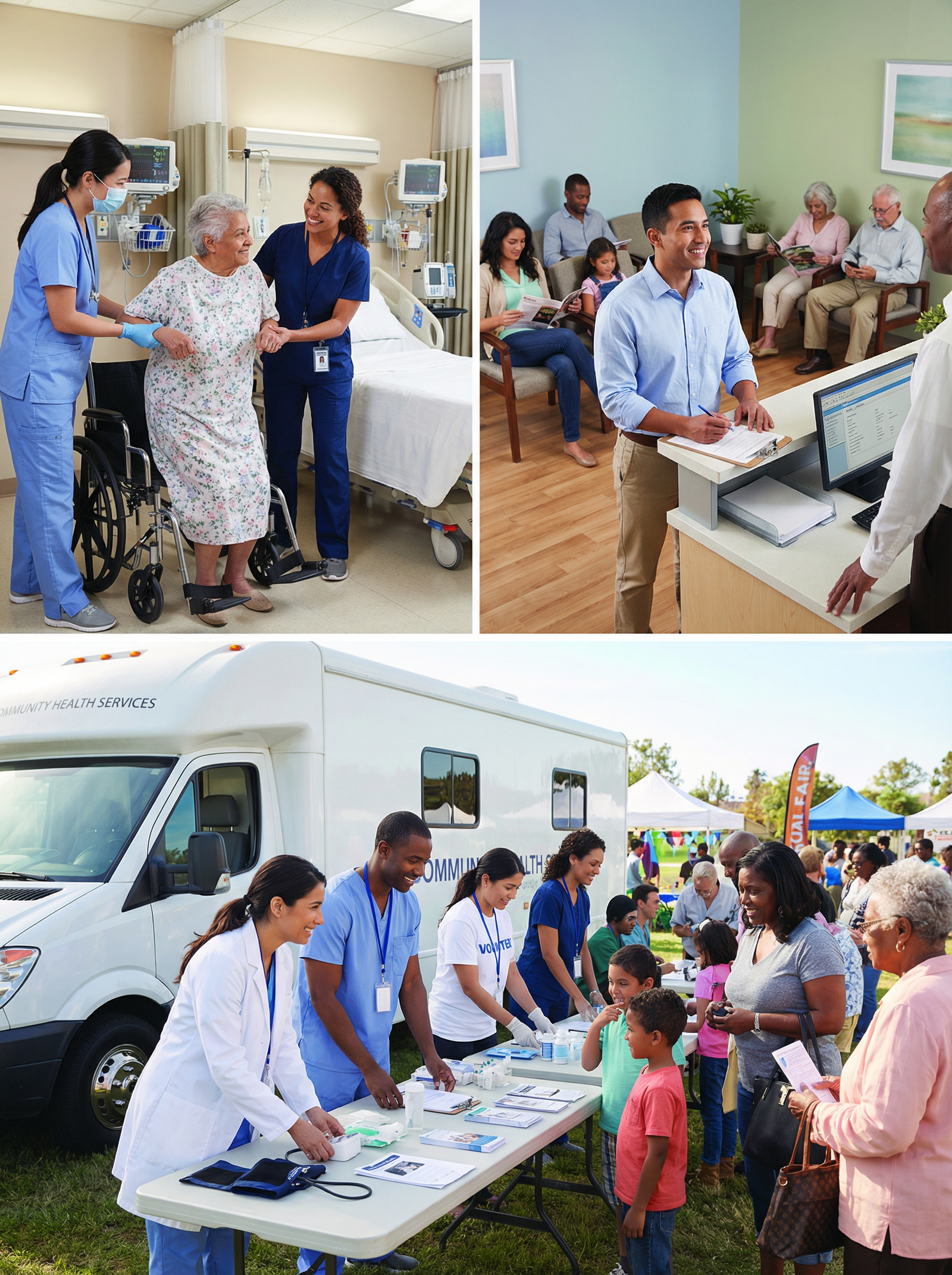
Not all clinical volunteering is the same. Understanding the variety of roles available helps you target opportunities that align with your interests, schedule, and level of experience.
1. Hospital Volunteer Roles
Most medium and large hospitals have structured volunteer programs, often with a dedicated Volunteer Services or Volunteer Management office.
Common hospital volunteer assignments include:
Patient transport and escort
- Accompany patients to imaging, therapy, or discharge areas
- Provide companionship and general comfort measures (within scope)
Nursing unit assistant
- Restock supplies and linen
- Answer call lights (within training and protocol)
- Help with non-clinical patient comfort tasks like offering water, blankets, or conversation
Front desk and patient intake support
- Greet visitors and patients
- Provide directions and basic information
- Assist with sign-in processes or paperwork (if permitted)
Therapy and activity support
- Help with group activities in rehab units or long-term care wards
- Prepare materials for occupational or physical therapy sessions
Hospital volunteering is ideal if you want consistent, structured exposure to multiple departments and a broad view of hospital operations.
2. Community Clinic and Free Clinic Volunteering
Community health centers and free clinics are critical for underserved populations and often rely heavily on volunteers.
Potential roles include:
Patient registration and check-in
- Confirm demographics and insurance information
- Help patients fill out forms, often in multiple languages
Clinical flow support
- Escort patients from waiting room to exam rooms
- Prepare rooms and restock supplies
Health education and outreach
- Assist with group education sessions (e.g., diabetes, prenatal care, smoking cessation)
- Help with phone calls, appointment reminders, or outreach events
Basic clinical tasks (where allowed and trained)
- Taking vitals (BP, HR, temperature) under supervision
- Recording information in the EHR (after appropriate training and permissions)
These roles are especially valuable for learning about primary care, population health, and social determinants of health.
3. Emergency Services and EMS Volunteering
If you’re drawn to fast-paced, acute care environments, emergency services roles may be a great fit. Options vary by region and local regulations:
Volunteer EMT or EMR (after certification)
- Provide pre-hospital emergency care as part of ambulance crews or first-response teams
- Gain exposure to trauma, cardiac emergencies, and urgent medical situations
Emergency department (ED) volunteer
- Assist with patient transport, stocking, and non-clinical tasks
- Observe triage, acute resuscitations, and ED workflows
Event medical support
- Volunteer with organizations covering sports events, concerts, or community gatherings
- Help set up first-aid stations and assist EMTs or paramedics
These exposures are intense but can be extremely clarifying for those considering emergency medicine, trauma surgery, or critical care.
4. Clinical Research Volunteer / Research Assistant
Some hospitals, academic medical centers, and research institutes offer volunteer positions focused on clinical research:
Typical responsibilities:
- Screening patients for study eligibility
- Assisting with participant recruitment and consent (under supervision)
- Collecting or entering data in research databases
- Observing or supporting clinical trials or quality improvement projects
This is an excellent way to blend clinical exposure with research experience, particularly valuable for students aiming for competitive specialties or MD/PhD programs.
5. Non-Profit and Community-Based Healthcare Organizations
Non-profit organizations focused on healthcare, health equity, and education often offer flexible volunteer opportunities, including:
Mobile clinics and health fairs
- Blood pressure screenings, basic vitals (with training)
- Health education and resource navigation for community members
Public health and advocacy organizations
- Assisting with vaccination campaigns, harm reduction programs, or health policy projects
- Supporting outreach to specific communities (e.g., migrant workers, LGBTQ+ communities, houseless populations)
Disease-specific organizations
- Volunteering with groups focused on cancer, HIV, mental health, etc.
- Helping run support groups, awareness campaigns, or patient resource centers
While not always inside traditional clinical walls, these experiences can provide powerful insight into healthcare access, prevention, and community health—critical aspects of modern medical practice.
How to Find High-Quality Clinical Volunteering and Medical Experience Opportunities
Finding the right volunteer role is a mix of research, networking, and persistence. Use multiple strategies in parallel for the best results.
1. Use Online Platforms to Search Volunteer Opportunities
Several major platforms aggregate volunteer opportunities, including those in healthcare:
VolunteerMatch (volunteermatch.org)
- Filter by cause area (health & medicine), location, and remote vs. in-person
- Look for roles that specifically mention patient interaction, clinic, hospital, or health education
Idealist (idealist.org)
- Strong focus on non-profit and community organizations
- Good for public health, advocacy, and community clinic roles
United Way and Local Volunteer Centers
- Regional sites often list community clinics, hospitals, and health initiatives seeking volunteers
When using these platforms:
- Set up email alerts for keywords like “clinic volunteer,” “hospital volunteer,” “patient support,” or “healthcare careers.”
- Read role descriptions carefully to confirm how much clinical exposure you’ll get.
2. Contact Hospitals and Clinics Directly
Many of the best clinical volunteering roles are never widely advertised.
Steps to take:
Identify local institutions
- Community hospitals
- Academic medical centers
- Urgent care centers
- Community health centers and FQHCs
- Student-run free clinics (if near a medical school)
Check their websites
- Look for pages labelled “Volunteer Services,” “Volunteer Program,” or “Get Involved.”
- Carefully review requirements (age, immunizations, TB testing, background checks, time commitments).
Reach out to Volunteer Coordinators
- If no roles are listed or applications are closed, email or call to ask:
- If they have a waitlist
- When new application cycles open
- Whether there are departments especially in need of volunteers
- If no roles are listed or applications are closed, email or call to ask:
Be prepared
- Have a concise 2–3 sentence introduction explaining:
- Who you are
- Your interest in healthcare careers
- Your availability and willingness to commit consistently
- Have a concise 2–3 sentence introduction explaining:
Persistence is key; some programs fill months in advance or only accept new volunteers at specific times of the year.
3. Leverage Your Academic and Professional Network
Your existing connections are often the fastest route to meaningful roles:
- Professors and advisors – Many have relationships with local hospitals, clinics, and researchers.
- Pre-health or premed advisors – Often maintain a list of partner organizations that regularly accept students.
- Peers and upperclassmen – Ask where they volunteer, what the application process was like, and which programs truly offer clinical exposure.
- Family, friends, and community members in healthcare – They may know of volunteer needs that aren’t publicly posted.
When networking, be specific:
“I’m looking for a consistent clinical volunteering opportunity where I can interact with patients and learn more about primary care. Do you know of any clinics or departments that might be open to volunteers?”
4. Join Local and Campus-Based Service Organizations
Many universities, colleges, and even high schools have:
- Pre-health clubs (AMSAs, premed societies, pre-PA clubs)
- Service fraternities and volunteer organizations
- Faith-based or community groups involved in hospital visitation, health education, or support services
These groups often have established relationships with local hospitals and clinics, making it easier for members to plug into existing programs.
5. Explore Volunteer Fairs and Community Events
Volunteer fairs—often hosted by universities, city governments, or nonprofits—bring numerous organizations together in one place.
Here’s how to make them count:
- Come with a short pitch about your interest in healthcare careers
- Ask targeted questions:
- “What kind of patient interaction do your volunteers have?”
- “What is the minimum time commitment?”
- “Have previous volunteers gone on to medical or health professional schools?”
- Collect contact information and follow up within 24–48 hours with a brief thank-you email and your resume if requested.
6. Don’t Overlook Smaller or Non-Traditional Settings
While large hospitals are popular, many students find rich experiences in:
- Small community clinics
- Long-term care facilities and nursing homes
- Rehabilitation centers
- Hospice and palliative care organizations
These settings often allow more sustained patient relationships and valuable insights into chronic illness, aging, and end-of-life care.
Succeeding as a Clinical Volunteer: Professionalism, Growth, and Next Steps

Once you secure a clinical volunteer position, your focus should shift to making the experience as meaningful as possible—for you, the patients, and the healthcare team.
1. Treat Volunteering Like a Professional Role
Even though you are not being paid, your reliability directly affects patient care and team functioning.
Key behaviors:
- Show up on time, every time
- Follow dress code (often business casual with a hospital-issued badge or jacket; sometimes scrubs)
- Respect all staff, from environmental services to attending physicians
- Maintain confidentiality (HIPAA and local regulations)
Your professional reputation starts now; supervisors from these roles may later become letter writers or references.
2. Communicate Effectively and Respectfully
In clinical environments, communication can be a safety issue. Practice:
- Active listening – Repeat back instructions, ask clarifying questions
- Clear, concise updates – If a nurse asks you to help transport a patient, confirm specifics and report back once complete
- Empathy with patients and families – Simple phrases like, “Is there anything I can do to make you more comfortable while you’re waiting?” can be powerful
When in doubt, ask. It’s far better to clarify than to guess in a healthcare setting.
3. Show Initiative—Within Your Scope
Being proactive doesn’t mean overstepping:
- Learn common tasks in your role and anticipate needs (restocking, room turnover, checking on waiting patients)
- Ask supervisors, “Is there anything else I can help with right now?”
- Offer to pick up extra shifts when feasible, especially during busy periods or staff shortages
Over time, your reliability may lead to more responsibility, stronger relationships, and better letters of recommendation.
4. Maintain Consistency and Long-Term Commitment
Admissions committees and hiring managers value depth over breadth:
- It’s generally better to volunteer 3–4 hours weekly for 1–2 years at one site than to do many short-term, disconnected experiences.
- Long-term involvement shows commitment to service and allows you to build meaningful relationships with patients and staff.
If you must leave, give adequate notice and, if possible, help transition your responsibilities.
5. Reflect and Document Your Experiences
Reflection transforms raw experiences into meaningful professional growth:
- Keep a confidential journal (never include identifiable patient information)
- After each shift, jot down:
- Memorable interactions (de-identified)
- Emotions (stress, fulfillment, uncertainty)
- Skills practiced and lessons learned
These reflections will later inform:
- Personal statements and secondary essays
- Interview answers (“Tell me about a meaningful clinical experience”)
- Specialty decisions and career goals
6. Use Volunteering as a Launchpad for Career Development
As you grow in your role, consider:
- Shadowing opportunities – Ask supervisors if you can observe clinicians during patient care (with appropriate permissions).
- Research projects – In academic settings, inquire about joining quality improvement or research efforts.
- Leadership roles – Some volunteer programs have lead volunteers, trainers, or coordinators.
Over time, your clinical volunteering can evolve into a robust portfolio of experiences that clearly support your healthcare career trajectory.
FAQ: Clinical Volunteering, Medical Experience, and Healthcare Careers
1. What counts as “clinical” volunteering for medical and health professional school applications?
Clinical volunteering generally involves exposure to healthcare settings and direct or indirect patient interaction. Examples include:
- Hospital volunteering with patient contact
- Clinic roles involving rooming patients, vitals, or education (under supervision)
- Hospice or long-term care volunteering where you regularly interact with residents
- EMS/ED support roles with active engagement in patient care environments
Purely administrative office work or remote data entry, while valuable as service, usually does not count as core clinical experience.
2. Do I need clinical volunteering if I already have a paid clinical job (like scribe or MA)?
If you already have a substantial paid clinical role with significant patient exposure, you may not need additional unpaid clinical volunteering. However, some applicants choose to:
- Add different clinical settings (e.g., from ED scribing to primary care volunteering)
- Engage in community-focused or underserved-care volunteering to broaden their perspective
It’s more about demonstrating consistent, meaningful engagement with patients and healthcare teams than checking a specific box.
3. How many hours of clinical volunteering should I aim for before applying?
There is no universal requirement, but as a general guideline:
- 100–200+ hours of substantive clinical experience is common among competitive applicants to many medical schools.
- Quality and reflection matter more than raw numbers; a deeply engaged 150 hours can be more powerful than 500 passive hours.
Review the expectations for your target programs and discuss your specific situation with a pre-health advisor.
4. Is clinical volunteering competitive? What if I can’t find a position?
Some high-demand programs (especially at famous hospitals) are competitive with long waitlists. To improve your chances:
- Cast a wide net: include community hospitals, smaller clinics, and non-profits
- Be flexible with timing (early mornings, evenings, or weekends)
- Consider starting with non-clinical roles (like greeter or transport) and transitioning to more clinical exposure once you prove reliability
If you’re in a rural area or have limited access to hospitals, emphasize any experience that brings you into contact with patients and healthcare teams, even if it’s in non-traditional settings.
5. Can clinical volunteering help me decide between different healthcare careers (MD, DO, PA, NP, nursing, etc.)?
Yes. Clinical volunteering is one of the most effective ways to compare professions in real time:
- Observe how physicians, PAs, NPs, and nurses differ—and overlap—in their responsibilities, autonomy, and patient relationships.
- Pay attention to lifestyle patterns, team dynamics, and what type of role resonates with your personality and strengths.
Combined with targeted shadowing and informational interviews, these experiences can give you clarity about which healthcare career fits you best.
By intentionally choosing and engaging in clinical volunteering, you’re not just “checking a box”—you’re building the foundation of your identity as a future healthcare professional. The patients you meet, the teams you support, and the skills you develop will shape both your applications and your long-term career in medicine and healthcare.