
You’re standing in the staff bathroom at your part‑time job, checking the time between customers. You’ve got a six‑hour shift tonight, a biochem exam in two days, and you still have not emailed back the clinic about that “mandatory Tuesday afternoon” volunteer slot. Your bank account says you need the paycheck. Every advisor you talk to says you “must” get clinical experience.
You’re not lazy. You’re not disorganized. You just can’t clone yourself.
This is for you if:
- You have to work for pay (tuition, rent, family obligations, your own survival)
- You still need meaningful clinical volunteering or patient exposure
- You’re trying to figure out what actually matters for med school admissions when time and money are tight
(See also: Reapplicant Strategy: Upgrading Your Clinical Volunteering Profile for more details.)
Let’s walk through how to balance this in real life, not in some fantasy world where you have unlimited free afternoons and parents paying your rent.
Step 1: Get Clear on What Med Schools Actually Need From You
Start here or you’ll waste time chasing the wrong opportunities.
Medical schools do not need:
- 500 hours in a brand‑name hospital
- A perfect “volunteering narrative”
- You saying yes to every unpaid opportunity that comes your way
They do need:
Evidence you understand what clinical medicine looks and feels like
- Seeing patients, watching teams work, exposure to the messiness of real care
Sustained commitment
- Not 15 one‑off activities; they want to see that you show up repeatedly over time
Contact with patient suffering and vulnerability
- Where you’re close enough to be changed by it, not just watching from a glass window
Reflection
- You don't just log hours; you think about what they mean, and you can articulate that in your personal statement and interviews
Here’s the key: paid work can sometimes satisfy these same boxes.
- CNA, EMT, medical assistant, scribe, phlebotomist, patient care tech, mental health tech = clinical experience, even if it’s not labeled “volunteering”
- Even non‑clinical jobs (barista, cashier, tutor, retail) can show resilience, responsibility, ability to work with the public and under stress
If you must work for pay, your question isn’t “How do I find more things to do?”
It’s “How do I stack my activities so they count for multiple dimensions at once?”
Step 2: Decide If Your Paid Job Can Be Clinical (or Close Enough)
If you haven’t locked into a specific job yet, or you’re willing to switch, this is your most powerful move: pick a paid job that is itself clinical experience.
Examples of paid jobs that admissions committees typically count as clinical:
- Hospital scribe (ED, inpatient, specialty clinics)
- Medical assistant in a primary care or specialty clinic
- Certified nursing assistant (CNA) in nursing homes, rehab hospitals, or hospitals
- Emergency medical technician (EMT) – with real patient contact
- Patient care tech or nursing tech
- Behavioral health tech / psych tech
- Hospice aide (paid positions exist in some systems)
- Phlebotomist in clinics or hospital labs with patient interaction
If you can do one of these:
- Your paycheck and your clinical exposure are the same hours.
- You reduce or even eliminate the need for separate clinical volunteering.
What if you already committed to another job?
You’re working Starbucks, Target, Uber, tutoring, or something totally non‑medical. That’s real life. You might still be able to shift strategically:
Check if your current employer has hospital/clinic connections.
- Large universities: student jobs in hospitals, clinics, research units
- Big systems like Kaiser, Mayo, Cleveland Clinic: entry‑level patient or unit support roles
- Some service jobs near hospitals may know staff and can connect you to opportunities
Look for incremental changes, not total career shifts.
- Moving from a campus library job to part‑time patient transporter
- From retail to hospital registration / front desk
- From general tutoring to working with developmental disability programs
If you can’t switch jobs at all, then the plan shifts: protect your job, and carve out a small but strategic clinical volunteer role.
Step 3: Build a Realistic Weekly Schedule Before Saying Yes to Anything
You cannot balance work and volunteering wisely if everything is hypothetical.
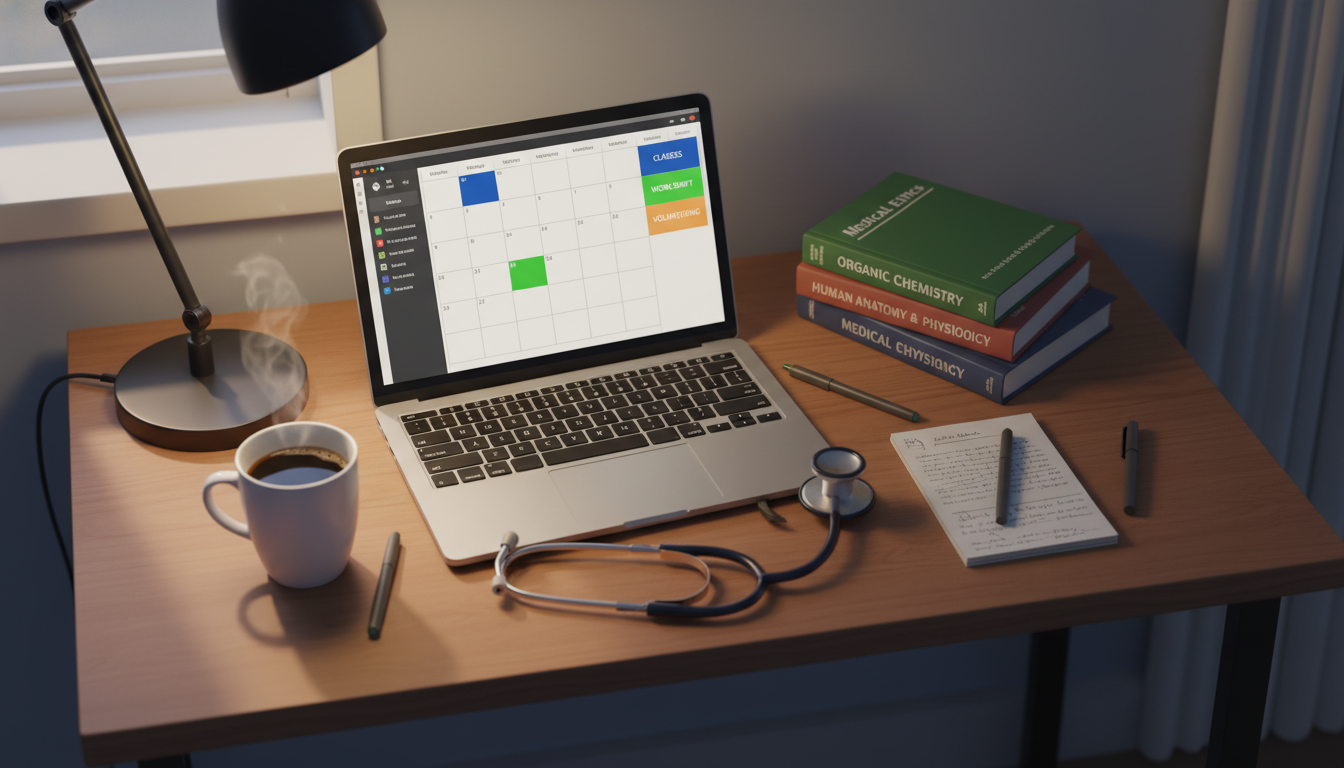
Grab a blank weekly calendar and actually block time.
Fill in non‑negotiables first
- Classes, labs, commuting
- Your work shifts (be honest about commute + decompression time)
- Fixed obligations: family care, religious services, ROTC, sports if truly non‑flexible
Estimate realistic study time
- Not dreamy “I’ll just study every free moment” time
- Think: for each tough science course, 8–12 hours/week outside of class
- Block that out like you would a job shift
Now see what’s left for clinical
- Be strict: if you only see 4–6 hours per week free, that’s your reality
- That does not disqualify you from med school; it just means you must be efficient
You’re aiming for something like:
- 8–20 hours/week work (or more if you must, but accept trade‑offs)
- 2–4 hours/week consistent clinical experience for at least 9–12 months
Consistency beats volume for someone who’s working:
- 3 hours/week in the same clinic for 18 months > 25 random hospital shifts over 3 years
Step 4: Choose Clinical Roles That Work With Work (Not Against It)
Some clinical volunteering structures are terrible for working students. Avoid those if you can.
Red flags if you have rigid work hours:
- Mandatory weekday daytime shifts (e.g., only Tuesdays 1–5 pm)
- “You must do at least 8 hours/week” minimums
- Unpredictable schedules that change every week with zero notice
What you want instead:
A. Roles with evening or weekend options
Look for:
- ED volunteer programs: many have evening shifts until 10–11 pm
- Inpatient units with weekend coverage
- Hospice companionship: often evenings or weekends visiting patients/families
- Free clinics that operate after working hours (big in some cities)
Search phrases like:
- “hospital volunteer evening shift premed”
- “free clinic volunteer Saturday”
- “hospice volunteer flexible schedule”
Call volunteer offices and literally ask, “Do you have roles that can be done evenings or weekends? I’m a full‑time student who also works.”
B. Roles with predictable, repeating shifts
If you’re juggling work and school, your brain doesn’t need more chaos. Look for:
- Same 2–3 hour shift each week, same day, same time
- Minimal last‑minute changes
- Programs where they build a schedule monthly, not day‑to‑day
When you apply or interview for volunteer roles, be honest upfront:
“I’m a full‑time student working 20 hours/week to pay rent. I can consistently do Wednesday evenings from 6–9 pm. I’d rather commit to that for a year than over‑promise and cancel later.”
Most coordinators appreciate that level of clarity.
Step 5: When You Truly Have Almost No Time – Minimum Viable Clinical Plan
Some students are in survival mode:
- 30–40 hours/week work
- Full course load
- Commuting significant distances
- Family responsibilities (kids, siblings, elder care)
If that’s you, the goal changes from “impressive” to “sufficient and believable.”
Here’s a minimum viable clinical plan that can still get you to med school:
Target 2–3 hours/week of clinical exposure
- 1 consistent shift/week at a free clinic, ED, hospice, or inpatient unit
- Even 2 hours/week is better than zero if it’s sustained
Sustain it for at least 9–12 months
- Admissions committees understand life constraints when they see durable commitment
Back it up with a strong explanation in your application
- In your Work & Activities, personal statement, and secondaries
- Don’t whine, just present facts:
- “I worked 30–35 hours/week throughout college to support myself and contribute to my family while taking 15–18 credit hours/semester. Because of this, I chose one long‑term clinical volunteer role rather than multiple short‑term experiences.”
Leverage any clinical that is built into your paid work
- If you work as a CNA 20 hours/week, you may not need any unpaid clinical at all
- Then add 1–2 low‑time, meaningful non‑clinical service roles (e.g., monthly food pantry)
Admissions committees have seen plenty of students who worked a lot and still made it. The mistake those students often make is hiding their workload instead of explaining it as context.
Step 6: How to Talk to Your Boss and Your Volunteer Coordinator
Coordinating a paid job and clinical volunteering is as much about communication as scheduling.
With your employer
Do not frame volunteering as a hobby. Frame it as career‑critical.
- Wrong: “I want to do some volunteering so I can get into med school.”
- Better: “I need one fixed evening per week where I get direct clinical exposure. That’s required for my future in healthcare. Can we look at my schedule and see if I can lock in Tuesday nights off?”
Specific strategies:
- Offer premium availability in exchange for 1 sacred block:
- “I can work Friday nights and Sundays regularly if I can have Wednesday 4–9 pm completely free.”
- Avoid asking for scattered small exceptions. Ask for one stable pattern.
If your employer cannot give you a single protected block in seven days, you have to ask a hard question:
- Is this job truly your only option?
- Can you pick up slightly lower‑paying but more flexible work (e.g., tutoring, gig economy, campus jobs) that gives you one or two evenings off predictably?
Sometimes a small pay cut for a more flexible job is the difference between “no clinical” and “a viable application.”
With your volunteer coordinator
Be professional and transparent at the start:
“I work 25 hours/week and I’m a full‑time student. I can truly commit to one 3‑hour shift per week, likely for at least a year. I’d rather commit to something sustainable than risk canceling. Is there a role that fits that profile?”
Ask clearly:
- “How strict are you about absences?”
- “How are schedules built? Monthly? Semester by semester?”
- “Do you offer evening or weekend shifts?”
Once you’re in, treat that shift with the same seriousness as your job:
- Show up on time, every time
- Avoid swapping or canceling unless urgent
- Communicate early if exams or work emergency clashes occur
Reliability is part of your professional identity now.
Step 7: Picking the Right Kind of Clinical Exposure When Time Is Tight
If you only have limited clinical hours to spend, spend them where they matter most.
Look for roles where you:
- See real illness and vulnerability (inpatient units, ED, hospice, oncology)
- Interact with patients directly (escorting, feeding, talking, helping them navigate)
- Work near physicians, nurses, PAs, social workers, techs – so you see team dynamics
Examples of high‑yield clinical volunteering for the time‑constrained:
Emergency Department volunteer
- Frequent patient contact
- Fast pace, lots of observation opportunities
- Often evening/weekend shifts
Hospice volunteer
- Deep patient/family interaction
- Strong material for reflection and essays
- Sometimes flexible scheduling
Free clinic volunteer
- Close to physicians/NPs/PAs
- Underserved populations → strong service narrative
- Often operate evenings/weekends
Inpatient unit volunteer (transport, comfort rounds)
- Patient contact, basic tasks
- Good for seeing chronic disease, post‑op recovery
Lower yield if this is your only clinical (but can still be okay as part of a mix):
- Volunteering only at the hospital front desk with no patient contact
- Pushing paperwork in an office that just happens to be in a hospital
- Health‑related fundraising events with no patient exposure
If you must choose one clinical role because of time, pick something that gets you in the room with patients and health professionals, not just adjacent.

Step 8: Using Your Work Story as a Strength in Your Application
If you’ve been working significant hours, that’s not a liability; it’s a narrative asset when used correctly.
Here is how to frame it:
Be specific about workload
- “Worked 25–30 hours/week as a cashier throughout college to cover living expenses and tuition differences.”
- “Served as a night‑shift CNA 24 hours/week while enrolled in 12–15 credits each semester.”
Connect it to traits medicine values
- Resilience, time management, empathy for working‑class patients, understanding of life outside the hospital
- Example: “Serving customers who were tired, stressed, and short on time taught me to stay calm under pressure and listen carefully, even when I was tired. That same skill helped me connect with anxious patients during my ED volunteering.”
Explicitly address limited free time
- You’re not making excuses; you’re giving context.
- “My work schedule limited my ability to participate in multiple activities, so I committed to one long‑term clinical volunteer role at a free clinic. Over 18 months there, I…”
Show reflection about trade‑offs
- Apply the same honesty to your story that you’ve had to apply to your schedule.
- “There were semesters when working fewer hours might have raised my GPA slightly. I chose to keep working to avoid debt and support my family; this forced me to become more intentional with the commitments I did choose, like my ED volunteering.”
When reviewers read this, they’re not thinking, “Why didn’t this student do 400 more hours of shadowing?”
They’re thinking, “This person has been living like an intern already.”
Step 9: Avoiding Burnout While You “Do It All”
If you must work for pay and still chase clinical experience, you are walking near a burnout line. Ignoring that is how people crash, tank a semester, or quit halfway.
Protect yourself with a few rules:
Cap your commitments intentionally
- One paid job
- One primary clinical activity
- Maybe ONE other thing that truly matters (research, one non‑clinical service role, or a small leadership role)
- Say no to everything else, and don’t apologize
Use semester breaks and summers strategically
- If your work is heavier in the semester, maybe you front‑load clinical hours in the summer
- Summer plan example:
- Work 30 hours/week
- Volunteer 6 hours/week (2 shifts)
- Shadow intensively for 2 weeks during a lighter work period
Watch your red flags
- Skipping sleep routinely to fit everything in
- Slipping grades across multiple classes
- Calling off work or volunteering constantly because you’re exhausted
If those are happening, scale back something before your transcript or reputation takes the hit.
Step 10: What to Do This Week
You probably don’t need more theory. You need a next move.
Here’s a concrete 7‑day mini‑plan:
Today:
- Print or open a weekly calendar.
- Block every non‑negotiable: class, commute, work, study.
- Circle one block of 2–4 hours that you could realistically protect every week.
Tomorrow:
- Identify 3 clinical sites that might fit that block:
- Your nearest hospital’s volunteer department
- A free clinic in your city
- A hospice organization or community health center
Day 3–4:
- Email/call each place with a short script:
“I’m a premed student who also works part‑time. I can reliably volunteer [Day/Time] for at least a year. Do you have a clinical volunteer role with patient contact that fits a consistent weekly shift?”
Day 5:
- If at least one responds positively, start their application process.
- If none do, expand: look into ED volunteering, hospice, or smaller clinics slightly further away but still realistic.
Day 6–7:
- Talk to your employer about locking in your protected block. Offer something in return (more availability at less popular times) if needed.
- Draft 3–4 sentences in a document explaining:
- Why you work
- Approximate hours
- How this shapes what you can commit to
- You’ll refine this later for your AMCAS/AACOMAS and secondaries.
Start now: pull up a blank weekly calendar and actually block your next seven days. Until your time is visible on paper, you’re guessing. Once you see it, you can start choosing clinical experiences that truly fit your life instead of fighting it.