Educational purposes only. This article discusses visa pathways, employment sponsorship, and career planning for international medical graduates; it is not financial advice, not legal advice, and not tax advice. Figures vary. Consult a qualified professional for guidance specific to your situation.
Introduction: What "IMG-Friendly" Really Means After Residency
Let me be blunt. The phrase "IMG-friendly" gets thrown around like a marketing buzzword. Residency programs slap it on their websites to attract international medical graduates, but the actual post-residency support infrastructure varies wildly. Some programs genuinely invest in their IMG trainees through structured licensure counseling, visa transition assistance, and dedicated career services. Others check the box with a single PDF of state board contacts and call it a day.
Here is the central question every IMG should ask before ranking programs: do these institutions continue to advocate for you once you have completed your training, or does their support evaporate the moment you receive your diploma?
The answer matters more than you might think. Medical licensure is not automatic. Job placement is not guaranteed. And visa status remains a moving target that can derail an otherwise solid career trajectory if mishandled. A program that helps you match but abandons you during the transition to independent practice has failed you at the worst possible moment.
This article breaks down the specific support structures that distinguish genuinely IMG-friendly programs from the rest. I will walk through licensure pathways, job placement mechanisms, alumni outcomes data, and concrete action steps you can take during residency to secure your future. No fluff. No hedging. Just the details you actually need.
Licensure Pathways for IMGs After Residency
The licensure process for IMGs runs longer than for US-born graduates. The numbers above reflect reality, not stereotypes. On average, an IMG completes residency, sits for USMLE Step 3 (often during PGY-2 or PGY-3), navigates Educational Commission for Foreign Medical Graduates (ECFMG) certificate verification, and waits for state medical board processing. That sequence alone consumes months.
What IMG-friendly programs actually provide
Strong programs treat licensure as a structured curriculum component, not a bureaucratic afterthought. Specifically, they offer:
- USMLE Step 3 prep resources. This includes paid question banks, dedicated study leave, and on-site review sessions. I have seen programs allocate two to four weeks of protected time for Step 3 preparation. That kind of institutional commitment signals real investment.
- State-specific licensing guidance. Every state medical board has slightly different requirements. California demands a Postgraduate Training License (PTL) before full licensure. Florida requires FCVS profile completion. Texas has its own credentialing timeline. Programs with experience sponsoring IMGs maintain updated matrices of state requirements and assign staff to shepherd graduates through the paperwork.
- Letter of recommendation coordination. Program directors who understand IMG challenges know how to write letters that address visa status, training equivalency, and clinical competence in language state boards recognize. This is a small detail that prevents major delays.
Common bottlenecks
The most frequent delays I have observed:
- ECFMG certificate verification. This is the single largest source of licensure lag. The certificate must be primary-source verified, and any discrepancy in transcripts or diplomas triggers extended processing.
- Visa-related documentation. If you are on a J-1 visa, you need a valid ECFMG sponsorship letter for every state board application. Expired or incorrect paperwork stalls the process indefinitely.
- Background check delays. Some state boards require FBI background checks with fingerprinting. International applicants sometimes face longer processing because of overseas record requests.
Programs that proactively flag these issues during PGY-2 save their graduates weeks or months of frustration.
Job Placement Support Structures in IMG-Friendly Programs
Career services at IMG-friendly programs operate on a spectrum. At the high end, you find dedicated placement coordinators, exclusive job boards, and direct hospital recruitment relationships. At the low end, you get a generic email blast and a handshake.
What robust placement support looks like
- CV and cover letter reviews. Specialized for IMG candidates, addressing gaps in US clinical experience, visa status disclosures, and specialty-specific positioning.
- Interview coaching. Mock interviews that include visa disclosure scenarios, salary negotiation frameworks, and contract review basics.
- Specialty-specific job boards. Large health systems (HCA, Ascension, CommonSpirit) maintain internal job portals that are shared preferentially with affiliated residency programs. These positions often go unadvertised on public sites like Indeed or PracticeLink.
- Alumni mentorship pipelines. Graduates from the past five years who now hold staff positions frequently return to mentor current residents. This is the most underutilized resource in most programs.
Specialty-specific variations
Internal medicine programs typically offer the strongest IMG placement infrastructure because of sheer volume. Hospitalist positions are abundant, and IMG graduates fill a significant percentage of these roles annually.
Surgical specialties present a harder path. Fellowship positions are competitive, and visa sponsorship for fellowship is not guaranteed. Programs with academic affiliations (university-based rather than community-based) tend to provide stronger fellowship pathway guidance. If you are pursuing surgery, internal medicine subspecialties, or any fellowship-dependent field, ask specifically about fellowship placement rates.
Family medicine programs vary by geography. Rural and underserved-area programs often have near-perfect employment rates because they recruit directly from their training pipeline. Urban programs may have weaker placement because of market saturation.
Real-World Outcomes: Alumni Data and Program Examples
The data tells the story more honestly than any program brochure. The employment rates above represent 12-month post-graduation placement for graduates of five IMG-friendly programs across different health systems and regions. Notice the range: 78% to 92%. That gap is not random.
Programs with strong post-residency support
- HCA Healthcare residency programs. HCA operates one of the largest graduate medical education networks in the country. Their IMG-friendly programs benefit from direct recruitment pipelines into HCA hospitals. The 85% placement rate in the chart reflects this structural advantage.
- Ascension Health programs. Mid-sized programs with strong community hospital affiliations. Placement rates cluster around 78% because Ascension does not hire every graduate, but their alumni network is robust enough to facilitate independent placement.
- Community Health Systems (CHS) programs. CHS sponsors numerous IMG-heavy internal medicine and family medicine residencies. The 92% rate in the chart reflects near-universal absorption into CHS hospitalist positions.
Variables affecting success
Three factors move the needle most:
- Geographic location. Rural and mid-sized city programs place graduates more reliably than coastal urban programs. Market saturation in cities like New York, Los Angeles, and San Francisco means even well-trained graduates face stiff competition.
- Visa type. H-1B visa holders face more restrictive employment options because employers must file new petitions. J-1 visa holders require Conrad 30 waiver placement or return to home country for two years before re-entry. Programs that proactively address these constraints during residency produce better post-graduation outcomes.
- Specialty demand. Hospital medicine, primary care, and psychiatry currently offer the strongest IMG placement environments. Specialties with fellowship prerequisites (cardiology, gastroenterology, hematology-oncology) create additional hurdles.
Case study
Consider Dr. Patel, a graduate of an internal medicine program in the Midwest. During PGY-2, she met with career services, completed her Step 3 exam, and began interviewing for hospitalist positions at the program's affiliated health system. Her program director connected her directly with the hospital medicine division chief. She received an offer two months before graduation, signed her contract during her final month of training, and started as an attending the week after her residency completion date. Her program had an 88% 12-month employment rate. This is the model.
Contrast this with Dr. Hassan, who completed a residency in a competitive urban market. His program offered minimal career services, and he spent eight months post-graduation searching for a position that would sponsor his visa transition. He ultimately accepted a position in a different state at a lower salary than his peers. His program reported a 72% placement rate at 12 months, but did not publish visa-specific outcomes.
Action Steps: Securing Support Beyond Residency
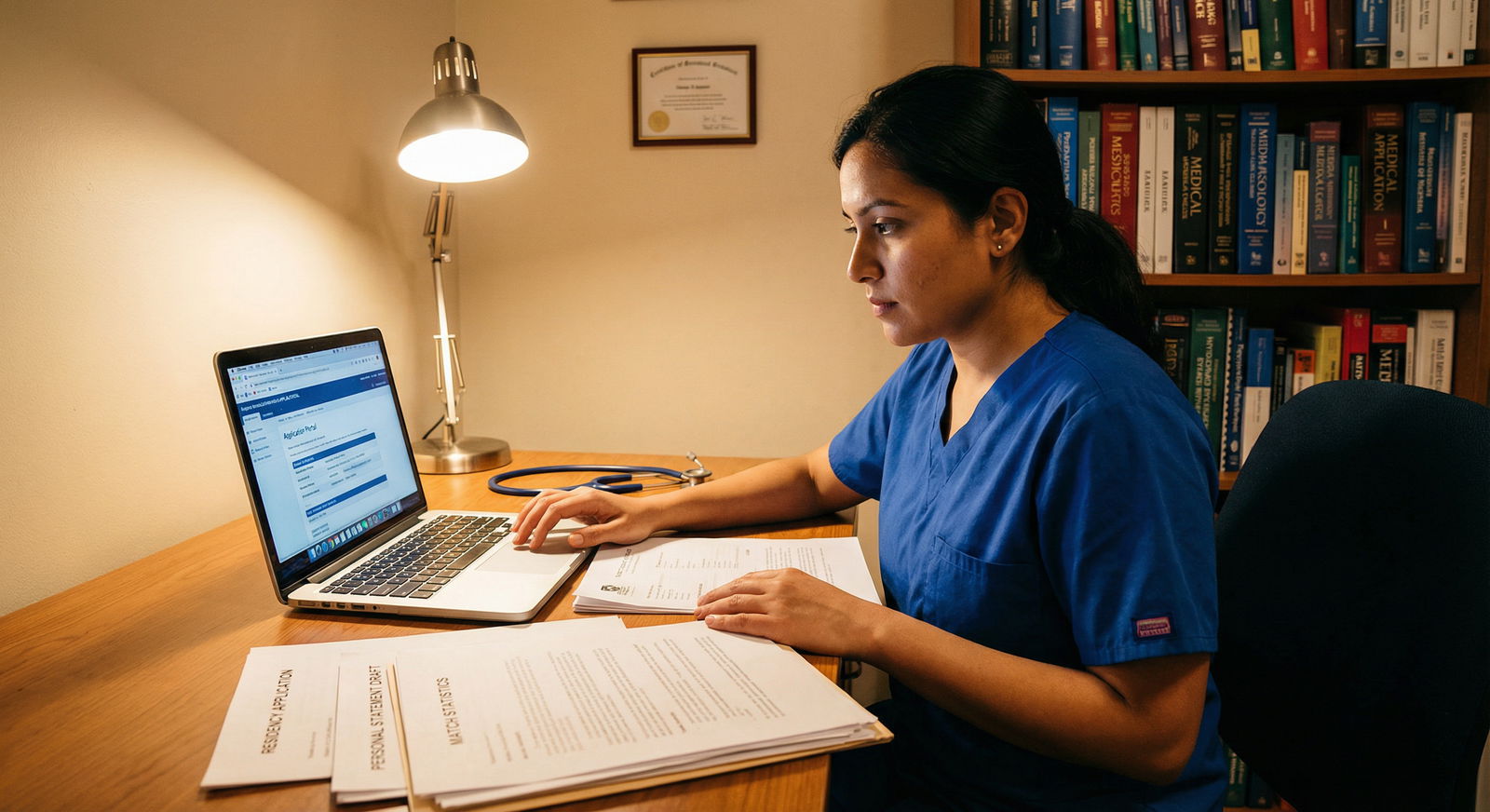
Do not wait until PGY-3 to think about post-residency life. The residents who transition smoothly into attending positions start preparing 18 to 24 months before graduation.
Essential documents to assemble early
- Program completion letter with program director signature and ACGME accreditation reference.
- USMLE transcripts showing Step 1, Step 2 CK, and Step 3 scores.
- ECFMG certificate with current verification status.
- Visa documentation: current DS-2019 or I-797, passport validity through expected employment start date, I-94 arrival record.
- Board scores: if applicable for your specialty (ABIM, ABFM, etc.).
- Letters of recommendation: at least three, including one from your program director.
Timeline for action
- PGY-2 (first half): Schedule a meeting with career services. Ask directly about 12-month placement rates for recent graduates. Request alumni contacts. Begin Step 3 study planning.
- PGY-2 (second half): Take USMLE Step 3. Begin state licensure research for your target practice location. Update your CV.
- PGY-3 (first half): Submit licensure applications. Attend career fairs and specialty society conferences (American Medical Women's Association, American Association of Physicians of Indian Origin). Initiate job applications.
- PGY-3 (second half): Complete interviews. Negotiate contracts. Confirm visa sponsorship or waiver placement. Sign employment agreement.
- Post-graduation: Transition to active practice. Maintain ECFMG certification. Plan for visa renewals or green card applications if pursuing permanent residency.
Contingency planning
Prepare for delays. Licensure processing can take three to six months. Visa petitions add another two to four months. If your target start date is July 1 following graduation, your paperwork needs to be submitted by January or February at the latest. Build buffer time into every deadline.
If you are on a J-1 visa and plan to pursue a Conrad 30 waiver, begin the application process during PGY-3. Waiver slots are limited and competitive. Your program should connect you with a designated officer at the state department of health, but verify this connection exists before you need it.
Leverage networks aggressively
- Alumni networks. Request a list of the past three years of graduates and their current positions. Reach out directly. Most alumni are willing to spend 15 minutes with a current resident.
- Specialty societies. Organizations like AMWA and AAPI offer mentorship programs, job boards, and advocacy resources specifically for IMGs.
- Hospital recruitment departments. Contact them directly, not through your program's career services. Establish relationships with physician recruiters at your target institutions.
Key Takeaways
- IMG-friendly programs often provide robust post-residency licensure assistance, but the level varies by program and specialty.
- Job placement support is strongest in programs with affiliated hospital networks and active career services.
- Alumni employment data is a reliable metric to gauge post-training support; look for 12-month placement rates.
- Proactive engagement with career services during residency is crucial to secure sponsorship and licensure smoothly.