I've seen this exact moment derail otherwise good shadowing experiences.
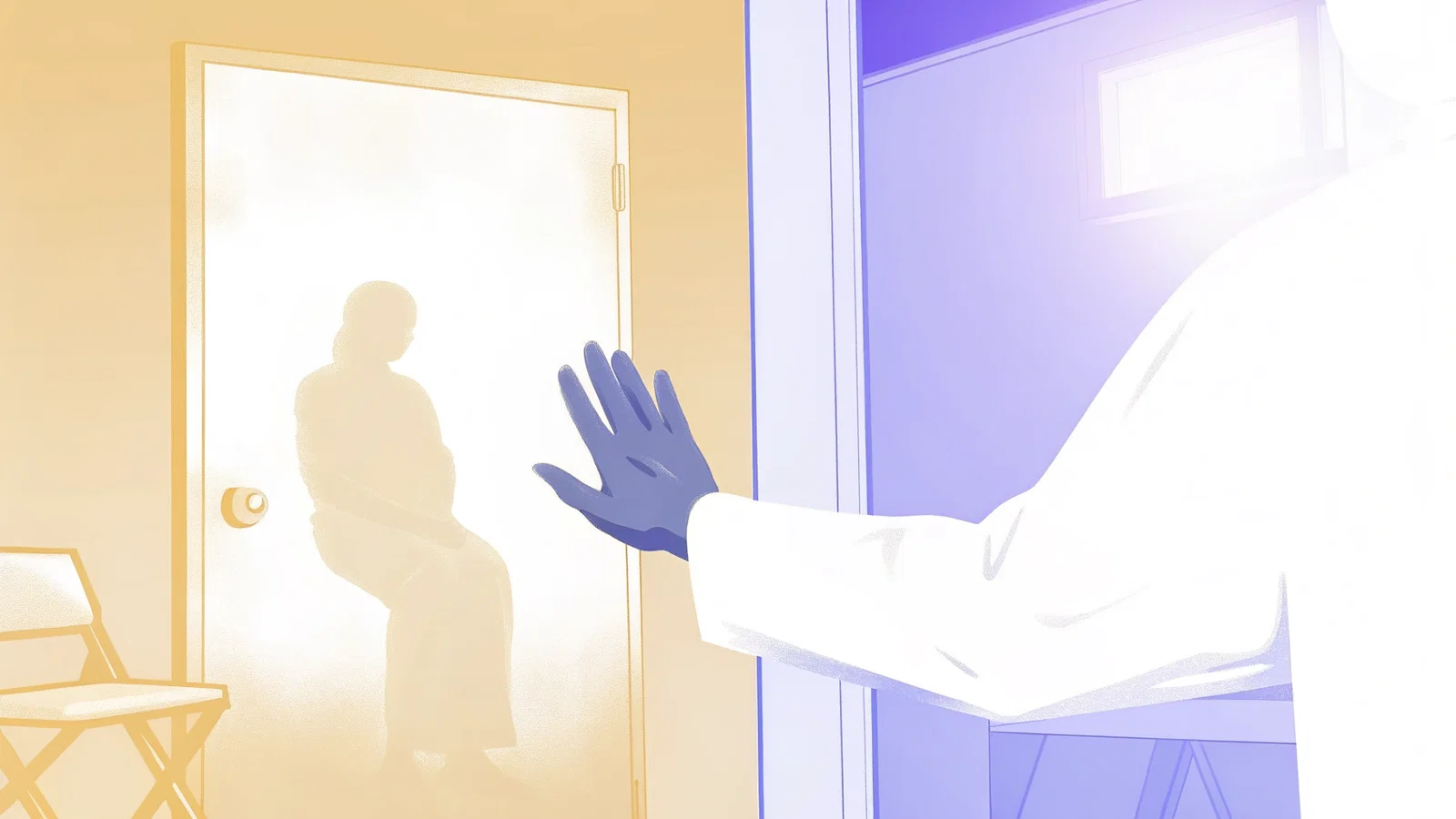
You're in a clinic room. The physician is asking routine questions. Then the patient glances at you. Not once. Repeatedly. Their answers get shorter. Their shoulders tense up. Maybe they stop making eye contact. Maybe they say, "Do they need to be here?" Or worse, they don't say anything at all, but the whole room changes. And now you're standing there, trying not to breathe too loudly, wondering: should I leave early, or would that look unprofessional?
Here's my answer. Yes. If the patient is uncomfortable, it is absolutely okay to leave the room early. In many cases, it's the right move.
That matters more than applicants realize. Shadowing isn't a performance where you prove your toughness by staying in every room no matter what. It's an exercise in judgment. Patient comfort, dignity, and trust come first. Always. If you don't understand that now, medicine will teach it to you later, and usually in a more embarrassing way.
For premeds and medical students, this issue comes up all the time because nobody gives clear instructions. Students are told to "be professional," but they aren't told what professionalism actually looks like when a patient seems uneasy, a visit turns sensitive, or the physician starts discussing something deeply personal. So people freeze. They stay too long. They make the room awkward. Then they replay it for three days.
You don't need to do that.
The skill here is simple: read the room, protect the patient, and leave without making yourself the center of the moment. That's what mature observers do. And yes, physicians notice it. The good ones especially.
This article is for educational purposes only. It is not financial advice, not legal advice, and not tax advice. Figures vary by individual circumstances, so consult a qualified professional before acting.
Introduction
The real question isn't "Am I allowed to leave?" The real question is "What does the patient need right now?"
That shift in thinking will save you a lot of grief.
During shadowing, you are a guest in one of the most private spaces people ever enter. Patients are discussing pain, fear, money, sex, bowel habits, pregnancy, trauma, addiction, depression, family conflict, and sometimes the worst day of their lives. You may be excited to learn. Fair enough. But your educational experience is never the most important thing happening in that room.
I'm blunt about this because students often get weirdly attached to the idea that leaving early means they missed something valuable. Maybe you did. Too bad. If a patient is uncomfortable, the valuable lesson is learning when to step out.
And this isn't just about being nice. It's about becoming trustworthy. Medicine runs on trust. If you want to become a physician, you need to build the reflex now: when patient comfort and your curiosity collide, patient comfort wins. Every time.
Sometimes the discomfort is obvious. The patient directly asks for privacy. Easy call. Other times it's subtle: clipped answers, nervous glances, suddenly quiet affect, hesitation before discussing a complaint, or a look toward the doctor that silently says, "I don't want an audience for this." I've seen students miss those signals because they're too focused on looking engaged. Bad instinct.
The students who impress physicians aren't the ones who cling to every encounter. They're the ones who understand boundaries without needing a dramatic speech about boundaries. They know when to stay still, when to fade into the background, and when to excuse themselves quickly and respectfully.
That's a medical career skill, not just a shadowing skill.
The Core Challenge
The hard part is that no one wants to get this wrong for opposite reasons.
You don't want to stay and make the patient uncomfortable. But you also don't want to bolt out of the room so fast that it looks rude, panicked, or performative. And if the physician hasn't explicitly told you what to do, you may feel stuck in that awful observer limbo, technically present, not really in charge, but still responsible for your behavior.
Here are the most common ways students mess this up.
Pitfall #1: Waiting for the patient to say the words
This is the biggest one. Students act like discomfort only counts if the patient says, "I'd like privacy." That's nonsense. Many patients won't say it. They don't want to offend the physician. They don't want to seem difficult. They may not even know they can ask.
So if you're standing there waiting for a formal declaration, you're already behind.
Instead, pay attention to behavior:
- shorter answers than before
- repeated looks at you or the door
- visible tension or embarrassment
- reluctance to describe symptoms
- a shift when sensitive topics come up
- joking that sounds more defensive than relaxed
That's enough to start preparing to step out.
Pitfall #2: Acting like your presence is neutral
It's not. Your presence changes the room. Even if you're silent. Even if you're "just observing." Patients know you're there. They may censor themselves because of you. They may feel exposed because of you. Pretending otherwise is immature.
I've watched visits open up the second a student leaves. Suddenly the patient asks the real question. Admits the real concern. Mentions the domestic issue, the sexual side effect, the relapse, the abortion, the incontinence, the fear they didn't want a stranger hearing. That's not a failure on your part. That's reality.
Pitfall #3: Making the exit awkward
Students sometimes try to explain too much.
"I'm so sorry, I can leave if you want, I totally understand, I didn't mean to make anything awkward."
No. Stop. That makes it about you and forces the patient to comfort you. Awful move.
A good exit is brief and low-drama:
- "I'll step out."
- "Thanks for letting me observe."
- "I'll give you some privacy."
That's it. Calm voice. Normal pace. Gone.
Pitfall #4: Ignoring context
Some rooms are higher-risk for discomfort from the start.
Be extra alert in:
- OB/GYN visits
- urology
- psychiatry
- adolescent medicine
- sexual health
- trauma-related conversations
- physical exams requiring exposure
- end-of-life discussions
- new cancer diagnoses
- family conflict conversations
This doesn't mean you should automatically disappear from every sensitive encounter. It means your threshold for stepping out should be lower. Faster judgment. Less ego.
Pitfall #5: Looking to the physician for rescue every time
A good physician often will rescue the situation. They might say, "Would you prefer some privacy?" or "Why don't you wait outside for this part?" Great. But don't become dependent on that.
You should be able to read the room yourself.
If you're unsure, use the physician's body language as a clue. Many attending physicians will briefly glance at you, pause, or shift tone when it's time for you to leave. Learn that language. In one internal medicine clinic, I watched a preceptor slightly angle her body away from the student and lower her voice before discussing domestic violence screening. That was the cue. The student missed it and stayed. Painful.
Pitfall #6: Thinking leaving early hurts your evaluation
Usually the opposite. Thoughtful exits show maturity.
If a physician sees that you can prioritize patient comfort without theatrics, that's a green flag. It signals discretion, empathy, and situational awareness. If they think you're "less committed" because you didn't insist on hearing a patient describe a painful hemorrhoid history while visibly mortified, that's not a mentor worth impressing.
So what should you actually do in the moment?
Use a simple internal checklist:
1. Is the patient showing or stating discomfort? If yes, that outranks everything else.
2. Is the topic or exam sensitive? If yes, be ready to leave with less hesitation.
3. Has the physician given a direct or indirect cue? Take it.
4. Can you exit quietly without interrupting care? If yes, do it cleanly.
5. Are you staying because it helps the patient, or because you don't want to miss something? Be honest. Your FOMO is not a clinical justification.
Here's my opinion, plain and simple: if you're torn, lean toward leaving. The cost of stepping out is that you miss a few minutes. The cost of staying too long is that a patient may hold back something medically important. That's a bad trade.
Actionable Next Steps
Let's make this practical. If you're about to shadow, or you're already in it and worried this will happen, here's the plan.
Before the clinic day: set expectations
Ask the physician or clinic coordinator one direct question before shadowing starts:
"If a patient seems uncomfortable or if a visit becomes sensitive, would you prefer that I step out automatically or wait for your cue?"
That one sentence can save you a lot of hesitation. Different physicians handle this differently. Some want to manage it themselves. Others expect you to quietly excuse yourself. Find out early.
Also, clarify whether the clinic obtains patient permission before you enter. If consent is being asked casually or inconsistently, keep your radar up. Patients sometimes say yes reflexively because they feel pressured.
Before entering each room: reset your role
Tell yourself:
- I'm here to observe, not to insert myself.
- I'm not entitled to stay.
- The patient can change their mind at any point.
That mental reset matters. It keeps you from treating access like a prize you earned.
In the room: watch for the pivot point
The pivot point is the second the room stops feeling easy.
Maybe the physician asks, "Any issues with sexual function?" Maybe the patient starts crying. Maybe there's a pelvic exam setup. Maybe the parent leaves and the teenager gets quieter. Maybe you hear, "Actually, there's something I didn't want to say in front of..."
Don't wait for a giant neon sign. That's the pivot. Move.
Use one of these lines:
- "I'll step out and give you some privacy."
- "Thank you, I'll wait outside."
- "I'm going to step out for this part."
Short. Steady. No speech.
After you step out: don't hover awkwardly
Wait where staff have told you to wait. Don't stand with your ear near the door. Sounds obvious, but I've seen behavior that should embarrass people for life.
If the physician comes out later, you can ask a brief educational question if appropriate:
- "Was that a situation where you generally prefer students step out?"
- "Are there signs you think I should watch for sooner?"
That shows self-awareness without demanding reassurance.
After the day ends: reflect like an adult
Write down what happened:
- What sign told you the patient was uncomfortable?
- Did you catch it early or late?
- Did the physician seem to appreciate your timing?
- What would you do faster next time?
That kind of reflection helps with personal growth and future interviews. Real shadowing insight sounds like this: "I learned patient comfort has to outrank my desire to observe every detail." That's a strong takeaway. Far better than "I saw a lot of cool cases."
Resources that are actually useful
Focus on high-yield basics:
- your shadowing site's confidentiality and observer policies
- AAMC professionalism guidance
- HIPAA training materials provided by your institution
- pre-health advising offices that offer clinical etiquette prep
- physician mentors who will answer scenario-based questions honestly
And be prepared. Seriously. Most shadowing mistakes aren't caused by bad intentions. They're caused by students showing up without a mental script for awkward moments. Have the script before you need it.

The bottom line? Yes, it's okay to leave the room early if the patient is uncomfortable. More than okay. It's often the best thing you can do. You are not there to collect experiences like souvenirs. You're there to learn how medicine is actually practiced. That includes restraint. That includes judgment. That includes knowing when your absence helps more than your presence.
So before your next shadowing day, make a plan. Ask the physician how they want you to handle sensitive moments. Practice one exit sentence. Decide now that patient comfort comes first. Then when the moment comes, and it will, you won't freeze. You'll do the right thing.