Does it really matter where you shadow, or is shadowing just shadowing?
I'll answer that plainly: yes, it matters. A lot. And pretending otherwise is one of the laziest myths in pre-med culture.
I've watched students collect shadowing hours the way people collect parking receipts, randomly, passively, with no real thought behind them. Then they act shocked when interviewers aren't impressed by "I followed a doctor around for 80 hours." Hours alone don't tell a story. Insight does. Exposure does. The setting does.
The myth persists because it's comforting. If "any shadowing counts," then you don't have to be strategic. You don't have to ask whether you actually saw medicine practiced across different patient populations, different systems, different pressures, and different styles of care. You just log the hours and move on. Nice idea. Bad strategy.
This article is here to stop that mistake before it costs you. We're going to look at:
- why all shadowing experiences are not equal,
- how different healthcare systems shape what you learn,
- what red flags mean you're wasting your time,
- and how to choose shadowing experiences that actually strengthen your application.
This article is for educational purposes only. It is not financial advice, not legal advice, and not tax advice. Figures vary by individual circumstances, so consult a qualified professional before acting.
Does It Really Matter Where You Shadow? The Question Every Medical Applicant Asks
The easy answer students want is: "No, just get some hours."
That answer is wrong.
The reason this myth spreads so well is simple:
- pre-meds are overwhelmed,
- advisors sometimes give oversimplified checklists,
- and students confuse completing an activity with learning from it.
Those are not the same thing.
If you shadow in a sterile, narrow, low-teaching environment, you may technically have "clinical exposure." But if you can't explain how physicians make decisions, how teams function, how social factors affect care, or how patient populations differ across settings, then your shadowing didn't do its job.
Admissions committees are not just asking, "Did this person stand near a doctor?" They're asking:
- Does this applicant understand what medicine actually looks like?
- Have they seen enough to choose this career with open eyes?
- Can they reflect on clinical care in a mature, specific way?
That's where healthcare system choice starts to matter. A student who shadows in a major academic center, a community hospital, and a private specialty clinic will usually walk away with a much richer understanding than someone who only sat in one quiet office watching routine follow-ups all summer.
Not because one student is smarter. Because one student chose better.
The Myth: "All Shadowing Experiences Are Created Equal"
Here's the myth in its ugliest form: any setting counts, more hours are always better, and the rest is details.
No. That's checkbox thinking. And checkbox thinking produces weak applications.
A lot of students make three major mistakes here:
They prioritize convenience over value The family friend's office ten minutes from home. The clinic that says yes first. The easy arrangement with minimal effort. Convenient isn't automatically bad. But if convenience is your only filter, don't expect a powerful experience.
They obsess over volume I've seen students brag about 150 shadowing hours and still be unable to describe a meaningful clinical moment. That's a problem. Fifty thoughtful hours in strong settings beats 150 dead hours where you learned nothing.
They assume every clinical environment teaches the same lessons It doesn't. Not even close.
A private dermatology office, a county emergency department, a tertiary academic ICU, and a suburban family medicine clinic are all "clinical settings." But the patient populations, pace, pathology, team structure, complexity, and opportunities for teaching are wildly different.
That matters because shadowing is supposed to do more than decorate your application. It should help you:
- test whether medicine fits you,
- understand physician workflow,
- observe clinical reasoning,
- and see healthcare inequality, systems issues, and patient complexity up close.
If your shadowing only showed you efficient, polished, low-conflict medicine in a narrow patient slice, then you got a filtered version of reality. Better than nothing? Sure. Enough by itself? Usually not.
The dangerous part is that weak shadowing can still feel productive. You were physically present. You wore the badge. You stood in clinic rooms. But passive presence is not the same as meaningful exposure.
Don't confuse motion with progress. Pre-meds do that constantly.
The Reality: Why Your Healthcare System Choice Significantly Impacts Your Application
Your shadowing site changes what you see, what you learn, and what you can later say about medicine. That directly affects your application.
1. Patient population diversity matters
If you only shadow in one affluent outpatient setting, you may see a very narrow version of healthcare. That's a blind spot.
Medical schools want applicants who understand that medicine is practiced across:
- different ages,
- languages,
- insurance statuses,
- education levels,
- cultural backgrounds,
- and barriers to care.
A diverse patient population teaches you what textbooks can't. You start noticing missed follow-up because of transportation issues. Medication nonadherence tied to cost. Delayed presentations because someone feared losing wages. Family dynamics affecting decisions. That's real medicine.
And yes, admissions readers can often tell who has seen that reality and who hasn't.
2. Different systems expose you to different pathology
An academic medical center often gives you:
- rare or complex disease,
- multidisciplinary teams,
- referrals for difficult cases,
- advanced diagnostics,
- residents and fellows discussing management.
A community hospital often gives you:
- common "bread and butter" pathology,
- high-volume general clinical care,
- practical workflow,
- a broad sense of everyday medicine.
A private practice often gives you:
- continuity,
- outpatient workflow,
- business and scheduling realities,
- longitudinal physician-patient relationships,
- a sharper look at how routine care actually operates.
None of these is useless. The mistake is assuming they offer the same educational return. They don't.
3. Academic center vs community hospital vs private practice: what each signals
Let's be blunt.
- Academic medical center: signals exposure to complexity, team-based care, and a teaching environment. Often strongest for insight, especially if you actively learned.
- Community hospital: signals grounded exposure to common clinical care and practical medicine. Very valuable. Often underrated.
- Private practice: useful for understanding continuity and outpatient realities, but can be narrow if it's your only setting.
The strongest applicants usually don't rely on one environment alone. They build a portfolio.
4. Residency-style thinking starts earlier than you think
Medical schools and later residency programs aren't impressed by generic descriptions. They value specifics:
- What did you observe about physician decision-making?
- How did the setting shape patient care?
- What differences did you notice across systems?
- What did you learn about teamwork, communication, uncertainty, or access?
Students with broad, intentional shadowing can answer those questions with substance. Students with weak shadowing default to clichés: "I loved helping people" and "the doctor inspired me." That's thin. Everybody says that.
Here's the position I'll stand by: the best shadowing setup for most students is a mix. One high-complexity setting. One community-based setting. One setting related to genuine specialty interest if possible. That combination gives you range and credibility.
Red Flags: Warning Signs You're Shadowing in the Wrong Healthcare Setting
This is where students lose months because they're too polite to admit the experience is bad.
If you notice these red flags, pay attention.
Red flag 1: Zero teaching
If the physician barely speaks to you beyond "stand over there," that's a problem.
Shadowing is observational, yes. But good shadowing still includes:
- brief explanations,
- questions,
- case context,
- reasoning out loud,
- occasional debriefing.
If you're invisible for every shift, you are not in a learning environment. You are furniture.
Red flag 2: No meaningful exposure to patients
You may not interact directly much because of privacy and workflow limits. Fair. But you should still be seeing real patient care unfold in some form.
If your entire experience is:
- sitting at a desk,
- watching charting from behind a monitor,
- or waiting through administrative downtime,
then don't fool yourself. That is not robust shadowing.
Red flag 3: Narrow, repetitive patient population
Seeing the same type of low-complexity visit over and over can become educationally thin fast.
Examples:
- only cosmetic consults,
- only routine medication refills,
- only highly selected elective cases.
Repetition isn't bad by itself. But if there's no diversity in patient needs, backgrounds, or clinical problems, your learning plateaus.
Red flag 4: No view into clinical decision-making
You need to hear some version of:
- why this diagnosis is more likely than another,
- why one treatment was chosen,
- what uncertainty exists,
- what social factors complicate the plan.
Without that, you're only seeing the surface performance of medicine, not the thinking behind it.
Red flag 5: Pure passivity
If you leave every session unable to answer:
- What did I learn today?
- What surprised me?
- What challenged my assumptions?
- What did this show me about being a physician?
then something is wrong.
I've seen students stay in lousy placements because they're afraid it will look rude to leave. Don't make that mistake. Wasted time doesn't become valuable just because you were loyal to it.
Quick self-audit
Ask yourself:
- Did I observe actual decision-making?
- Did I see a range of patients or problems?
- Did the physician make any effort to teach?
- Can I describe specific lessons from this setting?
- Would this experience give me anything useful to discuss in an interview?
If you answered "no" to most of these, get out and find a better environment.
Strategic Shadowing: How to Choose Healthcare Systems That Strengthen Your Application
Don't choose shadowing randomly. Build it like it matters. Because it does.
What to prioritize
1. Learning potential over convenience
Yes, commuting farther for a stronger site can be worth it. No, I'm not impressed that the office was close to your apartment if the experience was dead on arrival.
Ask before committing:
- Will I actually observe patient care?
- Is this physician known to teach?
- What kinds of patients are seen here?
- Is the setting high-volume, narrow, diverse, complex?
2. Diversity of setting
A strong shadowing portfolio often includes:
- an academic medical center for complexity and team dynamics,
- a community hospital or community clinic for practical general care,
- a specialty clinic that matches authentic interest.
That mix shows maturity. You didn't just sample medicine. You compared systems.
3. Teaching culture
A generous physician can make an average setting valuable. A disengaged physician can ruin a prestigious one.
Look for supervisors who:
- explain cases,
- ask what you noticed,
- let you hear their reasoning,
- and care whether you're learning.
That's gold.
4. Reflection value
Choose settings that will give you actual stories and insights for:
- your personal statement,
- secondary essays,
- interviews,
- and future conversations about why medicine.
Specific beats generic every time.
Instead of saying:
- "I shadowed a cardiologist and learned doctors help people,"
you want to be able to say:
- "In a community hospital, I watched a physician adjust a care plan because the patient couldn't afford the original medication and lacked reliable transportation. That changed how I think about adherence and clinical decision-making."
That sounds real because it is real.
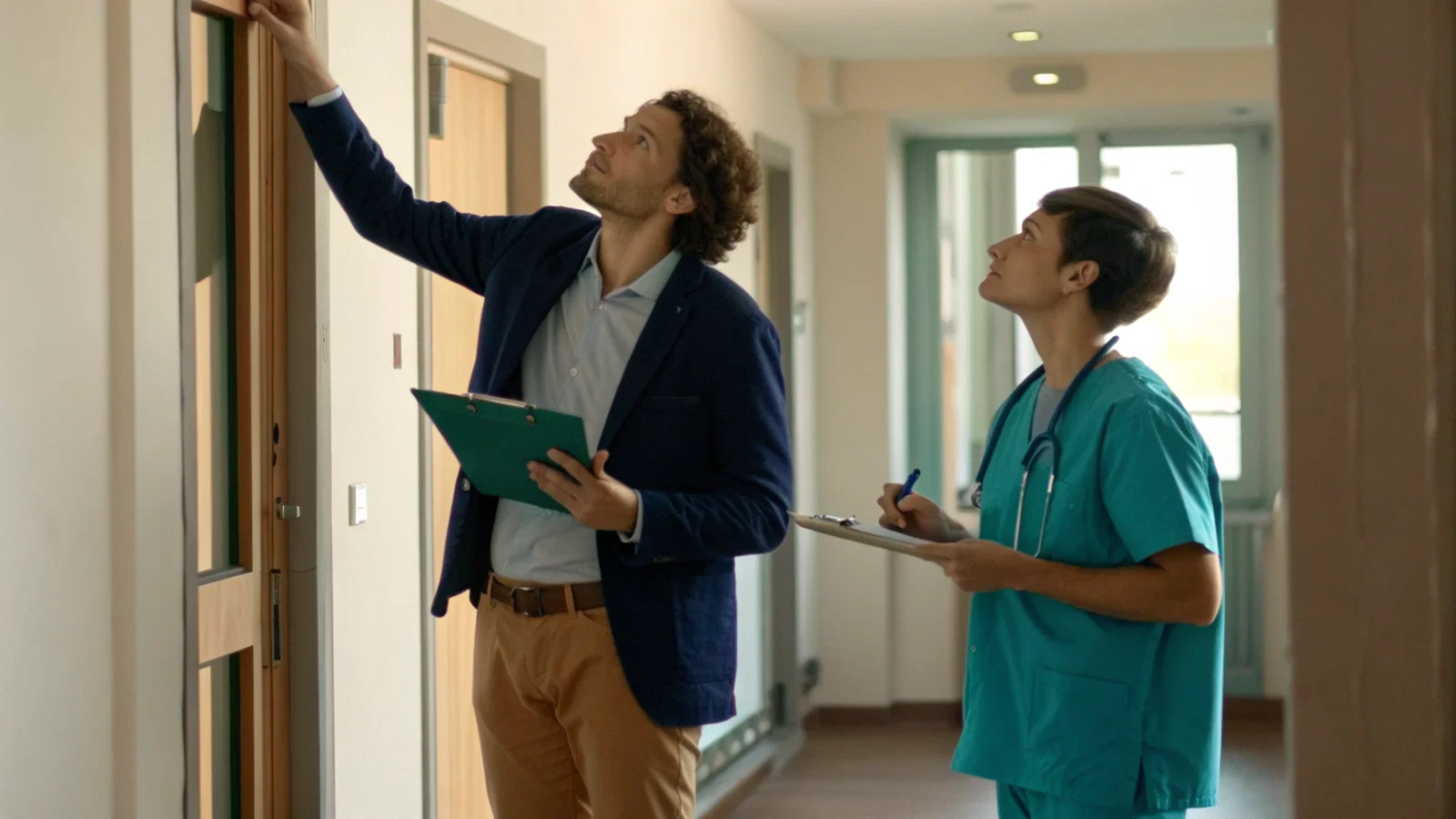
A smart shadowing plan
If you want a practical blueprint, use this:
Start broad Get exposure to general medicine or hospital-based care first.
Add community exposure See how care works outside elite referral centers.
Add specialty depth Explore one or two fields you're honestly curious about.
Track reflections, not just hours After each session, write:
- one clinical observation,
- one systems issue,
- one question,
- one moment that challenged you.
Leave weak placements early Don't cling to a bad setup just because it was hard to obtain.
That last one matters more than students think.
Summary: Don't Let the Myth Cost You Your Medical Career
Here's the truth, stripped down.
No, it does not all count the same.
Shadowing in different healthcare systems exposes you to different patients, different diseases, different workflows, different pressures, and different versions of what it means to be a physician. That difference shows up later, in your writing, your interviews, your judgment, and the credibility of your application.
The myth that "any shadowing works" is attractive because it lowers the bar. But low-bar thinking creates weak applications. If your shadowing is passive, narrow, repetitive, and poorly supervised, you are not building insight. You are burning time.
Remember the core mistakes to avoid:
- don't chase hours over substance,
- don't choose convenience over learning,
- don't stay in settings with no teaching,
- don't rely on one narrow clinical environment,
- don't assume admissions committees can't tell the difference.
They can.

Your future patients deserve a physician who chose to understand medicine honestly, not cosmetically. Start now. Shadow with intent. Pick settings that teach you something real. Don't make the avoidable mistake of treating all shadowing as equal when it plainly isn't.
Key Takeaways
- The idea that all healthcare system shadowing experiences count equally is false.
- Quality, diversity, and teaching value matter more than raw hours.
- Academic centers, community hospitals, and private practices each teach different lessons.
- Red flags like no teaching, no diversity, and passive observation mean you may be wasting precious time.
- The strongest applicants build a strategic shadowing portfolio, not a random collection of hours.