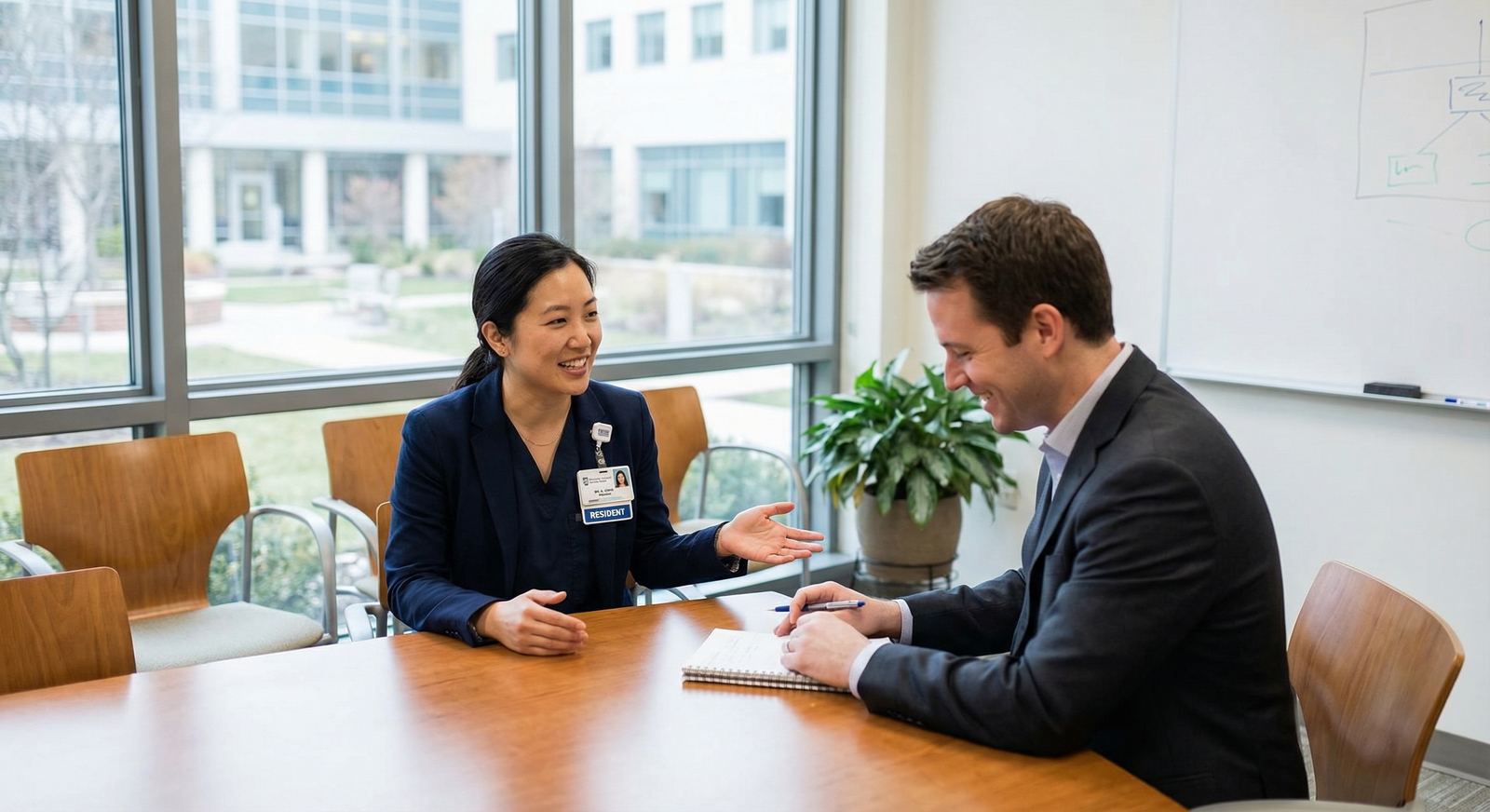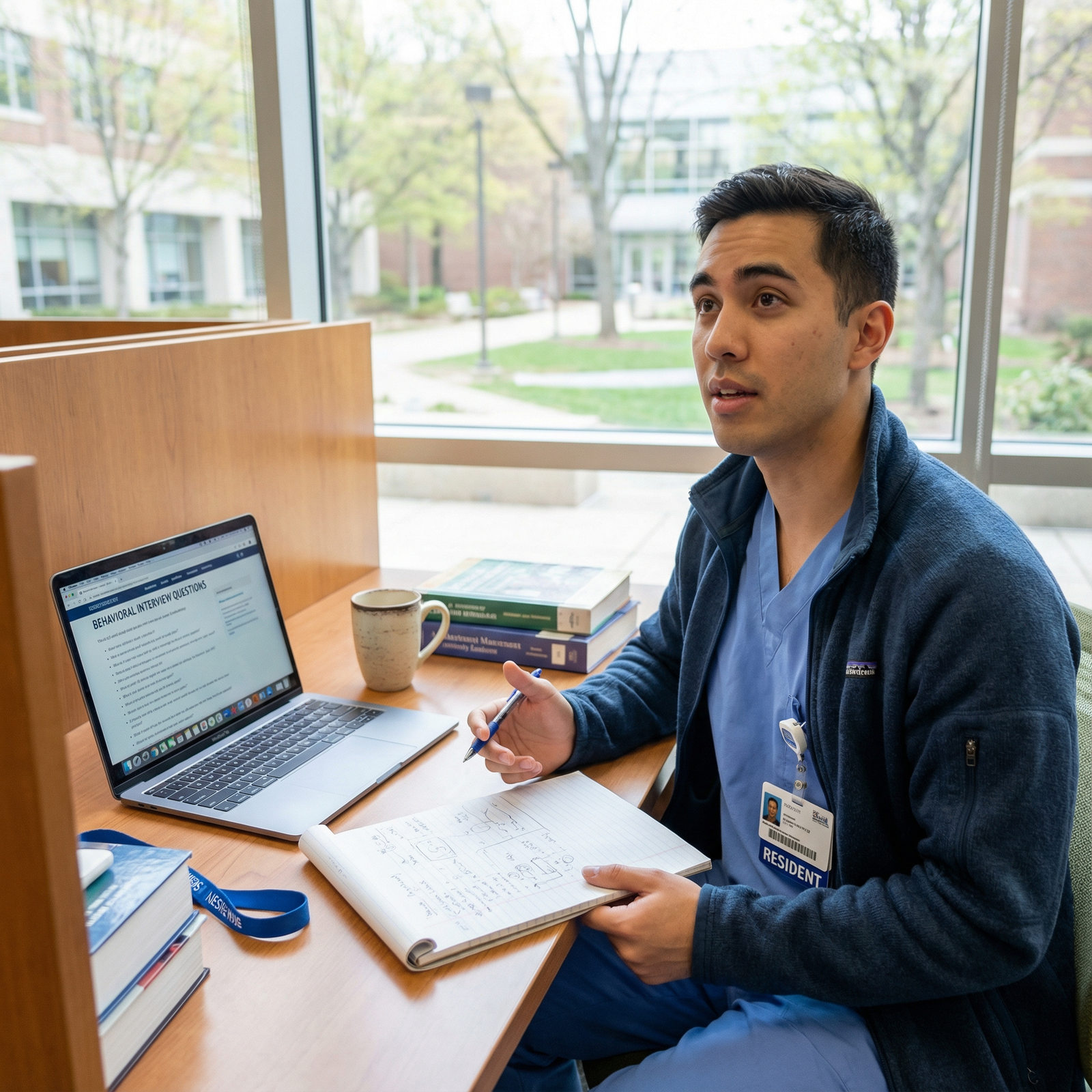
In the competitive world of medical school admissions, residency applications, and fellowship or job interviews, your words are only part of the story. How you sit, where you look, what you do with your hands, and even how you enter the room all shape how interviewers perceive you.
For behavioral interviews—where the goal is to understand how you think, act, and interact in real-world situations—Body Language and Non-Verbal Communication often become the “evidence” that supports (or contradicts) your answers. Mastering these elements can transform a good interview into an outstanding one.
This guide explains how to use body language strategically and authentically in behavioral interviews, specifically for medical students and residents navigating the residency match and other high-stakes selections.
Understanding the Power of Body Language in Behavioral Interviews
Body language is the collection of non-verbal signals you send through your posture, gestures, eye contact, facial expressions, and overall physical presence. In Behavioral Interviews, where you’re often describing how you handled past challenges, your non-verbal cues help interviewers decide:
- Do I believe this story?
- Would I trust this person with patients, colleagues, and high-stakes responsibilities?
- Does their demeanor fit our program culture?
Why Body Language Matters in Medical Interviews
Non-verbal communication can powerfully influence Medical School Admissions committees, residency selection panels, and hiring committees because it:
Shapes first impressions within seconds
Before you say a single word, your posture, handshake, and facial expression have already created an impression of confidence, anxiety, warmth, or distance.Reinforces—or undermines—your verbal message
If you describe yourself as “calm under pressure” while your leg bounces and your hands shake, interviewers may subconsciously doubt your claim. Conversely, calm breathing and steady posture strengthen your credibility.Signals emotional intelligence and professionalism
As a future physician, you must read others’ emotions and convey empathy and stability. Appropriate body language in interviews demonstrates you can build rapport, listen, and communicate effectively with patients and teams.Reveals authenticity and engagement
Interviewers are constantly asking themselves: “Is this person genuine?” Natural eye contact, responsive facial expressions, and relaxed gestures signal authenticity and sincere interest in the position.
Behavioral Interviews: Where Your Stories Meet Your Signals
Behavioral interviews are structured around questions like:
- “Tell me about a time you dealt with a difficult patient.”
- “Describe a situation where you made a mistake and how you handled it.”
- “Give an example of a conflict in a team and how you resolved it.”
These are often answered using the STAR method:
- Situation – Brief context
- Task – What you needed to do
- Action – What you actually did
- Result – What happened and what you learned
While your words fill in the STAR framework, your body language shapes how believable, mature, and self-aware you appear. Interviewers don’t just listen to your story; they watch how you relive it.
How Interviewers Read Non-Verbal Cues
Most interviewers—particularly in healthcare—are trained, informally or formally, to observe behavior. They may notice:
- Do you maintain composure when discussing challenging or emotional situations?
- Does your body language show insight and humility when you describe mistakes?
- Do you appear empathetic and team-oriented when talking about patients or colleagues?
Your goal is not to “perform” a role but to align your non-verbal communication with your true values and experiences so that your words and presence tell the same story.
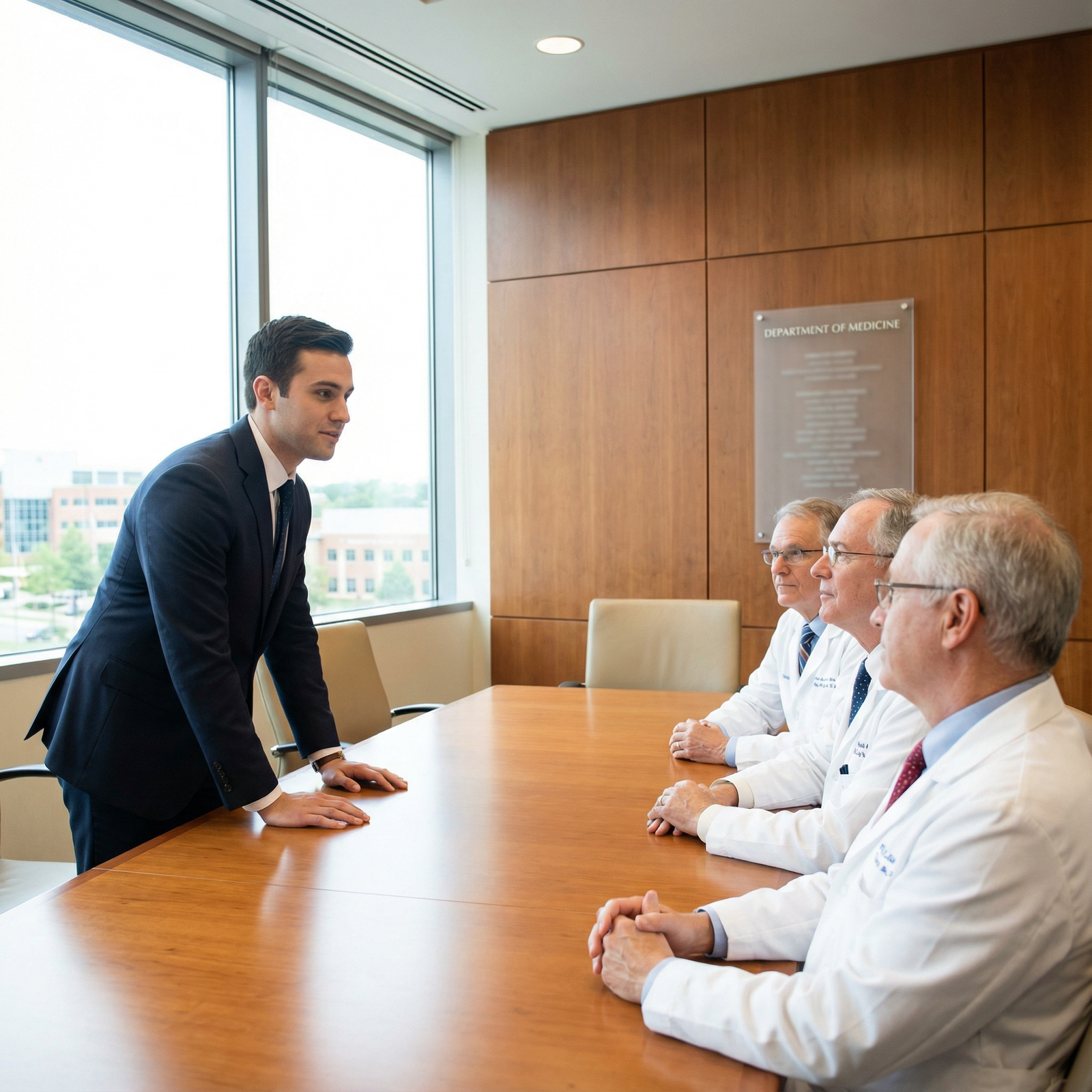
Key Components of Effective Body Language in Medical Interviews
1. Posture: Your Foundation for Presence and Confidence
Your posture is one of the first and most persistent non-verbal signals you send.
Open vs. Closed Posture
Open posture
- Back straight, shoulders relaxed and slightly back
- Arms uncrossed, hands visible (resting on your lap or on the table)
- Torso and feet facing the interviewer
This communicates approachability, confidence, and readiness to engage.
Closed posture
- Arms crossed, hands hidden in pockets
- Slouching back in the chair or leaning far away
- Body turned partially away from the interviewer
This can unintentionally signal defensiveness, disinterest, or insecurity.
For Behavioral Interviews, particularly when discussing conflicts, feedback, or mistakes, open posture suggests you are receptive to growth and learning—traits programs value highly.
Leaning and Spatial Orientation
- Subtle forward lean: Signals interest and engagement, especially when the interviewer is asking a question or describing the program.
- Extreme leaning back: Can appear dismissive or overly casual.
- Sitting on the edge of your seat: May come across as anxious or overly eager.
Aim for a comfortable, upright posture that suggests calm focus rather than tension or indifference.
2. Eye Contact: Balancing Confidence and Respect
Eye contact is one of the most powerful elements of non-verbal communication in Medical School and Residency Interviews.
What Effective Eye Contact Looks Like
- You maintain eye contact about 60–70% of the time while speaking.
- You look at the interviewer when they start and finish asking a question.
- You break eye contact naturally—looking briefly down or to the side—rather than staring.
In panel or group interviews, rotate your gaze:
- Primarily address the interviewer who asked the question.
- Briefly include other panelists as you speak, especially when making key points.
Pitfalls to Avoid
- Too little eye contact: May be perceived as lack of confidence, discomfort, or even evasiveness.
- Overly intense eye contact: Can feel confrontational or rehearsed.
- Staring at notes or the table: Reduces connection and may make you seem disengaged.
For virtual interviews, “eye contact” means looking into the camera periodically rather than just at the screen image of the interviewer.
3. Facial Expressions: Conveying Warmth, Empathy, and Professionalism
Your face often reveals more than your words. In clinical settings, your facial expressions are fundamental to patient communication—and interviewers know this.
Key Principles
- Natural, relaxed expression at baseline: Avoid extremes—no forced smile plastered on your face, but no flat, emotionless expression either.
- Genuine smiles when appropriate: A modest, authentic smile when greeting interviewers, during lighter moments, or when expressing gratitude helps you appear approachable and collegial.
- Responsive expressions: Your face should reflect the emotional tone of what you’re describing—concern during a difficult patient story, relief when describing a positive outcome, thoughtful seriousness when reflecting on an error.
Common Mistakes
- Flat affect: May unintentionally communicate disinterest or burnout.
- Overly animated expressions: Can appear theatrical or insincere, especially in high-stakes conversations.
- Mismatch with content: Smiling while describing a tragic event, or appearing bored when discussing a meaningful experience, can hurt your credibility.
Practicing in front of a mirror or recording mock interviews can help you calibrate your facial expressions to match your message.
4. Hand Gestures and Movement: Amplifying, Not Distracting
Thoughtful gestures can clarify your points, emphasize key details, and make your stories more engaging.
Effective Gestures
- Open-handed gestures at chest or waist level as you explain your role in a situation or describe choices you made.
- Counting on fingers when listing steps, tasks, or learning points.
- Gentle, controlled movement that naturally aligns with your speech.
These reinforce your narrative, especially in STAR-formatted answers.
Gestures to Limit or Avoid
- Fidgeting (tapping feet, clicking pens, playing with jewelry or a stethoscope, spinning a ring).
- Crossing and uncrossing arms repeatedly.
- Overly large or rapid gestures that dominate the conversation.
If you’re prone to fidgeting, consider:
- Placing both feet flat on the floor.
- Resting hands lightly on your lap or the table.
- Avoid holding objects you tend to play with (e.g., no pens in your hands unless needed).
5. Mirroring: Building Subtle Rapport with Interviewers
Mirroring occurs when you unconsciously or consciously reflect someone else’s posture, gestures, or energy level. Done subtly, it can help build rapport.
How to Mirror Professionally
- If an interviewer adopts a relaxed, open posture, you can allow your shoulders to relax and mirror that openness.
- If they speak more slowly and deliberately, you can slightly slow your own speech to match their pace.
- If they lean in while asking you about something meaningful, a modest forward lean can signal equal engagement.
What to Avoid
- Overt or exaggerated mimicry, which can seem mocking or insincere.
- Forcing mirroring when it feels unnatural—authenticity must remain your priority.
Use mirroring as a fine-tuning tool, not a manipulation technique.
Practical Strategies to Master Body Language Before Your Interview
1. Structured Mock Interviews with Video Review
Simulate real Behavioral Interviews focused on common questions such as:
- “Tell me about a time you received critical feedback.”
- “Describe a conflict within a team and how it was resolved.”
- “Tell me about a time you had to advocate for a patient.”
Record yourself (phone or laptop) and review for:
- Posture: Are you slouching or crossing your arms?
- Eye contact: Do you look up enough, or do you read from notes?
- Gestures: Are your hands helping your message or distracting from it?
- Facial expressions: Do they match the tone of your story?
Ask a mentor, advisor, or colleague for targeted feedback about your non-verbal communication, not just your content.
2. Managing Anxiety Through Breathing and Grounding
Anxiety frequently shows up as restless movement, shallow breathing, and tense posture.
Use simple techniques before and during the interview:
Box breathing (4–4–4–4 method)
Inhale for 4 seconds → hold for 4 → exhale for 4 → hold for 4. Repeat a few times in the waiting room or before clicking “Join” on a virtual interview.Physical grounding
- Feel your feet firmly on the floor.
- Gently roll your shoulders back and down.
- Take one slow breath before answering tough questions.
These techniques calm your nervous system and naturally improve your posture and presence.
3. Intentional Posture and Seating Strategy
As you enter the interview space:
- Stand tall as you walk in; avoid rushing.
- When seated:
- Sit fully back in the chair with your back supported.
- Keep your feet flat or crossed at the ankles (avoid bouncing legs).
- Place your hands lightly in your lap or on the table.
If you notice yourself shrinking into the chair or crossing your arms mid-interview, gently reset—no one will fault you for a small adjustment.
4. Calibrating Eye Contact and Listening Skills
Practice active listening with a friend or mentor:
- Let them ask you a behavioral question.
- As they speak, focus on:
- Looking at their face (or camera) regularly.
- Nodding occasionally to show understanding.
- Avoiding interruptions; allow them to finish fully.
Then answer while maintaining natural eye contact and occasionally glancing away to think. This practice reinforces a respectful, engaged interviewing style.
5. Matching Gestures to the STAR Framework
When answering behavioral questions using STAR, align your gestures:
- Situation/Task: Smaller, descriptive gestures as you set the scene.
- Action: More definitive, purposeful gestures when describing what you did.
- Result: Calm, confident gestures and open posture as you explain the outcome and what you learned.
This makes your answers more compelling and helps interviewers follow your narrative.
6. Observing and Adapting to Interviewer Cues in Real Time
Throughout the interview, periodically check:
- Are interviewers nodding, taking notes, and leaning in?
→ You’re likely engaging them well—continue your current style. - Do they look distracted, confused, or disengaged?
→ Briefly pause, clarify your point, or adjust your energy or pace.
Adaptation is a core clinical skill; demonstrating it non-verbally in an interview is powerful.
7. Anchoring in Authenticity
Most importantly, your body language must reflect who you are as a future physician.
- Don’t try to mimic someone else’s style entirely.
- Aim for the most grounded, professional version of yourself, not a persona.
- If you tend to be quieter, you don’t need to become overly animated—focus instead on clarity, warmth, and steady presence.
Programs are not just looking for “high energy”; they are looking for reliability, empathy, composure, and teachability—qualities that come through when your verbal and non-verbal messages align.
Real-World Application: Body Language in a Successful Medical Interview
Case Study: Medical School Behavioral Interview
A candidate preparing for a Medical School Admissions interview spent weeks rehearsing responses but also worked intentionally on non-verbal communication:
- Pre-interview routine: Practiced box breathing and a brief posture reset in the waiting area.
- Entrance and greeting: Walked in with upright posture, offered a polite greeting and a brief, genuine smile, and made eye contact with each interviewer.
- During behavioral questions:
- Maintained open posture with uncrossed arms and relaxed shoulders.
- Used the STAR method, paired with natural hand gestures when describing their role in a challenging volunteer experience.
- Showed appropriate concern and empathy in facial expressions as they described a difficult patient interaction.
- Made regular but not intense eye contact, occasionally glancing away thoughtfully when reflecting on what they learned.
Interviewers later described the candidate as:
- “Genuinely compassionate”
- “Calm and thoughtful when describing difficult situations”
- “Someone who would be easy to work with on a team”
The candidate received an offer of admission—not solely because of their body language, but because their non-verbal communication consistently reinforced their narrative of being a reflective, patient-centered future physician.
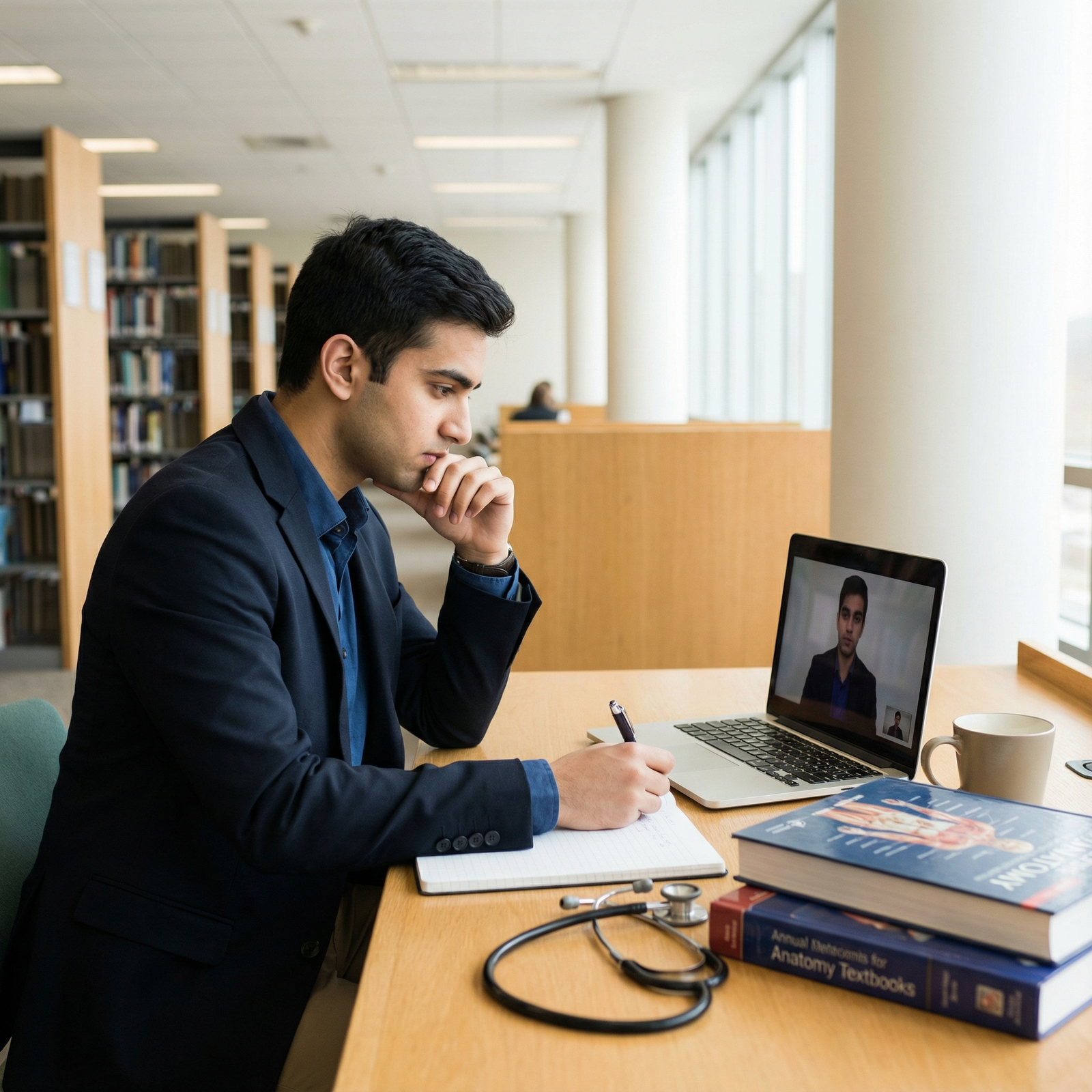
FAQs: Body Language and Behavioral Interviews in Medical Training
1. What is body language, and why is it so important in medical interviews?
Body language is the non-verbal communication you convey through posture, eye contact, facial expressions, gestures, and physical presence. In medical interviews—whether for Medical School Admissions, residency, or jobs—it:
- Shapes first impressions before you speak.
- Supports or contradicts your verbal answers.
- Demonstrates emotional intelligence, professionalism, and empathy.
- Helps interviewers imagine you interacting with patients and teams.
Because Behavioral Interviews rely on stories about how you think and respond under pressure, strong non-verbal communication makes your stories more believable and compelling.
2. What are the most common body language mistakes applicants make?
Common non-verbal pitfalls in Behavioral Interviews include:
- Closed posture (crossed arms, slouching, leaning away).
- Poor eye contact (either too little or an intense stare).
- Fidgeting (tapping feet, clicking pens, playing with jewelry or hair).
- Flat or mismatched facial expressions that don’t fit the story’s emotional tone.
- Overly rehearsed gestures that look mechanical rather than natural.
- Ignoring interviewer cues, such as continuing to talk rapidly when they look confused or disengaged.
Awareness and practice are key to correcting these patterns.
3. How can I quickly improve my body language if my interview is soon?
If your interview is coming up in the next few days, focus on high-yield changes:
- Record one or two mock behavioral interviews and review posture, eye contact, and facial expressions.
- Practice your entrance and first two minutes, including greeting, handshake (if in person), and your response to “Tell me about yourself.”
- Use simple anxiety control techniques like box breathing right before the interview.
- Choose an outfit that allows comfortable movement (no distracting jewelry or tight clothing that forces you to fidget).
- Set up your virtual environment (if online) so the camera is at eye level, your face is well-lit, and you can comfortably maintain good posture.
Small, intentional adjustments can create a noticeably more confident and composed presence.
4. How is body language different in virtual versus in-person interviews?
The principles are the same, but the emphasis changes:
- Eye contact: In virtual interviews, you must occasionally look at the camera—not just the interviewer’s image—to simulate eye contact.
- Framing: Your upper body, face, and hands should be visible so your expressions and gestures can be seen clearly.
- Posture: It’s easy to slouch or lean too close to the camera; sit upright with the camera at or slightly above eye level.
- Fidgeting: Micro-movements (like spinning on a chair) are more noticeable on video; choose a stable chair and limit movement.
Test your setup in advance so technology issues don’t disrupt your non-verbal communication.
5. Can I improve my non-verbal communication even if I’m naturally shy or introverted?
Yes. Effective body language is not about becoming extroverted; it’s about:
- Maintaining open, respectful posture.
- Offering consistent, comfortable eye contact.
- Using calm, minimal gestures that support your message.
- Allowing your natural warmth and sincerity to show through.
Many excellent physicians are introverted. Programs value authenticity and reliability more than showmanship. With practice, you can develop non-verbal habits that showcase your strengths while still feeling true to who you are.
By paying as much attention to your Body Language and Non-Verbal Communication as you do to your answers, you’ll walk into Behavioral Interviews with a more cohesive, confident presence. For medical students and residents navigating the residency match and beyond, this alignment between what you say and how you say it can be a quiet but decisive advantage—helping interviewers see not just your credentials, but the kind of colleague and physician you will become.