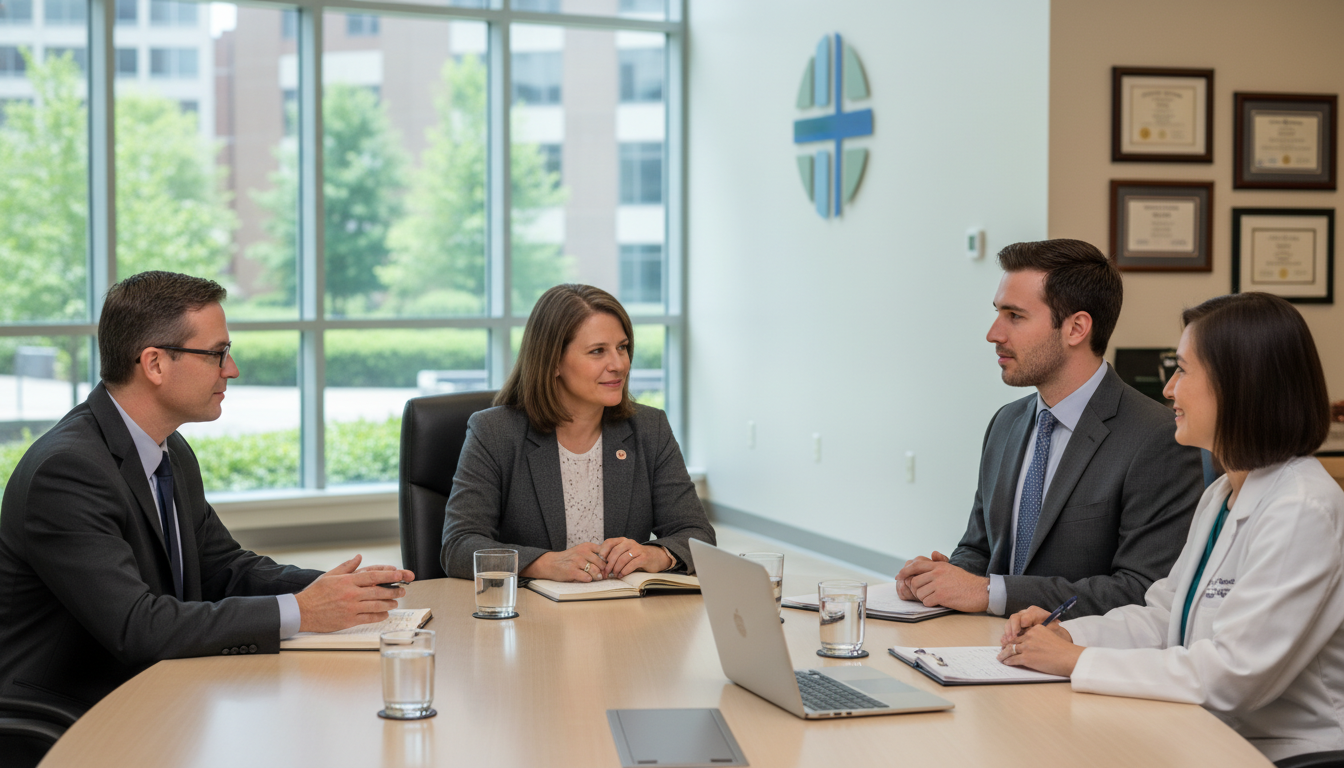
Navigating Tough Behavioral Interview Questions in Residency and Beyond
Behavioral Interviews are now standard in residency selection and many healthcare hiring processes. Whether you’re applying for residency, fellowship, or your first attending job, you can almost guarantee you’ll face at least a few challenging behavioral questions.
Instead of asking only about your CV or board scores, Behavioral Interviewers want to understand how you think, behave, and interact under pressure—because that’s what predicts how you’ll function on call, on rounds, and in the team.
For many applicants, these questions can feel like a minefield:
- “Tell me about a time you failed.”
- “Describe a conflict with a colleague.”
- “Give an example of when you were overwhelmed.”
Handled poorly, these can feel like traps. Handled well, they become some of the strongest evidence that you’re ready for the next stage of your Career Development.
This guide will walk you through what Behavioral Interviews are, why they matter so much in residency and job preparation, and practical Interview Strategies—centered around the STAR Technique—to help you answer even the toughest questions with clarity and confidence.
Understanding Behavioral Interviews in Healthcare and Residency
What Are Behavioral Interview Questions?
Behavioral interview questions ask you to describe how you handled real situations in the past. The underlying assumption: past behavior is one of the best predictors of future performance.
They usually begin with prompts like:
- “Tell me about a time when…”
- “Give me an example of…”
- “Describe a situation where…”
- “Walk me through a time you had to…”
Rather than hypothetical answers (“What would you do if…?”), they want concrete stories.
In medical education and healthcare roles, these questions often probe:
- Teamwork and communication
- Handling stress, uncertainty, and workload
- Ethical judgment and professionalism
- Conflict management (with colleagues, staff, or patients)
- Leadership and initiative
- Adaptability and resilience
- Patient-centered care and empathy
Programs use Behavioral Interviews because they need more than knowledge and test scores. They need to know:
- What are you like on a 28-hour call?
- How do you respond when things go wrong?
- Will you be safe, teachable, and a positive part of the team?
Common Behavioral Interview Questions You’ll Encounter
You’ll hear similar themes across specialties. Here are common Behavioral Interview Questions—adaptable to residency, fellowship, or job interviews:
Challenge/Problem-Solving
- “Tell me about a time you faced a significant challenge in clinical work. How did you handle it?”
- “Describe a time you had to make a difficult decision with incomplete information.”
Teamwork and Collaboration
- “Describe a situation where you had to work with a difficult team member. What did you do?”
- “Tell me about a time you helped a struggling teammate or classmate.”
Mistakes, Failure, and Learning
- “Can you give an example of a time when you made a mistake in a clinical or academic setting? What did you learn?”
- “Tell me about a time you received critical feedback. How did you respond?”
Time Management and Prioritization
- “Describe a time you had to manage multiple high-priority tasks at once. How did you prioritize?”
- “Tell me about a time you were overwhelmed with responsibilities. What did you do?”
Conflict and Difficult Interactions
- “Tell me about a conflict with a supervisor, attending, or colleague and how you resolved it.”
- “Describe a time a patient or family member was upset. How did you handle the situation?”
Ethics and Professionalism
- “Describe a situation where you saw something you felt was not appropriate or unsafe. What did you do?”
- “Tell me about a time you had to advocate for a patient.”
Recognizing these patterns helps you prepare targeted examples in advance—a core part of effective Job Preparation and Interview Strategies.

Mastering the STAR Technique: Your Core Behavioral Interview Strategy
What Is the STAR Technique?
The STAR Technique is a simple but powerful framework to structure your answers:
- S – Situation: Give the context. Where were you? What was going on?
- T – Task: What was your responsibility or goal in that situation?
- A – Action: What you did—your decisions, behaviors, and thought process.
- R – Result: What happened? What changed? What did you learn?
Behavioral Interviews reward clear, structured storytelling. Without a framework, candidates often:
- Ramble or go off-topic
- Skip crucial details
- Sound vague (“we did this,” “things improved”)
- Forget to mention what they actually contributed
STAR keeps your answer focused, concise, and impactful.
Example: Handling a Significant Clinical Challenge (STAR in Action)
Question: Tell me about a time when you faced a significant challenge at work and how you handled it.
Situation:
During my internal medicine rotation at a busy academic hospital in January, we experienced an unexpected spike in admissions due to a severe influenza outbreak. Our team was already short one resident and one nurse.Task:
As the senior student on the team, I was responsible for helping manage new admissions, updating families, and ensuring that basic tasks were completed safely despite the increased workload.Action:
I first met briefly with the resident to identify the most critical patients and categorize tasks into “must-do now,” “can wait,” and “can be delegated.” I volunteered to take ownership of straightforward admissions, drafted admission notes in advance, and created a simple checklist for daily tasks for each patient. I also coordinated with nursing staff to clarify which orders were highest priority and communicated expected delays to families as transparently as possible.Result:
Despite the surge, our team was able to admit all patients safely, and we did not miss any critical labs or treatments. The resident later told me that our structured approach significantly reduced her cognitive load during that shift. I learned how proactive communication and basic organization can dramatically improve team function under pressure, and I have used similar checklists in subsequent rotations.
Note the key features:
- Clear, brief context
- Specific actions that you took
- Measurable or observable outcomes
- A reflection that shows growth and insight
Advanced STAR: Add a Reflection Component
For high-stakes interviews (residency, fellowship, leadership roles), consider STAR-R:
- S – Situation
- T – Task
- A – Action
- R – Result
- R – Reflection/Repeat (How you’ve applied the lesson since)
You might end an answer with:
“Since then, I’ve used that same approach on my ICU rotation, especially during busy night shifts. It’s become a standard part of how I organize complex situations.”
That extra layer shows intentional Career Development and growth over time.
Preparing High-Impact Examples for Behavioral Interviews
Build Your “Story Bank”
Strong candidates don’t walk in “hoping for the best.” They build a story bank—a set of 8–12 specific, flexible examples they can adapt to multiple questions.
Aim for stories that cover:
- Teamwork and interprofessional collaboration
- Conflict or difficult interactions (peers, staff, attendings, patients/families)
- Mistakes, failures, or critical feedback
- Leadership, initiative, or quality improvement
- Time management and juggling competing priorities
- Ethical dilemmas or patient advocacy
- Working with diversity, inclusion, or cultural humility
- Resilience and managing stress or burnout risk
For each story, jot down bullet points using STAR. You don’t need a script, but you should know:
- The setting and your role
- The central conflict or challenge
- Two or three concrete actions you took
- The clear outcome and takeaway
Use Diverse Sources of Experience
If you’re early in training or feel you “don’t have many clinical stories,” broaden your lens. It’s acceptable—often wise—to draw from:
- Clinical rotations and electives
- Research projects and lab work
- Student leadership, committees, or interest groups
- Volunteer work and community outreach
- Teaching or peer tutoring
- Non-medical jobs (e.g., service industry, teaching, administrative roles)
- Personal challenges that shaped your professional identity (shared with appropriate boundaries)
Interviewers are evaluating competencies, not only clinical settings. An example from leading a community health fair can effectively show leadership, communication, and problem-solving.
Tailor Your Examples to the Role or Specialty
As part of your Job Preparation, align your story bank with the specialty’s demands:
- Emergency Medicine: Rapid decision-making, triage, comfort with uncertainty, team coordination
- Surgery: Situational awareness, hierarchy navigation, precision, perseverance
- Psychiatry: Listening, boundary setting, managing emotional intensity, interprofessional care
- Pediatrics: Communication with families, patience, empathy, education
- Internal Medicine: Complex problem-solving, longitudinal care, attention to detail
Before each interview, ask:
- What traits does this specialty and program value most?
- Which of my stories best highlight those traits?
Then, when you’re asked a behavioral question, you already know which story fits best.
Communication Skills: Delivering Behavioral Answers Effectively
Practice Active Listening First
Strong Interview Strategies start with listening, not speaking.
When asked a question:
- Pause and listen fully—don’t rush to answer.
- If needed, repeat or paraphrase part of the question:
“You’re asking about a time I had to manage a conflict within a team, and how I resolved it—is that right?” - Take a brief moment (2–3 seconds) to choose the best story from your story bank.
Active listening helps you:
- Target your answer to the real question
- Avoid rambling into irrelevant details
- Demonstrate thoughtfulness and composure under pressure
Stay Focused, Specific, and Personal
To keep your answers strong:
- Avoid vagueness: “We had some issues, but we handled it” → too generic.
- Use “I” language: Interviewers are assessing your behavior, not just the team’s.
- Limit background detail: One or two sentences are enough for context.
- Keep answers to ~1.5–3 minutes: Long enough to be meaningful, short enough to hold attention.
A simple mental checklist:
- Did I clearly state the Situation and Task within 30–40 seconds?
- Did I explain what I did, not just what we did?
- Did I give a concrete Result and a brief takeaway?
Demonstrate Self-Awareness and Growth
Some of the most challenging Behavioral Interview Questions involve mistakes, conflict, or failure. These are not traps; they are opportunities to show maturity.
When answering:
- Be honest—don’t pretend you’ve never struggled.
- Avoid blaming others, even if they contributed to the problem.
- Focus on your responsibility and what you controlled.
- End with what changed: “Here’s how I do things differently now.”
Example: Self-Awareness in Response to a Mistake
Question: Describe a time you made a mistake at work. What did you learn?
Situation:
Early in my third year, during a busy medicine rotation, I misunderstood an attending’s verbal order and failed to clarify a medication dose for a patient with chronic kidney disease.Task:
Once the nurse questioned the order, I realized I might have written an incorrect dose and needed to verify it quickly to ensure patient safety.Action:
I immediately checked the patient’s chart and renal function, then paged the attending to clarify the intended dose. I canceled the initial order in the EMR, entered the correct one, and confirmed with the nurse before administration. Afterward, I discussed the incident with my resident and attending, documented the near-miss per policy, and created a personal habit of repeating back and documenting all verbal orders with dose and indication.Result:
The medication was corrected before reaching the patient, and no harm occurred. The attending appreciated the transparency. Since then, I’ve become meticulous about clarifying and documenting orders, especially in patients with organ dysfunction. The experience reinforced for me that speaking up early, even when it feels uncomfortable, is critical for patient safety.
This answer shows:
- Accountability
- Insight into patient safety culture
- A specific new behavior adopted going forward
These are precisely the kinds of qualities Behavioral Interviews aim to uncover.

Advanced Interview Strategies for Residency and Career Development
Maintain a Constructive and Professional Tone
Even when discussing negative situations:
- Stay neutral and factual about others’ behavior.
- Focus on what you did to improve the situation.
- Emphasize lessons learned, not grievances.
Example shift in tone:
- Weak: “My resident was really unfair and disorganized…”
- Stronger: “Expectations weren’t clearly communicated at first, which led to some confusion on the team. I realized I needed to clarify roles and confirm priorities directly to avoid misunderstandings.”
This demonstrates professionalism and emotional intelligence—high-value traits for residency programs and employers.
Ask Insightful Follow-Up Questions
Behavioral Interviews are not one-way interrogations. Thoughtful questions you ask can:
- Show genuine interest in the program or job
- Clarify expectations for success
- Demonstrate your investment in Career Development
Examples:
- “You’ve heard about how I approach conflict; how are conflicts typically handled within your resident teams?”
- “What behavioral competencies do you consider most critical for interns to succeed here?”
- “Can you share an example of how residents receive feedback on their communication or teamwork skills?”
These questions reinforce that you see Behavioral Interviews as a two-way assessment: you’re also evaluating whether the environment fits your values and working style.
What If You Don’t Have a Perfectly Matching Example?
Sometimes you’ll get a question that doesn’t exactly fit anything in your story bank. You can still respond effectively by:
- Choosing the closest relevant example, even if the context differs.
- Briefly acknowledging the difference:
“I haven’t encountered that exact situation in a clinical setting yet, but I did face a similar dynamic in my research group…” - Drawing a clear connection: Show how the principles and behaviors transfer to the role you’re applying for.
This approach demonstrates flexibility, self-awareness, and the ability to apply skills across settings.
Handling Emotionally Charged Topics
In healthcare, some Behavioral Interview Questions may touch on:
- Burnout or emotional exhaustion
- Distressing clinical experiences
- Bias, discrimination, or harassment
- Ethical conflicts
When discussing these:
- Share enough detail to be authentic and meaningful
- Maintain professional boundaries and respect for others’ privacy
- Emphasize coping strategies, support systems, and growth
- Avoid oversharing personal trauma in a way that derails the interview
You might say, for example:
“That was a difficult experience emotionally, and I made sure to debrief with my team and seek mentorship. It reinforced for me the importance of having healthy coping strategies and checking in on colleagues who might be struggling as well.”
This shows resilience, insight, and maturity.
FAQ: Behavioral Interviews for Residency, Fellowship, and Healthcare Jobs
Q1: What should I do if I don’t have a specific experience that matches the question exactly?
If you lack an exact match, choose the closest related situation that still demonstrates the underlying competency (e.g., conflict, leadership, ethics). You can say:
“I haven’t faced that exact scenario clinically, but a similar situation occurred when…” Then use the STAR Technique to structure your answer and explicitly connect the skills from that scenario to what you would bring to the residency or job.
Q2: How do I handle Behavioral Interview questions that ask about negative or sensitive topics (e.g., failures, conflicts, mistakes)?
Approach them with honesty and professionalism:
- Choose an example where enough time has passed for you to reflect.
- Avoid blaming others or criticizing individuals directly.
- Clearly state your role and responsibility.
- Focus on what you learned and how you’ve changed your behavior.
Programs and employers are not looking for perfection; they’re looking for self-awareness, accountability, and growth.
Q3: Should I rehearse my Behavioral Interview answers in advance? Won’t that make me sound scripted?
Preparation is essential, but memorization is not. Instead of scripting entire speeches:
- Identify 8–12 strong stories for your “story bank.”
- Outline each story using STAR (brief bullets only).
- Practice saying them out loud until you’re comfortable, not robotic.
The goal is to sound structured and confident, not memorized. Practicing with peers, mentors, or a career advisor can provide helpful feedback on clarity and timing.
Q4: How can I make my behavioral answers stand out from other applicants?
To make your answers more compelling:
- Choose specific and vivid examples, not generic ones.
- Highlight unique challenges or circumstances you navigated.
- Include quantifiable or concrete results when possible (e.g., “reduced wait times,” “improved communication flow,” “completed the project ahead of deadline”).
- Add a brief reflection on how you’ve applied that lesson in later experiences.
Distinctive, well-reflected stories are far more memorable than vague descriptions.
Q5: What if I’m asked about something I truly don’t feel comfortable discussing?
You are not obligated to disclose deeply personal or inappropriate information. If a question feels too personal or unsafe:
- Respond respectfully:
“I’m not comfortable discussing that specific situation, but I can share a different example that illustrates how I handle similar challenges.” - Then pivot to a related, more comfortable story that still addresses the underlying competency.
Programs and employers that value professionalism will respect appropriate boundaries.
By understanding how Behavioral Interviews work, building a thoughtful story bank, and practicing the STAR Technique, you can transform tough questions from a minefield into an opportunity. For residency and beyond, your ability to reflect, communicate, and learn from experience is just as important as your clinical knowledge—and Behavioral Interviews are your chance to show it.