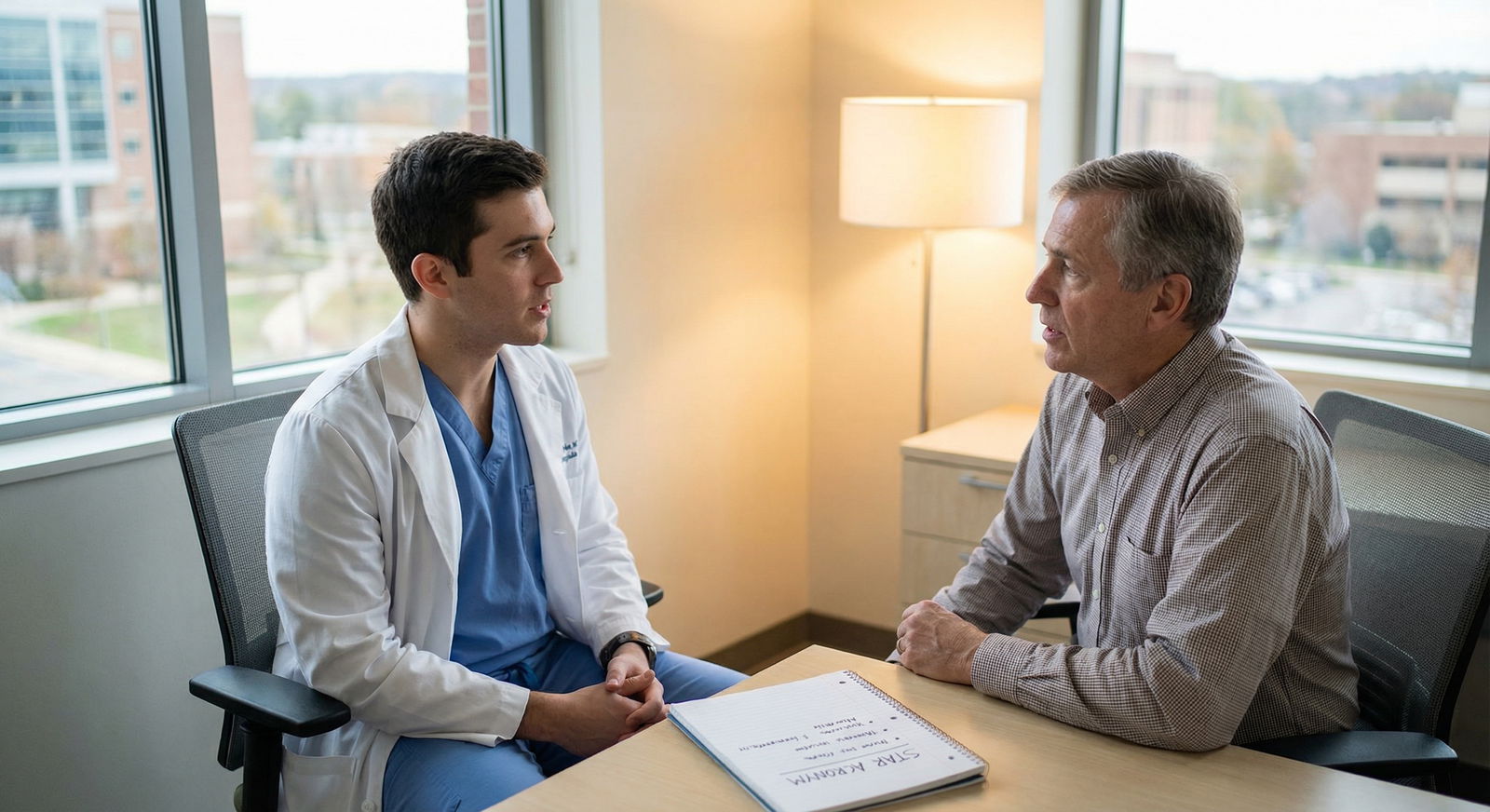
Understanding the STAR Method for Behavioral Interviews in Medicine
Behavioral interviews are now a standard part of residency selection, fellowship interviews, and many healthcare hiring processes. Program directors and hiring committees increasingly rely on these questions because past behavior is one of the best predictors of future performance—especially in high‑stakes environments like clinical care.
Instead of asking what you would do, behavioral interviews ask what you have done:
- “Tell me about a time you made a mistake with a patient.”
- “Describe a situation when you had a conflict with a team member.”
- “Give an example of when you had to advocate for a patient.”
For medical students, residents, and early‑career physicians, being ready for these questions is essential to strong interview performance and long‑term career development. One of the most powerful Job Interview Tips you can use is to master the STAR Method—a structured way to present your real experiences clearly and convincingly.
This guide will walk you through:
- What the STAR Method is and why it’s critical in healthcare Behavioral Interviews
- How to build strong STAR stories from your clinical and training experiences
- Common pitfalls to avoid
- Sample STAR answers tailored to medicine and residency
- Practical Interview Preparation strategies you can start using today
What Is the STAR Method? A Structured Tool for Behavioral Answers
The STAR Method is a simple, four‑step framework for answering behavioral questions:
- S – Situation
- T – Task
- A – Action
- R – Result
Program directors value this format because it produces concise, organized, and high‑signal answers. You show exactly what you faced, what you were responsible for, what you did, and how it turned out.
Situation: Set the Clinical or Training Context
In the Situation step, you briefly describe the background of the story—where you were, what was happening, and why it mattered.
In a medical context, this might include:
- The clinical setting (ED, ICU, outpatient clinic, OR, wards)
- Your role (MS3, intern, senior resident, team leader)
- The type of patient or team issue involved
- Any complicating factors (busy shift, understaffed team, new workflow, limited resources)
Example behavioral question:
“Can you tell me about a time when you dealt with a difficult patient or family member?”
Example Situation:
“During my internal medicine sub‑internship on a busy teaching service, we admitted a patient with decompensated heart failure. His daughter was extremely upset and distrustful of the medical team because of a prior negative experience at another hospital.”
You’re not yet explaining what you did—only setting the stage so your interviewer can clearly understand the context.
Task: Define Your Specific Responsibility
The Task clarifies what you were expected to do or what challenge you needed to address. This is where many candidates go wrong—they describe what the team needed to do, but never specify their own role.
For Career Development and strong impression‑making, always highlight your personal accountability.
Continuing the example:
Task:
“As the sub‑intern who first met the patient and his daughter, my responsibility was to gather a complete history, address their concerns, and help rebuild trust so we could move forward with appropriate diagnostic testing and treatment.”
Now the interviewer knows what you were expected to accomplish, not just what was happening.
Action: Show Your Clinical Judgment and Interpersonal Skills
The Action is the heart of the STAR Method. Here, you walk the interviewer through the concrete steps you took—your decisions, behaviors, and problem‑solving strategies.
In medicine, strong Actions frequently involve:
- Communication skills (active listening, explanation, shared decision‑making)
- Clinical reasoning (prioritization, data gathering, differential diagnosis)
- Teamwork and leadership (delegation, escalation, consulting services)
- Professionalism (conflict resolution, managing up, advocating for safety)
- Systems‑based practice (improving workflow, addressing system failures)
Continuing the example:
Action:
“I began by acknowledging the daughter’s concerns and apologizing for how she felt about her prior experience. I then asked her to walk me through what had happened previously and what she was most worried about this time. I summarized her concerns back to her to ensure I understood correctly and explained how our team structures care and communication. I invited her to join rounds at the bedside later that morning and made sure to brief my senior resident and attending ahead of time so we could address her questions directly.”
Notice how the actions are specific, observable, and clearly owned by the speaker.
Result: Demonstrate Impact and Learning
The Result showcases the outcome of your efforts and solidifies your credibility. Strong Results often include:
- Changes in patient status, satisfaction, or safety
- Improvements in team function or communication
- Measurable efficiency or quality gains (even approximate)
- Feedback from supervisors, peers, or patients
- What you learned and how you’ve applied it since
Continuing the example:
Result:
“As a result, the daughter’s tone shifted significantly—she thanked us for taking her seriously and agreed to the recommended workup. She attended rounds, where we clarified the plan and established a daily update schedule. Throughout the hospitalization, she remained engaged and cooperative, and our patient was discharged with a clear follow‑up plan. My attending later commented that our early conversation helped prevent a potential conflict and modeled effective family communication for the team. Since then, I’ve consistently used this approach when I sense distrust or frustration from patients or families.”
For Behavioral Interviews, this final step is crucial. It proves your actions matter and highlights your growth mindset—key qualities for residency and beyond.

Why the STAR Method Matters in Residency and Healthcare Interviews
Using the STAR Method doesn’t just make your answers sound better—it aligns directly with how programs evaluate candidates and with core competencies emphasized by ACGME and other accrediting bodies.
Organized Answers Reflect Organized Thinking
Residency programs care deeply about:
- Clinical reasoning
- Prioritization
- Communication clarity
When you use STAR, you:
- Avoid rambling or jumping around your story
- Keep your answer focused and time‑efficient
- Make it easy for interviewers to follow your logic and assess your skills
This structure signals that you can communicate clearly with patients, families, and interprofessional teams—critical to safe care.
Behavioral Evidence Beats Vague Claims
Generic statements like:
- “I’m a team player.”
- “I handle stress well.”
- “I’m very detail‑oriented.”
are weak without proof. STAR lets you show your skills in action:
- A time you supported a struggling teammate on night float
- A situation when you caught a near‑miss medication error
- An example where you managed multiple acute patients simultaneously in the ED
Program directors remember stories, not adjectives. STAR stories make you memorable and credible.
Encourages Reflection and Career Development
Preparing STAR examples forces you to:
- Review your clinical rotations and extracurriculars more deeply
- Identify your strengths and growth areas
- Recognize patterns in how you respond under pressure
This kind of reflection is valuable not just for Interview Preparation, but for long‑term Career Development as a physician.
Aligns with Core Residency Competencies
Strong STAR answers naturally demonstrate:
- Patient Care – How you managed complex cases, safety issues, or challenging interactions
- Medical Knowledge – How you applied knowledge to real situations
- Interpersonal and Communication Skills – How you handled conflict, broke bad news, or educated patients
- Professionalism – How you responded to mistakes, feedback, or ethical dilemmas
- Systems‑Based Practice – How you navigated or improved hospital processes
- Practice‑Based Learning and Improvement – How you learned from errors and sought feedback
When you choose and frame your examples strategically, you can hit multiple competencies in each story.
Practical Tips for Using the STAR Method Effectively
Knowing the STAR formula is not enough—you need to apply it intentionally. Below are evidence‑based Job Interview Tips for medical trainees and early‑career clinicians.
1. Build a “Story Bank” Before Interview Season
Don’t wait until the night before your residency or job interview to think of examples. Instead, create a “STAR story bank” during your rotations and early training.
Aim to collect 8–12 stories that cover themes such as:
- A conflict with a colleague or team member
- A difficult patient or family interaction
- A time you made a mistake or had a near miss
- An example of leadership or initiative
- A situation where you worked under intense pressure
- A time you advocated for a patient or safety
- An example of interprofessional collaboration (nursing, pharmacy, social work)
- A situation that required adapting to change or uncertainty (e.g., COVID protocols)
For each story, jot down brief STAR notes:
- Situation: 1–2 sentences
- Task: 1 sentence
- Action: bullet list of key steps
- Result: 2–3 bullet points, including what you learned
This preparation makes it easy to adapt your stories to different Behavioral Interview questions on the spot.
2. Match Your STAR Stories to the Program and Specialty
Effective Interview Preparation means tailoring your examples to the role:
- For Emergency Medicine: highlight triage, rapid decision‑making, teamwork in codes, resilience.
- For Internal Medicine: show longitudinal care, complex problem‑solving, multidisciplinary coordination.
- For Surgery: emphasize operating room communication, procedural skills, managing complications, decisiveness.
- For Psychiatry: focus on empathy, boundary setting, crisis de‑escalation, interprofessional mental health work.
- For Pediatrics: show communication with both children and caregivers, patience, family‑centered care.
As you review job or residency descriptions, underline key attributes (e.g., “collaborative culture,” “patient‑centered care,” “innovation”). Choose STAR examples that showcase those exact qualities.
3. Be Specific and Quantify When Possible
Vague actions and results are less persuasive. Add detail and, where appropriate, numbers:
- “I reduced the average triage‑to‑provider time by approximately 20 minutes over several shifts by redesigning our intake process with the charge nurse.”
- “We decreased lost‑to‑follow‑up in this group from about 40% to 15% over three months by implementing a reminder system and ensuring updated contact information.”
Even approximate numbers show you understand impact and think in terms of outcomes.
4. Keep It Concise and Focused
A strong STAR answer usually lasts 1.5–3 minutes, unless the interviewer asks for more detail. To stay concise:
- Spend about 15–20% of your time on Situation
- 10–15% on Task
- 40–50% on Action
- 20–30% on Result and reflection
Cut extra background that doesn’t directly support the point of the story. Your goal is a clear, high‑yield narrative, not a full case presentation.
5. Emphasize Your Role, Not Just the Team
Residency and job interviewers know medicine is a team sport—but they still need to evaluate your behavior. Avoid only saying “we” did everything.
Use language like:
- “As the intern, I was responsible for…”
- “I coordinated with the nurse and pharmacist to…”
- “I initiated a huddle with the team to…”
You can still acknowledge team contributions but center your own actions and decisions.
6. Show Growth, Not Perfection
Especially for questions about mistakes, conflict, or stress, interviewers are looking for insight and growth, not flawless performance.
In your Result, include:
- What you learned
- How you changed your behavior afterward
- Any follow‑up outcomes (e.g., new habit, QI project, feedback)
This demonstrates maturity, humility, and a commitment to continuous improvement—critical for Career Development in medicine.
STAR Method Examples Tailored to Medical and Residency Interviews
Below are expanded examples illustrating how the STAR method can be used in common Behavioral Interviews scenarios.
Example 1: Managing Team Conflict on a Busy Rotation
Question: “Tell me about a time you had a conflict with a team member. How did you handle it?”
Situation:
“During my third‑year surgery rotation, I was part of a team covering a high‑volume trauma service. One of the senior residents frequently became frustrated with the medical students, often criticizing us harshly in front of nurses and patients when small tasks were overlooked. This created a tense environment and made it harder for us to ask questions or clarify orders.”
Task:
“As one of the more experienced students on the team, I felt responsible for helping maintain a functional learning and working environment—not just for myself but for my classmates and the patients we were caring for.”
Action:
“I started by reflecting on whether there were things we, as students, could improve, such as double‑checking orders and clarifying expectations. I spoke with my classmates to gather specific examples and to ensure I understood how they were feeling.
Next, I requested a brief one‑on‑one meeting with the resident during a quieter time. In that conversation, I used ‘I’ statements to avoid sounding accusatory. I shared that we all respected his knowledge and wanted to learn from him, but that some of the public criticism was causing anxiety and making it harder for us to perform at our best. I asked if we could establish clearer expectations for student responsibilities on rounds and in the OR, and suggested using brief, private feedback when possible.
We agreed to create a short checklist for pre‑rounding and post‑op responsibilities, which I drafted and shared with the team. I also made a point to proactively update the resident when tasks were completed so he didn’t feel the need to micromanage.”
Result:
“Over the next two weeks, the tone on the team improved noticeably. The resident continued to have high expectations, but his feedback became more specific and was usually delivered in private. My classmates reported feeling more comfortable asking questions. Our team flow also improved because we had a shared understanding of expectations.
At the end of the rotation, the resident actually thanked me for bringing the issue up early and commented that the checklist helped him trust the students more. I learned that addressing conflict respectfully and early—even with someone more senior—can significantly improve team dynamics and patient care.”
Example 2: Leading Under Pressure During an Unexpected Surge
Question: “Describe a situation where you had to take the lead in a high‑pressure environment.”
Situation:
“During my intern year in internal medicine, I was covering a night shift on the step‑down unit when we suddenly received multiple transfers from the ICU due to bed shortages, while simultaneously admitting several new patients from the ED. The nurse manager was short‑staffed, and the unit started to feel overwhelmed.”
Task:
“As the only in‑house resident familiar with the unit that night, my responsibility was to ensure safe triage, timely evaluations, and clear communication so that no critical issues were missed despite the surge.”
Action:
“I first did a quick scan of the incoming transfer and admission list to identify which patients were most unstable or at risk of deterioration. I then huddled with the charge nurse to align on priorities and agree on a patient‑by‑patient order for evaluations.
I created a simple running list on the whiteboard with each patient’s name, key issues, and immediate action items. For the most unstable patients, I went to the bedside immediately, performed focused assessments, and placed key orders while updating the nurse in real time. For more stable patients, I delegated initial evaluations to the cross‑cover PA, providing a brief sign‑out of what to look for and asking them to text me urgent concerns.
Throughout the night, I did intentional, brief check‑ins with the nursing staff every hour to adjust priorities, clarify orders, and identify any new red flags early. When it became clear that two patients needed a higher level of monitoring than the step‑down unit could safely provide, I contacted the ICU fellow to advocate for ICU beds and presented concise cases focusing on instability and trends.”
Result:
“By the end of the shift, all new admissions and transfers had been assessed and had active plans in place within two hours of arrival. No rapid responses or codes were called overnight on the unit, and the two higher‑risk patients were successfully transferred back to the ICU. The charge nurse later told me that the whiteboard tracking system and regular huddles helped the team feel more in control.
My attending reviewed the night’s events the next day and commended the structured approach, particularly the early identification and escalation of the two unstable patients. Since then, I’ve used similar prioritization and communication strategies during other busy shifts, and I’ve shared this approach with incoming interns as part of our unit orientation.”

Advanced Strategies and Common Pitfalls with the STAR Method
Even strong candidates can weaken their behavioral answers with avoidable mistakes. Awareness of these pitfalls can sharpen your performance.
Common Pitfalls to Avoid
Spending too long on the Situation
- Overly detailed background loses your interviewer’s attention.
- Fix: Limit context to what’s necessary to understand the challenge and your role.
Being vague about your Task or Role
- If it’s not clear what you were responsible for, your contribution is hard to evaluate.
- Fix: Explicitly state your level of training and specific responsibility.
Listing tasks instead of showing thought process in Action
- “I did A, then B, then C” without explaining why can sound mechanical.
- Fix: Highlight your reasoning: how you prioritized, communicated, and adapted.
Weak or missing Results
- Ending with “and that’s what happened” leaves out impact and reflection.
- Fix: Include outcomes, feedback received, and what you learned.
Choosing stories that are too old or not clinically relevant
- Non‑clinical examples can be useful—but should not dominate residency or clinical job interviews.
- Fix: Prioritize clinical and team‑based stories from recent years, using non‑clinical examples only when they highlight unique skills.
Advanced Tips for Strong Behavioral Interview Performance
Map one story to multiple questions.
A well‑chosen STAR example can answer questions about leadership, conflict, and communication depending on what you emphasize.Prepare a “failure” story you’re proud of.
Interviewers often ask about mistakes. Choose a story where something went wrong, but you took responsibility, communicated openly, and changed your behavior meaningfully.Practice out loud.
Write notes, but don’t memorize scripts. Practice speaking your STAR answers with a mentor, advisor, or peer so they sound natural and conversational.Record yourself.
A short video or audio recording can reveal filler words, rushed sections, or unclear explanations you can refine before the real interview.Use the STAR Method beyond interviews.
The same structure works well for performance reviews, fellowship applications, scholarship essays, and networking conversations about your experience.
Frequently Asked Questions About the STAR Method for Behavioral Interviews
1. What is the STAR Method in Behavioral Interviews?
The STAR Method is a structured way to answer Behavioral Interview questions by organizing your response into four parts:
- Situation: The context or background of the event
- Task: Your specific responsibility or challenge
- Action: The concrete steps you took
- Result: The outcome and what you learned
For residency and healthcare Job Interview Tips, it’s one of the most effective tools to clearly demonstrate your skills with real examples.
2. How can I prepare STAR stories specifically for residency or clinical job interviews?
- Review key rotations, sub‑internships, and early residency experiences.
- Identify moments that involved challenge, conflict, leadership, or growth.
- Write brief STAR outlines for 8–12 stories covering themes like teamwork, mistakes, difficult patients, ethics, and resilience.
- Align your examples with the qualities your target specialty and program emphasize.
- Practice delivering them out loud so they’re concise (1.5–3 minutes) and natural.
3. Can I use non‑clinical examples (like research or volunteer work) with the STAR Method?
Yes—with care. Non‑clinical STAR stories can be powerful when they highlight transferable skills such as:
- Leadership (e.g., running a student organization or community clinic)
- Communication (e.g., teaching, tutoring, advocacy work)
- Problem‑solving (e.g., improving a research protocol or workflow)
However, for residency and clinical roles, ensure the majority of your STAR stories are rooted in patient care or interprofessional team settings.
4. What should I do if I can’t think of a “big” dramatic story for a question?
Your example doesn’t need to be dramatic to be effective. Many of the best STAR responses come from:
- Everyday clinical dilemmas
- Small but meaningful improvements in workflow
- Quiet acts of advocacy or professionalism
Focus on situations where:
- You made a thoughtful decision
- You communicated effectively
- You learned something important
Interviewers care more about your judgment and insight than whether the scenario sounds heroic.
5. How can I use the STAR Method to improve my overall Career Development, not just interview performance?
STAR is essentially a reflection framework you can use to:
- Debrief challenging clinical encounters
- Structure self‑evaluation after feedback or evaluations
- Prepare for promotion or fellowship applications
- Build narratives for personal statements and cover letters
By regularly asking yourself “What was the Situation, Task, Action, and Result?” after significant events, you create a habit of reflective practice—and you’ll have a rich reservoir of examples ready whenever Interview Preparation or career opportunities arise.
By mastering the STAR Method and applying it intentionally to your Behavioral Interviews, you transform your experiences into clear, compelling evidence of your readiness for residency, fellowship, or your next clinical role. With thoughtful preparation, honest reflection, and structured storytelling, you’ll be able to show—not just tell—why you’re the right fit for the opportunities ahead.