How to Craft Compelling Stories for Your Medical School Interview
The medical school interview is one of the most high‑stakes conversations you’ll have in your premed journey. In a single day, you’re asked to distill years of effort, growth, and personal challenges into a series of answers that help strangers decide if you’re ready for a career in medicine.
Numbers (GPA, MCAT, hours) can open the door, but what often earns you an acceptance is how well you communicate who you are. Thoughtfully crafted stories—rooted in authentic experiences and personal growth—are one of the most powerful tools you have.
This guide will walk you through:
- Why storytelling techniques are so effective in a medical school interview
- The types of stories you should prepare in advance
- How to structure and refine those stories for maximum impact
- Practical interview preparation strategies to deliver them with confidence
- Common pitfalls to avoid, plus FAQs
Why Storytelling Matters in Medical School Interviews
Stories Activate Emotion—and Memory
Interviewers often speak with dozens of applicants in a single day and hundreds over a season. Many have similar stats, similar extracurriculars, and similar “I want to help people” motivations.
What stands out is how you communicate those experiences.
Research in cognitive science and psychology shows that:
- Stories engage multiple parts of the brain, including regions tied to emotion, empathy, and memory.
- We remember narratives more easily than lists of facts or abstract statements.
- Emotionally resonant stories create a sense of connection and trust.
When you share a meaningful story, you’re not just listing what you did—you’re inviting the interviewer to understand how you think, what you value, and how you’ve grown.
What Stories Reveal About You
A compelling story in a Medical School Interview can demonstrate:
Personal Connection and Character
Stories reveal your values, motivations, and decision-making. They help interviewers see you as a future colleague, not just an applicant.Memorability
A vivid, concrete story (“I sat with a patient who…” or “I had to call a family at 2 a.m.…”) is far more likely to stick in the interviewer’s mind—and in committee discussions—than “I’m hardworking and compassionate.”Core Competencies and Communication Skills
Through narrative, you can showcase:- Empathy and listening
- Resilience and adaptability
- Teamwork and leadership
- Ethical reasoning
- Cultural humility
- Insight and reflection
At the same time, the way you tell the story reveals your communication skills—clarity, structure, tone, and professionalism.
Evidence of Personal Growth
Strong stories don’t just describe events; they highlight personal growth. Interviewers want to see you can learn from failures, feedback, and challenging experiences.
The Essential Story Types You Should Prepare
Before interview day, you should have a “toolkit” of stories you can adapt to many questions. These don’t need to be memorized scripts, but they should be clear in your mind.
1. Your Personal Background and Identity
These stories explain who you are beyond your resume:
- Growing up in a medically underserved community
- Being the first in your family to go to college
- Immigrating or navigating multiple cultures
- Managing family responsibilities, work, or caregiving while in school
Use these stories to answer questions like:
- “Tell me about yourself.”
- “What experiences have shaped who you are today?”
- “How has your background influenced your decision to pursue medicine?”
2. Your Motivation and Passion for Medicine
Most applicants say they’re passionate about medicine—but interviewers want to hear why, concretely.
Potential story sources:
- A formative patient encounter during volunteering or shadowing
- Witnessing a family member’s illness or navigating the healthcare system
- An academic or research experience that opened your eyes to medical science or health disparities
- A turning point when you realized medicine aligned with your values and strengths
Use these stories to answer:
- “Why medicine?”
- “When did you first know you wanted to be a physician?”
- “Why not nursing, PA, research, or another healthcare role?”
Be specific: not “I like science and helping others,” but how your experiences led you to that conclusion and how you see yourself contributing.
3. Patient Care and Clinical Exposure Stories
Even as a premed, you can share meaningful experiences from:
- Hospital volunteering
- Clinical assistant/scribe roles
- Hospice or palliative care volunteering
- Shadowing where you had a chance to observe complex interactions
Focus less on medical details and more on:
- What you observed about communication, empathy, or professionalism
- How healthcare teams worked together
- What you learned about patient perspectives and vulnerability
These stories fit questions such as:
- “Tell me about a meaningful patient interaction.”
- “What have you learned from your clinical experiences?”
- “How have you seen physicians demonstrate professionalism?”
4. Adversity, Failure, and Resilience
Every medical student will face intense stress, setbacks, and uncertainty. Interviewers want evidence you can cope and grow.
Story sources could include:
- Academic challenges (poor exam, low grade, rough semester)
- Personal hardships (illness, loss, financial stress, caregiving)
- Professional setbacks (research not working, conflict with a supervisor, losing a leadership position)
Emphasize:
- What was hard about the situation
- How you responded and what you changed
- What you learned about yourself and how that informs your approach moving forward
These stories are ideal for:
- “Tell me about a time you failed.”
- “What is your greatest challenge or weakness?”
- “Describe a time you showed resilience.”
5. Teamwork, Leadership, and Collaboration
Medicine is inherently team-based. Schools want students who can:
- Lead when appropriate
- Collaborate across disciplines
- Communicate clearly and respectfully
- Handle conflict professionally
Stories might come from:
- Campus leadership roles
- Research labs
- Sports teams, music ensembles, or community organizations
- Group projects or quality improvement initiatives
These stories respond well to:
- “Tell me about a time you worked on a team.”
- “Describe a leadership experience.”
- “Tell me about a conflict you’ve had and how you resolved it.”

How to Craft Powerful, Structured Stories
Once you’ve identified your key experiences, the next step in your Interview Preparation is to organize them into clear, compelling narratives.
Step 1: Reflect Deeply Before You Write
Don’t start with what you think “sounds impressive.” Start with what truly mattered to you.
Helpful reflection prompts:
- When did I feel emotionally moved in a clinical or volunteer setting?
- When was a time I wasn’t proud of my initial reaction—but grew from it?
- What feedback changed how I see myself or how I work with others?
- Which experiences made me question or reaffirm my choice of medicine?
Practical strategies:
- Journaling: Free-write for 10–15 minutes about specific moments without worrying about structure.
- Timeline exercise: Create a timeline from early college (or earlier) to now and mark significant experiences, decisions, and turning points.
- Ask others: Mentors, close friends, or supervisors may recall stories that highlight strengths you underestimate.
Aim for a mix of experiences across different domains: academic, clinical, research, service, personal.
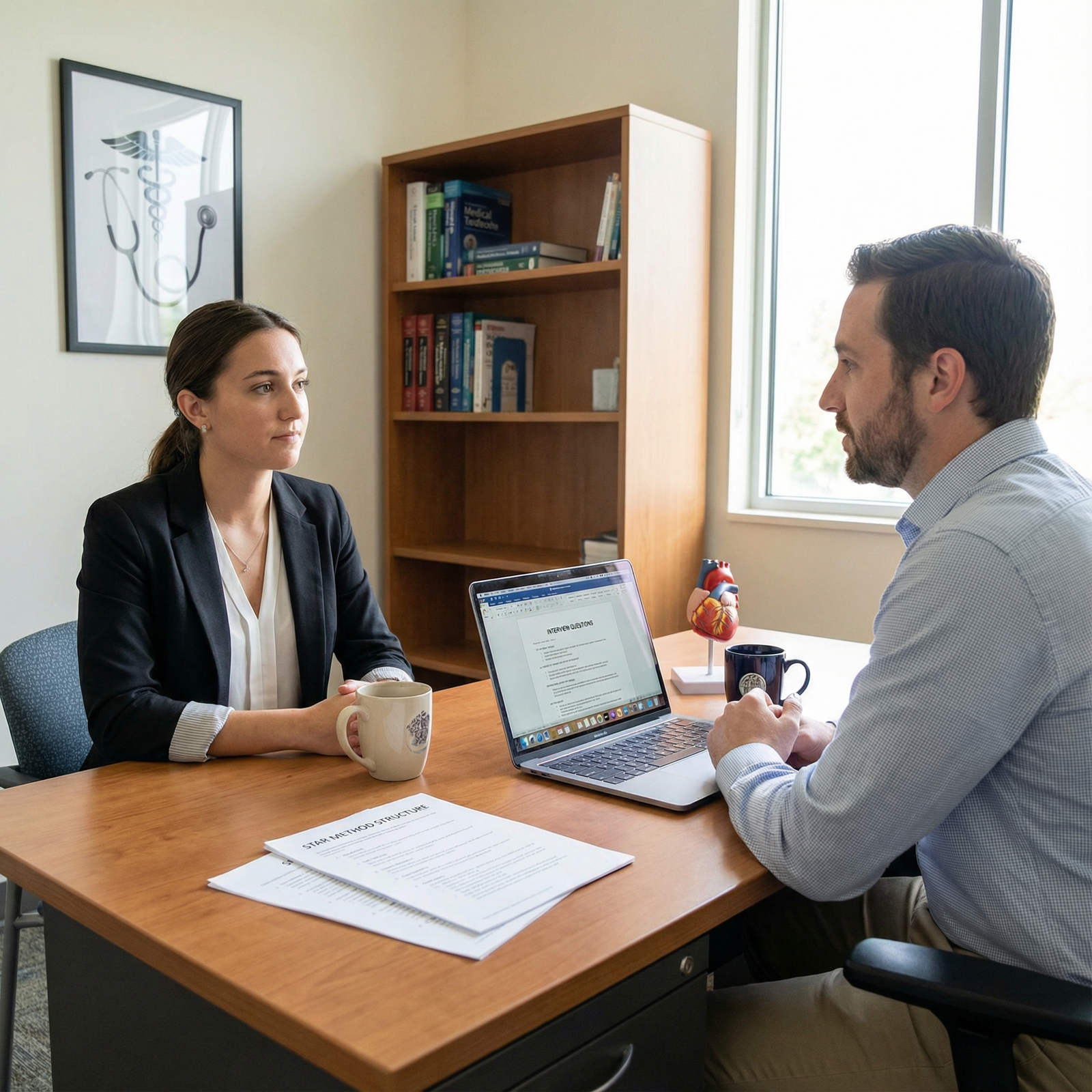
Step 2: Use a Clear Storytelling Framework (STAR+Reflection)
The STAR method is a classic and effective structure:
- Situation – Set the scene.
- Task – What needed to be done? What was your role?
- Action – What did you actually do?
- Result – What happened? What changed as a result?
For medical school interviews, take it one step further:
- Reflection – What did you learn? How did it shape your personal growth, values, or approach to medicine?
Example (summarized)
- Situation: “During my second year volunteering on a hospital ward, I met an elderly patient who rarely spoke and refused physical therapy.”
- Task: “As a volunteer, my role was to help with non-medical support, but I wanted to encourage his engagement without overstepping.”
- Action: “I started by simply sitting with him, asking about his life before his illness, and learned he used to be a teacher. I printed crossword puzzles and brought a small notebook so we could work on word games together during my shifts.”
- Result: “Over a few weeks, he began talking more with staff and agreed to short PT sessions. Nurses commented that he seemed more motivated.”
- Reflection: “This taught me the power of understanding patients as whole people, not just diagnoses. It also showed me how small, consistent acts of presence can change someone’s experience of care. That’s a mindset I want to carry into my future practice.”
Notice how the reflection ties directly to values like empathy, persistence, and patient-centered care.
Step 3: Make Your Stories Relatable, Concrete, and Reflective
To make your Storytelling Techniques more impactful:
Be specific and concrete.
Instead of “I helped a lot of patients,” say, “One patient I’ll never forget was a 6-year-old who was terrified of blood draws…”Focus on your role.
Use “I” strategically (not in a self-centered way, but to make clear what you did and thought).Connect to medicine and personal growth.
Finish by explicitly linking the story to:- A value important in medicine (e.g., compassion, integrity, curiosity)
- A skill you strengthened (e.g., communication skills, managing conflict)
- How it influences your future as a physician
This reflection separates a good story from a standout one.
Step 4: Tailor Stories to Common Question Types
You don’t need a unique story for every possible prompt. Instead, prepare core stories that can be adapted.
For example, a story about organizing a health fair might be used for:
- Leadership (“I coordinated a team of volunteers…”)
- Teamwork (“We had to navigate conflicting priorities and time constraints…”)
- Dealing with conflict (“Two community partners disagreed on how to present sensitive information…”)
- Personal growth (“I learned to listen more than I spoke and delegate clearly…”)
During practice, take each core story and ask:
- How would I tell this if the question is about failure?
- What if the question is about working with diversity?
- What if the question is about ethical challenges?
This makes you more flexible and confident during the actual Medical School Interview.
Practicing and Delivering Your Stories Effectively
Crafting strong stories is only half the work. The other half is how you tell them.
Step 1: Write Bullet Points, Not Scripts
Avoid memorizing word-for-word stories. It can make you sound robotic and increase anxiety if you forget a phrase.
Instead:
Write bullet points for each story:
- Key details of the Situation
- The essential Task
- 2–3 main Actions
- Clear Result and 1–2 sentences of Reflection
Practice talking through the bullets in different ways. This keeps your delivery natural and flexible.
Step 2: Practice Out Loud—Repeatedly
Silent rehearsal isn’t enough. To build strong Communication Skills:
Do mock interviews with:
- Friends or family
- Premed advisors or career centers
- Online services, clubs, or mentorship programs
Record yourself (video or audio) and review:
- Do you clearly answer the question?
- Is your story under ~2 minutes?
- Do you sound engaged and genuine, or monotone and memorized?
- Are there unnecessary details that distract from your main point?
Adjust based on what you observe and feedback you receive.
Step 3: Manage Length and Focus
Aim for:
- 1–2 minutes per story for most questions
- Up to 2–3 minutes for complex questions in open-file interviews, if clearly structured
To stay concise:
- Cut side details that don’t support your main point.
- Avoid long digressions about technical research specifics unless directly relevant.
- Make sure the last part of your answer emphasizes reflection and relevance to medicine.
Step 4: Engage Your Interviewers
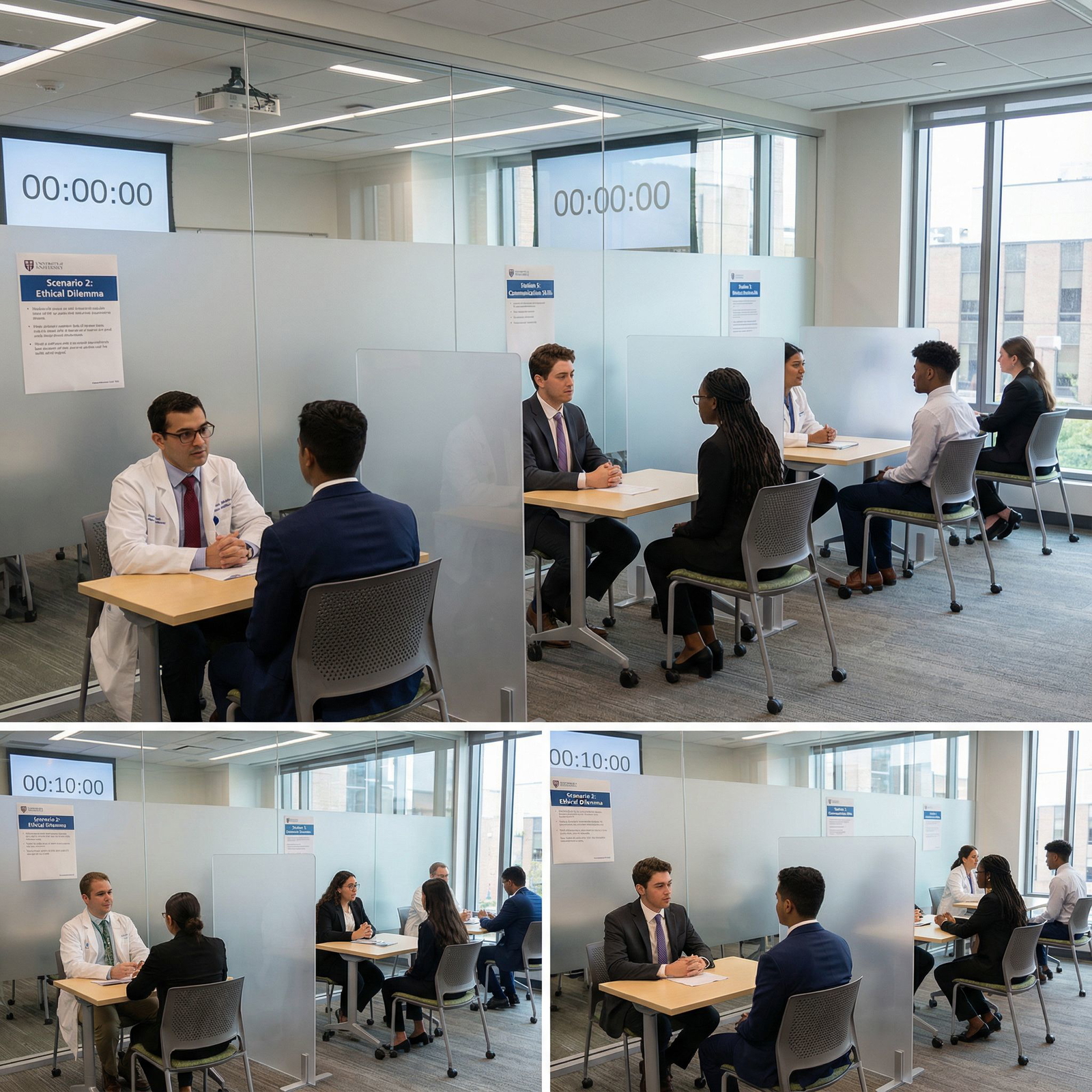
Regardless of format (MMI, traditional, open-file, closed-file):
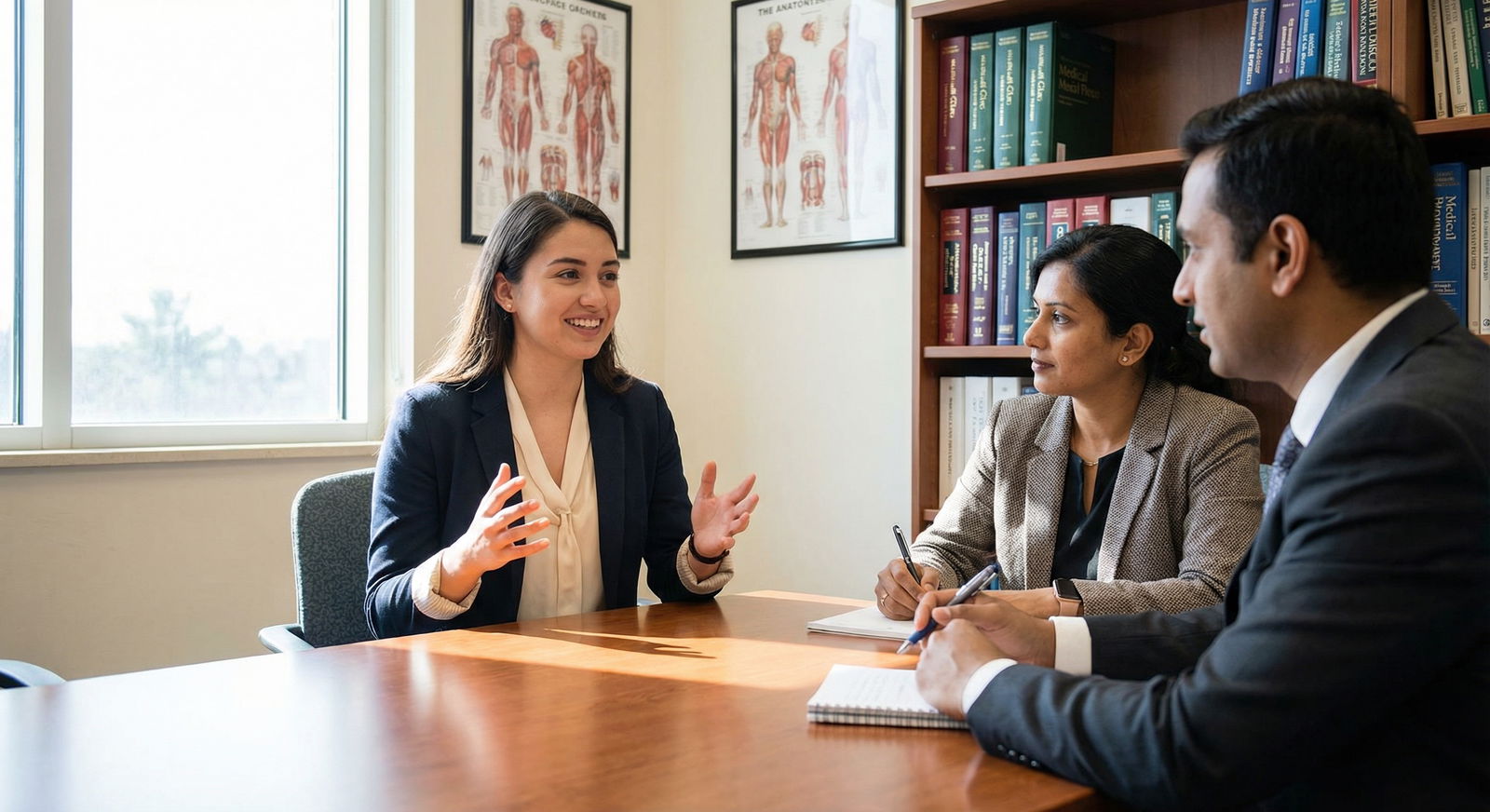
- Maintain comfortable eye contact (or look at the camera in virtual interviews).
- Use natural hand gestures and open body language.
- Vary your tone and pace—avoid speaking in a flat, rushed monologue.
- Show appropriate emotion—it’s okay to be moved by your experiences, as long as you remain composed and professional.
Remember: they’re not just assessing what you’ve done; they’re experiencing what it would feel like to work with you as a colleague.
Step 5: Be Ready for Follow-Up Questions
Strong stories often lead to:
- “What would you do differently now?”
- “How did that experience influence a later decision?”
- “What was the hardest part of that situation for you personally?”
Before interview day, for each core story, think through:
- Potential ethical dilemmas or gray areas
- Ways you might have handled it better with more maturity or knowledge
- How that experience connects to something else on your application
This level of preparation helps you handle deeper probing without feeling thrown off.
Common Storytelling Pitfalls to Avoid
Even strong applicants can weaken their impact with a few common mistakes. Watch out for:
1. Generic or Cliché Stories
Examples:
- “I’ve always wanted to help people.”
- “I realized I wanted to be a doctor when I watched a surgeon save a life on TV.”
There’s nothing inherently wrong with these, but if your story could easily be told by hundreds of other applicants, it’s less powerful.
Fix: Add concrete, specific details and unique reflections that only you could offer.
2. Overly Negative or Unresolved Stories
Stories involving conflict, failure, or trauma are valid—but they must show:
- Emotional processing and stability
- Insight and growth
- A constructive, forward-looking perspective
Avoid stories that still feel raw, unprocessed, or primarily venting about others (professors, supervisors, systems).
3. Overemphasis on Yourself as the Hero
You want to emphasize your role, but medicine is collaborative.
If every story presents you as the savior or the star, it can come off as self-centered or unrealistic.
Fix:
Acknowledge your team, mentors, and patients. Highlight collaboration and humility alongside initiative.
4. Lack of Reflection
A story without reflection is just a narrative. In a medical school interview, that’s not enough.
Every major story should answer:
- What did this teach me about myself?
- What did this teach me about patient care, teamwork, or the healthcare system?
- How will I apply this lesson as a medical student and future physician?
Final Thoughts: Using Storytelling to Show Who You Are
In medical school interviews, storytelling isn’t about performance or inventing a persona. It’s about honest, thoughtful communication of who you are, what you’ve lived, and how you’ve grown.
If you:
- Reflect deeply on your experiences
- Identify a set of versatile, meaningful stories
- Structure them clearly with STAR plus reflection
- Practice delivery until you feel natural and confident
…you’ll walk into your interviews prepared not just to answer questions, but to truly connect.
Your stories can help interviewers see you as a future colleague who:
- Communicates clearly and compassionately
- Learns from challenges and feedback
- Embodies the core values of medicine
- Is ready for the rigor and responsibility of medical training
That’s the impression that leads from interview day to acceptance.
FAQs: Storytelling and Medical School Interviews
1. How many stories should I prepare before my medical school interview?
Aim for 6–10 core stories that you know well and can adapt. At minimum, have at least one strong story in each category:
- Motivation for medicine
- Clinical/patient experience
- Teamwork/leadership
- Adversity/failure/resilience
- Personal background/identity
- An ethical or challenging situation
You’ll reuse and tailor these to many different questions.
2. How long should my stories be during the interview?
Most stories should be 1–2 minutes. That’s enough time to set the scene, explain what you did, and highlight your reflection without dominating the conversation. For particularly complex questions or open-file “tell me about yourself” responses, you might extend to around 2–3 minutes, but always stay structured and focused.
3. Is it okay to get emotional when telling a personal story?
Yes—authentic emotion is human and can be powerful. However, you should be able to:
- Stay composed and continue speaking clearly
- Show that you’ve processed the experience and can reflect on it thoughtfully
If a topic still feels too raw to discuss without becoming overwhelmed, consider using a different story.
4. What if I don’t have dramatic or “life-changing” experiences?
You don’t need dramatic stories to be compelling. Small, everyday moments can be powerful if you show:
- Careful observation
- Empathy and respect
- Growth in your thinking or behavior
For example, consistently showing up for a long-term volunteer commitment and learning from subtle patient interactions can make an excellent story if you reflect deeply.
5. Should my interview stories match what’s in my personal statement?
They should align with your personal statement in values, themes, and overall narrative—but they don’t have to be identical. It’s fine (and often beneficial) to:
- Revisit a key story from your personal statement with added depth
- Introduce new stories that complement and expand your overall narrative
Just make sure there are no contradictions and that everything fits into a coherent picture of your personal growth and motivation for medicine.
For further preparation, consider pairing these storytelling strategies with focused practice on professionalism, ethical reasoning, and current issues in healthcare. Together, they will help you communicate not only what you’ve done, but who you are—and why you’re ready for the next step in your medical journey.