
It’s 4:45 p.m. The last interview day slot just walked out. You’re in an Uber to the airport replaying every answer you gave, worrying about that one awkward joke during the social.
Inside the conference room you left behind?
The door is closed. Coffee cups everywhere. A couple of faculty half-looking at their phones, the PD flipping through a spreadsheet, the coordinator dragging in a stack of forms.
This is the post‑interview huddle. And this is where your fate actually gets written.
Let me tell you what they really say in that room—and what you can do before and during interview day so that conversation tilts in your favor.
The Myth vs. Reality of Post‑Interview Discussions
You’ve probably been told: “Just be yourself. If it’s the right fit, it’ll work out.”
That’s a nice story. It’s not how decisions are made.
Reality: By the time you show up on interview day, you’re already in a shortlisted pool. Your stats cleared the first and second filters. What happens in that huddle is about sorting that pool into:
- Must rank high
- Rank in the middle somewhere
- Rank low or not at all
And that sorting is driven less by your Step score and more by how easy you are to remember and defend when you’re no longer in the room.
Programs won’t say this on their website. But the huddle is a political process: people with different priorities pushing for their favorites, vetoing red flags, balancing service coverage vs. “shiny” applicants.
You are either:
- Someone they fight for
- Someone no one fights against (neutral, forgettable)
- Someone at least one person will quietly block
You want to be in the first group. Or at worst the middle.
What Actually Happens in the Huddle
Different places have different rituals, but the pattern is remarkably similar from big-name academic centers to mid-tier community programs.

| Step | Description |
|---|---|
| Step 1 | Interviews End |
| Step 2 | Faculty Gather |
| Step 3 | Go Through Applicants One by One |
| Step 4 | Assign Provisional Tier/Score |
| Step 5 | Discussion or Argument |
| Step 6 | Adjust for Class Balance |
| Step 7 | Save for Rank Meeting |
| Step 8 | Consensus? |
Here’s the behind-the-scenes reality.
1. Time is short, attention is thin
By late afternoon most faculty are:
- Post-clinic
- Behind on notes
- Half-thinking about home, kids, dinner, pages
They’re not doing a deep textual analysis of your personal statement. They’re glancing at:
- Their brief notes
- Your photo
- A one-line summary they scribbled (“nontrad, EMT, strong teaching vibe”)
If you didn’t give them something simple and sticky to remember you by, you vanish in this chaos.
2. They go candidate by candidate… fast
The PD or coordinator usually runs down the list, often in the order you interviewed:
“Okay, next is… John Smith. IMG from Ireland. Who had John?”
Then whoever interviewed you speaks. Sometimes it’s a formal scoring system. Sometimes it’s glorified vibes with numbers attached.
Typical contributions:
- “I really liked her—very grounded, would fit well here.”
- “Sharp, but a little rigid. Not sure how he’d handle busy nights.”
- “Great story. Clear interest in academic medicine.”
- “Honestly, kind of flat. Nothing wrong, just didn’t get much from him.”
This is where your entire interview day is boiled down to a 15–30 second pitch by someone who met you once.
Your job, indirectly, is to make that 30 seconds easy to say and positive to defend.
3. Scores get weaponized… or largely ignored
Programs love to talk about objective scoring. Here’s how it really plays out.
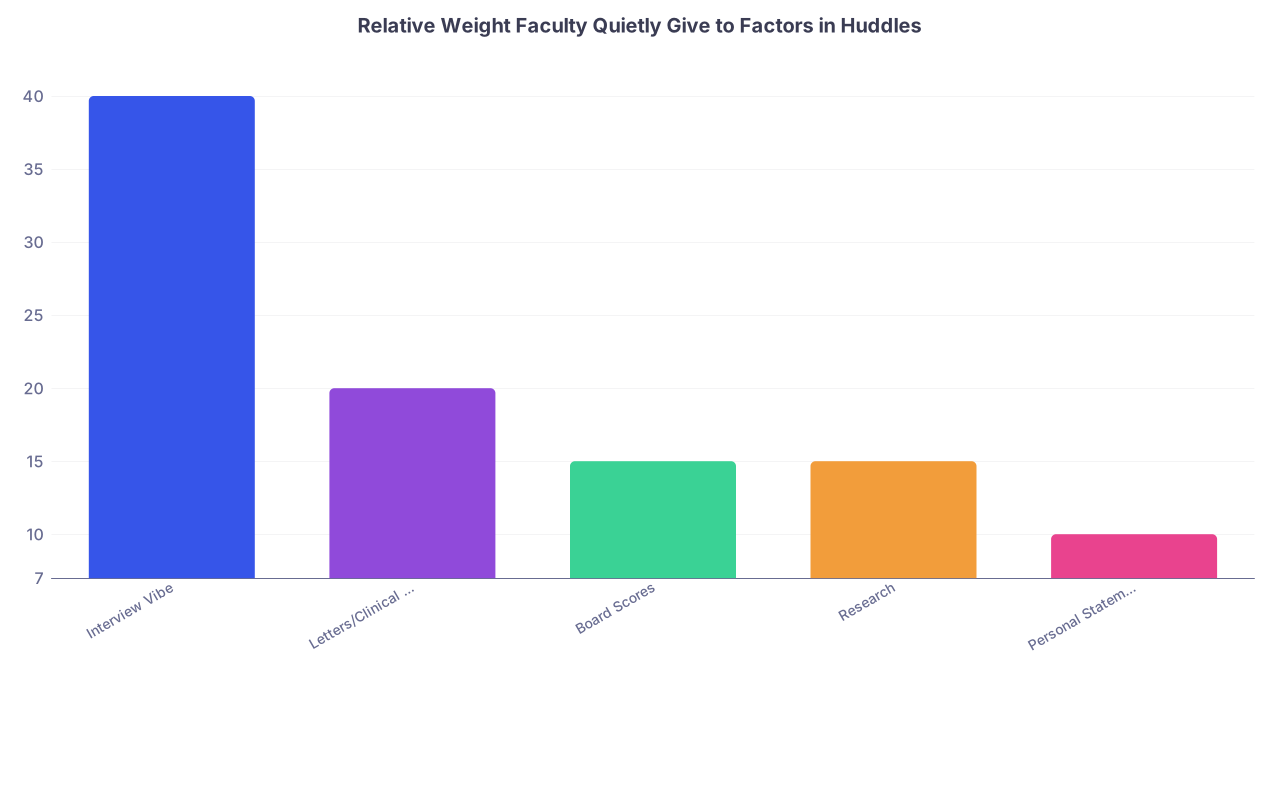
| Category | Value |
|---|---|
| Interview Vibe | 40 |
| Letters/Clinical Reputation | 20 |
| Board Scores | 15 |
| Research | 15 |
| Personal Statement | 10 |
Scores and research matter most for borderline or contested decisions:
- Two people want you, one is lukewarm → someone checks your file and says, “Also 260 on Step 2 and three pubs.” That can break the tie.
- Someone is underwhelmed by interview but your file is stellar → you get a “let’s not drop this one too far.”
But nobody in that room is saying, “We should rank Alex high because their Step 2 was 256” if your interview was a mess. Not in 2026. Not with this competition.
On the flip side, if your interview was strong enough, a slightly weaker Step score becomes, “Scores are okay but they’d be a fantastic resident. I’d be happy to work with them.”
I’ve watched faculty explicitly say:
- “I don’t care that he doesn’t have publications; he will grind and take care of patients.”
- “Her numbers are insane, but I don’t want to be on nights with her. Hard pass for me.”
Believe that.
4. Red flags are sticky. Very sticky.
If anyone raises a red flag, that follows you through the entire process:
- “Seemed defensive when I asked about a low clerkship grade.”
- “A little odd. Couldn’t read the room.”
- “Talked over me a couple times. Might struggle with feedback.”
I’ve seen applicants with powerhouse scores sink due to one consistent interpersonal concern across interviewers. Not always immediately rejected, but quietly pushed down to “not worth the risk” territory.
You can’t be perfect. But you absolutely cannot have the same negative theme mentioned by more than one person. That’s how you drop tiers.
What Faculty Actually Talk About: The Real Categories
Let’s break down what’s really on the table.

1. “Do I want to work nights with this person?”
This is the unspoken golden question.
Faculty imagine you:
- As the intern calling them at 3 a.m.
- On a brutal post‑call morning sign-out
- In a code when nothing is going smoothly
So they ask themselves: Would I trust this person? Would I be annoyed by this person?
Things they comment on:
- Emotional tone: calm vs. anxious vs. arrogant
- Humility: do you own mistakes in your stories or always cast yourself as the hero?
- Teachability: do you light up when talking about getting better or mostly brag about what you already know?
You shape this by how you tell your stories. If every anecdote ends with “and then I fixed it,” they see you as self‑centered. If your stories are “here’s what went wrong, what I learned, and how I changed,” you come across as someone who grows.
2. “Are they a headache for the program?”
This is blunt but real.
Programs worry about:
- People likely to complain constantly
- People who might be unprofessional with staff
- People who could end up in remediation or, worse, on the PD’s calendar every week
So in the huddle you’ll hear:
- “Very intense. Might be a handful if things do not go their way.”
- “Super strong, but I wonder if she’ll struggle with our workload.”
- “Seems needy. I got ‘constant reassurance’ vibes.”
You influence this by the questions you ask and the way you talk about prior institutions.
If you badmouth your med school, clerkships, or previous supervisors? The faculty assume: next year, you’ll be badmouthing them.
3. “Do they actually want us?”
They’re sick of being a backup plan.
Everyone says, “I’d be happy to train here.” That line is meaningless. Faculty listen for evidence you’ve done your homework and can see yourself specifically in that place.
In huddles, you hear:
- “She knew details about our QI project and asked really good questions.”
- “He had clearly read about our community clinics.”
- “Generic interest. Could be anywhere. Nothing tying him here.”
That last line? That’s code for “no one will fight for this person if spots get tight.”
4. “How do they fit into this year’s puzzle?”
Programs balance a class, not just individuals.
They juggle:
- A couple of strong future academicians
- A few workhorse clinicians
- Some with heavy research drive
- Someone deeply into teaching
- Diversity of background, language skills, life experience
I’ve watched PDs say:
- “We already have three heavy researchers in our top 10. We need a couple of people who actually like the ED night grind.”
- “We should make room for someone with strong teaching interests. We’ve been weak there.”
If you present as “I can do anything, I like everything, I have no real direction,” you become difficult to place in that puzzle. Clear (but not rigid) interests help someone say, “This is our future chief,” or “This is our advocacy person.”
How You Can Shape What They Say About You
You’re not in the room. But you can absolutely script your own 30‑second summary.
Think of it like this: every interviewer later has to answer the unspoken question, “So, who is this person?”
Your job during prep and the interview is to load their brain with a clean answer.
1. Craft a “headline” for yourself
I mean this literally. You want a one-sentence identity that a faculty member can repeat at 5 p.m. after 6 interviews.
Examples that actually stick:
- “The former teacher who wants to build a med ed career.”
- “The EMT nontrad who’s rock solid in chaos.”
- “The first‑gen student who did serious community outreach and wants to keep doing it here.”
Terrible headlines:
- “Strong student from [Generic School].”
- “Interested in research and clinical work.” (So… everyone.)
- “Wants to keep doors open.”
You shape this with:
- How you introduce yourself (“I came to medicine through years as an EMT; that shaped how I handle pressure.”)
- How you answer “Tell me about yourself.”
- What themes you echo in multiple answers.
If different interviewers describe you in totally different ways, you did not do this well.
2. Pre-load the “strengths” talking points
Faculty are lazy shorthand machines in these meetings. They say things like:
- “Great communicator.”
- “Very reflective.”
- “Strong team player.”
But those labels have to come from something you showed them.
So when you prep, don’t just list strengths—link each to a concrete, easy-to-retell story.
Instead of:
“I’m a hard worker.”
Go with something like:
“In my surgery clerkship, I realized our students never got feedback until the end. I started asking for 2-minute feedback at the end of each case, and over time the team actually started expecting that rhythm. My evaluations consistently mentioned that I sought feedback and implemented it quickly.”
Now a faculty member can say at the huddle:
“She actively seeks feedback and changes behavior. Her evals back that up.”
That is defensible praise. That’s what gets you pushed upward.
3. Control for red flags before they grow teeth
Anything weird in your file—LOA, failed exam, low clerkship, career switch—you must have a clean, non-defensive narrative ready.
The bad version in the room:
- “He danced around the failed Step attempt. Didn’t feel like he really owned it.”
The good version:
- “She was extremely straightforward about her leave. Clear about what happened, what she changed, and her track record since then is spotless.”
You get that second version by:
- Acknowledging the issue briefly
- Stating exactly what you changed
- Pointing to data that this is no longer a recurrent problem
If one interviewer buys your explanation and repeats it that way, others are less likely to inject doubt.
The Politics You Don’t See (And How They Affect You)
You’re not just up against other applicants. You’re up against the internal politics of the department.
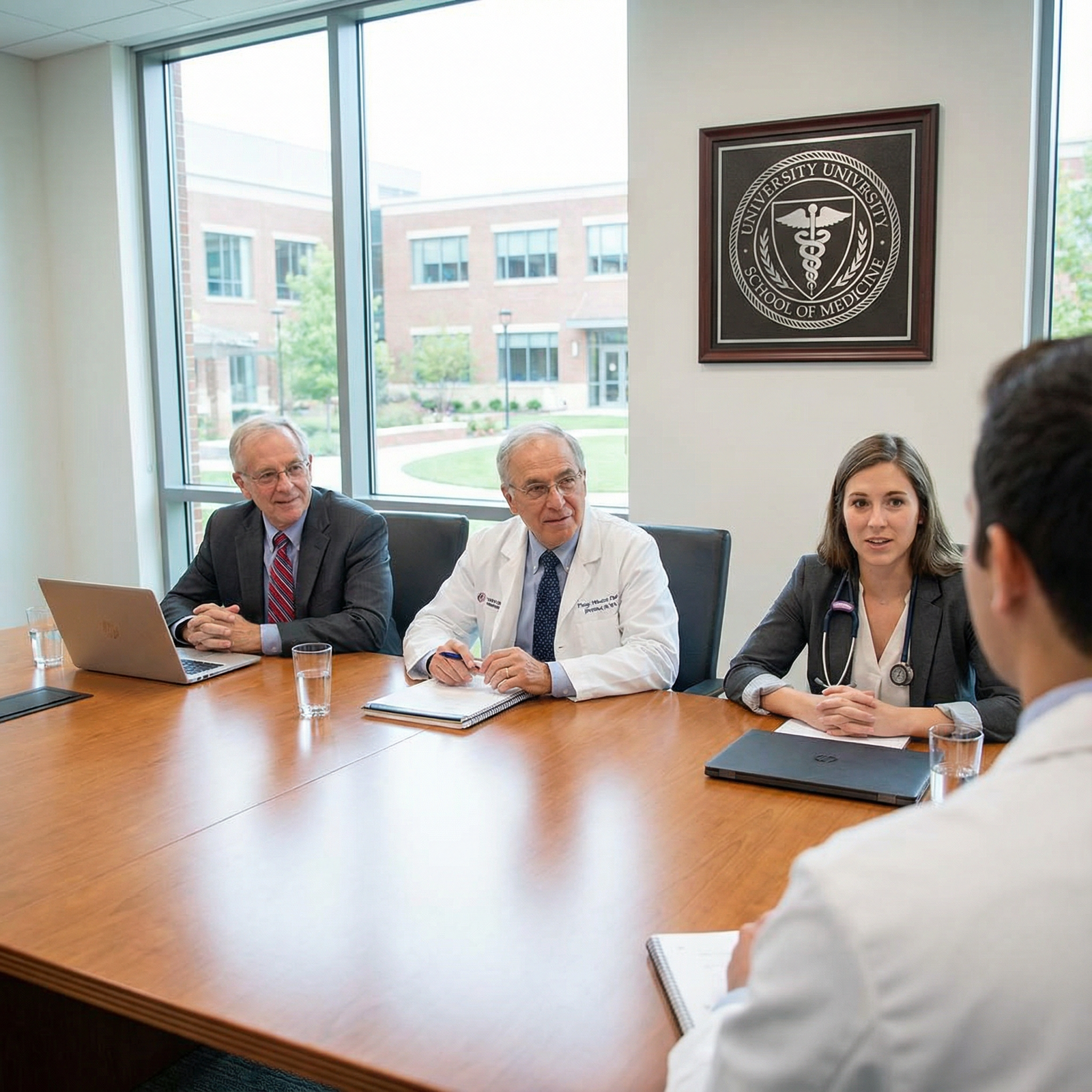
1. Champions and veto players
Every program has:
- Champions: attendings whose enthusiasm pushes applicants up the list
- Veto players: people whose concerns quietly sink you
If your champion is the PD or APD, you’re in great shape. If it’s a junior faculty with no real power, you get polite nods and no movement.
Your goal is simple: give at least one substantive person a reason to be your champion.
That doesn’t mean kissing the PD’s ass. It means:
- Asking smart, program-specific questions in PD/APD interviews
- Showing that your goals intersect with something they care about (curriculum, QI, research area, underserved population)
I’ve watched rank meetings where the PD says, “I interviewed her—she’s the one who wants to work in our rural outreach program. I want her in our top 10.” That’s it. Conversation over.
2. Residents’ input is filtered, not absolute
During pre‑med and med school prep people love to tell you: “The residents decide the rank list.”
That’s… generously overstated.
Most programs get resident feedback via:
- A scored form (overall fit, enthusiasm, concerns)
- A resident-only debrief, then a summary brought to the leadership
Residents absolutely kill applicants who are rude, condescending, or weird at the social. They can also boost those who clearly clicked with them.
But faculty filter comments:
- “Residents loved him” helps.
- “Residents thought she was quiet but nice” is neutral.
- “Residents flagged him as arrogant” is often deadly.
So yes, the pre‑interview dinner matters. Not because they’re grading your cardiology knowledge, but because they are screening out people they don’t want on nights with them.
3. Diversity, balance, and institutional pressure
You’re not only evaluated as an isolated human. Departments face pressure (sometimes explicit) to:
- Improve representation
- Retain graduates from their own med school
- Attract people likely to stay local
- Feed certain fellowship pipelines
That means if you’re:
- From the area
- A home student
- A meaningful diversity candidate
- Aligned with their mission (e.g., safety-net, rural, academic research powerhouse)
…someone in that room is thinking strategically: “This person is exactly who we say we want to train.”
You can’t fake being from the area or being first-gen. But you can absolutely make it obvious how your story fits their stated mission. Many applicants never connect those dots out loud. That’s a mistake.
Concrete Moves You Can Make Before Interview Day
Let’s step out of the faculty room for a second and get practical.
| What They Talk About | How You Influence It |
|---|---|
| “Would I want to work with them?” | Tone, stories, humility, calm presence |
| “Do they fit what we need this year?” | Clear interests, consistent theme, mission alignment |
| “Any red flags or headaches?” | Honest narratives, non-defensive answers |
| “Do they actually want *us*?” | Specific questions, program knowledge, tailored fit |
| “What makes them stand out?” | Memorable headline + concrete examples |
1. Decide your “headline” before the season
As a premed/med student, you can start shaping this years ahead.
Examples:
- “Community-focused, Spanish-speaking future IM doc who connects systems gaps with real patient stories.”
- “Data-nerd future EM doc who loves using QI and informatics to fix broken workflows.”
Then:
- Choose activities that reinforce that identity
- Write your personal statement to echo it
- Answer “Why this specialty?” in a way that fits that arc
So when interviews come, you’re not inventing an identity on the spot. You’re compressing a long-standing one into digestible anecdotes.
2. Build stories with clean arcs
Faculty love stories they can repeat.
A good story in this context has:
- A clear starting problem
- A moment you made a decision or took ownership
- A realistic challenge or setback
- A concrete, specific outcome
- One sentence on what you learned and changed
Practice 4–6 of these that hit:
- Leadership / initiative
- Handling conflict or difficult feedback
- Dealing with failure or weakness
- Working with different backgrounds or disciplines
Those stories become “evidence” in the huddle. I have literally heard: “She had that example of how she changed her study approach after failing anatomy—that made me think she’s actually coachable.”
3. Make “fit” easy to see
Do not show up saying, “I’m interested in everything.” Everyone is. That’s noise.
Instead, know a few program-specific hooks:
- A track, clinic, patient population, or project that genuinely aligns with you
- Names of 1–2 faculty whose work overlaps with your interests
- Structural features you actually like (3+1 vs traditional, night float vs 24s, etc.)
Then, during interviews:
- Ask specific questions: “I saw your residents do QI with the ED-based sepsis alerts. How involved are interns in those projects?”
- Link yourself explicitly: “My undergrad work in data science is why your QI outcomes database really caught my eye.”
Now in the huddle, a faculty member can say, “He’s the one who wants to help with our sepsis QI. Would fit nicely with our current projects.”
What You Should Stop Worrying About
Let me save you some cortisol.
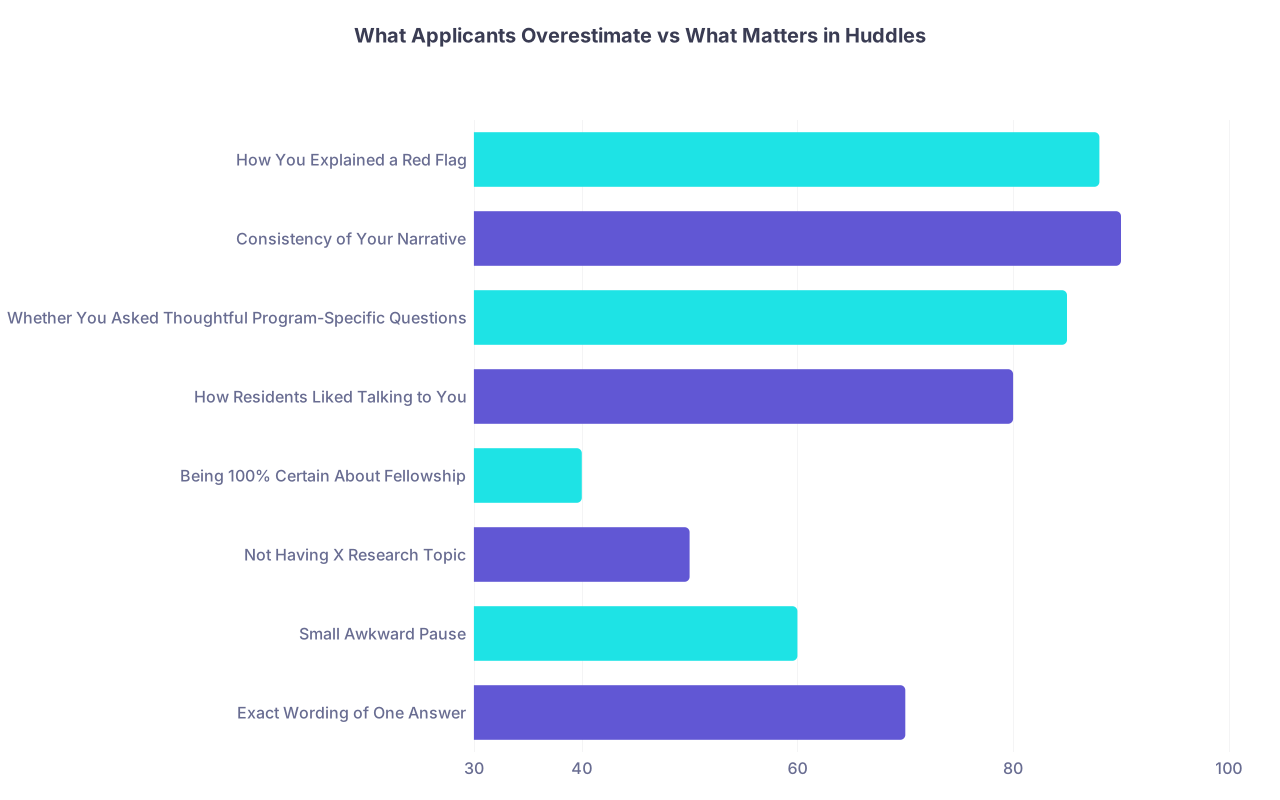
| Category | Value |
|---|---|
| Exact Wording of One Answer | 70 |
| Small Awkward Pause | 60 |
| Not Having X Research Topic | 50 |
| Being 100% Certain About Fellowship | 40 |
| How Residents Liked Talking to You | 80 |
| Whether You Asked Thoughtful Program-Specific Questions | 85 |
| Consistency of Your Narrative | 90 |
| How You Explained a Red Flag | 88 |
You overestimate:
- The impact of one slightly clumsy answer
- The power of buzzwords
- How much they care whether you know every curriculum detail
You underestimate:
- The damage of sounding rehearsed and inauthentic
- How badly badmouthing previous institutions plays
- How much “neutral and forgettable” loses to “clearly memorable and mostly good”
No one in the huddle is saying, “He paused for 3 seconds before answering my question on weaknesses.” They are saying, “She gave a very canned answer and I couldn’t get a real sense of her.”
FAQ: What You’re Afraid to Ask Faculty
1. Do small talk and social events really matter?
Yes, more than you want them to.
Not because they’re grading how “fun” you are. They’re watching:
- How you talk to staff, residents’ partners, and each other
- Whether you listen or just wait to speak
- If you dominate conversation or bring quieter people in
The phrase, “Residents said they’d be happy to work with him,” carries real weight in the huddle. So does, “Residents felt something was off.”
2. If one interview goes badly, am I done at that program?
Usually not, unless it’s really bad.
Faculty know chemistry can be off. What kills you is a pattern: multiple interviewers saying some version of “odd, arrogant, or defensive.”
If you sense an interview went off the rails, don’t spiral. Focus on being strong with everyone else that day. A single outlier can get discounted. A consistent theme cannot.
3. Is it better to be polarizing or universally “fine”?
Polarizing but strong is often better than bland.
If two faculty love you and one is lukewarm, you’ll probably land in a decent position. If everyone says, “Yeah, fine, solid, nothing special,” you slide into the mushy middle, which is where people disappear when spots get tight.
You want at least one person willing to say, “I really want this one.”
4. Should I signal that I’ll rank them #1?
Do not promise anything you won’t honor. Programs trade information, and people remember lies.
What you can say, if true:
- “This program is at the very top of my list.”
- “I can see myself training here more clearly than almost anywhere else.”
What that does in the huddle: it nudges you away from “backup plan applicant” territory. But it won’t rescue a genuinely poor interview. It’s a positive modifier, not a save button.
If you remember nothing else:
- The huddle is fast, political, and driven by how easy it is to remember and defend you—not by fine-grained score differences.
- Your job before and during interview season is to create a clear, consistent headline with concrete stories that faculty can repeat at 5 p.m. when they’re tired.
- One strong champion with a believable, specific case for you will do more for your rank than any single perfectly-worded answer.