The mistakes that kill your interview day are rarely the ones you’re worrying about.
You’re obsessing over your answers to “Why medicine?” while admissions is remembering that you showed up late, smelled like smoke, or rolled your eyes when someone else was talking. Content matters, yes. But professionalism missteps? Those are the ones committees repeat to each other behind closed doors.
Let me be blunt: one bad professional impression can outweigh an otherwise solid interview. I’ve seen it happen. Great stats, strong story, confident conversation… and then someone snaps at the receptionist or checks TikTok during a lull. That candidate becomes “the rude one,” “the one on their phone,” “the one who argued about the dress code.”
You’re not doing all this work—years of GPA, MCAT, volunteering—to throw it away over avoidable, dumb mistakes.
Let’s walk through the professional landmines on interview day that admissions remember. And how you avoid stepping on them.
1. Treating Anyone on Campus as “Unimportant”
This is the fastest way to get quietly torpedoed.
You are not only being evaluated in the formal interview room. You are being watched:
- In the lobby
- On the tour
- At lunch
- In the elevator
- On the shuttle
- In the hallway outside the bathroom
And not just by physicians.
People you absolutely cannot afford to disrespect
- The front desk or check‑in staff
- Student ambassadors
- Administrative assistants
- Security or parking attendants
- Cafeteria staff
- Custodial staff
I’ve heard this exact line in admissions meetings:
“His interview was fine, but the coordinator said he was dismissive and impatient. Hard pass.”
Common missteps:
- Ignoring front desk staff while scrolling on your phone instead of greeting them
- Speaking to staff in a clipped, annoyed tone
- Acting like student hosts are your personal chauffeurs or servants
- Making jokes about “low-level” jobs (yes, people actually do this)
- Not saying “thank you” for directions, badges, food, or help
What to do instead:
- Start every interaction with eye contact and a clear, respectful “Good morning” or “Hi, I’m [Name], I’m here for the interview.”
- Say “please” and “thank you” more than you think you need to.
- If something goes wrong (parking, directions, delay), do not vent to staff. Ask calmly, “Is there a best way for me to handle this?”
- Assume every single person you meet can (and might) report back to admissions. Because they can.
If the way you treat people depends on their title, that will bleed through. And the faculty will spot it.
2. Underestimating the Dress Code (Or Overcorrecting)
No, this is not a fashion show. But it is a professional evaluation in a conservative field. Medicine is slow to change. You can resent that or you can match the expectations and move on.
The most common professionalism clothes mistakes:
- Going “business casual” when they clearly said “professional attire”
- Wearing wrinkled, stained, or ill-fitting clothes
- Extremely strong cologne/perfume (this one is infamous)
- Overly flashy shoes, loud patterns, or club/event-style dresses
- Too much visible cleavage or extremely tight clothing
- Sneakers, even very clean “dress sneakers”
- Backpacks that look like you just left an undergrad lecture
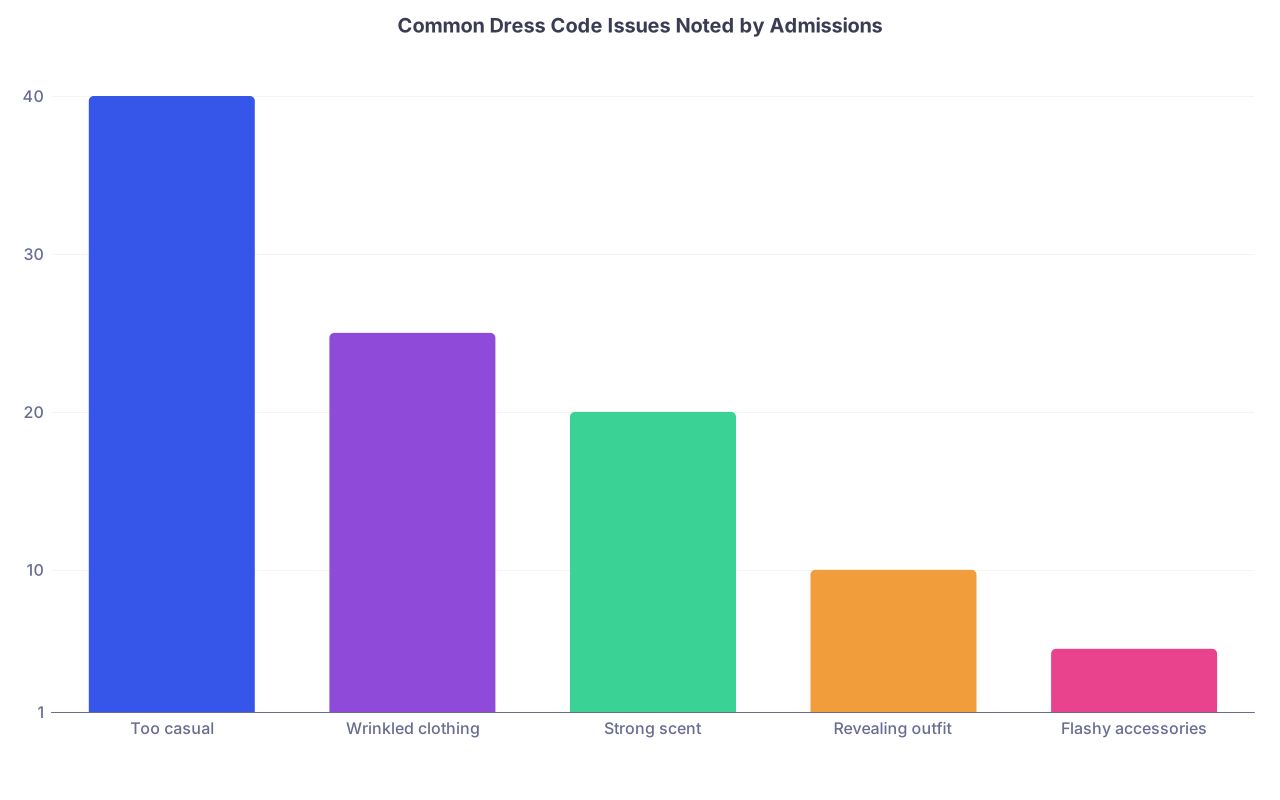
| Category | Value |
|---|---|
| Too casual | 40 |
| Wrinkled clothing | 25 |
| Strong scent | 20 |
| Revealing outfit | 10 |
| Flashy accessories | 5 |
There’s no prize for most creative outfit. There is a penalty for making the committee ask, “Why didn’t they take this seriously?”
Avoidable red flags:
- You walk in with a giant North Face hiking backpack and a Hydro Flask covered in meme stickers. Signals: still in college mode.
- You cross your legs and your skirt rides far above mid-thigh. Signals: didn’t test your outfit sitting down.
- You smell like you bathed in Axe/Chanel. Signals: poor awareness of scent sensitivity, patient comfort, and professional norms.
Quick rules that will not steer you wrong:
- Default: dark suit or blazer (navy, charcoal, or black), simple shirt/blouse, conservative shoes.
- Test your outfit sitting, standing, walking, going up stairs. Fix anything that rides up, gapes, or untucks constantly.
- If you’re not sure whether something is “too much,” it probably is. Tone it down.
You don’t need to be stylish. You do need to not be the person everyone remembers for the wrong visual reasons.
3. Being Late—or Cutting It Uncomfortably Close
There are very few faster ways to brand yourself as “unreliable” than walking in late.
What admissions remembers isn’t just the time. It’s the story you broadcast about your priorities and preparation.
Common time mistakes:
- Arriving “right on time” and then needing 10–15 minutes for parking, badges, restroom
- Underestimating traffic near big academic centers or downtown hospitals
- Not accounting for security check-ins or construction detours
- Cutting it so close that you show up sweaty, flustered, and apologizing
If your interview starts at 9:00, you should be physically at the building 30–45 minutes early. Seated and calm at least 15 minutes before start.
And no, “I’m usually pretty good with time” is not a system.
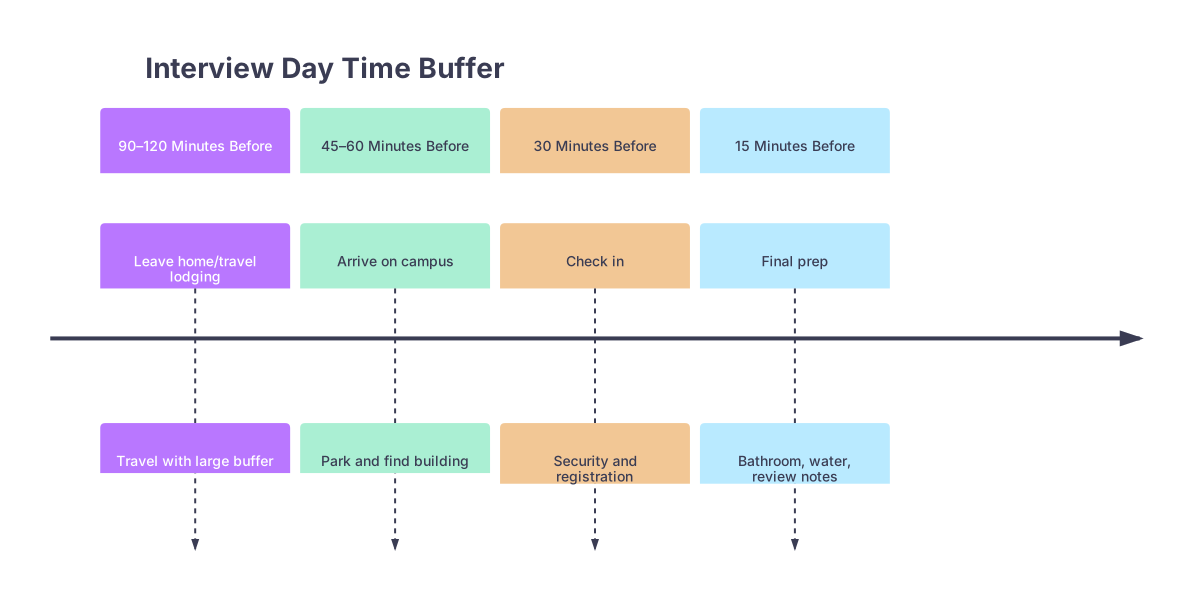
| Period | Event |
|---|---|
| 90–120 Minutes Before - Leave home/travel lodging | Travel with large buffer |
| 45–60 Minutes Before - Arrive on campus | Park and find building |
| 30 Minutes Before - Check in | Security and registration |
| 15 Minutes Before - Final prep | Bathroom, water, review notes |
Avoid these specific mistakes:
- Flying in the morning of the interview unless absolutely unavoidable. One delay and you’re done.
- Relying on “it’s usually fine at that time” traffic logic instead of checking conditions the day before.
- Not having a backup plan if your rideshare cancels or public transit is delayed.
If something catastrophic happens (true emergency), you call or email immediately. You don’t just show up late and apologize on the spot. Programs are much more forgiving when you communicate early and respectfully.
4. Phone Behavior That Screams “Unprofessional”
This one is brutal because it’s so easy to avoid, and yet people keep doing it.
The phone problems admissions notice:
- Scrolling social media in the waiting area instead of being present and engaged
- Phone on the table during lunch or tours, constantly lighting up
- Not silencing notifications—hearing pings, vibrations, or ringtones during sessions
- Sneaking looks at your phone mid-conversation
- Taking a call in a hallway right outside interview rooms in a loud voice
Here’s what that broadcasts:
- You can’t tolerate boredom for 10 minutes without a screen.
- You prioritize your digital life over a major professional moment.
- You may do this on rounds, in lectures, in front of patients.
Better approach:
- Fully silent mode. Not vibrate. Silent.
- Phone in bag, not in your hand, not on the table in line of sight.
- Use printed notes or a small folder if you must review information.
- If you need your phone for logistics at the end of the day, fine. Take it out when you’re clearly done.
You want the committee thinking: “They were present, engaged, and focused,” not “They couldn’t stop checking their notifications for five hours.”
5. Acting Like You’re Competing with the Other Applicants
This one is subtle but damaging.
Medicine is a team sport. Admissions is watching for how you behave in a group, not just how you sell yourself one-on-one.
Professionalism missteps in group settings:
- Dominating every group conversation
- Cutting people off because “your point is better”
- One-upping others: “Oh, you only shadowed 50 hours? I did 300 plus a publication.”
- Being weirdly secretive or cagey about your own background like it’s a competition
- Ridiculing or dismissing others’ questions to students or faculty
I’ve seen committees ask student hosts directly: “Did anyone stand out to you—for good or bad reasons?” And the bad reasons often sound like:
- “She made everyone else feel small.”
- “He kept flexing his MCAT score.”
- “They rolled their eyes when someone asked a basic question.”
Here’s how you stay out of that category:
- Ask other applicants questions. “Where are you coming from?” “What got you into medicine?” Then shut up and listen.
- Share honestly without bragging. You don’t need to list your entire CV to strangers.
- If someone says something wrong about the school, correct politely, or let the student host/faculty correct it. No need to score points.
You’re being assessed for whether people want you on their team at 3 a.m. on call. The arrogant competitor vibe is a hard no.
6. Being Too Casual in Conversation with Faculty and Students
“Everyone was so laid-back, I figured it was chill.”
This is what people say after they blow an interview by getting too familiar too fast.
Being warm and personable is good. Speaking to attendings like they’re your frat brothers? Not so much.
Common conversational professionalism missteps:
- Using slang or profanity, even mild (“that was kinda sketch,” “it sucked,” dropping casual swear words)
- Making edgy jokes about patients, politics, or controversial topics
- Oversharing personal drama: breakups, family conflict, mental health details beyond what’s relevant and thoughtful
- Arguing aggressively about hot-button issues instead of discussing them respectfully
- Making negative comments about your current institution, professors, or coworkers
Example of what gets remembered:
- “Remember the guy who called one of his professors ‘an idiot’?”
- “She talked about how boring old people are as patients—hard no.”
Your safe guardrails:
- Keep language clean. You’re not with friends; you’re on a job interview, essentially.
- Avoid mocking any group—patients, specialties, other schools, other healthcare workers.
- If controversial topics come up (they sometimes do), show thoughtfulness, not combativeness.
You’re allowed personality. You’re allowed humor. But it has to fit within a professional frame.
7. Complaining—About Anything
Admissions remembers the complainers.
The ones who:
- Grumble about the early start time
- Complain loudly about the weather, the city, or the building
- Trash previous interview sites or schools
- Whine about the length of the day, the walking, the food, the schedule
Yes, interview days are long. Yes, logistics sometimes suck. The candidates who handle minor discomfort with grace rise to the top.
Red flag comments:
- “Ugh, I hope we’re done soon, I’m exhausted.”
- “This city is kind of depressing, I don’t know how people live here.”
- “The food sucks. You’d think a med school could do better.”
That stuff gets back to admissions. Student hosts, especially, will remember it.
Instead:
- If something’s uncomfortable? Suck it up for one day.
- If you have a real need (food allergy, medical issue), ask calmly and privately.
- Save your venting for after you’re off campus and far away.
Emotional regulation is a professional skill. They’re looking for it.
8. Over-Rehearsed or Under-Prepared: Both Look Unprofessional
Two extremes kill you here.
The Scripted Robot
You memorized answers off Reddit and it shows:
- Every answer sounds like a pre-written essay
- Zero spontaneity, zero genuine connection
- You ignore the actual question and just deliver your rehearsed speech
- When they interrupt you, you look lost because your script got broken
Faculty hate this. It feels inauthentic and, frankly, exhausting.
The “I’ll Just Wing It” Disaster
The opposite extreme:
- You ramble for 5 minutes to answer a simple question
- You can’t succinctly explain your research, gap years, or motivations
- You haven’t looked up anything substantial about the school
- You freeze at basic behavioral questions (“Tell me about a time you failed”)
Under-preparation reads as disrespect. Why should a school invest in someone who couldn’t invest a few serious hours in preparation?
| Mistake Type | How It Appears on Interview Day |
|---|---|
| [Over-scripted](https://residencyadvisor.com/resources/med-school-interview-tips/interview-prep-traps-over-rehearsal-errors-that-kill-authenticity) | Stiff, rehearsed answers |
| Under-prepared | Rambling, vague, or blank responses |
| No school research | Generic answers to “Why our school?” |
| No self-reflection | Weak answers to ethics/values questions |
The sweet spot:
- You know your own experiences well and can explain them simply.
- You’ve practiced out loud enough that you’re comfortable, not robotic.
- You can adapt your answer based on how the question is actually asked.
Professionalism includes respecting other people’s time. That means clear, thoughtful, efficient answers.
9. Ignoring Structured Instructions or Logistics
Every interview day has small but meaningful tests of professionalism built into the logistics.
The ways people blow it:
- Sending documents late or in the wrong format after explicit instructions
- Ignoring directions about where/when to check in, then acting annoyed when corrected
- Not following Zoom etiquette for virtual interviews (camera off, bad lighting, obvious multitasking)
- Showing up to required sessions late or ducking out early without telling anyone
That “I don’t read instructions carefully” energy is something programs don’t want in their students. Because next time it won’t be a Zoom link—it’ll be medication orders.
Read every email, twice. If they say:
- “Arrive between 8:00–8:15” → don’t stroll in at 8:29.
- “Business attire” → don’t decide your cardigan and khakis are “close enough.”
- “Please use this naming format for your file” → use it exactly.
Detail orientation is part of professionalism, not a bonus feature.
10. Failing the “End of Day” Test
People relax too early.
They think the day is basically over after the last faculty interview. Wrong. You’re still being observed during:
- The last Q&A with students
- The walk back to the lobby
- The goodbyes at the front desk
- The shuttle back to the parking lot
Common late-day missteps:
- Dropping the politeness and making snarky comments once you think “the important people” are gone
- Ignoring staff on the way out—no goodbye, no thank you
- Looking visibly irritated or bored when things run late
End your day cleanly:
- Thank the coordinator by name if you can. Same with your student host.
- A simple, “Thank you so much for putting this together, I really appreciate your time” goes a long way.
- Stay engaged and respectful until you are fully off the premises (or logged off, for virtual).
This is the last impression you leave. Don’t let it be you sulking and scrolling your phone in the hallway.
11. The Virtual Interview Trap: Thinking the Rules Don’t Apply
Virtual interviews expose a different set of unprofessional habits.
Common virtual professionalism mistakes:
- Logging in right at the start time and spending the first 5 minutes fixing audio/camera
- Using your bed or a messy bedroom as your visible background
- Terrible lighting—your face in shadow, light directly behind you
- Looking at a second monitor or your phone while the interviewer speaks
- Wearing a suit jacket on top and gym shorts on bottom… and then standing up on camera
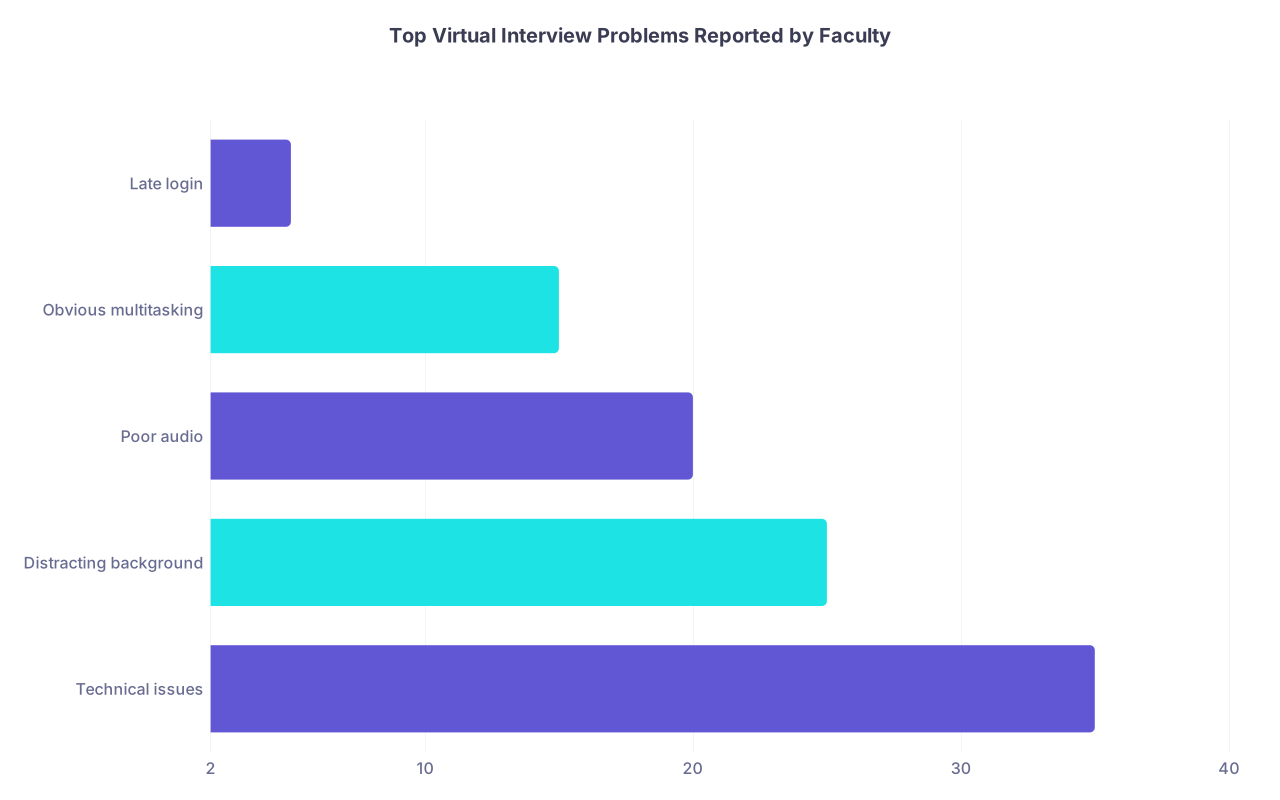
| Category | Value |
|---|---|
| Technical issues | 35 |
| Distracting background | 25 |
| Poor audio | 20 |
| Obvious multitasking | 15 |
| Late login | 5 |
Fix it like a professional:
- Test your setup (camera, mic, platform) the day before and again 30 minutes before.
- Neutral, uncluttered background or a professional virtual background if necessary.
- Good lighting—lamp or window in front of you, not behind.
- Camera at eye level, not looking up your nose or down from the ceiling.
- Close every other app and put your phone in another room.
Everything you do physically in-person—being on time, fully present, appropriately dressed—still applies here.
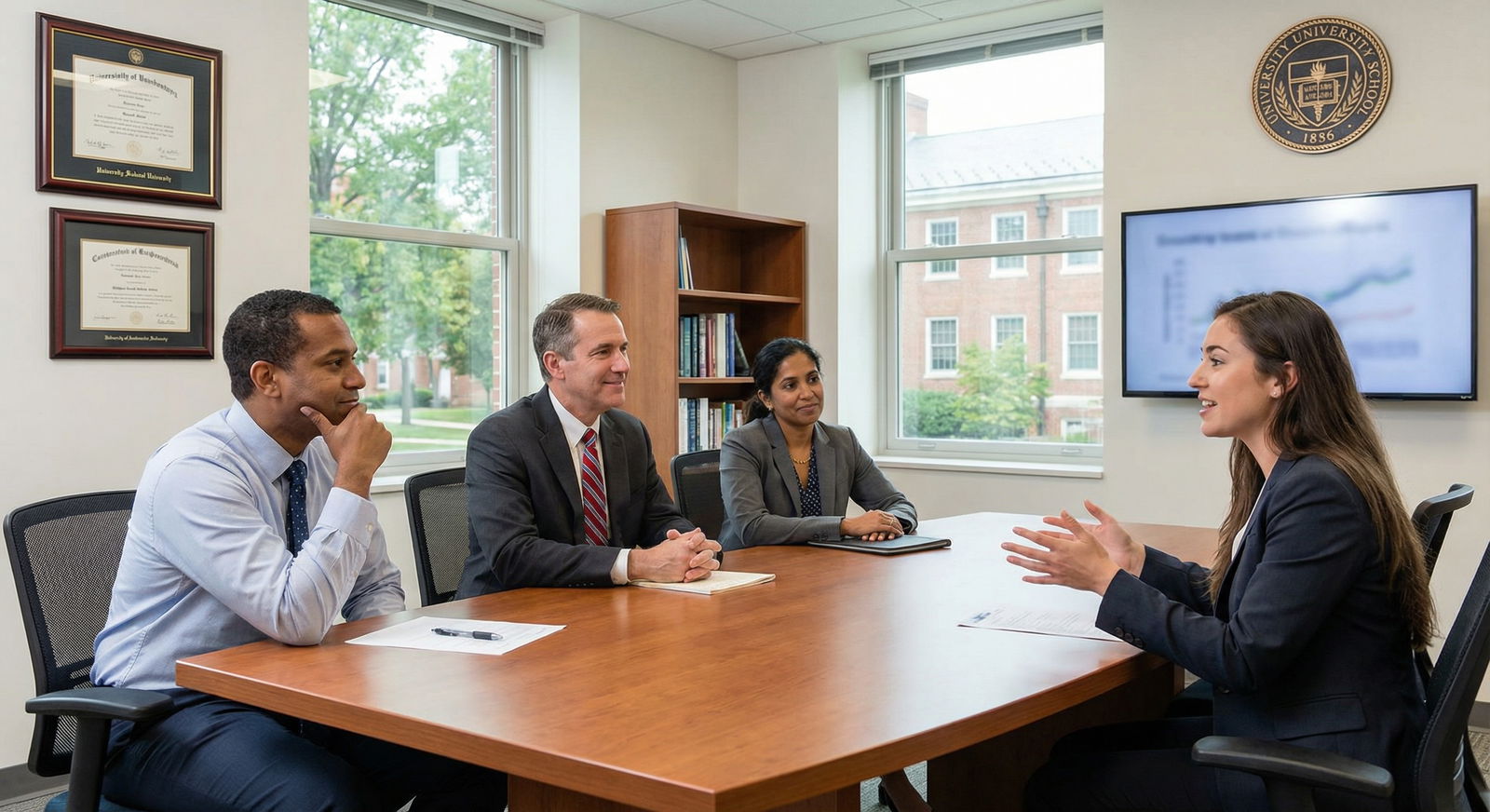
12. The Thank-You Email: Minor, but Still Professional
No, a thank-you email won’t rescue a bad interview. But it can reinforce a good impression—or slightly soften a neutral one.
Where people mess up:
- Sending a mass, obviously copy-pasted email to every interviewer with no specific content
- Writing overly long, emotional messages
- Making demands or asking for updates on ranking/acceptance
- Getting faculty names or titles wrong
Keep it simple:
- 2–4 sentences
- One specific detail you appreciated from that conversation
- No pressure, no questions about your standing
Example:
“Dear Dr. Smith,
Thank you again for taking the time to speak with me yesterday. I especially appreciated our discussion about your work in community-based primary care and the school’s commitment to serving the local population. Our conversation reinforced my interest in training at [School].
Best regards, [Name]”
And then stop. Don’t start a long back-and-forth unless they initiate.

FAQs
1. If I make one small professionalism mistake, am I automatically rejected?
No. One tiny misstep won’t tank you if everything else is strong. But understand this: schools see hundreds or thousands of applicants. If there’s a concern about your professionalism and they have plenty of other applicants without that concern, why should they take the risk on you? Your goal isn’t perfection; it’s avoiding patterns or glaring red flags.
2. How formal should I be with student interviewers or hosts?
Respectful, warm, and slightly less formal than with faculty—but still professional. You can be a bit more relaxed in tone, but not sloppy. Don’t swear, don’t overshare, don’t test edgy jokes on them. Students absolutely report their impressions back, and their voices can be influential, especially when they raise concerns.
3. Is it okay to admit I’m nervous during the interview?
Yes, in moderation. Saying, “I’m a little nervous, but I’m excited to be here,” is human and fine. What’s not fine is letting nerves derail your professionalism—talking too fast, interrupting constantly, or falling apart if you get a tough question. Practice enough that your baseline is steady even with some anxiety on board.
4. How do I handle it if another applicant is being rude or competitive?
Do not engage. Don’t get drawn into gossip, complaints, or one-upmanship. If someone is overtly inappropriate, you stay neutral, redirect the conversation, or quietly remove yourself. Admissions will notice both the problematic person and the person who keeps their composure. Be the latter.
5. What’s the single biggest professionalism mistake you’d tell applicants to avoid?
Treating the interview day like a performance only in the interview room. The biggest mistake is thinking you’re “on” for 30–60 minutes instead of the entire time you’re associated with the program—online, in the lobby, at lunch, on the tour, and even in email correspondence. Assume everything you do that day is part of your application. Because to admissions, it is.
Key points to remember:
- You’re evaluated everywhere, not just across the interview table—treat everyone, at every step, with the same respect you’d show the dean.
- Small lapses—phones, lateness, sloppy clothes, complaining—signal bigger professionalism risks schools don’t want.
- Professionalism isn’t a costume; it’s a pattern. Build habits now that make the right behavior automatic on interview day.