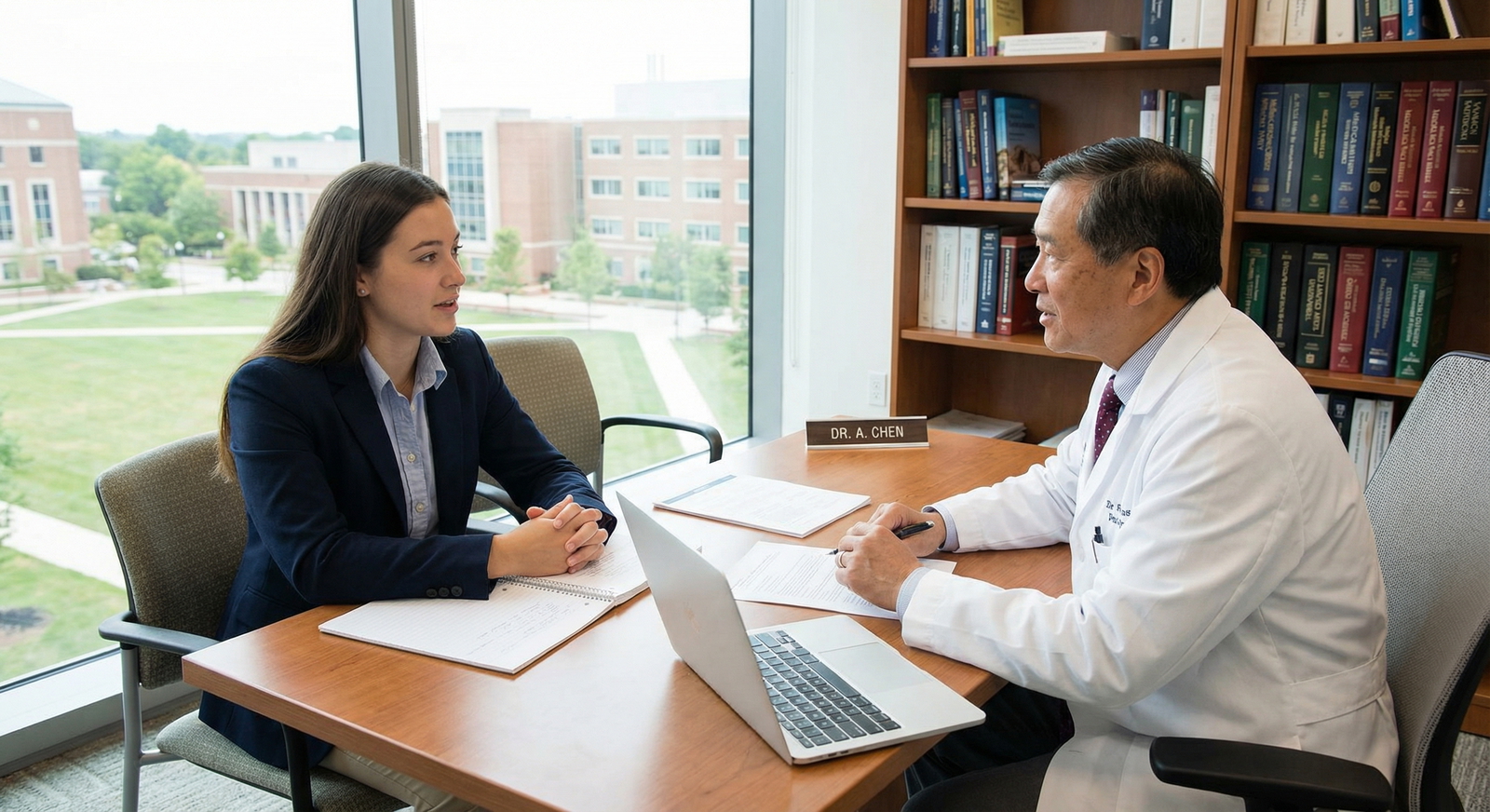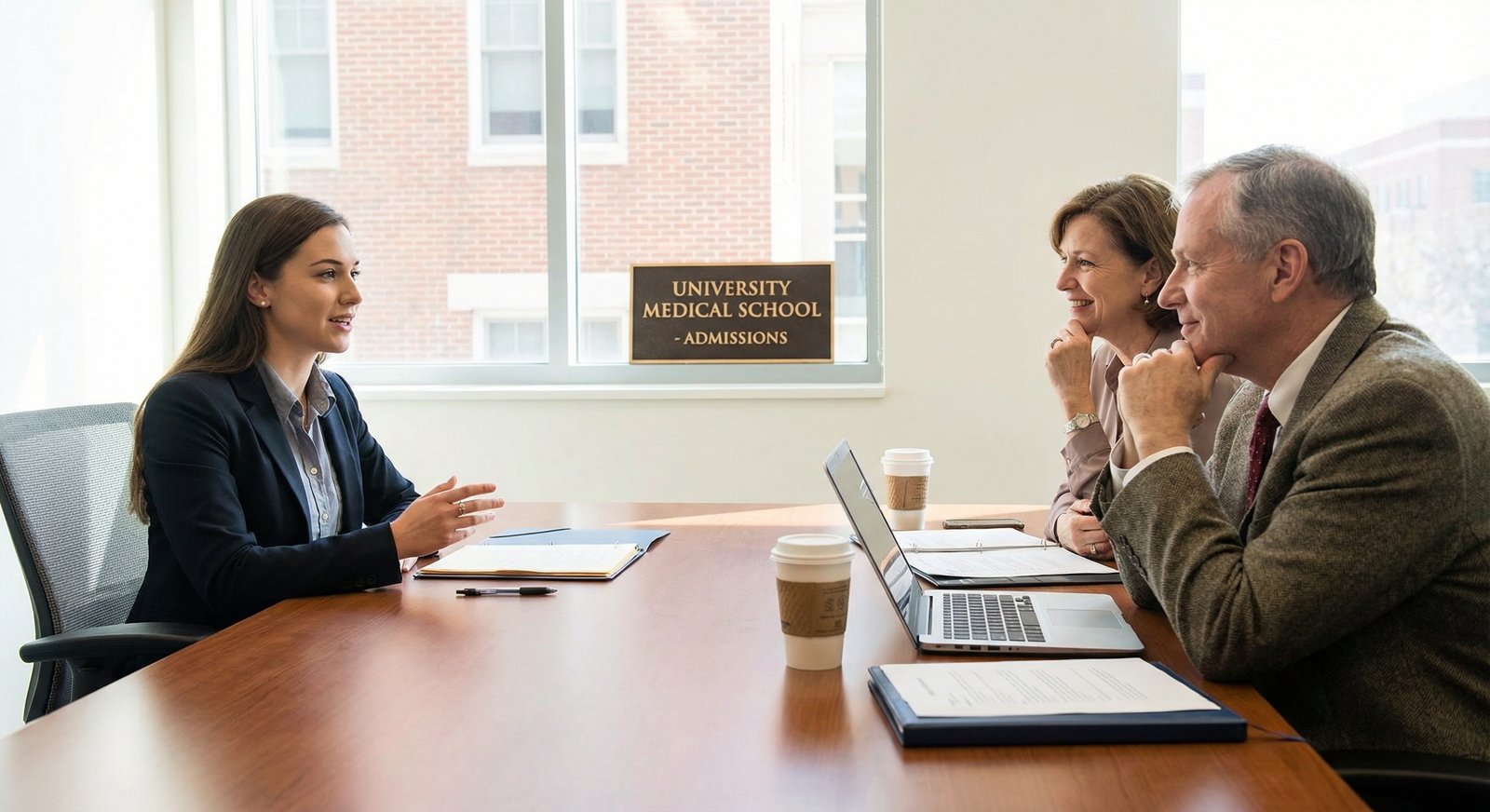
Elevate Your Interview Game in Healthcare: Strategies to Leave a Lasting Impression
In today’s competitive landscape of healthcare careers, how you interview often matters as much as what is on your CV. In medicine, many applicants share similar academic metrics, clinical experiences, and research backgrounds. The differentiator becomes your ability to communicate your story, demonstrate professionalism, and show that you are the right “fit” for that specific team and institution.
Whether you are a premed preparing for medical school interviews, a medical student applying to residency, or an early-career physician or healthcare professional pursuing a new role, strong Interview Tips and deliberate Job Preparation can significantly increase your chances of success.
This guide will walk you through practical, evidence-informed strategies to:
- Present yourself with integrity and professionalism
- Communicate clearly and confidently
- Highlight your strengths in a way that resonates with interviewers
- Navigate the unique expectations of healthcare interviews
- Leave a positive, memorable impression before, during, and after the interview
1. Grounding Yourself: Ethics and Professionalism in Healthcare Interviews
Ethical conduct and professional behavior are not just “nice to have” in healthcare interviews—they are non-negotiable. Interviewers are evaluating not only your knowledge and experiences, but also your judgment, integrity, and interpersonal style.
Respect and Professionalism
Respect begins well before you sit down in the interview chair.
- Punctuality: Aim to arrive 10–15 minutes early. For virtual interviews, log on 15–20 minutes in advance to test your connection, audio, video, and lighting.
- Professional Appearance: Choose business formal or conservative business casual, depending on the setting (academic centers often lean formal). Ensure clothes are clean, pressed, and fit well. Avoid overpowering fragrances.
- Professional Demeanor: Greet everyone politely—from reception staff to program coordinators to faculty. Many hiring and admissions decisions incorporate feedback from all staff who interact with you.
Interviewers will be asking themselves: “Is this someone I would trust with patients, colleagues, and our institutional reputation?”
Integrity: Honesty as a Core Competency
In healthcare, trust is everything. Exaggerating your role in a project, inflating responsibilities, or inventing experiences is a serious red flag.
- Be precise: If you assisted rather than led a project, say so clearly.
- Clarify your role: “I was the second author on this paper and primarily contributed to data collection and initial analysis.”
- Handle gaps transparently: If there are leaves of absence, academic struggles, or delays, briefly explain them respectfully and focus on growth, insight, and what you’ve changed.
Interviewers are less concerned with perfection and more focused on your honesty, accountability, and capacity for reflection—critical components of long-term Professional Development.
Empathy and Insight into the Healthcare Context
Healthcare roles exist within complex systems: patients, teams, policies, and limited resources. Show that you understand this context.
You might say:
- “I recognize that this role isn’t just about my learning; it’s about contributing to safe, high-quality patient care.”
- “I know residents are critical members of the clinical team, and I’m eager to balance education with service to patients and colleagues.”
Demonstrating empathy for patients and for your future coworkers communicates maturity and team awareness.
2. Strategic Interview Preparation for Healthcare Roles
Preparation is the strongest predictor of a confident, composed performance. It is also one of the easiest parts of Job Preparation to control.
Research the Organization and Program
Go far beyond the homepage.
Mission, Vision, and Values:
Identify 2–3 themes that align with your own priorities:- Community care
- Health equity and advocacy
- Research and academic advancement
- Innovation and quality improvement
Then, incorporate those themes into your responses. For example:
“Your emphasis on community engagement and longitudinal care really resonates with my experience running a free clinic and my long-term interest in working with underserved populations.”
Population and Services:
Learn:- Who they serve (urban vs rural, underserved, specific demographics)
- Key clinical strengths (e.g., trauma, oncology, primary care)
- Unique offerings (simulation center, global health programs, research institutes)
Recent News:
Scan press releases, websites, and recent publications. Bringing up a recent initiative shows genuine interest:“I read about your new quality improvement project in reducing readmissions in heart failure—could you share how trainees are involved?”
Understand the Role in Depth
Read the job description or program details, then take it a step further:
- Identify core responsibilities and daily tasks.
- Reflect: Where have you done something similar?
- Prepare at least 3–5 concrete examples demonstrating:
- Clinical competence
- Teamwork
- Adaptability
- Communication skills
- Commitment to continuous learning
For example, if you’re applying for a clinical research position:
- Prepare stories that highlight data collection, patient recruitment, regulatory awareness, and handling ethical dilemmas in research.
Anticipate Common Interview Questions (and Elevate Your Answers)
Most healthcare interviews draw from similar question types. Use them to your advantage by preparing structured, thoughtful answers that highlight your strengths and Communication Skills.
Common themes include:
“Tell me about yourself.”
- Keep it to 1–2 minutes.
- Focus on your professional story: background → key experiences → what led you to this field/role.
- End with why you’re excited about this opportunity.
Example framework:
“I grew up in [place], and I initially became interested in medicine when… During college, I focused on… In medical school, I found myself drawn to [field] because… Those experiences shaped my interest in [specific type of role or setting], which is why I’m particularly excited about your program’s focus on…”
Strengths and Areas for Growth.
- Choose 2–3 strengths with specific examples.
- For weaknesses, avoid clichés (“I’m a perfectionist”) unless you can make them meaningful and show active improvement.
Example:
“One area I’ve worked on is delegating tasks. Earlier in my training I tended to take on too much myself. Over the past year, I’ve begun to practice more structured delegation on team projects, which has improved efficiency and reduced my stress.”
Behavioral and Clinical Scenarios (Use STAR).
Behavioral questions often start with:- “Tell me about a time when…”
- “Describe a situation where you…”
Use STAR:
- Situation – Brief context
- Task – Your responsibility
- Action – What you did
- Result – Outcome and what you learned
Example prompt: “Describe a challenge you faced in a clinical setting.”
Example outline:
- S: Busy ED shift with limited resources
- T: Triage and prioritize multiple ill patients as a student/trainee
- A: Communicated with team, clarified roles, escalated concerns, ensured safety
- R: Timely care delivered, positive feedback from supervisor, and specific lesson about team-based triage
Ethical or Professional Dilemmas.
Be ready to discuss situations involving:- Conflicting values
- Patient autonomy and safety
- Team conflict or unprofessional behavior
Emphasize communication, seeking guidance, and patient-centered decision-making.
Prepare High-Impact Questions to Ask Interviewers
Your questions are a powerful tool to show curiosity, insight, and Professional Development goals. Avoid overly generic questions you could answer with a quick web search.
Consider questions like:
- “What qualities have you seen in your most successful residents/hires here?”
- “How does the organization support continuing education, mentorship, and long-term career development?”
- “Can you describe the culture of feedback in this program/department?”
- “What are some current challenges your team is facing, and how could someone in this role contribute to addressing them?”
- “For trainees, how do you balance clinical responsibilities with education and wellness initiatives?”
Thoughtful questions send a clear signal: you’re not just looking for any position—you’re looking for the right fit and you’re invested in your growth.

3. Presentation: How You Show Up in the Interview Room (or on Screen)
Once your preparation is solid, your focus shifts to how you present yourself in real time.
Professional Attire and Overall Presentation
For most healthcare interviews (medical school, residency, clinical jobs, research roles):
Recommended attire:
- Men: Suit or blazer with dress shirt and tie (or professional equivalent), polished shoes.
- Women: Suit, tailored dress, or blouse with slacks or skirt; closed-toe shoes.
- Gender-neutral: Any combination that is conservative, neat, and professional.
Grooming:
- Neat hair, minimal distracting jewelry, natural makeup if used.
- Cover visible tattoos if you’re unsure of institutional culture (you can adjust later once you know the environment).
For virtual interviews:
- Choose a quiet, well-lit space with a neutral background.
- Position your camera at eye level, avoid backlighting, and test microphone quality beforehand.
Body Language: Silent Communication Skills
Your nonverbal cues often speak louder than your words.
Key elements to practice:
- Posture: Sit upright, shoulders relaxed, facing the interviewer. Lean slightly forward to signal engagement.
- Eye Contact: Maintain steady but natural eye contact. For virtual interviews, look into the camera periodically when answering.
- Facial Expression: A calm, open expression with occasional smiles helps convey warmth and ease.
- Gestures: Use moderate hand movements to emphasize points, but avoid fidgeting with pens, jewelry, or clothing.
A composed physical presence signals confidence, emotional maturity, and readiness for professional responsibilities.
Demonstrating Genuine Enthusiasm (Without Overdoing It)
Enthusiasm is one of the simplest ways to stand out among similarly qualified candidates.
Ways to convey authentic interest:
- Use specific details about the program or role:
“I’m particularly excited by your longitudinal clinic experience and the opportunity to follow patients over time.”
- Share brief stories illustrating why you’re passionate about your chosen specialty or field.
- Express curiosity about future opportunities:
“I’d love to explore involvement in your quality improvement curriculum and potentially lead a project in my later years.”
Aim for balanced energy: engaged, positive, and attentive, without sounding exaggerated or insincere.
4. Communication Skills: Speaking and Listening Like a Future Colleague
In healthcare, strong Communication Skills are critical to safe patient care and effective teamwork. Interviewers are watching closely for how you structure your thoughts, respond under pressure, and listen to others.
Active Listening: Building Rapport and Understanding
Active listening demonstrates respect and maturity.
Practice:
- Pause before answering to ensure you fully understood the question.
- Clarify if needed: “Just to make sure I understand, are you asking about…”
- Reflect what you heard: “From what you’re saying, it sounds like the program is focusing heavily on interdisciplinary care…”
- Avoid interrupting, even when you’re eager to respond.
Good listening sets you apart as someone colleagues will want on their team.
Speaking Clearly and Confidently
You don’t need to sound perfect—you need to sound present, thoughtful, and authentic.
- Organize your answers: Aim for clear beginnings, middles, and ends.
- Limit filler words: Practice slowing down if you tend to say “um,” “like,” or “you know” frequently.
- Use concrete examples: Instead of “I’m a hard worker,” say:
“During my sub-internship, I took extra time after sign-out to prepare for the next day’s complex patients, which allowed me to anticipate needs and contribute meaningfully to rounds.”
Tailoring Language to Your Audience
In healthcare interviews, you might speak with:
- Clinicians and researchers
- Administrators
- Patients or community representatives (e.g., for some medical school or residency panels)
Adjust accordingly:
- With clinicians: Use clinical language appropriately, but don’t overuse jargon to show off.
- With non-clinicians: Explain concepts briefly and clearly in lay terms.
- In mixed panels: Strike a balance—be precise but accessible.
Example adjustment:
- Technical: “I coordinated the multidisciplinary management of a patient with septic shock requiring vasopressors and mechanical ventilation.”
- Lay-friendly: “I helped care for a critically ill patient with a severe infection requiring life support in the ICU.”
5. Following Up: Extending Your Impression Beyond Interview Day
Your performance doesn’t end when you leave the room or log off Zoom. Thoughtful follow-up reinforces your interest and professionalism and is a key part of Professional Development.
Writing Effective Thank-You Notes
Aim to send a brief, professional thank-you email within 24 hours.
Key elements:
- Personalization: Reference a specific point from your conversation.
- Gratitude: Thank them for their time and insight.
- Reinforced interest: Restate why you’re excited about the opportunity.
Example:
Dear Dr. [Name],
Thank you for taking the time to speak with me today about the [Program/Position]. I especially appreciated hearing about your approach to [specific topic discussed, e.g., resident mentorship or quality improvement].
Our conversation further confirmed my strong interest in joining a program that values [mission-related focus]. I would be honored to contribute to and learn from your team.
Sincerely,
[Your Name]
For large interview days with many faculty, prioritize sending notes to those you had longer or more meaningful conversations with, as well as program leadership.
Reinforcing Your Fit and Continued Interest
In some competitive processes (e.g., residency), you may consider a post-interview letter of interest or update if permitted by match guidelines and institutional policies.
Such a message might:
- Provide relevant updates (new publication, award, or project).
- Emphasize how well your goals align with their program.
- Reiterate that they remain a top choice.
Always respect rules set by the program or matching system (e.g., NRMP in the U.S.); avoid pressuring language or asking for ranking commitments.
6. Real-World Examples: Putting These Strategies into Action
Stories from real candidates illustrate how preparation and communication can shift outcomes.
Case 1: The STAR Method in Action – Dr. Alice Barnett
Dr. Alice Barnett, a family medicine physician, applied to a competitive community-focused residency program. She anticipated behavioral questions and rigorously practiced using the STAR method.
For a question such as “Tell me about a time you dealt with a difficult patient encounter,” she prepared:
- Situation: A patient frustrated about long wait times in a busy clinic.
- Task: As a student, she needed to de-escalate frustration while maintaining rapport.
- Action: She acknowledged the patient’s feelings, apologized for the delay on behalf of the team, provided a brief explanation, and ensured efficient care moving forward.
- Result: The visit proceeded calmly, and the attending later commended her communication approach.
Throughout her interviews, Alice:
- Repeatedly tied her stories back to the program’s mission of compassionate, community-centered care.
- Demonstrated self-awareness and growth from each challenge described.
The program later shared that her structured, reflective answers—and clear alignment with their values—distinguished her among many academically strong candidates, leading to a successful match.
Case 2: Standing Out Through Insightful Questions – Kevin’s Research Position
Kevin, applying for a clinical research coordinator role, deeply researched the principal investigator’s recent publications and active trials.
During his interview, he asked:
- “How does your team integrate research findings into clinical workflows?”
- “What opportunities are there for coordinators to contribute to protocol development or quality improvement?”
These questions:
- Showed he understood the bridge between research and clinical care.
- Demonstrated long-term thinking about his professional trajectory.
Following the interview, Kevin sent a tailored thank-you note referencing a specific trial they discussed and outlining how his previous data-analysis experience could support their current projects. The PI later cited his preparedness and clear interest as major reasons he was selected over other candidates with similar technical skills.
These examples illustrate a key point: the combination of preparation, communication, and targeted questions can tip the balance in your favor in close decisions.

FAQs: Common Questions About Healthcare Interview Preparation
1. How should I handle unexpected or difficult interview questions?
- Pause: Take a breath, and don’t be afraid of a brief moment of silence to think.
- Clarify: If needed, ask, “Could you please clarify what aspect you’d like me to focus on?”
- Structure your thoughts: Use a simple framework like STAR or “Past–Present–Future” to organize your response.
- Be honest: If you truly don’t know, it is acceptable to say, “I’m not sure, but here is how I would think through it or how I would find the answer.”
Interviewers often care more about your reasoning process and composure than exact perfection.
2. What are the most effective ways to practice for healthcare interviews?
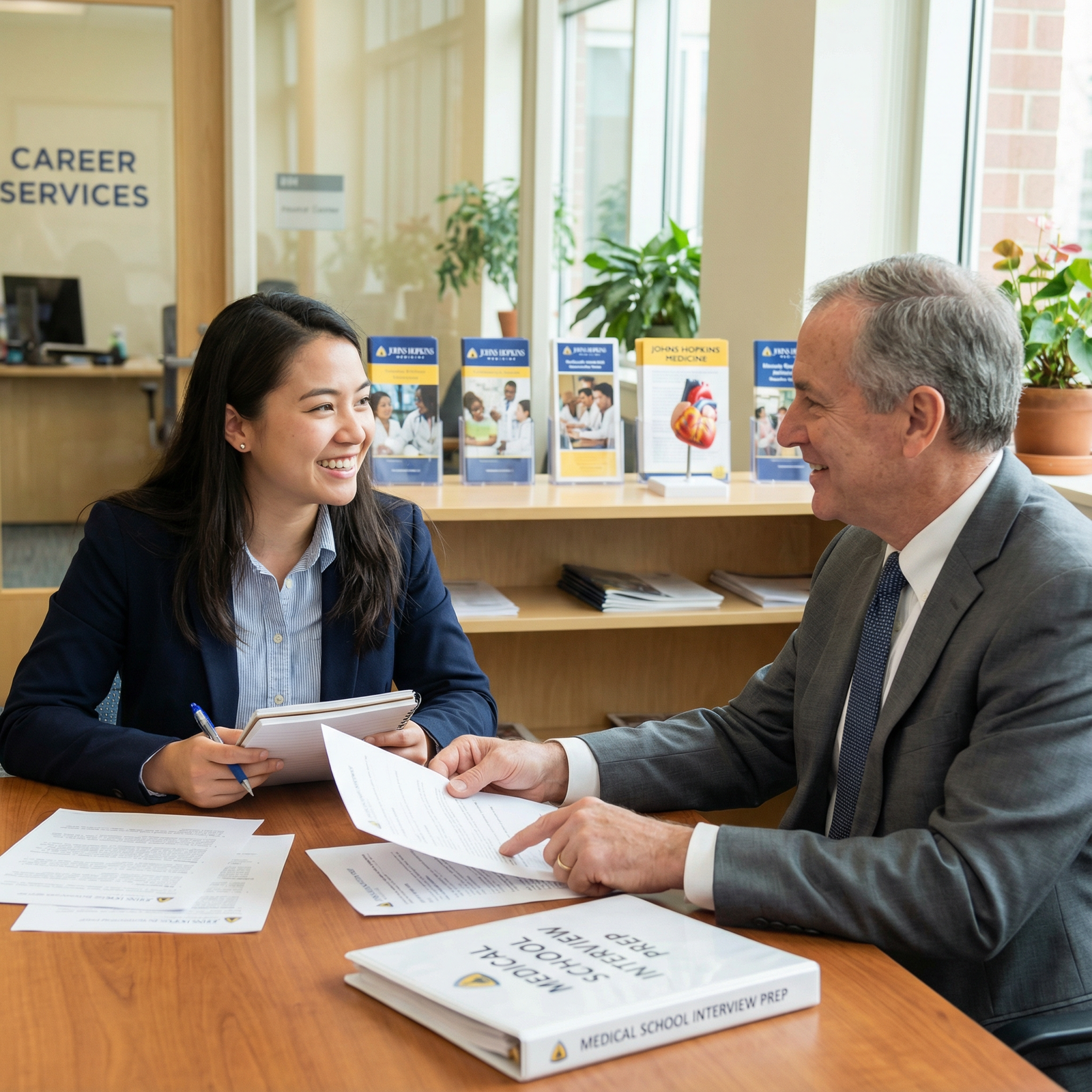
- Mock interviews: Practice with mentors, advisors, peers, or career services. Ask for specific feedback on clarity, body language, and content.
- Record yourself: Video or audio recordings help you identify filler words, speaking speed, and nonverbal habits.
- Question banks: Use common medical school or residency interview questions to generate practice responses.
- Simulate conditions: Dress as you would for the real interview and practice in a similar environment or setup (especially for virtual formats).
3. Should I always send a follow-up after an interview? What if there were multiple interviewers?
Yes. Sending a thank-you note is standard professional etiquette in healthcare careers.
- For multiple interviewers, send individualized emails when possible, even if they are brief.
- If you don’t have all email addresses, send a thank-you to the main contact (e.g., program coordinator or hiring manager) and ask them to extend your gratitude to the team.
4. When is it appropriate to ask about salary, benefits, or scheduling?
- For medical school and residency interviews, detailed compensation questions are generally not appropriate; information is often standardized and public.
- For employment positions, salary and benefit details usually arise:
- After you advance in the process
- When the employer raises the topic
- Or at the time of offer negotiation
If asked about your expectations early, you can respond with a range based on your research and indicate flexibility:
“Based on my research on similar roles in this area, I understand the typical range to be approximately X–Y, but I’m primarily focused on fit and growth opportunities.”
5. How can I stand out if my academic metrics or CV are not top tier?
You can meaningfully differentiate yourself through:
- Compelling storytelling: Share impactful experiences with reflection on what you learned and how you grew.
- Strong Communication Skills: Clear, confident, and empathetic interaction often leaves a stronger impression than numbers alone.
- Alignment with mission: Demonstrate a deep connection to the institution’s values and patient population.
- Professionalism and reliability: Many programs and employers value team players who are dependable, teachable, and kind over “perfect” metrics.
Mastering interviews is a critical step in building a successful and fulfilling path in healthcare. By integrating ethical conduct, thorough preparation, polished presentation, and thoughtful follow-up, you can elevate your interview game and leave a lasting, positive impression that moves you closer to your career goals.