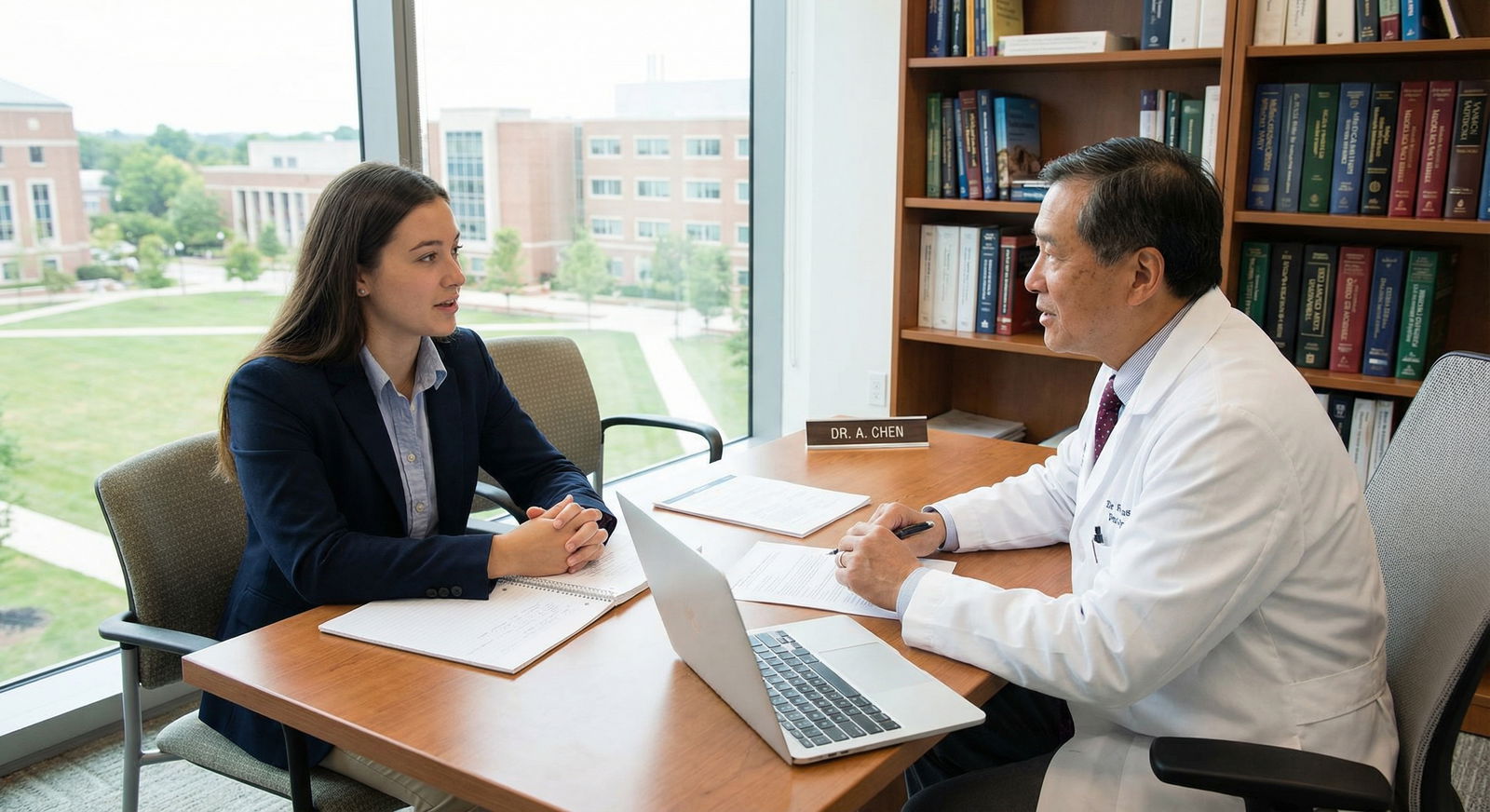
Mock Interviews: The Secret to Mastering Your Medical School Admissions Interview
Why Mock Interviews Matter in Medical School Admissions
The medical school admissions process is demanding long before you ever set foot in an interview room. You’ve spent years building your GPA, studying for the MCAT, accumulating clinical exposure, and crafting your personal statement. Yet, when it comes down to a final decision, the medical school admissions interview often carries as much weight as all of that combined.
Many applicants underestimate this step. They assume that because they can talk about their experiences with friends or write about them in a personal statement, they’ll naturally interview well. In reality, interviewing is a distinct skill set—one that requires conscious practice, structured feedback, and deliberate refinement.
That’s where mock interviews come in.
Mock interviews are one of the most powerful tools for:
- Interview preparation in a realistic, low-risk setting
- Confidence building through repeated exposure and improvement
- Strengthening communication skills under pressure
- Learning to present your authentic story with clarity and impact
Used strategically, mock interviews can transform a nervous, rambling applicant into a focused, confident future physician who can effectively communicate their motivations, values, and readiness for the profession.
This guide will walk you through what mock interviews are, how to set them up, concrete strategies for getting the most out of them, and how they fit into a larger plan for medical school admissions success.
Understanding Mock Interviews and Their Role in Interview Preparation
What Exactly Is a Mock Interview?
A mock interview is a structured practice session that imitates the format, tone, and expectations of a real medical school admissions interview. It can be tailored to:
- Traditional one-on-one interviews
- Panel interviews
- Multiple Mini Interviews (MMI)
- Group or hybrid interview formats
Mock interviews may be conducted:
- In person or virtually (via Zoom, Teams, etc.)
- With peers, advisors, physicians, or professional coaches
- Using standardized questions, school-specific questions, or MMI-style prompts
The goal is not to “perform” perfectly, but to practice under realistic conditions, identify weaknesses, and systematically refine both your content and delivery.
Core Goals of Mock Interviews
Mock interviews serve several crucial functions for premeds and medical school applicants:
1. Structured Skill Development
A mock interview helps you practice:
- Organizing your thoughts under time pressure
- Answering open-ended questions concisely and coherently
- Handling follow-up questions and redirection
- Navigating difficult or ethical scenarios thoughtfully
This is intentional interview preparation, not just casual conversation.
2. Familiarity with the Interview Experience
Fear often comes from uncertainty. Mock interviews help you get comfortable with:
- Common medical school interview questions
- The flow of conversation with an interviewer
- Expected professionalism and tone
- Timing of responses and transitions
By the time you sit for the real interview, the environment feels familiar—not foreign.
3. A Built-In Feedback System
One of the greatest advantages is actionable feedback on:
- Verbal communication: clarity, pacing, filler words, jargon
- Non-verbal communication: eye contact, posture, facial expressions
- Content: depth of reflection, alignment with your application, logical structure
- Overall impression: professionalism, maturity, integrity
High-quality feedback allows you to make targeted improvements rather than guessing what to fix.
4. Confidence Building Through Repetition
The more you practice responding to tough questions in a semi-stressful environment, the more your confidence grows. You learn:
- That you can recover from a bad answer
- How to manage anxiety and think clearly
- That you have more to offer than you may realize
For many applicants, confidence building is the single biggest benefit of mock interviews.

Preparing for Your Mock Interview: Laying the Foundation
High-yield mock interviews don’t happen by accident. Thoughtful preparation beforehand dramatically increases the value of each session.
Clarify Your Objectives First
Before scheduling a mock interview, identify what you want to get out of it. Ask yourself:
- Am I mainly worried about content (what I say) or delivery (how I say it)?
- Do I struggle more with open-ended questions (“Tell me about yourself”) or behavioral questions (“Tell me about a time…”)?
- Do I need practice for a traditional interview, MMI, or both?
- Do I want feedback on my professionalism, ethics reasoning, or emotional regulation under pressure?
Write down 3–5 specific goals, such as:
- “Give a structured, 2-minute answer to ‘Why medicine?’ without rambling.”
- “Use fewer filler words and maintain eye contact.”
- “Practice responding to ethical scenarios using a logical framework.”
Share these goals with your mock interviewer so they can tailor questions and feedback.
Choosing the Right Interviewers
Your interviewer significantly shapes the quality of your mock session. Consider a mix of:
Peers (Premeds or Other Applicants)
- Pros: Low pressure, easy to schedule, you can practice together
- Cons: Limited insight into admissions committees, may hesitate to give tough feedback
Peers are excellent for early-stage practice to build comfort.
Current Medical Students or Residents
- Pros: Recently navigated Medical School Admissions themselves, know current trends and questions
- Cons: Availability may be limited; feedback quality varies
They’re ideal for both content and strategy—what worked for them, what schools actually care about, and common pitfalls.
Faculty, Physicians, or Advisors
- Pros: Often have formal or informal admissions experience, strong professional perspective
- Cons: May feel more intimidating; need clear guidance on what feedback you want
They’re especially valuable for refining professionalism, ethics, and maturity of responses.
Professional Mock Interview Services
- Pros: Structured approach, expert feedback, often provide recordings and written evaluations
- Cons: Cost; quality varies between services
If you choose this route, look specifically for services that focus on Medical School Admissions, not generic job interviews.
Ideally, do at least one mock interview with someone who does not know you well; this reproduces the real admissions experience more closely.
Prepare Your Materials and Your Story
Before any mock interview, gather:
- Your AMCAS/AACOMAS application: You should know every activity on it well.
- Your personal statement: Be ready to expand on its key themes and stories.
- Secondary essays (for school-specific mocks): Particularly “Why our school?” and major adversity/ethics essays.
- Updated CV or resume: For reference if asked about non-AMCAS experiences.
Then, reflect on your core narrative:
- Why medicine? Why now?
- What core values guide you (empathy, curiosity, integrity, resilience)?
- What 3–5 key experiences best illustrate those values and your readiness for medical school?
You don’t need memorized scripts, but you do need practiced frameworks for your most common answers.
Running an Effective Mock Interview: Structure, Content, and Feedback
Simulate the Real Conditions as Closely as Possible
Aim to make your mock interview feel just like the real thing:
- Dress professionally: This isn’t just about appearance; it shifts your mindset.
- Pick the right setting:
- In-person: quiet room, table, chairs facing each other.
- Virtual: neutral background, good lighting, reliable internet, no distractions.
- Stay in character: No breaking to joke or explain your answers mid-interview. Save discussion for after.
Treat it like game day. The more realistic it feels, the more helpful it is for confidence building and anxiety management.
Use a Structured Format for Maximum Benefit
A high-yield mock interview typically includes:
1. Brief Orientation (2–3 minutes)
- Confirm interview format (traditional / MMI / panel-style).
- Share your goals and any particular question types you want to emphasize.
2. Core Traditional Questions (15–25 minutes)
These often include:
- “Tell me about yourself.”
- “Why medicine?”
- “Why our school?” (for school-specific mocks)
- “What are your greatest strengths and weaknesses?”
- “Tell me about a time you faced a significant challenge or failure.”
- “How do you handle stress and maintain work–life balance?”
Your interviewer should:
- Ask follow-ups to push depth of reflection.
- Vary question difficulty to mimic a realistic interview.
3. Behavioral Questions Using the STAR Method
Many medical schools rely heavily on behavioral interviewing to assess how you think, behave, and grow. Common examples:
- “Tell me about a time you worked with a difficult teammate.”
- “Describe a situation where you made a mistake. What did you learn?”
- “Give an example of when you advocated for someone else.”
Practice answering with STAR:
- Situation – Set the context
- Task – Your role or responsibility
- Action – What you did specifically
- Result – What happened, what you learned
Your interviewer should assess whether your answers are:
- Specific and concrete
- Focused on your actions (not just the team’s)
- Reflective and growth-oriented
4. Ethical or Clinical Scenarios
Especially for schools that emphasize MMI or situational judgment:
- “What would you do if a patient refuses a life-saving treatment?”
- “How would you respond if you observed a colleague behaving unprofessionally?”
- “How do you balance limited resources with patient needs?”
Here, focus on:
- Acknowledging complexity and uncertainty
- Identifying stakeholders (patient, family, team, institution)
- Using principles (autonomy, beneficence, non-maleficence, justice)
- Explaining your reasoning, not just your conclusion
5. Opportunity for Questions and Closing Statement
Practice:
- Asking thoughtful, school-appropriate questions (when appropriate to the mock’s goal)
- Delivering a concise, memorable closing (1–2 minutes) that reinforces:
- Your motivation
- Your fit for medicine and this school
- Your gratitude for the opportunity
Having a practiced closing statement can be a major asset in the real interview.
Debriefing and Feedback: Where the Real Growth Happens
The debrief is the most valuable part of the mock interview and should be structured, honest, and specific.
Ask your interviewer to comment on:
1. Communication Skills
- Did you speak clearly and at an appropriate pace?
- Any distracting habits (fidgeting, filler words, monotone voice)?
- Was your body language open and confident?
2. Content and Depth
- Did your answers go beyond generic clichés?
- Did you provide concrete examples and self-reflection?
- Did your stories align with your application and personal statement?
3. Professionalism and Maturity
- Did you handle difficult questions with composure?
- Did you demonstrate insight into the realities and challenges of medicine?
- Did your answers suggest emotional intelligence and empathy?
4. Overall Impression
- Would they feel comfortable having you as a future colleague?
- Did you come across as genuine, teachable, and resilient?
Request specific examples whenever possible:
- Instead of: “You rambled a bit.”
- Ask: “Can you point to a question where I lost focus and how you’d tighten it up?”
Record the session (with permission) so you can:
- Rewatch your body language and delivery
- Pause and rewrite weaker answers
- Track improvement across multiple mock interviews
Then, immediately after the session, write a quick reflection:
- 2–3 things you did well
- 2–3 things to improve
- 1–2 concrete action steps before your next mock
This iterative process turns feedback into measurable growth.
Why Mock Interviews Are So Effective: Beyond Practice
A Safe Space to Make and Learn From Mistakes
The real interview is not where you want to discover that you:
- Freeze when asked about failures
- Over-explain every answer
- Become defensive under mild challenge
Mock interviews give you permission to:
- Try out different ways of structuring answers
- Experiment with how personal or vulnerable to be
- Learn how to recover gracefully from a poor response
Mistakes made in practice sessions are valuable data, not failures.
Building Psychological Readiness and Resilience
Interview anxiety is normal, especially when the outcome feels life-defining. Repeated exposure through mock interviews helps to:
- Desensitize you to the stress of being evaluated
- Prove to yourself that you can think clearly under mild pressure
- Develop calming routines (breathing, pausing, grounding techniques)
Over time, the interview becomes something you know how to do, not something mysterious and terrifying.
Strengthening Lifelong Communication Skills
The same skills you build through mock medical school admissions interviews will serve you throughout your career:
- Presenting complicated ideas clearly and concisely
- Listening actively and responding thoughtfully
- Navigating emotionally charged conversations
- Advocating for yourself and your patients
You’re not just preparing for one day—you’re building professional communication skills essential for clinical practice.
Hidden Benefit: Networking and Mentorship
High-quality mock interviews, especially with physicians, faculty, or residents, can organically open doors:
- Ongoing mentorship or shadowing opportunities
- Insight into particular schools and their cultures
- Letters of recommendation in some circumstances (over time, not from a single session)
Approach mock interviews as both skill-building and relationship-building opportunities.

Real-World Examples: How Mock Interviews Change Outcomes
Consider two composite examples based on common applicant experiences:
Emma: Turning a Strong Story into a Strong Interview
Emma had high stats and extensive volunteer work but tended to:
- Give long, unfocused answers
- Downplay her accomplishments
- Struggle to tie her stories back to medicine
After five structured mock interviews with a medical student mentor and a pre-health advisor:
- She developed a clear 90–120 second narrative for “Tell me about yourself” and “Why medicine?”
- She identified three key experiences that anchored most of her behavioral answers.
- She learned to end answers with a brief reflection and link to her future as a physician.
By her actual interviews, she was confident, concise, and authentic. She later reported that several interviewers specifically commented on her clarity and maturity.
Tom: Managing Anxiety and Finding His Voice
Tom knew his application well but struggled with performance anxiety. In early mocks, he:
- Spoke too fast
- Blankly stared when surprised by questions
- Left sessions feeling discouraged
Through multiple mock interviews with different interviewers:
- He practiced pausing and taking a breath before answering.
- He developed go-to frameworks for ethical questions, which reduced his panic when asked something unexpected.
- He learned that a moment of silence to think was acceptable—and often beneficial.
On interview day, he still felt nervous, but he knew exactly how to manage it. He left his interviews feeling that he had genuinely represented himself, and he ultimately earned multiple acceptances.
Frequently Asked Questions (FAQ) About Mock Interviews for Medical School Admissions
1. How many mock interviews should I do before my actual medical school interview?
Aim for at least 3–5 high-quality mock interviews, spaced over time so you can apply feedback between them. A possible structure:
- 1–2 early mocks to identify major weaknesses and build baseline confidence
- 1–2 mid-cycle mocks focusing on refining content and delivery
- 1 final mock close to your first real interview, simulating the exact format and timing
More is not always better; a few well-structured, feedback-rich sessions are more valuable than 10 rushed or casual ones.
2. Can I still benefit from mock interviews if I’m practicing alone?
Yes—but differently. Solo practice is great for:
- Drafting and timing responses to common questions
- Practicing speaking out loud (not just in your head)
- Recording yourself on video to review body language and pacing
However, solo practice cannot replace external feedback. Try to supplement solo work with at least a couple of sessions involving another person—peer, mentor, advisor, or professional coach—who can observe and critique you.
3. How can I get better at behavioral and ethical questions?
For behavioral questions, use the STAR method consistently and:
- Make a list of 8–10 experiences (clinical, academic, extracurricular, personal challenges).
- For each, outline the Situation, Task, Action, and Result.
- Practice retelling each story verbally in 60–90 seconds.
For ethical questions:
- Learn core bioethical principles (autonomy, beneficence, non-maleficence, justice).
- Practice a simple framework:
- Identify the dilemma and stakeholders.
- Explain the ethical principles involved.
- Consider possible options and their consequences.
- State your approach and reasoning.
Use mock interviews to test and refine these frameworks under time pressure.
4. What’s the best way to handle critical or negative feedback from mock interviewers?
Treat feedback as a clinical skill-building tool, not a judgment of your worth:
- Listen without interrupting or defending yourself.
- Ask for concrete examples (“Can you show me where I seemed vague?”).
- Write down the feedback immediately after the session.
- Turn each criticism into an action step (“Practice 3 concise versions of my ‘Why medicine?’ answer”).
If feedback feels overly harsh or unclear, seek a second opinion—but don’t ignore consistent patterns noted by multiple interviewers.
5. How can I find people to conduct mock interviews with me?
Consider multiple sources:
- Pre-health advising offices at your college or university
- Pre-med or pre-health clubs, which often run interview workshops
- Current medical students or alumni from your institution or target schools
- Mentors or physicians you’ve shadowed or worked with
- Online communities and forums for premeds that organize mock interview exchanges
- Professional mock interview services that specialize in Medical School Admissions
When reaching out, be specific: share your timeline, target schools (if relevant), and what type of interview you’re preparing for (traditional, MMI, etc.).
Mock interviews are not just “extra practice”—they are one of the most effective ways to sharpen your communication skills, reduce anxiety, and present the strongest, most authentic version of yourself on interview day. By approaching them strategically and incorporating consistent feedback, you position yourself to walk into your medical school admissions interview with genuine confidence and the skill to back it up.