
Turning Weaknesses into Strengths in Medical School Interviews
Medical School Interviews are often the most anxiety-provoking part of the application process. You’ve spent years building your GPA, preparing for the MCAT, gaining clinical and volunteer experience—and yet a 30–60 minute conversation can feel like it determines everything.
The toughest moments often come when interviewers shift from your accomplishments to your vulnerabilities: your weaknesses, failures, mistakes, and struggles. Many applicants fear these questions will “expose” them and sink their chances.
In reality, well-handled “weakness” questions can become some of the strongest parts of your interview. They allow you to demonstrate self-awareness, maturity, resilience, and your readiness for a demanding Career in Medicine. Schools are not looking for perfect people; they are looking for students who know themselves and are committed to continuous growth.
This guide will walk you through how to prepare for and answer tough weakness-related questions in Medical School Interviews in a way that highlights your Interview Preparation, Skills Development, and personal growth.
Why Interviewers Ask About Weaknesses and Failures
Before you can answer these questions well, it helps to understand what interviewers are actually trying to assess.
What Programs Want to See
When they ask about weaknesses, failures, or mistakes, admissions committees are usually looking for:
Self-awareness
Do you understand your own limitations? Can you reflect honestly on your behavior, decisions, and performance?Integrity and honesty
Are you willing to acknowledge imperfection without being defensive, evasive, or blaming others?Growth mindset and Skills Development
Do you treat challenges as opportunities to learn? Have you taken specific, concrete steps to improve?Emotional maturity
Can you talk about difficult experiences calmly, thoughtfully, and with perspective?Resilience and coping skills
Medicine is demanding. How do you respond to setbacks, stress, and criticism?Insight into your fit for a Career in Medicine
Have your difficulties helped clarify why you want to be a physician and how you plan to show up for patients and colleagues?
Interviewers are not expecting you to be flawless. In fact, claiming that you don’t really have weaknesses, or giving a non-answer (“I care too much”) is often more damaging than admitting a real shortcoming and showing growth.
Common Weakness-Focused Medical School Interview Questions
Weakness questions can be phrased in many ways, but most fall into a few broad categories.
Frequently Asked Weakness and Challenge Questions
“What is your greatest weakness?”
- Variations:
- “What is an area you are currently working to improve?”
- “If I asked your supervisor/mentor about an area of growth, what would they say?”
- Variations:
“Can you describe a time when you failed or faced a significant challenge?”
- Variations:
- “Tell me about a time you didn’t meet expectations.”
- “Tell me about a setback and how you handled it.”
- Variations:
“How do you handle criticism or negative feedback?”
- Variations:
- “Tell me about a piece of constructive feedback you received and what you did about it.”
- Variations:
“Tell me about a time you made a mistake.”
- Variations:
- “Describe a situation where you wish you had handled something differently.”
- Variations:
“How do you cope with stress or pressure?”
- Variations:
- “Medical school is stressful. How do you manage stress now, and how will you manage it in the future?”
- Variations:
Each question gives you a chance to discuss a vulnerability, but more importantly, they reveal how you think, how you learn, and how you’re preparing yourself for a long-term Career in Medicine.
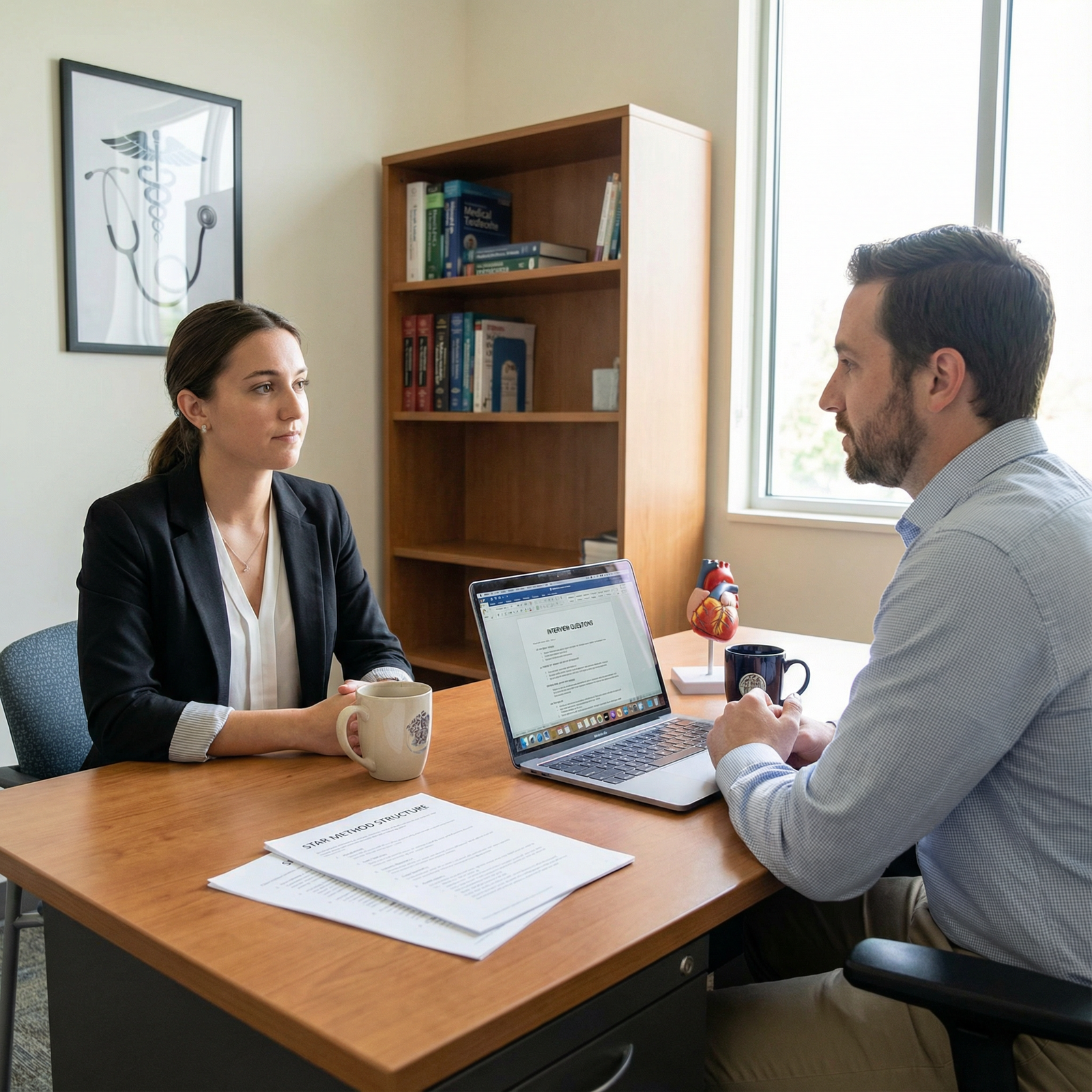
How to Choose the Right Weakness to Discuss
1. Be Honest, But Strategic
You want a weakness that is:
- Genuine – something you have truly struggled with
- Non-fatal – not a core competency so essential that it would seriously endanger patient care (e.g., “I struggle to be honest with people,” “I don’t work well in teams” without evidence of major improvement)
- Specific – concrete and situational, not vague (“I’m bad at everything”)
- Improving – an area where you’ve already taken steps toward Skills Development and can show progress
Examples of reasonable weaknesses:
- Difficulty with time management, especially when juggling multiple commitments
- Tendency to overcommit or have trouble saying “no”
- Initial discomfort with public speaking or speaking up in groups
- Being overly self-critical
- Tendency to avoid asking for help and try to do too much alone
- Struggles with assertiveness or setting boundaries
2. Avoid These Common Pitfalls
Fake weaknesses disguised as strengths
- “I’m a perfectionist; I just care too much.”
- “I work too hard.”
Interviewers have heard these hundreds of times. Unless you have a very specific story illustrating real negative consequences and growth, avoid them.
Weaknesses that raise red flags for medicine
- Dishonesty
- Lack of empathy
- Chronic unreliability
- Inability to work with others
These can be mentioned only if they are in the distant past, well-resolved, and accompanied by clear, substantial change.
Overly personal or unrelated weaknesses
- Relationship drama, family conflicts, or private details that don’t connect to your professional development are usually not necessary to disclose.
3. Align with a Narrative of Growth
The best weaknesses to share are those that allow you to tell a story of:
“Here’s something I struggled with → here’s how it impacted me → here’s what I did to improve → here’s how I’m different now → here’s how this will make me a better medical student and physician.”
If you can’t articulate that full arc, choose a different weakness.
The STAR Method: Structuring Strong, Coherent Answers
One of the most effective Interview Preparation tools is the STAR method:
- S – Situation
Set the context. Where were you? What was happening? - T – Task
What were you responsible for? What was expected? - A – Action
What did you do—especially after recognizing the weakness or problem? - R – Result
What happened as a result? What did you learn and how have you changed?
Example: Time Management as a Weakness
Question: “What is your greatest weakness?”
Situation:
“During my second year of undergrad, I was balancing a heavy course load, a part-time job, leadership in a premed organization, and weekly volunteer work at a clinic.”
Task:
“I wanted to excel academically while still maintaining those commitments, but I began noticing I was constantly rushing, turning in assignments at the last minute, and feeling overwhelmed.”
Action:
“I realized my time management strategies weren’t sufficient. I started by tracking how I used my time for two weeks, then prioritized my activities. I cut down on one extracurricular, implemented a digital calendar with blocked-out study periods, and set earlier personal deadlines for major assignments. I also met with an academic advisor who helped me develop a realistic weekly schedule.”
Result:
“Over the next semester, my grades improved, I was meeting deadlines without last-minute stress, and I felt less overwhelmed. More importantly, I learned how to realistically assess my capacity and protect time for rest—skills I know will be critical in medical school and throughout my Career in Medicine.”
Why This Works
This answer:
- Admits a real, common weakness
- Avoids exaggeration or self-pity
- Describes concrete steps taken (Skills Development)
- Ends with clear, positive changes and relevance to medicine
You can apply the STAR structure to almost any weakness, failure, or stress-related question.
Showing Growth: Turning Weakness into a Strength
Simply naming a weakness is not enough. The core of your answer should focus on growth.
1. Emphasize What You’ve Learned
After describing the Situation, Task, and Action, clearly answer:
- What did this teach you about yourself?
- How has it changed your habits or mindset?
- What would you do differently if faced with a similar situation now?
Example closing statement:
“Overall, this experience taught me the importance of setting limits and being intentional with my time. I’ve carried that forward by regularly reviewing my commitments and making sure I can show up fully for each one—a mindset that I believe will help me sustain a long, demanding Career in Medicine.”
2. Connect to Future Performance in Medical School
Always link your growth back to how it will make you a better medical student and future physician:
- Better teamwork and communication
- Stronger professionalism and reliability
- More effective self-care and longevity in training
- Improved empathy and understanding of others’ struggles
For example:
“Learning to ask for help earlier has made me more comfortable collaborating with peers and seeking mentorship. In medicine, where patient care depends on teamwork and recognizing one’s limits, this has been a critical shift for me.”
3. Avoid Overclaiming
Don’t say, “So now it’s no longer a weakness at all.”
Instead, acknowledge that growth is ongoing:
“It’s still something I monitor, but I now have systems in place that help me manage it much more effectively.”
This shows humility and realism—traits interviewers value.
Talking About Criticism, Feedback, and Mistakes
“How do you handle criticism?” and “Tell me about a mistake” are essentially questions about teachable moments.
Key Principles for Answering Criticism Questions
Own the issue without blaming
Avoid focusing on how others were at fault. Highlight your responsibility and response.Be specific about the feedback
Vague “I was told to improve” answers sound generic. Include what was actually said and why it mattered.Show how you implemented the feedback
What concrete changes did you make afterward?Demonstrate ongoing reflection
Are you still using what you learned? Did this change how you approach similar situations?
Example: Handling Criticism in Research
Question: “Tell me about a time you received constructive criticism.”
Answer:
“During a summer research project, I was responsible for data entry and preliminary analysis. In one meeting, my supervisor pointed out that I had misapplied a statistical test, which affected some of our early results. Initially, I felt embarrassed and defensive because I had worked hard on the project.
However, after reflecting, I realized the criticism was valid and that I had rushed through the analysis without double-checking my work. I asked my supervisor to walk me through the correct method and then enrolled in a short online statistics course to strengthen my understanding. I also created a checklist to follow before presenting any data.
As a result, our subsequent analyses were more accurate, and I became someone my lab mates would consult with on statistics. That experience taught me to view criticism as an opportunity to improve rather than a personal attack—an attitude I know is essential in medicine, where feedback is constant and directly impacts patient care.”
This answer shows humility, concrete Skills Development, and a growth mindset—all crucial qualities for a Career in Medicine.
Coping with Stress and Pressure: Demonstrating Resilience
Medical training is inherently stressful. Interviewers know this and want to ensure you have healthy, sustainable coping strategies.
1. Be Honest About Stress
Avoid claiming that you “don’t really get stressed.” Instead:
- Acknowledge that you do experience stress
- Share what it feels like for you (e.g., trouble focusing, irritability, fatigue)
- Describe a specific high-pressure situation
2. Describe Healthy Coping Strategies
Examples of effective coping mechanisms include:
- Structured time management to reduce last-minute crises
- Exercise (running, lifting, yoga, team sports)
- Mindfulness or meditation
- Maintaining social support (friends, family, mentors)
- Hobbies and creative outlets (music, art, reading)
- Setting boundaries (learning to say no, protecting rest time)
Avoid centering strategies that may sound unhealthy or unreliable (e.g., “I just stay up all night and push through”).
3. Example: Stress in a Clinical Environment
Question: “How do you cope with stress or pressure?”
Answer:
“In my clinical volunteering in the emergency department, the fast-paced environment and emotional intensity could be overwhelming at first. I noticed that after particularly difficult shifts, I would replay encounters in my head and have trouble falling asleep.
I started by acknowledging that I needed better strategies. I implemented a brief post-shift routine: I would take a 10-minute walk outside before going home, practice a short breathing exercise, and then jot down a few reflections to process the day. I also made a point of debriefing challenging experiences with a more senior volunteer or nurse when appropriate.
Over time, I found that I was able to be more present with patients during my shifts and recover more effectively afterward. These habits have helped me manage stress in other areas, such as during MCAT preparation and busy exam weeks. I know that maintaining these coping strategies will be essential for sustaining my well-being through medical school and beyond.”
This answer shows:
- Real stress
- Intentional response and Skills Development
- Link to long-term resilience in a Career in Medicine

Putting It All Together: Practical Interview Preparation Tips
To answer tough questions confidently, you need more than theory—you need practice.
1. Reflect Deeply Before the Interview
Set aside time to journal on questions like:
- What are 2–3 genuine weaknesses I’ve worked on?
- What is one meaningful failure or setback I’ve faced?
- When did I receive criticism that changed my behavior?
- How do I actually respond to stress, and what helps me cope?
For each, outline your answers using the STAR method. This reflection itself is meaningful Personal Growth and will strengthen your Interview Preparation.
2. Practice Out Loud
- Conduct mock interviews with friends, advisors, or mentors.
- Record yourself answering weakness questions and watch the playback.
- Focus on sounding calm, reflective, and matter-of-fact rather than apologetic or defensive.
Pay attention to:
- Overusing filler words (“um,” “like”)
- Rambling or getting lost in unnecessary detail
- Minimizing your growth or, conversely, over-dramatizing the weakness
3. Keep Answers Balanced and Professional
When answering:
- Be specific but not overly confessional
- Be honest but focused on improvement
- Be concise while still telling a complete story (1.5–3 minutes is usually ideal)
Remember: these questions are not traps. Used well, they are a powerful way to highlight your maturity, resilience, and readiness for a demanding Career in Medicine.
FAQ: Weaknesses and Tough Questions in Medical School Interviews
Q1: How do I choose the “right” weakness to discuss in my Medical School Interviews?
Choose a weakness that is:
- Authentic and meaningful in your life
- Not a core, unaddressed deficit in professionalism or ethics
- Something you’ve actively worked to improve
- Connected to your Personal Growth and Skills Development
Good candidates are time management, difficulty saying no, discomfort with public speaking, or being overly self-critical—provided you show clear progress.
Q2: What if I feel like I don’t have any “big” failures to talk about?
Your example doesn’t have to be dramatic. It can be:
- A disappointing grade or exam performance
- A leadership role that didn’t go as planned
- A conflict on a team project
- A missed deadline or miscommunication
What matters is not the size of the failure, but the depth of your reflection and the concrete steps you took afterward. Admissions committees care more about your process than the event itself.
Q3: How can I practice answering tough weakness questions effectively?
- Write out STAR-style bullet points for 2–3 weaknesses and 1–2 failures.
- Do timed practice answers (1.5–3 minutes) out loud.
- Use mock interviews with peers, advisors, or professional coaching services.
- Record yourself and evaluate clarity, structure, and tone.
- Ask for feedback from someone who knows you well and can tell you if you sound authentic.
Consistent practice will make your interviews feel more like a conversation and less like an interrogation.
Q4: How vulnerable should I be when discussing weaknesses or stress?
Aim for professional vulnerability:
- Be honest about real challenges and emotions
- Maintain appropriate boundaries—avoid overly graphic or deeply personal details that aren’t necessary
- Focus on what you learned, how you grew, and how the experience prepared you for medicine
Vulnerability that highlights insight and resilience tends to resonate very well with interviewers.
Q5: Can discussing weaknesses or past struggles hurt my chances of admission?
It can, but usually only if:
- The weakness is a serious red flag (e.g., ongoing dishonesty, disrespect for patients)
- You show no evidence of insight or effort to improve
- You blame others and avoid responsibility
Handled well, these questions usually help you. Thoughtful, structured answers show maturity, authenticity, and a commitment to continuous improvement—the same qualities that make for successful medical students and compassionate physicians.
By reframing tough questions as opportunities to showcase your Personal Growth and Skills Development, you can turn moments of vulnerability into some of the most compelling parts of your Medical School Interviews. With deliberate reflection and targeted Interview Preparation, you’ll be ready to demonstrate exactly why you’re prepared for the challenges and responsibilities of a Career in Medicine.