Introduction: Why Medical School Interview Preparation Matters
Earning a medical school interview means admissions committees already see you as academically capable of succeeding. Your GPA, MCAT, and activities have done their job. Now, the focus shifts: who are you as a future physician, teammate, and communicator?
The interview is your chance to show the person behind the numbers—your judgment, empathy, resilience, and motivation for a healthcare career. For many schools, especially in competitive Medical School admissions, the interview can significantly influence final decisions, scholarships, and waitlist movement.
This guide expands on expert strategies to help you:
- Understand different interview formats (traditional and MMI)
- Build a focused, efficient interview preparation plan
- Communicate your story clearly and authentically
- Avoid common pitfalls that hurt otherwise strong candidates
- Leave a professional impression before, during, and after interview day
Whether you are early in your Education journey or actively in the interview cycle, these Admissions Tips will help you approach interview day with more clarity and confidence.
Understanding Medical School Interview Formats
Before you can prepare well, you need to know what you’re preparing for. Most Medical School interviews fall into two main categories, though schools may blend or adapt these formats.
Traditional One-on-One (or Panel) Interviews
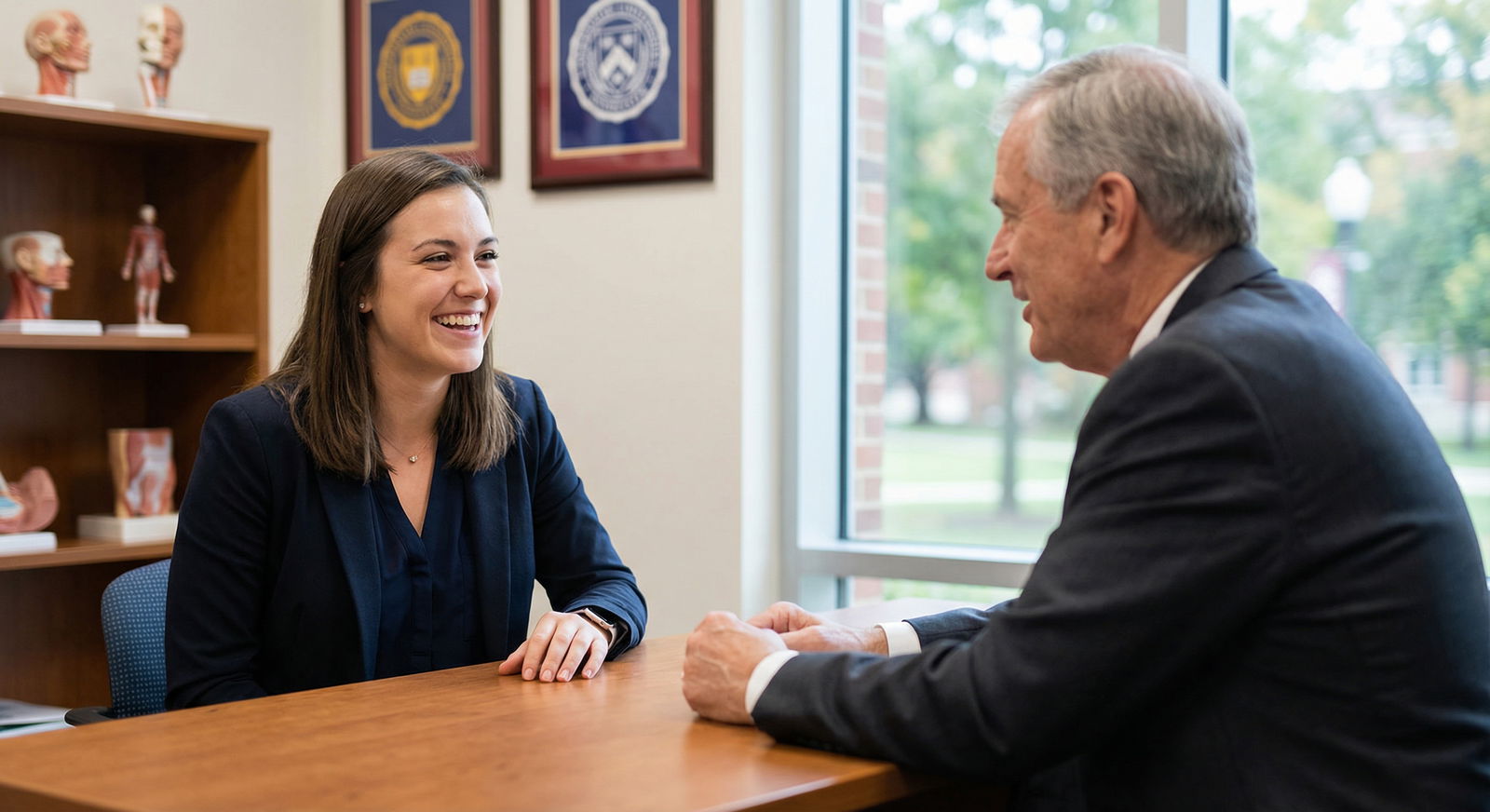
In traditional interviews, you meet with one or more interviewers—often faculty, clinicians, admissions committee members, or occasionally senior medical students.
What to expect:
- Length: typically 25–60 minutes per interview
- Style: conversational but structured
- Focus areas:
- Your path to medicine and motivation for a healthcare career
- Key activities: clinical exposure, research, leadership, service
- Personal qualities: resilience, teamwork, integrity, empathy
- Understanding of current issues in healthcare and medical education
- Format variations:
- Open-file: interviewer sees your full application beforehand
- Closed-file: interviewer knows little or nothing about you beyond your name and maybe your school
How this affects your preparation:
- Open-file: be prepared to discuss specific details you’ve written (dates, roles, outcomes).
- Closed-file: practice giving a coherent overview of your story, experiences, and goals from scratch.
Multiple Mini Interviews (MMI)
MMIs are designed to evaluate your skills and values rather than just your rehearsed answers.
What MMIs typically look like:
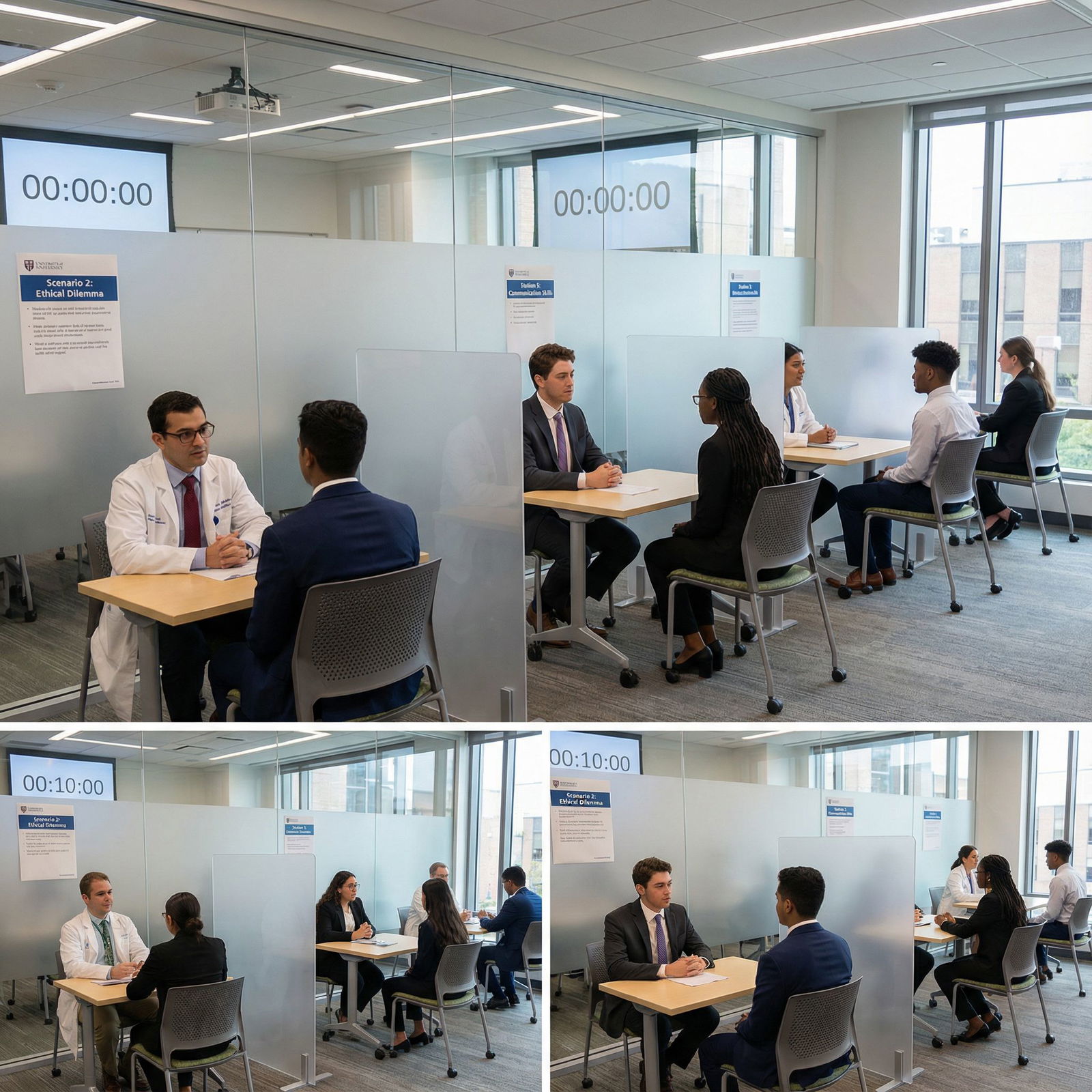
- 6–10 short “stations,” often 6–10 minutes each
- Rotating between rooms or virtual breakout rooms
- New prompt or scenario at each station
- Prompts may include:
- Ethical dilemmas (e.g., confidentiality, allocation of limited resources)
- Communication tasks (e.g., explaining a concept to a layperson)
- Teamwork or collaboration activities
- Situational judgment (e.g., handling a conflict, responding to unprofessional behavior)
- Policy or healthcare system questions
Core competencies assessed:
- Ethical reasoning and professionalism
- Communication and active listening
- Cultural humility and empathy
- Adaptability under time pressure
- Reflection and self-awareness
Regardless of format, the underlying question is the same:
“Would I trust this person to care for my patients and work on my team in a few years?”
Foundational Pre-Interview Preparation
Successful interview preparation starts well before you log into Zoom or walk onto campus. Focus on three pillars: your application, the school, and the healthcare landscape.
1. Know Your Application Inside and Out
Anything you included in your Medical School application is fair game. Interviewers often build questions directly from your submitted materials.
Review your personal statement
Be able to discuss, in depth:
- The central theme or message of your personal statement
- The turning points that pushed you toward medicine
- What specific experiences confirmed your desire for a healthcare career
- Any particular patient encounters or shadowing experiences you highlighted
Ask yourself:
- Do my interview answers align with my statement, or do they sound like a different person?
- Can I add deeper reflections beyond what I wrote originally?
Revisit your activities and experiences
Look over everything you listed: clinical work, research, leadership, volunteering, teaching, and non-medical jobs.
For each major activity, prepare:
- A concise description of what you did
- Why you chose it and what you learned
- A few specific stories that demonstrate growth, challenges, or impact
The STAR method (Situation, Task, Action, Result) is especially useful here:
- Situation – what was going on?
- Task – what was your role or responsibility?
- Action – what did you do?
- Result – what happened, and what did you learn?
Example (clinical volunteering):
- Situation: Busy urban clinic with high no-show rates.
- Task: Improve appointment adherence.
- Action: Created reminder system with multilingual scripts and follow-up calls.
- Result: Reduced no-show rate by 15% over 3 months and gained insight into logistical barriers to care.
2. Research Each Medical School Thoroughly
Interviewers can easily tell when you’ve done your homework versus when you’re recycling generic answers.
What to look for
- Mission and values
- Community-oriented? Research-intensive? Primary care–focused? Social justice driven?
- Curriculum structure
- Systems-based vs. discipline-based
- Organ-based vs. traditional pre-clinical/clinical divide
- Early clinical exposure? Longitudinal integrated clerkships?
- Unique programs
- Dual degrees (MD/MPH, MD/MBA, MD/PhD)
- Global health or rural medicine tracks
- Longitudinal primary care experiences
- Student support and wellness programs
- Mentorship structures, advising, mental health resources
- Location and community
- Patient population served
- Opportunities for service, advocacy, or research aligned with your interests
How to use your research in answers
Instead of saying:
“I like that your school offers research and community service.”
Be specific:
“I’m particularly drawn to your community partnership with the free clinic downtown and the required longitudinal primary care experience. My long-term goal is to work in underserved urban communities, so the chance to engage in sustained patient relationships from early in my Education is very appealing.”
3. Stay Informed About Healthcare and Medical Issues
You don’t need to sound like a policy expert, but you should be conversant about:
- Major themes in healthcare:
- Health disparities and social determinants of health
- Access to care and insurance coverage
- Primary care shortages and burnout
- Telemedicine and digital health
- Basic health policy context in your country/region
- Ethical issues in medicine:
- Informed consent and shared decision-making
- Confidentiality, especially with electronic records
- Resource allocation in crises (e.g., ICU beds, ventilators)
- Physician-assisted dying (where relevant)
- Bias and discrimination in healthcare
Strategies to stay updated:
- Read reputable medical news sources (e.g., NEJM Perspective, JAMA, major health sections in established newspapers).
- Listen to healthcare podcasts for premeds and residents.
- Discuss articles or cases with mentors or peers to deepen your understanding.
Smart Practice Strategies: From Mock Interviews to Mastery
You can’t script your interview, but you can absolutely train your mindset and communication skills.
4. Use Mock Interviews Strategically
Mock interviews are invaluable—if done thoughtfully.
Who can help you with mock interviews?
- Premed advisors or career services at your university
- Mentors (physicians, residents, or senior medical students)
- Friends or peers familiar with the process
- Professional coaching services (if accessible and desired)
How to structure mock interviews
- Practice both traditional and MMI-style questions when relevant
- Record yourself (video if possible) to review:
- Eye contact and body language
- Filler words (“um,” “like,” “you know”)
- Rambling vs. concise answers
- Ask your mock interviewer to comment specifically on:
- Clarity and organization of your responses
- Authenticity and warmth
- Professionalism and maturity
After each mock session, choose 1–2 concrete things to improve next time (e.g., shorter responses, clearer structure, fewer tangents).
5. Master Common Questions—and the Thought Behind Them
You will not be able to predict every question, but many Medical School interview questions fall into predictable categories.
Motivation and fit
- “Why do you want to become a doctor?”
- “Why this medical school?”
- “What specialty are you considering and why?” (It’s okay to be undecided—focus on what interests you now.)
Personal qualities and resilience
- “Tell me about a time you failed or made a mistake.”
- “Describe a significant challenge and how you handled it.”
- “How do you cope with stress and maintain balance?”
Teamwork, ethics, and professionalism
- “Tell me about a time you had a conflict on a team.”
- “Have you ever witnessed unprofessional behavior? How did you respond?”
- “How would you handle a situation where you disagreed with a supervisor’s decision?”
Healthcare and societal questions
- “What do you see as the biggest problem in healthcare today?”
- “How would you address health disparities in your future practice?”
- “What does cultural competence mean to you?”
For each category, focus on:
- Your reasoning process, not just your conclusion
- What you learned and how you grew
- How this relates to your future role as a physician
6. Prepare Strong Questions for Your Interviewers
Asking thoughtful questions serves two purposes:
- It helps you assess whether the school is a good fit for you.
- It demonstrates genuine interest and maturity.
Avoid questions easily answered on the website (e.g., “How long is your curriculum?”). Instead, consider:
- “How does the school support students who are exploring multiple specialties?”
- “Can you tell me about how students are involved in quality improvement or patient safety initiatives?”
- “How does your program support student mental health and work–life balance?”
- “What characteristics do you see in students who thrive here?”
Write down a short list before each interview, then choose what feels most natural based on the conversation.
Performing Well on Interview Day
Your mindset and professionalism on the actual day matter as much as the content of your answers.
7. Professionalism and First Impressions
Dress code and appearance
- Aim for business professional:
- Well-fitted suit (skirt or pants) or blazer with dress pants/skirt
- Neutral or conservative colors
- Closed-toe shoes
- Keep accessories and fragrances minimal.
- Ensure your appearance matches your comfort and identity while maintaining a professional standard.
Logistics and punctuality
- For in-person:
- Plan your route and parking the day before.
- Arrive 15–30 minutes early.
- For virtual:
- Test your internet, camera, and microphone in advance.
- Choose a quiet, well-lit space with a simple background.
- Have a backup device or hotspot if possible.
Professionalism includes how you treat everyone—from admissions staff and student hosts to other applicants.
8. Communication Skills: How You Say It Matters
Active listening
- Let the interviewer finish their question fully.
- Pause briefly to gather your thoughts.
- It’s okay to say, “That’s a great question; let me think for a moment.”
Clear, structured responses
Use simple structures to keep your answers focused:
- Past–Present–Future (for “tell me about yourself” or “career goals”)
- STAR for behavioral questions
- Acknowledgment–Analysis–Action for ethical or policy questions
Example (ethical question on limited resources):
- Acknowledgment: Recognize the complexity and competing values.
- Analysis: Walk through factors you’d consider (justice, beneficence, fairness, transparency).
- Action: Explain how you’d proceed, or who you’d involve, based on those principles.
Nonverbal communication
- Maintain natural eye contact (or look at the camera for virtual interviews).
- Sit upright, with an open posture.
- Use natural hand gestures, but avoid excessive fidgeting.
- Nod slightly to show you’re engaged and listening.
9. Demonstrating Empathy and Cultural Humility
Modern Medical School Admissions Tips heavily emphasize empathy, cultural competence, and self-awareness.
Ways to demonstrate this in your answers:
- When describing patient or community experiences, focus on:
- What you learned about patients’ perspectives
- How you recognized and checked your own assumptions
- How structural factors (insurance, housing, language, transportation) affected care
- Use person-first language (“patients with diabetes” rather than “diabetics”).
- Acknowledge the limits of your experience and show willingness to keep learning.
Example:
“Volunteering at the free clinic taught me that even highly motivated patients can face barriers outside their control—lack of transportation, unstable housing, or inconsistent work schedules. It pushed me to think beyond individual behavior and consider how I, as a future physician, can collaborate with social workers and community organizations to support patients more holistically.”
After the Interview: Professional Follow-Through
What you do after the interview still reflects on your professionalism and maturity.
10. Thoughtful Thank-You Notes
Within 24–72 hours:
- Email brief, individualized thank-you notes to each interviewer, if you have their contact information or the school permits this.
- Include:
- A sincere thank you for their time
- A specific detail you appreciated from your conversation
- A brief restatement of your interest in the school
Example:
“Thank you for taking the time to speak with me on Monday about your experiences working with the student-run clinic. Our discussion about longitudinal patient relationships reinforced my excitement about the opportunities at [School]. I appreciate your insights and would be honored to contribute to the community here.”
Reflect and Adjust
Soon after each interview:
- Jot down:
- Questions you remember
- Answers you felt good about
- Moments where you struggled or wish you’d responded differently
- Use this reflection to refine your preparation for subsequent interviews—without obsessively replaying every detail.

Frequently Asked Questions About Medical School Interview Preparation
1. How far in advance should I start preparing for medical school interviews?
Ideally, start foundational preparation 2–3 months before you expect interview invitations:
- Review your application and reflect on your experiences.
- Begin reading about current healthcare issues regularly.
- Do a few mock interviews to identify major areas to improve.
Once you receive an invitation, spend 1–2 focused weeks preparing specifically for that school:
- Deep-dive into their curriculum, mission, and programs.
- Refine your answers to “Why this school?”
- Practice responses to common and challenging questions.
If you’re in the earlier Education phase (e.g., premed years), you can still prepare by practicing reflection on your experiences and staying engaged with healthcare topics.
2. What if I get very nervous during interviews?
Nerves are extremely common—and interviewers know this. To manage anxiety:
- Practice short grounding routines:
- 3–5 deep, slow breaths before entering the room or logging on
- Brief positive self-talk (“I’ve prepared, I’m here to learn and share my story.”)
- Do enough mock interviews that the format feels familiar.
- Reframe the interview as a conversation rather than a test.
- If you blank on a question, it’s okay to say:
- “I’m not sure I’ve thought about that directly before. Let me think aloud for a moment.”
Interviewers are more interested in your thought process and authenticity than in polished perfection.
3. How should I handle a question I truly don’t know the answer to?
If you’re asked something factual that you don’t know (e.g., a detailed policy point):
- Be honest rather than guessing wildly:
- “I’m not familiar with that specific policy, but based on what I know about X, I would imagine…”
- “I don’t know the exact statistics, but I do know that…”
For open-ended questions you find confusing:
- Ask for clarification: “Can I clarify what you mean by…?”
- Take a moment: “That’s a challenging question. Let me take a second to organize my thoughts.”
You’re not being evaluated on trivia; you’re being evaluated on humility, reasoning, and composure.
4. Is it okay if my answers change slightly between my application and the interview?
Yes—growth is expected. However, your core motivations and values should be consistent.
If your views have evolved:
- Acknowledge that: “Since writing my personal statement, I’ve had the opportunity to…”
- Explain what changed and why.
- Emphasize continuity in your underlying commitment to a healthcare career.
Admissions committees appreciate reflection and intellectual honesty.
5. How heavily do interviews weigh compared to GPA and MCAT?
Once you’re invited to interview, schools generally consider you academically qualified. At that point:
- The interview can heavily influence:
- Admission vs. waitlist vs. rejection
- Scholarship decisions at some schools
- Many schools consider interviews as one of the most important components in the final decision, because they directly assess:
- Communication skills
- Professionalism and maturity
- Empathy and ethical reasoning
- Overall fit with the school’s mission and culture
Think of your academic record as opening the door, and your interview performance as determining whether you’ll be invited in.
Preparing thoroughly for Medical School interviews is one of the most high-yield investments you can make in your Education and future healthcare career. With intentional reflection, targeted practice, and genuine curiosity about each program, you can walk into your interviews ready not just to answer questions, but to have meaningful conversations about the kind of physician you hope to become.