
I Have Zero Research: Will Medical Schools Automatically Reject Me?
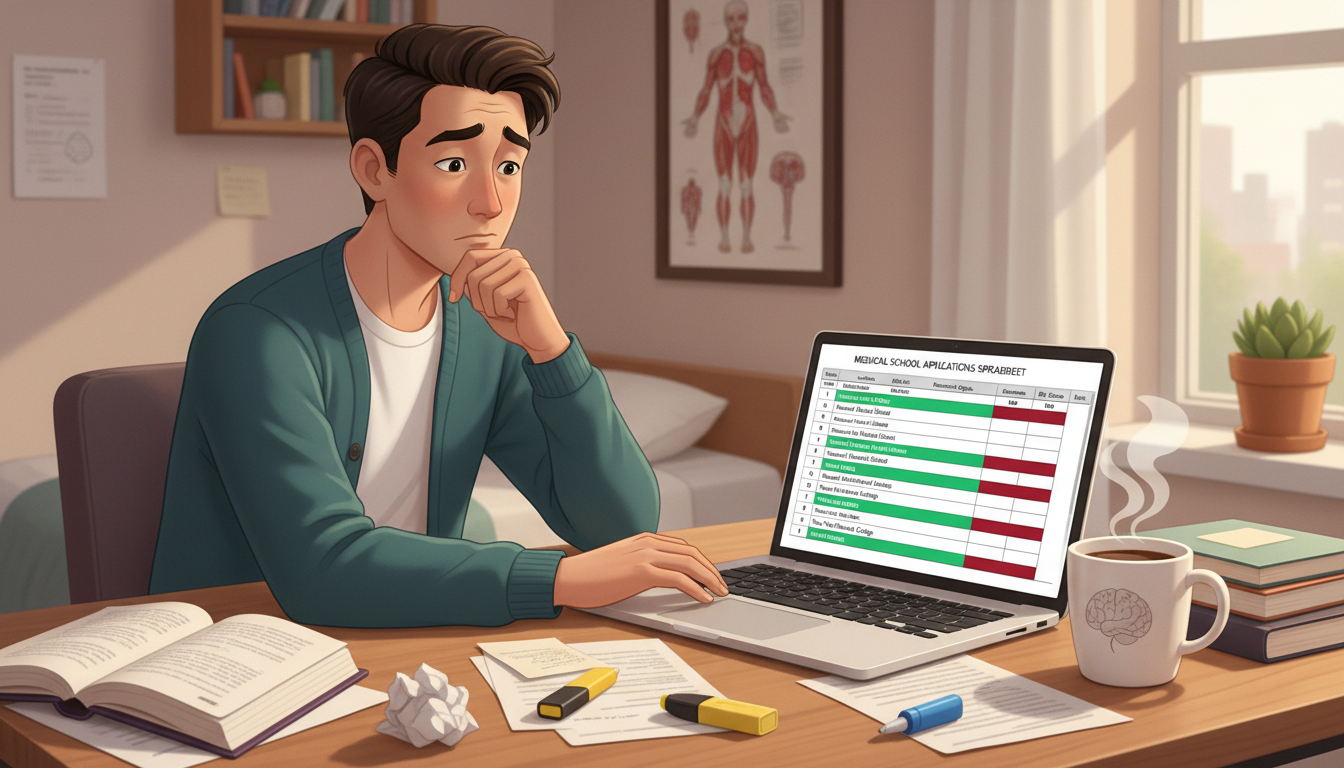
What if the “Research” section on your AMCAS is basically… empty? Like, you click that part and your stomach drops because it’s literally nothing. Does that mean every med school is just going to auto-trash your application?
Let’s say it out loud:
“I have zero research. Am I already doomed?”
You’re not the only one thinking it. Especially when every other premed on Reddit seems to have 2 publications, 3 posters, and a Nobel Prize “in progress.”
Let’s unpack how bad (or not) this really is.
Do Med Schools Actually Reject People Just For No Research?
Short answer: almost none will literally auto-reject you for having no research.
But some schools will quietly move you to the bottom of the pile. And some will basically treat “no research” as a huge red flag… depending on what kind of school they are and what else is in your app.
Here’s the brutal part first:
If you’re applying to super research-heavy places—think Harvard, Stanford, UCSF, Penn, WashU—having absolutely no research is a major problem. Those places are built on academic medicine. They want people who are at least curious about scientific inquiry.
Now the more honest, less-doom part:
There are many MD and DO schools where research is not a hard requirement. It’s “nice,” “helpful,” “great,” but not a dealbreaker. They care more about:
- Can you handle the academics (GPA/MCAT)?
- Do you understand medicine as a career (shadowing/clinical)?
- Are you a decent human being who can talk to patients (service, life experience)?
- Do you have a story that makes sense?
A lot of people get into med school every year with little or no traditional research. Some have zero bench research and maybe a small quality improvement or school project at most. Some truly have nothing you could honestly label “research.”
So no, you’re not automatically rejected.
But are you at a disadvantage at many schools?
Yeah. Probably. The question is: how much, and can you buffer it?
Who Can Get Away With No Research (and Who Probably Can’t)?
Not all “zero research” situations are equal. Here’s where the panic might be justified and where it might be overblown.
You’re in decent shape without research if:
- You’re targeting less research-heavy MD schools and DO schools, especially community-focused ones.
- You have strong clinical exposure: scribing, EMT, CNA, MA, hospice volunteering, etc.
- You’ve done long-term service in something meaningful (not 15 different one-off things).
- Your story actually focuses on clinical exposure, community work, leadership, and that theme runs through your app.
- Your GPA/MCAT are solid and you’re not already borderline academically.
Here’s a real-ish scenario:
- 3.75 cGPA / 3.7 sGPA
- 512 MCAT
- 200+ hours clinical volunteering
- 800+ hours paid clinical job (EMT, MA, scribe, etc.)
- 300+ hours non-clinical volunteering
- No research
If that person applies strategically (lots of DO, mid-tier MD, less research-heavy schools), they are absolutely not “dead in the water” just because they have no research.
You’re in a tougher spot if:
- Your list is full of top-20 or research powerhouses.
- Your GPA/MCAT are just okay, not stellar.
- You don’t have much clinical exposure either.
- You’re at a big university where most premeds do research, and adcoms expect it as the norm.
- You claim you want to be an academic physician or “physician-scientist” but have literally zero research to back that up.
Imagine this:
- 3.6 GPA
- 506 MCAT
- 60 hours shadowing
- 80 hours clinical volunteering
- 50 hours non-clinical volunteering
- No research
And you apply mainly to high-stat MD schools? That’s not a “no research” problem. That’s an “overall profile doesn’t match the school type” problem. Research is just one piece of a bigger mismatch.
Why Do Schools Care About Research So Much Anyway?
This is where it gets slightly annoying: “but I want to be a doctor, not a scientist.” Totally fair. But med schools think about things in a few ways:
- They’re training future leaders, and leaders often engage with evidence, data, and innovation. You don’t have to be in a lab forever, but they like to see you’ve dipped your toe in.
- Curriculum-wise, you’ll do evidence-based medicine, maybe scholarly projects. They like proof you can handle that kind of thinking.
- Their reputation partially depends on research output, and students who like research help with that.
- For more academic places, research is part of their identity, so no research feels like “wrong fit.”
They don’t necessarily want everyone to be a hardcore PhD type. But they do like curiosity: “How does this work? How can we measure this? How do we improve this?”
That said, some mission-driven schools care way more about service and primary care than whether you pipetted anything.
What If I Truly Have Zero Research and I’m Already Applying?
This is where the anxiety hits hard: the cycle’s starting (or already started), and your research section is a blank void.
Ask yourself some blunt questions:
- Is this my one-and-done application, or am I okay with reapplying if needed?
- Did I apply to a ridiculously top-heavy school list?
- Is research the only obvious weakness, or are there others?
- Could I realistically start something now that might not be fully complete but could be in progress?
If you’re already in the cycle:
Look carefully at your school list.
Are you applying to a lot of schools where the website brags nonstop about research, NIH funding, MD/PhD, etc.? Those are going to be rough with no research. If your list has almost no DO, no community-focused MD, and tons of “top 30,” there’s a big risk.Frame what you do have as strongly as possible.
You can’t magically invent research (don’t lie—seriously, don’t), but you can show:- Depth in clinical roles
- Long-term commitment
- Leadership, initiative
- Reflection and insight
Some adcoms will look at you and say: “No research, but wow, lots of patient-facing experience. That’s valuable too.”
If you get waitlisted or shut out…
This might be your signal for a growth year: add some kind of research experience if at all possible, even if it’s small and not glamorous. It doesn’t have to be “Nature paper or bust.” It just has to show you tried.
If I Still Have Time: Is It Even Worth Starting Research Late?
This is such a common spiral:
“If I start now as a junior/senior, I won’t get published. So what’s the point?”
Here’s the uncomfortable truth: most premed research never gets published before they apply. Adcoms know this. They’re not expecting you to walk in with first-author RCTs.
They’re looking at:
- Did you stick with it for more than 2 months?
- Can you describe what you did without sounding lost?
- Do you understand basic concepts of what your project is about?
- Can you talk about how you handled uncertainty, repetition, setbacks?
So yes, it’s worth starting, even if you won’t have publications. But only if you can do it honestly and with some actual engagement. If you just half-heartedly show up twice and then disappear, that doesn’t help.
If you still have a year or more before applying, consider:
- Joining a lab at your university (email 10–20 PIs, expect many no’s)
- Working on a clinical research project with a physician (chart reviews, databases, QI)
- Doing a public health or education project with some data component
- Joining outcomes research or any project where there’s a question and a method
Even 6–12 months is something. Especially if you can get a letter from your PI saying you were committed, reliable, and actually understood what you were doing.
But What If I Genuinely Hate Research?
You’re allowed to hate bench work. You’re allowed to find pipetting mind-numbing. You’re allowed to prefer people over pipettes.
What med schools don’t love is:
- “I hate research, I’ll never touch data again, I don’t care about evidence, just let me see patients.”
That’s… not a great message.
A better framing looks like:
- “I’m most energized by working directly with patients and being in clinical environments. I’ve still tried to engage with the evidence and understand how we measure outcomes, but long-term I see myself more in clinical practice than in a research career.”
You don’t have to claim to love research. You just don’t want to seem hostile or dismissive of it. Especially at more academic places.
If you truly can’t stand traditional research, consider things like:
- Quality improvement projects
- Clinical audits
- Health outcomes projects
- Community health needs assessments
Those still show that you can think in structured, “how do we know this works?” ways, without living in a basic science lab.
Choosing Schools Wisely When You Have No Research
If you’re applying with zero research, your school list matters a lot more.
You’ll want to lean toward:
- DO schools (many are more flexible and more clinically focused)
- MD schools with strong community or primary care missions
- State schools where you’re in-state and they emphasize service over publications
- Programs where their website emphasizes service, diversity, primary care, community partnerships, rather than only NIH funding and Nobel winners
Be realistic:
If the school screams “academic powerhouse,” no research is going to hurt. You can still apply to a few reaches like that if your stats are strong and you really want to. But don’t make them the bulk of your list and then be shocked when the silence hits.
How To Talk About Having Little or No Research in Interviews
If you make it to interviews without research, it means something else in your app was strong enough to push you through. That’s good news.
But you might still get questions like:
- “Tell me about your research experience.”
- “Have you been involved in any scholarly work?”
- “Can you see yourself doing research as a physician?”
You can’t just say, “Nope” and stare at the floor.
Try something like:
“I haven’t had the opportunity to be part of formal lab research yet. My main focus during undergrad was [clinical work / family obligations / needing to work a job / etc.], and I devoted most of my time to [briefly explain]. That said, I know research is a key part of modern medicine, so I’m looking forward to exploring it during medical school, especially [clinical research / outcomes / QI / etc.].”
If you’ve done any kind of project, even if not labeled “research,” you can mention it:
“I haven’t been part of a formal lab, but I did work on a project where we [describe data collection, analysis, evaluation]. It showed me how systematic approaches can improve patient care, and I’d like to build on that in the future.”
You want to sound open, not defensive.
If You’re Reading This Early: How To Not End Up in Full-Blown Panic Later
If you’re still 1–2+ years away from applying and already spiraling about research, that’s actually a good time to panic (gently) because you can still do something.
You don’t have to become “Research God.” You just want something truthful you can put on that section.
Aim for:
- 6–12+ months in any kind of project (bench, clinical, education, public health)
- Enough involvement that you can talk about what you did
- Ideally one PI/mentor who can write a letter if needed
You don’t need publications to “count.” If they happen, cool. If not, you still gain skills, stories, and credibility.
And if your life circumstances are tough—family caregiving, working a lot of hours, commuting, health stuff—those are real. You can explain why you didn’t have the time to pile on research and 10 other things. Just make sure your clinical and service experiences are strong, since those are non-negotiable.
FAQ: Zero Research and Medical School Admissions
1. Will having zero research automatically get my application thrown out?
No. Most schools don’t auto-reject on that basis alone. But at research-heavy schools, having no research is a significant disadvantage. At many DO schools and some MD programs with more clinical/community missions, it’s not a dealbreaker if the rest of your app is solid.
2. Can strong clinical experience make up for no research?
Sometimes, yes. If you have substantial, consistent clinical experience (scribing, EMT, MA, CNA, hospital volunteering with real patient contact) and strong service, some schools will see that as more relevant to their mission. It won’t magically make you competitive at top research powerhouses, but it can absolutely get you into plenty of MD/DO programs.
3. Is starting research 6–12 months before applying even worth it?
Yes. Adcoms don’t expect most undergrads to have publications. They care more about your engagement and understanding. Even a year of honest, consistent involvement looks better than nothing and gives you something to write and talk about. Just don’t expect it to transform your app overnight.
4. What if I truly can’t access research opportunities at my school?
Explain your situation in your secondaries or interviews if appropriate. Some students are at small schools with limited labs, or they have to work a lot of hours to support themselves. If that’s you, focus on building strong clinical and service hours and, if possible, look for small-scale projects (quality improvement, data projects, public health initiatives) instead of formal bench research.
5. If I get no interviews this cycle, should I prioritize research for a reapplication year?
If the rest of your app is already strong—good clinical exposure, service, stats—then yes, adding 1–2 years of research can make a reapp much more competitive, especially for MD. If you’re weak in other core areas (clinical hours, volunteering, GPA/MCAT), fix those first. Research helps, but it doesn’t replace the fundamentals.
Key takeaways:
- Zero research doesn’t automatically doom you, but it limits where you’ll be competitive.
- Strong clinical exposure and service can partially offset the lack of research at many schools, especially DO and less research-heavy MD programs.
- If you still have time, even modest, late-start research is better than nothing—and if you don’t, focus on owning your story and targeting schools where your profile actually fits.