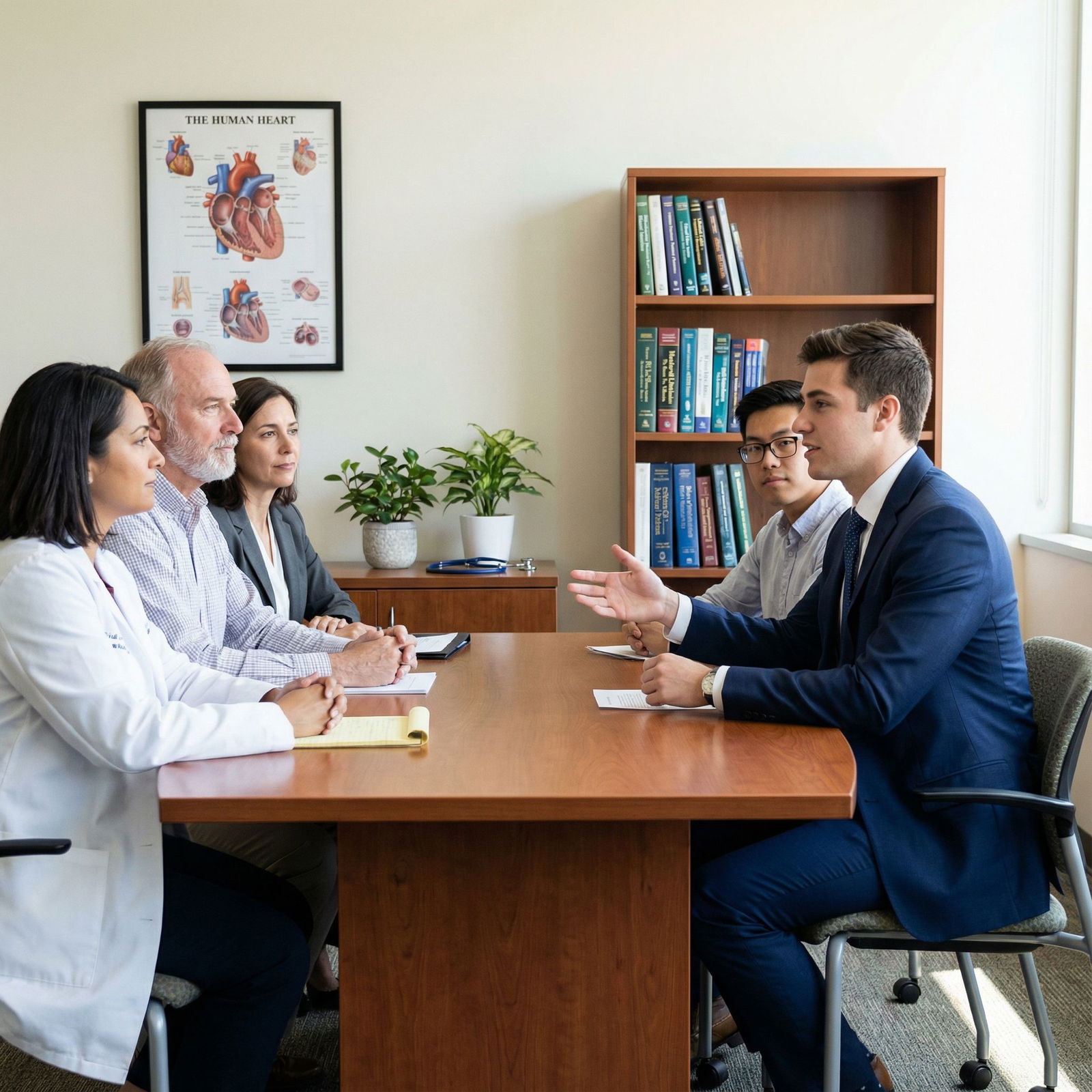
Interviews are often the most stressful part of the Medical School admissions process. By the time you’re invited, schools already know you can handle the academics. The interview is where they decide: Do we want this person caring for our patients and representing our institution?
Strong interview preparation helps you communicate not just your achievements, but your empathy, ethics, communication skills, and genuine motivation for a career in Healthcare. This guide breaks down 10 of the most common and high-yield Medical School interview questions, explains why they’re asked, and shows you how to answer them with confidence—with specific examples, structures, and strategies you can practice.
Understanding Medical School Interview Formats and Expectations
Before you rehearse answers, you need to understand the interview formats you might encounter and what each is really assessing.
Traditional One-on-One Interviews
In a traditional format, you’ll meet with one interviewer at a time—this might be a faculty member, physician, admissions dean, or even a senior medical student.
What they’re assessing:
- Your communication style and professionalism
- Depth of your motivation for medicine
- Alignment with the school’s mission and values
- Maturity, self-awareness, and resilience
How to prepare:
- Practice common questions out loud (preferably in mock interviews).
- Familiarize yourself with your own application—personal statement, activities, research.
- Be ready for follow-up questions that dig deeper into anything you’ve written.
Multiple Mini-Interview (MMI)
The MMI is a circuit of brief stations (often 6–10, each 5–10 minutes long) that may involve role-plays, ethical dilemmas, teamwork tasks, or traditional questions.
What they’re assessing:
- Ethical reasoning
- Communication and empathy in real-time
- Ability to work under time pressure
- Adaptability and interpersonal skills
How to prepare:
- Practice analyzing ethical scenarios in Healthcare (e.g., confidentiality, resource allocation).
- Develop a simple, logical framework for approaching dilemmas (identify stakeholders, weigh harms/benefits, respect autonomy, consider justice, etc.).
- Work on staying calm and organized in short time frames.
Panel Interviews
In panel interviews, you answer questions from multiple interviewers at once—often a combination of physicians, basic science faculty, students, and/or community members.
What they’re assessing:
- Confidence and poise in group settings
- Ability to engage multiple people and read nonverbal cues
- Consistency in your story and values
How to prepare:
- Practice eye contact by addressing the entire panel, not just the person who asked the question.
- Prepare for varied styles—some panelists are conversational; others are more formal.
- Expect questions that mix motivation for medicine, ethics, healthcare policy, and personal reflection.
Regardless of format, the core goal is the same: Can you become a compassionate, competent physician who will thrive in this school’s environment?
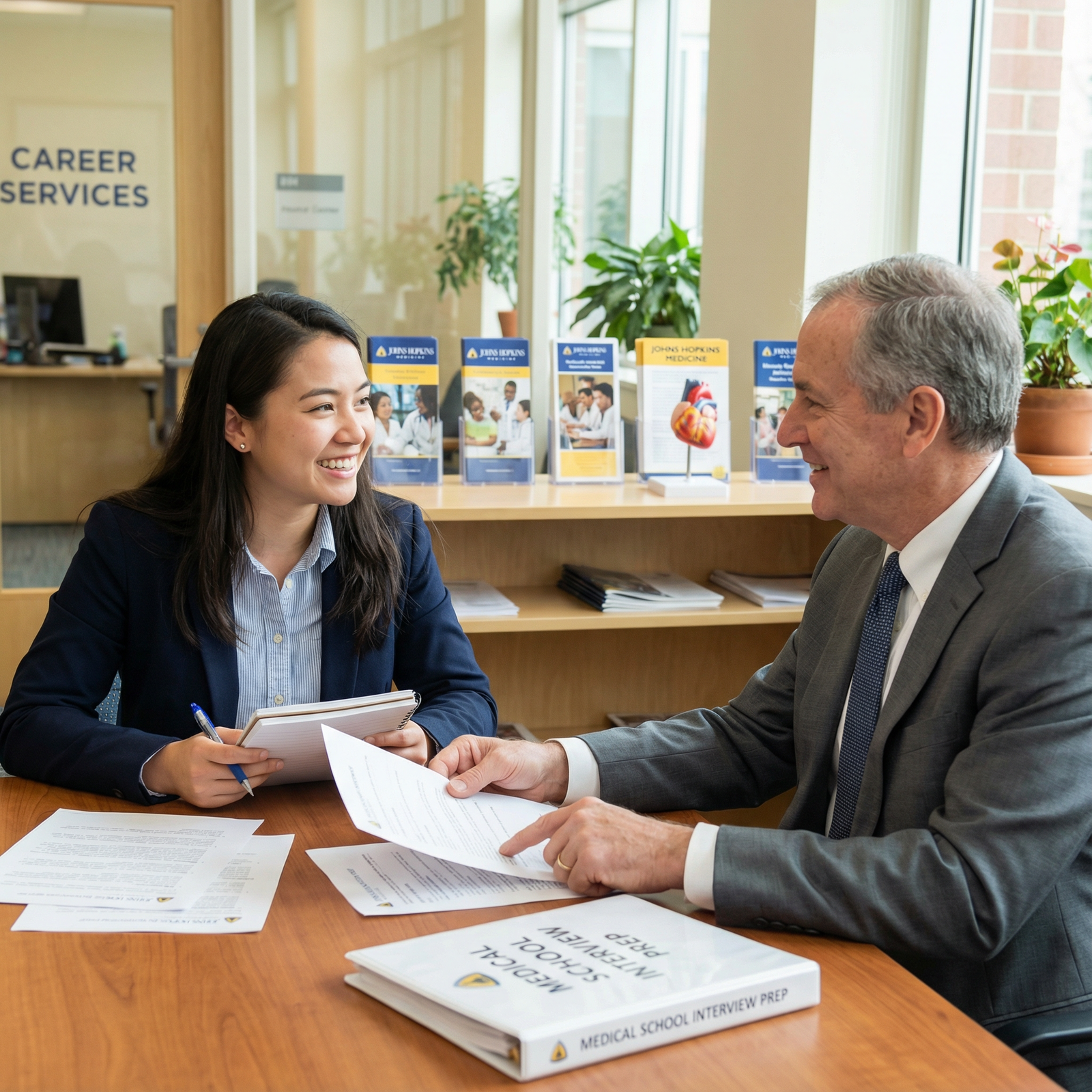
Top 10 Medical School Interview Questions and How to Answer Them Confidently
Below are 10 commonly asked questions in Medical School interviews, along with why they matter, common pitfalls, and sample structures you can use to craft strong, authentic answers.
1. “Why do you want to be a doctor?”
This is the cornerstone question of Medical School Admissions and Interview Preparation. It assesses your motivation and your understanding of what a career in medicine truly involves.
What Interviewers Are Really Asking
- Is your interest in medicine genuine and sustained, not impulsive?
- Do you understand the realities—long training, emotional demands, systemic challenges?
- Have you reflected on why physician vs. nurse, PA, researcher, or another Healthcare role?
How to Answer Effectively
Structure your answer around specific experiences that shaped your decision, rather than abstract ideas.
Strong answer components:
Origin spark
- A meaningful early exposure (e.g., family illness, volunteering, shadowing)
- Focus on what you learned, not just what you saw
Sustained exploration
- Shadowing, clinical volunteering, scribing, research, teaching, or community work
- Show progression: “That early experience led me to…”
Mature understanding of the role
- Acknowledge the challenges: emotional burden, time demands, systemic barriers
- Explain why, despite these, this is still the right path for you
Alignment with your values and strengths
- Connect medicine to your personal traits: curiosity, empathy, resilience, love of problem-solving, dedication to service
Example outline:
“My interest in medicine started when…
I didn’t fully understand what being a physician meant until I…
Through shadowing and working in [setting], I saw how physicians…
I’m drawn specifically to the role of a physician because…
These experiences confirmed that medicine aligns with my values of [service, lifelong learning, advocacy] and allows me to use my strengths in [communication, teamwork, critical thinking] to improve patient care.”
Avoid clichés like “I want to help people” without supporting stories and reflection. Everyone says they want to help people; your job is to show how and why in a unique, honest way.
2. “What do you think is the most pressing issue in healthcare today?”
This question gauges your awareness of the Healthcare system and your willingness to engage with complex, real-world problems.
What Interviewers Are Really Asking
- Are you intellectually engaged beyond your own application?
- Do you follow Healthcare news, policies, and disparities?
- Can you discuss sensitive issues thoughtfully and respectfully?
How to Answer Effectively
Pick one issue you understand reasonably well and can discuss in some depth. Common topics include:
- Healthcare access and insurance coverage
- Health disparities and social determinants of health
- Mental health access and stigma
- Burnout among Healthcare professionals
- Misinformation and public trust in medicine
- Impact of technology and AI on patient care
Use a simple structure:
- Identify the issue plainly.
- Explain why it’s important, ideally with a brief statistic or example.
- Connect it to your experiences (volunteering, research, coursework, personal background).
- Offer a balanced perspective—acknowledge complexity and barriers.
- End with your role as a future physician (awareness, advocacy, communication, system improvement).
Mini-example:
“One of the most pressing issues in healthcare today is unequal access to care, especially for low-income and rural communities. In my volunteer work at a free clinic, I saw patients who delayed treatment because they lacked insurance or transportation, which often led to more advanced disease.
Addressing this isn’t simple—it requires policy reform, community partnerships, and better primary care infrastructure. As a future physician, I hope to be part of solutions by [e.g., working in underserved settings, advocating for policy changes, participating in community health initiatives], and by being attentive to the social determinants that affect my patients’ health.”
You’re not expected to solve the issue on the spot, but you are expected to show informed, thoughtful engagement.
3. “Describe a challenge you faced and how you overcame it.”
This is a classic behavioral question used in many Education and professional settings. Medical Schools use it to evaluate resilience, problem-solving, and growth mindset.
What Interviewers Are Really Asking
- Do you take responsibility, or do you blame others?
- Can you reflect on your own behavior and learn from setbacks?
- How do you respond when things don’t go according to plan—academically, personally, or professionally?
How to Answer Effectively: Use the STAR Method
STAR = Situation, Task, Action, Result + Reflection
- Situation: Brief context (1–2 sentences).
- Task: What you needed to do or what was at stake.
- Action: Specific steps you took—this is the most detailed part.
- Result: Outcome (include both successes and what remained challenging).
- Reflection: What you learned and how it changed your behavior.
Tips:
- Choose a real challenge—not something trivial, but also not something so deeply personal that you can’t discuss it calmly.
- Strong examples include: academic setbacks, failed projects, leadership challenges, family responsibilities, or time-management crises.
Reflection is crucial: Many applicants describe the event but skip what they learned. Interviewers care about how you’ve grown and changed.
4. “How do you handle stress and manage your time?”
Medical School is intense. Admissions committees want to know if you have sustainable strategies for well-being and performance.
What Interviewers Are Really Asking
- Do you recognize stress in yourself?
- Do you have healthy coping mechanisms?
- Can you balance multiple responsibilities without burning out?
How to Answer Effectively
Acknowledge that stress is inevitable. You’re not expected to be stress-free.
Describe specific, healthy strategies:
- Time-blocking or calendar systems
- Prioritization frameworks (e.g., urgent vs. important)
- Exercise, sleep hygiene, mindfulness, therapy, hobbies
- Setting boundaries and asking for help when needed
Give a brief example where you successfully applied these strategies (e.g., balancing MCAT prep, research, and work).
Connect to future Medical School: Explain how you plan to adapt and maintain well-being during training.
Avoid answers that suggest:
- You “never get stressed” (unrealistic).
- You cope solely by avoiding problems or overworking without rest.
Medical Schools increasingly care about wellness and burnout prevention. Show that you can contribute to a healthier culture, starting with yourself.
5. “What is your greatest strength and your greatest weakness?”
This question tests your self-awareness, honesty, and professionalism.
What Interviewers Are Really Asking
- Can you assess yourself realistically—neither arrogant nor overly self-deprecating?
- Are you open to feedback and growth?
- Do your strengths fit the demands of medicine?
- Are your weaknesses manageable and improving?
How to Answer Effectively
Strengths
- Choose 1–2 strengths that are highly relevant to Healthcare (e.g., empathy, teamwork, communication, perseverance, attention to detail).
- Support each with a specific example (again, STAR can help).
- Show impact—how this strength helped a team, patient, or project.
Weaknesses
Pick a real, non-fatal weakness—not “I’m a perfectionist” without explanation. Examples:
- Difficulty delegating
- Speaking up in large groups
- Overcommitting to too many activities
- Needing to improve comfort with uncertainty
Show insight: When did you realize it?
Describe concrete steps you’re taking to improve (mentoring, feedback, structured practice, new systems).
End with progress, not perfection.
Example outline for a weakness:
“I used to struggle with delegating tasks in group projects because I felt responsible for making sure everything was done correctly. Over time, I realized this wasn’t sustainable and could actually undermine team trust. I started intentionally assigning roles based on people’s strengths, checking in at set intervals rather than doing everything myself. In my last group project, this led to better morale and a stronger final product. I’m continuing to work on this by…”
Interviewers don’t expect you to be flawless; they expect you to be coachable and reflective.
6. “Tell me about a time you worked as part of a team.”
Medicine is inherently collaborative. Admissions committees want reassurance that you can work well with others in fast-paced, high-stakes settings.
What Interviewers Are Really Asking
- Can you share credit and communicate effectively?
- How do you handle differing opinions or conflict?
- Do you contribute positively to group morale and outcomes?
How to Answer Effectively
Again, use STAR:
- Situation/Task: Briefly describe the team context (research lab, clinical volunteering, group project, sports team, student organization).
- Action: Focus on your contributions—communication, organization, conflict resolution, initiative.
- Result: What did the team achieve, and what did you learn about teamwork?
Highlight qualities like:
- Listening actively
- Clarifying expectations
- Supporting peers under pressure
- Bridging gaps between members (e.g., science and non-science collaborators)
Avoid making yourself the hero who fixed everyone’s incompetence. Emphasize shared success and respect.
7. “How would you handle conflicts with classmates or peers?”
Conflict is inevitable in any demanding Education or clinical environment. Medical Schools want to see maturity, professionalism, and communication skills.
What Interviewers Are Really Asking
- Do you avoid conflict, escalate it, or address it constructively?
- Can you see multiple perspectives?
- Are you able to protect relationships and maintain professionalism?
How to Answer Effectively
Outline a calm, stepwise approach:
Self-reflection:
- Pause and consider your own contribution.
- Separate emotions from facts.
Direct, private conversation:
- Approach the peer respectfully.
- Use “I” statements (“I felt…” rather than “You always…”).
- Aim to understand their perspective.
Seek common ground and solutions:
- Collaborate on a plan moving forward.
- Clarify expectations.
Escalation only when necessary:
- If conflict affects patient safety, academic integrity, or well-being, involve a supervisor or appropriate authority.
If you have a specific example of resolving a conflict professionally, share it briefly to illustrate your approach.
8. “What have you done to prepare yourself for medical school?”
This question probes the depth and intentionality of your premed journey and Medical School preparation.
What Interviewers Are Really Asking
- Have you realistically explored medicine beyond TV and headlines?
- Do you understand day-to-day clinical life and training demands?
- Have your experiences given you skills that will help you thrive?
How to Answer Effectively
Organize your answer into key experience categories:
Clinical exposure and shadowing
- Hospitals, clinics, free clinics, hospice, global health, scribing, EMT, etc.
- What you learned about patient care, interprofessional teams, and the physician’s role.
Service and community engagement
- Volunteering with underserved populations, community outreach, public health projects.
- Reflections on empathy, cultural humility, and social determinants of health.
Research and academic preparation
- Lab work, clinical research, quality improvement projects.
- Skills gained: critical thinking, data interpretation, persistence.
Leadership and teaching
- Mentoring, tutoring, leading organizations or initiatives.
- Communication and responsibility.
Personal readiness and self-care
- Strategies for stress management, time management, and balance.
Tie these experiences back to specific competencies Medical Schools value: communication, ethics, teamwork, resilience, curiosity, and a commitment to lifelong learning.
9. “If a colleague made a mistake during a clinical rotation, what would you do?”
This is an ethical and professional scenario commonly tested in both traditional interviews and MMI stations. It assesses your integrity, judgment, and prioritization of patient safety.
What Interviewers Are Really Asking
- Will you protect patients even when it’s uncomfortable?
- Can you balance honesty with respect for colleagues?
- Do you understand reporting hierarchies and professional responsibility?
How to Answer Effectively
Emphasize these principles:
- Patient safety comes first.
- Address issues at the appropriate level.
- Aim to support learning, not punishment, when possible.
- Follow institutional policies and norms.
Sample framework:
If the mistake has no immediate impact on patient safety and is minor:
- Speak privately with the colleague.
- Clarify what happened and your understanding of the correct approach.
- Encourage transparency if necessary.
If the mistake could harm or is harming a patient:
- Ensure the patient is safe—seek immediate help if needed.
- Inform the appropriate supervising resident/attending or nurse.
- Encourage your colleague to participate in the reporting and learning process.
Also mention the importance of:
- A culture where people feel safe to disclose and learn from errors
- Professionalism and confidentiality
- Avoiding gossip or public shaming
10. “Do you have any questions for us?”
This is not a formality; it’s a crucial part of the interview. Your questions reflect your curiosity, preparation, and fit for the program.
What Interviewers Are Really Asking
- Have you researched our Medical School and curriculum?
- Are you thoughtful about where you train?
- What do you value in your Education and learning environment?
How to Answer Effectively
Always have 3–5 thoughtful questions ready that:
- Are not easily answered by the website
- Show you’ve done your homework
- Reflect your interests (research, primary care, global health, wellness, diversity, etc.)
Examples:
- “How does your school support students’ mental health and well-being during the preclinical and clinical years?”
- “Can you describe the mentorship structure here—both formal and informal?”
- “What opportunities do students have to work with underserved communities or be involved in community-based Healthcare projects?”
- “How has your curriculum changed in response to recent developments in medical education or healthcare policy?”
- “From your perspective, what qualities do successful students at this school typically share?”
Avoid asking primarily about grades, class ranking, or Step scores in a way that suggests you care only about metrics. Show that you’re invested in learning, growth, and community.
Putting It All Together: Final Tips for Confident Medical School Interview Performance
Practice with Purpose
- Conduct mock interviews with advisors, mentors, or peers.
- Record yourself and review your tone, pacing, and nonverbal communication.
- Practice both traditional questions and scenario-based/MMI prompts.
Know Your Application Inside and Out
Anything you’ve listed—activities, research, volunteering, hobbies—can become a question. Be ready to:
- Explain your role and contributions
- Discuss what you learned
- Reflect on how it shaped your interest in medicine or your values
Communicate Clearly and Concisely
- Aim for 1–2-minute answers to most questions.
- Use simple, direct language; avoid excessive jargon.
- It’s fine to pause briefly to think before answering.
Be Professional but Human
- Maintain eye contact, good posture, and a calm demeanor.
- Let your personality show—humility, humor (when appropriate), and warmth go a long way.
- Remember: They’re not just admitting a GPA; they’re admitting a future colleague.
FAQs: Medical School Interview Preparation
1. How long should my interview answers be?
Aim for about 60–120 seconds per question. That’s typically enough time to:
- State your main point
- Provide a brief example or explanation
- Conclude with a clear takeaway
If you’re going beyond 2 minutes regularly, practice trimming your responses. For complex ethical or Healthcare policy questions, slightly longer answers can be appropriate, but try to stay focused and organized.
2. What should I wear to my medical school interview?
Business professional attire is the standard for Medical School Admissions:
- For all genders: Dark or neutral suit (black, navy, gray), conservative blouse or shirt, closed-toe shoes, minimal accessories.
- Ensure your clothes are clean, pressed, and comfortable enough to sit and walk in for several hours.
- Aim for a look that is neat, professional, and not distracting—you want the focus on your words and character.
3. Can I bring notes or a portfolio into the interview?
You can bring a padfolio or folder with a notepad, copies of your resume, and questions for the interviewers, especially for information sessions or orientations.
However, during the actual interview:
- Avoid reading from notes or scripts—it disrupts natural conversation.
- It’s fine to glance at a list of prepared questions at the end when they ask if you have questions.
- Rely on preparation and practice rather than written answers.
4. How can I calm my nerves before and during the interview?
- Prepare thoroughly: Familiarity with common questions and your own application reduces anxiety.
- Use relaxation techniques: Deep breathing, short walks, or mindfulness exercises before your interview.
- Control what you can: Arrive early, know the schedule and location, test your tech for virtual interviews.
- Reframe nerves as excitement: A moderate amount of adrenaline can help you focus and perform well.
- Practice beforehand: Mock interviews simulate the real environment and build confidence.
5. How should I prepare differently for virtual interviews?
For virtual Medical School interviews:
- Test your setup: Camera, microphone, and internet connection; use a stable, well-lit setup.
- Choose a neutral background: Quiet, uncluttered space with good lighting (facing a window if possible).
- Look at the camera when speaking to simulate eye contact.
- Minimize distractions: Silence notifications, inform roommates or family about your interview time.
- Dress professionally head-to-toe: It helps with mindset and avoids awkward moments if you need to stand up.
Thoughtful, structured preparation transforms interviews from something you dread into a powerful opportunity to show who you are—beyond numbers and transcripts. By understanding common Medical School interview questions, reflecting deeply on your experiences, and practicing your responses out loud, you’ll be ready to present yourself as a capable, reflective, and genuinely motivated future physician.