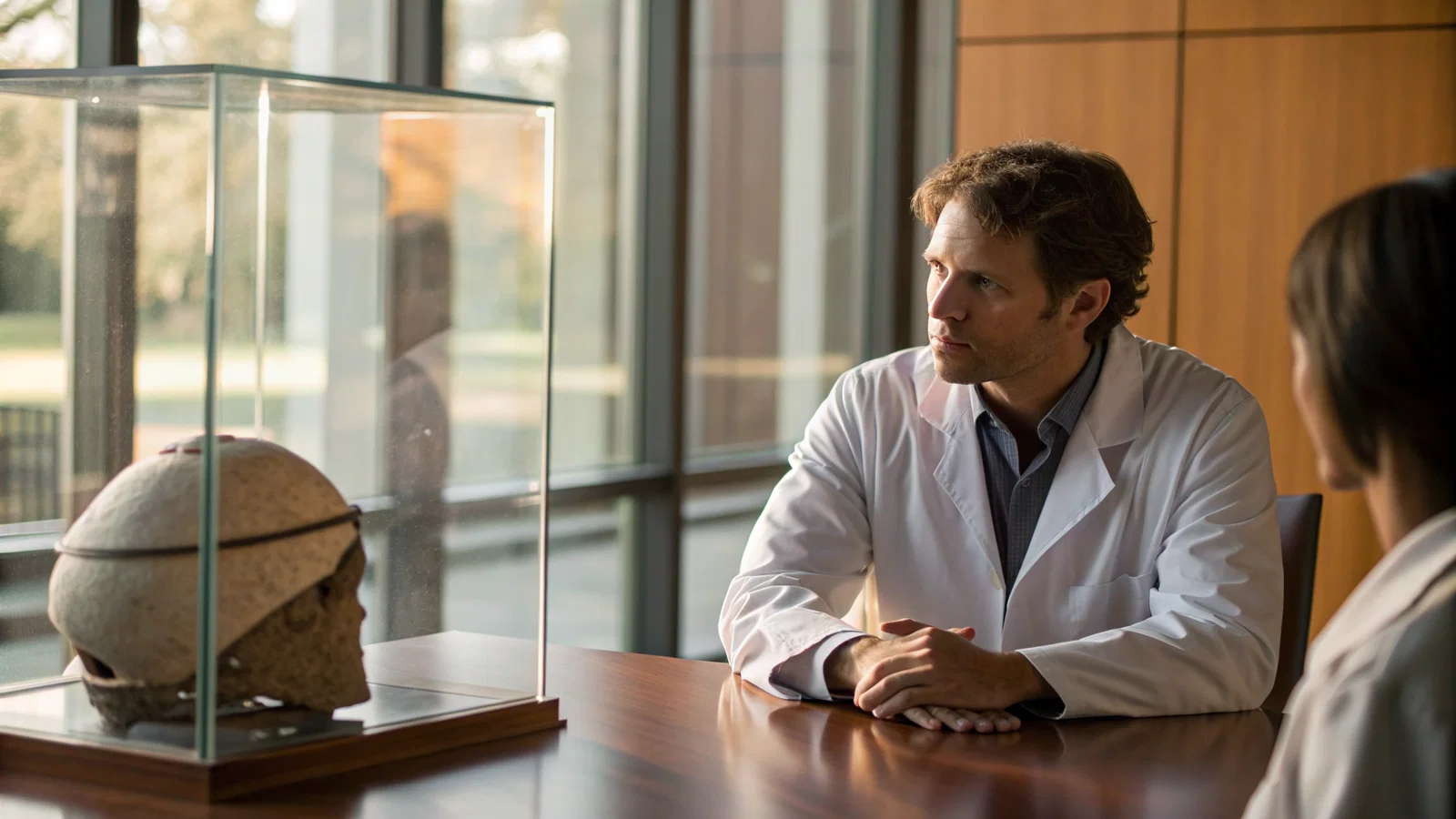
The interviewer leans forward, clasps their hands, and drops the question: "Tell me about a time you noticed a patient safety issue but didn't report it."
Your heart drops. You have noticed things. You just didn't file a formal, electronic incident report for every single one of them. Now you're on the spot, and the silence is stretching.
Here is exactly what to do in this moment.
First, stay calm and clarify the scope. Are they asking about a formal electronic incident report, or just telling a senior resident? Safety reporting has a broad spectrum. Next, assume good intent. They aren't trying to trap you into a confession of malpractice. They want to see your safety mindset. Do not overclaim. If you didn't file a formal report, say so. Acknowledge the gap, correct the record, and immediately pivot to how you handle safety going forward.
Structure your response rigidly. You need four beats: (1) what you learned, (2) what you actually did at the time to mitigate risk, (3) what you would do now, and (4) how you ensure it doesn't recur.
Avoid the common traps. Do not blame the EMR or the hospital's clunky reporting software. Do not dismiss the issue by saying "nothing bad happened, so it didn't matter." And never say "I didn't see anything" if you have clinical experience. You've seen things. Own it.
This article is for educational purposes only. It is not financial advice, not legal advice, and not tax advice. Figures vary by individual circumstances, so consult a qualified professional before acting.
Decode the Interviewer's Intent: Why They're Asking (and What "Safety" Usually Means)
Why do interviewers ask this? They are testing your honesty, your self-awareness, your willingness to speak up, and your systems thinking. Above all, they are testing your commitment to patient-first behavior.
When they say "never reported," they could mean several things. Maybe you didn't escalate to an attending. Maybe you missed a formal reporting opportunity. Maybe you simply weren't aware of the institution's specific reporting pathway.
Understand that "safety" in these interviews isn't just wrong-site surgery or a massive medication overdose. It includes near-misses, sloppy handoffs, documentation errors, supervision lapses, consent failures, patient falls, mishandled lab specimens, broken infection control protocols, or teamwork breakdowns. If a patient could have been harmed, it's a safety issue.
Pay attention to their language clues. If they say, "Tell me about a time..." they want your actual past process. They want a real story. If they say, "What would you do if..." they want your theoretical framework. Give them exactly what they asked for.

If You Truly Didn't Report: The Honest-but-Strategic Framework (You Can Still Recover)
You didn't report it. Own it. Start with a direct clarification. Say something like, "I didn't file a formal report through the hospital's portal at the time because I misunderstood the threshold for near-misses." Or, "I wasn't aware of the specific electronic reporting process on that ward." Honesty is your best weapon here.
Demonstrate accountability without self-flagellation. Don't grovel. It's pathetic and wastes time. Own your role in the event, then immediately pivot to what you did to reduce the risk. You are a clinician, not a compliance robot. Show them you acted like one.
Explain the actual safety action you took in the moment. You didn't just walk away. You intervened immediately. You notified the charge nurse. You fixed the order, ensured follow-up, or added a physical safeguard to the patient's room. That is mitigation. Mitigation proves you prioritize the patient over the paperwork.
Finally, show growth. What changed after the event? Did you seek out training? Did you ask for escalation guidance? Did you start using a checklist or request closer supervision? The interviewer needs to see that the failure to report was a one-time educational moment, not a chronic character flaw.
Build Your Answer: A Script Template You Can Adapt (30-60 Seconds)
You need a tight, rehearsed template. Rambling kills behavioral answers. Use this structure: Incident + Your role + Why reporting didn't happen + Immediate mitigation + Learning + Future prevention.
Include "threshold language" in your answer. State clearly that you would now report near-misses, unsafe conditions, and anything that could harm a patient, even if no actual harm occurred.
Make your future plan concrete. Don't just say "I'd report it." Say, "I would notify the attending and charge nurse immediately, document the objective facts in the chart, and file the event through the institution's safety reporting system."
End with professionalism. Look them in the eye and say, "I'm committed to a culture where we surface concerns early, before they reach the patient."
If You're Not Sure What Qualifies as "Reportable": How to Show Safety Judgment Without Guessing
It is perfectly fine to say you weren't certain what qualified as reportable at the time. Just don't leave the interviewer with uncertainty about your judgment now.
Describe a concrete method for deciding. Tell them you use a three-step process: immediate risk assessment at the bedside, escalation to a supervisor for guidance, and consulting institutional definitions or resources if the path forward is unclear.
Signal that you know the reporting pathways you'd use today. Drop the right terminology. Mention the incident reporting system, risk management, or the unit chain-of-command.
If you're struggling to find a good example, use a near-miss. Interviewers highly value the recognition of risk even when no harm occurred. Catching a wrong-dose medication before it hits the patient's IV line is a massive safety win, even if you initially thought it didn't need a formal report because "no harm was done."

Special Cases: Different Situations Applicants Actually Face
Not all safety issues look the same. Here is how to handle the specific variations you might face:
- Near-miss but you didn't think it mattered: Emphasize your learning curve. Explain how you now separate "no harm yet" from "low risk." A near-miss is a free lesson; show them you've learned to treat it that way.
- You saw unsafe behavior by a peer: This tests your courage. Emphasize respectful escalation. Talk about direct, polite correction at the bedside if appropriate, followed by supervision involvement and objective documentation of the facts.
- It was a systems issue (equipment/protocol): Don't just blame the broken pump. Show personal action. You stopped the process when it became unsafe, notified the responsible parties, and ensured the patient was protected while the system was fixed.
- Supervisory roles: If you were the senior resident or chief, highlight how you'd escalate earlier. Talk about how you now build safer workflows and foster an environment where juniors feel safe reporting to you.
- It happened years ago: Show what's changed. Acknowledge the old mistake, then provide a current, concrete example of your modern safety habits, like using handoff checklists, performing double checks, or doing read-backs on critical labs.
What Not to Say: Red Flags That Trigger "Integrity/Professionalism" Concerns
Some answers will instantly tank your application. Avoid these at all costs:
- Don't minimize. Saying "It wasn't that serious" is a massive red flag. It tells the interviewer you're the weak link in their safety chain and wouldn't escalate risk.
- Don't fabricate. Do not invent a report you didn't make. Interviewers are often testing honesty and judgment consistency. If they probe and catch you in a lie, you're done.
- Don't blame the system exclusively. Yes, hospital software is often terrible. But if you exclusively blame the EMR, you look like you wouldn't act as a safety-oriented clinician when the system fails.
- Don't get trapped in defensive details. Keep the story factual and brief. Do not spend two minutes explaining why it wasn't your fault. Pivot to the learning.
- Avoid "I never make mistakes." It's unrealistic, arrogant, and directly contradicts the core principles of a just safety culture.
Closing Style: Turn the Moment Into a Forward-Looking Safety Commitment
How you end the answer matters just as much as how you start it. Conclude with a forward-looking commitment. Tell them exactly how you will communicate, escalate, and follow reporting processes as a resident in their program.
Signal culture fit. Show them you welcome feedback, you're comfortable speaking up when things look wrong, and you can lead safety improvements on the wards.
Offer a practical "next time" plan. Tell them what you'd do in the first 5 minutes of an event (secure the patient), the first shift (notify the team), and after the event (file the report and debrief).
End confidently. Look them in the eye and let them know you understand that safety reporting is a core pillar of medical professionalism, not a punishment. You aren't perfect, but you are safe. And that is exactly what they want to hire.
Key Takeaways
- Be honest about why you didn't report at the time, but always pivot to the mitigation you did and the clear plan you'd use now.
- Your goal isn't to prove you're perfect, it's to prove you can recognize risk, take action, learn, and reliably escalate.