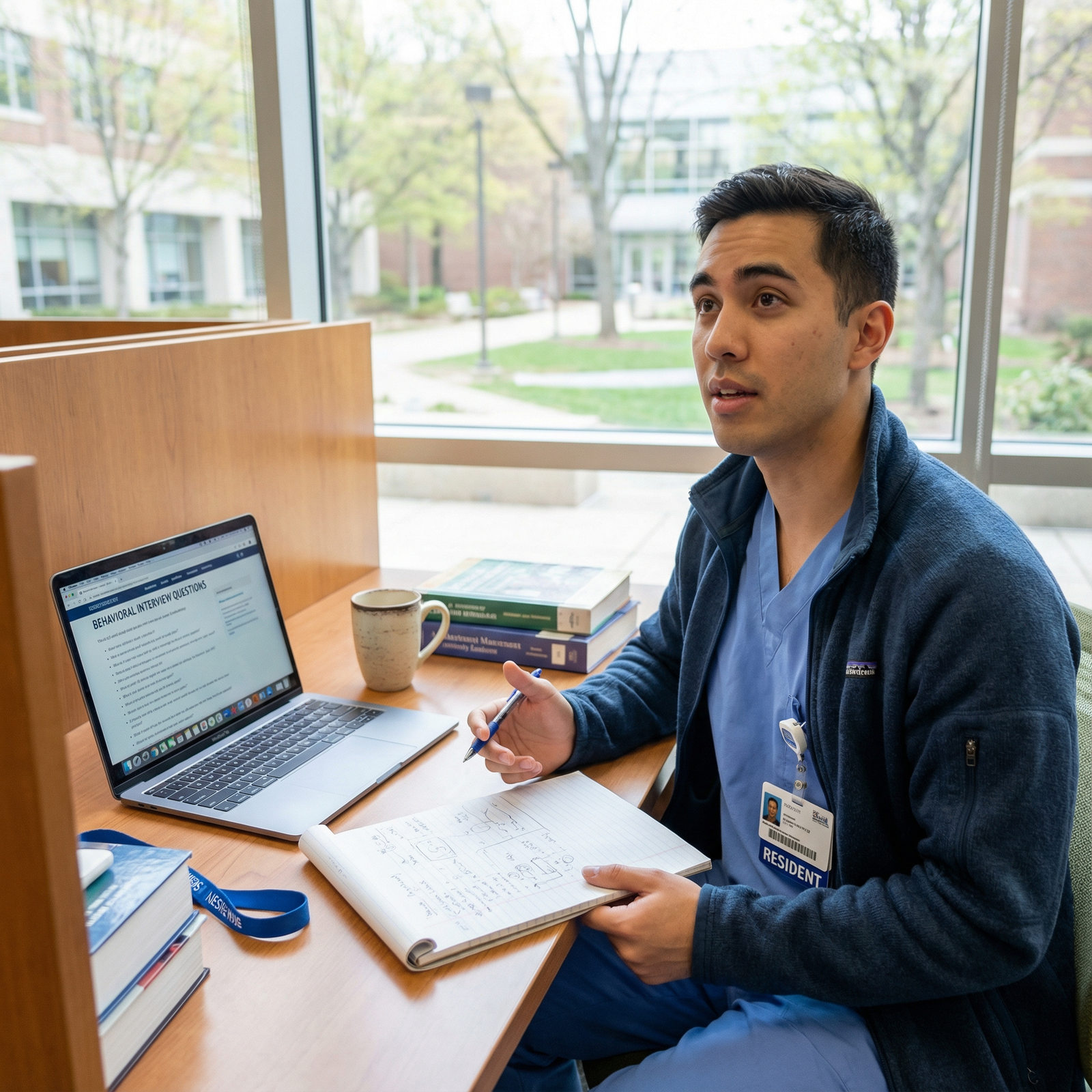
Ophthalmology is one of the most competitive fields in medicine, so it’s no surprise that ophthalmology residency interviews can feel high stakes. Programs know that almost every candidate has strong metrics; what differentiates you is how you think, communicate, and fit into their culture. Understanding common interview questions—and how to answer them strategically—can make the difference in your ophtho match outcome.
This guide breaks down the most frequent ophthalmology residency interview questions, what programs are really assessing, and how you can craft strong, authentic responses.
Understanding the Ophthalmology Interview Landscape
Ophthalmology interviews tend to be structured, professional, and focused on both your story and your judgment. Across programs, you can expect:
- A mix of traditional and behavioral interview medical questions
- Questions probing your motivation for ophthalmology
- Exploration of your clinical reasoning, especially around vision loss
- Attention to your teamwork, communication, and professionalism
- Often, multiple short interviews rather than a single long one
Many interviews feel conversational, but do not mistake that for lack of structure. Faculty are still making careful judgments about:
- How clearly you communicate
- Whether you’ve reflected thoughtfully on your experiences
- How you handle pressure and interpersonal challenges
- Whether your values match the program’s culture and demands
The rest of this article organizes common ophthalmology residency interview questions into key domains, with sample responses and practical preparation tips.
1. Opening & “Tell Me About Yourself” Questions
Almost every interview begins with some version of “tell me about yourself.” How you start sets the tone for the rest of the conversation.
1.1 Classic Opening Questions
Common variants include:
- “Tell me about yourself.”
- “Walk me through your journey in medicine so far.”
- “How did you get here today?”
- “Take a few minutes and introduce yourself beyond what’s on paper.”
Programs use these to assess:
- Your ability to summarize your background succinctly
- How organized and confident you sound
- Your professional identity and what you emphasize about yourself
This is not an invitation to recite your CV. It’s a chance to make a strategic, narrative first impression.
How to Structure “Tell Me About Yourself”
Use a simple 3-part structure:
- Past (1–2 sentences)
- Where you’re from, key formative experience, or academic background
- Present (3–4 sentences)
- Your current stage, strengths, and what you’re working on or proud of
- Future (2–3 sentences)
- Your career goals and why you’re sitting in an ophthalmology residency interview
Example:
“I grew up in a small town in Arizona where my grandmother slowly lost her vision to diabetic retinopathy, which first exposed me to the impact of eye disease. I went to [University] for medical school, where I gravitated toward visually oriented fields and found that I loved the combination of microsurgery, technology, and longitudinal patient relationships in ophthalmology. Over the last two years, I’ve focused on building strong clinical skills, serving as the ophthalmology interest group co-president, and conducting research on access to diabetic eye screening. Going forward, I hope to become an academic general ophthalmologist who cares for underserved patients and helps train future residents in a program like this one.”
Keep it to 60–90 seconds, conversational, and tailored to why ophthalmology and why you’d be a good resident.
1.2 Other Common Introductory Questions
- “How would you describe yourself in three words?”
- “What should we know about you that’s not on your CV?”
- “What are you most proud of in your medical career so far?”
For these, prepare short, specific, example-backed responses.
Example (“three words”):
“Curious, dependable, and team-focused. I’m curious because I genuinely enjoy digging into why patients present the way they do and reading beyond the basics. Dependable, because I make it a priority to follow through—whether that’s updating a patient with results or finishing a note so the team has it by morning rounds. And team-focused, because some of the most satisfying experiences I’ve had in medical school were working on multidisciplinary teams in clinic to coordinate complex patient care.”
These opening questions often influence how faculty perceive your later answers, so practice them aloud multiple times.

2. Motivation for Ophthalmology & Career Goals
In a competitive field, “Why ophthalmology?” is more than a formality. Programs want to ensure you’re committed for the right reasons and have realistic expectations.
2.1 “Why Ophthalmology?”
Variations:
- “Why did you choose ophthalmology?”
- “What draws you to this field compared to other surgical specialties?”
- “When did you first realize you wanted to go into ophtho?”
Avoid generic answers like “I like surgery and clinic” or “I want a good lifestyle.” Those may be true, but they’re not enough.
A strong answer usually includes:
- Specific clinical experiences that sparked or confirmed your interest
- Features unique to ophthalmology (microsurgery, imaging, visual function, technology, longitudinal relationships, global blindness, etc.)
- Your fit—what about your skills, values, and personality align with the field
- Forward-looking vision for your career (even if tentative)
Example outline:
- Briefly reference the first meaningful exposure (e.g., clinic with a blind patient regaining vision after surgery).
- Highlight 2–3 aspects of ophthalmology you genuinely love.
- Connect those features to your strengths (attention to detail, visual-spatial ability, patient communication, interest in chronic disease management).
- Conclude with a sentence tying your goals to the field.
2.2 “Why Our Program?”
Every program will ask some version of:
- “Why are you interested in this program in particular?”
- “What makes you a good fit for our residency?”
- “How do you see yourself contributing here?”
To answer well, you must research each program in detail. Go beyond their website tagline.
Consider:
- Clinical volume and case mix
- Resident autonomy and call structure
- Subspecialty strengths (e.g., retina, cornea, glaucoma, global health, optics/vision science)
- Culture and size of the program
- Teaching and mentorship styles
- Facilities: VA, county, tertiary academic center
Example:
“I’m particularly drawn to this program for three reasons. First, the clinical training here is incredibly strong—your residents graduate with high surgical numbers and excellent exposure to complex pathology through the county and VA systems. Second, I’m interested in health disparities and was excited to see your resident-run community outreach screenings and teleophthalmology initiatives. And third, in talking with residents, I consistently heard about a supportive culture where faculty are approachable and invest heavily in teaching. I see myself thriving in a high-volume, academically rigorous environment like this where I can contribute through my interest in community outreach and clinical research.”
Make it specific, genuine, and clearly different from what you’d say to another program.
2.3 Career Goals Questions
Common prompts:
- “Where do you see yourself in 5–10 years?”
- “Do you plan to pursue fellowship?”
- “Are you more interested in academics or private practice?”
You’re not locked into your answer, but you should show:
- You’ve thought carefully about possible paths
- You understand what different ophthalmology careers look like
- Your goals are realistic and flexible
Safe approach:
“Right now, I’m leaning toward a career that includes X and Y, but I’m open and excited to explore different subspecialties during residency.”
If you’re strongly leaning toward a track (e.g., retina, academic global health), you can say so but express openness to evolution as you gain experience.
3. Behavioral Interview Questions: Judgment, Teamwork & Communication
Behavioral questions are now common in ophthalmology interviews. These are “Tell me about a time…” questions that probe how you’ve handled real situations.
They’re central to behavioral interview medical formats and help programs predict your performance as a resident.
3.1 The STAR Method
Structure your responses with STAR:
- Situation – Brief context
- Task – What you needed to do
- Action – What you actually did
- Result/Reflection – Outcome and what you learned
This keeps you concise and focused.
3.2 Common Behavioral Question Themes
You’ll often encounter:
- Conflict with team members or staff
- Managing a difficult patient or family
- Handling a mistake or near-miss
- Dealing with heavy workload or burnout
- Navigating ethical dilemmas or professionalism challenges
- Working with someone very different from you
Representative questions:
- “Tell me about a time you had a conflict with a colleague and how you resolved it.”
- “Describe a situation where you made a mistake in patient care.”
- “Give an example of a time when you had to advocate for a patient.”
- “Tell me about a time you felt overwhelmed. How did you handle it?”
Example: Conflict with a Team Member
Weak response: “I don’t really have conflicts; I get along with everyone.”
This sounds unrealistic and lacks insight.
Better STAR-style response:
“During my internal medicine rotation (S), I was working with another student who consistently left the floor early, which increased the workload on the rest of us (T). I first made sure I wasn’t misinterpreting the situation, then I spoke privately with him and shared how his early departures were affecting the team, asking if there was something going on that we didn’t know about (A). It turned out he had a family issue he was dealing with and hadn’t felt comfortable speaking up. We adjusted how we divided tasks, and he also communicated with the resident about needing occasional time away. Our team dynamics improved, and I learned that addressing concerns early, privately, and with curiosity rather than accusation can prevent resentment and improve patient care (R).”
Notice the tone: calm, reflective, non-blaming, focused on communication and learning.
3.3 Handling Mistakes and Near-Misses
Programs want to know how you respond when things go wrong.
Examples:
- “Describe a time you made a mistake.”
- “Tell me about a time you received critical feedback.”
- “Have you ever missed something important in a patient’s history or exam?”
Key principles:
- Own the mistake—do not deflect or blame others
- Focus on what you did next (disclosed, sought help, corrected, followed up)
- Emphasize learning and changes you made to prevent recurrence
Example outline:
- Brief, specific mistake (e.g., delay in calling for help, incomplete chart review, communication error).
- Immediate actions taken (notifying senior, apologizing, correcting order, re-evaluating patient).
- Structural change you made (checklist, new habit, asking for help earlier).
- Reflection on humility, safety, and team communication.
3.4 Difficult Patients & Families
Vision loss is emotionally charged; ophthalmologists frequently manage anxiety and frustration.
Questions may include:
- “Tell me about a difficult patient encounter.”
- “How do you handle angry or non-adherent patients?”
- “Have you ever had to deliver bad news?”
Strong answers should show:
- Empathy
- Clear, jargon-free communication
- Boundary-setting when needed
- Collaboration with team and resources (social work, interpreters, etc.)
Behavioral questions are a chance to demonstrate your emotional intelligence, not just your professionalism.
4. Clinical & Specialty-Specific Questions
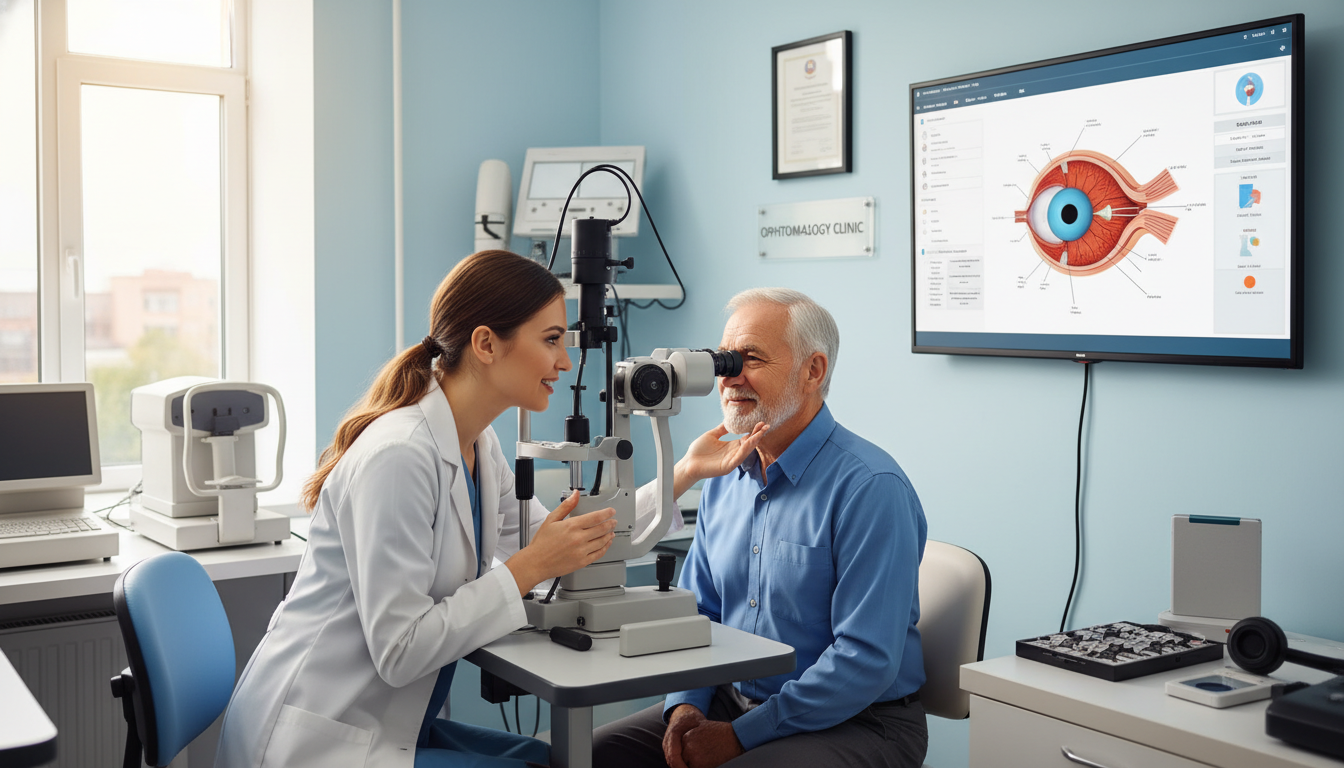
Some ophthalmology interviews will include simple clinical or scenario-based questions. These are not usually “pimping” sessions, but they assess your reasoning and comfort with eye-related problems.
4.1 Common Clinical Scenario Themes
- Acute painless vs. painful vision loss
- Red eye differential
- Trauma to the eye
- Basic fundus findings
- Systemic diseases affecting the eye (diabetes, hypertension, autoimmune disease)
Typical prompts:
- “A 60-year-old patient presents with sudden, painless loss of vision in one eye. What are you thinking about?”
- “How would you approach a patient with a red, painful eye?”
- “What ophthalmic emergencies should a general clinician never miss?”
You’re not expected to think like a senior resident, but you should:
- Start with broad differentials
- Prioritize vision- and life-threatening diagnoses
- Mention immediate actions and when you’d urgently consult ophthalmology
Example (sudden, painless vision loss):
“For sudden, painless monocular vision loss, I’d consider central retinal artery occlusion, central retinal vein occlusion, retinal detachment, ischemic optic neuropathy, and sometimes vitreous hemorrhage. I’d want to quickly assess visual acuity, visual fields, pupillary response, and fundoscopic exam if possible. If CRAO is suspected, I’d treat it as a stroke equivalent, seek emergent ophthalmology and stroke team evaluation, and ensure systemic workup for embolic sources.”
If you don’t know an exact detail, you can say:
“I don’t recall the specific statistic, but my first step would be to…”
Programs often care more about your framework and priorities than perfect recall.
4.2 “What Do You Find Most Challenging in Ophthalmology?”
This question tests your insight into the field’s realities.
Examples of thoughtful challenges:
- Communicating complex diagnoses and uncertain prognoses
- Operating in tight spaces with millimeter precision
- The emotional impact of irreversible vision loss
- Rapid pace and high volume of clinic + surgery
- Vision-threatening emergencies during off-hours
You might say:
“One of the most challenging aspects of ophthalmology, from what I’ve seen, is supporting patients through conditions where vision cannot be fully restored, especially when they’ve presented late. I’ve watched attendings balance honesty with hope in those conversations, and it’s made me think carefully about my own communication skills. I’m looking forward to developing that ability to guide patients through those difficult moments while connecting them to resources and low-vision support.”
Demonstrate respect for the field’s difficulty and a growth mindset.
5. Personal, Ethical & “Fit” Questions
Ophthalmology programs care about your resilience, professionalism, and how you’ll function in a high-intensity environment.
5.1 Strengths and Weaknesses
Classic prompts:
- “What are your greatest strengths?”
- “What are your weaknesses?” or “What are you working on?”
- “What would your friends or colleagues say is your biggest area for growth?”
For strengths, pick 2–3 that are:
- Relevant to residency (reliability, attention to detail, teamwork, patient communication, teaching)
- Backed up with brief examples
For weaknesses, avoid clichés like “I work too hard.” Choose something:
- Genuine but non-fatal to residency success
- That you’ve actively worked on
- That you can describe concrete strategies for improving
Example:
“One area I’ve been working on is my tendency to over-prepare for every task, which can sometimes slow me down. Early in clinical rotations, I’d spend too long rewriting my notes to make them perfect, and it occasionally delayed my other tasks. After feedback from a resident, I started using templates, prioritizing key information, and setting internal time limits for certain tasks. I’ve gotten much better at balancing thoroughness with efficiency while still maintaining accuracy.”
5.2 Stress, Burnout & Resilience
Questions might include:
- “Residency is demanding. How do you handle stress?”
- “Tell me about a time you felt burned out or overwhelmed.”
- “What do you do outside of medicine to maintain balance?”
Strong answers show that you:
- Recognize your limits
- Use healthy coping mechanisms (exercise, hobbies, social support, therapy)
- Seek help when appropriate
- Can maintain professionalism even under stress
Avoid answers that sound like you never struggle; that can come off as naïve or disingenuous.
5.3 Ethical & Professionalism Scenarios
Examples:
- “What would you do if you saw a resident behaving unprofessionally?”
- “How would you handle a situation where your attending asks you to do something you feel is unsafe?”
- “What would you do if a patient refused a necessary exam or procedure?”
Programs are assessing:
- Your integrity
- Respect for hierarchy while prioritizing patient safety
- Willingness to use institutional resources (ethics, risk management)
A good framework:
- Clarify and confirm what you’re seeing or being asked
- Address concerns directly but respectfully
- Escalate appropriately if patient safety or ethics are at risk
- Document or report per institutional policy when necessary
6. Practical Preparation Strategies for Ophtho Interviews
Content knowledge alone isn’t sufficient; practice is what makes your answers polished yet authentic.
6.1 Build a Personal Story Bank
Before interview season:
- List 8–12 significant experiences from medical school:
- A challenging patient
- A leadership role
- A mistake or near-miss
- A time you received tough feedback
- A team project that went well
- A conflict you navigated
- For each, write 3–4 bullet points in STAR format.
- Re-use these stories across many behavioral interview medical questions.
This makes you more fluent and reduces the chance of freezing when asked, “Tell me about a time…”
6.2 Practice Core Questions Out Loud
At minimum, rehearse:
- “Tell me about yourself.”
- “Why ophthalmology?”
- “Why our program?”
- One strength and one weakness answer
- Two to three behavioral examples
Use your phone to record yourself or practice with:
- A mentor in ophthalmology
- Your school’s career advisors
- Co-applicants doing mock interviews via Zoom
6.3 Anticipate Common Residency Interview Questions
While this article focuses on ophthalmology-specific content, don’t neglect general residency interview questions that come up in nearly every specialty:
- “What do you do for fun?”
- “Tell me about a leadership experience.”
- “Describe a research project you’re involved in.”
- “Is there anything else you’d like us to know?”
- “Do you have any questions for us?”
Prepare thoughtful questions for programs about:
- Resident autonomy and surgical training
- Mentorship and feedback
- Recent changes or future directions for the program
- How they support resident wellness and career development
Avoid questions easily answered on the website (e.g., “How long is your program?”).
6.4 Virtual vs. In-Person Interview Considerations
If interviews are virtual:
- Test your audio, video, and internet connection
- Choose a neutral, well-lit background
- Dress professionally (head to toe—you may need to stand)
- Close distracting apps and silence notifications
- Have a printed copy of your application and notes about the program nearby
If in-person:
- Plan travel logistics carefully
- Arrive early; ophthalmology programs value punctuality and professionalism
- Interact respectfully with everyone—coordinators, residents, staff—since they often provide feedback
Frequently Asked Questions (FAQ)
1. How important are interview performances in the ophtho match?
In ophthalmology, once you have an interview, your performance can significantly influence your rank position. Programs view interviews as critical for assessing communication, maturity, professionalism, and fit. Strong scores alone rarely compensate for a poor interview, while an excellent interview can sometimes elevate a candidate with mid-range metrics.
2. How should I answer “tell me about yourself” without sounding rehearsed?
Prepare a clear 60–90 second outline that covers your past, present, and future, but don’t memorize it word-for-word. Practice enough that you know your key points and transitions, then allow your phrasing to be natural each time. Think of it as telling a familiar story rather than reciting a script.
3. Will I be asked technical questions about ophthalmology in residency interviews?
Many programs keep questions non-technical, but some may ask basic clinical or scenario-based questions related to eye complaints or emergencies. They are more interested in your clinical reasoning and ability to prioritize than in subspecialist knowledge. Reviewing common ophthalmic presentations and emergencies before interviews is wise, but you are not expected to perform at a resident level.
4. What if I don’t have a dramatic “origin story” for why I chose ophthalmology?
You don’t need a dramatic story to be compelling. Many applicants develop interest gradually through multiple exposures. Focus on specific moments that clarified your interest, aspects of the field you genuinely enjoy, and how your skills align with ophthalmology. Authenticity and reflection matter more than having a single life-changing event.
Thoughtful preparation for these common ophthalmology residency interview questions will help you present your best self, communicate clearly, and demonstrate that you’re ready for the rigors and rewards of training in this specialty. With your story bank, practiced responses, and genuine enthusiasm for the field, you’ll be well-positioned to shine on interview day—and ultimately in the ophtho match.