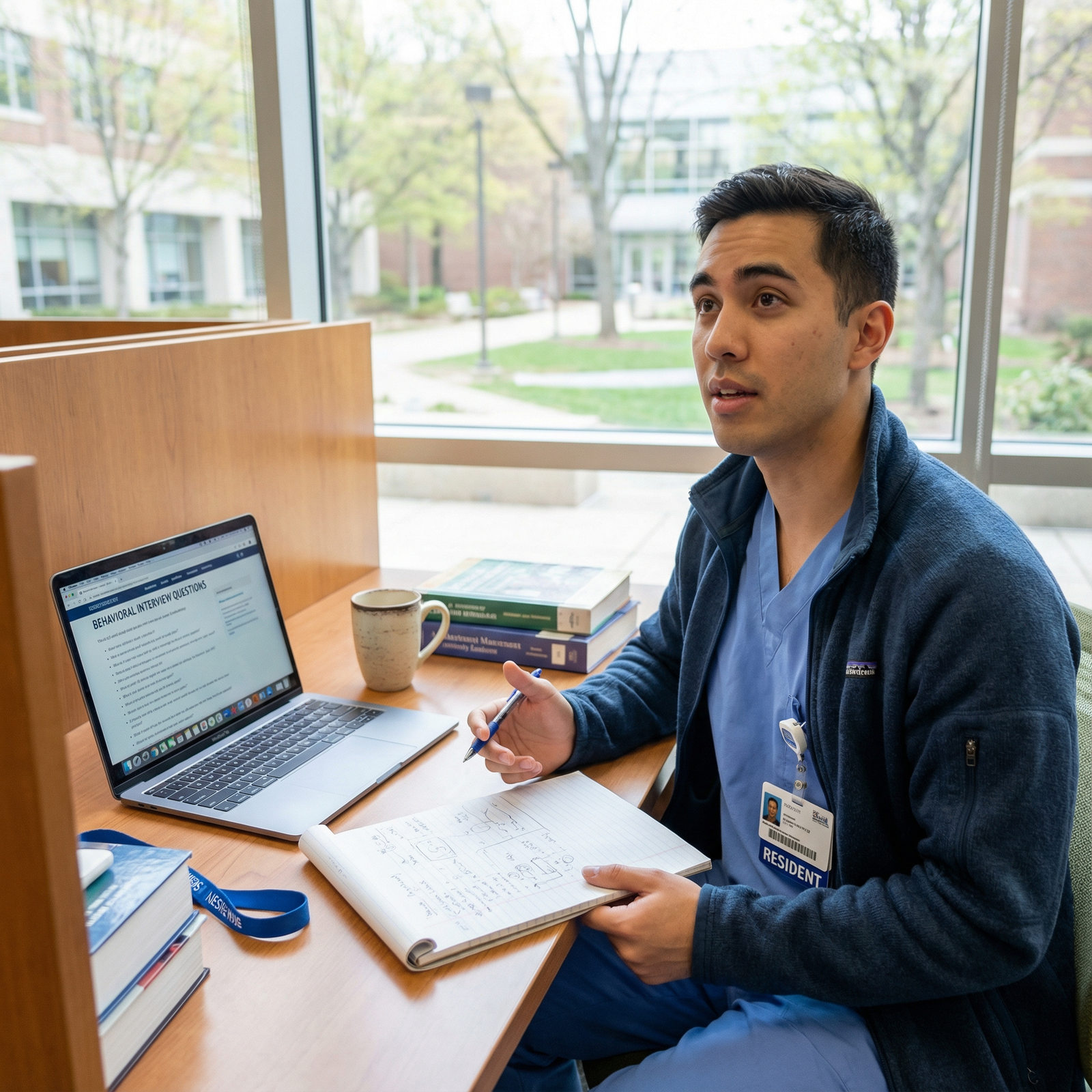
Understanding Dermatology Residency Interview Questions as an MD Graduate
Dermatology is one of the most competitive specialties in the allopathic medical school match. As an MD graduate, you’ve already cleared major hurdles—USMLE, clinical rotations, letters of recommendation—yet the interview often plays the deciding role in whether you secure a derm match or walk away empty-handed.
Program directors consistently report that the interview and interpersonal skills are among the top factors in ranking decisions. That means you must be ready for a wide range of residency interview questions, especially behavioral interview medical questions that get at your character, professionalism, and fit.
This guide breaks down the most common interview questions for MD graduates applying to dermatology residency, with examples, frameworks, and tailored advice to help you stand out.
1. Setting the Stage: What Dermatology Programs Are Really Assessing
Before diving into specific questions, it helps to know what interviewers are trying to learn about you. Most common dermatology residency interview questions fall into a few categories:
- Motivation & fit for dermatology
- Professionalism & ethics
- Teamwork & communication
- Resilience & adaptability
- Clinical reasoning & patient care
- Scholarly mindset & growth potential
As an MD graduate (as opposed to a current MS4), interviewers may probe additional areas:
- What you did during your “gap” time (if applicable)
- Reasons for not matching previously, if you re-applied
- Commitment to dermatology vs. other specialties
- Long-term academic or private practice goals
They are not just assessing whether you are “strong enough” academically; they’re asking:
- Will this person be safe and reliable with patients?
- Are they coachable, self-aware, and mature?
- Do they fit our culture and values?
- Will they represent our program well after graduation?
Understanding this helps you shape your responses to be clear, calm, and thoughtful, rather than generic.
2. Foundational Questions: Your Story, Fit, and Motivation
These are the core questions you can almost guarantee will appear in some form. Prepare them thoroughly.
2.1 “Tell me about yourself.”
This is often the opening question—yet it’s also where many applicants ramble or recite their CV. You need a concise, high-yield narrative.
Purpose of the question
- Gauge your communication style and confidence
- Understand your journey to medicine and dermatology
- See what you value and how you organize information
Structure you can use (3-part format):
- Brief background – Who you are in 1–2 sentences
- Key experiences & strengths – 2–3 themes relevant to dermatology
- Present & future – Why this specialty now and your goals
Example (MD graduate, dermatology-focused):
“I’m an MD graduate from an allopathic medical school in the Midwest, where I developed a strong interest in complex medical dermatology and patient-centered care. During medical school, I led a psoriasis quality-improvement project, completed two dermatology electives—including one at a large academic center—and co-authored a review on biologics for atopic dermatitis.
After graduation, I spent a year as a dermatology research fellow focusing on outcomes in skin of color and continued part-time clinical work in internal medicine to maintain my skills. These experiences have confirmed that dermatology is the field where I can integrate my interests in longitudinal patient relationships, procedural skills, and research. I’m now looking for a dermatology residency that values mentorship, diverse patient populations, and scholarly growth.”
Tips for “tell me about yourself”:
- Aim for 60–90 seconds.
- Don’t read your CV; tell a cohesive story.
- Use at least one point that connects directly to this program (e.g., research focus, patient population, mentorship culture).
- Practice enough that it sounds natural, not memorized.
2.2 “Why dermatology?” / “Why did you choose dermatology over other specialties?”
This is core in any derm match interview. Weak answers sound superficial (“I like rashes and procedures”). Strong answers show insight and experience.
Frame your answer around:
- Exposure – When/how you discovered dermatology
- Reinforcement – Specific experiences that solidified your interest
- Alignment – How derm fits your skills, values, and long-term goals
Example:
“I first became interested in dermatology during an inpatient consult month where I followed a patient with severe bullous pemphigoid. I was struck by how much their skin disease affected not only their physical health, but also their identity and social interactions.
Over time, rotating through outpatient derm, I saw the breadth of the field—from managing chronic inflammatory diseases like psoriasis and hidradenitis to performing skin cancer surgeries. Dermatology combines what I enjoy most: detailed physical diagnosis, long-term relationships with patients, and procedures that can have immediate, visible impact.
Compared to other specialties I explored, dermatology offers a unique balance of complex medicine, surgery, and quality-of-life improvement, which aligns well with my interests in visual diagnosis, patient education, and outcomes research.”
Avoid:
- Overemphasizing lifestyle.
- Vague statements like “I like that it’s visual and diverse” without concrete examples.
- Answers that could apply equally to any specialty.
2.3 “Why this program?”
Programs want residents who genuinely want to be there. Generic answers are easy to spot.
Research before the interview:
- Program’s clinical strengths (e.g., skin of color clinic, complex medical dermatology, pediatric derm, Mohs)
- Faculty interests and ongoing research
- Program structure (clinic continuity, dermatopathology exposure, global health options)
- Resident life: community engagement, teaching roles, wellness initiatives
Answer structure:
- Start with your priorities in a residency.
- Connect those to specific program features.
- Close with fit & contribution.
Example:
“When I looked at programs, I prioritized three things: strong medical dermatology training, exposure to diverse patient populations including skin of color, and a supportive academic environment.
Your program stands out to me because of the breadth of complex inflammatory dermatology you see as a regional referral center, and the dedicated skin of color clinic, which aligns directly with my research on pigmentary disorders. I’m also drawn to the structured resident research curriculum and the opportunity to work with Dr. X on outcomes in psoriasis.
Given my background in QI and my interest in academic dermatology, I see a strong alignment between my goals and the opportunities here, and I believe I could contribute meaningfully to both clinical care and ongoing scholarly projects.”

3. Common Behavioral Interview Questions in Dermatology
Behavioral interview medical questions start with prompts like “Tell me about a time when…” and aim to predict future behavior based on past actions. Dermatology programs use these to assess professionalism, resilience, and interpersonal skills.
The STAR method is your best friend:
- Situation – Brief context
- Task – Your responsibility
- Action – What you did
- Result – Outcome (and reflection)
3.1 Teamwork and Communication
Common prompts:
- “Tell me about a time you had a conflict with a team member. How did you handle it?”
- “Describe a situation where you had to work with a difficult colleague.”
- “Give an example of a time you had to communicate bad news.”
Example answer (conflict with team member):
Situation/Task: “During my internal medicine sub-internship, I worked with another sub-I who consistently arrived late on rounds, which increased the workload for the rest of the team and created tension. As senior sub-I, I felt responsible for maintaining a cohesive and effective team.”
Action: “I first made sure I understood the situation by asking them privately how they were doing and if anything was affecting their schedule. I learned they were overwhelmed by overnight studying and personal stress. I acknowledged their challenges but emphasized how their lateness impacted patient care and team morale. Together, we came up with a plan: we redistributed some tasks, set clear expectations for arrival time, and I helped them prioritize their workload.”
Result: “Over the next two weeks, their punctuality improved significantly, the team dynamics normalized, and our attending commented on how well we worked together. I learned the importance of approaching conflict with curiosity and empathy rather than judgment, which I plan to carry into residency when managing team dynamics and working with multidisciplinary staff.”
Tips:
- Always avoid bashing others.
- Highlight empathy, problem-solving, and professionalism.
- End with a reflection: “I learned that…” or “This changed how I…”
3.2 Professionalism and Ethics
Dermatology may seem outpatient-heavy and “low risk,” but ethical challenges are common: cosmetic requests, prescribing isotretinoin, managing opioid requests post-procedure, handling social media, etc.
Common prompts:
- “Describe a time you made a mistake with a patient.”
- “Tell me about an ethical dilemma you faced in medical school.”
- “Have you ever seen unprofessional behavior? What did you do?”
Example answer (mistake with a patient):
Situation/Task: “On my family medicine rotation, I was responsible for calling a patient with lab results. I misread the timing instructions and told the patient to stop a medication earlier than the attending had intended.”
Action: “When the attending reviewed my note and identified the error later that day, I immediately called the patient back, clarified the correct instructions, apologized for the confusion, and ensured they understood the plan. I documented the error and debriefed with my attending about how it occurred.”
Result: “Fortunately, the patient had not yet changed their dose, and there were no adverse clinical consequences. I implemented a personal rule to always read the attending’s written plan carefully before calling patients and to confirm any uncertainties. This experience heightened my awareness of how even small communication errors can impact patient care—especially in dermatology, where we’re often managing high-risk medications like isotretinoin and immunosuppressants.”
Key points:
- Own the mistake; don’t deflect blame.
- Show you acted promptly and responsibly.
- Demonstrate systems thinking: what changed in your process afterward.
3.3 Resilience, Stress, and Time Management
Dermatology residency can be intense: high clinic volumes, cosmetic expectations, complex systemic therapies, and board pressures.
Common prompts:
- “Tell me about a time you were overwhelmed. How did you handle it?”
- “Describe a significant challenge or failure and how you responded.”
- “How do you manage stress and burnout?”
Example answer (challenge/failure):
Situation/Task: “During my second year of medical school, I failed my first anatomy practical exam. It was the first academic setback I had experienced, and it made me question my study strategies and confidence.”
Action: “I met with the course director to review my performance and learned that my approach—relying heavily on textbooks rather than lab time—did not match the exam style. I formed a small study group, increased my time in the anatomy lab, and started using active recall and spaced repetition. I also adjusted my schedule to include regular exercise and protected sleep.”
Result: “My performance improved significantly on subsequent exams, and I passed the course comfortably. More importantly, I learned how to adapt my study strategies and manage stress proactively. This experience prepared me for the intensity of Step preparation and will help me handle the demands of dermatology residency with more resilience and structure.”
For MD graduates who didn’t match previously:
If you are reapplying, you may be asked:
- “You applied previously and did not match. How have you grown since then?”
Be honest and growth-focused:
- Briefly acknowledge the outcome.
- Highlight specific changes: research, clinical experience, improved scores, stronger letters, feedback incorporated.
- Emphasize resilience and sustained commitment to dermatology.
4. Clinical and Specialty-Specific Dermatology Interview Questions
Even though many programs are moving away from heavy clinical grilling, dermatology is competitive, and some interviewers will test your clinical thinking and specialty understanding.
4.1 Clinical Reasoning Questions
These are not “pimping” sessions but probes of your approach.
Examples:
- “Tell me about an interesting dermatology case you’ve seen.”
- “Describe a challenging patient and how you approached their care.”
- “Walk me through how you would evaluate a new patient with a changing pigmented lesion.”
Example answer (interesting case):
“During my dermatology elective, I saw a 35-year-old woman with a long history of ‘eczema’ that had been refractory to multiple topical steroids. On exam, she had well-demarcated, scaly plaques on her extensor surfaces and scalp, and nail pitting—features more consistent with psoriasis.
We discussed her history in detail, including joint symptoms, and discovered she had intermittent joint pain and morning stiffness, raising concern for psoriatic arthritis. I presented the case to my attending, who involved rheumatology and started her on a biologic therapy.
This case reinforced the importance of reassessing prior diagnoses, performing a thorough skin and joint exam, and considering systemic manifestations in dermatologic disease. It also highlighted the multidisciplinary nature of dermatology.”
Tips:
- Emphasize history-taking, physical exam, and differential diagnosis.
- Discuss teamwork (consults, referrals) and follow-up.
- Highlight patient-centered communication, especially around chronic disease.
4.2 Questions About Dermatology’s Future and Your Role
Programs want residents who understand the specialty’s evolving nature.
Common questions:
- “Where do you see dermatology heading in the next 10 years?”
- “What role do you see yourself playing in dermatology?”
- “Are you interested in academics, private practice, or a hybrid career?”
Example (future of dermatology):
“I think dermatology is moving toward increasingly personalized and systemic care. The explosion of biologics and targeted therapies for conditions like psoriasis, atopic dermatitis, and hidradenitis suppurativa has transformed management, and I believe we’ll continue to see integration of genetics, biomarkers, and AI-driven diagnostic tools.
At the same time, we face challenges in access to care, particularly for underserved populations and skin of color, as well as ethical issues around cosmetic procedures and social media.
I’d like to contribute by combining clinical practice with outcomes research that evaluates how new therapies and delivery models affect real-world patients, especially those historically underrepresented in dermatology research.”
For MD graduates:
If you have past work experience or a prior career, connect it:
- Data background → outcomes research
- Education background → teaching & curriculum development
- Art/photography → interest in dermoscopy, dermatologic surgery, or aesthetic work
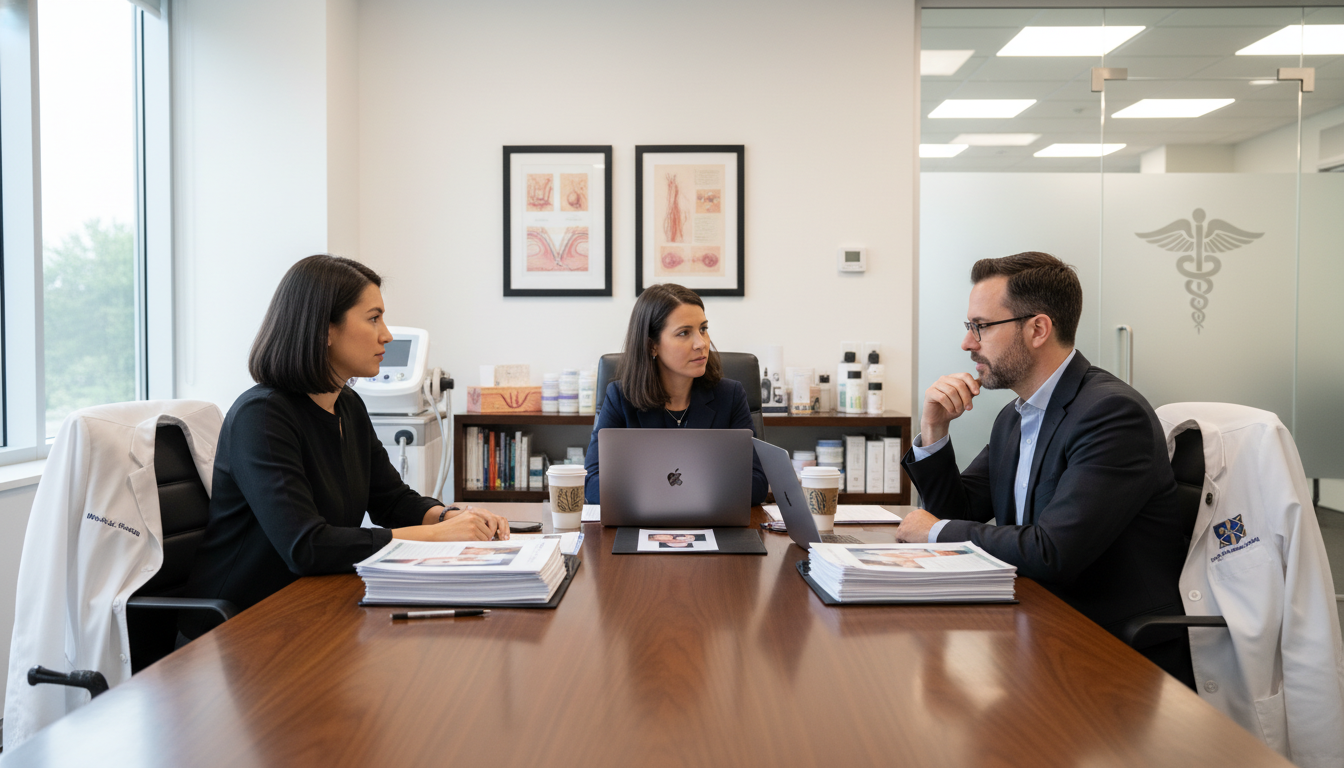
5. Personal Fit, Red Flags, and “Closing” Questions
Interviewers are also gauging who you are outside of clinical scenarios and how you will fit their culture.
5.1 Questions About You as a Person
Common questions:
- “What are your strengths and weaknesses?”
- “How would your colleagues describe you?”
- “What do you like to do outside of medicine?”
- “What are you most proud of that’s not on your CV?”
Strengths:
Choose 2–3 strengths relevant to dermatology:
- Attention to detail
- Communication and patient education
- Visual-spatial skills or procedural skills
- Reliability and follow-through
- Team-based mindset
Pair each with a brief example.
Weaknesses:
- Pick a real but non-fatal weakness (e.g., difficulty delegating, over-committing).
- Show you are actively working on it.
- Avoid clichés (“I’m a perfectionist”) unless you can explain it well.
Example (weakness):
“Early in medical school, I had difficulty delegating tasks because I worried things wouldn’t be done ‘just right.’ This sometimes led to unnecessary stress and inefficiency during group projects. Over time, through feedback and experience on clinical teams, I’ve learned to trust others’ strengths, communicate expectations clearly, and check in periodically rather than doing everything myself. I’m still mindful of this tendency, but I now actively practice delegation, which has made me a more effective team member.”
5.2 Addressing Potential Red Flags
As an MD graduate, you may face specific questions:
- “You graduated in [year]; what have you been doing since?”
- “Can you explain this leave of absence or gap?”
- “You initially matched into another specialty; what led you to switch to dermatology?”
Principles:
- Be transparent without oversharing.
- Take responsibility where appropriate.
- Emphasize insight, growth, and how you’re now prepared for residency.
Example (gap year post-graduation):
“After graduating from my allopathic medical school, I pursued a structured one-year dermatology research fellowship. During this time, I worked on two clinical trials in atopic dermatitis, presented an abstract at the AAD, and co-authored a manuscript that is currently under review. I also maintained my clinical skills by working part-time in a supervised general medicine clinic.
This year allowed me to deepen my understanding of dermatologic disease, strengthen my research skills, and confirm that dermatology is the right long-term path for me.”
5.3 Questions You Should Ask Them
Near the end, you’ll often hear:
- “What questions do you have for us?”
Thoughtful questions show genuine interest and help you compare programs. Avoid asking things clearly answered on the website.
Examples tailored to dermatology:
- “How does your program support residents interested in complex medical dermatology versus procedural or cosmetic dermatology?”
- “What opportunities exist for MD graduates to get involved in teaching medical students or other learners?”
- “Can you describe how feedback is given to residents and how residents are supported if they struggle?”
- “How has your program adapted to changes in the dermatology job market, especially for graduates interested in academic careers?”
Have 3–5 questions prepared, and adapt based on what you learn during the day.
6. Practical Preparation Strategies for MD Graduates in the Dermatology Match
Having a list of common residency interview questions is only the first step. Effective preparation can separate a good interview from an outstanding one.
6.1 Build a Personal “Question Bank”
Create a document with:
- Core questions: tell me about yourself, why dermatology, why this program.
- 10–15 common behavioral questions.
- 3–4 clinical/“interesting case” stories.
- 3–5 questions you will ask them.
Write bullet-point outlines, not full scripts, to keep answers natural.
6.2 Practice Aloud and Get Feedback
- Record yourself answering the top 10 questions.
- Practice with:
- Peers applying to other specialties
- A mentor or attending in dermatology
- Your institution’s career services or mock interview programs
- Ask specifically for feedback on:
- Clarity and organization
- Filler words and pacing
- Professionalism and warmth
- How well your answers communicate fit for dermatology
6.3 Review Your Application Thoroughly
Anything in your ERAS can spark questions:
- Publications and abstracts: know your role and key findings.
- Research projects: be ready to discuss methodology and limitations.
- Volunteer work: reflect on impact and what you learned.
- Hobbies: they often come up in the “tell me about yourself” or “what do you do outside medicine” segments.
6.4 Prepare for Virtual Interview Logistics (If Applicable)
Many dermatology residency interviews still include virtual components.
- Test your camera, microphone, and internet ahead of time.
- Choose a neutral, well-lit background.
- Dress professionally—head to toe, in case you need to stand up.
- Have your program notes and question list nearby, but avoid reading from them.
FAQ: Common Questions from MD Graduates Applying to Dermatology
1. How different are dermatology residency interview questions for MD graduates compared to current medical students?
Programs ask many of the same residency interview questions (e.g., “tell me about yourself,” “why dermatology,” “why this program,” behavioral scenarios). As an MD graduate, you’re more likely to face questions about your post-graduation experiences, any gaps, prior match attempts, and your readiness to re-enter structured training. Strong answers emphasize continuous clinical engagement, focused dermatology exposure, and clear growth since graduation.
2. How much clinical dermatology knowledge do I need to show in the interview?
Most programs don’t expect you to function like a dermatology resident yet, but they do expect you to understand the breadth of the field and demonstrate solid clinical reasoning. You should be able to discuss at least one or two dermatology cases you’ve seen, your approach to common issues (e.g., rash, changing mole), and general awareness of major conditions like psoriasis, atopic dermatitis, skin cancer, and acne. Clarity of thought and willingness to learn matter more than obscure facts.
3. How should I answer if I don’t know the answer to a clinical question?
Acknowledge that you don’t know the specific detail, but briefly outline your approach:
“I’m not sure of the exact statistic or guideline recommendation, but in practice I would start by… [history, exam, baseline labs, common differentials, when to refer or escalate].”
This demonstrates humility, safety, and reasoning. Avoid guessing wildly or bluffing; dermatology interviewers value honesty.
4. What’s the best way to stand out in such a competitive derm match?
You stand out less by being “perfect” on paper and more by being cohesive and authentic in person. Use your answers to show:
- A clear narrative linking your background, interests, and dermatology.
- Mature reflection on challenges and growth.
- Specific alignment with each program’s strengths.
- Enthusiasm and collegiality—someone residents and faculty would enjoy working with.
When you pair that with thoughtful preparation for common behavioral interview medical questions, polished answers to foundational prompts like “tell me about yourself,” and deep knowledge of your own application, you maximize your chances of matching into a dermatology residency that fits you well.