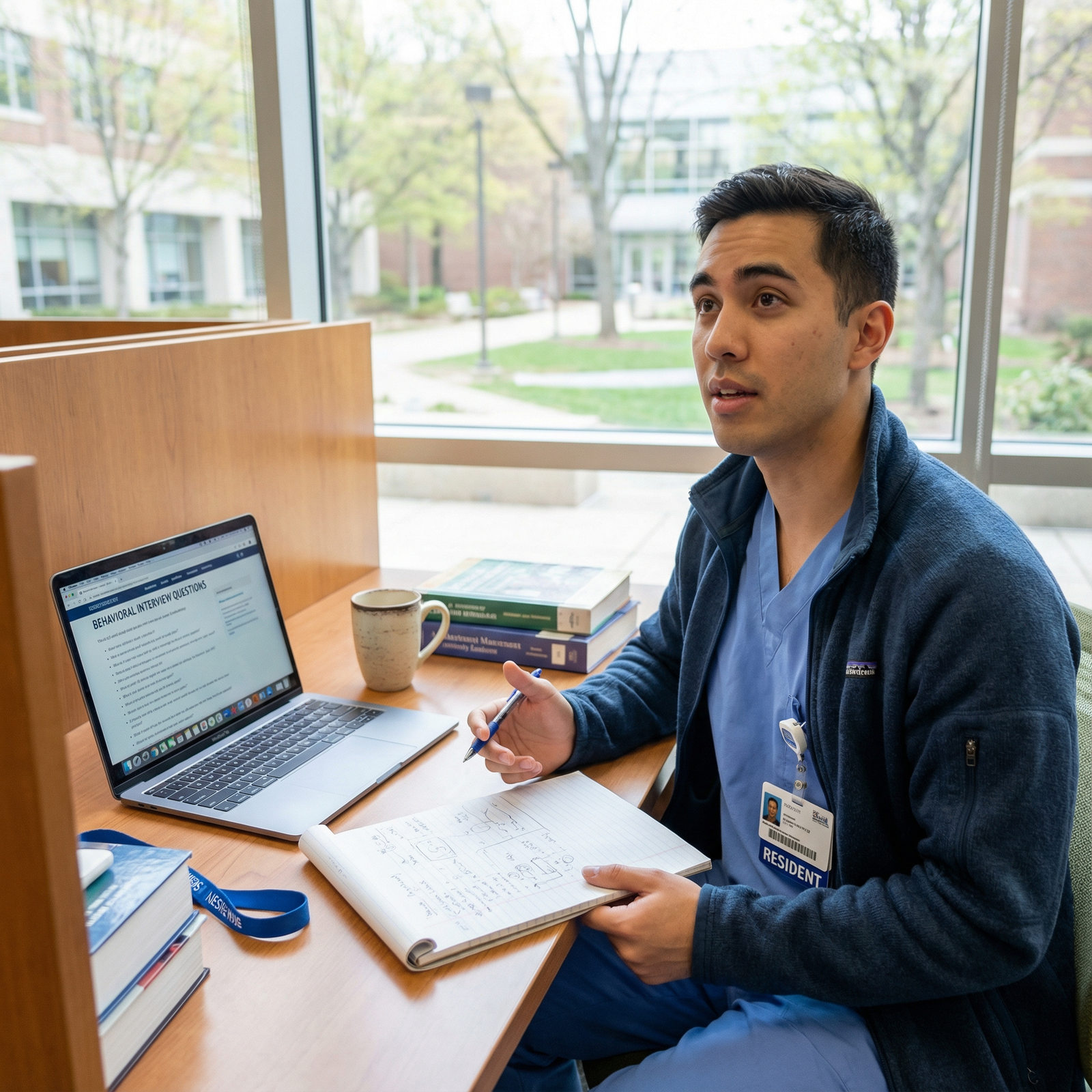
Preparing for psychiatry residency interviews as a Caribbean IMG means facing not only clinical and behavioral questions, but also subtle concerns about training background, readiness for U.S. practice, and long-term commitment to the specialty. The good news: these questions are predictable, and you can absolutely prepare to handle them with confidence.
Below is a comprehensive guide to the most common interview questions you’ll face as a Caribbean IMG applying in psychiatry—along with example frameworks, model answers, and specific tips to address your unique profile.
Understanding the Psychiatry Residency Interview as a Caribbean IMG
Psychiatry programs are increasingly IMG-friendly, and many have strong histories of Caribbean medical school residency placements, including SGU residency match successes. However, as a Caribbean IMG you must be ready to address three consistent themes:
Why psychiatry? Why now?
Programs want to know you genuinely understand the specialty’s realities—complex patients, biopsychosocial formulation, long-term care—and aren’t using it as a “backup” field.Why you? Why here?
They’re assessing your fit with their program and your readiness for team-based, patient-centered psychiatric care in their specific clinical environment.Why Caribbean? Why an IMG?
You may be asked directly (or indirectly) about your choice of school, clinical preparation, and ability to transition to U.S. healthcare systems.
To prepare effectively, you should:
- Anticipate common psychiatry-specific questions
- Practice behavioral interview medical questions using structured methods (like STAR)
- Prepare a crisp, tailored response for “Tell me about yourself”
- Develop a narrative that connects your background, training, and future goals
Core “Get to Know You” Questions (and How to Answer Them)
1. “Tell me about yourself.”
This is almost guaranteed and sets the tone for the entire interview. Program directors listen carefully to see how you frame your story.
Purpose of the question:
- Assess your communication skills
- Understand your journey from Caribbean medical school to psychiatry
- See how well you can summarize complex information
Structure your answer in 3 parts (2–3 minutes total):
- Brief background – where you’re from, your Caribbean medical school, key identity points
- Clinical and psychiatry-relevant experiences – rotations, research, leadership
- Current goals and fit – why psychiatry, and why this type of program
Sample outline (Caribbean IMG, psychiatry focus):
- Start with: Country of origin + medical school + one defining trait
- Add: Key psychiatry exposure + what you learned about yourself as a future psychiatrist
- End with: Why you’re applying to programs like theirs and what you hope to contribute
Example (condensed) answer:
“I was born and raised in Trinidad and completed my medical education at St. George’s University, where I was drawn early to the interface between culture, mental health, and chronic disease. During my clinical rotations in the U.S., particularly my core psychiatry and an elective in consultation-liaison psychiatry, I realized how much I enjoy spending time understanding patients’ narratives, exploring their beliefs, and working with multidisciplinary teams to create realistic treatment plans.
As a Caribbean IMG, I’ve had to adapt to several healthcare systems and diverse patient populations, which strengthened my communication skills and cultural humility. I’m now looking for a psychiatry residency that emphasizes psychotherapy training, strong inpatient and outpatient experience, and a supportive teaching environment—qualities I see in this program. Ultimately, I hope to practice as a community psychiatrist working with underserved populations and contributing to resident teaching.”
Tips for Caribbean IMGs:
- Mention your Caribbean school confidently, especially if it is known for strong SGU residency match or similar outcomes.
- Emphasize adaptability, cultural competence, and resilience.
- Avoid a long autobiography; keep it focused on what’s relevant to psychiatry and residency.
2. “Why psychiatry?”
Programs are trying to distinguish genuine interest from “I chose psychiatry because it’s more IMG-friendly.” Your answer must feel authentic and specific.
Key elements to include:
- A personal or clinical moment that sparked your interest
- Specific aspects of psychiatry you enjoy (e.g., psychotherapy, longitudinal care, cultural psychiatry, CL psychiatry)
- How your skills and personality match the specialty
- How you see yourself in psychiatry long-term
Better than:
- “I like talking to patients”
- “Psychiatry is less competitive”
- “I couldn’t see myself in any other specialty” without examples
Example answer:
“My interest in psychiatry developed gradually. During my internal medicine rotation, I noticed that patients with depression or anxiety had more difficulty adhering to their medical regimens. One patient with poorly controlled diabetes shared that he felt life was ‘not worth it,’ and it was clear that his mental health was driving much of his medical instability.
Later, on my psychiatry rotation in Brooklyn, I worked with a patient with schizoaffective disorder. Over several weeks, I watched her move from severe disorganization to a point where she could talk about going back to school and reconnecting with her sister. Being part of that team—adjusting medications, providing psychoeducation, and taking time to understand her story—made me realize that this is where I feel most effective as a physician.
I enjoy thinking in a biopsychosocial framework, I’m comfortable with ambiguity, and I value long-term relationships with patients. Psychiatry allows me to combine these strengths, while also addressing the mental health disparities I’ve seen both in the Caribbean and the U.S.”
3. “Why our program?”
You will hear this in some form in almost every interview. Vague answers are a red flag.
Research beforehand:
- Clinical strengths (inpatient, outpatient, CL, addiction, child & adolescent)
- Psychotherapy training (modalities, supervision style)
- Patient populations (urban, rural, underserved, immigrant communities)
- Unique features (global mental health, integrated care, strong alumni network)
Then connect 2–3 specific elements to your goals.
Example answer:
“I’m drawn to your program for three main reasons. First, your strong emphasis on community psychiatry and integrated care aligns with my goal of working with underserved populations, particularly immigrants and minority communities, similar to the patients I saw during my rotations in New York.
Second, I appreciate your structured psychotherapy curriculum, including early exposure to CBT and psychodynamic therapy with close supervision. As someone who is particularly interested in psychotherapy, that level of training is very important to me.
Finally, as a Caribbean IMG, I value the diversity of your residents and faculty and the supportive environment described on your website and by the residents I’ve spoken with. I’m looking for a program that balances high clinical volume with mentorship, and I feel your program offers that combination.”

High-Yield Behavioral Interview Questions in Psychiatry
Behavioral questions (“Tell me about a time when…”) are central in behavioral interview medical formats and heavily used in psychiatry residency interviews. They assess how you think, react, and interact—beyond test scores and grades.
Use the STAR Method
Structure your answers:
- Situation – Brief context
- Task – What you needed to do
- Action – What you personally did
- Result/Reflection – Outcome and what you learned
Aim for 1.5–3 minutes per answer.
4. “Tell me about a time you managed a difficult patient.”
In psychiatry, “difficult” may refer to agitation, hostility, poor insight, or strong transference/countertransference.
What they’re looking for:
- Safety awareness
- De-escalation skills
- Empathy and professionalism
- Ability to work with the team
Example answer outline:
- S: Briefly describe setting (e.g., inpatient psych, ED, medical floor with delirium)
- T: You as student/extern tasked with engaging the patient, ensuring safety
- A: Use of calm tone, validation, boundaries, involving staff appropriately
- R: Improved interaction, lessons on communication and safety
Sample (condensed) answer:
“During my psychiatry rotation at a community hospital, I encountered a patient with bipolar disorder in a manic episode who frequently became verbally aggressive during interviews. My task was to complete a mental status exam and gather history for rounds.
I started by observing the patient’s interactions with nursing staff and noticed that he became more agitated when he felt rushed or challenged. When I approached him, I introduced myself clearly, asked permission to sit and talk, and acknowledged that he seemed frustrated with the hospital. I used short, concrete questions, avoided challenging his delusional content, and redirected when he became tangential. When he began raising his voice, I calmly set limits—saying I would step out and return later if he felt too upset to talk—and I alerted the nurse when I sensed his agitation increasing.
By the third meeting, he was more willing to talk, and I was able to gather enough information for the team. The experience reinforced for me the importance of de-escalation, respecting a patient’s sense of control, and collaborating closely with nursing staff for safety.”
5. “Tell me about a time you made a mistake or received critical feedback.”
This is almost universal and tests your maturity, insight, and growth mindset.
Do:
- Choose a real, but non-catastrophic mistake
- Own your responsibility without blaming others
- Emphasize what you changed afterward
Don’t:
- Choose a “fake” weakness (“I care too much”)
- Deflect blame entirely
- Describe a major ethical violation without clear remediation
Example answer:
“During my internal medicine rotation in the U.S., I was responsible for pre-rounding on several patients each morning. One day, I failed to review the overnight labs for a patient with hyponatremia before presenting. During rounds, the attending pointed out that the sodium had dropped further, and I wasn’t aware.
I felt embarrassed because I knew lab review was my responsibility. After rounds, I apologized to the senior resident, who emphasized the importance of double-checking critical labs. I created a simple checklist that I used for every patient—vitals, labs, new imaging, consult notes—before rounds. I also started pre-rounding 15 minutes earlier to give myself enough time.
Since then, I haven’t repeated that mistake, and the experience taught me to build safety nets into my workflow. I apply a similar approach in psychiatry by systematically reviewing suicide risk, medication changes, and collateral information before presenting a patient.”
6. “Describe a time you worked with a difficult team member.”
Programs need residents who function well in teams and avoid unnecessary conflict.
Key points:
- Avoid character attacks or blaming
- Focus on communication, understanding perspectives, and constructive actions
- End with what you learned about teamwork
You can frame this around miscommunication with a resident, attending, nurse, or fellow student.
7. “Tell me about a time you dealt with an ethical dilemma.”
Common psychiatry-related scenarios:
- Confidentiality vs. safety (suicidal/homicidal ideation)
- Capacity vs. autonomy in medically ill patients
- Cultural or religious beliefs affecting treatment decisions
Emphasize:
- Awareness of ethical principles
- Consulting supervisors and guidelines
- Patient-centered reasoning
Psychiatry-Specific Clinical and Scenario Questions
Many programs will test how you think about common psychiatric presentations. They don’t expect full attending-level answers, but they do expect a logical, safe approach.
8. “How would you approach a patient with suicidal ideation?”
Structure your response:
- Safety first – Is the patient in an appropriate setting?
- Ask directly about suicidal thoughts, plan, intent, means, and past attempts
- Risk factors – psychiatric, medical, social, substance use, recent losses
- Protective factors – family, faith, future goals, reasons for living
- Next steps – involvement of team, possible hospitalization vs. outpatient safety plan, documentation
Also mention collateral information and supervisor involvement as a medical student/junior resident.
9. “A patient tells you, ‘I don’t want medication. I don’t need psychiatry.’ What do you do?”
This tests your ability to handle resistance and incorporate motivational interviewing.
Include:
- Respecting autonomy and exploring concerns
- Asking what they know and what they fear about medications/psychiatry
- Providing clear, nonjudgmental education
- Offering collaborative decisions (“Would you be open to trying…?”)
- Involving family or other supports when appropriate
10. “What is your understanding of the biopsychosocial model?”
This is a classic psychiatry residency interview question.
Answer elements:
- Psychiatric disorders and presentations are influenced by biological, psychological, and social factors
- Provide a brief example (e.g., depression + genetics + trauma + job loss)
- Emphasize it guides assessment and treatment—medications + therapy + social interventions

Questions Targeted to Caribbean IMGs and Caribbean Medical School Background
As a Caribbean IMG, you should anticipate questions—explicit or implicit—about your path.
11. “Why did you choose a Caribbean medical school?”
This question is sensitive but common, especially in the context of Caribbean medical school residency discussions.
Answer goals:
- Be honest but professional
- Avoid sounding defensive
- Emphasize what you gained from the experience
Example answer:
“I applied broadly to medical schools and was offered admission at [Caribbean school] where I appreciated the opportunity to train within an internationally diverse student body and gain exposure to multiple healthcare systems. The school’s track record of graduates successfully entering U.S. residency programs, including in psychiatry, also reassured me.
The experience pushed me to be independent and self-directed in my learning, and my clinical rotations in the U.S. allowed me to work in a variety of settings—from inner-city hospitals to community clinics. I believe this combination has prepared me well for the demands of residency.”
If you attended SGU, AUC, Ross, Saba, or similar, you can briefly highlight their established residency match history, including similarity to SGU residency match stories, without sounding like a commercial.
12. “How has your Caribbean training prepared you for residency in the U.S.?”
Focus on:
- Adaptability – moving between countries/systems
- Diverse patient care – different cultures, disease patterns
- Resourcefulness – learning with limited resources at times
- Strong clinical exposure during U.S. rotations
You might say:
“Training in the Caribbean and completing clinical rotations in the U.S. gave me a layered understanding of mental health across cultures. In the Caribbean, stigma is high and resources can be limited, so we relied heavily on family support and community structures. In the U.S., I’ve worked with complex cases, comorbid substance use, and patients navigating homelessness or immigration stressors.
This combination has made me flexible, culturally sensitive, and comfortable working with diverse teams—qualities that I believe are vital for psychiatry residency.”
13. “Can you tell me about any gaps, exam retakes, or challenges in your journey?”
Many IMGs have non-linear paths. Programs care more about how you handled challenges than the challenge itself.
Answer tips:
- Briefly state the issue (failed Step, leave of absence, delay in graduation)
- Take ownership and avoid we-blame (e.g., “the exam was unfair”)
- Describe concrete actions you took to improve (study plan, counseling, time management)
- Highlight the positive outcome and what you learned
Personality, Fit, and Future Goals in Psychiatry
Psychiatry programs seek residents who are introspective, empathic, and team-oriented. Expect questions that probe your interests, coping skills, and long-term vision.
14. “What are your strengths and weaknesses?”
For strengths:
Choose 2–3 that fit psychiatry, with examples:
- Active listening
- Cultural sensitivity
- Patience and tolerance of ambiguity
- Team collaboration
- Initiative in learning
For weaknesses:
Pick something real but modifiable and non-dangerous:
- Tendency to over-prepare or take on too much
- Initial hesitation to ask for help
- Public speaking anxiety
Follow with steps you’re taking to improve and progress so far.
15. “How do you handle stress and prevent burnout?”
Psychiatry programs care deeply about resident wellness and want to know you have healthy coping mechanisms.
Include:
- Specific activities (exercise, faith practices, hobbies, time with family)
- Boundaries you set (sleep routine, limiting screen time, time management)
- When you seek help (peers, mentors, counseling if appropriate)
Avoid answers that imply you don’t experience stress—that sounds unrealistic.
16. “Where do you see yourself in 5–10 years?”
Show that you have direction but flexibility.
Possible directions in psychiatry:
- Community psychiatry
- Consultation-liaison
- Child and adolescent psychiatry
- Addiction psychiatry
- Academic or research-oriented career
- Telepsychiatry or global mental health
Connect your goals to your experiences and values, not just what sounds impressive.
17. “Do you have any questions for us?”
This is not optional—coming with no questions appears disinterested.
Questions you might ask:
- About psychotherapy supervision and case load
- Opportunities to work with specific populations (e.g., immigrants, refugees, Caribbean diaspora)
- Mentorship structures and evaluation/feedback processes
- Resident wellness initiatives
- Graduates’ career paths (fellowship, community practice, academic roles)
Avoid questions easily answered on the website (e.g., “Do you have an inpatient unit?” if it’s clearly listed).
Final Preparation Tips for Caribbean IMGs in Psychiatry
Prepare and practice aloud
- Record yourself answering “Tell me about yourself,” “Why psychiatry?”, and behavioral questions.
- Time your responses to keep them concise and structured.
Create a “case portfolio”
- 3–4 memorable psychiatry patients, anonymized, that you can discuss for clinical or behavioral questions.
- Focus on what you learned about diagnosis, therapeutic alliance, and systems of care.
Address the psych match landscape realistically
- Know that psychiatry residency has become more competitive, but IMGs—including Caribbean graduates—still match successfully.
- Programs want candidates who can clearly articulate their interest in psychiatry and demonstrate readiness.
Be ready to discuss CV details
- Research, QI projects, mental health advocacy, volunteer work, presentations, or publications.
- Have 1–2 sentences summarizing each activity and what you learned.
Practice common residency interview questions with peers
- Especially those involving behavioral interview medical scenarios.
- Ask for feedback on clarity, organization, and non-verbal communication.
Stay authentic and grounded
- Program faculty in psychiatry are attuned to genuineness and emotional tone.
- It’s okay to show reflection and vulnerability—balanced with professionalism and growth.
Frequently Asked Questions (FAQ)
1. As a Caribbean IMG, will programs question my clinical training during psychiatry residency interviews?
Programs may ask about your decision to attend a Caribbean school or how your training prepared you, but this is not inherently negative. Be prepared with an honest, confident explanation that emphasizes:
- The strengths of your school and clinical rotations
- Your adaptability and cultural competence
- How your experiences shaped your interest in psychiatry
You can also reference the broader success of Caribbean medical school residency outcomes, including strong SGU residency match records, to indicate that your pathway is well established.
2. How can I stand out in the psych match as a Caribbean IMG?
You stand out by:
- Having a clear, compelling narrative for why psychiatry
- Demonstrating strong communication, reflection, and empathy during interviews
- Showing consistent interest in mental health (psychiatry electives, research, volunteer work)
- Preparing thoroughly for residency interview questions, especially behavioral ones
- Obtaining strong letters from U.S. psychiatrists who can comment on your clinical performance
3. What are the most important behavioral questions to practice for psychiatry residency?
Focus on:
- “Tell me about yourself.”
- “Tell me about a time you managed a difficult patient.”
- “Describe a time you made a mistake or received critical feedback.”
- “Tell me about a time you dealt with an ethical dilemma.”
- “Describe a conflict within a team and how you handled it.”
These are central to behavioral interview medical formats and allow you to highlight your interpersonal and reflective skills.
4. How long should my answers be during the interview?
Aim for:
- 2–3 minutes for core questions like “Tell me about yourself,” “Why psychiatry?”, and “Why our program?”
- 1.5–3 minutes for behavioral questions using the STAR method
- 30–60 seconds for simpler factual or clinical questions
If you’re unsure, pause and ask, “Would you like more detail?” This shows awareness of time and makes the interaction more conversational.
By anticipating these common interview questions and tailoring your responses to your unique background as a Caribbean IMG, you will present yourself as thoughtful, prepared, and genuinely committed to psychiatry. With deliberate preparation and practice, you can navigate the psych match with confidence and clarity.