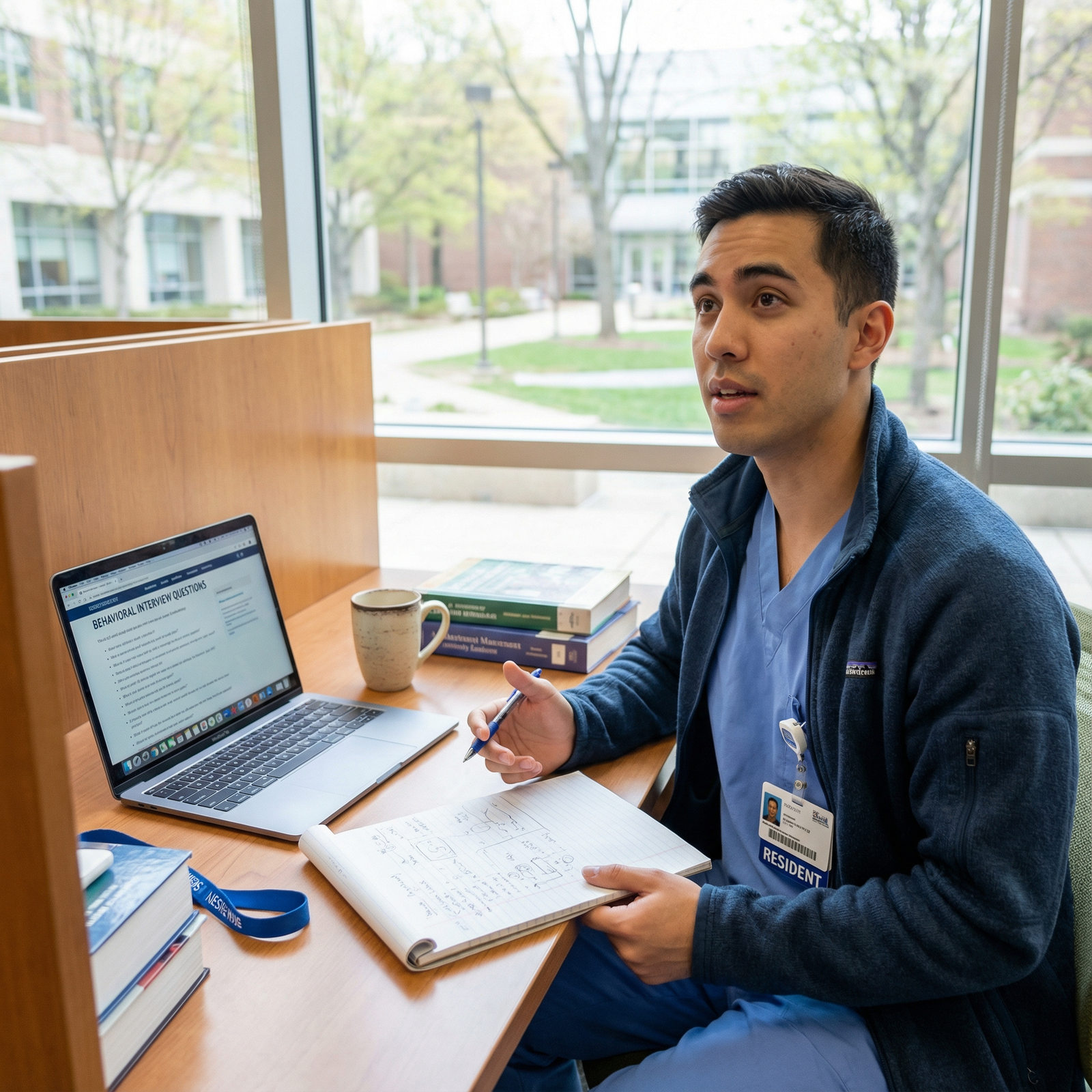
Preparing for a pathology residency interview as a US citizen IMG (American studying abroad) is very different from simply “knowing pathology.” Programs are assessing your judgment, communication skills, professionalism, and long‑term fit just as much as your exam scores or slide-reading ability.
This guide focuses on the most common interview questions you’re likely to encounter as a US citizen IMG in pathology—and how to answer them with clarity, confidence, and strategy.
Understanding the Pathology Interview Landscape for US Citizen IMGs
As an American studying abroad, you’re often viewed as a hybrid candidate: technically an IMG, but with cultural familiarity and language skills that resemble U.S. grads. That creates both advantages and unique questions in the pathology match process.
Programs are usually trying to answer four big questions:
Can you handle the work?
- USMLE/COMLEX scores
- Clinical and pathology experiences
- Letters of recommendation, particularly from U.S. pathologists
Are you truly committed to pathology?
- Depth of exposure (electives, observerships, research)
- Understanding of the field’s realities (not just “I don’t like talking to patients”)
Will you fit our culture and communicate well?
- Professionalism, team skills, language/communication
- Ability to discuss cases and conflicts respectfully
What is your trajectory?
- Career goals (academic vs. community, subspecialty interests)
- Likelihood to complete training and represent the program well
Most common interview questions are behavioral or reflective, designed to indirectly assess these four areas. The following sections break down these questions, analyze what programs are really asking, and offer example approaches tailored to US citizen IMGs seeking pathology residency.
Core Introductory Questions: Setting the Tone
These are usually asked in the first 5–10 minutes and shape the interviewer’s early impression.
1. “Tell me about yourself.”
This is almost guaranteed. It’s not an invitation to recite your CV—it’s your chance to deliver a focused, 60–90 second narrative.
What they’re really assessing:
- Can you communicate clearly and concisely?
- Do you have a coherent story that explains: US citizen IMG → Pathology → This program?
- Do you sound purposeful or random?
Framework for a strong answer (US citizen IMG–specific):
Use a Present → Past → Future structure:
- Present: Who you are now as an applicant
- Past: Key experiences that shaped you and led to pathology
- Future: What you hope to gain in residency and career direction
Example structure:
- Present: “I’m a US citizen who completed medical school at [X University] in [Country], and over the last two years I’ve focused my training and electives on anatomic and clinical pathology, particularly hematopathology and lab management.”
- Past: “I went to medical school abroad because [brief reason—cost, opportunity, family], and during my third year a rotation in pathology changed my career direction. Since then I’ve done [number] pathology electives, including U.S.-based ones at [institutions], and worked on [research/project] that gave me hands-on exposure to [relevant area].”
- Future: “I’m now looking for a program with strong surgical pathology training and good fellowship placement, where I can grow into a well-rounded pathologist and potentially pursue [subspecialty or academic/community interest].”
Avoid:
- Long autobiographical stories
- Overexplaining why you studied abroad
- Discussing personal hardships in excessive detail at the start
Focus on a clean, confident summary.
2. “Why pathology?”
Programs know some applicants “discover” pathology late or choose it after struggling in clinical fields. They want to see genuine interest.
What they’re assessing:
- Is your decision thoughtful or an afterthought?
- Do you understand what pathologists actually do day to day?
- Are your reasons more than “I like microscopes”?
Stronger elements to include:
- Specific experiences: A key case, rotation, mentor, or project that clicked
- Cognitive fit: Enjoyment of pattern recognition, diagnostics, and systems thinking
- Realistic understanding: Mention sign-out, lab medicine, multidisciplinary role, quality and safety
Example outline:
- Briefly describe your first meaningful exposure to pathology
- Connect that exposure to your strengths (analytical thinking, attention to detail, comfort with complex data)
- Add what you’ve done since then to confirm your interest:
- Electives in AP/CP
- Observerships in U.S. labs
- Autopsies, tumor boards, QA projects, or research
- Close with how those experiences led to a committed decision
3. “Why did you choose to study medicine abroad as a US citizen?”
As a US citizen IMG, this question is nearly inevitable.
What they’re assessing:
- Are there red flags (e.g., failures, inability to gain admission anywhere)?
- Can you explain your path without sounding defensive or blaming others?
- Do you own your decision and its consequences?
Tips for answering:
- Be honest but strategic—you can mention competitiveness or cost without sounding bitter.
- Emphasize what you gained: adaptability, working in different health systems, cultural competence.
- Show that any gaps, delays, or detours are now corrected and you’re fully aligned with your current path.
Example points to include:
- “I chose to study abroad because [brief, neutral reason: affordability, opportunity, timing, program structure].”
- “This exposed me to diverse pathology and health systems, and I learned to adapt quickly, work with limited resources, and communicate across cultures.”
- “To align with U.S. training, I proactively sought U.S.-based pathology electives and ensured my clinical skills and documentation match U.S. standards.”
Avoid over-apologizing or over‑justifying. State it calmly and move on.

Behavioral and Situational Questions in Pathology: What They Really Mean
Pathology residency interviews increasingly use behavioral interview medical questions (“Tell me about a time when…”) to assess professionalism and teamwork. These can feel uncomfortable if you haven’t actively practiced them.
Use the STAR method:
- Situation
- Task
- Action
- Result (and Reflection)
4. “Tell me about a time you had a conflict with a team member. How did you handle it?”
What they’re assessing:
- Emotional maturity and professionalism
- Ability to resolve issues at the lowest level
- Capacity to work with clinicians, lab staff, and co-residents
Good pathology-relevant examples:
- Disagreement with a clinician over a lab result or test ordering
- Miscommunication with another student on a rotation
- Working through differing opinions in a research or QA project
Key elements:
- Describe a specific scenario
- Show you sought to understand the other person’s perspective
- Explain how you communicated calmly and aimed for a shared goal (patient safety, report accuracy, workflow efficiency)
- Reflect briefly on what you learned
Avoid:
- Stories where the other person is entirely “the problem”
- Resolutions that involve complaining to higher-ups without first trying to communicate
- Long, emotionally charged narratives
5. “Tell me about a mistake you made in clinical work or studies and how you addressed it.”
In pathology, error management and humility are crucial.
What they’re assessing:
- Honesty and accountability
- Your approach to error: hide, blame others, or improve the system
- Long-term learning and self-correction
Stronger examples:
- Near-miss in interpreting a lab result or slide (as a student/observer) that was caught by supervision, leading you to change your study/verification methods
- Miscommunication in a patient presentation or documentation that you corrected transparently
Key points to show:
- You acknowledged the mistake
- You communicated appropriately (to supervisor / team)
- You implemented specific changes to prevent recurrence
- You see mistakes as learning opportunities, not personal catastrophes
Don’t:
- Use an example that suggests reckless or unethical behavior
- Blame others or circumstances entirely
- Claim you’ve “never made a real mistake”
6. “Describe a time you had to handle a heavy workload or competing deadlines.”
Pathology may appear “less hectic,” but AP/CP residents juggle high case volumes, complex sign-outs, on-call responsibilities, and lab management.
What they’re assessing:
- Time-management strategies
- Stress coping mechanisms
- Ability to prioritize and seek help appropriately
Example responses could draw on:
- Preparing for USMLE exams while on clinical rotations
- Managing multiple U.S. pathology electives and research projects
- Completing a thesis, presentations, and clinical duties simultaneously
Highlight:
- How you organized the work (e.g., to-do lists, time blocking)
- How you communicated when help or deadline extension was needed
- What you learned about your limits and productivity
7. “Tell me about a time you worked with a difficult patient or family member.”
Even in pathology, communication with clinicians and occasionally families (especially in autopsy or transfusion situations) requires empathy and clarity.
What they’re assessing:
- Professionalism with challenging personalities
- Respectful communication despite stress
- Ability to maintain composure
Your story can come from:
- Clinical rotations (before you decided on pathology)
- Communicating lab issues or delays to clinicians or nursing staff
- Explaining results or processes in lay terms during a previous job or volunteer work
Use it to show your empathy, calm demeanor, and respect for the patient-care team—attributes highly valued in a pathologist who consults on complex diagnoses.
Pathology-Specific Questions and How to Stand Out as a US Citizen IMG
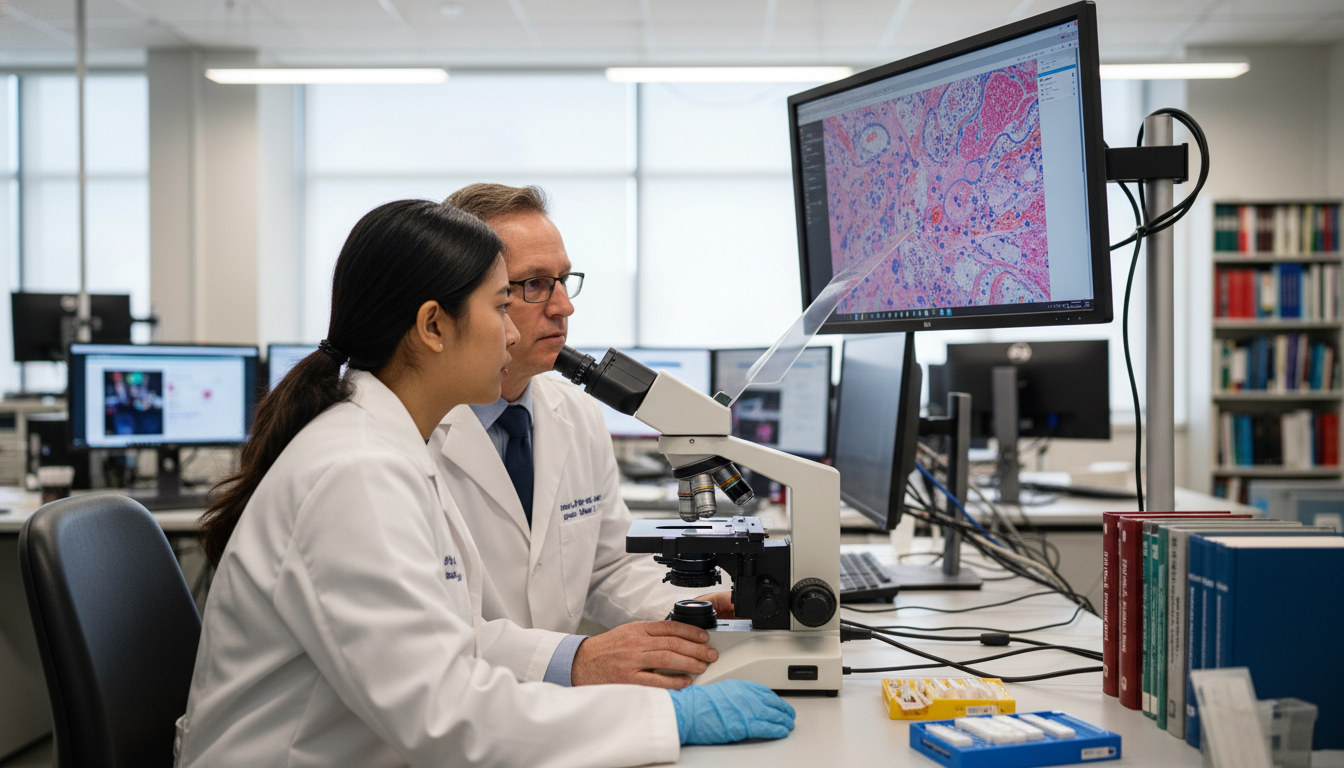
Beyond general behavioral questions, interviewers often probe your understanding of pathology as a specialty.
8. “What aspects of pathology interest you most (AP, CP, subspecialties)?”
Programs know that interests may evolve, but they want to see you’ve thought about the field.
Potential areas to mention:
- Surgical pathology
- Hematopathology
- Cytopathology
- Molecular diagnostics
- Transfusion medicine
- Microbiology/virology
- Informatics and digital pathology
- Quality improvement and lab management
As a US citizen IMG, link your interest to specific exposures from your rotations or research, especially U.S.-based experiences. Emphasize:
- Cases or projects that shaped your preferences
- How you explored both AP and CP
- Openness to evolving interests while maintaining a curious mindset
9. “How have you prepared for a career in pathology as an American studying abroad?”
This is particularly relevant to a US citizen IMG trying to show readiness for U.S. practice.
Stronger points to include:
U.S.-based pathology experiences:
- Electives or observerships in pathology departments
- Mentorship from U.S. pathologists
- Tumor board participation, autopsy exposure, sign-out shadowing
Academic preparation:
- Keeping up with U.S. guidelines and resources (e.g., CAP, ASCP)
- Studying pathology beyond the minimum exam requirements
- Attending virtual pathology conferences or webinars
Professional adaptation:
- Familiarizing yourself with U.S. reporting styles, EMR systems, and lab structures
- Demonstrating strong English communication in clinical documentation and presentations
Signal that you came back to the U.S. system intentionally and thoughtfully, not as an afterthought.
10. “What do you think are the biggest challenges facing pathology today?”
This question differentiates a casual applicant from someone genuinely engaged with the field.
Possible areas to discuss:
- Workforce issues and subspecialty shortages
- Integration of molecular diagnostics and genomics into routine practice
- Digital pathology and AI—opportunities and limitations
- Pressure for turnaround time vs. diagnostic accuracy
- Reimbursement and visibility of pathologists in the healthcare system
- Patient safety and error reduction in the lab
You don’t need deep policy knowledge; you do need to show:
- Awareness that the field is evolving
- Basic familiarity with current trends (e.g., AI in image analysis, growing role of molecular pathology)
- Openness to continuous learning and adaptation
Program-Fit and Career-Goal Questions
These questions help programs determine whether you will thrive in their environment and whether they can meet your needs.
11. “Why our program?”
Generic praise (“Great reputation, friendly residents”) won’t differentiate you in the pathology match.
To answer well:
Name 2–3 specific program features that match your goals:
- Volume and case variety (community vs. tertiary care)
- Subspecialty faculty (e.g., strong hemepath, molecular, dermpath)
- Research opportunities or fellowships
- Call structure and CP exposure
- Educational curriculum (didactics, unknown conferences, journal club)
Connect those features to your personal path as a US citizen IMG:
- “Given my foundation abroad, I’m particularly drawn to your structured CP curriculum and strong lab management training to ensure I’m fully aligned with U.S. practice expectations.”
Do your homework: review the program website, case volumes, and fellowship placement list before the interview.
12. “Where do you see yourself in 5–10 years?”
What they’re assessing:
- Are your goals realistic and compatible with their training environment?
- Are you likely to complete training and be successful?
You can be honest about uncertainty while still offering direction:
- “I’m leaning toward [subspecialty], but I’m open to exploring more during residency.”
- “I see myself in a [academic vs community] setting, ideally with a role in [education, lab management, quality improvement, or research].”
As a US citizen IMG, it can help to note:
- Your intention to stay in the U.S. long term
- Interest in contributing to the program’s reputation through fellowships, jobs, or leadership
13. “Do you have any concerns about starting residency in the U.S. after training abroad?”
This is a chance to be self-aware and proactive, not self-critical.
You might acknowledge:
- Adapting from your medical school’s healthcare system to U.S. workflows
- Getting used to specific EMR systems or documentation conventions
- Learning the local culture of communication with clinicians and staff
Then emphasize:
- Steps you’ve already taken (U.S. electives, observerships, language proficiency, reading U.S. guidelines)
- Your openness to feedback and structured learning
Programs appreciate when candidates anticipate challenges and show they can self-correct.
14. “What questions do you have for us?”
This is not a formality. Strong questions show that you’re evaluating them thoughtfully—just as they are evaluating you.
Tailor your questions to pathology and your situation as a US citizen IMG:
- “How does your program integrate AP and CP teaching across the four years?”
- “What kinds of mentorship do residents receive if they’re interested in fellowships like hemepath or molecular?”
- “How are residents involved in quality improvement or lab management projects?”
- “For residents coming from international schools, what support or orientation have you found most helpful?”
Avoid questions easily answered on the website or that suggest you’re only ranking based on location or workload.
Commonly Asked “Red Flag” and Personal Background Questions
Programs may probe more sensitive topics; prepare answers that are clear, concise, and non-defensive.
15. “I see you have a gap / low score / repeated exam. Can you tell me about that?”
Principles for a strong response:
- Acknowledge the issue directly.
- Provide a brief, factual explanation (health, adjustment, logistics), without unnecessary detail.
- Emphasize your growth and subsequent performance (improved scores, strong clinical evaluations, publications).
- Reaffirm your current readiness and stability.
Example structure:
- Briefly state what happened.
- One sentence of context, without blaming.
- Specific steps you took to fix the problem.
- Evidence that it worked (scores, performance, feedback).
Stay composed. The interviewer is often more interested in how you handle the question than the issue itself.
16. “How do you handle stress or prevent burnout?”
Pathology can involve high cognitive load, complex cancer cases, and responsibility for patient outcomes behind the scenes.
Your answer should include:
- Specific coping strategies (exercise, hobbies, family/friend support, mindfulness)
- Time-management and boundary-setting habits
- Recognition of when to seek support from peers or mentors
- A brief example if possible (e.g., during exam prep or heavy rotations)
As a US citizen IMG, you can also mention how you managed the stress of being far from home, adapting to a new system, or balancing exams with clinical work—showing resilience and resourcefulness.
Practical Tips for Practicing Pathology Residency Interview Questions
To truly benefit from these common interview questions, deliberate practice is key.
1. Record yourself answering big anchors:
- “Tell me about yourself.”
- “Why pathology?”
- “Why did you study abroad?”
- “Why this program?”
Watch for:
- Rambling or long pauses
- Overly rehearsed or robotic tone
- Excessive self-criticism or humility that undercuts your strengths
2. Build a small “bank” of STAR stories:
Aim for 5–7 scenarios you can adapt:
- A conflict with a team member
- A mistake or near miss
- A time you demonstrated leadership or initiative
- Handling heavy workload/stress
- Working with a difficult patient or colleague
- A time you adapted to a new environment (great for American studying abroad)
- A successful collaboration or project outcome
You can reuse these across many behavioral questions by reframing the emphasis.
3. Practice pathology-specific discussions:
Be ready to talk about:
- A memorable case and what you learned
- A pathology-related project or research experience
- An aspect of CP (e.g., transfusion reactions, microbiology, lab utilization) you found interesting
- A recent article or topic in pathology that caught your attention
4. Simulate virtual interviews:
If many interviews are virtual:
- Test your lighting, camera angle, and sound
- Use a neutral background
- Maintain eye contact (look at the camera, not just the screen)
- Keep notes nearby, but avoid reading
FAQs: Pathology Residency Interviews for US Citizen IMGs
1. As a US citizen IMG, will I be asked different interview questions than non‑IMGs?
The core residency interview questions—“Tell me about yourself,” “Why pathology?”, behavioral scenarios—are the same. However, as a US citizen IMG, you can expect:
- More frequent questions about why you studied abroad.
- Occasional questions about how you’ve adapted to the U.S. healthcare system.
- Extra interest in your U.S.-based pathology experiences to gauge your readiness.
Prepare clear, confident answers that present your path as intentional and strengths-based.
2. How can I best answer “Tell me about yourself” as an American studying abroad?
Use the Present → Past → Future format:
- Present: Your current status (US citizen IMG, pathology-focused experiences).
- Past: Key events that led you from medical school abroad to pathology, highlighting formative rotations or mentors.
- Future: Your goals in pathology residency and long-term direction (e.g., subspecialty interests, academic vs community).
Keep it focused, 60–90 seconds, and link your international training to specific strengths: adaptability, cultural competence, resourcefulness.
3. What pathology-specific topics should I review for residency interview questions?
You usually won’t be heavily quizzed on microscopic details, but you should be prepared to discuss:
- Your pathology rotations: types of cases, sign-out experience, autopsy exposure.
- Basic structure of AP and CP and how residents progress through each.
- Any research, QI, or lab management projects you participated in.
- General awareness of current trends: digital pathology, molecular diagnostics, AI, patient safety in labs.
Your ability to talk thoughtfully about these topics matters more than memorizing esoteric facts.
4. What are some strong questions I can ask programs at the end of the interview?
Good questions for a pathology residency (especially as a US citizen IMG) include:
- “How are residents exposed to both AP and CP throughout the four years?”
- “What opportunities are there for residents to get involved in quality improvement or lab management?”
- “How does your program support residents pursuing competitive fellowships?”
- “What resources or support do you provide for residents who graduated from international medical schools to help them adapt to the U.S. training environment?”
Thoughtful, program-specific questions show maturity, engagement, and genuine interest—traits that leave a strong final impression.
By anticipating these common interview questions and tailoring your responses to your path as a US citizen IMG, you can present a coherent, confident narrative: you chose to study abroad for clear reasons, actively prepared for U.S. pathology practice, and now bring unique strengths—global perspective, adaptability, and a deep commitment to diagnostic medicine—to any pathology residency program.