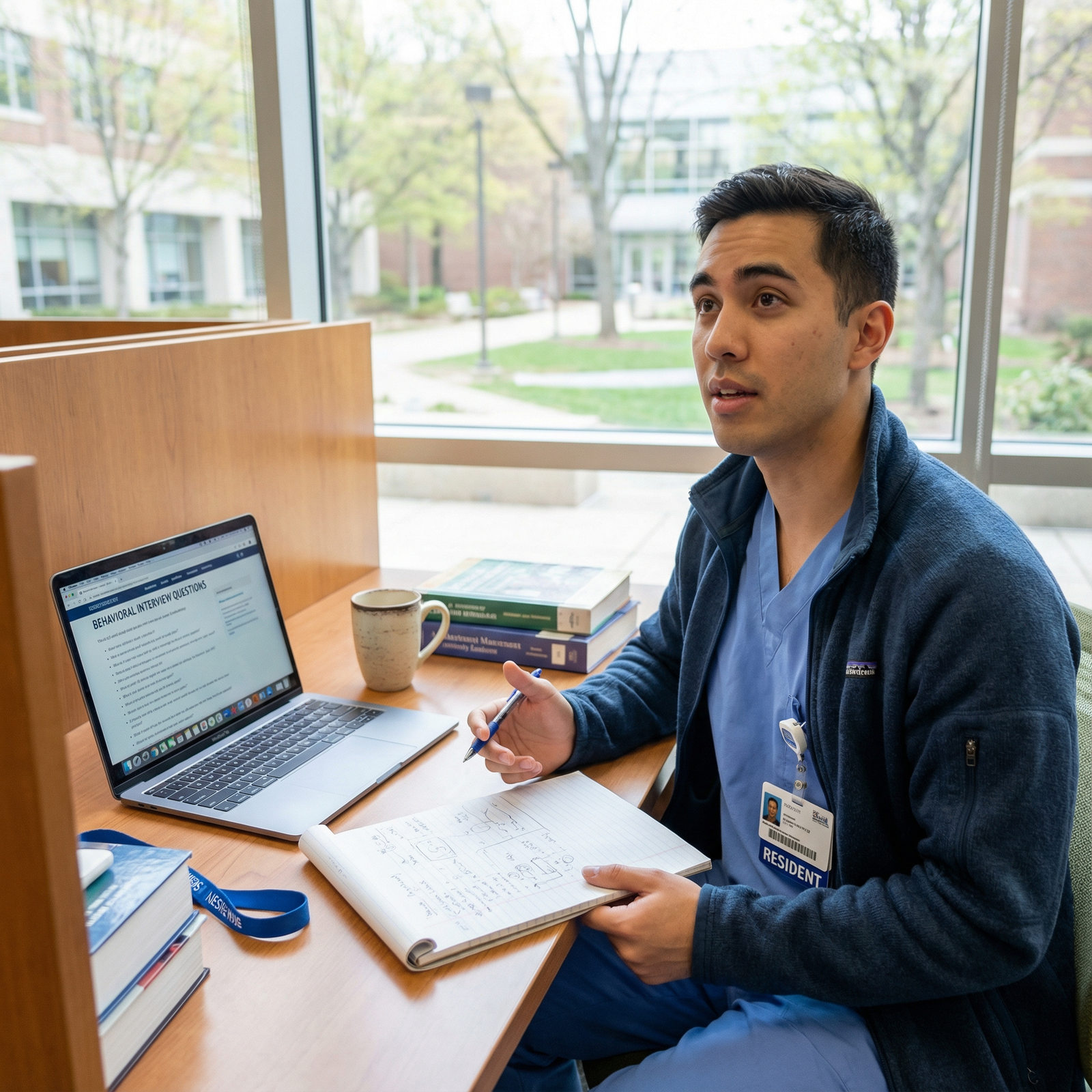
Preparing for orthopedic surgery residency interviews as an MD graduate requires more than knowing anatomy and fracture classifications. Programs want to see how you think, communicate, manage pressure, and fit into a high-intensity surgical team. This article breaks down the most common interview questions you’ll face as an MD graduate in orthopedic surgery, how to approach them, and what strong answers look like.
Understanding the Orthopedic Surgery Interview Landscape
Orthopedic surgery is one of the most competitive specialties in the allopathic medical school match. As an MD graduate, you’ve already proven your academic capability, Step scores, and clinical skills. Interviews are where programs differentiate between many highly qualified candidates and decide who will thrive in their specific environment.
What Programs Are Really Assessing
Across almost all residency interview questions—especially behavioral interview medical formats—programs are trying to evaluate:
- Clinical maturity and judgment
- Teamwork and communication under stress
- Reliability and work ethic in a demanding surgical field
- Coachability and humility—can you take feedback?
- Resilience after complications, errors, or personal setbacks
- Motivation for orthopedic surgery and alignment with the program’s culture
A significant portion of the interview will consist of “behavioral” questions (“Tell me about a time when…”). These are designed to predict how you will behave as a resident based on your past actions. Your goal is to answer clearly, concisely, and with specific examples that highlight your strengths and growth.
Core Personal & Motivational Questions
These questions tend to open or frame the interview. They’re almost guaranteed, and your answers should be polished, authentic, and aligned with orthopedics.
1. “Tell me about yourself.”
This is one of the most common residency interview questions and almost always comes first. Programs use it to quickly understand who you are and what matters most to you.
Strategy:
- Keep it to 1.5–2 minutes.
- Focus on professional and academic story arcs; avoid long personal backstories.
- Use a past–present–future structure:
- Past: Where you’re from, major milestones that shaped your path to medicine/orthopedics.
- Present: Your current status as an MD graduate, key experiences and strengths.
- Future: Why orthopedic surgery and what you’re looking for in a residency program.
Example outline:
- Brief background (hometown/undergrad if relevant)
- Medical school highlights (key ortho exposure, research, leadership)
- Why orthopedics (1–2 concise reasons)
- What you bring to a program (work ethic, teamwork, interest in trauma/sports/etc.)
Strong answer elements (for an ortho-focused MD graduate):
- Specific triggers for your interest in orthopedics: first fracture clinic, OR exposure, mentorship.
- Evidence of commitment: ortho sub-I’s, research, interest group leadership, shadowing.
- Skills that translate well to an orthopedic surgery residency: manual dexterity, team sports, perseverance, problem-solving.
2. “Why orthopedic surgery?”
For the ortho match, this question is critical. Programs want to know you are choosing orthopedics deliberately, not just as a prestige or salary-based decision.
Strategy:
- Offer 3–4 specific reasons, not generic “I like working with my hands.”
- Tie your reasons to personal experiences and future goals.
- Connect to both cognitive and procedural aspects of the field.
Possible themes:
- Enjoyment of mechanical problem-solving (biomechanics, fracture patterns)
- Satisfaction from restoring function and mobility
- Enjoying longitudinal relationships with patients after surgery
- Appreciation for team-based care with PT/OT, nursing, anesthesia, and other surgeons
- Alignment with the culture of orthopedics (direct communication, decisiveness, fast-paced)
Weak answers to avoid:
- “I like sports and I was injured once” without depth.
- Only referencing money, lifestyle, or prestige.
- Overly vague responses that could apply to any surgical field.
3. “Why our program?”
Every program will ask this in some form. Strong answers separate you from applicants giving canned responses.
Strategy:
- Know 3–4 program-specific points (from the website, residents, faculty, or pre-interview dinner).
- Connect these to your goals and experiences.
- Show you understand both training structure and culture.
Examples of specific points:
- High volume in trauma, joints, or sports that aligns with your interests.
- Unique features: early operative autonomy, integrated research year, robust simulation training.
- Geographic or community-based reasons that are genuine (family, long-term plans, interest in underserved populations).
Structure your answer:
- High-level statement: “I’m drawn to your program because…”
- 3 concrete examples: volume, mentorship, research, culture.
- Personal tie-in: “This aligns with my interest in X and my experience in Y.”
4. “Why should we choose you?” / “What sets you apart?”
This is your opportunity to clearly articulate your value proposition.
Strategy:
- Pick 2–3 core strengths that matter for orthopedics.
- Support each with a brief, concrete example.
- Keep it confident but not arrogant.
Examples of ortho-relevant strengths:
- Resilience/work ethic demonstrated on busy trauma rotation.
- Leadership as ortho interest group president or team captain.
- Research productivity in ortho/biomechanics.
- Communication skills and ability to connect with patients and teams.

Common Behavioral & Situational Questions (With Examples)
Behavioral interview medical questions typically follow the STAR format:
Situation, Task, Action, Result. Prepare 6–8 “core stories” you can adapt to various prompts.
5. “Tell me about a time you made a mistake.”
Programs are not looking for perfection; they’re looking for honesty, insight, and growth.
Strategy:
- Choose a real but contained mistake, not something catastrophic or unprofessional.
- Emphasize accountability and what you changed afterward.
- Avoid blaming others or external factors.
Example framework:
- Situation: On your surgery clerkship, you forgot to follow up on a lab result.
- Task: You were responsible for checking morning labs for the team.
- Action: You recognized the oversight, notified your senior, helped expedite appropriate care, and implemented a personal system (checklists, EMR flags) to prevent repeat.
- Result: The patient’s outcome was not harmed; you improved your reliability and workflow.
6. “Tell me about a conflict with a team member and how you handled it.”
Orthopedics is highly team-oriented with intense, time-sensitive environments.
Strategy:
- Choose a professional conflict, not personal drama.
- Show emotional control, perspective-taking, and focus on patient care.
- End with what you learned and how you now approach conflicts proactively.
Example scenarios:
- Disagreement with a co-intern about patient sign-out priorities.
- Miscommunication with a nurse over post-op pain control orders.
- Differences with a research collaborator about authorship or timeline.
Focus on:
- Clarifying expectations.
- Listening first.
- Keeping the patient’s best interest at the center.
- Involving seniors/supervisors appropriately when needed.
7. “Describe a time you worked under intense pressure.”
Orthopedic surgery often involves long trauma calls, complex cases, and multiple competing priorities.
Strategy:
- Pick a story that reflects clinical stress, not just exam stress.
- Highlight organization, prioritization, and calm communication.
- Avoid portraying yourself as a victim; show how you took control where you could.
Example:
Managing multiple unstable post-op patients on a busy trauma service night, triaging calls, escalating appropriately, and using checklists and task grouping to stay organized.
8. “Tell me about a time you failed.”
This is similar to the mistake question but often refers to a broader setback: failing an exam, not matching into a research program, losing a leadership position.
Strong approach:
- Be honest about the severity (e.g., Step failure, repeated exam, personal challenge).
- Focus on:
- Insight: What you misjudged or missed.
- Action: Concrete changes you made (study habits, wellness strategies, time management, mentorship).
- Outcome: Improved performance, increased resilience, better self-awareness.
Program directors want to see that you can rebound and mature, which is crucial in a field where complications and difficult outcomes are inevitable.
9. “Give an example of when you showed leadership.”
Orthopedic surgery values residents who can lead the team in acute situations, coordinate care, and advocate for patients.
Possible examples:
- Serving as chief of a student-run clinic with orthopedics-focused services.
- Leading a quality improvement project related to post-op infection rates or mobilization.
- Coordinating a multidisciplinary response to a complex trauma case, even as a student, by ensuring communication between services.
Emphasize:
- How you motivated or coordinated others.
- Your communication style.
- Concrete improvements that resulted (process efficiency, patient satisfaction, safety).
10. “Tell me about a time you dealt with a difficult patient or family.”
Orthopedic patients may have chronic pain, high functional demands, or unrealistic expectations post-op.
Strategy:
- Demonstrate empathy, boundary-setting, and clear communication.
- Show respect for patient autonomy while giving realistic, evidence-based guidance.
- For example:
- A patient upset about weight-bearing restrictions or rehab timeline.
- A family distressed over potential loss of function after trauma.
Highlight:
- Active listening (“I hear that you’re worried about…”).
- Using plain language to explain the plan.
- Involving the team (attendings, PT/OT, social work) appropriately.
Orthopedic-Specific & Clinical Scenario Questions
Programs often incorporate specialty-specific questions to see how you think like an orthopedic resident, even if they’re not expecting you to act as a fellow.
11. “What areas of orthopedic surgery interest you most?”
This helps programs understand your long-term trajectory and fit with their strengths.
Be honest but flexible:
- It’s fine to say you are undecided but highlight 1–2 areas you’re exploring: trauma, sports, joints, pediatrics, hand, spine, oncology.
- Tie your interests to:
- Previous rotations or sub-I’s.
- Specific research you’ve done.
- Future career goals (academic vs community, research focus, patient population).
Programs don’t expect you to be locked in, but they appreciate thoughtful self-awareness.
12. “Describe a challenging orthopedic case you were involved in.”
This allows you to demonstrate:
- Clinical reasoning.
- Understanding of multidisciplinary care.
- Insight into your role as a learner.
Structure:
- Briefly introduce the case (age, key pathology, why it was challenging).
- Discuss your role as a student/MD graduate (pre-op eval, counseling, OR assistance, post-op care).
- Reflect on what you learned about:
- Surgical decision-making.
- Complication management.
- Patient expectations and rehab.
Avoid violating confidentiality: no names, identifiable details, or unnecessary specifics.
13. “How do you handle seeing complications or poor outcomes?”
Complications are emotionally and professionally taxing.
Strong answer themes:
- Emotional processing: Acknowledge that it’s difficult while staying professional.
- Learning orientation: Participate in M&M, literature review, and feedback.
- Patient-centered approach: Clear, honest communication with patients/families (as appropriate to your role).
- Support and resilience: Use mentors, peers, wellness resources, and healthy coping mechanisms (exercise, hobbies).
14. Clinical Scenario-Style Questions
Some programs will give you broad scenarios instead of rapid-fire factual questions:
- “You’re the on-call ortho resident. A nurse calls about a post-op patient with increasing pain and swelling in the leg. What do you do?”
- “You’re covering the ED and get paged about an open tibial fracture in a 25-year-old after an MVC. Walk us through your initial steps.”
Tips:
- Think aloud and prioritize safety.
- Use structured thinking: ABCs, neurovascular status, immobilization, pain control, imaging, antibiotics, tetanus, calling for help.
- It’s okay to say, “I would discuss this with my senior/attending,” while still outlining your initial steps.

Common “Fit” and Professionalism Questions
These questions help programs assess how you’ll function as a colleague in the program’s culture.
15. “How do you handle feedback or criticism?”
Orthopedic training is feedback-heavy, often delivered in fast, direct ways.
Strong answer elements:
- Explicitly state that you welcome feedback and see it as necessary for growth.
- Briefly describe a specific time you received constructive criticism, how you reacted, and how you changed your behavior.
- Emphasize non-defensiveness, reflection, and follow-through.
16. “What are your strengths and weaknesses?”
This is classic but still widely used.
Strengths:
- Pick 2–3 that are relevant to orthopedics (work ethic, team orientation, composure under stress, manual dexterity, detail-orientation).
- Support each with a concrete example.
Weaknesses:
- Choose something real but improvable (e.g., sometimes over-committing, initial difficulty delegating, speaking too quickly when nervous).
- Show insight and specific actions you’re taking to improve.
- Avoid clichés like “I’m a perfectionist” unless you explain how it has been a real issue and how you’ve managed it.
17. “How do you manage work–life balance and prevent burnout?”
Given the demands of an orthopedic surgery residency, programs want to see realistic insight.
Strategy:
- Acknowledge that ortho is demanding and that you anticipate challenges.
- Discuss healthy coping strategies:
- Exercise, time outdoors, hobbies, family/friend support.
- Setting micro-boundaries when off duty (sleep hygiene, minimizing screen time).
- Reference how you maintained wellness during intense periods in medical school or sub-I’s.
18. “Where do you see yourself in 10 years?”
This question tests whether your long-term vision is compatible with the training environment.
Possible directions:
- Academic surgeon with clinical subspecialty and ongoing research.
- Community orthopedic surgeon with focus on sports medicine, trauma, or joint replacement.
- Interest in medical education, quality improvement, or global orthopedics.
Programs don’t need a fixed plan but want intentionality and a sense that their training will actually help you reach your goals.
Practical Preparation Strategies for MD Graduates
Knowing common residency interview questions is only half the battle. Effective preparation will help you stand out in the allopathic medical school match for orthopedic surgery.
Build Your “Story Bank”
Create a list of 6–8 key experiences you can repurpose:
- A time you showed leadership.
- A time you failed or made a mistake.
- A difficult patient/family interaction.
- A conflict with a team member.
- A challenging clinical case.
- A high-pressure situation.
- A time you went above and beyond for a patient.
- A research or QI project.
For each, jot down:
- Situation
- Task
- Action
- Result
- Reflection (what you learned)
This practice makes it much easier to answer behavioral questions smoothly.
Practice Out Loud—Especially “Tell Me About Yourself”
The “tell me about yourself” question sets the tone. Practice until your answer:
- Is clear, organized, and 90–120 seconds long.
- Flows naturally—not memorized verbatim.
- Emphasizes your journey toward orthopedic surgery and your strengths as an MD graduate.
Do mock interviews with:
- Mentors or orthopedic faculty.
- Career advisors or your medical school’s residency prep office.
- Peers also applying to competitive surgical specialties.
Record yourself to assess:
- Filler words (“um,” “like,” “you know”).
- Body language (eye contact, posture, fidgeting).
- Pace and clarity.
Research Each Program Thoroughly
For every interview, research:
- Case volume and subspecialty strengths.
- Research infrastructure and recent publications.
- Call schedule and operative expectations by PGY level.
- Resident bios and fellowship placements.
- Program’s stated values (from website, pre-interview presentations).
Use this to tailor answers to:
- “Why our program?”
- “What are you looking for in a residency?”
- “How would you contribute here?”
Prepare Thoughtful Questions to Ask Them
Your questions at the end of the interview also signal your priorities and insight. Avoid asking things easily found on the website.
Consider asking about:
- Resident autonomy in the OR over time.
- Mentorship structure for research.
- Wellness support and mechanisms for addressing resident concerns.
- How the program incorporates feedback from residents to improve training.
- Opportunities to work with specific subspecialty services you care about (e.g., complex trauma, sports).
Having 3–4 strong questions prepared per program shows sincere interest and maturity.
FAQs: Orthopedic Surgery Residency Interview Questions
1. Are my answers to residency interview questions supposed to be memorized?
No. Overly scripted answers sound inauthentic. Instead, outline key points and practice enough that you’re comfortable and fluid. Know your major stories (for behavioral questions) and your core messages (why orthopedics, why this program, what you bring) but adapt wording naturally to the conversation.
2. How much should I talk about research during my orthopedic surgery residency interviews?
Mention research particularly when:
- Asked about your CV.
- Discussing your interest in academic practice or subspecialty training.
- Answering “What sets you apart?” or “Tell me about a project you’re proud of.”
Avoid turning every question into a research monologue. Focus on what your research shows about your persistence, curiosity, teamwork, and problem-solving—all valuable in orthopedics.
3. How do I talk about a lower Step score or a red flag if I’m asked directly?
Be honest, concise, and forward-looking:
- Briefly explain relevant context if appropriate (no long justifications).
- Emphasize what you learned and the specific changes you made.
- Highlight subsequent evidence of improvement (clerkship grades, sub-I evaluations, later test performance). Turn the narrative into one of resilience and growth, not excuse-making.
4. What if I don’t know the answer to a clinical or ortho-specific question during the interview?
It’s acceptable—and often respected—to say something like:
- “I’m not certain of the exact answer, but I would approach it by…”
- “At my current level of training, I would first assess X, Y, Z and then discuss with my senior/attending.”
Demonstrate logical thinking, patient safety, and willingness to seek help. Programs don’t expect fellowship-level knowledge from an MD graduate, but they do expect sound judgment and humility.
By anticipating these common interview questions and preparing thoughtful, experience-based answers, you’ll be better positioned to present yourself as a mature, motivated, and coachable future orthopedic surgeon. Combine solid preparation with genuine curiosity about each program, and you’ll navigate your orthopedic surgery residency interviews—and the ortho match as a whole—with confidence and clarity.