
Preparing for emergency medicine (EM) residency interviews as a DO graduate means navigating not only standard residency interview questions, but also questions specific to osteopathic training and the competitive EM match landscape. This guide walks through the most common interview questions you can expect, why programs ask them, and how to craft strong, memorable answers that reflect your strengths as a future emergency physician.
Understanding the EM Residency Interview Landscape as a DO Graduate
Emergency medicine programs are fast-paced, team-driven, and communication-heavy. Interview questions are designed to evaluate three big things:
- Fit for EM and the specific program
- Clinical judgment and professionalism under pressure
- Interpersonal skills and self-awareness
As a DO graduate, you may also encounter questions that explore:
- Your osteopathic training and philosophy
- Your path as a DO in an increasingly competitive osteopathic residency match and ACGME-integrated system
- How you compare and integrate with MD peers
What Programs Are Really Looking For
Across all emergency medicine residency programs, interviewers are trying to answer:
- Are you safe to put in front of patients in a chaotic ED?
- Are you coachable and able to grow from feedback?
- Will you fit our culture and be someone we want on a 3 a.m. shift?
- Do you bring something unique (background, interests, skills) to our team?
- Do you understand the realities of emergency medicine—not just the TV version?
This is why you’ll get a mix of:
- General “get to know you” prompts (e.g., “tell me about yourself”)
- Behavioral interview medical scenarios (“describe a time you made a mistake”)
- Ethical and conflict questions (e.g., “what would you do if…”)
- EM-specific questions (“why emergency medicine?” “why nights and weekends forever?”)
- Osteopathic-specific questions for a DO graduate residency applicant
Foundational Questions: Setting the Tone
These questions often come early and shape the interviewer’s first impression. Prepare them carefully.
1. “Tell Me About Yourself”
This is one of the most common residency interview questions and almost guaranteed to appear. Interviewers are not asking for your full life story—they want a concise, structured narrative.
Purpose:
- Assess your communication style and self-awareness
- Understand your path to medicine and EM
- Get a sense of who you are beyond the CV
Strategy: Use a 3-part structure: Past → Present → Future
- Past: Briefly where you’re from and major formative experiences
- Present: Where you are now (4th year DO student/recent graduate), your EM-specific interests
- Future: What you’re looking for in an EM residency and career
Example Framework for a DO Graduate:
“I grew up in a small town in Ohio where access to healthcare was limited, and my earliest experiences with medicine were in the local ED. Those experiences, along with years as an EMT before medical school, drew me to both medicine and the acute care environment.
I attended [DO school name], where I’ve been especially involved in our EM interest group and did sub-internships at high-volume urban EDs. I really enjoyed the team-based care and the chance to stabilize very sick patients while still taking the time to connect with them and their families.
Going forward, I’m looking for an emergency medicine residency that offers high acuity, strong procedural training, and a supportive, teaching-focused culture. I’m especially interested in programs like yours that emphasize [example: ultrasound education, community outreach, or critical care exposure]. Long-term, I see myself as an ED physician with a role in [education/administration/EMS] and continuing to work with underserved populations.”
Avoid:
- Listing your CV chronologically
- Sharing too much personal detail or anything overly controversial
- Monotone delivery—practice sounding conversational and natural
2. “Why Emergency Medicine?”
Every EM program will ask some version of this. Your answer must be specific to EM, not generic to medicine.
Purpose:
- Confirm you understand EM’s realities (shift work, nights, high stress)
- Evaluate your motivations for choosing this specialty
- See if you’re resilient and realistic
Key Elements to Include:
- Concrete experiences that led you to EM
- Aspects of EM that uniquely fit your personality and strengths
- Honest acknowledgment of challenges—and why you still choose it
Sample Answer Points:
- Love for undifferentiated patients and rapid decision-making
- Comfort with uncertainty and incomplete information
- Enjoyment of procedures and hands-on care
- Appreciation for teamwork with nurses, techs, EMS, consultants
- Interest in public health, access to care, and safety-net medicine
DO-Specific Angle: You can weave in your osteopathic training:
“My osteopathic training emphasized treating the whole person, not just a disease process. In the ED, I see that in action every day—whether it’s addressing someone’s chest pain and their housing insecurity in the same visit, or understanding how social determinants drive frequent ED use. That whole-person approach is a big part of why EM feels like the right fit for me.”
3. “Why Our Program?”
This is where many strong candidates stumble by giving generic answers. Programs want to know that you’ve done your homework.
Purpose:
- Assess genuine interest in the program
- Distinguish you from applicants giving “copy-paste” answers
- Evaluate how your goals align with their strengths
Preparation Checklist:
- Read the program website in depth
- Talk to current residents if possible
- Identify 2–3 program-specific features:
- Trauma level
- Community vs. academic focus
- EMS exposure
- Ultrasound program
- Toxicology, global health, or research opportunities
- ED volume and acuity
- Culture and resident wellness initiatives
Answer Template:
“I’m particularly interested in your program for three reasons. First, your ED’s high volume and diverse patient population would give me strong exposure to both bread-and-butter and high-acuity EM, which aligns with my goal of being comfortable anywhere after residency.
Second, your emphasis on ultrasound—with a dedicated rotation and resident-led workshops—really stands out, as I’ve been heavily involved in ultrasound electives and see it as core to modern EM practice.
Finally, in talking with your residents, I consistently heard about a culture of support and camaraderie. As a DO graduate, I value collaborative learning environments, and it’s important to me to train somewhere where faculty are approachable and invested in resident growth.”

Behavioral and Situational Questions: The Core of EM Interviews
Behavioral questions are a major part of behavioral interview medical assessments. They often start with:
- “Tell me about a time when…”
- “Describe a situation where…”
- “Give me an example of…”
These questions probe how you’ve handled real situations and are strong predictors of future behavior—critical in EM.
Use the STAR Framework
For all behavioral questions, answer with STAR:
- Situation – Brief context
- Task – Your role or responsibility
- Action – What you did (focus here)
- Result – Outcome and what you learned
Keep answers focused and reflective—not just storytelling.
4. “Tell Me About a Time You Made a Mistake”
This is almost guaranteed in EM interviews.
Purpose:
- Assess honesty and accountability
- Evaluate insight and ability to learn from errors
- Gauge emotional maturity and professionalism
Tips:
- Choose a real, meaningful example (not something trivial)
- Avoid catastrophic errors (e.g., major harm without appropriate follow-up)
- Emphasize what you changed afterward
Example Structure:
“During my third-year internal medicine rotation, I was responsible for following up on lab results for a patient with worsening renal function. One day, I failed to notice a critical potassium level until the resident pointed it out during rounds.
My role was to ensure important labs were reviewed and communicated promptly. Once I realized the mistake, I immediately informed the team, we treated the hyperkalemia, and fortunately, the patient remained stable without any sequelae.
After that, I implemented a personal system: I created a daily checklist for each patient and set timed reminders in the EMR to re-check critical labs. I also discussed the incident with my attending to better understand risk factors and systems issues that could contribute to missed results.
Since then, I haven’t missed a critical lab, and the experience reinforced the importance of redundancy and structured review systems—especially in high-stakes environments like the ED.”
Avoid saying:
- “I can’t think of any mistakes.”
- Blaming others entirely without acknowledging your part.
5. “Tell Me About a Time You Had a Conflict With a Team Member”
Conflict resolution is expected in EM’s fast-paced, team-oriented environment.
Purpose:
- Understand how you work within teams
- See if you remain professional under stress
- Evaluate your communication style
Best Practices:
- Don’t speak harshly about the other person
- Show that you sought to understand their perspective
- End with a positive resolution or lesson
Example Scenario:
“On my EM sub-I, I had a disagreement with a co-student about task distribution during a particularly busy shift. I felt I was taking on most of the new patients while they were spending extended time with a single case.
My role was to help manage throughput and ensure patients were seen promptly. Initially, I felt frustrated, but I recognized that addressing it directly and respectfully was important for the team dynamic. During a brief lull, I approached them privately and said something like, ‘I want to make sure we’re both having a good learning experience and that patients are being seen efficiently. Can we talk about how we’re dividing new cases?’
It turned out they were feeling less confident with certain presentations and were spending extra time reading. We agreed that I’d help them with initial assessments and presentations so they felt more comfortable seeing additional patients.
The rest of the rotation went smoothly, and it reinforced for me the value of clear, timely communication and assuming good intentions—especially in the ED where tensions can run high.”
6. “Describe a Time You Worked Under Significant Pressure”
Emergency medicine is defined by pressure—this question is a staple in EM match interviews.
Purpose:
- Evaluate composure under stress
- Understand your coping mechanisms
- Assess prioritization and decision-making
Good Example Sources:
- High-acuity ED or ICU cases
- Managing multiple critically ill patients
- Pre-hospital/EMS experiences
- Personal or family emergencies where you had to stay composed
Answer Tips:
- Describe how you organized tasks and communicated with the team
- Highlight any leadership role, even small
- Reflect on what you would do similarly or differently next time
DO-Specific and Osteopathic Identity Questions
As a DO graduate entering the unified ACGME system, you may be asked specific questions about your degree, training, and perspective.
7. “Why Did You Choose Osteopathic Medicine?”
Purpose:
- Understand your values and motivations
- See how you integrate the osteopathic philosophy into practice
- Assess how you’ll fit in a mixed MD/DO environment
Answer Components:
- Early experiences or mentors that drew you to osteopathic medicine
- Interest in holistic, patient-centered care
- Appreciation for OMT (even if not used daily in the ED)
Sample Response:
“I chose osteopathic medicine because the philosophy of treating the whole person—body, mind, and spirit—resonated deeply with my experiences volunteering in underserved clinics. I saw how social and psychological factors drove many health issues. At [DO school], that philosophy was embedded in our training, from early primary care exposure to our emphasis on communication and preventive care.
While I recognize OMT isn’t used as routinely in the ED as in some other specialties, the osteopathic lens shapes how I approach every patient—asking about their social context, functional status, and what matters most to them in their care. I think that integrative mindset is particularly valuable in emergency medicine, where we often see patients at crisis points that involve more than just their immediate chief complaint.”
8. “How Do You See Your Osteopathic Training Fitting Into Emergency Medicine?”
Purpose:
- Discover value you add as a DO
- Assess your adaptability in EM environments
You might mention:
- Strong grounding in communication and bedside manner
- Comfort with musculoskeletal complaints and hands-on assessment
- Awareness of mind–body interactions and chronic disease management
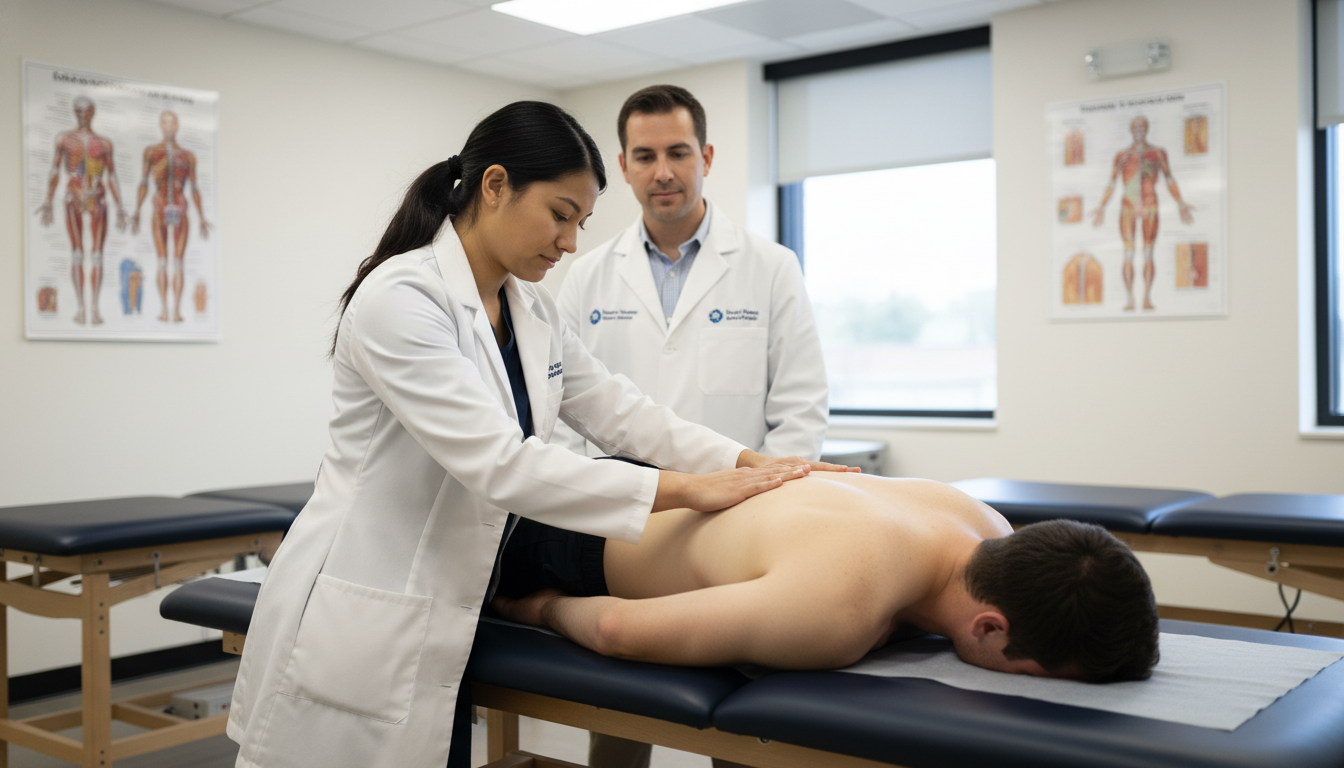
You can also discuss selective use of OMT:
- For neck/back pain, tension headaches, or musculoskeletal strain (when appropriate and time allows)
- For building rapport with patients who may have had prior positive experiences with OMT
Common Clinical, Ethical, and Program-Fit Questions in EM Interviews
Beyond behavioral questions, most EM interviews will include scenario-based or values-based questions.
9. “Describe a Clinical Case That Impacted You”
Purpose:
- Gain insight into your clinical maturity
- See what you value in patient care
- Evaluate your ability to reflect (not just describe)
Tips:
- Choose a case that genuinely changed how you think or practice
- Include emotional impact and what you learned
- Maintain patient privacy
Try to highlight:
- Communication during bad news
- Team collaboration during a resuscitation
- Understanding bias or health disparities
10. “How Do You Handle Uncertainty in Clinical Decision-Making?”
EM is full of gray zones.
Key Ideas:
- Balancing over-testing with missing diagnoses
- Using shared decision-making
- Appropriately consulting seniors and other services
- Recognizing your own limits
You might answer:
“I manage uncertainty by first clarifying whether the situation is time-sensitive or life-threatening. For potentially unstable conditions, I err on the side of safety while still being mindful of resource use. I’m comfortable acknowledging uncertainty with patients—using clear explanations and shared decision-making when options exist. I also make use of decision tools, evidence-based guidelines, and, when in doubt, I have a low threshold to discuss complex cases with my senior or attending. I see uncertainty not as a failure, but as an inherent part of EM that requires humility, good communication, and follow-up planning.”
11. “What Do You See as the Biggest Challenges Facing Emergency Medicine?”
Programs want residents who understand the system context.
You might touch on:
- ED overcrowding and boarding
- Burnout and mental health among EM physicians
- Violence in the ED
- Limited resources in rural EM
- Reimbursement and healthcare access issues
Follow with:
- How you hope to contribute to solutions (quality improvement, advocacy, education)
12. “How Do You Take Care of Yourself Outside of Medicine?”
This is indirectly a question about resilience and burnout.
Good Answer Elements:
- Specific hobbies or interests (running, cooking, music, reading, time with family)
- Boundaries you try to maintain
- Willingness to seek help if needed
Avoid implying:
- You have no life outside medicine
- You “just work more” as your coping strategy
Practical Strategies to Prepare for EM Residency Interview Questions
Build a Personal Question Bank
List the main categories:
- “Tell me about yourself” and “why EM”
- Behavioral questions (mistakes, conflict, leadership)
- EM-specific and ethical scenarios
- DO/osteopathic questions
- Personal life, strengths, weaknesses
Draft bullet-point answers:
- Avoid memorizing scripts word-for-word
- Focus on key stories and themes
Tag stories that can be reused:
- One clinical case that shows growth
- One teamwork/conflict scenario
- One mistake/learning scenario
- One leadership/initiative example
Practice Out Loud
- Record yourself answering common residency interview questions
- Do mock interviews with:
- EM mentors
- Career office staff
- Peers, especially those also aiming for the EM match
Watch for:
- Pace and clarity
- Filler words (“um,” “like,” “you know”)
- Overly long answers (aim for 1–2 minutes per question)
Prepare Thoughtful Questions to Ask Programs
At the end of interviews, you’ll be asked what questions you have. This is another chance to show fit and insight.
Consider asking about:
- Resident autonomy and progression
- Feedback and evaluation structure
- Wellness initiatives
- How DO graduates have integrated into the program
- Opportunities for interests (ultrasound, EMS, global health, toxicology)
Frequently Asked Questions (FAQ)
1. As a DO graduate, will I be asked different residency interview questions than MD applicants?
You’ll get the same core emergency medicine residency questions as MD applicants—about your experiences, clinical judgment, and fit for EM. However, you’re more likely to be asked a few additional questions about:
- Why you chose osteopathic medicine
- How your osteopathic training influences your practice
- How you see OMT fitting (or not fitting) into emergency medicine
Prepare clear, confident answers that frame your DO background as a strength, not something to defend.
2. How long should my answer to “tell me about yourself” be?
Aim for 60–90 seconds. Long enough to:
- Provide a coherent narrative (past → present → future)
- Highlight your path to medicine and EM
- Show some personality
But short enough to:
- Avoid rambling
- Leave room for follow-up questions
Practice out loud so it sounds natural, not memorized.
3. How many behavioral examples should I prepare?
For behavioral interview medical questions, have at least:
- 1 case where you made a mistake and learned
- 1 example of conflict resolution
- 1 example of working under significant pressure
- 1 example of leadership or initiative
- 1 example related to communication with a difficult patient or family
You can often adapt the same story to multiple questions, as long as you tailor the framing.
4. What if I get a clinical or ethical question I don’t know how to answer?
First, slow down and think. Then:
- Clarify the question if needed (“Just to be sure I understand…”).
- Verbalize your reasoning process—programs care more about how you think than whether you know the perfect guideline.
- Prioritize safety and ethics:
- Patient safety first
- Honesty about limitations
- Appropriate use of consultants and seniors
- If you truly don’t know, it’s acceptable to say:
- “I’m not completely sure of the exact guideline, but here’s how I would approach the situation…”
This approach reflects how you will function as a supervised trainee in a real ED.
By anticipating the most common emergency medicine residency interview questions and preparing thoughtful, authentic answers—especially around “tell me about yourself,” behavioral scenarios, and your identity as a DO graduate—you’ll present yourself as a self-aware, resilient, and team-oriented applicant ready to thrive in a demanding, rewarding specialty.