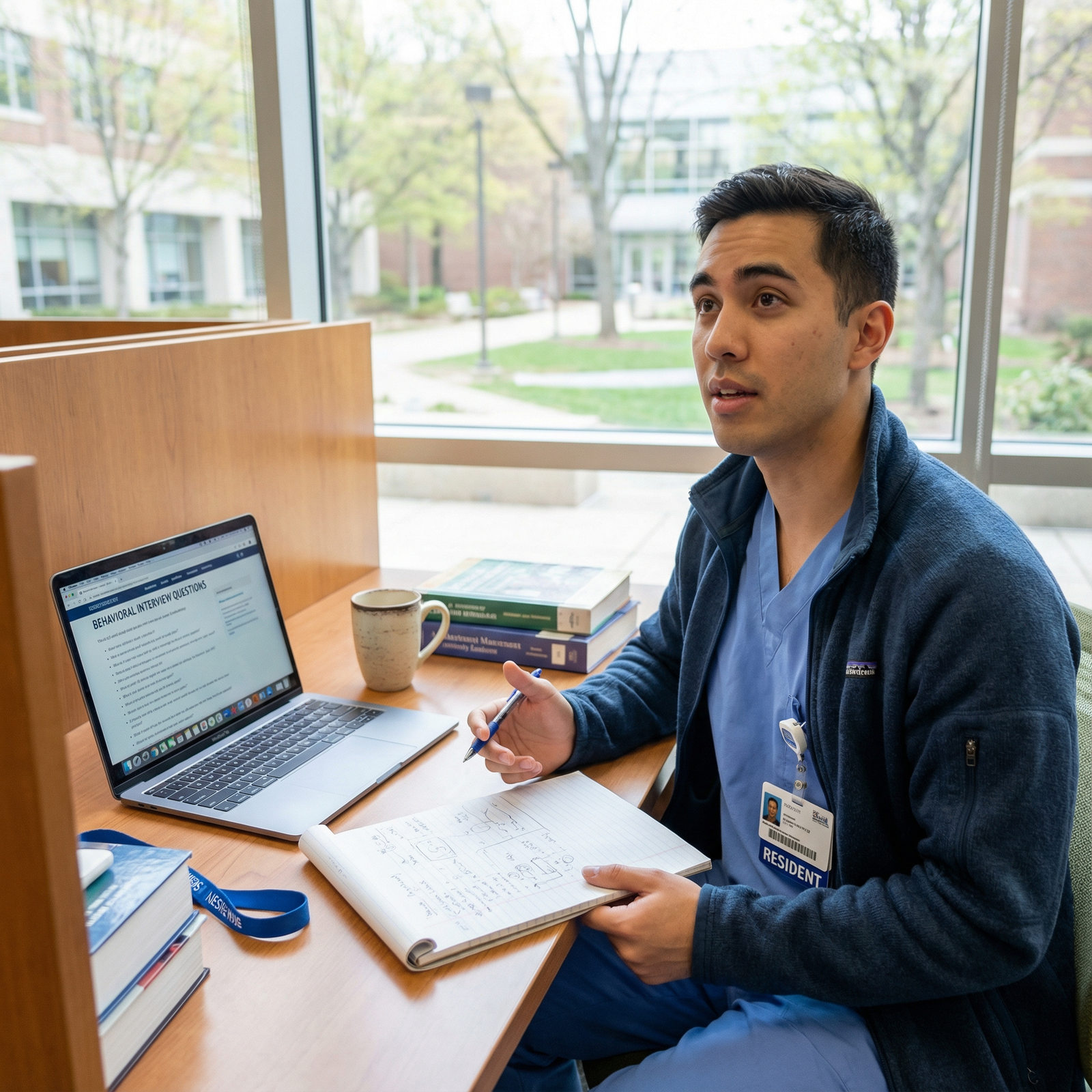
Understanding the Landscape: Why Common Interview Questions Matter for DO Graduates
As a DO graduate entering the residency match, you face everything your MD counterparts do—plus a few unique considerations. Program directors are increasingly familiar with osteopathic training, but you may still need to differentiate yourself, explain your path, and address misconceptions. Mastering common residency interview questions is one of the most powerful ways to do this.
This article focuses on practical, step‑by‑step strategies for typical residency interview questions—especially behavioral interview medical questions—so you can walk into every interview with structured, confident responses. We’ll pay special attention to issues often on the minds of DO graduates: the osteopathic residency match landscape, integration into ACGME programs, and highlighting OMM/osteopathic principles without sounding repetitive or defensive.
Throughout, remember that strong answers are:
- Structured (clear beginning, middle, end)
- Specific (real examples, not vague claims)
- Reflective (what you learned, how you grew)
- Program‑focused (why that matters for you as a resident there)
“Tell Me About Yourself”: Crafting a Strong, DO‑Focused Opening
“Tell me about yourself” is almost guaranteed to appear in your residency interviews. It sets the tone and often shapes the questions that follow. Many applicants ramble, recap their entire CV, or share irrelevant personal history. You need a concise, compelling professional narrative—especially as a DO graduate who may want to highlight osteopathic identity early.
Goal of the Question
Programs are assessing:
- How you communicate
- How you organize information
- Whether your story logically leads to their specialty and their program
- How you present your DO training and values
A Simple 4‑Part Framework
Aim for 90–120 seconds. Use:
- Present – Who you are now as a senior DO student or graduate
- Past – Key experiences shaping your path (pre‑med + medical school)
- Path to Specialty – Why this specialty and what you bring
- Future/Program Fit – What you’re looking for in residency
Example Structure for a DO Graduate
Present
“I’m a fourth‑year DO student at [School], currently completing my sub‑internship in [specialty] at [Institution]. I’ve been particularly focused on [clinical interest, e.g., inpatient medicine, underserved care, procedural skills].”Past
“Before medical school, I studied [major] at [college], where I became interested in [clinical or service interest]. At [DO school], I sought roles that let me combine osteopathic principles with [patient population or specialty interest], including [example: OMM clinic, rural rotations, leadership].”Path to Specialty
“During my third‑year rotations, [one or two concrete experiences] confirmed that [specialty] was the right fit—particularly the blend of [e.g., continuity vs. acuity, procedures vs. cognitive work]. I noticed that my osteopathic background in [e.g., holistic assessment, structural exam, communication] helped me connect with patients and the care team.”Future/Program Fit
“I’m now looking for a residency that offers strong training in [specifics], values [e.g., team‑based care, teaching, osteopathic recognition, community engagement], and will support my goals in [e.g., hospitalist work, fellowship, primary care in underserved communities]. That’s what drew me to your program.”
DO‑Specific Tips for “Tell Me About Yourself”
Name osteopathic training confidently, not defensively
Example: “My DO training emphasized systems‑based, whole‑person care and hands‑on skills, which I’ve integrated into my clinical approach.”Connect OMM to your specialty pragmatically
In FM/IM: “I’ve used osteopathic manipulation for musculoskeletal complaints and as a tool for building rapport and understanding functional limitations.”
In non‑OMM‑heavy specialties: Emphasize diagnostic touch, anatomy, and communication, not specific techniques.Don’t overload with personal trivia
A quick personal line (e.g., “Outside of medicine, I enjoy running and cooking”) at the end is enough, if you want it.Avoid reading your CV
Focus on a story that explains your trajectory; they can see the details in ERAS.

High‑Yield Behavioral Questions: STAR Method for DO Graduates
Behavioral interview medical questions often start with:
- “Tell me about a time when…”
- “Give me an example of…”
- “Describe a situation where…”
These questions test not only what you’ve done, but how you think and how you behave on teams under stress. As a DO graduate, these are prime opportunities to showcase communication, empathy, and holistic thinking—core osteopathic values—without overusing the word “holistic.”
The STAR Framework
Use STAR to organize your answers:
- Situation – Brief context
- Task – Your role or responsibility
- Action – What you actually did
- Result/Reflection – Outcome & what you learned
Keep answers 2–3 minutes; STAR keeps you from rambling.
Common Behavioral Residency Interview Questions (and How to Answer Them)
1. “Tell me about a time you had a conflict with a team member.”
Programs want to know if you are coachable, professional, and collaborative.
Approach:
- Choose a professional conflict (clinical or academic), not a personal drama.
- Avoid blaming language; focus on understanding and resolution.
- End with what you learned and how you changed your behavior.
Example Outline (STAR):
- S: “On my IM rotation, a resident and I disagreed about the plan for an elderly patient with multiple comorbidities.”
- T: “As the student, I was responsible for presenting the case and advocating for what I thought was best while respecting team hierarchy.”
- A: “I requested a brief one‑on‑one with the resident, expressed my understanding of his reasoning, and shared my concerns using evidence from guidelines. I asked how I might better present my reasoning during rounds.”
- R: “We adjusted the plan slightly to incorporate both perspectives, and the resident later thanked me for raising my concerns respectfully. I learned to be clearer and more concise in explaining my clinical reasoning and to address disagreements privately and professionally.”
For DO graduates, you might highlight how your training in communication and empathy informed how you handled the conversation.
2. “Tell me about a time you made a mistake.”
This is about accountability, insight, and growth—not perfection.
Key principles:
- Admit a real but not catastrophic mistake (missed lab, incomplete note, communication gap).
- Emphasize what you did to correct it and prevent recurrence.
- Do not blame others; own your part.
Example Outline:
- S: “During my surgery rotation, I was responsible for updating labs for the post‑op list.”
- T: “I missed a critical lab value for one patient before sign‑out.”
- A: “When I realized the oversight, I notified the resident immediately, updated the sign‑out, and we confirmed the patient’s status with the night team. I then created a checklist to ensure all labs were reviewed before sign‑out each day.”
- R: “There was no negative outcome for the patient, and my system prevented similar oversights later in the rotation. I learned to build redundancy into my workflow for tasks that impact patient safety.”
You might add that your osteopathic mindset of seeing the “whole system” now extends to your workflow and communication processes.
3. “Describe a difficult patient encounter and how you handled it.”
Here they assess your bedside manner, communication skills, and ability to handle emotions.
DO advantage: You can naturally weave in your focus on relationship‑centered care.
Example Outline:
- S: “On family medicine, I saw a patient with chronic low back pain who was frustrated with prior care and skeptical about trying anything new.”
- T: “As the student, I needed to gather a detailed history and propose a plan while rebuilding trust.”
- A: “I spent extra time validating his frustration, asked open‑ended questions about his goals, and used lay language to explain our multi‑modal approach, including physical therapy, medication options, and, if he was interested, osteopathic manipulation to address somatic dysfunction contributing to his pain.”
- R: “By the end of the visit, he agreed to a trial of PT and a follow‑up OMM appointment. I learned that aligning the plan with the patient’s functional goals and expectations can turn a confrontational encounter into a collaborative one.”
Focus less on being “the hero” and more on the process—listening, empathy, shared decision‑making.
4. “Tell me about a time you had to adapt quickly or work under pressure.”
Residency is inherently stressful. Programs want to see resilience and composure.
Example Outline:
- S: “During my ED rotation, we had an unexpected influx of trauma cases while already at capacity.”
- T: “I was responsible for helping the team with initial assessments, documentation, and basic procedures under supervision.”
- A: “I prioritized tasks, clarified my role with the senior resident, and focused on what I could do efficiently—obtaining histories, starting notes, and setting up for procedures so attendings and residents could focus on critical interventions.”
- R: “The team complimented my calm and organization. I realized the importance of situational awareness and proactively clarifying roles when conditions change rapidly.”
Emphasize that your DO training in integrated mind–body understanding also informs how you manage your own stress (breathing, self‑awareness, using the team).
Specialty‑Neutral Core Questions and DO‑Specific Angles
Some residency interview questions cut across all specialties. For DO graduates, these are important opportunities to frame your osteopathic identity, address the DO graduate residency landscape, and dispel misconceptions.
1. “Why this specialty?”
Your answer must be more than “I like helping people” or “I enjoy procedures.”
Structure your answer around:
- Initial exposure – when you first got interested
- Validating experiences – specific clinical moments
- Fit with your strengths – personality, skills, values
- How osteopathic training adds value in this field
Example Components:
- “I was first drawn to internal medicine during a third‑year rotation where…”
- “I found that I enjoyed the puzzle‑solving of complex, multi‑morbid patients…”
- “My DO background in systems‑based evaluation and chronic disease management fits well with longitudinal medical care…”
- “I see myself using that mindset to coordinate care, address social determinants of health, and support patients’ functional goals.”
Avoid sounding like you just picked the specialty recently or by default. Show a coherent trajectory.
2. “Why our program?”
This is where research and specificity matter. Generic answers kill momentum.
Research beforehand:
- Curriculum structure (e.g., strong outpatient focus? ICU time? Subspecialty exposure?)
- Patient population (urban underserved, suburban, rural)
- Unique features (osteopathic recognition, global health tracks, scholarly focus)
- Reputation for collegiality, wellness, mentorship, or fellowship placement
Template:
Show you know them
“Your program’s [feature: strong ambulatory curriculum, osteopathic recognition track, community hospital with academic affiliations] really resonates with me…”Connect to your experience and goals
“…because during my clerkships I realized I value [X], and I’m interested in pursuing [Y].”Mention DO‑specific alignment if relevant
“I also appreciate your program’s inclusion of OMM in continuity clinic and your osteopathic recognition; I’d like to continue using my manual skills where appropriate, and also help teach junior learners.”
If the program has no osteopathic recognition, you can say:
“I value the osteopathic principles I was trained with—whole‑person care, attention to structure‑function relationships, preventive focus—and I see those reflected in your emphasis on [e.g., continuity of care, interprofessional teams, community engagement].”
3. “What are your strengths?”
Choose 2–3 strengths that are genuine, supported by examples, and meaningful for residency.
High‑yield strengths for DO graduates:
- Strong communication and rapport building
- Team orientation and humility
- Work ethic and reliability
- Adaptability and willingness to learn
- Patient‑centered approach informed by osteopathic principles
Structure:
- Name the strength.
- Provide a brief example.
- Tie it to residency.
Example:
“One of my strengths is building rapport with patients quickly. On my family medicine rotation, I often saw patients who had seen multiple providers and were skeptical about new recommendations. I found that by starting with open‑ended questions and reflecting back what I heard, patients were more receptive to discussing lifestyle modifications and treatment options. In residency, I know this skill will help with adherence, shared decision‑making, and managing complex chronic conditions.”
4. “What are your weaknesses?”
Avoid clichés like “I’m a perfectionist” unless you can frame them credibly. The goal is insight + improvement, not self‑sabotage.
Good weakness criteria:
- Real but not disqualifying
- Under active improvement
- Supported by a concrete example and change
Examples:
- Being initially too hesitant to ask for help, now improved by seeking feedback earlier.
- Struggling with time management early in third year, now using structured tools.
- Being overly detailed in notes, now learning to be more concise.
Example Answer:
“Early in third year, I struggled with time management. I tended to spend too long on each note, which made pre‑rounding inefficient. After feedback from my resident, I started using note templates, prioritizing key data, and setting mini‑deadlines for myself on rounds. Over the next few rotations, my feedback improved, and I was able to manage larger patient loads more comfortably. I know residency will require further growth here, so I plan to continue using checklists and time‑blocking techniques.”
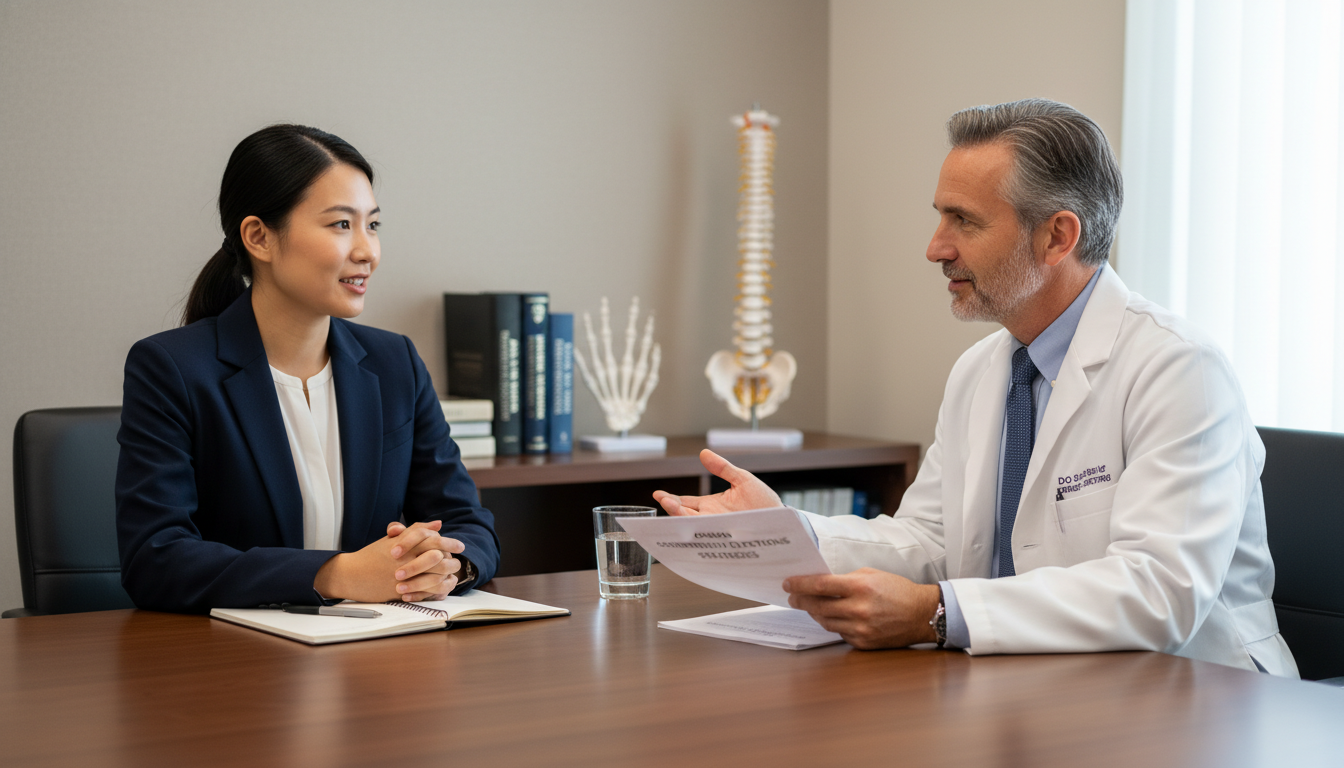
DO‑Specific Considerations: Osteopathic Identity, ERAS, and Potential Red Flags
As a DO graduate, you may encounter nuanced questions or unspoken concerns about your background, especially in historically MD‑heavy programs. You want to address these calmly, confidently, and factually.
1. “Why did you choose a DO school?”
Some programs ask this directly; others hint at it.
Good elements to include:
- Alignment with your values (whole‑person care, primary care, underserved communities)
- Appreciation of OMM, structural diagnosis, or hands‑on skills
- Recognition of DOs as fully licensed physicians
- Avoidance of a defensive or apologetic tone
Sample Answer:
“I chose a DO program because its philosophy of treating the whole person—considering lifestyle, environment, and structure‑function relationships—aligned with how I’d seen good clinicians practice. I was also interested in developing hands‑on skills through OMM, seeing it as another tool to understand and treat musculoskeletal issues. Over four years, I’ve found that these principles enhance, rather than replace, evidence‑based allopathic care, and I think they make me a more thoughtful, patient‑centered clinician.”
2. Addressing the Osteopathic Residency Match and ACGME Integration
You might be asked:
- “How do you feel about training in an ACGME program as a DO?”
- “What has your experience been integrating with MD colleagues?”
Approach:
- Emphasize collaboration, mutual respect, and shared standards.
- Highlight successful experiences working in mixed MD/DO environments.
- Show you understand that expectations are the same for all residents.
Example:
“Most of my clinical rotations have been in mixed MD/DO environments. I’ve found that once we’re on the wards, the letters after our names matter less than our ability to function as a team and provide high‑quality care. I’m comfortable in ACGME settings and see the single accreditation system as an opportunity to train alongside and learn from a diverse group of colleagues while bringing my own osteopathic background to the table.”
3. Managing Questions About COMLEX, USMLE, and Board Performance
If your exam scores are lower than you’d like, or if you only took COMLEX, be prepared.
Key points:
- Never sound defensive; be factual and reflective.
- If you had a failed attempt, use STAR: context, what changed, improvement.
- Highlight clinical performance and upward trends.
Example for a Lower Score or Initial Struggle:
“On my first COMLEX attempt, my score was below what I had hoped. In retrospect, I realized my study plan was too content‑heavy and not question‑focused. For Level 2, I restructured my approach around timed question blocks, active review, and built in weekly self‑assessments. My Level 2 score improved significantly, and my clinical evaluations have been strong. The experience taught me how to adapt my learning strategies, which I know will be critical for in‑training and board exams during residency.”
Strategy and Practice: How to Prepare for Common Residency Interview Questions
Knowing the “right” answers in your head isn’t enough. You need live practice and feedback, especially for high‑leverage questions like “tell me about yourself,” “why this specialty,” and behavioral scenarios.
Step 1: Build a Personal Story Bank
Create a list of 10–15 experiences from medical school that you can flexibly use in different answers:
- A time you led a project or team
- A time you failed or made a mistake
- A conflict you navigated
- A meaningful patient interaction
- A time you advocated for a patient
- A stressful on‑call or busy shift
- An example of quality improvement or research
- An instance when you used osteopathic principles or OMM to help a patient
For each story, jot down STAR bullet points. Many residency interview questions can be answered by reshaping one of these core stories.
Step 2: Practice Aloud—Not Just in Your Head
- Record yourself answering common questions.
- Time your responses (target 1.5–3 minutes).
- Watch for fillers (“um,” “like”), eye contact, posture.
- Adjust overly long or confusing parts.
Consider mock interviews with:
- Your school’s career advising office
- Faculty mentors, especially DO mentors
- Recently matched residents
- Peers (exchange questions and give each other structured feedback)
Step 3: Adapt Answers for Different Programs
Tailor, don’t reinvent, for each program:
- Emphasize community medicine for community‑based programs.
- Highlight academic interest, research, teaching for university programs.
- For osteopathic‑recognized programs, be explicit about your interest in OMM and osteopathic principles.
- For predominantly MD programs, emphasize your comfort in integrated environments and your focus on evidence‑based practice.
Step 4: Prepare Questions You Will Ask Them
Programs will almost always ask if you have questions. Good questions:
- Show you researched the program.
- Clarify what daily life and culture feel like.
- Reflect your priorities (education, wellness, OMM opportunities, fellowship potential).
Examples:
- “How do you see DO graduates integrating into your program, and are there opportunities to utilize or teach OMM here?”
- “How would you describe the learning culture among residents and faculty?”
- “What qualities do your most successful residents tend to share?”
- “How does the program support residents preparing for boards and fellowship applications?”
Avoid questions that are easily answered by the website (call schedule posted, basic program structure).
FAQs: Common Concerns About Residency Interview Questions for DO Graduates
1. As a DO graduate, should I bring up osteopathic principles in every answer?
No. Mention osteopathic principles and OMM where it’s natural and relevant—for example, in “tell me about yourself,” “why DO,” or a patient encounter where OMM or whole‑person assessment clearly mattered. Overusing the term “holistic” or forcing DO language into every response can sound rehearsed. Aim for your osteopathic training to be evident through your examples and approach, not just buzzwords.
2. What if I’m asked a behavioral question I haven’t prepared for?
Use the STAR framework on the spot:
- Take a brief pause to think (perfectly acceptable).
- Pick a story from your mental “bank” of experiences that’s closest to the theme.
- Walk through Situation, Task, Action, Result clearly and succinctly.
- End with a reflection: what you learned and how it will make you a better resident.
The more you practice STAR with different stories beforehand, the more easily you can adapt in real interviews.
3. How do I handle “tell me about yourself” if I’ve had a non‑traditional path?
Non‑traditional routes can be powerful differentiators. Briefly acknowledge your prior career or experience, then connect it directly to skills relevant to residency—teamwork, communication, resilience, leadership. For example, prior work in physical therapy, EMS, military service, teaching, or business can all be framed as assets if you link them convincingly to your interest in medicine and your specialty.
4. Are there different expectations for DO graduates vs MDs during residency interviews?
Expectations for professionalism, clinical readiness, and communication are the same. The main differences are:
- You may get more questions about why you chose a DO path, how you see OMM fitting into your future, or your comfort in MD‑heavy environments.
- Some programs may be less familiar with COMLEX, so you may need to briefly explain score context or your decision about USMLE.
Handle these confidently and matter‑of‑factly. Emphasize that as a DO graduate, you meet the same core competencies as any applicant and bring an additional perspective rooted in osteopathic philosophy.
By anticipating common residency interview questions and preparing structured, reflective answers that highlight your strengths as a DO graduate, you position yourself not just to “get through” interviews, but to stand out in them. Combine a clear narrative, strong behavioral examples, and thoughtful integration of osteopathic principles, and you’ll be ready to navigate the osteopathic residency match and broader ACGME landscape with confidence.