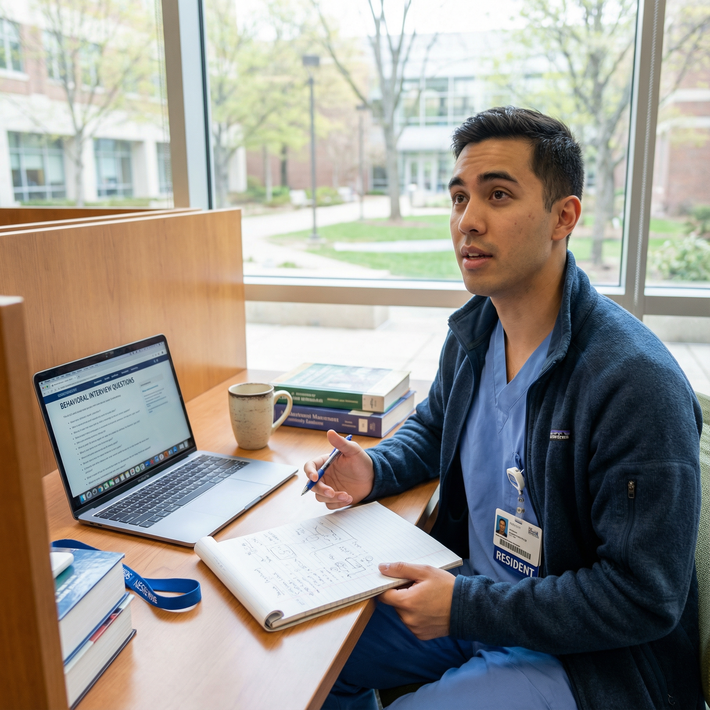
A short US clinical experience (USCE) doesn't disqualify you from matching, but it makes behavioral interview questions significantly harder.
When you only have two or three months of clinical exposure in the United States, your library of US-based clinical stories is thin. When an interviewer asks, "Tell me about a time you handled a difficult family dynamic during rounds," a candidate with two years of US clinical experience pulls from twenty distinct situations. You might have one. Or none.
Here's the reality: residency program directors know your clinical knowledge is already vetted by your Step scores. Behavioral questions aren't testing whether you know how to treat heart failure. They test how you communicate, how you handle stress, and whether you understand the unspoken rules of American hospital culture.
Short USCE creates an evidence gap. Applicants with 12+ months of USCE meet the evidence threshold effortlessly because their stories naturally include American nurses, US electronic health record systems (EHRs), and local patient communication styles. With 2 to 4 months of USCE, you have to work harder to prove those same interpersonal competencies. Programs recognize this time limitation, but they won't lower their standards for professionalism or team dynamics. You simply need a better strategy to present your evidence.
What Programs Actually Evaluate in Behavioral Answers
Program directors don't care about the location of your story as much as they care about the behavioral signals buried inside it.
When an interviewer asks a behavioral question, they're looking for five specific traits:
- Communication under stress: How you talk to angry patients, anxious family members, or overworked attendings.
- Multidisciplinary teamwork: How you interact with nurses, social workers, physical therapists, and medical assistants. (This is a huge focus in US hospitals, where hierarchy is flatter than in many international systems.)
- Conflict resolution: How you handle disagreements over patient management or personal friction without inflating your ego.
- Cultural competence: Your ability to navigate diverse patient populations with empathy and respect.
- Adaptability: Clear evidence that you understand American healthcare culture and can integrate quickly without disrupting the team.
Notice where medical knowledge sits in that breakdown: near the bottom. If you spend your behavioral answers explaining the pathophysiology of a disease instead of how you managed the nurse's concern about the order, you miss the target completely.
The Three Core Challenges With Limited USCE
If you're sitting on fewer than 90 days of US clinical experience, you're fighting three specific friction points:
Challenge 1: Fewer Concrete US Stories
In an eight-week clinical rotation, you simply don't see as many complex interpersonal situations. You might have zero end-of-life family conferences, zero major nurse-physician conflicts, and zero medical error disclosures in that window.
Challenge 2: Exposure to US Communication Norms
Patient communication in the US relies heavily on shared decision-making, direct patient autonomy, and explicit empathy markers. If you trained in a system where physician authority is absolute, your default communication examples might sound overly directive or cold to an American interviewer.
Challenge 3: Demonstrating Multidisciplinary Teamwork
In many international hospitals, doctors work in isolation from nursing and allied health staff. In the US, a resident who pisses off the nursing staff will fail their rotation. Two months of US shadowing rarely gives you enough depth to prove you can manage these complex team dynamics smoothly.
It's a numbers game. Eight weeks yields roughly 320 clinical hours. A US medical graduate has thousands of hours. You can't change the clock, so you have to change how you leverage the experience you do have.
Strategic Workarounds When Your US Experience Is Brief
You don't need a year of US clinical experience to give great behavioral answers. You just need to repurpose the experiences you possess effectively.
1. Convert International Stories into "US-Ready" Answers
Your international clinical experiences are fully valid. I've seen applicants land top-tier University residency interviews using stories entirely from their home country. The trick is translation. Frame the core human interaction, empathy, conflict, stress, and then explicitly state how that skill directly transfers to practice in an American residency program.
2. Upgrade Shadowing and Observerships
Shadowing feels passive, but your answers don't have to sound passive. Instead of saying, "I just observed the attending," frame it around acute observation and analysis: "While observing a complex discharge discussion during my rotation at [Hospital Name], I paid close attention to how the attending de-escalated the family's frustration..."
3. Prioritize Depth Over Geography
A deeply emotional, highly reflective story from an intern year in India, Pakistan, or Nigeria beats a bland, surface-level story from a two-week observership in Chicago every single time.
The STAR-Plus Framework for Short-USCE Applicants
Standard interview prep tells you to use the STAR method: Situation, Task, Action, Result.
For international graduates and applicants with short USCE, standard STAR is incomplete. You need STAR-Plus.
Standard STAR:
- Situation: Set the scene.
- Task: What needed to be solved?
- Action: What specific step did YOU take?
- Result: What was the outcome?

The PLUS (For Short-USCE Candidates):
- US Relevance Connection: How this experience directly shapes your readiness for the US healthcare environment.
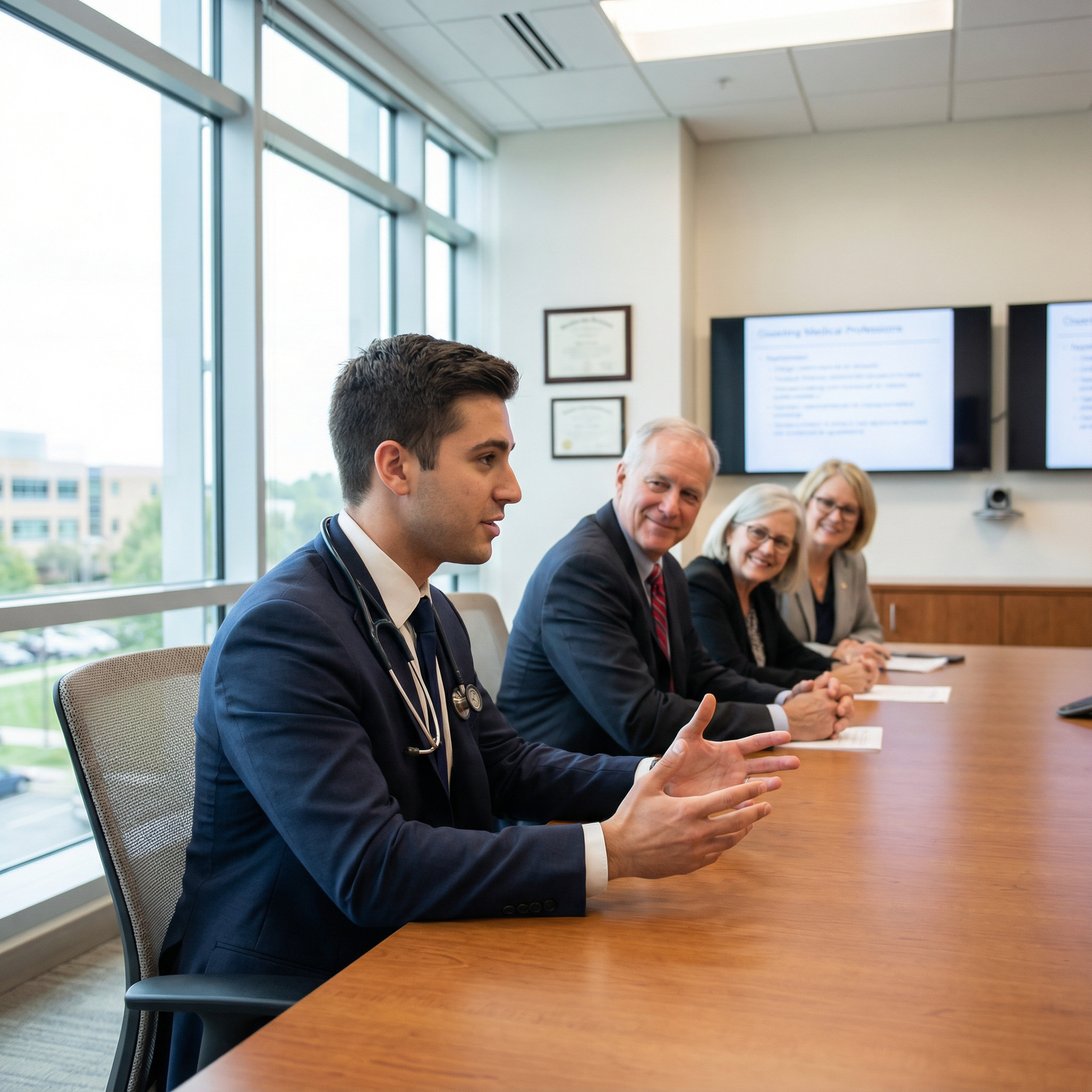
STAR-Plus Example: Handling a Difficult Patient
- Situation: "During my internal medicine residency in my home country, I cared for a patient with poorly controlled type 2 diabetes who repeatedly missed follow-up appointments and was defensive about his diet."
- Task: "I needed to understand the root cause of his non-adherence without making him feel judged."
- Action: "Instead of repeating the standard dietary guidelines, I set aside 15 minutes to ask open-ended questions about his home life. I learned he worked night shifts and couldn't access fresh food during his breaks. We collaborated on a realistic meal plan adapted to night-shift options."
- Result: "His HbA1c dropped from 10.2% to 8.1% over six months, and he didn't miss another follow-up."
- The PLUS (US Relevance): "That experience taught me that patient non-compliance is usually a systems or communication issue, not a motivation issue. During my recent two-month rotation at Mount Sinai in New York, I applied this exact same non-judgmental approach when working with culturally diverse safety-net patients, which helped me quickly build rapport despite being new to the US clinical setting."
That extra sentence bridges the gap. It proves you took a lesson from your home country and tested it in an American clinical environment.
Top 5 Behavioral Questions and How to Answer With Limited USCE
1. "Tell me about a time you disagreed with a team member."
- The Problem: International medical cultures often discourage disagreeing with senior physicians. Short USCE gives you few chances to observe professional disagreement in the US.
- The Fix: Frame disagreement around patient safety and respectful inquiry. Use a story where you noticed an error or had a differing clinical opinion with a peer or nurse. Focus heavily on how you communicated: privately, respectfully, and backed by evidence.
2. "Describe a time you had to deliver bad news."
- The Problem: Short US rotations rarely put observers or short-term rotating students in charge of breaking bad news.
- The Fix: Pull from your international training, or use a high-stakes simulation/OSCE encounter if you are a recent US graduate. Emphasize the protocol you used (like the SPIKES protocol) and how you handled the emotional reaction of the family. Connect it to US expectations of directness mixed with empathy.
3. "Tell me about a time you made a mistake."
- The Problem: You worry that admitting a mistake will make a program doubt your qualifications, especially with limited US clinical experience.
- The Fix: Never pick a catastrophic clinical error or an ethical violation. Pick a real operational or communication oversight (e.g., miscommunicating a sign-out detail or misunderstanding a hospital workflow). Focus 80% of your response on immediate disclosure, corrective action, and systemic prevention.
4. "Describe a conflict with a patient."
- The Problem: You don't have enough US clinical exposure to pull a classic "demanding US patient" story.
- The Fix: Human frustration is universal. Use an international patient story where emotional stress or fear manifested as anger. Show that you didn't take the hostility personally, actively listened to their underlying fear, and restored trust.
5. "Tell me about a time you went above and beyond for a patient."
- The Problem: As a short-term rotating student, your scope of practice was limited.
- The Fix: "Above and beyond" rarely means performing a heroic procedure. It usually means spending an extra 20 minutes arranging transport, finding a translator, or calling a patient's family member. Any clinical setting works for this question as long as it shows compassion.
Action Steps: Building Strong Behavioral Answers Now
Do not wait for interview day to figure out your stories. You will freeze, scramble, and default to generic, unconvincing answers.

Follow these exact steps to build your response bank today:
- Audit Every Clinical Memory: Sit down with a blank document. List every rotation you've ever completed, US and international. Write down at least three intense, memorable, or stressful moments from each.
- Build a 12-Story Grid: Map those memories against key competency buckets: Conflict, Mistake, Communication, Teamwork, Leadership, and Adaptability. Aim for 10-12 versatile stories.
- Apply the STAR-Plus Tag: For every international story on your grid, write a dedicated "Plus" sentence that explicitly connects the lesson to how you will practice medicine in a US residency.
- Practice Out Loud (Without Scripts): Scripts sound fake. Bullet point your stories, turn on your laptop camera, and record yourself talking through them. Eliminate dead air and word whiskers ("um," "like").
- Address USCE Briefness Confidently: If an interviewer directly asks about your limited USCE, don't apologize or sound defensive. Frame it cleanly: "While my formal US clinical experience was targeted across three months, I approached every day intent on mastering American clinical workflows and team structures. Combined with my extensive clinical background, I am completely ready to hit the ground running on day one."
Own your preparation, structure your stories intentionally, and the duration of your US experience stops being a bottleneck.