
The average residency sign-on bonus ranges from $2,500 to $15,000. Applicants fixate on this number. They talk about it in the interview trail lounges. They post about it on social media. They use it as a primary metric to judge how much a program values them. Meanwhile, they completely ignore a benefit that can yield $50,000 or more over a three-to-five-year training period: the employer retirement match.
This is a massive oversight. Residency is the foundation of your long-term financial trajectory. The habits you build and the capital you accumulate during your PGY years dictate your financial flexibility as an attending. Most applicants focus entirely on base salary and sign-on bonuses but overlook 403(b) and 457(b) offerings. I review residency contracts and financial trajectories constantly. The residents who win the long game are the ones who look past the immediate cash grab and evaluate the structural wealth-building tools a program provides.
This article provides a framework to evaluate and compare retirement benefits systematically. We will break down the exact mechanics of these accounts, expose the hidden traps in vesting schedules, and build a mathematical model to rank your programs based on true financial value.
The following information is provided for educational purposes only. It is not financial advice, not legal advice, and not tax advice. Because individual circumstances and institutional policies differ, figures vary significantly. Always consult a qualified professional before making binding financial or career decisions.
The 403(b) vs. 457(b) Breakdown: What Residents Need to Know
(See also: if you're undecided on fellowship picking programs that keep doors open for strategic program selection.)
Let me break this down specifically. You will primarily encounter two types of tax-advantaged retirement accounts during residency: the 403(b) and the 457(b). They look similar on paper. They both allow for pre-tax or Roth contributions. They both shelter your investments from annual capital gains taxes. But their underlying mechanics are vastly different, and confusing them will cost you.
The 403(b) is the standard tax-advantaged retirement account for nonprofit hospitals and academic medical centers. If you are training at a university-affiliated nonprofit, this is your primary vehicle. It functions much like a corporate 401(k). You contribute a percentage of your salary, the employer may match it, and the funds grow tax-deferred. The catch is the withdrawal rule. If you withdraw funds from a 403(b) before age 59½, you pay standard income tax plus a 10% early withdrawal penalty. There are exceptions, but they are narrow.
The 457(b) is a deferred compensation plan available to state and local government employees. If your residency is through a state university system, a county hospital, or a Veterans Affairs (VA) medical center, you likely have access to this. The 457(b) has a unique, massive advantage that most residents do not know about: it does not impose the 10% early withdrawal penalty upon separation from service.
(See also: what questions should I revisit before finalizing my rank list for a comprehensive pre-Match checklist.)
Read that again. If you leave your employer, you can withdraw from a 457(b) without the penalty, regardless of your age.
Why does this matter for a resident? Because you will separate from service when you graduate or transition to a fellowship. If you need liquidity to buy into a practice, fund a fellowship application cycle, or cover a gap in attending income, the 457(b) provides penalty-free access to your funds. The 403(b) locks it up.
Government 457(b) plans often allow for "double catch-up" contributions in the three years prior to the plan's normal retirement age. While this rarely applies to current residents, it is a structural benefit that speaks to the overall quality of the plan. When evaluating a program, verify which account they offer. A robust 457(b) is objectively superior to a 403(b) for a physician in training due to the liquidity it provides post-graduation.
Vesting Schedules: The Hidden Factor That Could Cost You $20K
A high employer match means absolutely nothing if you do not actually own the money. This brings us to vesting. Vesting is your legal ownership of employer-contributed funds over time. Your own contributions are always 100% vested immediately. The employer match is where institutions protect themselves.
There are two primary vesting structures you will see: immediate vesting and cliff vesting.
Immediate vesting is exactly what it sounds like. The moment the employer deposits their match into your account, it is yours. If you leave the program the next day, you take every cent with you. This is the gold standard.
Cliff vesting is a trap. Under a typical three-year cliff vesting schedule, you own 0% of the employer match for the first two years. On the exact anniversary of your third year, you suddenly vest 100%. If you leave the program in month 35, you forfeit every dollar the employer contributed. You walk away with nothing but your own principal.
Why does this matter so much for residents? Because medical training is highly volatile. Approximately 35% of residents change programs, switch specialties, or relocate unexpectedly within the first two years of training. Life happens. Spouses get jobs in other states. Program culture turns out to be toxic. You might need to transfer.
If you are in a program with a three-year cliff vesting schedule and you transfer during your PGY-2 year, you lose tens of thousands of dollars in employer contributions. I have seen residents stay in miserable, poorly run programs for an extra year solely because they did not want to forfeit their unvested retirement match. That is a terrible reason to endure a toxic work environment. Always demand immediate vesting, or at the very least, a one-year graded vesting schedule. If a program insists on a three-year cliff, you must discount the value of their match to zero in your financial calculations.
How to Calculate the True Dollar Value of Benefits
You cannot compare programs based on vibes. You need hard math. To evaluate retirement benefits accurately, you must calculate the "effective salary" of each program. This requires a specific formula.
The baseline formula for total retirement value is: (Annual Employer Match + Annual Auto-Contribution) × Years until vesting.
Let us run a concrete example. Program A offers a 5% employer match on a $65,000 resident salary. That is $3,250 per year. However, they have a three-year cliff vesting schedule. If you are a three-year residency program, the total vested value is $9,750. If you are a four-year program, it is $13,000.
Now look at Program B. They offer a 3% match ($1,950 per year) but they also provide a 2% automatic non-elective contribution ($1,300 per year). Total annual employer contribution is $3,250. But Program B has immediate vesting. If you leave after two years, Program B yields $6,500 in your pocket. Program A yields $0.

You must also factor in loan repayment programs that interact with retirement. If a program offers a student loan repayment benefit, determine how it is structured. Some institutions pay loan repayment directly to the servicer, which is often treated as taxable income. Others offer it as a 403(b) contribution. If you are pursuing Public Service Loan Forgiveness (PSLF), maximizing your 403(b)/457(b) contributions lowers your Adjusted Gross Income (AGI). A lower AGI reduces your monthly Income-Driven Repayment (IDR) payments. Therefore, a program that allows high contribution limits and offers a strong match effectively subsidizes your student loan strategy.
Use this calculation to create an effective salary for each program. Add the base salary, the fully vested retirement match, the monetary value of health insurance premiums paid by the employer, and any guaranteed sign-on bonuses. The program with the highest base salary often loses to the program with the superior structural benefits once you run the actual numbers.
Comparing Program Types: Academic, Community, and Military
Different institutional structures dictate different benefit architectures. Let us break down what you should expect based on the program type.
Academic programs typically offer excellent 403(b) infrastructure. They are managed by large university systems with access to low-cost institutional index funds (like Vanguard or Fidelity institutional shares). The downside is the vesting. University systems are notorious for three-year or even five-year cliff vesting schedules to retain faculty. As a resident, you are highly vulnerable to this.
Community programs operate differently. They may offer higher immediate take-home pay and larger sign-on bonuses, but their retirement infrastructure is often limited. You might find a basic 401(k) or 403(b) with high administrative fees and a limited menu of expensive, actively managed mutual funds. They often lack the administrative bandwidth to negotiate institutional share classes. You must check the fee structure. A 1% higher expense ratio on your funds will eat away at your returns over time.
VA and Military residencies operate on entirely different federal systems. The VA uses the Federal Employees Retirement System (FERS) equivalent, which includes the Thrift Savings Plan (TSP). The TSP is arguably the best retirement vehicle in the country due to its rock-bottom expense ratios (often around 0.04%). The VA offers a 5% automatic contribution and matches up to another 5%, with immediate vesting on the automatic portion and rapid vesting on the match. Military residencies use the Blended Retirement System (BRS) and the TSP, offering immediate vesting on a 5% match. If you are considering the VA or military, the retirement benefits are exceptionally strong and highly predictable.
Private practice residencies (which are rare but exist in certain specialties like ophthalmology or dermatology) often boast the best matching percentages. It is not uncommon to see 10% or 15% matches. However, you must verify the financial stability of the practice. A high match is worthless if the practice goes bankrupt or freezes the plan.
Building Your Ranking Matrix: Weighting Retirement Against Other Factors
You cannot rank programs based on a single metric. You need a weighted scoring system to synthesize clinical training, culture, and financial compensation into a single, actionable rank list.
I recommend the following weighting for your matrix:
- Clinical Training and Faculty: 30%
- Location and Lifestyle: 25%
- Total Compensation and Benefits: 20%
- Base Salary and Sign-on: 15%
- Program Culture: 10%
Notice that total compensation (which includes retirement, health insurance, and loan repayment) is weighted higher than base salary alone. This forces you to look at the complete financial picture.
Assign dollar values to each benefit category within the compensation tier. If Program A offers a $3,000 higher base salary, but Program B has an $8,000 higher fully-vested retirement match, Program B is mathematically superior by $5,000 per year. The break-even point for Program A's salary advantage is less than half a year of Program B's retirement contributions.
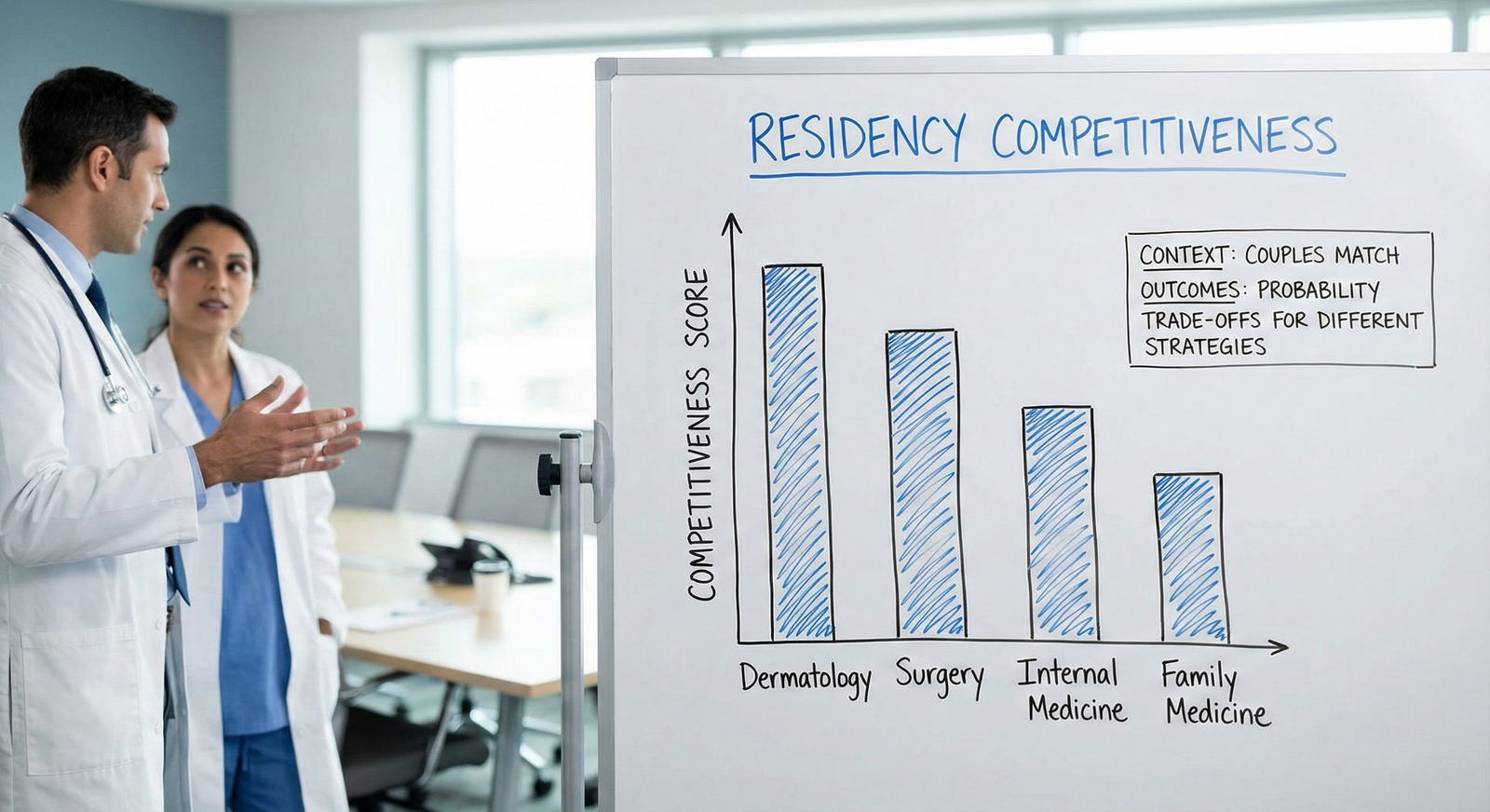
You must also factor in opportunity cost. Could the retirement money elsewhere fund fellowship application costs, research time, or a chief resident year? If a program offers a 457(b) with immediate vesting, that capital is available to you upon graduation. You could use those funds to cover the massive costs of traveling for fellowship interviews, or to buy into a private practice partnership track immediately. A 403(b) with a three-year cliff locks that capital away until you are in your late fifties. Liquidity has a tangible value during the transition to attending life.
Do not let program directors dazzle you with a slightly higher base salary while they quietly hand you a terrible vesting schedule and a 403(b) filled with high-fee annuities. Look at the fine print. Demand the summary plan description. Run the math.
Retirement benefits can add $15,000 to $50,000 in tangible value over the course of your residency. Always verify the vesting schedule; a three-year cliff will cost you significantly if you transfer programs. Calculate your effective salary by factoring in all compensation, not just the number on your offer letter. Academic programs typically offer better 403(b) infrastructure, but community and government programs may provide the immediate flexibility and liquidity you actually need. Build your rank list on data, not assumptions. Your future attending self will thank you for it.