
You’re staring at your rank list.
You’ve got 2–3 programs you really loved. A couple you definitely hated.
And then there’s this big mushy middle of places that felt…fine. Not bad. Not great. Just “okay.”
Now you’re asking yourself:
Is it smart to rank one of those “meh but acceptable” programs highly, just because it’s realistic? Or are you screwing yourself by giving up on what you actually want?
Let’s walk through this like adults, not anxious zombies the week before rank list lock.
The Short, Honest Answer
Yes, it can be smart to rank a program highly even if you felt only “okay” about it—if it clears three bars:
- You can realistically see yourself functioning there for 3–7 years without being miserable.
- The program will get you to your actual career goals (fellowship, job, lifestyle).
- There are no serious red flags (abuse, dangerous patient load, zero support).
If it meets those three, then ranking it higher than your gut “excitement level” might actually be the correct strategic move.
But if it fails any of those? Ranking it highly is dumb. You’re signing up for long-term pain to avoid short-term anxiety.
First: How the Match Really Treats Your “Okay” Programs
You can’t answer this question if you don’t actually understand how the algorithm works.
Quick version: The Match favors the applicant, not the program.
You are never punished for “aiming high.” Ranking dream programs above safeties doesn’t lower your chances at the safeties. The algorithm basically:
- Starts with your #1 choice and tries to place you there.
- If that program also ranked you and has space, you go there.
- If not, it moves to your #2, then #3, and so on.
- Only if higher-choice programs can’t take you does it consider the next one.
So your “okay” program at #5 will consider you exactly the same as if you’d ranked them #2—as long as the algorithm eventually gets to that spot. They don’t see your rank order.
Bottom line:
You never move a program up “just to be safe.” You move it up only if you would truly prefer to go there over the ones below it.
The Real Question: What Does “Okay” Actually Mean?
You’re using that word, but you might be packing different things into it. You need to unpack it before you rank.
Ask yourself: when you say “I felt only okay about it,” which of these buckets does it fall into?
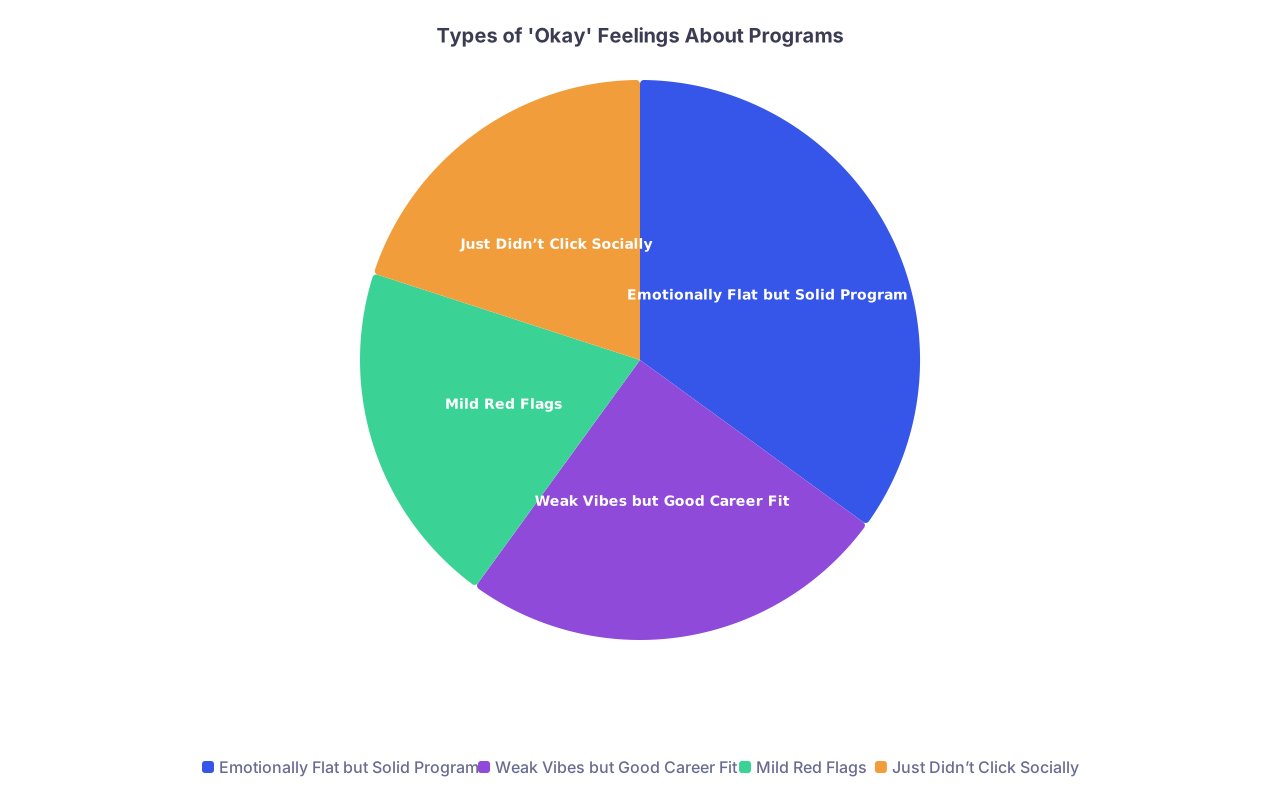
| Category | Value |
|---|---|
| Emotionally Flat but Solid Program | 35 |
| Weak Vibes but Good Career Fit | 25 |
| Mild Red Flags | 20 |
| Just Didn’t Click Socially | 20 |
1. “Okay” = Boring but Solid
Example:
Program is well-organized, decent case mix, graduates do fine. City is meh. Apartments are beige. Nobody was weird or inspiring.
This is the underrated good ‘okay’.
You’re not in love, but nothing seemed harmful.
For this category, it is smart to rank them highly if they beat programs below them on:
- Training quality
- Location life realities (partner, family, cost of living)
- Long-term opportunity
2. “Okay” = Career Fit Good, Vibes Were Off
Example:
Program has strong fellowship matches, good board pass rates. But residents seemed tired. You couldn’t read the culture. Some awkwardness.
This one needs more thought, not just vibes. Ask:
- Were residents tired because they’re overworked, or because it was a random post-night-float day?
- Did anyone actually say something concerning (e.g., “we’re losing attendings,” “people are leaving early,” “lots of unfilled spots”)?
- Or did you just feel out of place socially?
If it’s just “I didn’t click socially in a 7-hour highly artificial Zoom day”? That’s not a reason to tank a solid program.
3. “Okay” = Mild Red Flags
Example phrases I’ve actually heard from residents that should make you pause:
- “We’re in the middle of leadership transition, so things are a bit chaotic.”
- “There’s been some feedback about wellness…they’re working on it.”
- “You get lots of autonomy starting intern year” (translation: maybe under-supervised).
- “We don’t really track work hours too closely.”
This is not just “okay.” This is yellow-flag territory.
Rank is now a risk tolerance decision. More on that below.
A Simple Framework: “Would I Rather Go Here Than…”
The right way to decide whether to rank an “okay” program highly isn’t to ask “Do I love it?” It’s to ask:
“Would I genuinely rather train here than at any program below it—or not match?”
Here’s the decision skeleton:

| Step | Description |
|---|---|
| Step 1 | Program feels okay |
| Step 2 | Rank low or not at all |
| Step 3 | Rank low or skip |
| Step 4 | Rank higher |
| Step 5 | Keep lower |
| Step 6 | Meets career goals? |
| Step 7 | Major red flags? |
| Step 8 | Prefer over programs below? |
Use this to pressure-test yourself:
- Compare Program X to the one directly below it on your draft list.
- Ask out loud: “If I matched at X and not at Y, would I be happy with that?”
- If the answer is “yes, or at least not regretful,” then X belongs above Y.
- If you’d be secretly disappointed, flip them.
Do that from the top all the way down. That’s how you get a rational list instead of a vibes-only mess.
When It Is Smart to Rank an “Okay” Program Highly
Let’s get specific. These are scenarios where ranking a program you only felt “okay” about highly is actually the right move.
1. You Care More About Outcome Than Daily Aesthetics
Example: You want cardiology fellowship. Program A (small city, meh social scene) sends 2–3 people to cards every year. Program B (cool coastal city, super fun residents) barely sends anyone to subspecialty.
If you felt “okay” about A and “loved” B but your true priority is fellowship →
Ranking A higher is smart. Even if it’s not exciting.
2. Your Life Outside Work Matters More Than Hospital Vibes
Example:
Your partner has a stable job in that city. You’ve got parents nearby. Schools are good. Commute is short. Cost of living is sane.
The program itself felt middle-of-the-road—but your life setup would be strong. That absolutely justifies ranking it higher than cooler-feeling programs in cities that’ll wreck your finances or relationships.
3. You’re in a Competitive Specialty Without Super Strong Stats
Let me be blunt. If you’re applying to derm, ortho, plastics, ENT, etc., and your application is middle-of-the-pack, you don’t get to be incredibly picky among all possible solid programs.
If a program:
- Is reputable enough to get you where you want to go.
- Didn’t feel toxic or unsafe.
- Showed you residents who seemed basically fine.
…then ranking it highly is often smart, even if the interview day didn’t give you butterflies.
You’re playing probabilities, not fantasy drafts.
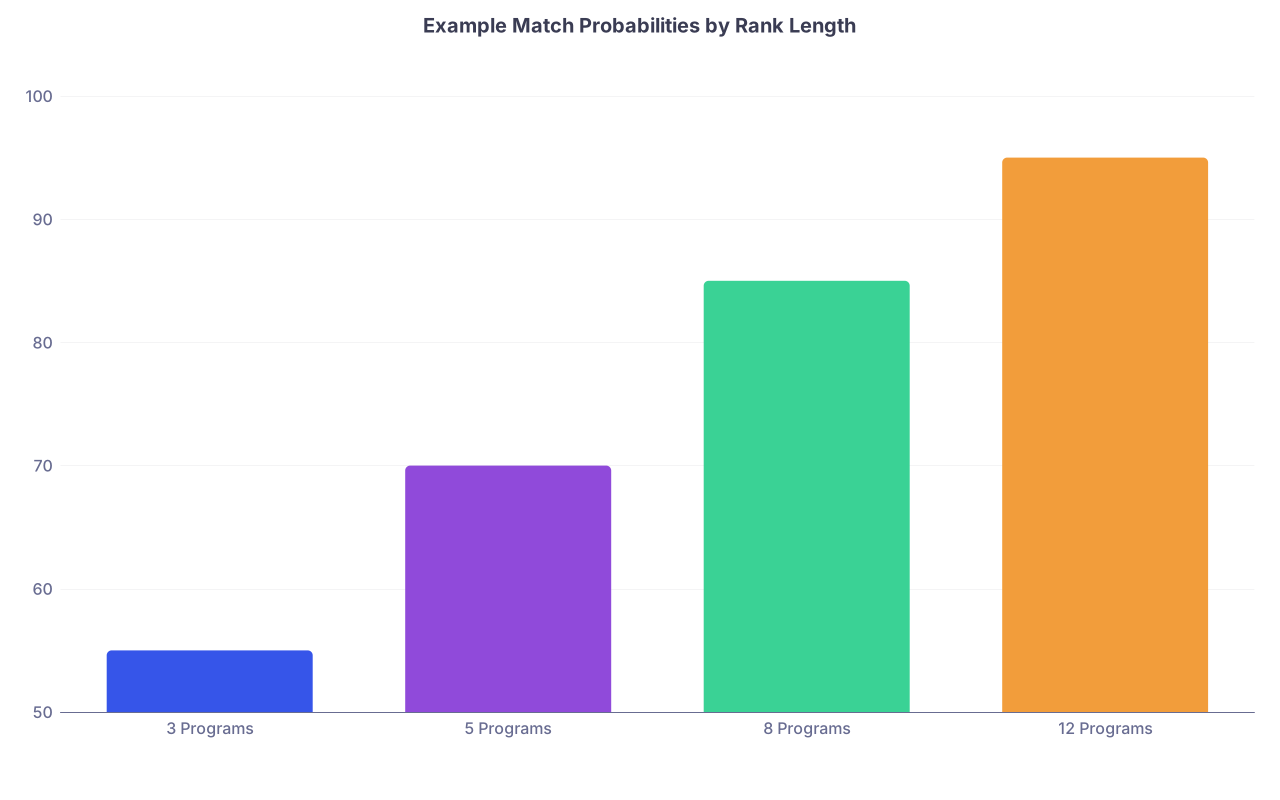
| Category | Value |
|---|---|
| 3 Programs | 55 |
| 5 Programs | 70 |
| 8 Programs | 85 |
| 12 Programs | 95 |
(This isn’t exact NRMP data, but directionally: more acceptable programs on your list = higher chance of matching.)
When Ranking an “Okay” Program Highly Is a Bad Idea
There are some situations where “I’ll just rank it high to be safe” is actually you walking into a 3–7 year trap.
1. You Saw or Heard Serious Red Flags
These are not “I just didn’t vibe” issues. These are “this will affect my health or training” issues. Examples:
- Multiple residents mentioned burnout with no clear plan from leadership.
- You heard about harassment, discrimination, or retaliation.
- Sudden leadership churn: multiple PDs in a few years, unstable chair.
- Residents quietly told you, “If you have other options, take them.”
Ranking these highly because “I really want to match this year” is like buying a house with a known foundation crack “because the market is hot.” You can, but you’ll live with that decision every day.
2. You’d Legit Rather Scramble/SOAP Than Go There
This is the hard one. If you honestly feel:
“I would rather not match and SOAP into a different program or even a different specialty than spend 3+ years here,”
then you should not rank that program. Period.
You’re allowed to draw a line, even in a stressful process.
3. Geography Would Be Actively Harmful For You
Not just “far from friends.” I mean:
- Partner can’t reasonably move there at all.
- You have health issues that can’t be managed well in that area.
- Immigration/visa issues make that location risky for you or your family.
Don’t rank a place highly if it blows up the rest of your life.
How to Compare Two “Okay” Programs Rationally
Let’s say you’ve got three programs that all felt “fine.” Here’s a way to sort them without overcomplicating things.
| Factor | Program A | Program B | Program C |
|---|---|---|---|
| Fellowship Matches | Strong | Moderate | Weak |
| Location for You | Great | Meh | Good |
| Resident Vibes | Neutral | Good | Neutral |
| Cost of Living | Low | High | Moderate |
How to read something like this:
- If you care most about fellowship → A probably rises.
- If you care most about social life and co-residents → B might rise.
- If you’re trying to balance training and livability → A or C over B.
You’re ranking trade-offs, not emotions.
What If You Genuinely Felt “Meh” About Every Program?
This happens more than people admit. A few possibilities:
You’re burned out and emotionally flat from the process.
Everything feels bland. That doesn’t mean every program is bad.You had unrealistic expectations.
You thought you’d “just know” your perfect program. Real life rarely looks like that.You actually don’t care that much where you go, as long as it’s decent.
That’s valid. Then your ranking should be based on rational metrics (location, career outcomes, support systems), not feelings.
In that case, you lean on structure:
- Training quality (boards, procedure volume, fellowship/job outcomes)
- Geography (support, partner, cost of living)
- Schedule/call, night float system, time off
- Resident support (did people seem protected or abandoned?)
Build your list from those and stop obsessing over not having a “love at first sight” program.
How Much Weight Should You Give Vibes vs. Data?
Both matter. But not equally.
If I have to assign a rough split for most people:
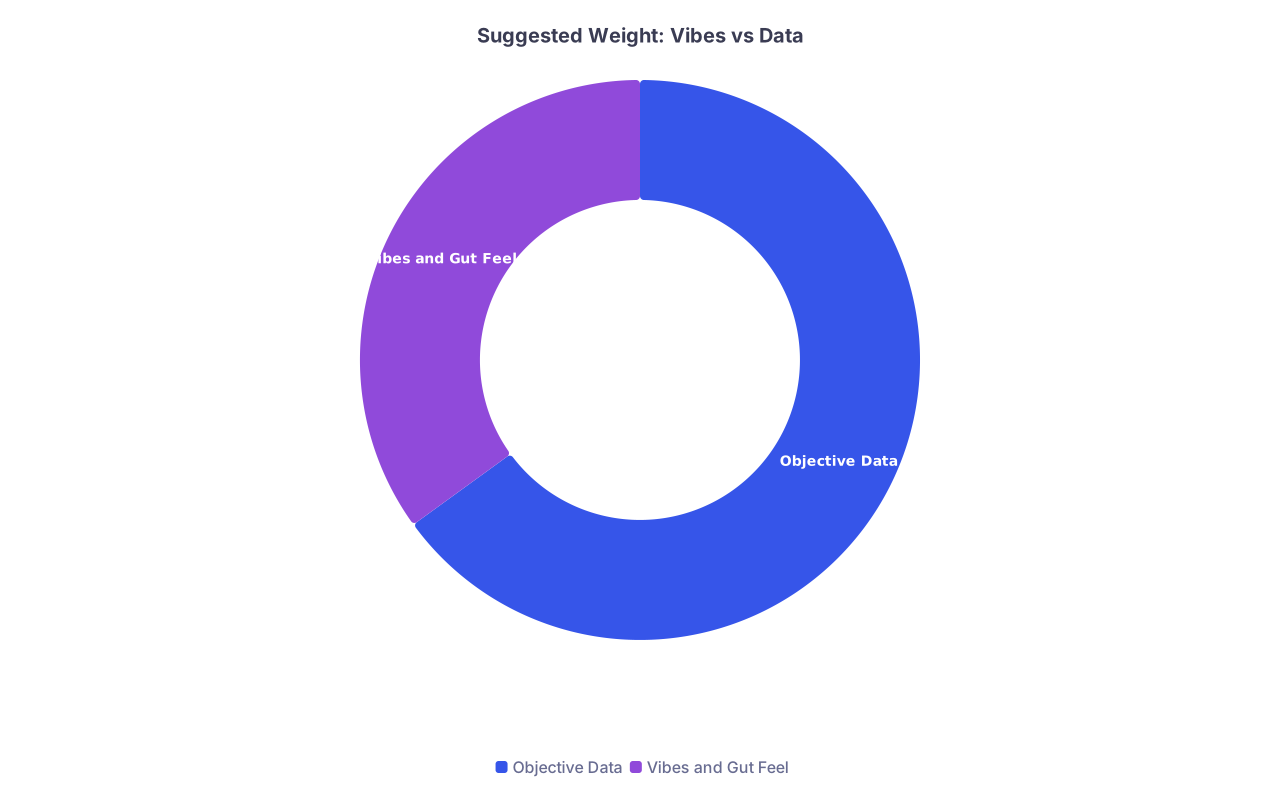
| Category | Value |
|---|---|
| Objective Data | 65 |
| Vibes and Gut Feel | 35 |
- Data (65%): outcomes, workload, call structure, support, location realities.
- Vibes (35%): did the residents seem like people you could be stuck in a call room with at 2 a.m. without wanting to scream?
If the data is strong but vibes are flat? That’s a valid “rank it decently high” scenario.
If vibes are great but the data is trash (no case volume, poor support, chaotic leadership)? That’s a trap.
Concrete Steps: What To Do With That “Okay” Program Today
Here’s how to decide where it belongs on your list, step-by-step.

| Step | Description |
|---|---|
| Step 1 | List all programs |
| Step 2 | Mark love vs okay vs no |
| Step 3 | Remove any never programs |
| Step 4 | For okay group check career fit |
| Step 5 | Check for red flags |
| Step 6 | Order remaining by real life preference |
| Step 7 | Review from top and compare neighbors |
Put all your programs into three piles:
“Loved,” “Okay,” and “Nope.”
The “Nope” pile usually shouldn’t be ranked at all.Take each “Okay” program and answer:
- Does this program get me where I want to go professionally?
- Would my life outside work be survivable or decent here?
- Did I see or hear anything that truly concerns me?
If the answer to those is mostly “yes / yes / no,” that program is safe to rank highly relative to others.
Now compare pairwise: “Would I rather be at Program X or Program Y?”
Don’t overthink. First honest gut answer wins.Build your final list based on true preference, not fear.
FAQs
1. Will a program know I only ranked them “in the middle” and hold it against me?
No. Programs never see how you rank them. They only see whether you matched there or not. There is no such thing as “ranking them high to show interest” in the Match. That’s not how this works.
2. Should I move a safer “okay” program above a dream program just so I match?
No. The algorithm already protects you. Ranking a safer program above a dream program does not improve your chances of matching at that safe program. It only increases the chance you’ll never get considered by the dream program at all. Put them in true preference order.
3. What if my family really wants me closer, but that program was only “okay” for me?
Then you need to be honest about your priorities. If being near family is a top value for you (childcare, support, cultural reasons, whatever), it’s absolutely reasonable to rank that “okay” nearby program higher. If you’d resent that daily, maybe it belongs a bit lower. There’s no universal right answer—there’s only what you’d regret less.
4. Is it better to rank more programs, even ones I felt lukewarm about?
Rank every program where you’d be willing to spend 3–7 years. Don’t rank places you’d rather go unmatched than attend. More acceptable programs on your list usually raises your chance of matching, but padding your list with programs you’d hate is a good way to end up stuck and miserable.
5. I still feel stuck. How do I break a tie between two “okay” programs?
Ask yourself three simple tie-breakers:
- Where would my life outside the hospital be better?
- Where do graduates seem to land jobs/fellowships I’d actually want?
- If I matched there tomorrow and posted it on social media, which one would I feel more at peace about?
Whichever wins 2 out of 3 goes higher.
Open your draft rank list right now.
Pick one “okay” program. Move it up or down one spot based on the question:
“Would I truly rather train here than at the program right below it?”
Lock that one decision in. Then repeat. That’s how you build a list you can live with.