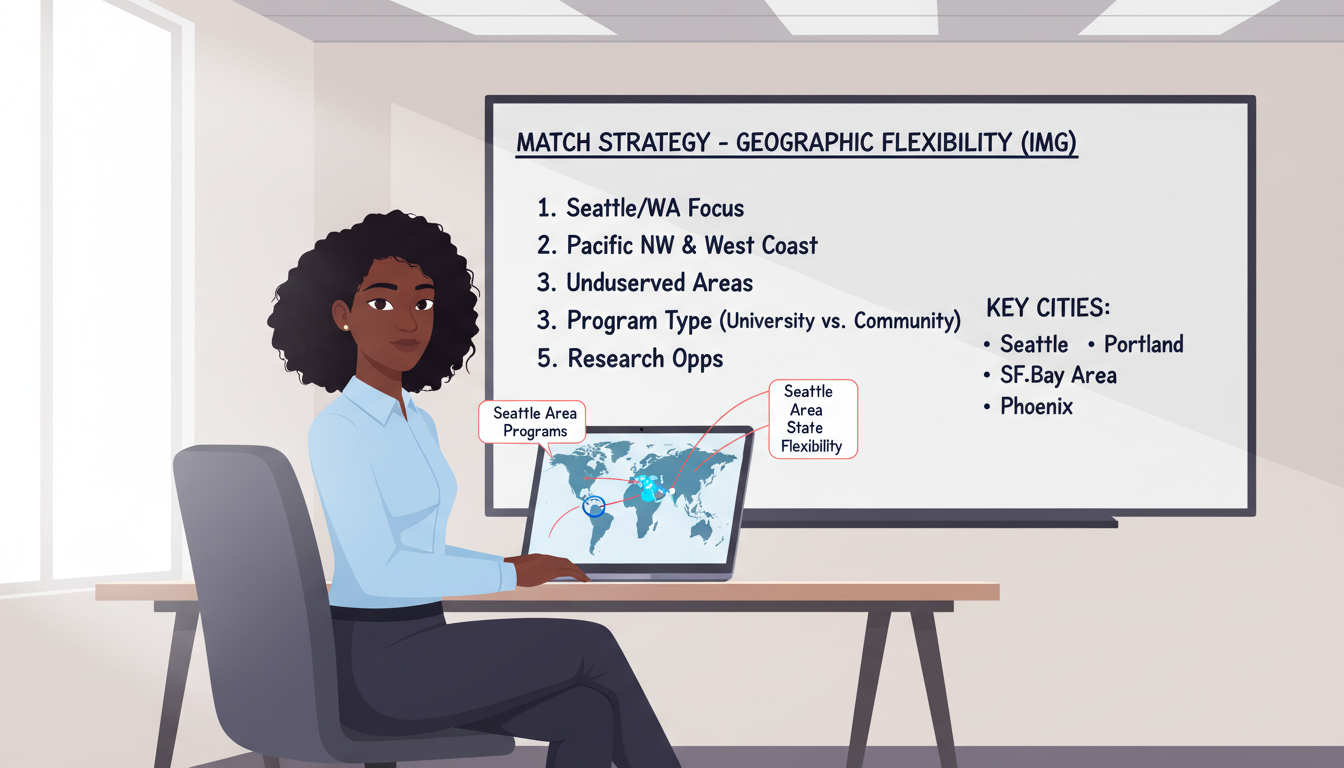
Understanding Geographic Flexibility as a Caribbean IMG Aiming for Seattle
For a Caribbean international medical graduate (IMG) who wants to train and eventually practice in Seattle, “geographic flexibility” is not just a buzzword—it’s one of the most powerful levers you have in the residency match. You may dream of a spot in competitive Seattle residency programs or broader Washington state residency sites. But if you frame your strategy with the right balance of flexibility and focus, you significantly improve your odds of a successful match.
This article walks through how to think about geographic flexibility as a Caribbean IMG, how it interacts with your Seattle goals, and how to build a resilient regional preference strategy that still gives you a real chance at training in or near the Pacific Northwest.
We’ll cover:
- What geographic flexibility really means in the Match
- How to position Seattle and Washington state in a broader application plan
- How your Caribbean background (including things like SGU residency match outcomes) plays into regional considerations
- How to talk about location in your application materials and interviews
- Practical steps to protect yourself from going unmatched while still giving yourself a shot at Seattle
1. What Geographic Flexibility Really Means (Especially for Caribbean IMGs)
Geographic flexibility is your willingness to train in different locations—cities, states, or even regions—rather than restricting yourself to one highly desired area (like Seattle). For a Caribbean IMG, this concept is especially critical because:
- Many programs still prioritize U.S. MD and DO students
- IMGs may face visa issues, licensing nuances, and institutional bias
- The Pacific Northwest has fewer residency positions overall than larger regions like the Northeast or Midwest
Dimensions of Geographic Flexibility
You can think of flexibility across several dimensions:
City size
- Large academic centers (e.g., Seattle)
- Mid-sized cities (e.g., Spokane, Tacoma, Everett)
- Smaller cities or more rural communities (e.g., central or eastern Washington)
State and region
- Primary goal: Seattle and broader Washington state residency positions
- Secondary: West Coast (Oregon, Idaho, California, Nevada)
- Tertiary: Nationwide flexibility if needed to protect against going unmatched
Program type
- University-based programs (like those affiliated with University of Washington)
- Community-based programs in metropolitan or suburban areas
- Community programs in smaller or more rural settings
Visa and support
- States and institutions with a track record of supporting IMGs and visa sponsorship
- States where Caribbean IMGs from schools like SGU, Ross, AUC, etc., commonly match
For most Caribbean IMGs, insisting on “Seattle or nowhere” is a high-risk plan. A smarter approach is: “Seattle first, Pacific Northwest second, several other regions as safety nets.”
2. Seattle and Washington State: Opportunities and Realities for Caribbean IMGs
Seattle is an attractive target for many reasons: strong academic centers, high-quality subspecialty exposure, and a vibrant city life with access to nature. However, you need a clear-eyed view of what you’re aiming for.
The Landscape: Seattle and Washington State Residency
In Washington state, residency programs are concentrated in:
- Seattle (major academic centers and some community programs)
- Tacoma, Everett, Spokane, and other cities with community or hybrid programs
- A smaller number of rural or regional training tracks
Many programs are tied to the University of Washington or partner institutions. These often:
- Have strong academic reputations
- Attract competitive applicants, including U.S. MD and DO students
- May have limited IMG intake, or only consider IMGs under specific conditions (strong scores, U.S. experience, visa requirements met, etc.)
Because of that, a Caribbean IMG with a narrow focus on Seattle only, especially in competitive specialties (e.g., dermatology, orthopedics, radiology, ophthalmology), is at substantial risk of going unmatched.
Where Caribbean IMGs Fit In
Caribbean IMGs do match into Washington state, but:
- The numbers are relatively small compared to other regions
- Matches are often in internal medicine, family medicine, pediatrics, psychiatry, or transitional year positions
- Many IMGs reach Seattle or Washington after first training elsewhere (e.g., Midwest or East Coast) and later returning for fellowship or practice
If you’re from a well-known Caribbean school with strong outcomes—such as a strong SGU residency match record—you may have:
- A more extensive alumni network in various states
- Better access to U.S. clinical rotations
- A track record your programs may recognize
But you are still competing in a region with fewer total positions, many of which may not routinely take IMGs.
3. Designing a Geographic Strategy Centered on Seattle but Built for Safety
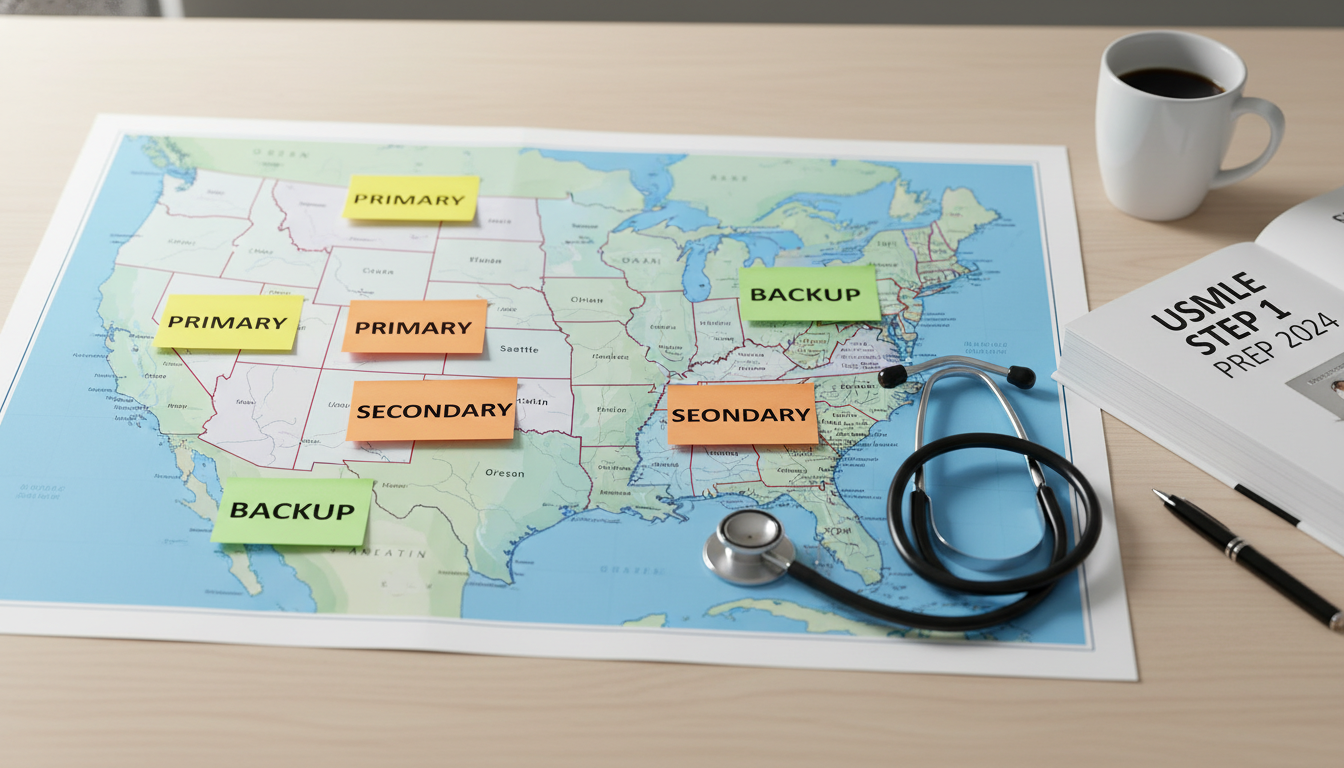
Your application strategy should be like a pyramid: narrow at the top (Seattle), broader in the middle (Pacific Northwest and West Coast), and broadest at the base (nationwide, IMG-friendly programs).
Step 1: Define Your Tiers of Geographic Preference
A practical regional preference strategy for a Caribbean IMG targeting Seattle might look like this:
Tier 1: Primary Target
- Seattle and broader Washington state residency programs
- Focus on specialties where you’re realistically competitive (e.g., FM, IM, psych, peds, prelim/transitional year) unless you have exceptional numbers and research
Tier 2: Secondary Regions with Similar “Feel” or Proximity
- Oregon (Portland, Eugene, smaller cities)
- Idaho and Montana (regional programs, often with strong primary care emphasis)
- Northern California (Sacramento, Bay Area, Central Valley communities)
- Other West Coast-adjacent regions with IMG-friendly reputations
Tier 3: Broad Nationwide Net
- Midwest and Northeast community programs known to be IMG-friendly
- States with a history of accepting Caribbean IMGs (e.g., New York, New Jersey, Michigan, Pennsylvania, Florida, Illinois, Texas—depending on your visa situation)
The purpose: You maintain a clear primary goal (Seattle) but don’t gamble your entire career on one metro area.
Step 2: Quantify Your Level of Flexibility
Use your competitiveness to decide how aggressively you must expand your geography:
Strong application (e.g., solid USMLE scores, multiple U.S. clinical rotations, strong letters, no major red flags):
- 10–20% of programs in Washington and neighboring states
- 30–40% in the broader West Coast and/or states with personal ties
- The rest in highly IMG-friendly regions nationwide
More average or below-average application, or any significant red flags:
- You still apply to Seattle and Washington, but they might make up only 10–15% of your total list
- 50%+ of applications to reliably IMG-friendly areas across the country
- Consider more primary care–oriented specialties where IMG pathways are more open
Step 3: Align Specialty Choice with Geographic Goals
Certain specialties are more forgiving in terms of geography; others are not.
More flexible specialties (for IMGs):
- Family Medicine
- Internal Medicine (categorical and prelim)
- Psychiatry
- Pediatrics
- Transitional year positions
Highly competitive specialties (for IMGs, especially in Seattle):
- Dermatology, orthopedic surgery, plastic surgery, neurosurgery, ENT
- Diagnostic radiology, radiation oncology, ophthalmology
- Some surgical subspecialties
If your absolute non-negotiable is “Seattle plus a very competitive specialty,” the trade-off is a dramatically higher risk of going unmatched. You then either:
- Expand geography broadly nationwide, or
- Choose a less competitive specialty if you are strictly fixed on staying in the region long term

4. How to Communicate Geographic Preference (Without Hurting Your Chances)
You want programs in Seattle and Washington to understand that you are genuinely interested in their location, but you also don’t want to limit your options by sounding unwilling to go anywhere else.
ERAS Application: Addressing Geographic Preference
Use the personal statement and ERAS experiences to:
Highlight genuine ties or interest in Seattle/Washington state
- Family or close friends in the region
- Previous time living in the Pacific Northwest
- Clerkships, sub-internships, or observerships in Washington or nearby states
- Interest in the regional patient population (e.g., rural health, Native American health, underserved urban communities)
Avoid sounding inflexible
- Don’t write: “I will only consider training in Seattle.”
- Instead: “I have a strong interest in training in the Pacific Northwest, and I am especially drawn to programs in Seattle due to [reasons]. At the same time, I value diverse clinical environments and remain open to excellent training opportunities in other regions.”
Program-specific statements (if used)
- Some applicants use slightly tailored personal statements for a subset of programs in especially desired regions (like Seattle).
- If you do this, keep the core story the same but add a paragraph on regional interest: research or rotation experiences, family ties, or career plans in the region.
Interviews: Talking About Location Flexibly
When you interview at Seattle or Washington state residency programs:
- Be clear: “Seattle is one of my top geographic preferences because…”
- Add flexibility: “I’m also applying to other regions where I believe I can serve similar patient populations and receive strong training.”
When interviewing at other locations:
- Acknowledge honestly: “I’m applying somewhat broadly because I want to ensure a strong residency training experience. While I have interest in the Pacific Northwest, I see significant value in training here because…”
- Emphasize features of that program and region that genuinely appeal to you. Programs understand that IMGs often need some location flexibility in the match; they just want to know you would actually be happy there if you matched.
Signaling and Preference Tools (as available)
If your specialty uses preference signaling (e.g., certain competitive specialties), use a limited number of signals for:
- Your highest-priority Seattle/Washington programs
- A few high-yield West Coast or IMG-supportive programs in other states
Be strategic: signals are more meaningful when used selectively, not on every program in one city.
5. Using Data, Networks, and Your Caribbean Background to Guide Choices
As a Caribbean IMG, you’re not starting from zero. Many of your predecessors have navigated similar questions, including those targeting the West Coast.
Study Match Data for Seattle and Beyond
Use tools like:
- NRMP Charting Outcomes in the Match (for IMGs)
- FREIDA and individual program websites (to identify IMG-friendliness and visa policy)
- School-specific match lists (for example, an SGU residency match list if you’re from SGU, or equivalent for your school)
Look for:
- Which Seattle residency programs have historically taken IMGs
- Which Washington state programs consistently list international graduates in their residents
- Which specialties and regions have higher IMG representation (e.g., certain Midwest and Northeast family medicine or internal medicine programs)
Then ask: “Where do people like me actually succeed?” This helps you calibrate how many slots to devote to Seattle versus broader regions.
Leverage Alumni and Clinical Contacts
Your Caribbean medical school likely has graduates in many programs nationwide. To specifically target Seattle and Washington:
Ask your school’s alumni office or career services for:
- Alumni currently in Seattle or Washington state residency programs
- Alumni in Pacific Northwest or West Coast programs generally
Reach out professionally:
- “I’m a current student at [School] interested in applying to your program and to the Seattle/Washington region overall. Could you share any advice on how IMGs are evaluated and whether the program is open to Caribbean graduates?”
Ask targeted questions:
- How many IMGs are currently in the program?
- How do they view Caribbean schools?
- Are there particular strengths or weaknesses Caribbean graduates need to address (e.g., USCE, letters, Step scores)?
This information helps refine where your time and application fees are most likely to pay off.
Incorporating Visa and Licensure Considerations
If you require a visa:
- Confirm whether each program in Seattle/Washington and elsewhere sponsors J-1, H-1B, or both
- Some states and institutions are more comfortable with visa sponsorship than others; this may affect how much emphasis you can realistically place on Washington state
For long-term practice in Seattle, remember:
- You can complete residency anywhere in the U.S., then return to Washington later for fellowship or attending work
- Many physicians practicing in Seattle did not complete residency in Washington state
This broader view can lower the pressure to match in Seattle specifically while still keeping the region as part of your long-term plan.
6. Practical Application Blueprint for a Caribbean IMG Targeting Seattle
Putting it all together, here’s a concrete, stepwise plan.
Step A: Assess Your Competitiveness Honestly
- USMLE/COMLEX scores
- Number and quality of U.S. clinical experiences (especially in your target specialty)
- Research, publications, leadership, and service
- Red flags (gaps, failures, professionalism concerns)
Stronger applicants can afford slightly more geographic narrowness; weaker ones need broader flexibility.
Step B: Define Your Geographic Tiers
Tier 1 – Seattle & Washington state residency programs
- Identify every program in your specialty in Seattle and Washington
- Separate them into:
- “Dream but possible” (has taken IMGs, your scores in range)
- “Unlikely” (academic-heavy, rarely or never take IMGs, much higher metrics)
Tier 2 – Pacific Northwest & broader West Coast
- Oregon, Idaho, Montana, Northern California, Nevada, possibly Colorado
- Look for IMG presence and visa support
Tier 3 – Nationwide IMG-friendly
- Northeast and Midwest community programs
- States known for Caribbean IMG intake
Step C: Distribute Your Applications
For a typical Caribbean IMG applying in a core specialty (IM, FM, psych, peds):
- Aim for 60–80+ programs total, depending on competitiveness
- Example distribution:
- 10–15%: Seattle/Washington state residency sites
- 25–30%: Pacific Northwest and West Coast
- 55–65%: IMG-friendly programs nationwide
Adjust these percentages if you are exceptionally strong or face significant application challenges.
Step D: Tailor Your Story
Core personal statement emphasizing:
- Commitment to your specialty
- Strengths as a Caribbean IMG (resilience, adaptability, diverse clinical exposure)
- Broad openness to different training environments
Optional Seattle/Washington–focused version:
- Add a paragraph about why the Pacific Northwest is particularly appealing
- Mention long-term interest in serving patients in Washington if true
Step E: Prepare for Interviews with a Location Narrative
Before interviews, define:
- Why Seattle and Washington state are uniquely attractive to you
- Why you would still be content and professionally satisfied training elsewhere
- How your background equips you to adapt geographically (e.g., having studied in the Caribbean, rotated in multiple U.S. states)
This narrative helps you present as enthusiastic but not rigid.
FAQs: Geographic Flexibility for Caribbean IMGs Targeting Seattle
1. Can a Caribbean IMG realistically match directly into a Seattle residency program?
Yes, it is possible, but it’s competitive and not common across all specialties. Your chances improve if you:
- Choose relatively IMG-friendly specialties (IM, FM, psych, peds)
- Have solid scores and strong U.S. clinical experience
- Show genuine connection or interest in Seattle or Washington state
- Apply broadly so Seattle is part of a larger, safer plan
2. If I don’t match in Seattle, can I still end up practicing in Washington state later?
Absolutely. Many physicians practice in Washington after training elsewhere. Pathways include:
- Completing residency in another state and then applying for fellowships in the Pacific Northwest
- Joining a hospital or group practice in Washington after residency
- Using national networks (including Caribbean alumni) to find attending positions in Seattle or surrounding areas
3. Will stating a strong geographic preference for Seattle hurt me with programs in other regions?
Not if you phrase it correctly. Programs expect you to have preferences, but they want to know you would genuinely consider them. Emphasize:
- Seattle is a top interest, but not your only acceptable option
- Specific reasons you value each program’s location and patient population Avoid language that implies “Seattle or nothing.”
4. How can I find Seattle or Washington programs that are IMG-friendly?
Use a combination of:
- FREIDA and program websites to see current and past residents’ medical schools
- NRMP data to understand IMG match rates by specialty and region
- Your Caribbean school’s match lists (e.g., SGU residency match data if applicable)
- Alumni and networking: reach out to former students now in Washington or nearby states
If a program has multiple international graduates, especially from Caribbean schools, it’s a strong signal that they are open to IMGs.
By approaching your Seattle dream with structured geographic flexibility—anchoring your goals in Washington while opening yourself to a wider range of locations—you dramatically increase your odds of training in the U.S., building a strong career foundation, and eventually making your way to the Pacific Northwest if that remains your long-term destination.