
The word “malignant” gets thrown around by residents the way attendings throw around “this will be a quick case.” It rarely means what outsiders think it means—and it’s almost never about just working hard.
Let me be blunt: faculty and program directors almost never say “our program is malignant.” But behind closed doors, they absolutely use that word about other programs. And when they do, they’re not talking about “oh, they work their residents hard.” They’re talking about structural, cultural, and leadership problems that quietly destroy people.
You will not find any of this in the brochure, on the website, or during interview day. You hear it in side conversations. In fellowship interviews. In off-the-record emails. I’ve heard department chairs warn their own students: “You can go there if you want, but know that place is malignant.” And they mean something very specific by it.
Let me tell you what that really is.
What “Malignant” Actually Means to Faculty and PDs
When faculty use the word “malignant” about a residency, they’re usually pointing to a pattern. Not one bad attending. Not one rough rotation. A pattern of:
- Institutionalized disrespect
- Systematic overwork without protection
- Leadership that punishes vulnerability and whistleblowing
- Residents being disposable rather than developed
They might soften the language with students: “That’s a very demanding program.” Or, “They have a challenging culture.” But behind closed doors, I’ve heard far harsher phrases:
- “They burn through residents.”
- “They only graduate people who survive, not who are trained well.”
- “The PD is vindictive.”
- “No one is happy there. They just endure.”
The key distinction: a “hard” program pushes you and trains you well; a “malignant” program uses you and blames you when their system fails.
And faculty know the difference, because they see the downstream product—fellows and applicants who come from those programs.
The Five Quiet Markers of a Malignant Program
Forget the glossy tours and curated resident panels. Malignancy shows up in the stuff they hope you do not notice.
1. Leadership That Rules by Fear
Malignancy starts at the top. Always.
Faculty and PDs trade stories about this. You’ll hear it in fellowship selection meetings:
- “Residents are terrified of that PD. No one gives them honest feedback.”
- “They had three chief residents resign over the last five years.”
- “Residents get retaliated against for going to GME.”
The malignant pattern:
- Residents are scared to bring up safety, wellness, or duty hours.
- Residents who speak up get labeled “unprofessional” or “not a team player.”
- Program leadership talks a big game about “family” and “resilience,” then weaponizes professionalism language to silence people.
When faculty call a place malignant, they’re often thinking of situations they’ve heard like:
- A resident reported duty hour violations → suddenly put on remediation for “attitude problems.”
- Someone asked for help with depression → their future letter subtly hinted they were “emotionally labile.”
- A QI or safety concern was raised → the resident got blamed for “communication issues” instead of the system being fixed.
Residents talk to their away-rotation attendings. Fellows talk to their prior program’s faculty. PDs hear these patterns and file them away.
2. Chronic, Unfixed Duty Hour and Coverage Abuse
Every program occasionally has a bad month. EHR rollout, service explosion, a few people out on leave.
Malignant programs? It’s not a bad month. It’s the operating system.
You see features like:
- Violated duty hours that are “understood” not to be reported.
- Attendings explicitly pressuring residents not to log hours accurately: “Don’t get us in trouble.”
- PGY-2s and 3s doing routine scut a decent program would assign to an NP, PA, or clerk.
- No genuine backup system. The “backup” is always: the residents will just figure it out.
Here’s the part most students never hear: When faculty say a place is malignant, they often know because they’ve seen or heard of RRC citations, GME investigations, or near-misses that never made it outside the institution. They know which programs have been “on the radar.”
You’ll never see that in a brochure. But the reputation circulates among faculty quickly.
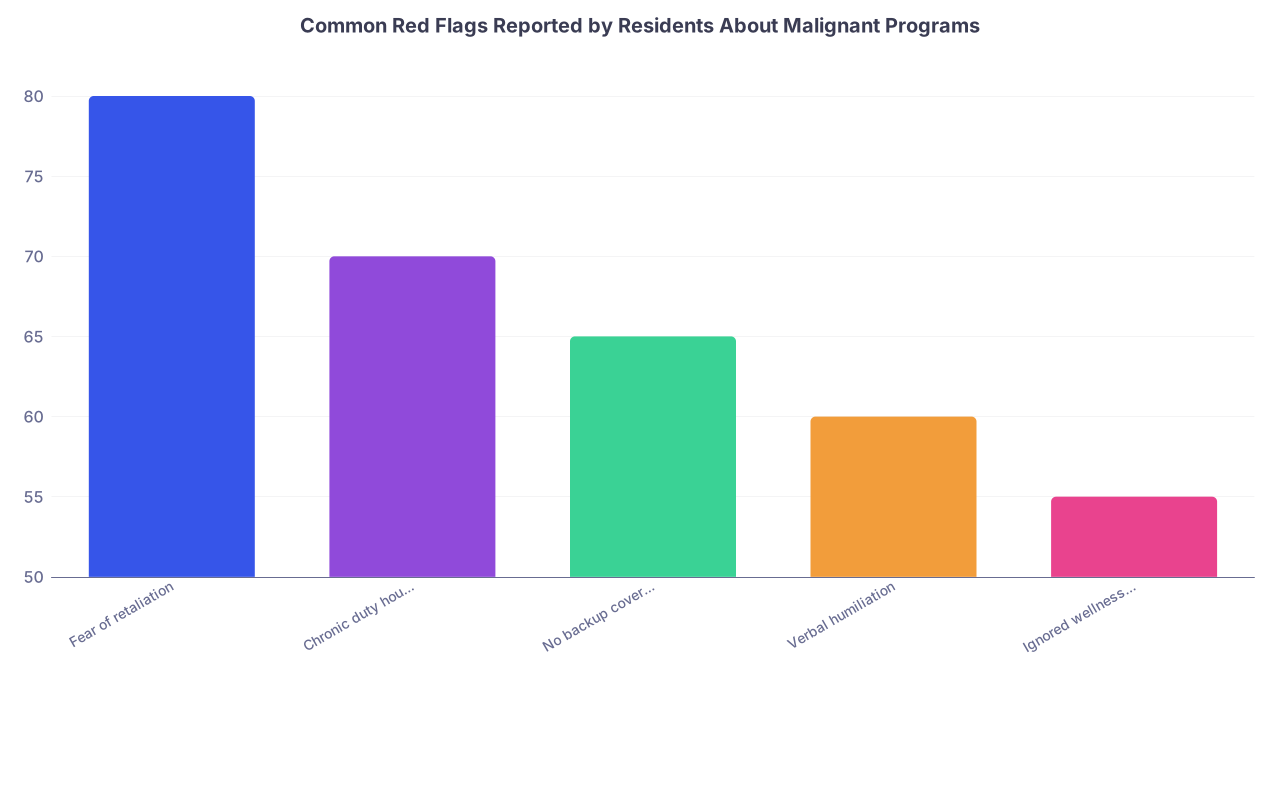
| Category | Value |
|---|---|
| Fear of retaliation | 80 |
| Chronic duty hour issues | 70 |
| No backup coverage | 65 |
| Verbal humiliation | 60 |
| Ignored wellness/leave | 55 |
(Percent of respondents encountering each issue at least occasionally in anonymous resident well-being surveys across multiple institutions, internal data shared among faculty.)
3. A Culture of Humiliation, Not High Standards
Do not confuse strict with malignant. Some of the best programs I know are absolutely intense. Attendings grill you, expect you to know the literature, and do not tolerate sloppiness. But they don’t humiliate you.
In malignant environments, the teaching style crosses an unspoken line:
- Public dress-downs in front of patients and staff.
- Sarcastic “teaching” that’s really character assassination.
- “You’re an embarrassment” instead of “Here’s how to fix this.”
The faculty test for this is simple: they ask their own residents quietly, “How do you feel when you’re on with Dr. X?” If the consistent answer is dread, shame, humiliation—that’s not just a “tough attending.” That’s malignant culture.
And here’s the insider part: program leadership often knows exactly which attendings are toxic. If they’ve chosen to look away for years, that is a malignant decision.
4. Residents Who Look Dead Behind the Eyes
Every program has tired residents. That’s residency. But there’s a difference between tired and hollow.
Faculty and interviewers notice this. They won’t say it to you, but they notice:
- Residents who mechanically say “it’s a great program” with no spark.
- Eyes darting to the chief when someone asks a real question, waiting to see if it’s safe to answer honestly.
- No joking or warmth between residents in front of applicants. Or the opposite: very forced, over-the-top enthusiasm that doesn’t match the vibe.
I’ve sat in rooms where faculty debrief after interview days and someone says, “Their residents looked… beaten down.” That phrase comes up a lot. And once that perception gets attached to a program, it lingers.

5. Graduates Who Are Competent but Broken
Here’s something students never see, but attendings do: what happens to people after they finish training.
Fellowship directors and hiring committees notice certain programs produce residents who:
- Are clinically solid but profoundly burned out.
- Have major gaps in supervised autonomy—they either under-function or over-function.
- Carry trauma from training: hypervigilant, apologizing constantly, terrified of making normal mistakes.
I’ve been in fellowship selection meetings where someone says, “This candidate is strong, but honestly their program is known to be malignant. We should think about whether they’ll need extra support.”
That’s the quiet cost of matching at a malignant place. You graduate with a reputation that precedes you. Not because you are flawed—but because people assume you’ve been through something brutal.
How Malignant Culture Shows Up on Interview Day (Without Saying a Word)
You’re not powerless. You can pick up pieces of this if you know where to look.
No one is going to turn to you and say, “Run, we’re malignant.” But the cracks show.
The Subtle Signs During Your Visit
Watch for these patterns:
- Residents never answer first. Faculty or chiefs always jump in to “frame” the program.
- Any question about well-being, support, or complaints gets answered with obvious talking points: “We really value wellness here” without any concrete examples.
- When someone asks, “What’s something you’d change about the program?” there’s awkward silence, then a generic, safe answer.
Also watch for:
- Defensive energy. Ask about duty hours and suddenly everyone’s voice gets a little too bright, a little too rehearsed.
- Resident turnover or mysterious “personal reasons” for departures that no one can explain beyond vague statements.
- Absolutely no mention of residents ever going to GME, negotiation, or program improvement initiatives. In healthy programs, residents can talk about problems they raised and changes that happened.

| Step | Description |
|---|---|
| Step 1 | Interview Day |
| Step 2 | Observe Resident Interactions |
| Step 3 | Ask About Support Systems |
| Step 4 | Review Call Schedule |
| Step 5 | Healthy Culture |
| Step 6 | Possible Red Flag |
| Step 7 | Consistency? |
| Step 8 | Concrete Examples? |
| Step 9 | Backup in Place? |
The Stuff Programs Will Never Put in Writing (But Faculty Talk About)
You want the real story? You’ll never get it from ERAS or the website. You get it from the whisper network.
Faculty and PDs quietly track data about “problem programs”:
- Unusual numbers of residents leaving mid-year.
- Recurrent GME or ACGME scrutiny.
- Program leadership turning over suspiciously often.
- Residents from that program consistently bringing up trauma during fellowship interviews.
Most medical students underestimate how much their own faculty know. Your department chair probably has a mental map of which programs they’d never send their own kid to.
The problem is students ask the wrong question. They say, “Is Program X good?” That’s too vague. It invites platitudes.
Ask instead:
- “Would you send your own child to Program X?”
- “Have you ever had concerns about how that program treats residents?”
- “Do you know of any residents who left that program early, and why?”
You’ll see the hesitation. The careful phrasing. That hesitancy is where the truth lives.
| Feature | Harsh but Healthy Program | Malignant Program |
|---|---|---|
| Workload | Heavy but monitored | Chronic overload, expected to hide hours |
| Feedback style | Direct, sometimes blunt | Public shaming, personal attacks |
| Response to concerns | Imperfect but engages in fixes | Retaliation, labeling as unprofessional |
| Resident departures | Occasional, well-explained | Recurrent, vague or hidden |
| Leadership reputation | Demanding but fair | Fear-based, described as vindictive |
How To Protect Yourself When Vetting Programs
You’re not just choosing training. You’re choosing who will have enormous power over your time, your reputation, and your mental health.
Here’s how people who know the game actually vet malignancy risk.
1. Use Your Faculty Like a Backchannel
You should be having very explicit conversations with:
- Your clerkship directors
- Your departmental advisors
- Any attendings who’ve recently moved institutions or done fellowship elsewhere
Ask directly:
- “Are there any programs in this specialty you think students should avoid, based on how they treat residents?”
- “When you hear the word ‘malignant,’ which programs come to mind, and why?”
- “If I were your kid, would you try to talk me out of going to any particular places?”
Watch what they do with their eyes. How quickly they answer. The names that come up more than once—that’s your red list.
2. Read Between the Lines When Residents Talk
When you get residents alone—even on Zoom if you read the tone carefully—you can learn a lot from how they avoid certain truths.
Pay attention to phrases like:
- “We’re a very tough program.”
- “You have to be really resilient to be here.”
- “You get thick skin fast.”
- “We work hard, but it makes you strong.”
In isolation, those might be fine. But if that’s all they can say about culture, and they have zero concrete stories about support, that’s suspicious.
More revealing are the things they don’t say:
- No examples of attendings going to bat for residents.
- No stories of someone struggling and actually being helped.
- No mention of flexible solutions for life disasters—family illness, pregnancy, serious mental health issues.
In healthy programs, residents love telling the story of when leadership “showed up” for them. In malignant ones, those stories do not exist.
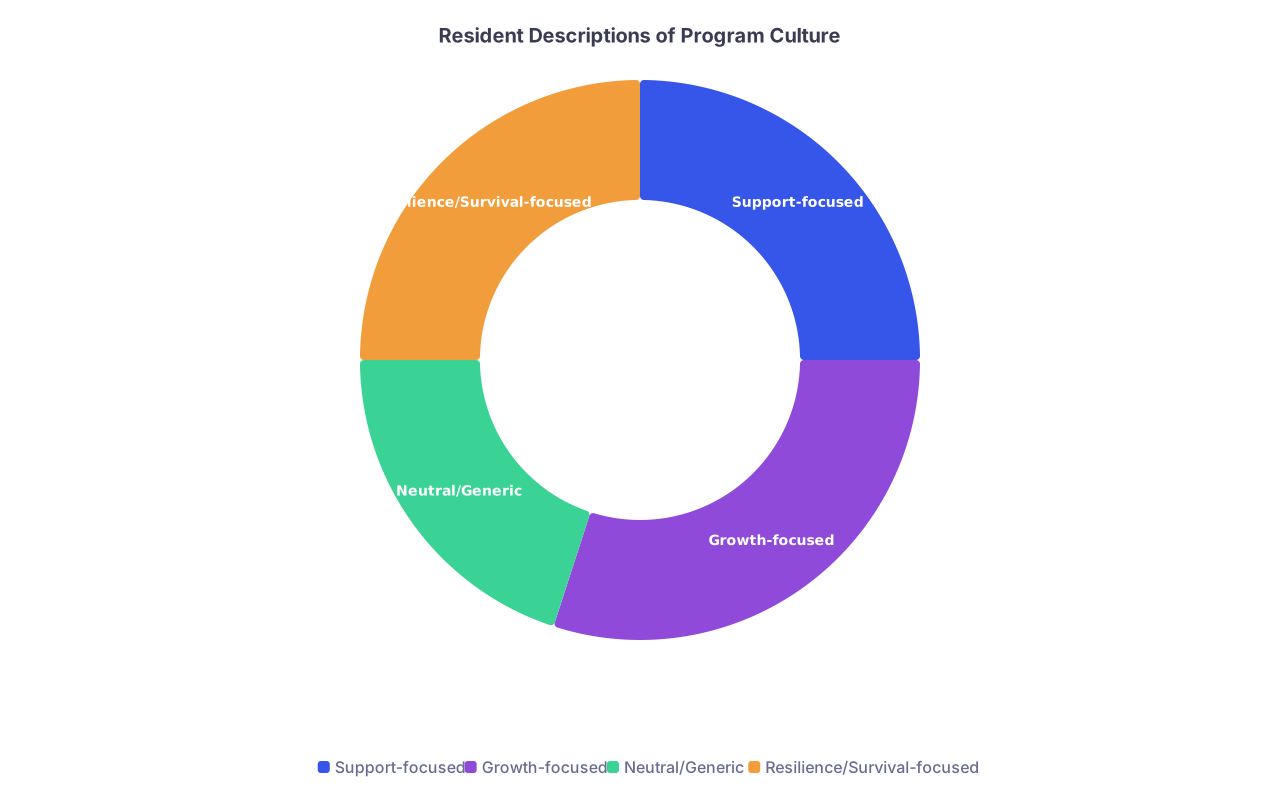
| Category | Value |
|---|---|
| Support-focused | 25 |
| Growth-focused | 30 |
| Neutral/Generic | 20 |
| Resilience/Survival-focused | 25 |
3. Trace the Outcomes, Not Just the Match List
Everyone looks at fellowship match lists. Fewer people ask, “What happened to the residents who didn’t finish?”
Ask very specific questions on interview day or at second looks:
- “How many residents, if any, have left the program in the last 5 years?”
- “What were the reasons?”
- “How does the program support residents who are struggling or need remediation?”
If they dodge, minimize, or turn weirdly defensive, that’s data.
Then cross-check with your own faculty: “Have you ever heard of residents leaving that program, and do you know why?” Those stories circulate among attendings far more than you realize.
4. Read the Call Schedule Like a Contract
The call schedule is where malignancy hides in plain sight.
Do not just look at “q4 vs night float.” Ask:
- “What happens if someone is sick or has a family emergency on a call day?”
- “Who covers when multiple people are out?”
- “How are cross-cover responsibilities split between residents, NPs, and attendings?”
A malignant program’s answer is almost always some version of: the residents stretch further. A healthy program has redundancy built in and can tell you clear backup pathways that do not always cannibalize the resident pool.

When, If Ever, You Should Still Rank a “Malignant” Program
Let me say something you won’t hear on wellness panels: some people knowingly choose malignant programs. And sometimes it’s not the worst decision.
Here’s the cold reality:
- In hyper-competitive subspecialties or markets, some “known tough” programs have incredible name recognition and case volume.
- If you’re geographically locked (family, immigration, finances), your options may include programs with red flags you can’t entirely avoid.
- Some malignant programs still produce technically excellent clinicians, just at a very high personal cost.
If you find yourself considering such a place, you need ruthlessly honest math:
- What are you willing to trade in mental health, safety, and quality of life for training prestige or location?
- Do you have an exit strategy if it’s truly unbearable—transfer, switch specialties, or step away for health?
- Do you have enough internal and external support (therapy, family, partner, mentors) to not be isolated if the culture turns on you?
I’ve seen residents survive malignant programs and go on to great careers. But I’ve also seen people leave medicine entirely because of those three years. That is not dramatic; it’s factual.
If you sense malignancy and you have any viable alternative that is “hard but healthy,” you take that deal. Every time.
The Quiet Truth: Most Programs Aren’t Malignant, They’re Just Flawed
Let me balance this a bit.
Faculty throw “malignant” around too loosely sometimes. A single bad rotation is not malignancy. A demanding surgical attending who yells once in the OR does not automatically make a program poisonous. A rough winter of understaffing doesn’t either.
Most programs:
- Have some toxic individuals, but a generally decent culture.
- Are stretched by hospital finances and service needs, but try to play fair.
- Want residents to succeed and care—clumsily—when they fail.
Your job is not to find the mythical perfect program. It’s to avoid the handful of truly malignant ones that will erode you from the inside out.
Ask the right questions. Listen for the hesitations. Use your faculty’s institutional memory. And trust this: your future self cares far more about how you were treated than whether the website bragged about being “top ranked.”
Years from now, you will not remember the exact call schedule. You will remember who had your back when everything went sideways—and whether you felt like a human being or just another warm body to plug into the schedule.